

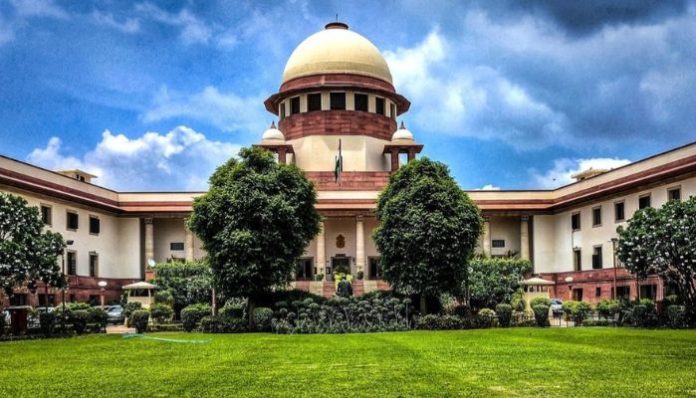
The Supreme Court on Monday, 3rd November, declined to immediately consider a plea seeking a nationwide ban on pornography, saying it was not inclined to interfere in the matter for now.
The bench, led by outgoing Chief Justice BR Gavai, made an interesting remark during the hearing, “Look what happened in Nepal over a ban,” referring to the violent protests that broke out in the first week of September sparked massive anti-government protests that ousted the government of then Prime Minister K P Sharma Oli. Thousands of youths under the banner of the Gen Z group staged anti-government protests in Kathmandu on 8th and 9th September, during which 76 people were killed.
The bench, which also comprised Justice KV Viswanathan, said that the issue shall be heard again after four weeks, reported NDTV. The petition had urged the court to direct the central government to frame a national policy and create an action plan to curb easy access to pornographic material, specifically among minors. It also sought a ban on viewing such content in public places.
The petitioner contended that after digitalisation, everyone – educated or uneducated – has easy access to the internet and adult material. “Everything is available with just one click,” the petitioner said, adding that even during the Covid-19 lockdowns, when children had to use phones and laptops for online classes, there was no effective mechanism to block or monitor pornographic content.
Citing government data, the petitioner claimed that billions of pornographic websites are available in India and that exposure to such content can have a harmful impact on individuals and society, particularly on young people between the ages of 13 and 18. The plea also said that more than 20 crore pornographic videos, including those involving child sexual material, are circulating online in India.
The petition reminded the court that under Section 69A of the Information Technology Act, the government has the power to block access to such material. However, the Supreme Court noted that options were already available for persons and families, in the form of parental controls and tracking software, to keep a check on what children were viewing online.
