

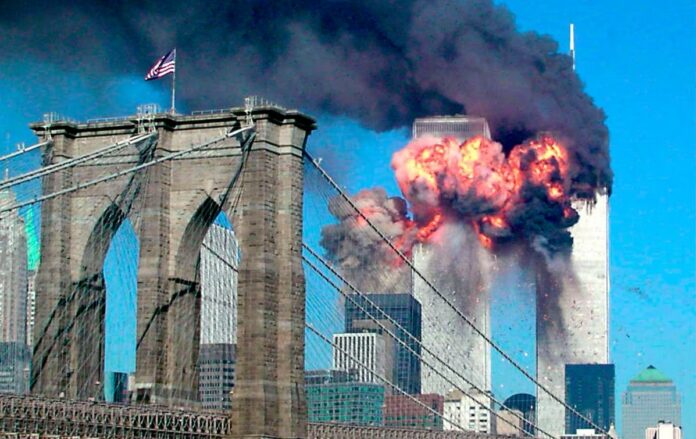
Nearly 25 years after the September 11, 2001, terrorist attacks, the City of New York has released more than 170,000 pages of previously undisclosed records detailing air quality around Ground Zero, offering a fresh and troubling look at what city officials knew about the dangers lurking in the air as they assured the public that the area was safe.
New York City Council Member Zohran Mamdani announced the release of the records at a news conference on Tuesday, September 8, saying the documents shed new light on the city’s response to the aftermath of the attacks and the toxic exposure suffered by thousands of people who lived, worked or responded at Ground Zero.
“As the years pass and the human toll grows, we reckon with the cost of September 11th whenever another New Yorker is stolen from us too soon,” Mamdani said.
He pointed to the continuing death toll from illnesses linked to the attacks, noting that nearly 25 years later, deaths attributed to 9/11-related diseases have surpassed the number of people killed on the day of the attacks itself.
The newly released material includes air-quality reports, internal communications and government memoranda concerning the conditions around the World Trade Centre site in the weeks and months following the attacks.
Among the most significant documents is an internal memo that came to be known as the “Harding Memo,” sent to then-Deputy Mayor Robert Harding. The document indicates that city officials were already anticipating thousands of potential lawsuits arising from exposure to the air around Ground Zero, as well as concerns over inadequate protective equipment.
The memo also discussed possible legislative measures that could have helped limit the city’s legal exposure.
The revelations are particularly significant because they come against the backdrop of years of health problems among first responders, residents, workers and others exposed to the massive cloud of dust and debris released when the World Trade Centre towers collapsed.
“People got sick because the leaders they trusted lied and told them they were safe to breathe in toxic air,” Mamdani said, accusing successive administrations of withholding information that should have been made available to the public.
Asked whether the decades-long withholding of the records amounted to a cover-up, Mamdani stopped short of using that word, but sharply criticised previous administrations.
“This was multiple mayoral administrations refusing to release documents that New Yorkers were owed,” he said.
The mayor appeared alongside 9/11 families and comedian and political commentator Jon Stewart, who has spent years campaigning for greater support and transparency for first responders and survivors.
“There was poison in the air, and on the ground, and in the window sills, and in your air conditioners and covering your pets and your clothes, and it stayed there for months. Everyone knew. Now it’s very clear that the city knew as well,” Stewart said.
For survivors and families who have spent decades dealing with the consequences of the attacks, the release represents more than a historical disclosure.
Karen Klingon, whose brother Robert lived only a few minutes’ walk from the World Trade Centre, attended Tuesday’s news conference. Robert was enrolled in the World Trade Centre Health Program after becoming ill following his exposure.
In 2018, he collapsed on a New York street and was subsequently diagnosed with a brain tumour. He died two years later, according to his sister.
Klingon said the issue went beyond the absence of transparency, arguing that the records reflected a failure to adequately value the lives of those exposed to the toxic environment.
“I think there wasn’t just lack of transparency; there was a lack of regard for people, and I find that very disturbing,” she said.
The scale of the continuing health crisis is reflected in the numbers. At least 140,000 people from all 50 US states have enrolled in the World Trade Centre Health Program, while around 49,000 people have been diagnosed with cancers certified as being related to their exposure at the site, according to the 9/11 Memorial.
Mamdani also said that thousands of people who may qualify for assistance remain outside the programme, including individuals who lived in the neighbourhood surrounding Ground Zero but were never adequately reached by outreach efforts, as well as people who subsequently moved away from New York.
Cancer itself was not initially included when Congress established the World Trade Centre Health Program in 2011. It was added the following year after sustained advocacy and research showing elevated cancer rates among New York firefighters who worked at Ground Zero.
The newly released records therefore arrive at a moment when the health consequences of 9/11 remain an active public-health issue rather than merely a chapter in American history.
Nearly 3,000 people were killed in the attacks on September 11, 2001. In the quarter-century since then, however, thousands of other people who were exposed to the toxic environment surrounding Ground Zero have developed cancers, respiratory illnesses and other conditions, with many eventually dying from diseases linked to their exposure.
The records were discovered among 68 boxes of government material stored in a city office. Officials said the boxes were located last year, prompting the city to begin reviewing and preparing the documents for public release ahead of the 25th anniversary of the attacks.
For years, first responders, survivors and advocacy organisations had demanded access to the records. The group 9/11 Health Watch had also sued the city seeking their disclosure.
The newly published material represents only a portion of the city’s air-quality records from Ground Zero, but officials say additional documents will be added to a searchable online archive over the coming months.
The city has made the documents available to the public without charge, allowing researchers, journalists, survivors and families to examine records that remained inaccessible for decades.
The disclosure could ultimately provide a much clearer picture of the decisions made by New York officials in the chaotic aftermath of the attacks, when authorities were under immense pressure to stabilise Lower Manhattan, clear the ruins and restore normal life.
But for those who became sick after being told the air was safe, the documents also raise a much more fundamental question: what did officials know about the risks at Ground Zero, and why did it take almost a quarter-century for the public to see the records?
As New York prepares to mark the 25th anniversary of September 11, the release has reopened one of the most painful chapters of the attacks, not about what happened when the towers fell, but about what happened to the people who continued living and working in the shadow of the disaster long after the smoke had cleared.
