

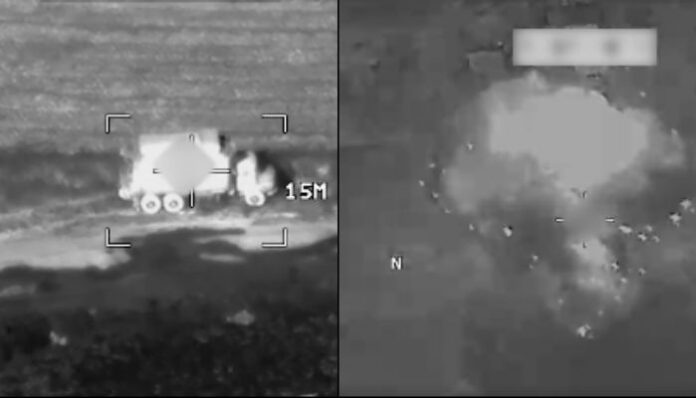
On Wednesday (29th July), the US forces carried out fresh strikes on Iran a day after US-Saudi forces struck Iranian proxies in Iraq.
Taking to X, US Central Command (CENTCOM) said, “At 10 p.m. ET on July 29, U.S. Central Command (CENTCOM) forces successfully completed a heavy wave of strikes against Iran in response to yesterday’s attempted missile attacks on U.S. forces.”
U.S. forces began launching strikes against Iran at 8 p.m. ET today. The strikes are a powerful response to yesterday's attempted Iranian attacks on U.S. forces based in the Middle East.
— U.S. Central Command (@CENTCOM) July 30, 2026
The US CENTCOM said that its assets struck dozens of Islamic Revolutionary Guard Corps (IRGC) targets in Iran, including military command centres, missile and drone facilities, coastal surveillance and defence sites, and maritime capabilities.
“The strikes aimed to further diminish threats posed by Iran and its proxies to American forces, commercial shipping, and neighbouring Gulf countries,” it said.
As per reports, Iraq’s presidency has said the US-Saudi attacks on Iran-aligned ‘paramilitary groups’ in Iraq were a “blatant violation of the country’s sovereignty”. The Popular Mobilisation Forces armed group said that around 20 of its members were killed in the attacks.
The Tuesday US-Saudi strikes on Iranian proxies in Iraq targeted “multiple terrorist logistics and weapons sites across eastern Iraq in a strong response to over 30 IRGC-directed aerial drone attacks in the last 72 hours”.
Notably, on 28th July, the IRGC launched multiple ballistic missiles from Iran in an attempted surprise attack on US forces based in West Asia.
The IRGC said that it had hit a US air base and a command centre in Jordan “in response to the acts of aggression of the American child-killing army”.
In addition, the Iranian naval forces also reportedly struck three oil tankers in the Strait of Hormuz. This came after these tankers disregarded Iran’s warnings against sailing along what Iran described as an “unsafe and illegal route”.
