

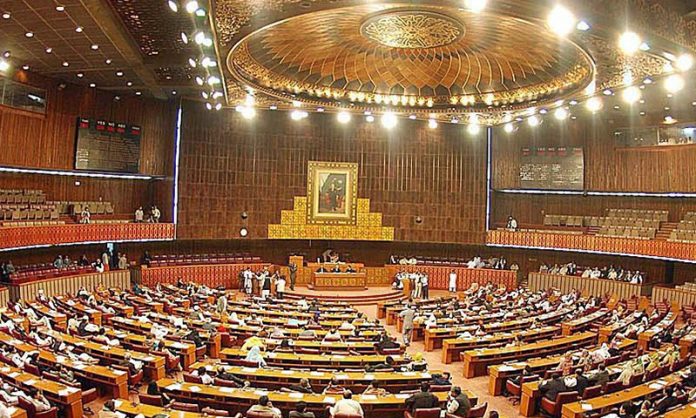
The drama in Pakistan’s National Assembly does not appear to be ending anytime soon. In an unexpected action following the decision of the Deputy Speaker of the national assembly to dismiss the no-confidence motion against the Imran Khan govt and suspend the session, the opposition resumed session of the assembly in protest of the deputy speaker’s decision and elected Shehbaz Sharif as the new Prime Minister.
#Breaking | Pakistan Crisis Deepens as Shehbaz Sharif Appointed New PM in ‘Oppn-only Session’.
— News18 (@CNNnews18) April 3, 2022
(Exclusive Input: @manojkumargupta)@moayyedjafri shares details with @toyasingh pic.twitter.com/CyY5MmlarZ
The opposition appointed Ayaz Sadiq as the Speaker of the National Assembly and resumed the no-confidence vote against the incumbent government led by Imran khan. Sherry Rehman, who is a member of the assembly, tweeted a video stating that a total of 197 members voted for the motion.
197 opposition members by counting via Division excluding Ayaz Sadiq https://t.co/Nh0WT5uHbd
— SenatorSherryRehman (@sherryrehman) April 3, 2022
After the deputy speaker had dismissed the no-confidence motion and the session was prorogued, the opposition MPs remained in the house, even as they moved Supreme Court Against the deputy speaker and prime minister Imran Khan. Amid applaud by the opposition MPs, PML(N) MP Ayaz Sadiq occupied the speaker’s chair and announced resumption of business in the house. He reactivated the no-confidence motion dismissed by the deputy speaker and put it to vote, which was voted in favour of the motion as the ruling party MPs had already left the house.
After that, Pakistan Muslim League (Nawaz) chief Shehbaz Sharif, who is also the brother of former Prime Minister Nawaz Sharif, was elected as the leader of the house and was declared the Prime Minister.
It should be noted, however, that this is a protest move, which is against the rules of the house. Despite today’s session was prorogued, Ayaz Sadiq was named speaker, and Shahbaz Sharif addressed the house as Prime Minister. According to the regulations, only the Speaker or the President can call the session after it has been prorogued.
Some photos also surfaced on social media where it can be seen that the lights of the assembly were turned off after the ruckus erupted in the house.
Ayaz Sadiq was holding NA Session with his own people & NA staff turned off the lights. ??? pic.twitter.com/nOyWwpo7CK
— Fatima S. (@ItsMeMyselfI__) April 3, 2022
All of this follows after the Deputy Speaker of the House rejected a no-confidence resolution against the Imran Khan-led PTI government. While the National Assembly was preparing to vote on a no-confidence resolution, Deputy Speaker Qasim Suri dismissed it. He read from a prearranged note claiming the motion was prompted at the behest of an unknown “foreign power,” and hence it is unconstitutional.
Following the rejection of the no-confidence resolution, the opposition parties declared that they will file a petition with the Supreme Court against the deputy speaker and the prime minister. The Supreme Court of Pakistan, on the other hand, is said to have taken Suo Moto notice of the matter.
On the other hand, Prime Minister Imran Khan has already advised the president to dissolve the national assembly, and called for fresh elections.


