

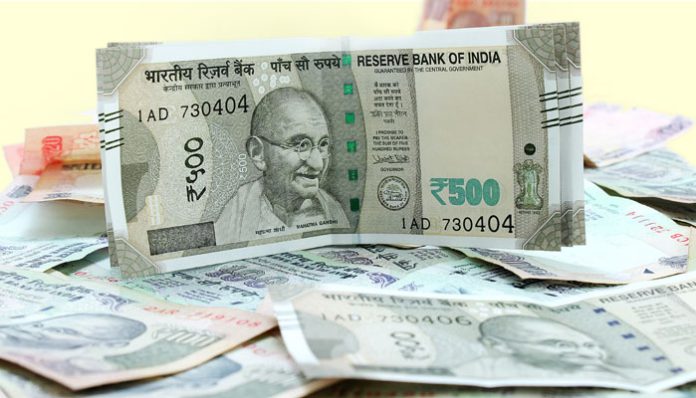
The Enforcement Directorate (ED), Central Bureau of Investigation (CBI), and Income Tax (IT) Department conduct multiple raids every year, resulting in the recovery of unaccounted cash worth crores. With swanky photographs of seized money arranged to form letters like “E” and “D” to denote ED during raids, the question arises: What happens to the cash recovered by the agencies during raids?
When the ED, CBI, or IT Department seizes unaccounted money, they cannot just keep it on their office premises. First of all, the accused gets a chance to explain where the cash came from. If the accused fails to give a satisfactory answer, the money is considered ill-gotten and seized under the Prevention of Money Laundering Act (PMLA) provisions.
The actual process of seizing the cash starts from here. The State Bank of India is called in to count the seized cash. Simultaneously, a list of seized cash is prepared with the details of the recovered amount in specific denominations such as Rs 500, Rs 200, Rs 100, Rs 50 and so on. Based on the amount, the bank deploys multiple cash counting machines to ensure smooth and quick completion of the counting process.
Once the counting is complete, the cash is sealed in the boxes in the presence of independent witnesses. The cash is then taken to the SBI branch, where it is deposited under the agency’s Personal Deposit (PD) account. Later, the cash is moved to the central government’s treasury.
Notably, cash can be used only once the case is over in the court of law. Neither the ED, nor the bank, nor the government has the right to use the money for any purposes while the case is sub-judice. The agency issues a provisional attachment order, and an adjudicating authority must confirm the attachment within six months. This order ensures that the accused cannot benefit from the seized cash. Notably, the agency can only hold onto the cash for 180 days. During that time, the agency has to prove the validity of the seizure. In case the agency fails to do so, the money gets returned to the accused automatically.
How the money will be used depends on the outcome of the case. If the accused acquits, the cash gets returned; otherwise, if convicted, the money becomes government property.
Enforcement Directorate, Central Bureau of Investigation, and Income Tax Department can raid, investigate and seize property in cases of money laundering, scams, tax fraud, or irregularities.


