

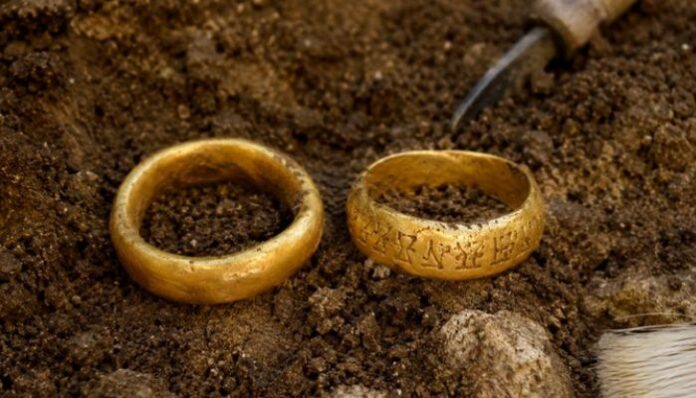
A team of archaeologists working in western Thailand has uncovered two gold rings believed to be around 2,000 years old at a newly identified archaeological site. The discovery has drawn attention because one of the rings carries an inscription in Brahmi script, which was used in ancient Indian texts and inscriptions from approximately the 3rd century BCE to the 5th century CE.
Archaeologists in western Thailand have unearthed two gold rings believed to be around 2,000 years old at a newly discovered archaeological site, officials said. One of the rings found on Thursday was engraved with characters believed to be Bhrami script, an ancient Indian… pic.twitter.com/RHq56EFbwi
— Hindustan Times (@htTweets) July 6, 2026
Experts say the find offers fresh evidence of cultural and trade connections between the Indian subcontinent and Southeast Asia during the Iron Age.
The rings were recovered from the Don Yai Thong archaeological site in Phetchaburi province, about 130 kilometres southwest of Bangkok. They were found alongside human skeletal remains during an ongoing excavation led by Thailand’s Fine Arts Department. The department believes the burial site belonged to people of high social standing, based on the valuable objects found with the dead.
One ring carries an ancient Indian inscription
Of the two rings, one has attracted special interest because it is engraved with characters that experts have identified as Brahmi script. After an initial study, specialists read the inscription as “pusarakhitasa,” which means “the one protected by Pushya.”
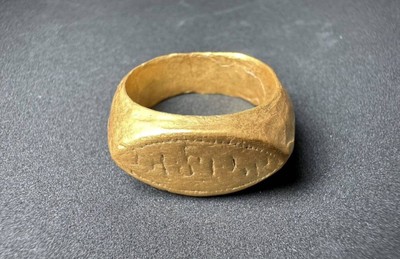
According to the Fine Arts Department, Pushya is considered one of the most auspicious zodiac signs in Indian astronomy. The inscription is expected to be studied further, as researchers hope it may provide more information about the identity, background and cultural links of the person who once wore the ring.
The second ring is a simple gold band without any design or inscription. Even though it appears plain, archaeologists believe it is equally important because it adds to the overall picture of the burial customs and wealth of the people buried at the site.
Clues about the owner’s identity
Based on the style of the jewellery and the inscription, experts believe the rings may have belonged to a merchant connected with the ancient Indian Vaishya community, traditionally associated with trade and commerce. While more studies are needed to confirm this idea, the discovery supports the long-held view that merchants played a major role in linking India with Southeast Asia through ancient maritime trade routes.
The presence of Brahmi script in Thailand also suggests that ideas, language and cultural traditions travelled alongside goods. Historians have long believed that trade between India and Southeast Asia helped spread writing systems, religious beliefs and artistic styles across the region. This latest discovery adds another piece of evidence to that history.
Burial site reveals lives of the affluent
The gold rings were not the only valuable objects recovered during the excavation. Since work began in February, archaeologists have uncovered the skeleton of eight individuals buried with bronze and gold jewellery, pottery and several other artefacts.
The collection of burial goods suggests that the site was used for ceremonial burials of wealthy or upper-class people. Researchers say such burials often reflected the social status of the deceased and showed the importance of honouring them with valuable possessions.
The careful placement of ornaments and other objects also gives archaeologists useful information about how people lived, what they valued and the customs they followed nearly two thousand years ago.
Site discovered after villagers found bronze drum pieces
The Don Yai Thong archaeological site came to the attention of experts earlier this year after residents found fragments of ancient bronze drums in a rice field. The discovery prompted Thailand’s Fine Arts Department to begin a full-scale excavation, which soon revealed a much larger burial ground hidden beneath the surface.
Since then, the site has continued to produce important discoveries that are helping researchers understand the history of the region. Every new artefact recovered adds to the picture of life in ancient Thailand and its links with neighbouring civilisations.
Dating back to Thailand’s Iron Age
Experts have dated the burial site to Thailand’s late prehistoric period, also known as the Iron Age, which lasted roughly between 1,500 and 2,500 years ago. During this period, communities across the region witnessed major developments in metalworking, agriculture and long-distance trade.
The quality of the gold jewellery and the variety of objects found at the site show that some communities had already achieved considerable wealth. The discoveries also point to clear social differences, with certain individuals receiving elaborate burials that reflected their status.
Researchers say the craftsmanship seen in the rings demonstrates the high level of skill possessed by artisans of that time. Future studies will also examine how the rings were made and where the gold may have come from, helping experts better understand ancient production methods and trade networks.
More studies planned
Scientists plan to carry out detailed research on the Brahmi inscription using advanced methods to better understand its language and historical importance. Archaeometallurgical studies are also expected to examine the composition of the gold and the techniques used to shape the rings.
Researchers hope these investigations will provide deeper insights into ancient economies, trade routes and cultural exchanges that connected India and Southeast Asia centuries ago. They also expect further excavation around the burial ground to uncover additional graves and artefacts that could reveal more about the people who lived in the region.
Museums, universities and cultural institutions are likely to work together to preserve the discoveries and share them with the public through exhibitions and research publications.
Discoveries to be displayed after the excavation ends
The ongoing excavation at Don Yai Thong is expected to conclude within the next month. After conservation work is completed, Thailand’s Fine Arts Department plans to display the rings and other recovered artefacts for the public.
Archaeologists believe the discoveries from the site are among the most significant recent findings in Thailand because they highlight not only the burial traditions of ancient communities but also the long-standing connections between India and Southeast Asia. The gold rings, especially the one bearing the Brahmi inscription, provide an important reminder that people, ideas and trade travelled across the region thousands of years ago, leaving behind evidence that continues to reshape our understanding of ancient history.


