

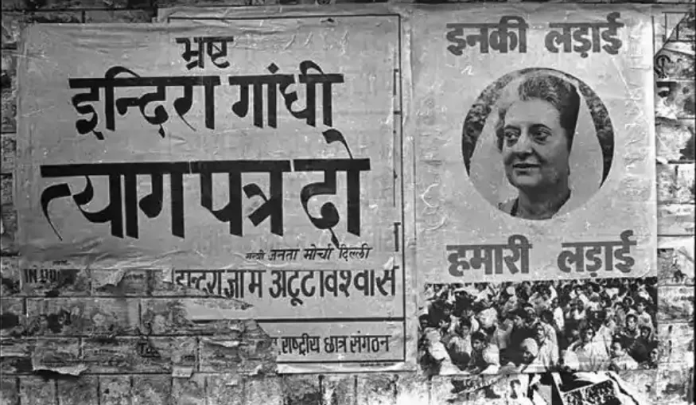
Murder of democracy, fascism, misuse of institutions…these are some of the chosen words that have become the favourite slogans of Congress since 2014. But where did the Congress learn all these words from? For this, it is necessary to know the history of 12th June.
It is obvious that the country’s first Prime Minister Jawaharlal Nehru and his daughter Indira Gandhi have left so much for today’s Congress that even if this political party never returns to power, it will hardly face any problem in sustaining its political ideology.
Today is a witness to the historic moment when fascist, dictator and autocrat Indira Gandhi was convicted in the Allahabad court. On the morning of June 12, 1975, the courtroom of Allahabad High Court was completely packed with the crowd.
On this day, Justice Jagmohan Lal Sinha (Justice JML Sinha) was going to deliver the final verdict in the case of ‘Raj Narain vs Indira Gandhi’. This was a rare occasion when a political battle was being fought in the courts.
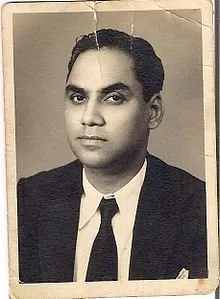
Today, the Congress would hardly remember what all circumstances Justice Jagmohan Sinha had to go through before this decision and what all tactics were adopted by Indira Gandhi to influence his decision.
Actually, the reason behind making Indira Gandhi stand in this courtroom was her victory in the Lok Sabha elections of Rae Bareli in 1971. In this Lok Sabha election, Indira Gandhi got tremendous success and she won from the Rae Bareli seat.
In this election, Indira Gandhi defeated the candidate of the United Socialist Party, Raj Narain, by a surprisingly large margin. This was surprising for the reason that Raj Narain, the socialist who made arena politics a part of Indian politics, was so sure about his victory in this election that he had already celebrated his victory and taken out a victory procession.
Despite being related to the royal family of Banaras, Raj Narayan decided to start his political battle in Raebareli. But the story was completely reversed when the results were declared. Raj Narayan lost the election. Only one-fourth of the total votes were in his favour, while Indira Gandhi defeated him by almost two-thirds of the votes.
This defeat in the Lok Sabha elections prompted Raj Narain to approach the High Court and pray for the cancellation for Indira Gandhi’s election for misusing government machinery and resources to win the election. This was going to prove to be a unique case in independent India.
After all, for the first time, a Prime Minister of India was ordered to appear before the court. Famous lawyer Shanti Bhushan (father of Prashant Bhushan), who was fighting this case on behalf of Raj Narayan, had said –
“Before Indira Gandhi entered the court, Justice Sinha said – People stand in the court only when the judge comes, so no one should stand when Indira Gandhi arrives, passes were distributed to the people for entry.”
Shortly thereafter, on March 18, 1975, Indira Gandhi reached the court and answered questions related to the elections, including her election for about five hours.
Shanti Bhushan, who argued the case against Indira Gandhi, has written in his autobiography ‘Courting Destiny’ –
“When I started arguing, I felt the judge was not giving much importance to the case. But after the third day, I noticed that my arguments were influencing him and he started taking notes.”
The autobiography mentions how Justice Sinha was successful in keeping his decision confidential and for this he was even forced to ‘disappear’ by the Indira Gandhi government. Justice Jaganmohan Sinha used to receive telephone calls from Dehradun from certain specific people and they used to force him to give a decision in their favour.
The person who called Justice Sinha from Dehradun was none other than Chief Justice Mathur who told him that Joint Secretary of the Home Ministry PP Nair had met him and requested that the decision be postponed till July. Justice Sinha was so disappointed and saddened by this that he immediately went to the High Court and ordered the Registrar to inform both the parties that the decision would be announced on June 12.
Prashant Bhushan, son of Shanti Bhushan, has written in his book ‘The Case that Shook India’ –
“Sinha wanted to write his decision in a peaceful environment. But as soon as the court closed, a Congress Member of Parliament from Allahabad started visiting him daily. This annoyed Justice Sinha and he had to tell him not to come to his place. But when he did not agree to this, Sinha asked his neighbour Justice Parikh to explain to that gentleman that he should not disturb him.”
Justice Sinha was so fed up with the pressure being exerted on him regarding the verdict that he had to spread the false news of him being in Ujjain. He was even offered the post of a judge of the Supreme Court. However, when the verdict did not turn out to be in favour of Indira Gandhi, Justice Sinha was never appointed as a judge of the Supreme Court. This is a very small example of the Congress’s system of governance.
On the morning of June 12, Justice Sinha had a 255-page document containing his decision in front of him. Starting the court proceedings at 10 am, Justice Sinha said, “I will read out the conclusions I have reached on all the issues related to this case.”
After a pause, Justice Sinha said, “The petition is allowed.”
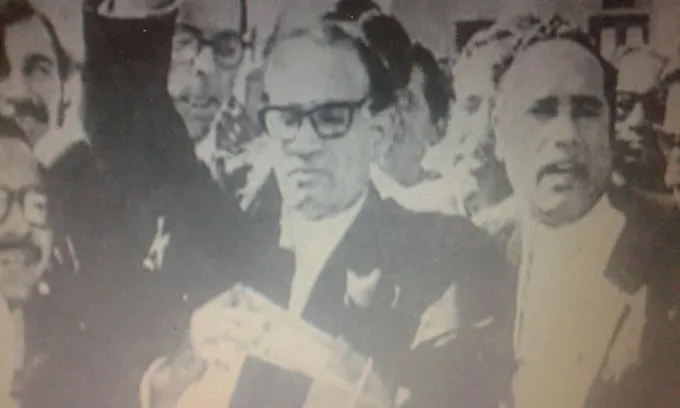
‘Indira Gandhi dethroned’
Justice Sinha wrote in his order that Indira Gandhi used the officials and machinery of the Government of India in her election. Justice Sinha held Indira Gandhi guilty of receiving assistance from gazetted government officials, including Yashpal Kapoor, who was working as an officer on special duty with the PM’s secretariat. Also, the court ordered Indira Gandhi to pay legal costs to the petitioner, Raj Narain.
Justice Sinha wrote in his order that Indira Gandhi used the officials and government machinery of the Government of India in her election. Using them for election work was also illegal under the Representation of the People Act. On the basis of these two issues, Justice Sinha cancelled the election of the then Prime Minister Indira Gandhi from Rae Bareli to the Lok Sabha.
On June 12, 1975, Justice Jagmohan Lal Sinha of the Allahabad High Court declared the Rae Bareli election ‘null and void’ due to electoral malpractices. Along with this, Justice Sinha gave a stay order of twenty days on his decision. That is, the ruling party was given 20 days to find an alternative to Indira Gandhi.
On this decision of Justice Sinha, London’s ‘The Times’ newspaper wrote that this decision was like removing the Prime Minister from hER post for violating traffic rules.
The court had given relief to Indira Gandhi on 5 out of the 7 issues included against her in Raj Narain’s petition, but Indira Gandhi was found guilty on two issues. According to the verdict given by Justice Sinha, Indira Gandhi was disqualified from contesting elections for the next 6 years under the Representation of the People Act.
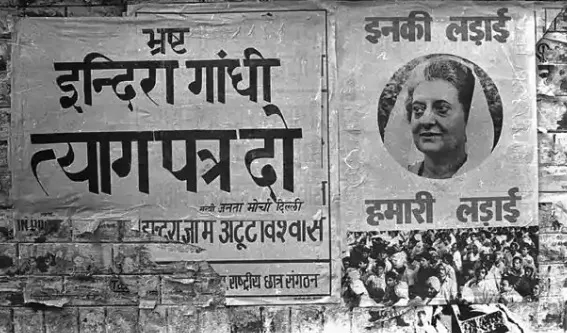
This was the decision that threw the country into the fire of emergency on Indira Gandhi’s insistence. To cover up one crime, Indira Gandhi considered it better and necessary to commit another crime which was even bigger than the previous one. After this decision of Allahabad High Court on June 12, 1975, the emergency imposed on June 25, 1975 lasted for 21 months, i.e. till March 21, 1977.
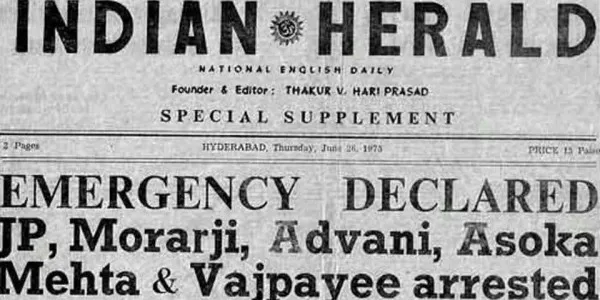
The single judgement against Indira Gandhi made her do what is called
fascism, dictatorship and murder of democracy . This was the same Indira Gandhi who thought of crippling the judiciary to make herself legally immune and started making all kinds of undemocratic amendments in the Constitution.
By the time the monsoon session began on 21 July, all the MPs were in jail and those who remained boycotted the Parliament. This step made Indira Gandhi even more autocratic. This tainted chapter in the history of democracy was written with the blood of social activists and the arrest of journalists.
This was the time when Indira Gandhi banned even the newspapers that published quotes of Nehru and Gandhi, many films were banned and the fate of Delhi and political prisoners began to be decided by Sanjay Gandhi.
Today’s so-called intellectuals and internet-liberals must remember the day of 12th June. So that they can know the exact details of the murder of democracy and its real culprits.
This is an English translation of an article published on OpIndia Hindi


