

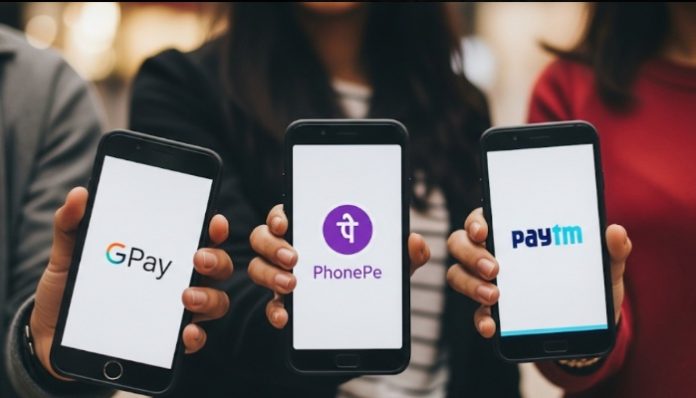
A number of improvements have been made to the Unified Payment Interface (UPI) ecosystem by the National Payments Corporation of India (NPCI) in an effort to enhance UPI transaction performance which are set to take effect from August 1.
Millions of Indians rely on UPI transactions for their everyday financial activities and these revisions aim to improve the speed, security and dependability of this crucial service.
The modifications are intended to promote a more balanced digital payments ecosystem while addressing operational issues like strain on the infrastructure and security flaws. The new rules would have a direct effect on UPI apps like Google Pay, PhonePe and Paytm, the popular systems that handle billions of transactions every month.
Limit on balance inquiries
The implementation of a daily cap on balance queries is one of the primary adjustments made by the NPCI. The amount of balance-related requests executed by the system is set to be limited as users will only be able to check their account balance 50 times per day per UPI app to lessen pressure on the Application Programming Interfaces (API) system. Any attempt to check after this point will be blocked.
The excessive balance checks that slow down payment processing and annoy users during peak hours have resulted in infrastructure stress, prompting this measure. NPCI hopes to decrease needless system load and enhance overall transaction speed along with reliability by lowering balance queries. Furthermore, following each successful UPI transaction, issuer banks must provide the available account balance in the confirmation message.
Time restrictions on auto-payment
Auto-pay transactions including subscriptions, bills, Equated Monthly Installments (EMIs) and Systematic Investment Plans (SIPs) are also subject to limits imposed by the NPCI. Now, they will only be performed during non-peak hours before 10 am, between 1 pm and 5 pm and after 9:30 pm. These recurring payments could be completed at any time, earlier.
The goal of these time boundaries is to ease traffic at peak transaction times, facilitating the processing of other crucial real-time payments. Additionally, officials emphasised that this action would protect client interests by reducing the possibility of auto-pay functions being exploited during busy periods.
Status of transaction updates
NPCI is also working to improve how swiftly users obtain notifications on the status of their transactions. Users and merchants will be able to confirm payments sooner with faster feedback on UPI transaction status which will reduce waiting times and confusion during busy times. NPCI has reaffirmed their dedication to providing millions of Indians with a safe and easy digital payment experience.
Cap on balance check requests
Information on the user’s bank accounts connected to the mobile number can also be retrieved only 25 times per day. The customer must choose their bank in the UPI app before making these requests. Retries must only be made with the customer’s permission if the account list does not load to prevent needless system load.
Further alterations to benefit the user
- Users can only check the status of unsuccessful or pending transactions three times in total with a minimum of ninety seconds gap after first first try to reduce server load. This indicates that a single mandate could be carried out up to four times. All Autopay executions should be planned during off-peak times exclusively to further mitigate congestion.
- It is necessary to display the recipient’s name before to each transaction to improve security and avoid mistakes.
- Only API usage and behaviour patterns are limited as daily payment amounts and transaction restrictions have not been impacted.
- With certain transaction limits, UPI will enable the connection of pre-approved credit lines backed by assets such as gold, shares, loans, peroperties or fixed deposits starting on 31st August. These services have daily restrictions of Rs 1 lakh for payments, Rs 10,000 for cash withdrawals and a daily ceiling of 20 peer-to-peer (P2P) transfers.
- Banks and payment service providers need to keep an eye on the volume of API requests and restrict non-customer-initiated API calls during peak hours to preserve system reliability.
Payment Service Providers (PSPs) have been instructed by the NPCI to make the necessary system modifications by 31st July. On 21st May, NPCI’s press release conveyed, “Members are requested to take note of this compliance requirement and communicate it to relevant stakeholders and their respective partners for implementation by 31st July 2025.”
It warned, “In the event of non-compliance to the above guidelines, NPCI may take necessary action including UPI API restrictions, penalties, suspension of new customer on-boarding or any other measures deemed appropriate.”
Future plans
The requirement for a PIN for UPI transactions in the country might soon come to an end. Instead, payments could be verified through biometric methods such as fingerprint recognition, facial identification and iris scanning. The NPCI is currently developing this innovative technology, which could be made available to the general public in the future.
This stage will prove to be especially helpful for individuals who have difficulty remembering their UPI PIN or possess limited educational backgrounds. Moreover, the implementation of biometric payment methods can greatly mitigate fraud, given that this system is founded on distinct biological data. The payment procedure may proceed as follows:
- After the QR code is scanned, a biometric verification option will be displayed instead of the PIN.
- Once verification is completed using the fingerprint scanner or the phone’s Face ID, the payment will be confirmed automatically.
- The direct link between Aadhaar and NPCI will enable this process, maintaining both security and ease of transaction.
The biometric payment system is regarded as secure since the user’s personal information, including fingerprints and facial features, is directly associated with the UPI transaction. This linkage renders it nearly impossible for unauthorized individuals to execute the payment.
Nevertheless, certain cybersecurity experts caution that the risk of biometric data breaches must be considered seriously. Hence, the government and NPCI are actively developing essential security protocols. All biometric details will be stored in an encrypted format, ensuring that access is granted only with the user’s consent.
This innovative feature is particularly beneficial for rural residents or older individuals who find it challenging to operate a smartphone or remember a PIN. They simply need to place their thumb or present it in front of the phone’s camera, and the transaction will be completed. In markets, stores or villages where digital payment accessibility remains limited, biometric UPI payments can significantly improve the situation.
Motive behind the new announcement
The existing UPI payment limit remains unchanged. The transaction limitations stay the same and in most situations, they are up to Rs 1 lakh while in some categories, such as healthcare or education, they are up to Rs 5 lakh.
The new changes are applicable to all users on all platforms, regardless of how frequently they use UPI. However, the difference is not noticeable if the payment status is not continuously checked or the amount is not constantly reviewed several times. The primary target for these updates is frequent users who inadvertently overload the system with requests.
The NPCI has already taken action to strengthen security, but this set of moves is among the most extensive to date, for the purpose of consumer protection and system efficiency. Furthermore, the changes are an aspect of its larger plan to guarantee fair competition across digital payment providers.


