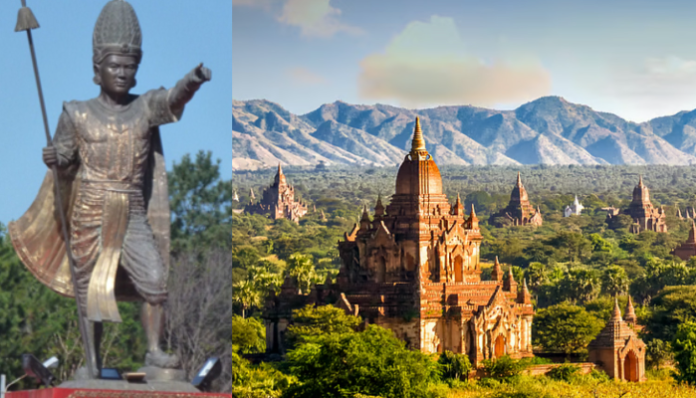
Myanmar has lately been grabbing headlines for its civil war, military coups and narco terrorism, as well as for Chinese-operated call centres that are filled with kidnapped tourists and trapped job seekers from India and other countries. Unfortunately, these dramatic events have overshadowed the magnificent history of the Buddhist-majority nation, popularly known as the “Golden Land” due to its abundance of golden temples and pagodas.
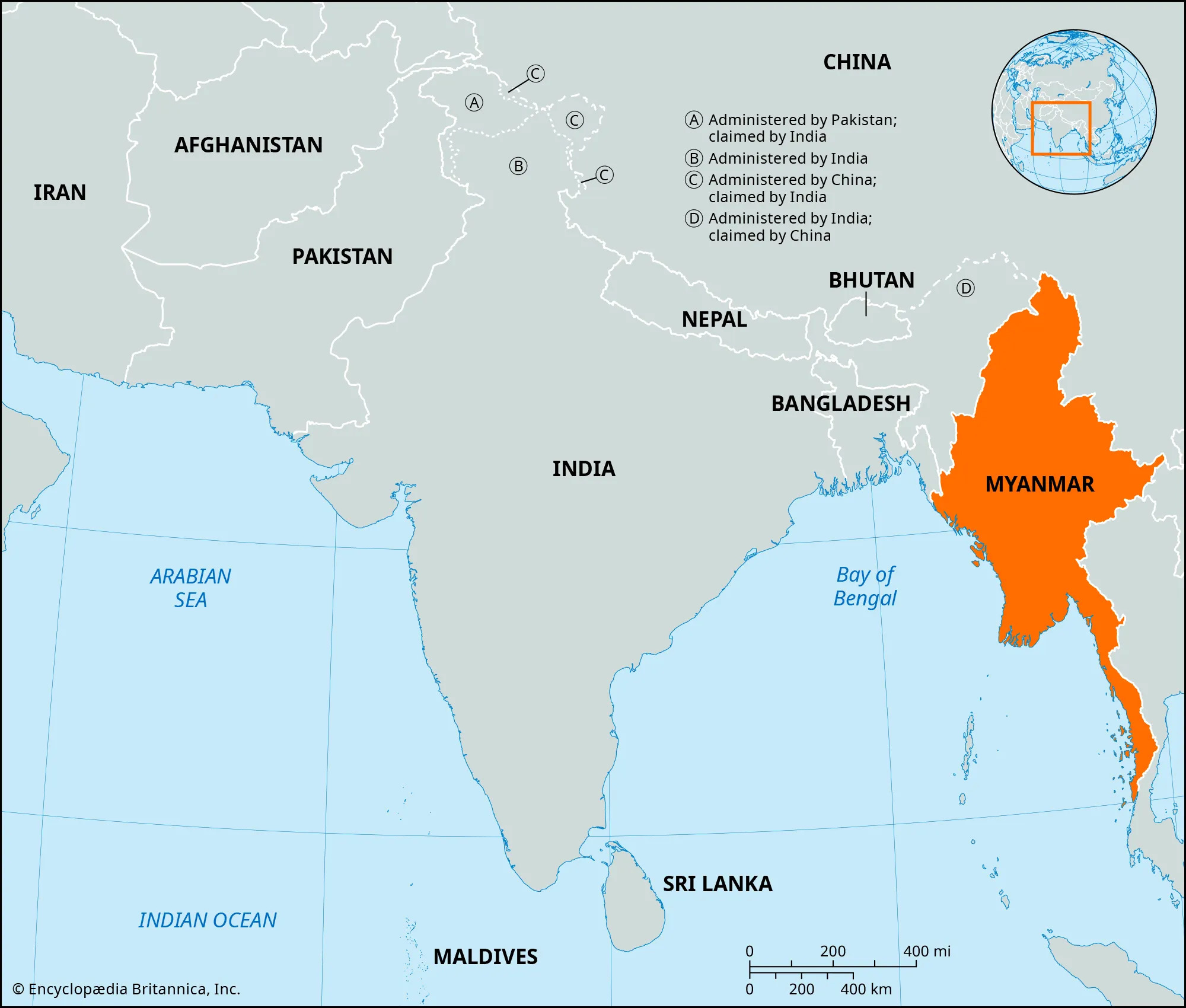
It was a thriving civilization that possessed a vibrant culture, beautiful natural landscapes and enchanting scenery which is now tainted by relentless political turmoil and rampant violence. The nation has also experienced the ascension and decline of many kingdoms including the the Ava Kingdom, the Hanthawaddy Kingdom and the Toungoo Empire, among others, over its long and fascinating past which have profoundly impacted and richly contributed its legacy and history.
Bagan kingdom takes root
The Bagan (mentioned as Pagan in some texts) dynasty was one such kingdom which became the first to unify the areas that would eventually form present-day Myanmar, the country which was previously known as Burma. Interestingly, Mranma or the Burman people are credited as the source of both these names.
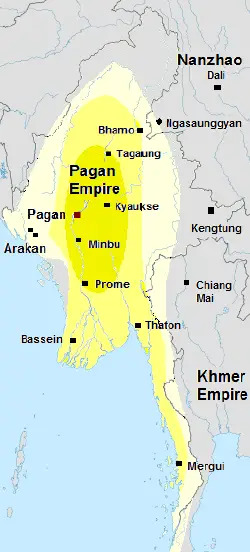
The historians stated that the Burman were originally from the areas that border Tibet and western China. A military crisis had gripped the Pyu kigdom when they seized the opportunity. Burman annexed their cultural territory in the middle of the 9th century AD and made Bagan their capital in 849 AD. Nevertheless, the take over was not absolute as the culture and traditions of the Pyu had a crucial impact on the new arrivals.
The latter did not resort to plundering but tried to adapt to the already established way of life of the Pyu people. Indian cultural and economic ties had influenced the Pyu. They were Buddhists and the new conquerors also followed suit. The Pyu wet-rice cultivation which is still practised in the Irrawaddy Delta, was another fresh lesson for the Burman who were accustomed to the temperature and terrain of far higher altitudes.
Modern historians consider Pyinbya to be one of the earliest monarchs of Bagan which would eventually occupy modern-day central Myanmar over the next two centuries. However, the country’s chronicles name him as the 33rd king of the dynasty.
A short video on temples of Bagan, Myanmar
— भारतीय वास्तुकला(Wonderful Indian Architecture) (@wiavastukala) July 19, 2018
There are more than 2000 temples in Bagan spread over an area of 40 miles². Bagan was mainly founded in 849 during the reign of king Pyinbya, known as 'AriMardanaPura'/TambaDipa(TamraDweep).
Video: Milosh Kitchovitch pic.twitter.com/d8OoHL5NWC
Anawrahta ascends the throne
Bagan was modest kingdom until King Anawrahta whose original name was Aniruddha, its greatest ruler came to power in 1044. He was the great-grandson of Pyinbya. His debut brought a substantial change in the fortunes of his kingdom and the entire region and altered their destiny. The new ruler made Bagan a leading producer of rice by enhancing the irrigation infrastructure throughout his realm.
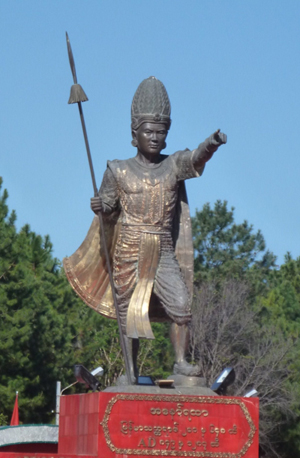
Furthermore, Anawrahta launched bold military plans. He took control of Thaton which was the capital of the prosperous and elegant Mon kingdom to the south, in 1057. The first Burmese empire swiftly rose to prominence when Anawrahta brought the entire Irrawaddy area under Bagan sovereignty. The important development pushed neighbouring Mon princes to yield to Burman authority.
Nathlaung Kyaung Temple is a Hindu temple dedicated to Vishnu. It is located inside the city walls of old Bagan, Burma & is the only remaining Hindu temple in Bagan.
— राजतरङ्गिणी (@Rajataranginii) April 9, 2019
It is one of the oldest temples in Bagan, and was built in the 11th century, during the reign of King Anawratha. pic.twitter.com/3YySFS1o1G
The king’s accomplishment involved both military triumphs and cultural interchange. Similar to his forebears, he was moulded by the Mon school of Theravada Buddhism which he propagated throughout the Bagan state because he perceived it as a beneficial unifying force.
Expansion of Bagan Empire and Indian influence
The Mon culture which was heavily influenced by Indian culture, was also valued greatly by Anawrahta. He was able to hire Mon engineers, goldsmiths, woodworkers and artists to adorn Bagan as a result of the wealth acquired by the capture of the Mon ports. River transportation was controlled by this remarkable civilisation which broadened their sphere of dominance.
Meanwhile, the king ordered the construction of countless temples, pagodas and stupas. Every structure appeared to be more expansive and impressive than the one before it. Notably, the sacred tale of Ramayana was popularized in Burma from his time.
It was known as Rama Zatdaw in Burmese and was recorded in Ava by the end of the 13th century and was passed down orally from generation to generation until the 16th century. Buddhist monks viewed it as a great story in the 18th century. Based on Old Bagan oral traditions, the historical epic was written down in prose, verse and dramatized between the sixteenth and eighteenth centuries.
Bagan’s golden period continued even after Anawrahta’s passing in 1077 as the flourishing commerce funded the rapidly growing temple complex. The ancient city was their political, economic and cultural hub from around 1044 and 1287 CE.
However, just as all great things, including formidable empires, are destined to come to an end, the mighty Bagan too had to submit to the brutality of the same rite with the onset of the Mongols. It was engulfed, like a number of other city-states in the central region of Myanmar after falling as a result of various political and economic issues starting in the late 1200s.
The power of Bagan, akin to so many other nations, was ultimately overrun by Mongol invasions. King Narathihapate, emboldened by the victories initially, avoided communication with Mongol monarch Kublai Khan. Bagan’s fortunes fluctuated and its decline began in 1277 with an unexpected defeat at the Battle of Ngasaunggyan. Bagan fell ten years later.
Many of the temples and pagodas were abandoned in the centuries that followed. Nevertheless, the original culture of the region persisted and the 15th century witnessed Bagan reclaim its status as a destination for Buddhist pilgrims. It remained a place of worship and underwent a resurgence of construction in the 1700s.
Temples, monasteries, and stupas, buildings that store Buddhist treasures and are formed like mounds, bell-like domes or cones are among the thousands of monuments that remain standing to this day. Nearly all of these revered structures are composed of brick with stucco.
Bagan make its way into UNESCO World Heritage site
The sacred landscape of Bagan is home to an extraordinary collection of Buddhist art and architecture as well as centuries of the Theravada Buddhist practice of merit making (Kammatic Buddhism). It also offers striking evidence of the Bagan Period (11th-13th centuries) during which redistributional Buddhism evolved into a political control mechanism with the king serving as the primary donor.
Temple construction increased rapidly as a result of the merit-making customs, reaching a pinnacle in the 13th century. The area is divided into eight serial components (parts) which are situated on a bend in the Irrawaddy River. One component is on one side of the river while seven are on the other.
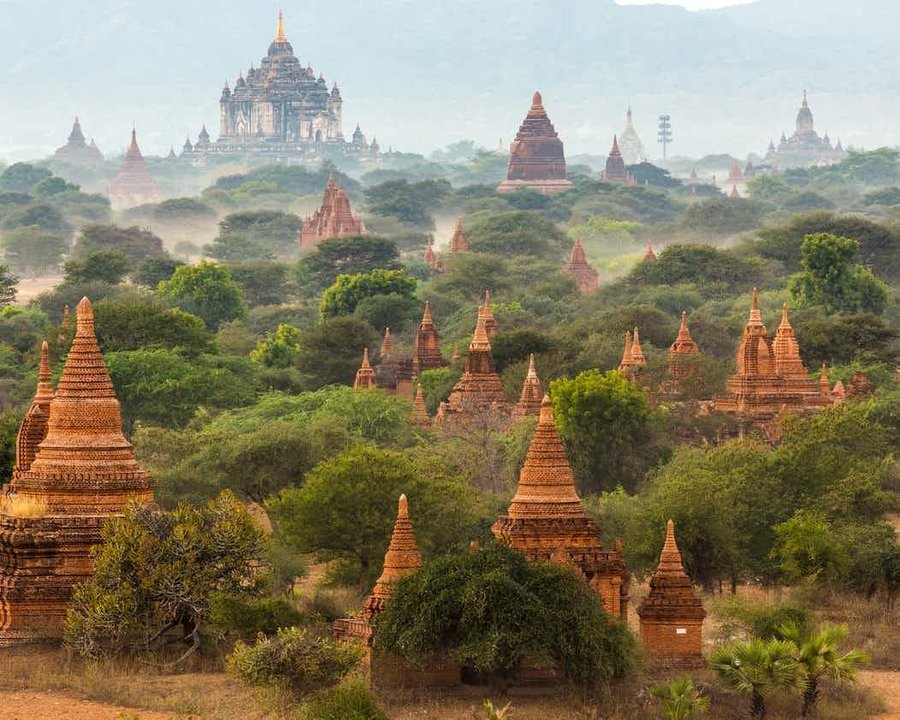
The complex’s intangible qualities are represented in farming, traditional cultural customs, Buddhist worship and merit-making endeavours. The 3,595 documented monuments there are comprised of stupas, temples, and other Buddhist spiritual practice structures. They also include extensive archaeological resources as well as numerous inscriptions, murals and sculptures.
Bagan is truly a multi-layered, intricate cultural ensemble of modern cities and residential neighbourhoods which was named a United Nations Educational, Scientific and Cultural Organization (UNESCO) World Heritage site in 2019.
Melting pot of culture and religion
Over 5,000 religious monuments were built on the Bagan plains which covered an area of roughly 65 square kilometres under the supervision of its rulers. The Bagan Archaeological Zone contains more than 2,000 of the original structures that have survived to this day in various repair states.
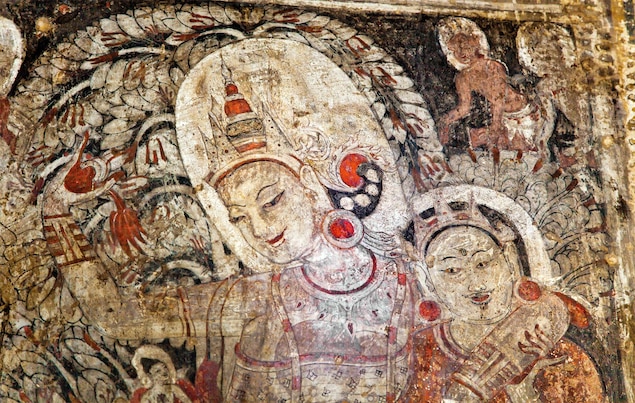
Images illustrating the lives of the Buddha and earlier Buddhas adorn the monuments. Bagan excelled during its more than 250-year golden age under the empire and had an incredible 10,000 religious monuments dispersed over a 40-square-mile area, according to other reports.
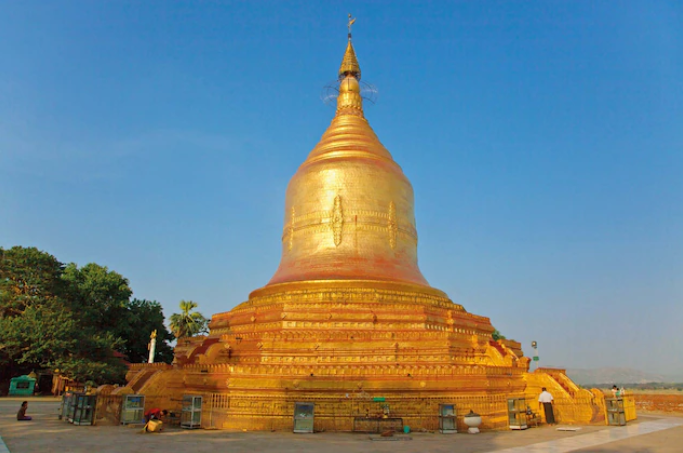
Several sites stand out among the thousands of buildings ranging from vast temples to modest, one-room monasteries. The Lawkananda Pagoda, constructed by Anawrahta, dazzles tourists with its shining dome which is crowned with an umbrella-shaped finial. A relic considered to be one of the Buddha’s teeth is housed in this pagoda which was acquired in Sri Lanka by the ruler.
Likewise, many rose-colored pagodas and temples soared above crimson soil and lush greenery, which have been a sight to behold for tourists along the bend of the Irrawaddy River in central Myanmar.
One of the greatest concentrations of Buddhist temples in the world can be found in this expansive sacred area which is a testament to the intricate connection between culture and religion. Scholars have examined how this relationship shaped the formation of Burmese identity in the early 1900s.
What is next for Bagan
The Burmese people had long prized Bagan. However, the Maha Yazawin from the 18th century and the Hmannan Yazawin from the 19th century provided the basis for its history. Moreover, Burmese researchers looked for fresh evidence in the early 1900s to give more reliable historical details about the same. These included Gordon Luce, a British scholar and U Pe Maung Tin, a Burmese scholar.
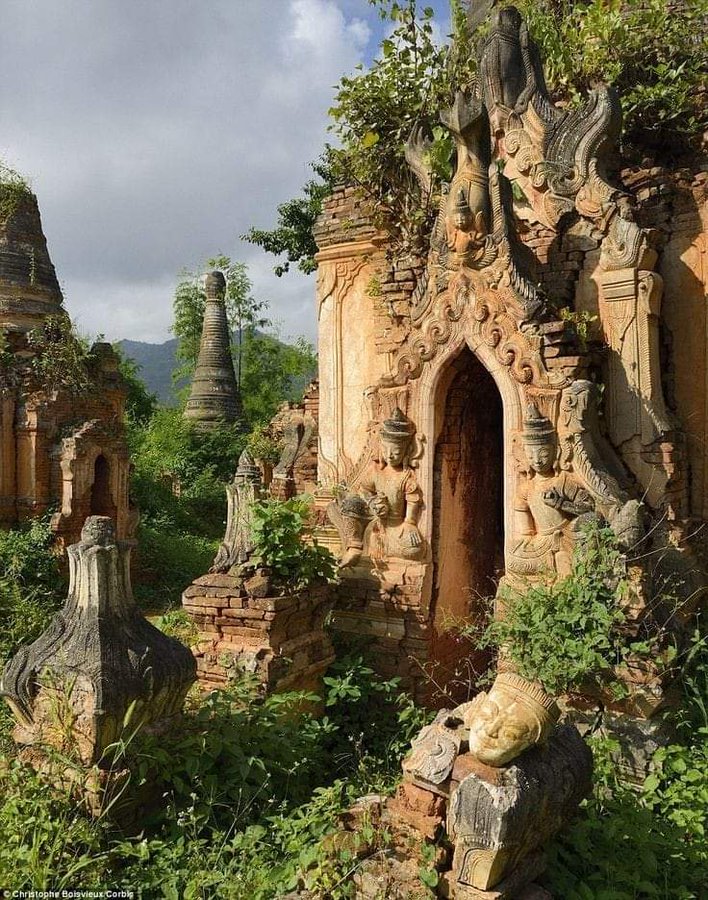
Bagan which is located in an area that is prone to earthquakes, has experienced multiple seismic events that have seriously damaged its religious and archaeological attractions. Several buildings were destroyed by two earthquakes in 1975 and 2016. In the 1990s, over 2,229 temples and monuments were preserved as a consequence of massive restoration initiatives run by the military administration.
However, archaeologists criticised the military government’s restoration of the site. The World Heritage award, according to Bagan history researchers, should encourage collaboration between experts and the Myanmar government to protect Bagan’s holy sites for many years to come.
Bagan is frequently referred to as an archaeological marvel. However, it is also a living historical monument with functional temples that are essential to the local, national and international Buddhist communities. Notably, the Archaeological Survey of India (ASI) has also played an important role in the restoration of this crucial cultural and historical heritage.
Bagan: Amalgamation of Indic religion and culture
Bagan is as an active reminder of the influence of India and a religion that was born in in the country, which then spread to the rest of the world, including Myanmar. This reflects the unparalleled popularity and impact of India and its religions, showcasing the extraordinary imprint on culture, traditions, societies and civilizations for centuries with evidence that stands to this day.
Bagan also affirms that Burmans were conquerors who seized kingdoms to form their dominance and authority. Nevertheless, they embraced the local heritage as their own and integrated rather than trying to replace or uproot it. They were deeply influenced by the Indian culture and an Indic religion that was already prominent in the area, which they not only adopted but also propagated further, erecting monuments to celebrate and commemorate it.