

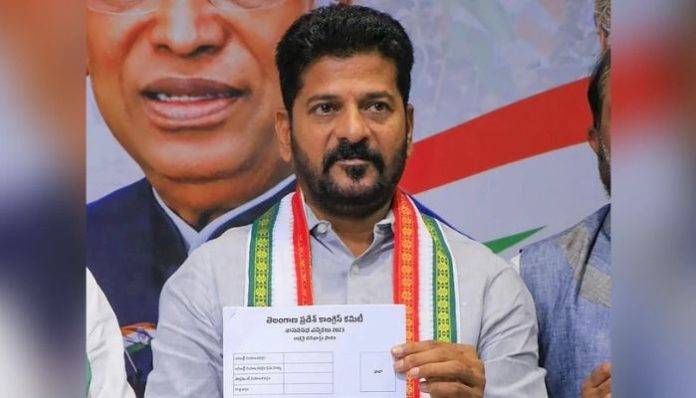
The Congress government in Telangana, led by Chief Minister Revanth Reddy, is looking at a proposal to fix some long-pending issues in reservations for backwards Muslim communities. According to a report of The Indian Express, the plan is to give proper benefits to 14 Muslim groups, including around 3 lakh Shia families, under the Backwards Classes (BC) category based on how socially, economically and educationally backwards they are.
Right now, these groups have 4% reservation under a special category called BC (E), but due to legal complications and poor awareness within the community, this quota has not really worked as it should have. Many people in these Muslim communities are not getting the benefits they are entitled to, say government sources.
Earlier this year, the Telangana government made public the findings of a large-scale social, educational, economic, political, and employment (SEEPC) caste survey. According to the report, Muslims make up about 12.58% of the state’s population. Out of this, about 10.08% are listed as BC Muslims while around 2.5% fall under the OC (Other Castes) category. Interestingly, this is slightly lower than the 2011 Census figure of 12.69%.
However, officials believe that the Muslim population might have been under-reported by 1-2%, especially in parts of Hyderabad’s Old City, where many women didn’t feel comfortable sharing details without male family members present during the survey.
The survey of the castes revealed that the BC population within the state, comprising Muslim BCs, is approximately 56.33%.
Following the survey’s conclusions, the Telangana Assembly legislated two significant pieces of legislation in March 2024. These pieces of legislation enhanced the overall BC reservation in government employment, education, and local body polls from 27% to 42%. The Bills were referred to Governor Jishnu Dev Varma, who has referred them to President Droupadi Murmu for approval.
Mohammed Ali Shabbir, who advises the Telangana government on SC, ST, OBC, and minority welfare, said that 2.5% of the Muslims in the state are doing fairly well and are above the poverty line. But a large chunk around 10.08% are very poor and need support in education, jobs, and political participation.
He pointed out that communities like the Saiyyeds, Mughals, Pathans, Arabs, Kojja Memons, Agha Khanis, and Bohras are not included in the existing quota benefits. According to him, the BJP is creating a false narrative that this is about religion-based reservation. “These are occupational caste groups, just like other BC communities, and they need help based on their condition, not their religion,” Shabbir said.
He also explained why this proposal is different from earlier failed attempts. “Earlier, courts and governments always asked, ‘Where is the data?’ Now we have it. The caste survey tells us exactly how many people belong to which group and what their condition is. Most of the Muslims living below the poverty line are fruit and vegetable vendors, scrap collectors, and auto drivers, just like other BCs. They deserve the same benefits.”
He added that the government is seriously thinking about extending the same welfare schemes to these 14 Muslim groups as it is offering to other backwards communities.
Karnataka has already taken similar steps through its caste survey
Telangana is not alone in trying to address the needs of its backwards Muslim communities and politics around them. Karnataka has already made headlines with its caste census, which has created a lot of political showdown in the state.
The report of the Karnataka caste survey was leaked recently and created a furore, particularly among the ruling classes. Several prominent leaders within the ruling Congress party have condemned the report as “unscientific” and demanded that the government reject it.
But the leaked report has made a strong recommendation: increase the total reservation for backwards castes from 32% to 51%. It specifically points out that Muslims make up about 12.6% of Karnataka’s population, based on data from 2015. The report says the Muslim community should get 8% reservation under Category IIB, double the 4% they currently get.
It’s not just Muslims. The report also recommends changes for other communities. For example, under Category III(A), which includes the Vokkaligas and two other dominant groups, the total population is 73 lakh, and the recommended quota is 7%. Under Category III(B), consisting of Veerashaiva-Lingayats and five other large groups, the total is 81.3 lakh, and the proposed reservation is 8%.


