

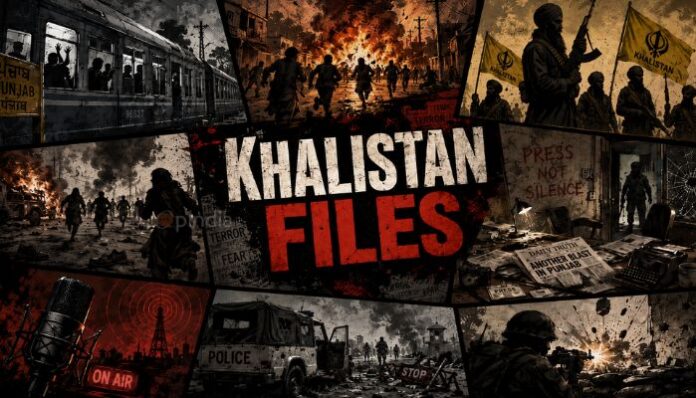
The release and subsequent removal of the Diljit Dosanjh-starrer Satluj, based on Jaswant Singh Khalra and allegations of extrajudicial killings during Punjab’s counterterrorism campaign, has revived debate around one of the darkest periods in the state’s history. While allegations of unlawful police killings deserve scrutiny, Punjab’s insurgency cannot be understood only through the actions of the security forces. The violence had begun years before Operation Blue Star, and its victims included Hindus, Sikhs, journalists, politicians and police personnel.
By the early 1980s, Khalistani terrorists were already carrying out targeted killings. Lala Jagat Narain was assassinated in 1981 for opposing separatism. DIG Avtar Singh Atwal was shot outside the Golden Temple in 1983. The same year, militants hijacked a bus near Dhilwan, separated six Hindu passengers and killed them. These attacks showed that organised terrorism had taken root well before Operation Blue Star in June 1984.
The pattern became even more brutal in the following years. In November 1986, terrorists stopped a bus near Khuda in Hoshiarpur, ordered Hindu passengers to get off and opened fire, killing 24. Similar killings took place in Muktsar, Lalru, Fatehabad, Abohar and elsewhere. In 1989, terrorists attacked an RSS gathering at Nehru Park in Moga, killing at least 24 people. Such attacks were intended not merely to kill individuals but to create communal fear and deepen divisions between Hindus and Sikhs.
Sikhs who opposed Khalistan were also targeted. Shiromani Akali Dal president Harchand Singh Longowal was assassinated in August 1985, less than a month after signing the Punjab Accord with Prime Minister Rajiv Gandhi. Sikh politicians, police personnel, villagers and journalists faced violence for opposing separatism, cooperating with the government or refusing to follow militant diktats. Khalistani terrorism, therefore, cannot be reduced to a conflict between Hindus and Sikhs.
The press was another major target. After Lala Jagat Narain’s assassination, his son Romesh Chandra was killed in 1984, while editors, reporters, newspaper agents and hawkers were threatened or murdered. In 1992, All India Radio station director ML Manchanda was abducted and beheaded after Babbar Khalsa attempted to dictate the terminology used by the broadcaster. Terrorist groups were not merely confronting the state. They were also attempting to control what journalists could write, broadcast and say.
Punjab Police paid an enormous price as well. A widely cited police figure records 1,784 officers and personnel killed during the terrorism period. Officers were assassinated outside places of worship, bombed inside secured offices, ambushed on roads and targeted along with their families. This sustained violence helps explain why Punjab Police eventually adopted an increasingly aggressive counterterrorism strategy. It does not justify illegal killings, torture or other abuses, but removing the terrorism that preceded the crackdown produces an equally incomplete version of history.
Punjab’s insurgency cannot be remembered selectively. The anti-Sikh violence of 1984 cannot be justified by Khalistani terrorism, police crimes cannot be excused because terrorists murdered policemen, and the massacres carried out by Khalistani groups cannot disappear simply because sections of the security establishment later committed abuses. The Hindu passenger pulled from a bus, the Sikh leader murdered for seeking peace, the journalist killed for refusing terrorist diktats and the policeman whose name survives only in a memorial are all part of the same history.
The article examines the victims who are frequently missing from contemporary narratives of the Punjab insurgency.
The full article can be read on Chapter One Mag.


