

The Modi government’s formal approval of the sale of a 60.72% controlling stake in IDBI Bank for ₹52,878 crore marks a defining moment in India’s modern economic history. This one move will dismantle years of fiscal drag and create a blueprint for strategic restructuring.
While the Opposition and the left-liberal cabal are fearmongering about the Modi government selling off the country’s assets, a thorough examination of the balance sheet data and key metrics demonstrates that the transaction is an economic masterstroke.
The Modi government has acknowledged the inherited debt from the Congress-led UPA, turned around the fortunes of the bank, and is now monetising it to fully recover public money while retaining substantial equity.
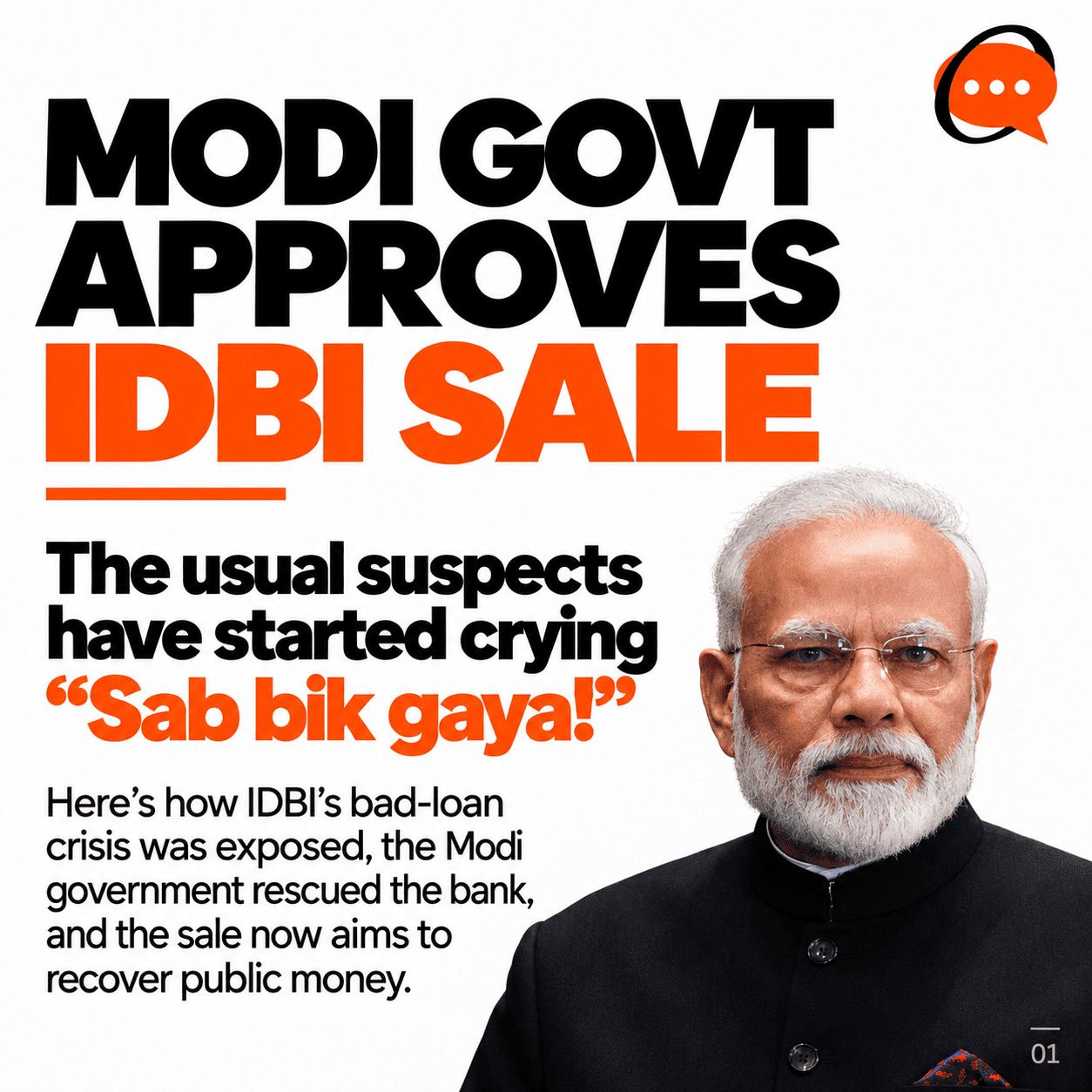
Between 2014 and 2026, IDBI transitioned from a lender crippled by crony capitalism into a high-earning institution. By securing ₹52,878 crore through this strategic restructuring, the Narendra Modi government has reversed the cycle of endless taxpayer bailouts.
It has further insulated the public from systemic banking liabilities and proven that strategic governmental intervention can be of public good.
To understand why the sale of IDBI Bank is an economic masterstroke, we need to first understand the institutional wreckage inherited by the Modi government in May 2014. IDBI was transformed into a full-service commercial bank in 2004, although it was originally established in 1964.
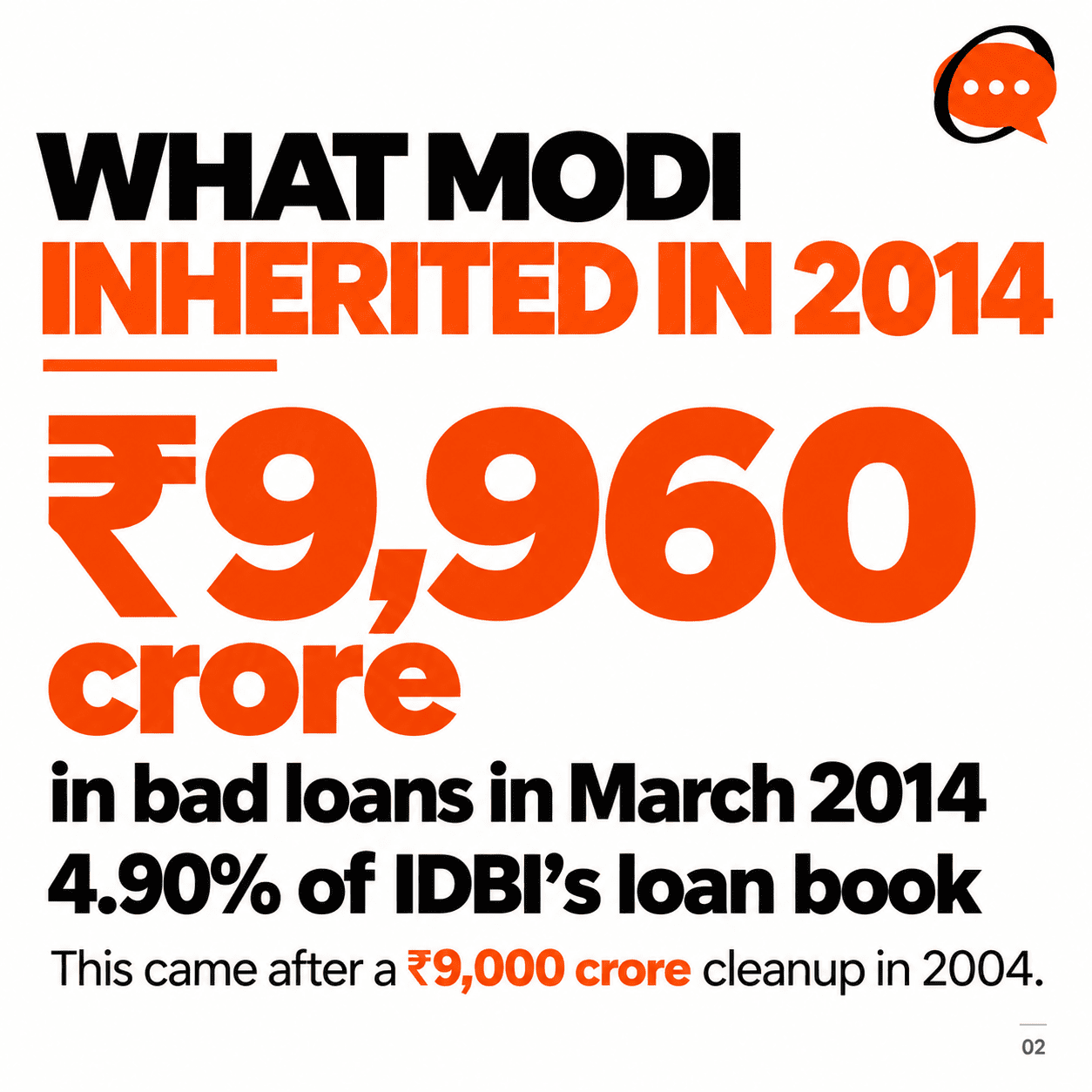
The bank required a ₹9,000 crore government cleanup package in 2004 to absorb industrial debt and enable its commercial conversion. During the Congress era, IDBI witnessed aggressive, politically connected balance-sheet expansion.
By March 2014, the bank carried ₹9,960 crore in gross bad loans, officially constituting 4.90% of its total loan book. IDBI extended roughly ₹900 crore to Vijay Mallya’s Kingfisher Airlines in 2009, despite internal cautionary red flags.
Loans linked to serial defaulter C. Sivasankaran totalled ₹322 crore in 2010 and approximately ₹523 crore in early 2014 prior to the May general election.
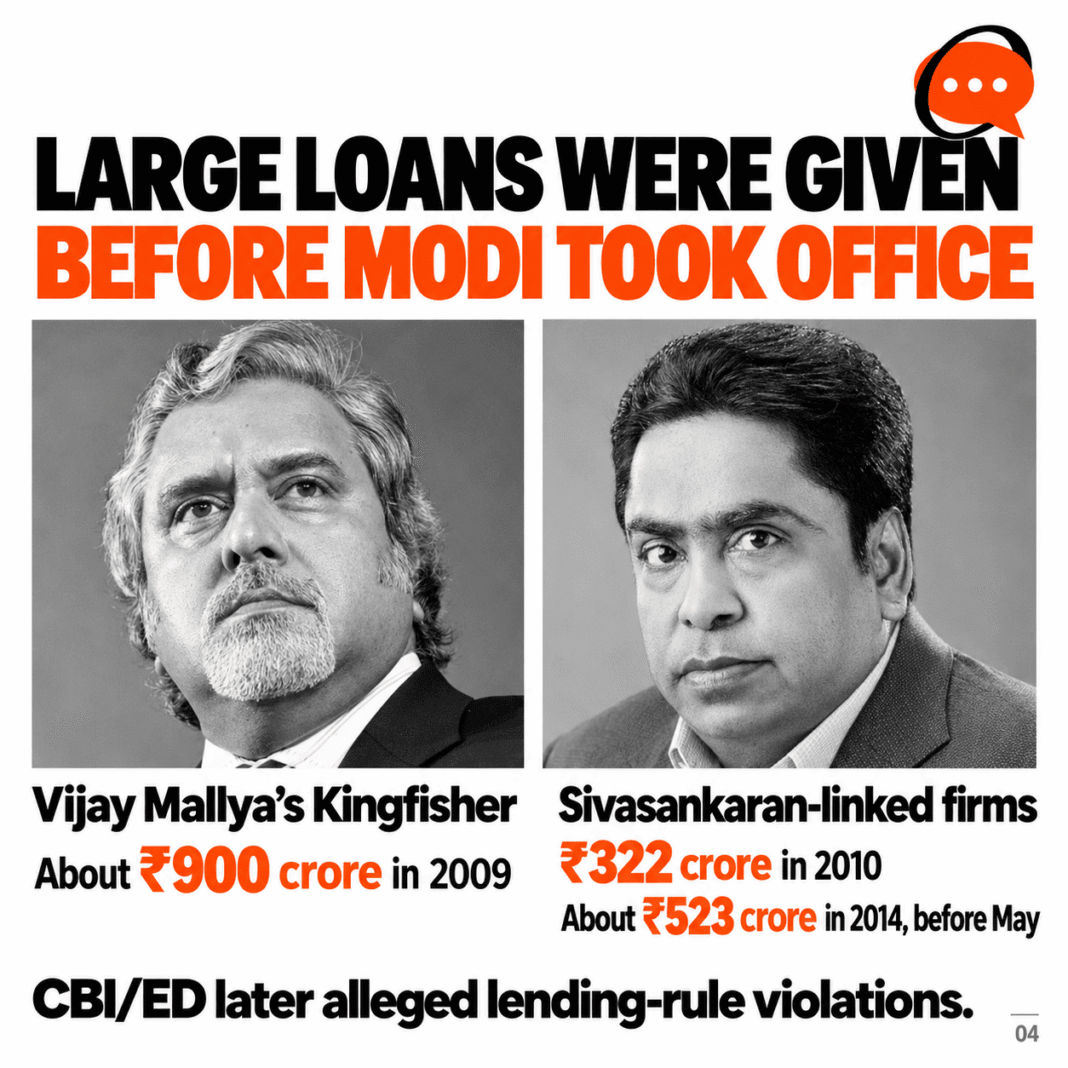
Subsequent investigations by the Central Bureau of Investigation (CBI) and the Enforcement Directorate (ED) revealed systemic violations of central credit appraisal guidelines, including top-tier management collusion and bypassed credit committees.
Under the Congress-led regime, standard banking practice relied heavily on loan restructuring schemes and issuing new debt to repay maturing interest, which artificially disguised the depth of bad loans.
When the Modi government assumed office in 2014, it confronted a choice. Either continue to conceal non-performing debt or choose transparency. The government and the Reserve Bank of India (RBI) chose the latter.
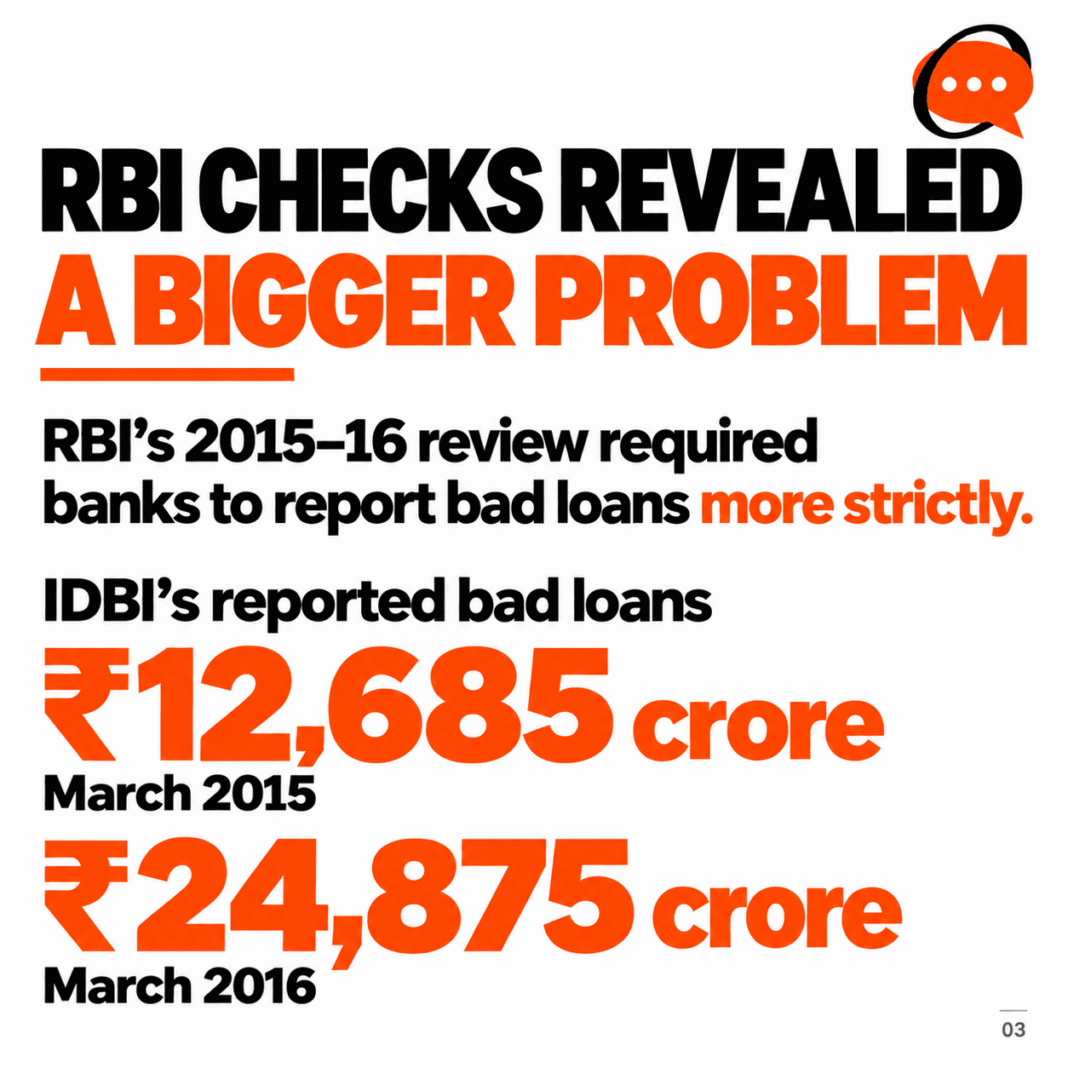
In late 2015, the RBI launched the Asset Quality Review (AQR), mandating that all commercial lenders uniformly classify stressed assets and set aside cash provisions against deteriorating accounts. The impact on IDBI was catastrophic:
In March 2015, IDBI reported ₹12,685 crore in bad loans as initial scrutiny began. Within 12 months of strict reporting rules, reported bad loans doubled to ₹24,875 crore. As legacy infrastructure, steel, and power loans unraveled, IDBI’s gross bad loans reached an unprecedented ₹60,875 crore by September 2018.
At its peak in September 2018, bad loans swallowed 31.78% of IDBI’s entire loan book. Nearly one out of every three rupees lent was non-performing. The bank was technically insolvent.
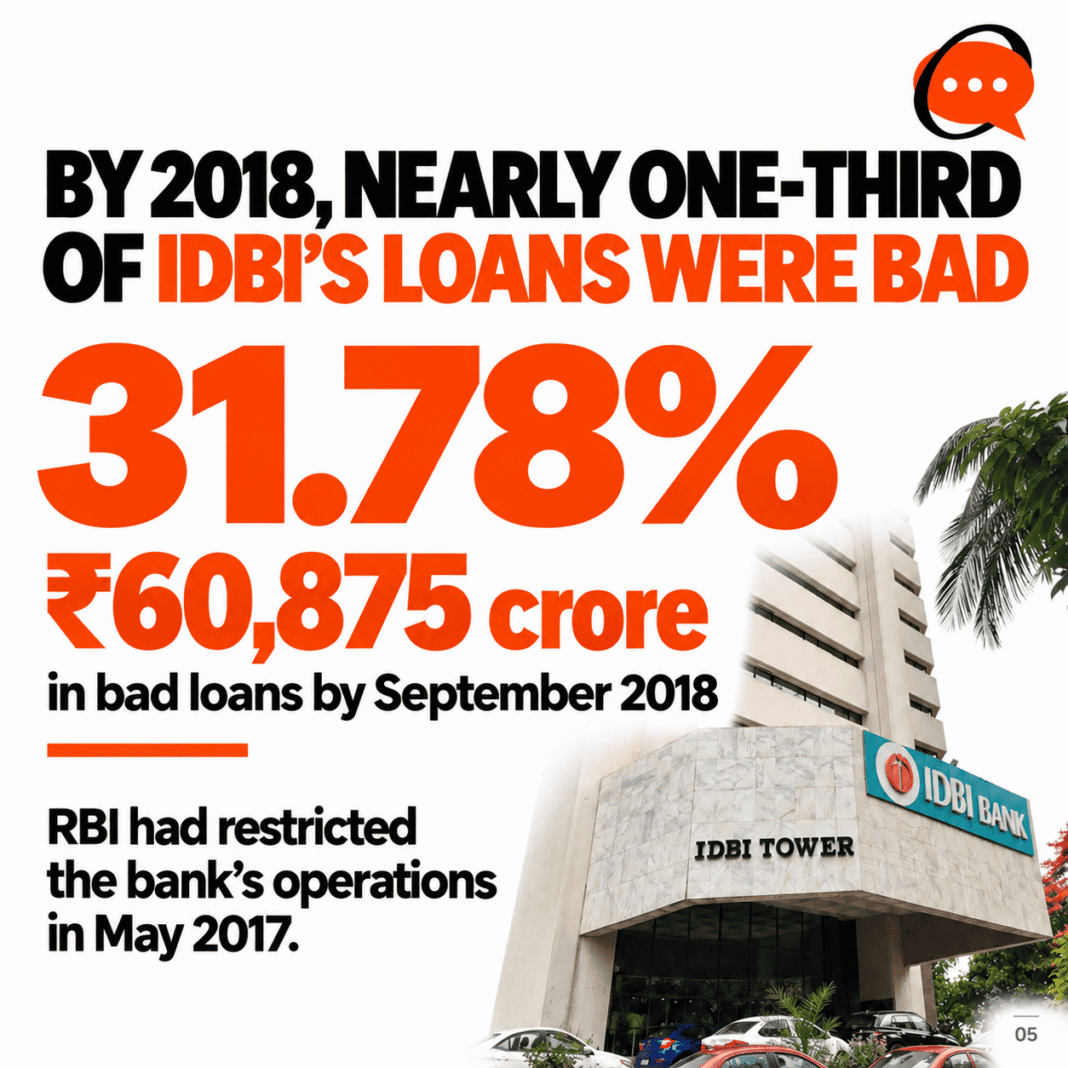
In response, the RBI placed IDBI Bank under the Prompt Corrective Action (PCA) framework in May 2017. Under PCA sanctions, IDBI was barred from opening new branches, issuing large-ticket corporate loans, or paying staff bonuses.
Stripped of its core commercial function, the institution faced liquidation or permanent subsidisation at direct taxpayer expense. Faced with a collapse that could trigger a tsunami across India’s financial sector, the Modi government devised an aggressive turnaround strategy.
The bank refocused on personal loans, auto finance, home mortgages, and small enterprise lending. Simultaneously, the Insolvency and Bankruptcy Code (IBC) allowed IDBI’s recovery teams to take chronic industrial defaulters directly to the National Company Law Tribunal (NCLT). In this way, the banks recovered tens of thousands of crores in previously write-off-bound debt.
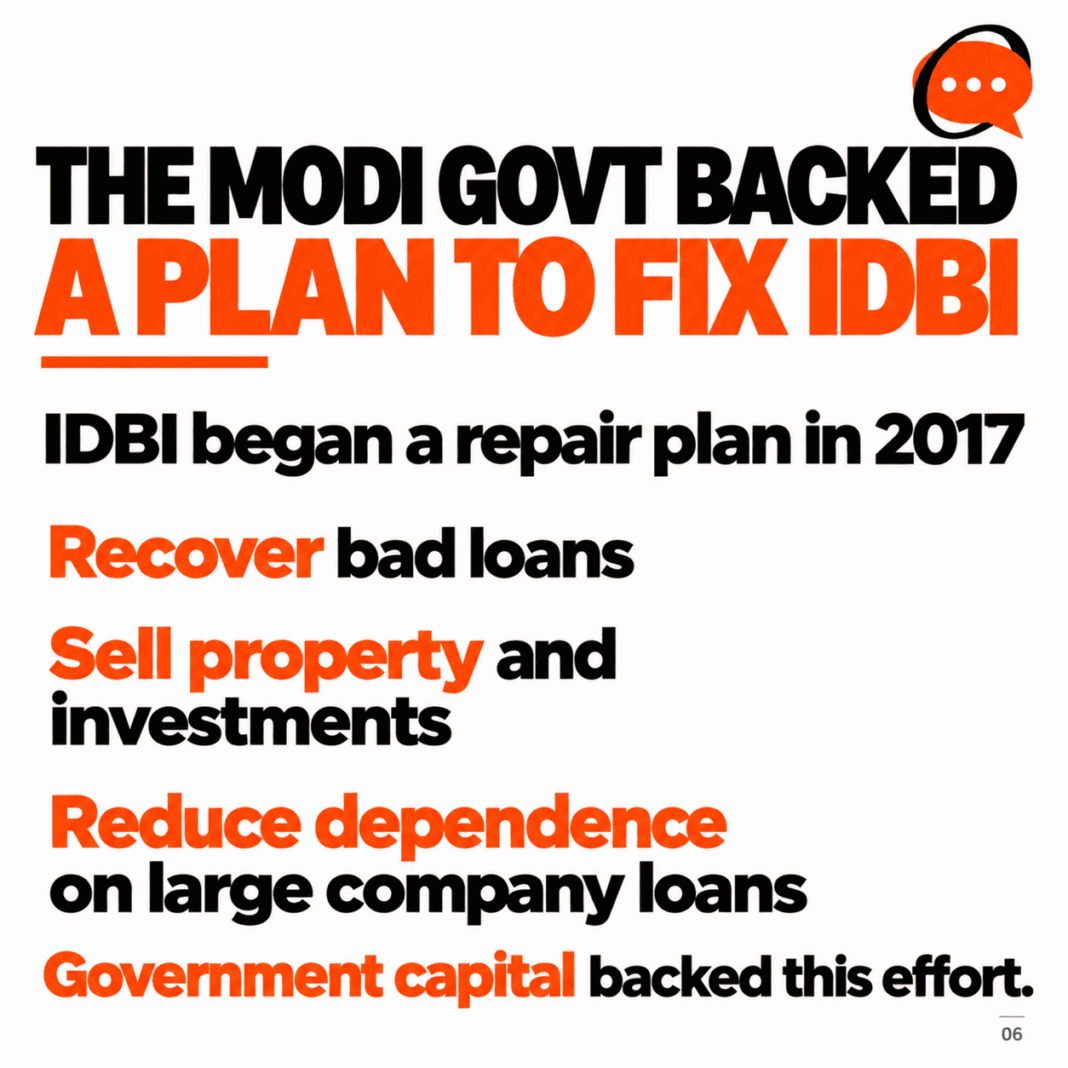
Liquidating the bank would have devastated millions of retail depositors and erased public trust. The Modi government structured a phased recapitalisation model combining direct exchequer support with institutional equity from the Life Insurance Corporation of India (LIC).
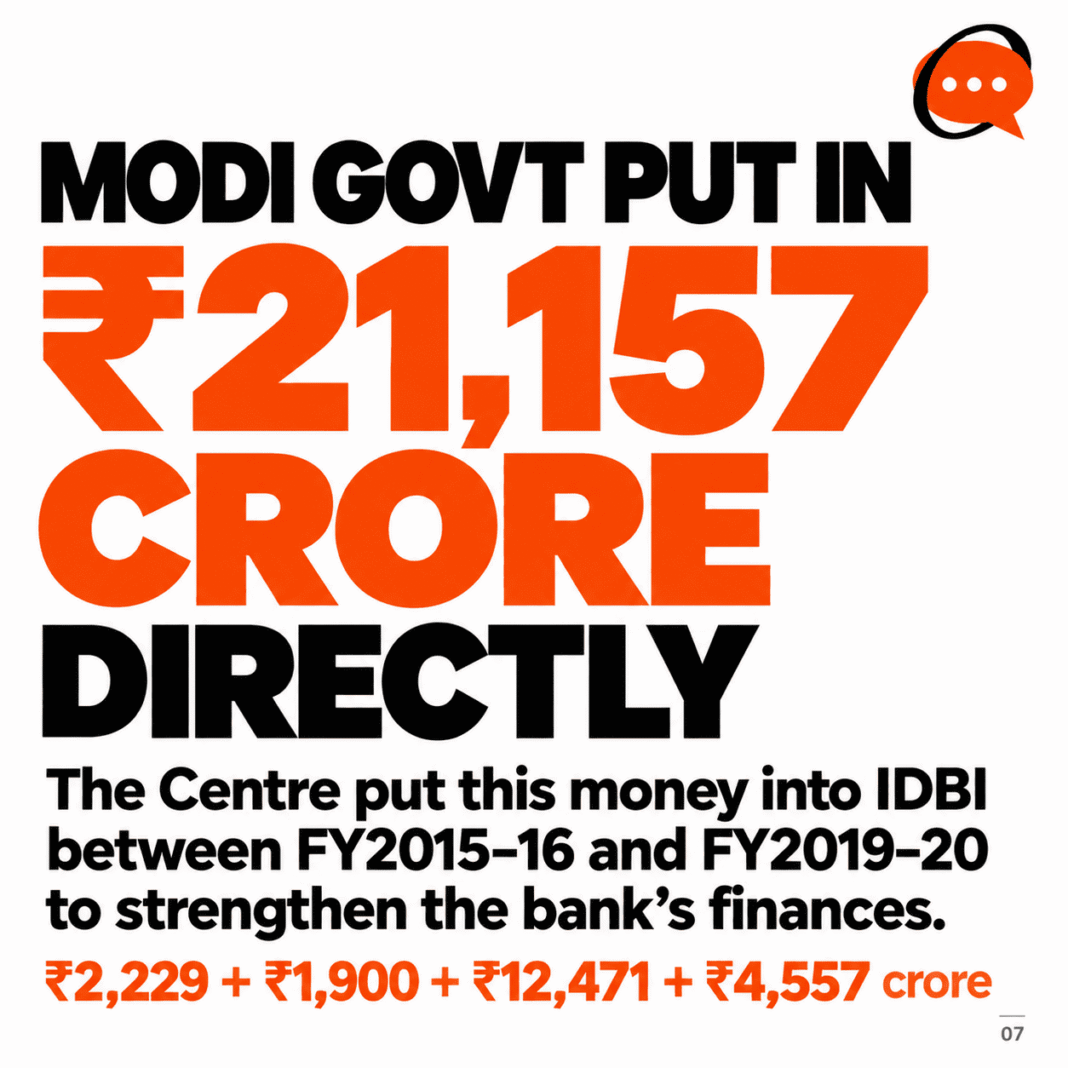
Between FY2015-16 and FY2019-20, the Centre injected ₹21,157 crore of direct equity into IDBI Bank across four separate tranches.
FY 2015–16: ₹2,229 crore
FY 2016–17: ₹1,900 crore
FY 2017–18: ₹12,471 crore
FY 2019–20: ₹4,557 crore
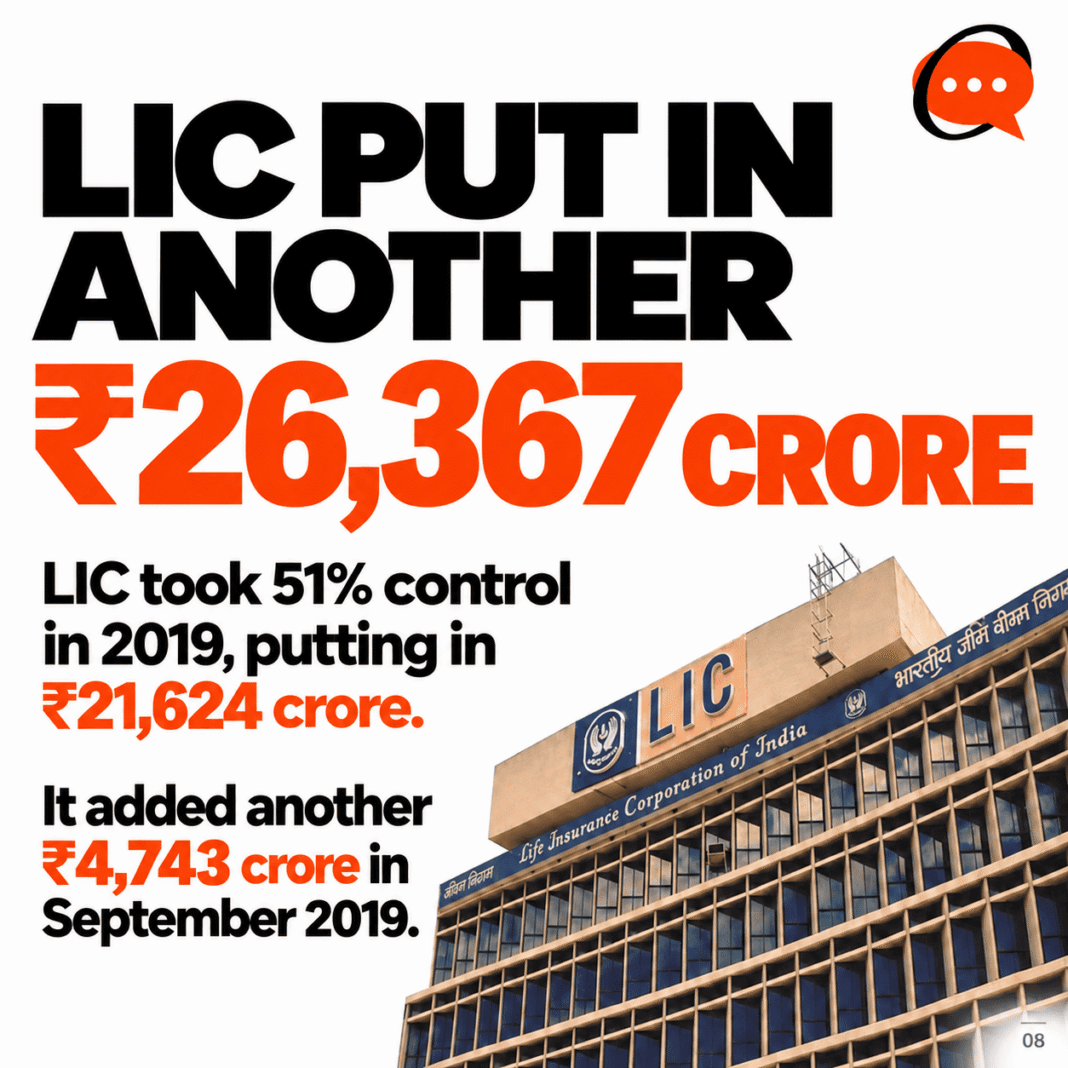
To lift the bank out of the PCA framework without breaching sovereign fiscal deficit targets, the government brought in LIC as a strategic co-promoter. In January 2019, LIC acquired a controlling 51% stake in the lender:
Initial 51% Acquisition (Early 2019): LIC infused ₹21,624 crore in equity.
Follow-on Rights Capital (September 2019): LIC infused an additional ₹4,743 crore.
Total LIC Investment: ₹26,367 crore.
Across both state institutions, total capital deployed to rescue IDBI Bank amounted to ₹47,524 crore. While it was dubbed a “backdoor state bailout,” the strategic rationale was clear.
It was to protect retail deposits, recapitalise the lender’s eroded net worth, purge legacy NPAs, and wait for the asset to appreciate before executing an organised exit.
The restructuring turned IDBI Bank from one of India’s most distressed state lenders into a competitive, profitable commercial bank.
By cleaning up provisions, reining in high-cost bulk deposits, leveraging LIC’s nationwide network for retail bancassurance, and adhering to strict risk-weight filters, IDBI steadily restored its operating ratios.
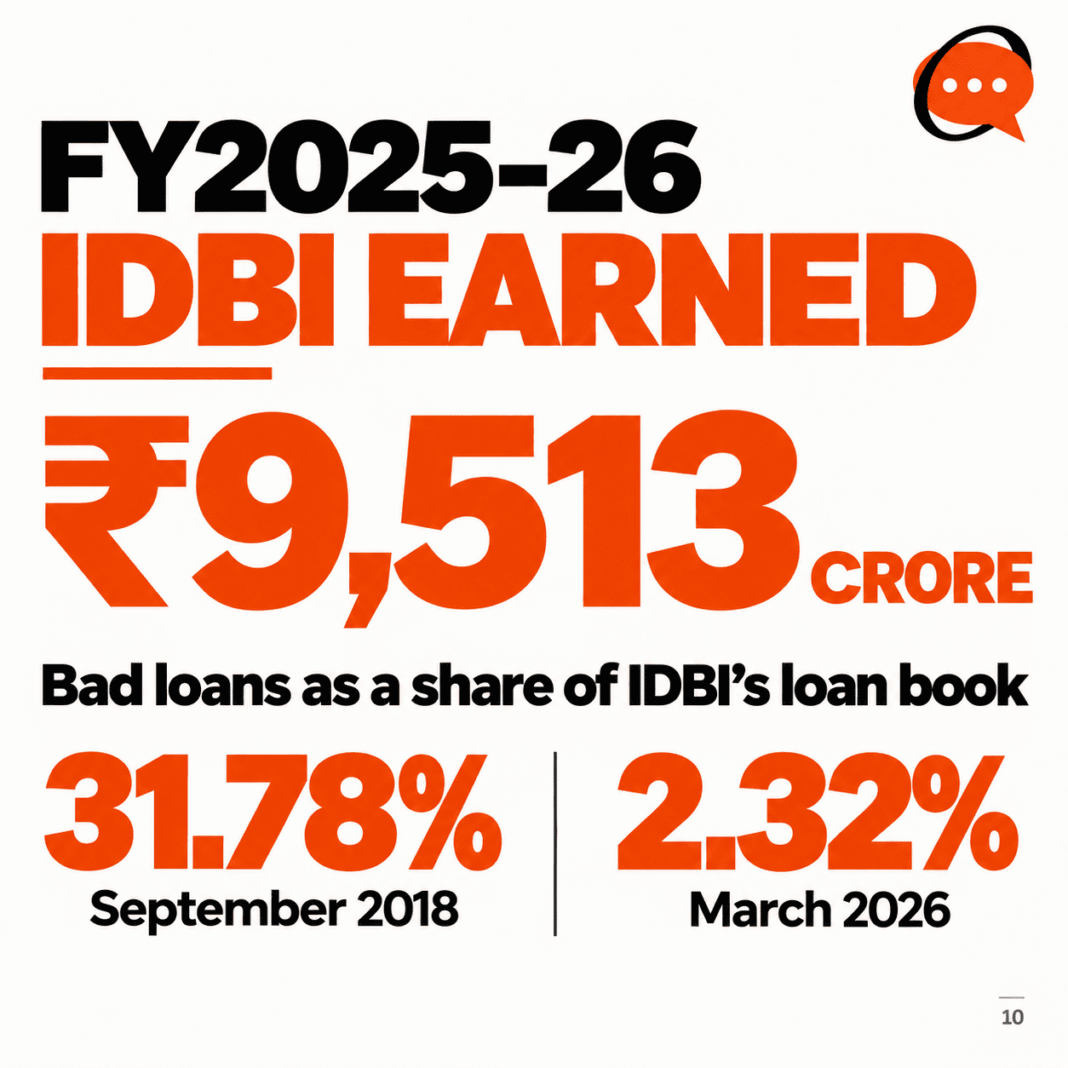
Gross NPAs plummeted from an alarming 31.78% in September 2018 to just 2.32% by March 2026. This drop of over 2,900 basis points was achieved through cash recoveries via the IBC, write-offs of uncollectible corporate loans, and a shift toward low-default retail lending.
After enduring heavy losses from 2016 through 2020, IDBI achieved a historic turnaround, generating ₹9,513 crore in consolidated net earnings in FY2025-26. Satisfied with the bank’s sustained capital adequacy ratio (CAR > 14%) and declining net NPA levels, the RBI formally lifted all PCA restrictions in March 2021, restoring full commercial operational autonomy.
The bank shifted away from volatile, high-cost wholesale deposits toward low-cost Current Account Savings Account (CASA) deposits, fortifying its net interest margins (NIM) against rate volatility. By early 2026, IDBI was no longer an impaired public liability.
It had become an efficient, well-capitalized commercial lender with strong return on assets (RoA).
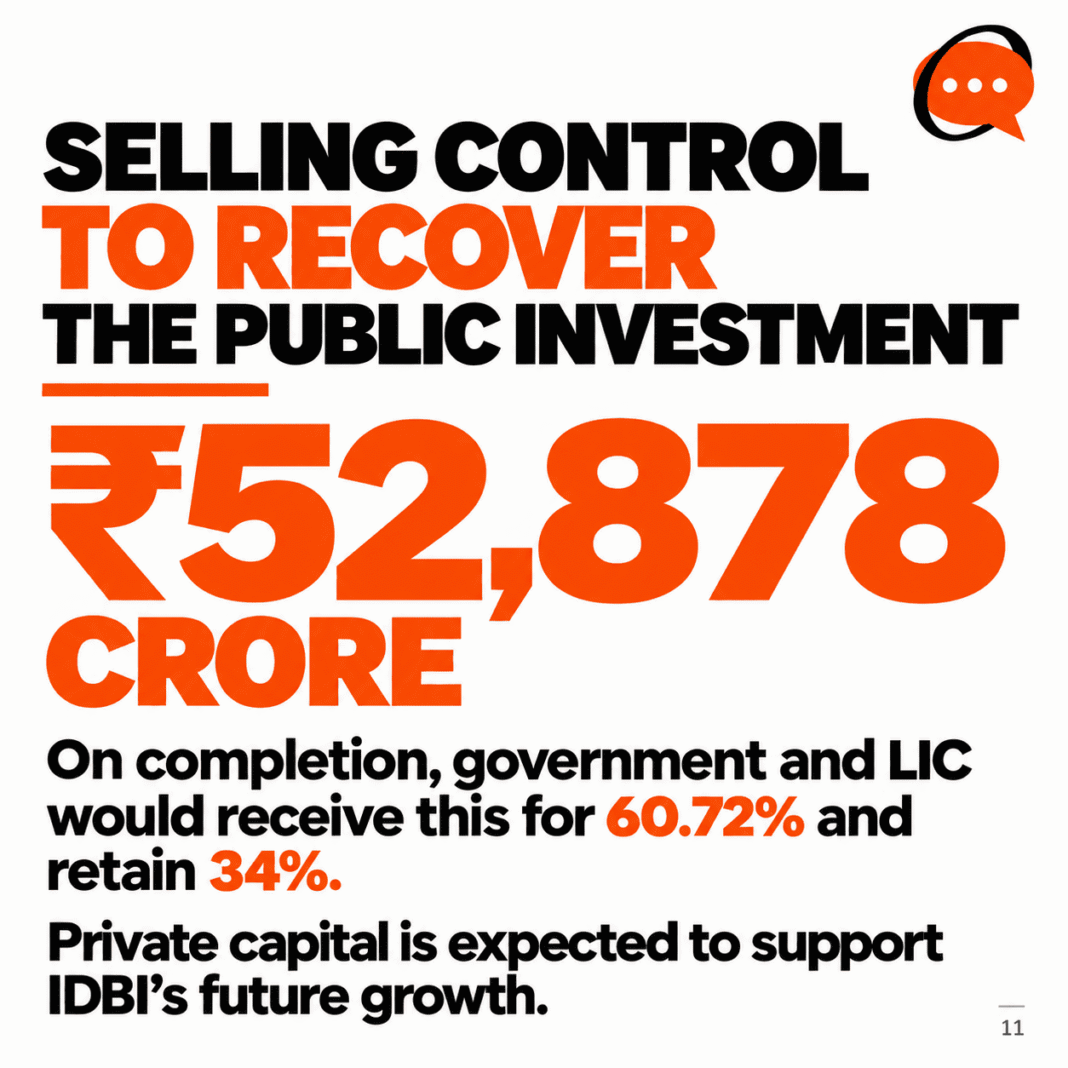
With the balance sheet restored, the Cabinet Committee on Economic Affairs (CCEA) approved the strategic sale of IDBI Bank to global investment giant Fairfax Financial Holdings, founded by Prem Watsa. The approved transaction parameters confirm that this sale is an economic masterstroke.
The Modi government and LIC together retain a 34% equity stake (Government 15%; LIC 19%). The government has not only recovered 100% of every rupee injected by both it and LIC during the crisis, but has extracted an immediate net cash profit of ₹5,354 crore.
Under private management led by Fairfax, IDBI will gain access to private global equity markets, streamlined credit risk systems and advanced digital banking architecture without needing sovereign recapitalization bonds.
With the bank generating ₹9,513 crore in profit and non-performing loans down to 2.32%, the Modi government executed a planned strategic restructuring for ₹52,878 crore.


