

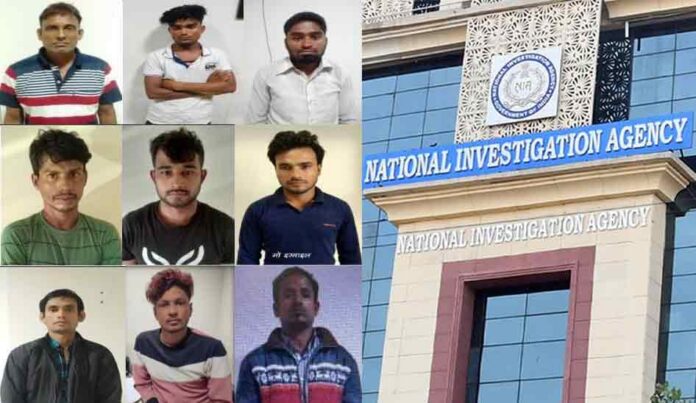
A special National Investigation Agency (NIA) court in Lucknow on Thursday sentenced nine individuals, including Bangladeshi and Rohingya (Myanmar) nationals, to eight years of rigorous imprisonment for their roles in an international human trafficking syndicate. The convicts were also fined as part of the verdict.
The judgment was delivered by Special Judge Jainendra Kumar Pandey of the NIA court. The nine convicted are:
- Mohammad Noor alias Nurul Islam (Bangladesh national)
- Rahmat Ullah (Rohingya/Myanmar)
- Mohammed Hussain (Rohingya/Myanmar)
- Shabiur Rahman alias Shabi Ullah (Rohingya/Myanmar)
- Ismail (Rohingya/Myanmar)
- Abdul Shakoor alias Abdul Gani (Bangladesh)
- Aale Miya (Bangladesh)
- Mohammad Rafiq alias Rafiq-ul-Islam (Rohingya/Myanmar)
- Bappan alias Arshad Miyan (Indian national from Tripura)
They were found guilty under multiple sections of the Indian Penal Code, including 419 (cheating by impersonation), 420 (cheating and dishonesty), 467 (forgery of valuable security), 468 (forgery for the purpose of cheating), 471 (using forged documents as genuine), 370 (trafficking of persons), and 120B (criminal conspiracy) — as well as Sections 14 and 14C of the Foreigners Act, 1946.
Nine people, including Rohingya and Bangladeshi nationals, sentenced to 8 years of rigorous imprisonment and fined for illegal infiltration, forgery, and human trafficking: UP STF pic.twitter.com/Gedjat7HXS
— ANI (@ANI) April 10, 2026
According to Special Public Prosecutor for the NIA, MK Singh, the gang operated as part of an organised syndicate along the India-Bangladesh border, with a key hub in Tripura. They trafficked Rohingya refugees and Bangladeshi nationals into India illegally. Women were often forced into marriages, while men and children were exploited for labour. The accused charged approximately ₹20,000 per person for facilitating border crossings without valid documents.
Case Background and Investigation
The case dates back to July 2021, when the Uttar Pradesh Anti-Terrorist received intelligence inputs. Surveillance on prime accused Mohammad Noor’s mobile phone showed he was transporting trafficked individuals to Delhi via the Brahmaputra Mail train. On July 26, 2021, an ATS team arrested Noor at Ghaziabad railway station along with four trafficked victims from Myanmar. Subsequent arrests were made in Delhi, Noida, and other locations, including Rahmat Ullah, who had come to receive the victims.
The prosecution examined eight witnesses, including ATS officers, victims, and telecom nodal officers. Key evidence presented during the trial included call detail records (CDRs), recovered mobile phones, SIM cards, forged documents such as Aadhaar, PAN cards, and voter IDs, UNHCR cards, and railway tickets. Victims testified that they had been trafficked from refugee camps in Bangladesh.
During the trial, all the accused confessed to their involvement but sought leniency. The court, however, described the offences as serious, noting that such organised crimes undermine national security and human dignity.
