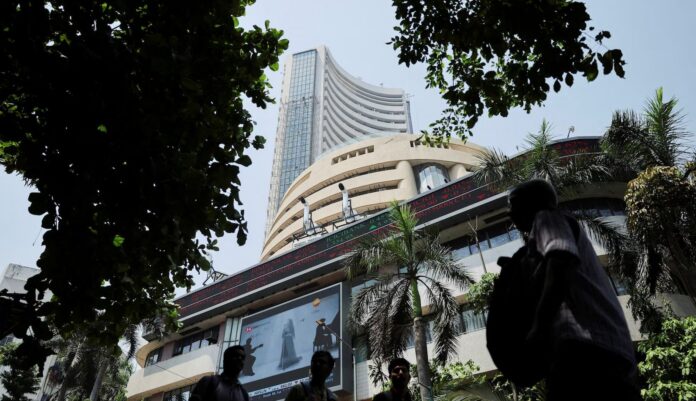
India’s benchmark indices looked set for another day of gains on Wednesday.
Crude oil prices had softened, easing concerns over inflation. The Reserve Bank of India (RBI) kept the repo rate unchanged at 5.25 per cent, a move that reassured investors. The Sensex climbed nearly 450 points in early trade, and optimism appeared to be building.
Then, the rally disappeared.
Within hours, the Sensex had slipped into negative territory while the Nifty also lost momentum. The abrupt reversal puzzled many investors because there was no major geopolitical shock or disappointing economic data to justify the sell-off.
The answer lay elsewhere. It lies in a new trading mechanism introduced just two days earlier.
A major overhaul in the way India’s official closing prices are determined has unsettled traders, triggered unusual movements in benchmark indices and exposed market participants to risks they had never encountered under the old system.
What exactly changed?
Beginning August 3, the Securities and Exchange Board of India (SEBI) rolled out the Closing Auction Session (CAS) for the cash market of stocks that have futures and options (F&O) contracts.
It may sound like a technical change, but it fundamentally alters how India’s markets behave during the final minutes of trading.
Until last week, the official closing price of an F&O stock was calculated using the Volume Weighted Average Price (VWAP) of trades executed during the last 30 minutes of continuous trading. Since prices kept updating until the closing bell, traders had a fairly good idea of where the market was likely to settle.
That is no longer the case.
Under the new framework, continuous cash trading in eligible stocks ends at 3:15 pm. From there, exchanges shift to a dedicated 20-minute auction, during which orders are collected rather than executed immediately. Once the auction concludes, the exchange determines a single equilibrium price, the level at which the highest number of buy and sell orders can be matched. That becomes the official closing price.
In other words, the closing price is no longer an average of trades. It is now a price discovered through an auction.
Why did SEBI change a system that was already working?
The old method had long attracted criticism from institutional investors and market regulators.
Large passive funds that track benchmark indices often have to buy or sell shares near the market close so that their portfolios mirror the index. Under the VWAP system, these sizeable transactions could themselves move prices while they were being executed, making it harder for funds to replicate the index accurately.
There was another concern.
Since futures and options contracts are settled using official closing prices, concentrated buying or selling during the last few minutes of trading had the potential to influence settlement values. Even small price changes could significantly affect derivatives positions worth thousands of crores.
The auction system seeks to reduce that vulnerability by gathering all orders first and matching them together at one equilibrium price instead of executing them one after another.
Several developed markets, including the New York Stock Exchange and the London Stock Exchange, already use similar closing auction mechanisms.
How does the new closing auction work?
For F&O stocks, the last 25 minutes of the trading day now follow a completely different sequence.
Between 3:15 pm and 3:20 pm, continuous cash trading ends, and the market transitions into the auction session.
From 3:20 pm to 3:25 pm, traders can place both market and limit orders.
Between 3:25 pm and 3:30 pm, only limit orders are accepted. The exchange randomly closes order entry sometime during the last two minutes to prevent traders from attempting last-second manipulation.
Finally, between 3:30 pm and 3:35 pm, the exchange matches all orders and discovers a single equilibrium price, which becomes the official closing price.
Meanwhile, trading in stock and index futures and options continues until 3:40 pm, allowing derivatives traders a short window to respond after the cash-market closing price has been determined.
Importantly, the new mechanism applies only to the cash market of F&O-eligible stocks. Shares that do not have derivatives contracts continue to follow the old VWAP-based closing system until 3:30 pm.
Why are traders suddenly nervous?
The issue is not that the auction is inherently flawed.
It is that traders are adjusting to a market where they no longer know with certainty where prices will settle.
During continuous trading, investors can monitor bids, offers and executed trades in real time. During the closing auction, however, orders are merely collected until matching takes place. Although indicative prices are displayed, the final settlement price can still change before the auction concludes.
That uncertainty matters enormously because the official closing price is used to:
- Settle futures and options contracts.
- Calculate benchmark index values.
- Value mutual fund portfolios.
- Determine mark-to-market gains and losses for institutional investors.
A stock that appears comfortably profitable during regular trading can end up settling at a significantly different price after the auction, changing the economics of an entire derivatives position.
Why did the Nifty and Sensex suddenly stop moving together?
One of the biggest surprises after the rollout has been the unusually large gap between India’s two benchmark indices.
Traditionally, the Nifty and Sensex move almost in tandem because they share most of their constituent stocks.
This week has been different.
The reason lies in the auction itself.
The National Stock Exchange (NSE) and the Bombay Stock Exchange (BSE) conduct separate closing auctions using separate order books. As a result, the same company can finish at different prices on each exchange.
Heavyweights such as Reliance Industries, ICICI Bank and Infosys have already recorded noticeably different closing prices on the NSE and BSE under the new mechanism.
Those differences become more visible because the Nifty contains 50 stocks, while the Sensex tracks 30, and the weight assigned to common stocks also differs between the two indices.
The result has been a rare divergence in benchmark performance that has surprised even experienced market participants.
Who has been winning, and who has been losing?
The biggest beneficiaries have been arbitrage traders.
Temporary pricing gaps between the cash and derivatives markets have created opportunities that sophisticated funds have been quick to exploit.
Retail traders, however, have had a tougher experience.
Many entered positions based on prices visible during the regular trading session only to find that the official closing price used for settlement differed materially once the auction concluded.
The resulting swings in options premiums and futures settlements caught many participants off guard, particularly around derivatives expiry.
Other changes traders should know
The new auction has also changed several everyday trading practices.
Open Stop-Loss (SL), Stop-Loss Market (SL-M) and Iceberg orders do not carry forward into the auction session for eligible stocks. Traders therefore need to manage such positions before continuous trading ends.
Similarly, market orders are accepted only during the initial phase of the auction. After 3:25 pm, only limit orders can be placed.
Intraday traders using MIS products should also verify revised auto square-off timings with their brokers, as broker cut-off times may now differ from the old market schedule.
Will the confusion last?
Probably not.
Most analysts believe the current volatility reflects a market adjusting to a fundamentally new closing mechanism rather than a permanent structural problem.
As institutional participation in the auction increases and traders become more familiar with the process, liquidity is expected to improve, and pricing anomalies should reduce.
SEBI, too, appears confident that the transition period will smooth out over time and is not expected to revisit the framework immediately.
What’s the crux of the matter?
Wednesday’s market reversal was less about the economy and more about market mechanics.
Strong macroeconomic cues had initially lifted investor sentiment, but uncertainty surrounding SEBI’s new Closing Auction Session ultimately overshadowed those positives.
The reform is intended to make India’s closing prices more transparent, improve price discovery and reduce opportunities for manipulation. Yet, like many structural market reforms, it has produced short-term disruptions before participants have had time to adapt.
For now, the familiar assumption that the market effectively ends at 3:30 pm no longer holds true for F&O stocks. In India’s new trading landscape, the most important price of the day is no longer discovered during continuous trading; it is determined only after the closing auction ends.