

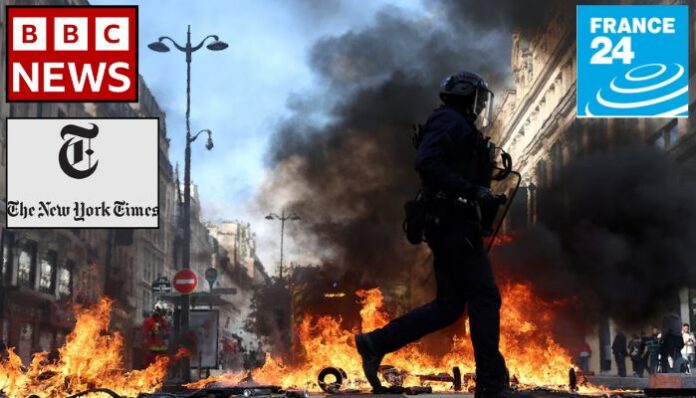
Violent protests that were initially portrayed as student demonstrations in France have escalated into widespread unrest, with shops looted, public buildings attacked and a historic town hall set ablaze. On Saturday, 17th October, clashes broke out across Paris and several other major French cities as masked rioters set fires, damaged public property and confronted riot police. Security forces responded with tear gas and water cannons to disperse the crowds.
Massive protests in France against the high cost of living and the deterioration of public services. https://t.co/H3FUK6kcvC
— Globe Eye News (@GlobeEyeNews) October 18, 2026
However, despite the damage, violence and chaos visible in these scenes, the Foreign media continued to describe the protesters as “mostly peaceful” or “mainly peaceful”. Instead of holding the perpetrators accountable or accurately capturing the sheer destruction on the streets, prominent international outlets have systematically softened their coverage, reframing rampant rioting as civic activism.
Des milliers de projectiles ont été lancés contre les forces de l’ordre Place de la République à Paris. #17octobre #Paris https://t.co/OxIN36C3vJ
— Luc Auffret (@LucAuffret) October 17, 2026
The coverage of the French unrest, when compared with the reporting of CJP demonstrations in India, offers a striking example of how the framing of protests can change depending on the country involved and shows clear hypocrisy and double standards.
The BBC’s sanitisation of French unrest
The BBC published a report on Monday, 19th October, in which they wrote, “On Saturday over half a million ‘mainly peaceful protesters’ demonstrated against rising living costs and dwindling access to decent public services, including a good state education.”
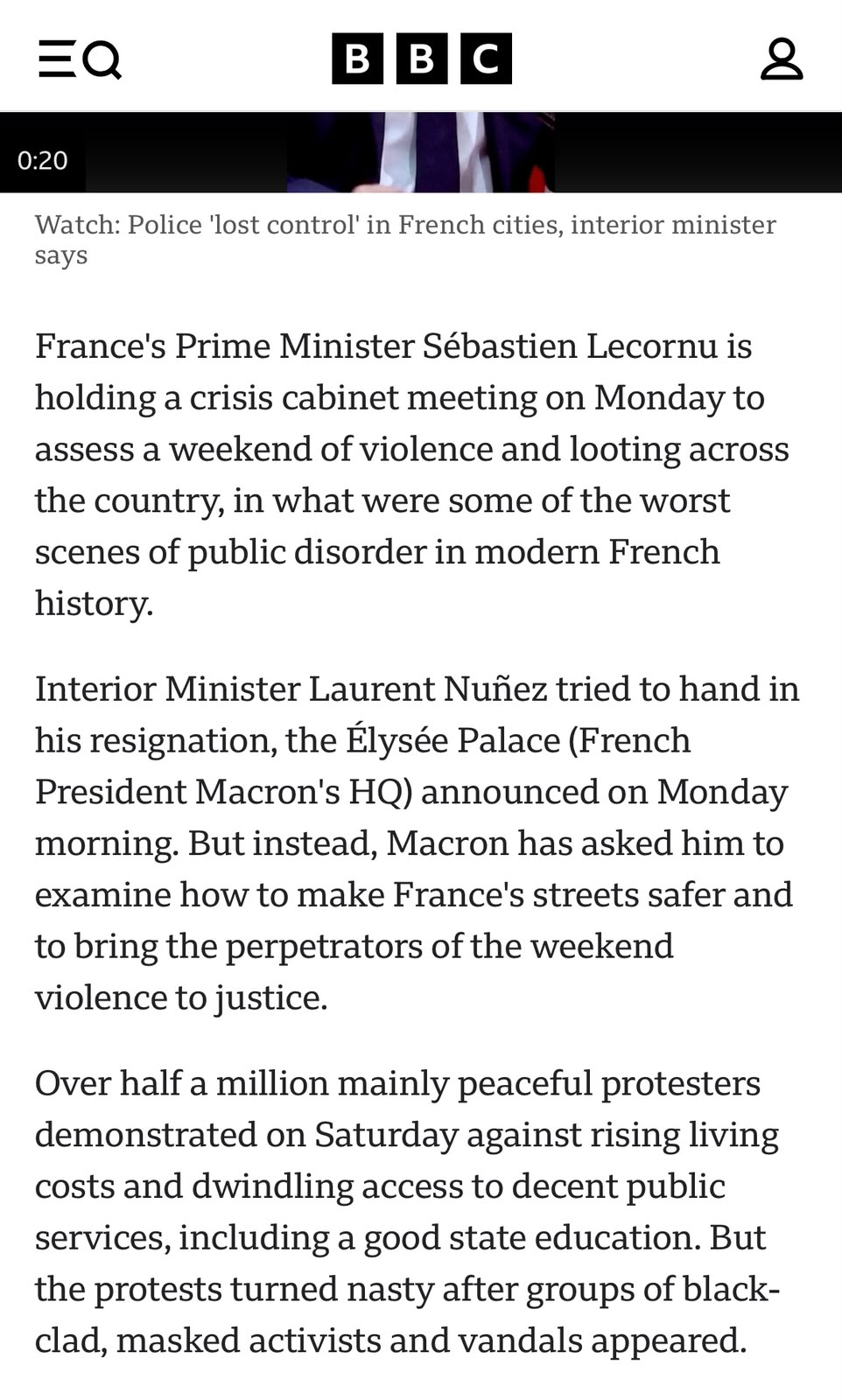
The BBC report further went on to describe the anarchists damaging the country and looting the stores as “masked activists”. According to the BBC, the rioters were students who were peacefully protesting for good state education and by looting the stores and erasing the nation’s history, their education will be improved.
Alors, Emmanuel Macron, les policiers manquent toujours d’empathie ? À Marseille, des criminels veulent à tout prix tuer un flic 🇫🇷 ! Regardez les images : les voyous tentent d’ouvrir les véhicules de police pour s’y introduire. À force d’accuser, d’insulter et de désarmer la police, voilà le résultat ⤵️
— Matthieu Valet (@mvalet_officiel) October 17, 2026
BBC also described police security action as hitting people and wrote, “Riot police fired tear gas and turned water cannon on crowds. They were seen hitting people with batons in several places,” and turned a blind eye when videos clearly showed rioters hitting the police van and throwing stones at them.
In another report published on the same day, whitewashing the French protests, BBC described protests across France as mostly peaceful, even as footage in its report showed a car burning, masked rioters clashing with police and businesses being looted. Further said, “Half a million people had filled cities across France to protest over the country’s future.”
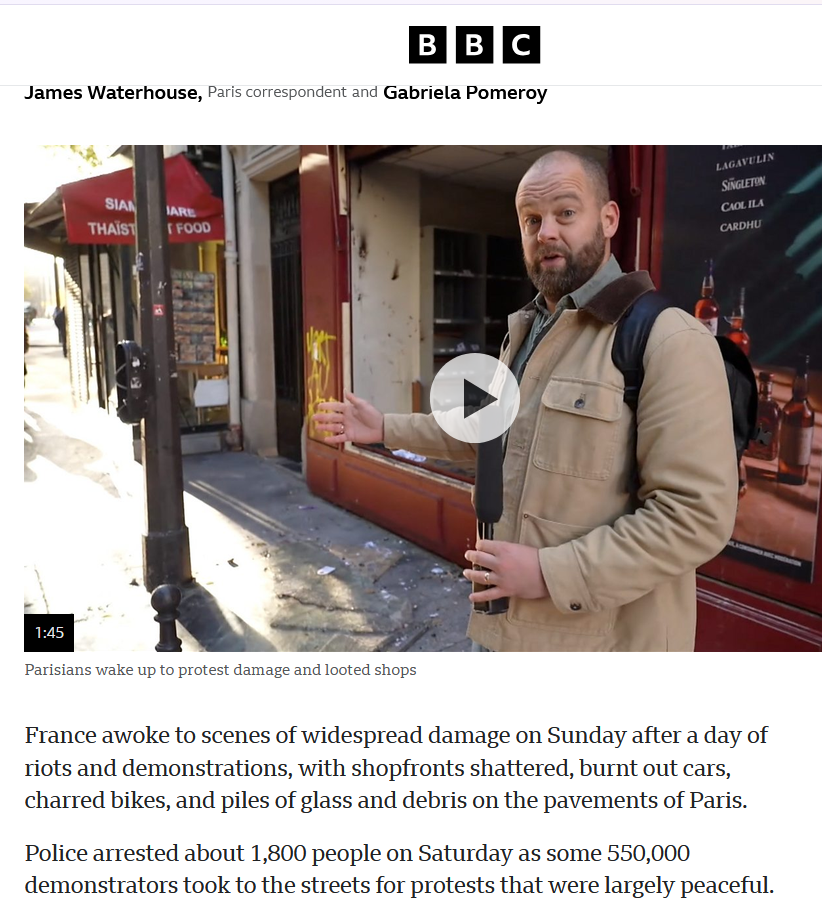
The report further said that people seeking to exploit the disorder were present alongside the ‘largely peaceful demonstrators’. The BBC report’s wording shows clear hypocrisy because it paired the description “mostly peaceful” with itself adding the images of burning vehicles and clashes.
Double standards: BBC’s framing of violent demonstrations in India
When covering India’s so-called students’ protest by CJP, the BBC shows its clear bias towards a Western country like France. Recently, the BBC published a report on far-left anarchist and National President of the All India Students Association (AISA), Neha Bora, calling her a ‘fiesty Gen-Z protester’.
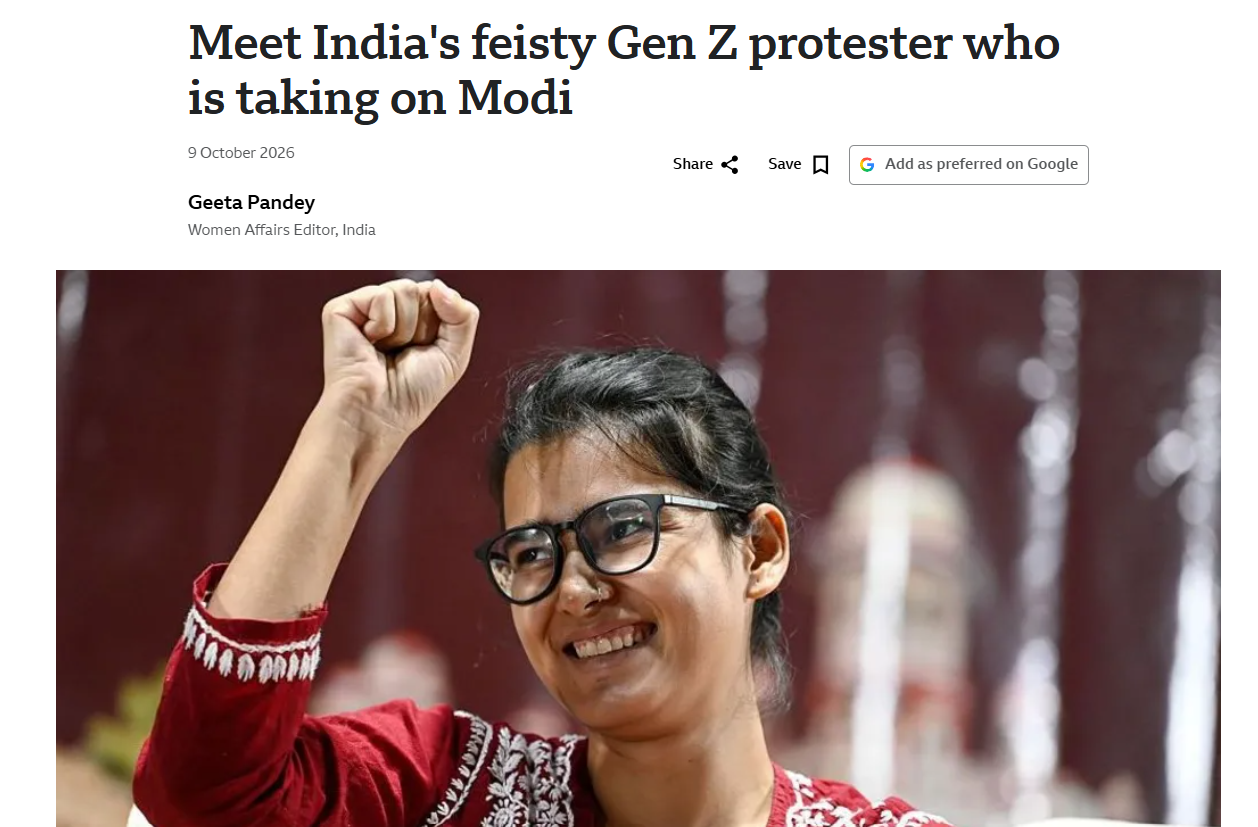
Neha Bora is known for stoking unrest and self-proclaimed status as a student activist, and she recently made a controversial remark, publicly citing the August 2024 “Gen-Z movement” in Bangladesh as an inspiration for Indian demonstrations.
Bora expressed a desire to replicate similar events in India after receiving support from anti-India Bangladeshi figures like Nahid Islam. Further highlighting her apparent admiration for such destructive turmoil, she was recently seen wearing a red T-shirt emblazoned with the Jolly Roger symbol of the Straw Hat Pirates from the popular “One Piece” manga, which has been prominently linked to deadly uprisings across Asia and the world, including Nepal, Indonesia and the Philippines.
The BBC later published an article on protests in France with the title, “Are student protests being manipulated ahead of France’s Presidential Election?” The hypocrisy and the double standards are clearly visible in the wording of the title. For anti-India BBC, an anarchist like Neha Bora is a ‘fiesty Gen-Z protester’ who is taking on Modi and in France the protest is manipulated, and the rioters are peaceful.
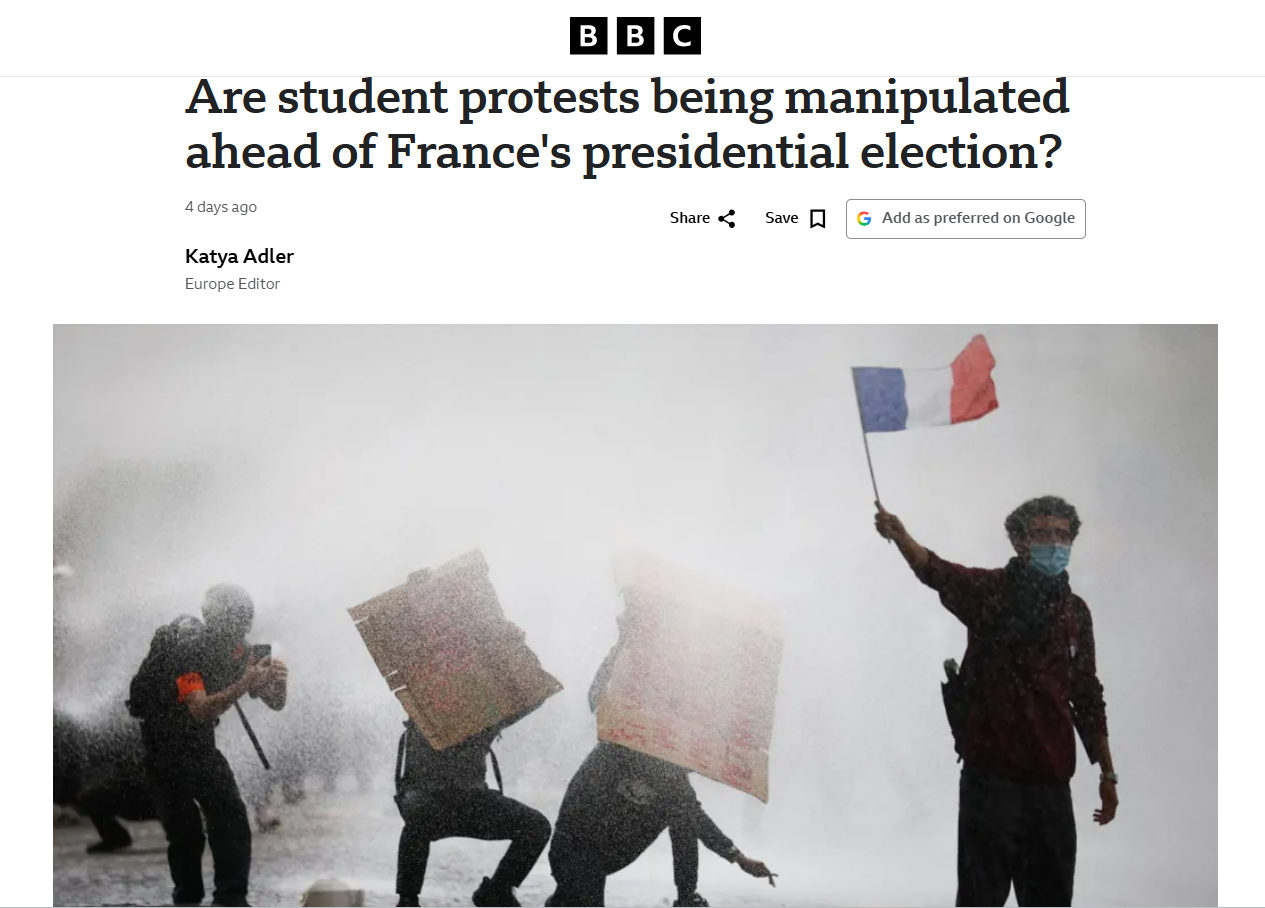
BBC went on to connect the French unrest with the upcoming Presidential Election. Basically, the rioters damaging India are hailed as heroes by Western media like the BBC, but when French protesters hit the streets, they become ‘manipulated’ ahead of elections.
France 24 covers Indian demonstrations as France faces unrest
France 24, a French state-owned international news broadcaster, has also drawn attention for its coverage of the Cockroach Janata Party (CJP) demonstrations in India. While France was dealing with widespread unrest at home, the broadcaster was reporting on the Indian movement and presenting it through the lens of youth activism and Gen-Z dissent.
.@FRANCE24 TV: “India has come to standstill with protests.” Meanwhile, France right now: https://t.co/RvL6cSimvg
— Shiv Aroor (@ShivAroor) October 17, 2026
France 24 described CJP’s planned unrest in the National Capital as a rally called by an online movement. The Western media outlet further went on to describe the CJP rioters as young protesters and wrote, “But hundreds of young protesters defied the crackdown to march close to Connaught Place’s Central Park, many of them waving flags in a show of defiance.”
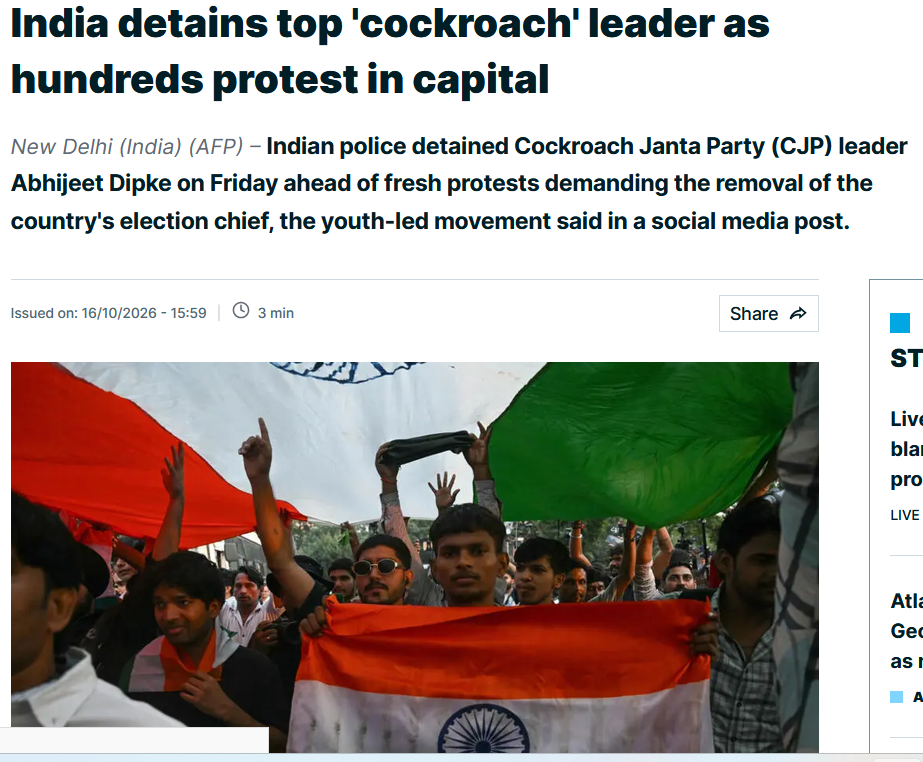
And, as with the BBC, France 24 also described anarchist Neha Bora as a student activist, and Abhijit Dipke was hailed as a hero who created unrest in the national capital during the July protests when thousands of naive students trusted him as a founder of a supposedly “neutral” banner. But it was just a political prop, leaving behind a trail of broken promises, hijacked protests, and exposed falsehoods. Dipke came as a so-called well-wisher for the NEET candidates and created immense public disruption across India.
France 24 also celebrated the resignation of Union Home Minister Dharmendra Pradhan and wrote, “Protests organised by the CJP in July over exam irregularities forced the resignation of the education minister, marking a rare climbdown by Modi’s administration.”
The anti-India France 24 started covering French protests when it was all over social media and known by the world, but in the earlier stage it was not covering the protests and also still calling them a students’ protest after the country was almost destroyed.
The network’s behaviour reveals a deep-seated editorial double standard. While domestic destruction in France is downplayed, delayed, or rationalised under the guise of noble student demands, protests in sovereign developing nations like India are eagerly magnified and romanticised. By ignoring real violence at home while glorifying political disruptors abroad, France 24 displays pure hypocrisy, using external reporting to lecture other democracies while minimising the breakdown of order on its own soil.
The New York Times and the pattern of bias
The New York Times (NYT), another prominent anti-India outlet. While covering the current French protests, NYT wrote, “Unrest Mars Day of Protest in France, as Student Movement Turns National”. For the NYT, the whole country is destroyed, and visuals all over social media of burning buildings are from students’ protests, and they are protesting for the improvement of the education system.
NYT also describe the violent riots in France as peaceful marches, and wrote, “Riots broke out in several French cities alongside peaceful marches of tens of thousands of people demonstrating against rising living costs and poor school conditions.” Further added, “Many rallies stayed peaceful as weeks of student-led protests evolved into a national display of discontent.”
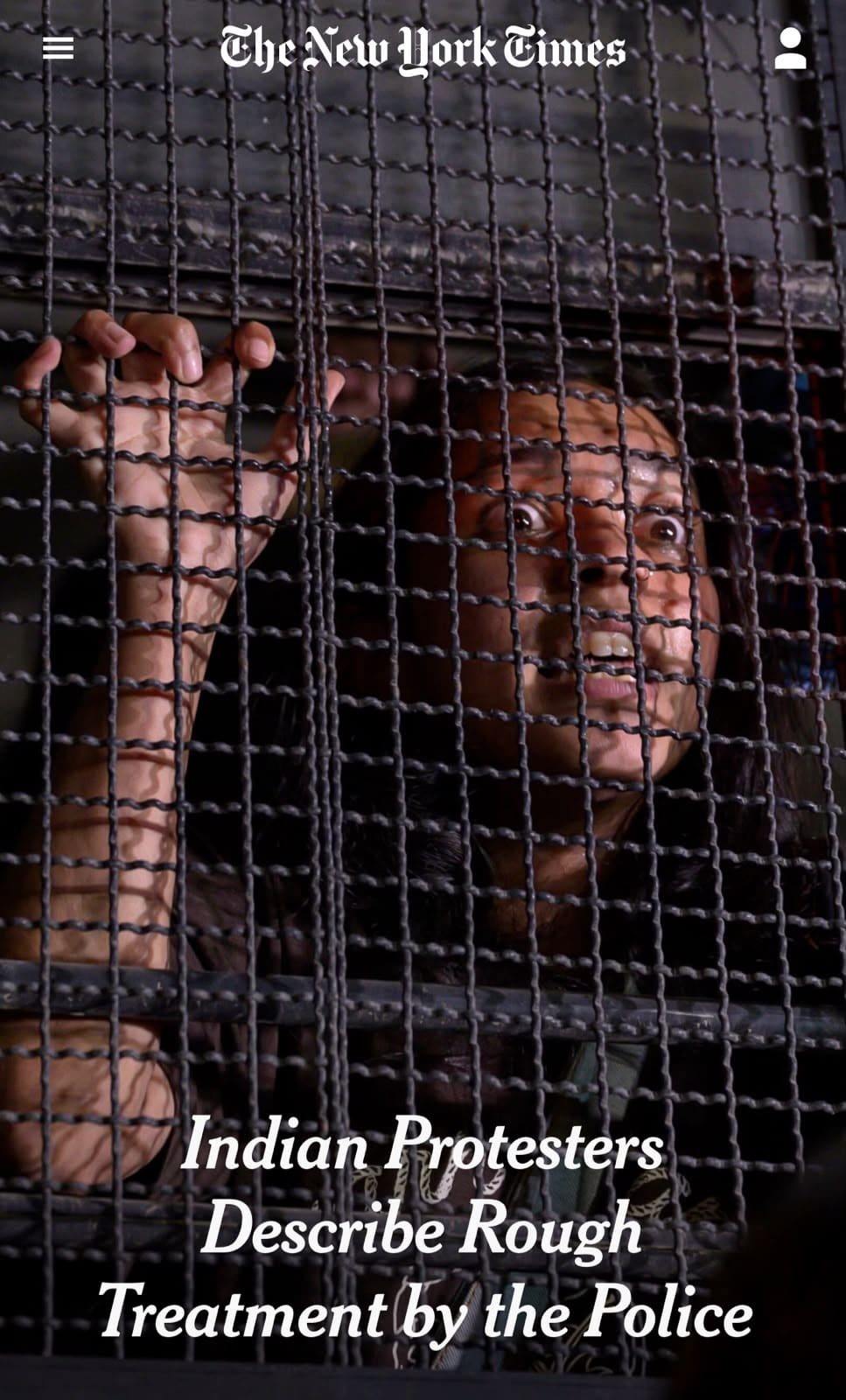
For an anti-India media outlet, NYT burning the cities, looting, and damaging property is peaceful protest, and when the Indian government took security measures to thwart all this, they described it as ‘Rough treatment by the Police’. NYT also described CJP’s planned unrest as Gen Z protests just to show it as similar to regime change operations in Nepal and Bangladesh, for which anarchist Neha Bora was wishing.
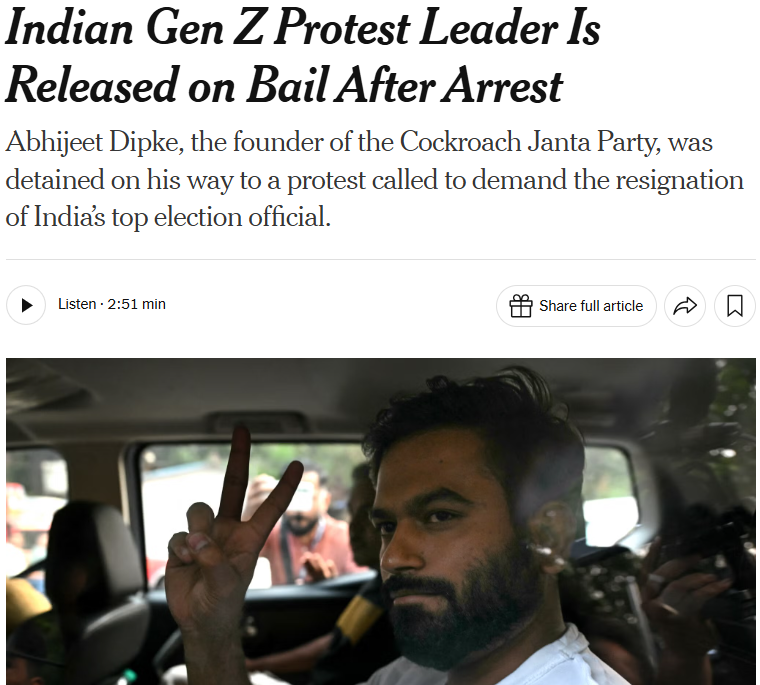
NYT also went on to indirectly describe Dipke as a peaceful and non-violent leader and wrote, “Mr Dipke was seen wearing the same T-shirt he had on Saturday, with an image of Mohandas K. Gandhi, India’s leader of nonviolent protest.”
Outlets like the BBC and France 24 remain heavily invested in pushing anti-India rhetoric and glorifying political agitation abroad, while willfully ignoring critical domestic issues back home, ranging from major civil unrest in French cities to scandals like the Pakistani grooming gangs in the UK.


