

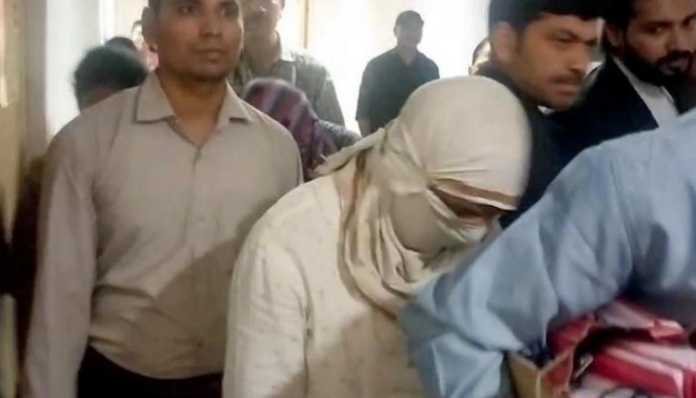
On Wednesday, 18 November, a fast-track court in Delhi ordered the framing of charges against 14 accused in the NEET-UG 2026 paper leak case. It is setting the stage for a day-to-day trial to begin on 25 November. The order by Special Judge Ajay Gupta at the Rouse Avenue District Court marks a critical step in the pursuit of swift justice in the controversy. It has once again exposed the vulnerabilities of India’s premier medical entrance examination.
The court directed that all 14 accused be produced before it on 21 November for the formal framing of charges. The trial will then commence on a day-to-day basis from 25 November. The charges have been framed under Section 63 of the Copyright Act, along with provisions of the Bharatiya Nyaya Sanhita (BNS), the Prevention of Corruption Act, and the Public Examinations (Prevention of Unfair Means) Act, 2024.
In his order, the judge observed that the accused had “shared/distributed the confidential material at a very large scale.” This led to its dissemination across the country before the exam and consequently forced the cancellation of the NEET-UG 2026 examination. The court noted that the leak caused the exchequer to suffer a loss of several crores of rupees and left lakhs of aspirants financially and mentally distressed. Among the 14 accused are three NTA subject experts, while the rest are candidates and middlemen who ran a syndicate to circulate the leaked question paper.
Background of the controversy
More than 22 lakh students appeared for the NTA-conducted NEET UG 2026 on 3 May. Despite the NTA’s assurances of a leak-proof exam, a guess paper similar to the actual question paper was reportedly being sold on WhatsApp and Telegram groups days before the test, sparking a paper leak scandal.
According to OpIndia report, a handwritten note containing around 410 questions, with a 281-question set, circulated among students over WhatsApp, Telegram groups and coaching networks, particularly in Rajasthan’s Sikar, Uttarakhand’s Dehradun, and other coaching hubs. The guess paper began to be circulated among NEET aspirants, days before the exam held on 3 May.
Acting on a tip-off, the Rajasthan Police’s Special Operations Group (SOG) launched an investigation and found striking similarities between the actual question paper and the circulated guess paper. Around 120–140 questions, mainly from Biology and Chemistry, matched either exactly or very closely.
According to some reports, 135 questions from the guess paper matched the actual examination paper. These questions reportedly accounted for approximately 600 marks out of a total of 720, given that each question in the NEET paper carries 4 marks.
It has emerged that the leaked “guess paper” was sold for Rs 30,000 and at prices as high as Rs 5 lakh in several networks.
PM Modi’s promise of fast-track justice
The fast-track court’s order is being viewed against the backdrop of Prime Minister Narendra Modi’s announcement in July 2026 that the Centre would establish dedicated fast-track courts to ensure “swift and stringent punishment” for those involved in paper leak cases.
In a post on X, Modi had declared: “Nothing is more important than the welfare and future of our youth! We have decided to set up fast-track courts to ensure swift and stringent punishment for those involved in paper leaks”. He had also warned that “those who try to harm the future of our youth will not be spared”.
