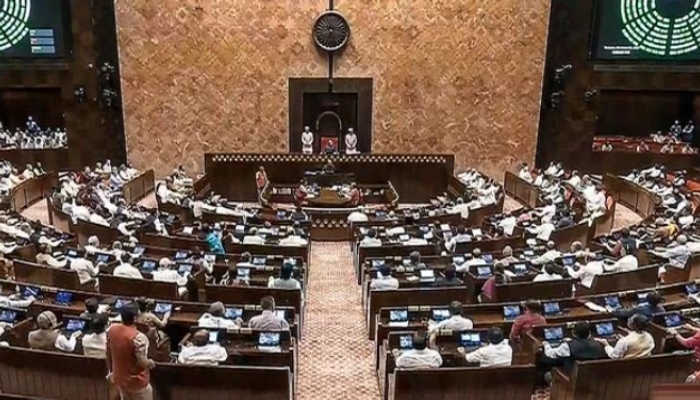
On Tuesday (27th February), voting for 56 Rajya Sabha seats from 15 states is underway. In January, the Election Commission notified elections for 56 seats across 15 states that would fall vacant in April, but only three states are holding polls because the remaining MPs were elected unopposed.
Despite the BJP’s strong Assembly election victories in three Hindi heartland states in December and the changing political dynamic in Bihar, earlier estimates projected that the composition of the Rajya Sabha would remain relatively stable. However, in Uttar Pradesh, Himachal Pradesh, and Karnataka, where there have been indications of cross-voting, the votes might surprise some.
Before voting day, the ruling NDA had 109 MPs in the Upper House, 10 short of the halfway point in the 238-member Rajya Sabha. The opposition group had 89 MPs.
Uttar Pradesh has the most seats up for vote (10), followed by Maharashtra and Bihar (6 each), Madhya Pradesh and West Bengal (5 each), Karnataka and Gujarat (4 each), Odisha, Telangana, Andhra Pradesh, and Rajasthan (3 each), and Uttarakhand, Himachal Pradesh, Haryana, and Chhattisgarh (1 each).
According to the Assembly’s strength, the BJP and the main opposition Samajwadi Party (SP) had enough seats to send 7 and 3 members to the Upper House, respectively, but this changed when the BJP fielded Sanjay Seth as their eighth candidate. The result in one seat could now be decided by cross-voting.
In Karnataka, three Congress MPs and one BJP MP will retire. However, by forming an alliance with the Janata Dal (Secular) and nominating one of its members for a Rajya Sabha seat, the BJP has ensured a struggle between five contenders for four vacancies. Congress, which has 134 MLAs, claims to have the support of three Independents, while two BJP and many JD(S) MLAs were expected to vote for Congress candidates. The BJP-JD(S) alliance has 85 MLAs, five less than the 90 votes needed to elect two MPs.
In Himachal Pradesh, where the Congress has 40 MLAs after winning the 2022 Assembly elections, there is just one Rajya Sabha seat, which was vacated by the BJP President J P Nadda. However, due to internal party unrest, at least 9 MLAs are reported to have cross-voted on Tuesday.
The Congress has fielded Abhishek Manu Singhvi, while the BJP’s candidate is Harsh Mahajan. Interestingly, with 25 MLAs, the BJP is nine votes shy of the halfway point in the 68-member Assembly.
Of the 56 retiring MPs, 28 are from the BJP and 10 from the Congress. The BJP, which was anticipated to retain around the same number of seats, could possibly win more seats in Uttar Pradesh and Himachal Pradesh. The Congress, which was expected to win 9 seats and possibly 1 more in Bihar with the support of its ally Rashtriya Janata Dal (RJD), is certain to lose in Himachal Pradesh.
Notably, polling for Himachal Pradesh’s lone Rajya Sabha seat began at 9 am on Tuesday and finished with Congress MLA from Chintpurni Sudershan Babloo casting the final ballot. The polling was quick, and all 68 members voted. Ashish, an independent MLA from Hamipur, cast the first vote.
Congress MLA Babloo was flown to the Assembly via helicopter due to illness. Further, after casting his vote, Chief Minister Sukhvinder Singh Sukhu stated that the MLAs voted based on the party’s principles.
In Himachal Pradesh, the Congress had issued a whip urging all MLAs to vote for the party’s nominee, Abhishek Manu Singhvi. The BJP then criticised the measure, claiming that parliamentarians have the freedom to vote based on their views.
Meanwhile, of the 56 Rajya Sabha seats up for grabs today, 41 have effectively secured their positions in the upper house.
The National Investigation Agency (NIA) on Tuesday conducted raids at 16 locations in Punjab and Rajasthan in its ongoing investigations against Khalistan and organised criminals’ nexus, detaining six persons to question them.
The raids are underway at these 16 locations, which include 14 in Punjab and two in Rajasthan. The NIA’s investigations are ongoing and include efforts to destroy the nexus between terrorists, gangsters, and drug smugglers. The NIA’s goal is to dismantle the nexus’s infrastructure, including funding channels.
The agency has carried out the search operation since early Tuesday morning in close coordination with state police forces. The raids are being conducted based on some specific inputs.
The places being searched are residential and other premises of the suspects having links with Khalistani supporters and those involved in criminal nexus.
“NIA is conducting searches in ongoing investigations against Khalistan and organised criminal nexus at 14 locations in Punjab and 2 locations in Rajasthan. Subsequent to searches, six people are being examined for their involvement in terrorist activities,” said the NIA.
The six persons picked for questioning are reportedly having indulged in terrorist activities and are in close contact with some fugitive designated Khalistani terrorists through social media networks and other means of communication.
The move comes almost two months after NIA Director General Dinkar Gupta raised candid and wide-ranging issues in December 2023 while meeting with the Director of the FBI, Christopher A Wray. He had raised activities of terrorist-organised criminal networks, ongoing investigations in the US in the attack on the Indian Consulate in San Francisco, and investigations of cyber-terror and cyber-crimes of various kinds in the meeting.
Gupta then highlighted the active nexus between the terrorist outfits and terrorist elements with members of organised criminal syndicates, which was spreading to the US as well. (ANI)
(This news report is published from a syndicated feed. Except for the headline, the content has not been written or edited by OpIndia staff)
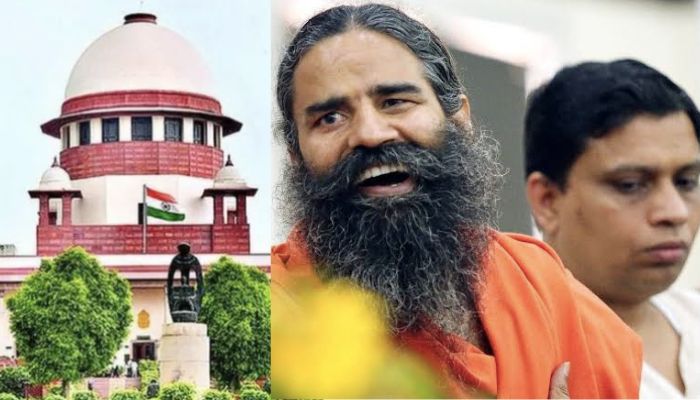
On Saturday (27th February), the Supreme Court imposed a temporary ban on Patanjali Ayurved’s advertisements until further order. The court also issued a contempt notice to its founders Baba Ramdev and Acharya Balakrishna for flouting the court’s November orders regarding the ‘misleading claims advertisements’ of Patanjali Ayurved products.
BIG BREAKING: Supreme Court imposes a COMPLETE BAN on Patanjali advertisements after SC came down heavily upon Baba Ramdev and Patanjali for 'false and misleading' ads. Notice for contempt of court issued to Patanjali and Acharya Balakrishnan.#SupremeCourt#Patanjalipic.twitter.com/yFsIT0ZZ2h
A bench comprising Justices Hima Kohli and Ahsanuddin Amanullah stated that Patanjali has duped the country by making misleading claims that its medicines can cure various diseases despite the lack of scientific evidence.
The Court also questioned the Union Government on what action it had taken under the Drugs and Magic Remedies (Objectionable Advertisements) Act 1954 about Patanjali’s advertisements.
“The entire country has been taken for a ride! For two years you wait when the Drugs Act says this is prohibited?” Justice Amanullah said to Additional Solicitor General KM Nataraj.
While acknowledging that deceptive advertisements are unacceptable, the Centre’s law officer emphasised that it is up to the concerned States to take action under the Act. The apex court asked the central government to submit an affidavit outlining what steps it has taken.
The Supreme Court today ruled that Patanjali cannot advertise or market any of its medicinal products that claim to heal conditions listed in the Drugs and Magic Remedies (Objectionable Advertisements) Act.
The Supreme Court slammed the Patanjali group while hearing an Indian Medical Association (IMA) petition about ‘misinformation against Allopathy’.
Furthermore, the Court warned Patanjali Ayurved against making any adverse statements about any medical system. The case will be heard after two weeks.
Senior Advocate PS Patwalia, representing the Indian Medical Association, alleged that the day after the Supreme Court issued the ruling, on the 21st of November last year, Baba Ramdev and Patanjali conglomerate’s Managing Director Acharya Balakrishna of Patanjali held a press conference and made deceptive claims again.
SC slams Patanjali Ayurved for ads against modern medicines
As reported earlier, on 21st November 2023, a Supreme Court bench of Justices Ahsanuddin Amanullah and Prashant Kumar Mishra had pulled up Patanjali Ayurved for “publishing misleading claims and advertisements against modern systems of medicine”
The bench had also issued a stern warning to the company stating that it would impose a Rs 1 crore fine on every product if the company made false claims that the product ‘cures’ a particular disease.
“All such false and misleading advertisements of Patanjali Ayurved have to stop immediately. The Court will take any such infraction very seriously, and the Court will also consider imposing costs to the extent of Rs. 1 crores on every product regarding which a false claim is made that it can “cure” a particular disease,” Justice Amanullah said back then.
However, a day later, Baba Ramdev called a press conference and expressed displeasure over SC’s warning to Patanjali about making ‘false’ and ‘misleading’ claims in the commercials about its medicines as cures for various diseases. Ramdev Baba said that the medical mafia has been targeting him and running propaganda against him and the Ayurveda.
“SC said that if you do false propaganda, then you will be fined… We respect SC. But we are not doing any false propaganda. A few doctors have formed a group that continuously does propaganda against yoga, Ayurveda. We are also ready for the death penalty. But if we are not liars, then punish the ones who are spreading the false propaganda. For the past 5 years, propaganda has been going on targeting Ramdev and Patanjali,” Baba said adding that if Patanjali is a liar, it should be fined Rs 1000 crores.
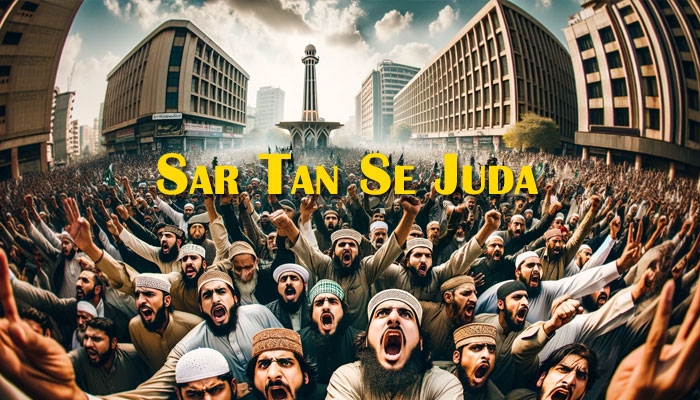
On 25th February, the world received another shock from Pakistan as a woman wearing a dress with Arabic alphabets almost got lynched by an agitated mob. Someone in Pakistan saw the dress of the woman and assumed it had “Allah” written on it, deeming it blasphemous.
Shortly after, the woman was surrounded by religious hounds raising ‘Sar Tan Se Juda’ slogans. She was seen begging for her life. A brave female police officer rescued her from the mob and took her into custody for further investigation. The history of fanatic mob lynching in Pakistan is disturbing.
Woman in Lahore’s Ichra wearing a digital print shirt taken into police custody after a mob complained that the shirt had Quranic verses on it. pic.twitter.com/bVjtkuZlsP
A video of the woman emerged on social media apologising for the alleged “sacrilege” she committed. She apologised to everyone in her statement, though there was no intention to hurt religious sentiments. The Kuwait-based brand that made the dress urged the people of Pakistan not to message them over the matter. They reminded everyone that they use Arabic texts in different fonts because, wait for it, it is “THEIR LANGUAGE”.
While the incident had a shock value, this is not the first time Islamists living in Pakistan resorted to violence and barbarism because they thought someone did something ‘blasphemous’. Let’s start with “blasphemous” QR codes that generated quite a stir.
The QR code mayhem
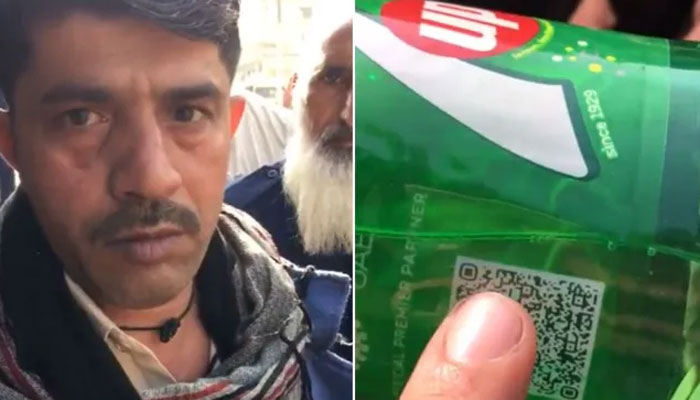
In January 2022, a video of a man from Pakistan went viral on social media where he was seen threatening American company Pepsi for printing a QR code with the name of “Prophet Muhammad” on its 7UP bottles. The man identified himself as Mulla. He threatened the driver of the truck that was transporting 7UP bottles. He said the driver would face dire consequences if the QR code were not removed.
Man named Mullah threatened Pepsi of consequences claiming QR code on 7UP had the word “Allah”
He insisted that the QR code was the name of the Prophet, and if the company did not remove it, he would burn the truck. The video was recorded by a social media user who tried to convince the agitated Islamist, but it did not help. The agitated Islamist threatened the social media user with consequences.
In July 2022, Samsung became the target of fanatics as its QR codes were deemed blasphemous. Reportedly, dozens of Islamists of the extremist Barelvi organisation Tehreek-e-Labbaik Pakistan (TLP) unleashed mayhem in the mobile market of Karachi, Pakistan, after rumours of alleged blasphemy against the company.
The protestors tore down the billboards of Samsung in the mobile market in the city and indulged in vandalism after they heard that the company had committed ‘blasphemy’ against Islam. From QR code to name of WiFi network were deemed blasphemous by the mob so that they could continue burning things.
27 employees of Samsung were detained by the police in Karachi over claims that they were using a WiFi network whose name was insulting to Ummayad Dynasty Caliph Muavia.
Sri Lankan man brutally murdered in Pakistan by a large mob
In December 2021, a heart-breaking incident of fanatics lynching a man over blasphemy took place in Pakistan. A Sri Lankan man, Priyantha Kumara, was tortured and burnt to death by an angry Islamist mob that believed in rumours of blasphemy. The incident took place on Wazirabad Road in Sialkot, where reportedly, the workers of private factories attacked the export manager of a factory and burnt his body after killing him. Barbaric visuals of a large mob of hundreds of people lynching and then burning the body of Kumara went viral on social media.
A video of the incident emerged on social media where the angry mob can be heard chanting “Nara e Taqbeer” and “Labbaik Ya Rasool Allah”. Labbaik Ya Rasool Allah means “Here I am at your service, O Messenger of Allah”. Other slogans that could be heard as the fanatics burnt the man to death were ‘gustakh-e-nabi ki ek hi saza, sar tan se juda sar tan se juda’.
Hindu teacher sentenced over false allegations of blasphemy
In February 2022, a Pakistani court sentenced Notan Lal, a Hindu teacher, to life imprisonment on the charges of blasphemy. Lal, owner and principal of a private school, was accused of ‘insulting’ Prophet Muhammad during an Urdu class as charged by a student named Muhammad Ihtisham, who later said he had lied. In September 2019, an FIR was filed against the Hindu principal of the Sindh Public School for allegedly passing derogatory remarks against Prophet Muhammad.
#BREAKING: Innocent Hindu minority teacher Notan Lal in Pakistan sentenced to 25 years in prison for allegedly insulting Prophet Muhammad during an Urdu lesson. Accusation came from a student Muhammad Ihtisham who later said he had lied. Yet courts convicted him under pressure. pic.twitter.com/Y8urpp33Kg
After the false accusation by the student, violence and vandalism were unleashed by residents of Ghotki. Local Islamists vandalised the school and destroyed a Hindu temple in the area. The Police, to control the situation and avoid further damage, detained Lal under Article 295 (c) of the Pakistan Penal Code.
The demonstrators had already vandalized three temples, a private school and multiple houses belonging to the Hindu community, posing a threat to the minority community in Pakistan. Lal was taken into custody and was questioned about the incident. Also, the child Muhammad Ihtisham was interrogated. Ibtisam had then confirmed the allegations that Lal ‘insulted’ the prophet during a lesson on his life and travel between two holy cities.
Hindu boy arrested over blasphemy charges
In December 2022, a Sindhi Hindu boy identified as Love Kumar Meghwad, a resident of Mithi, district Tharparkar (Thar) of Sindh Province in Pakistan, was arrested by the Police for alleged blasphemy. As per social media posts, Love used ‘Mola’ instead of Bhagwan in a Facebook post while addressing God. A case was filed against Love. Reportedly, Love had complained to God that He was missing when Hindu girls were abducted from their homes every day and how their families were suffering! He also said that when fathers and mothers of such girls cry, God does not listen to them. Notably, the word ‘Mola’ is commonly used in the Sindhi language to address God.
Man brutally beaten to death over blasphemy
In February 2023, a man was brutally lynched to death by a fanatic mob over alleged blasphemy. The incident took place at a police station. Reportedly, the victim, identified as Muhammad Waris, had been taken into custody for allegedly desecrating the Quran. They said news of the alleged crime outraged residents, and hundreds of them later surrounded the police station, demanding Waris be handed over to them. Seeing the massive violent crowd, police officers fled the facility. Protesters grabbed the man and dragged him out to the street, where they beat him to death.
Man lynched for comparing Imran Khan to Prophet
In May 2023, a fanatic mob lynching took place in Pakistan in Khyber Pakhtunkhwa’s Mardan after a man was accused of blasphemy during a rally of Imran Khan’s political outfit Pakistan Tehreek-e-Insaf (PTI). A video went viral on social media, in which several people can be seen beating the man violently. The mob even dragged and were seen beating mercilessly the lifeless body of a man believed to be in his 40s in the Sawal Dher area. The deceased has been identified as Maulana Nigar Alam. He was accused of announcing before the crowd at a Pakistan Tehreek-e-Insaf (PTI) rally that he respects PTI chairman Imran Khan like a Prophet as he is honest. His comments did not go well with the people present at the scene, and he was lynched.
Akbar Ram arrested for ‘insulting Islam’
In August 2023, a Hindu man named Akbar Ram was arrested in Punjab province, Pakistan, after he was accused of blasphemy. The Pakistan police claimed they stopped him to “save his life” from a fanatic mob lynching. Akbar Ram was a Rahim Yar Khan district resident, some 400 km from Lahore.
A man named Faisal Munir filed a complaint against him and produced two witnesses to prove his allegations. He claimed that Akbar Ram came to his shop and made “insulting” remarks against the holy places of Muslims and also Islam. Ram has reportedly been booked under Pakistan’s Blasphemy law and Punjab Maintenance of Public Order Ordinance.
Christian attacked in Pakistan
In August 2023, a Christian man became a victim of lynching by a fanatic mob in Pakistan. The man was killed in the Punjab province of Pakistan. The victim’s house was looted, and his belongings were thrown out. A video surfaced on social media where the mob was seen gathered in the streets while gunshots could be heard in the background.”
Graphic Warning ⛔️ #Punjab#Pakistan has become a hell for Pakistani minorities right now. Another alleged #blasphemy case, A Man shot dead without Investigating or any evidence.
Just a month after the murder of a Christian man, a Christian couple was arrested in Pakistan for allegedly desecrating a copy of the Holy Quran in Lahore on Saturday. Taimur, a resident of Harbanspura, filed a complaint with the police, saying he was standing at a food shop on a street near the Rangers headquarters when he saw some pages being thrown from the roof of a nearby house. He picked up the pages, which were found to be from the Holy Quran.
Blasphemy in Pakistan
Pakistan has suffered widespread communal violence and riots over perceived blasphemy against Prophet Muhammad. An unfavourable reference to Prophet Muhammad, or what is referred to as ‘Blasphemy,’ is frequently used by Islamists as a rallying cry to commit violence and communal rioting against ‘non-believers.’ There have been myriad reports of violence and barbarity committed against non-Muslims in the name of blasphemy and desecration of Prophet Muhammad.
All that is needed to rile a mob to go on a lynching, killing, burning rampage is a vague claim that some person has ‘insulted’ Islam, just like the claim against Priyantha Kumara and the woman in the dress with Arabic letters.
The rising number of fanatic lynching incidents over alleged blasphemy in Pakistan should concern everyone. It highlights a troubling trend of intolerance and violence among the general public. It is the failure of the law enforcement of Pakistan to protect individuals from mob justice and street veto.
Fanaticism over religion has reached such an extent in Pakistan that thousands of Pakistanis had marched against French products, just because the President of France had chosen to stand with the Charlie Hebdo magazine’s right to free speech. Pakistanis are often seen denouncing other Muslims in Saudi Arabia and UAE as ‘not Muslim enough’ and shaming them for not being as fanatic as them.
On Tuesday (27th February), a research report published by the State Bank of India (SBI) corroborated the findings of the Household Consumption Expenditure Survey (HCES), which was conducted by the National Sample Survey Office (NSSO).
It noted the positive impact that the schemes of the Union government had in reducing poverty, checking inflation, increasing the Monthly Per-capita Consumer Expenditure (MPCE) and bridging the urban-rural divide in spending power.
For instance, rural poverty has decreased from 25.7% (2011-12) to 7.2% (2022-2023) while urban poverty has reduced from 13.7% (2011-12) to 4.6% (2022-2023).
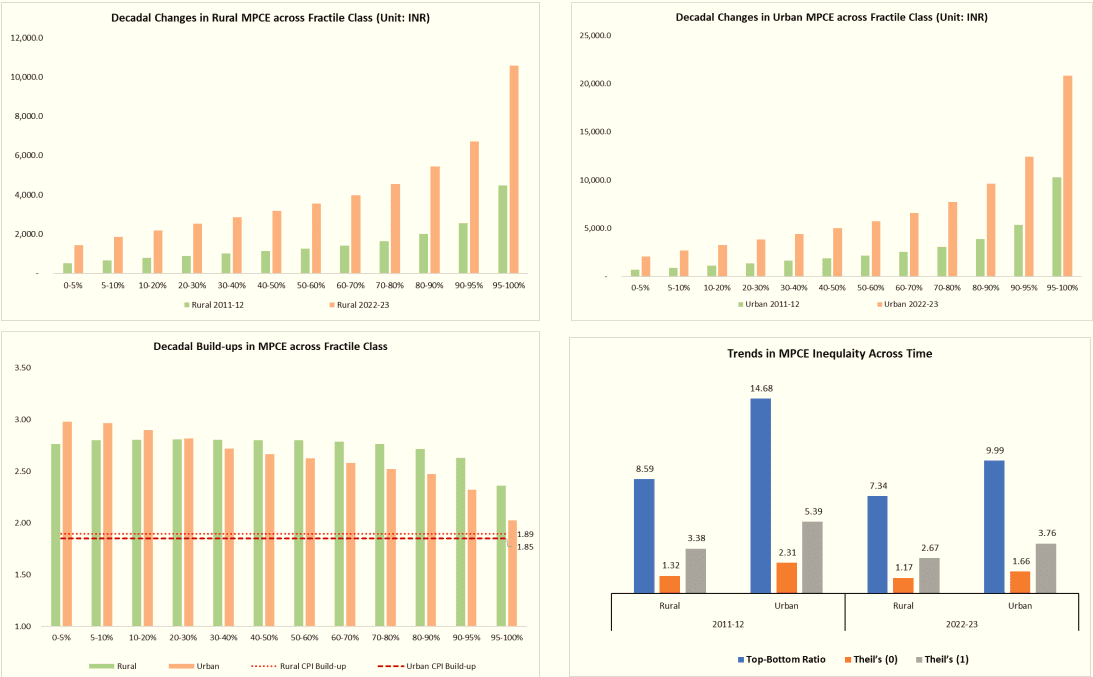
Decadal changes in MPCE show decline in consumption inequality, graphic via SBI Research
“Rural Poverty has thus staged a significant 440-basis point decline since 2018-19 and Urban Poverty a 170-basis point decline post-pandemic…This indicates that many Government programmes currently for those at the bottom of the pyramid are having a significant salutary impact on Rural Livelihood,” the SBI Research report said.
According to the report, the significant reduction in consumption inequality can be attributed to increased government spending on the development of physical infrastructure including rural roads and 4/8 lane national highways.
“Around 30% of the Rural MPCE is explained by factors that are endogenous to the Rural ecosystem. Such endogenous factors are mostly due to the initiatives the Government has taken in terms of DBT transfers, building Rural infrastructures, augmenting farmer’s income, improving the rural livelihood significantly,” it further emphasised.
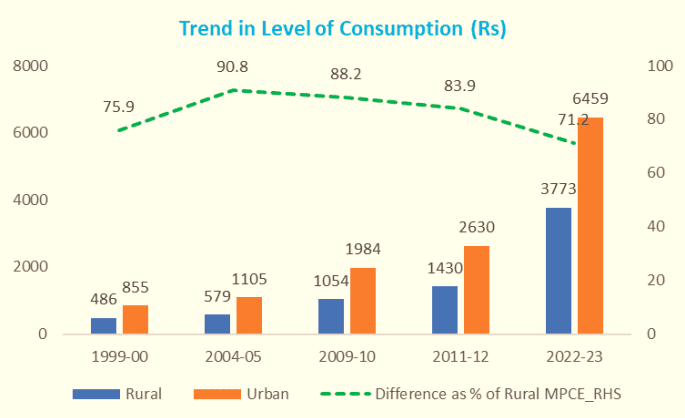
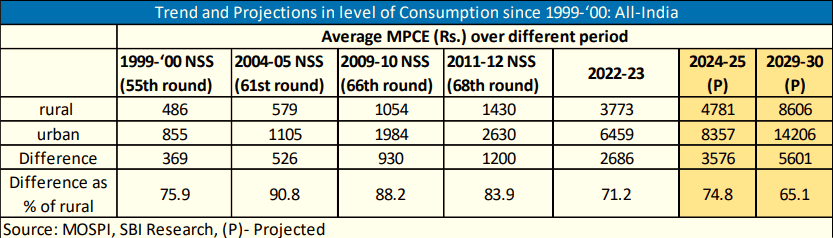
Difference in Rural and Urban MPCE down to 71.2% now from 88.2% in 2009-2010, graphic via SBI Research
The difference between rural and urban Monthly Per-capita Consumer Expenditure (MPCE) has decreased to 71.2% in 2022-20234 from 88.2% in 2009-2010.
Reportedly, the difference was as high as 90.8% in 2004-2005 but is now projected to reduce to 65.1% in 2029-2030.
According to SBI Research, the biggest beneficiaries of reducing consumption inequality are States such as Madhya Pradesh, Uttar Pradesh and Bihar.
Difference in rural and urban consumption in India, data and graphics via SBI Research
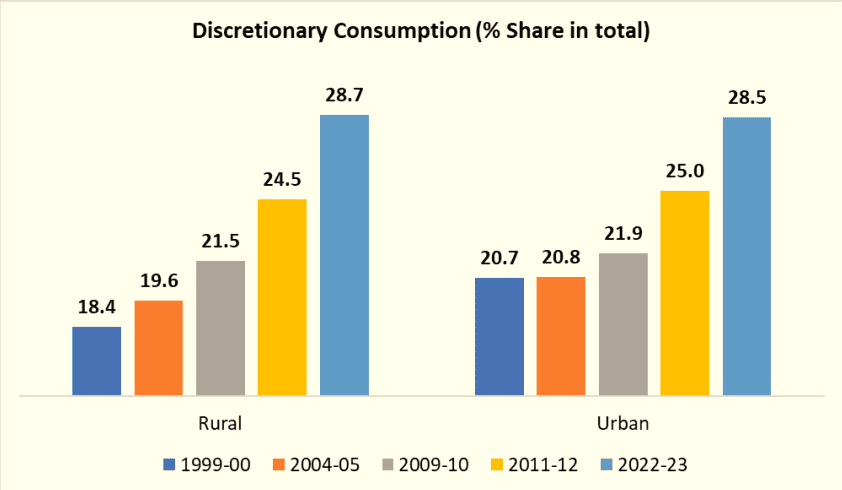
The SBI Research report also noted, “India is becoming more aspirational as indicated by the increasing share of discretionary consumption (like spending on beverages, intoxicants, entertainment, durable goods, etc.) in rural and urban areas. The speed of aspiration is swifter in rural areas as compared to urban areas.”
Difference in Aspirational consumption between 1999-2000 and 2022-2023 in rural and urban India, graphic via SBI Research
Data reflects the status of India’s poverty level
The data provided in the NSSO survey also paints an accurate picture of the poverty level in the country. According to BVR Subramaniam, CEO of NITI Aayog, India’s poverty level has fallen to just five per cent, signalling an improvement in the nation’s economic landscape.
In light of this data, he asserted that there is now no scarcity issue in the villages. The assertion that village expenditures were declining and that the villages’ conditions remained unchanged was refuted by the CEO of NITI Aayog.
He underscored the narrowing gap between rural and urban consumption, suggesting a positive trajectory towards economic parity.
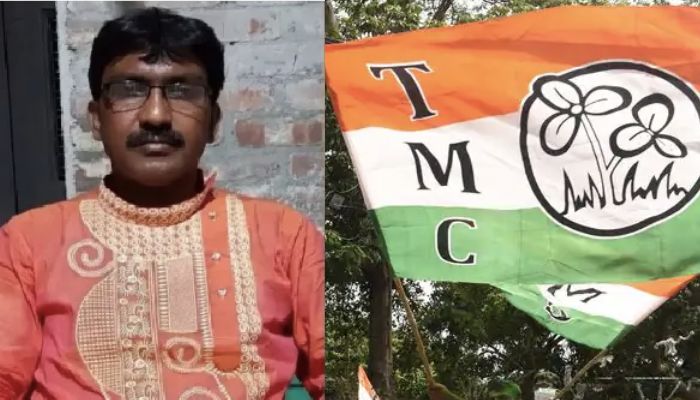
On Sunday (25th February) night, Bijan Das, a 49-year-old Trinamool Congress (TMC) leader from Ashoknagar in West Bengal’s North 24 Parganas district, was shot dead by a group of men after a confrontation over a land deal.
The police on Monday said that the TMC leader was shot dead at around 11 pm on Sunday when he visited the house of a party colleague to attend a birthday party in the Ashoknagar police station area.
A TMC leader has been shot dead in West Bengal.
The victim, identified as Bijan Das from West Bengal, was shot by a group of men during a dispute over a land deal.
Das had a heated argument with Goutam Das, a local businessman, as per reports. A person allegedly fired two rounds at Bijan from point-blank range suddenly when he and Goutam Das were arguing. The police said that one bullet hit Bijan Das’s head and another pierced through his left ear. Bijan was declared dead at the state-run Barasat Medical College Hospital.
According to reports, TMC leader Bijan Das was killed due to party infighting, and outraged locals vandalised the house of Goutam Das, who is accused of involvement in Das’s murder.
TMC Barasat MP Kakali Ghosh Dastidar, who visited the hospital, stated, “Bijan’s death is a big loss for the party. He began his political career in student politics and has remained with the party since then.”
Meanwhile, reports say that the police have detained several people after an initial investigation.
Bijan Das was a prominent leader of TMC in Ashoknagar and Habra. He served as the panchayat pradhan of Guma (I) panchayat for ten years, beginning in 2003. He was appointed deputy panchayat pradhan in 2013. He also served as TMC’s president of the Habra Block (II).
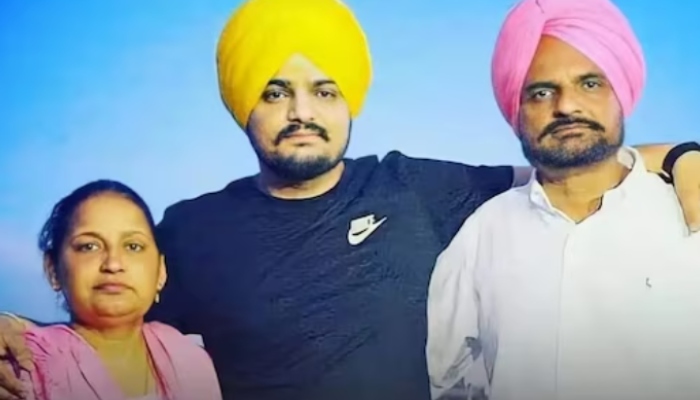
The parents of late Punjabi rapper and musician Shubhdeep Singh Sidhu, well known as Sidhu Moosewala are expected to welcome a new family member shortly. According to the reports, Charan Kaur, Moosewala’s mother, is pregnant and due to give birth shortly.
Sidhu Moosewala was the sole kid of his parents. His father is claimed to be 60 years old, and his mother is 58. Rapper and singer Sidhu Moosewala was 28 years old when he died in 2022. Had he been alive today he would be 30 years old.
While Moosewala’s parents are yet to make a formal declaration, it is notable that Charan Kaur has not made any public appearance in more than six months. It is also being said that the couple used In vitro fertilization (IVF) treatment to get pregnant and that the woman has not been stepping out of the house for the last three to four months because of the pregnancy.
According to family insiders quoted by several media reports, the delivery is expected soon.
On May 29, 2022, assailants shot and killed Moosewala in his car in Jawaharke village, Mansa district, Punjab. That year, Sidhu Moosewala, the well-known singer contested unsuccessfully for the Punjab Assembly seat in Mansa on a Congress ticket. He lost the polls to Vijay Singla of the Aam Aadmi Party, who won by a landslide victory in the 2022 Punjab elections.
About 31 people have been charged in the Moosewala murder case, including criminals Lawrence Bishnoi and Goldy Brar, while 25 have been arrested.
Considered one of the wealthiest Punjabi musicians, Moosewala used to develop and produce his own songs and had a large fan base, particularly among young people.
Following Sidhu Moosewala’s death, numerous of his songs were released and received millions of views across various platforms, including YouTube. This comes following speculations that Moosewala’s father, Balkaur Singh, plans to run in the next 2024 Lok Sabha elections from the Bathinda seat.
Sidhu Moosewala made his musical debut in 2017 with the release of his first track, G Wagon. Soon after, he established himself in the entertainment sector, receiving praise and respect for his music. Some of his most notable successes were Legend, So High, and The Last Ride.
Khalistani sympathiser Sidhu Moosewala praised Bhindranwale in his songs
Though the majority of the Punjabi singers who sympathise with the Khalistani narrative do not speak in the open about it, Moosewala is one of such singers who have gained fame to a level that his fans prefer to ignore the narrative he injects in some of his songs. During the farmer protests, he came up with a song titled ‘Panjab’ in which he openly praised Khalistani leader Bharpur Singh Balbir. The song started with his visuals in 1982 in the presence of Bhindranwale. The speech that was used by Moosewala talks openly about separatism. ‘Raj di gal Kyun na kariye. Assi maala phad ke Hindustan de kisi math de pujaari ni banna chauhnde’ (Why not talk of self-rule? We don’t wish to just hold prayer beads and become priests in some math in Hindustan) is one of the excerpts from the song.
Ahead of Ramadan this year, the Prince of Saudi Arabia, Mohammad Bin Salman has issued an order banning Iftars in mosques. In an order dated 20th February 2024, Saudi Arabia’s Ministry of Islamic Affairs issued a set of instructions for mosque employees to follow during the month of Ramadan.
The Ministry also restricted imams and muezzins in various regions of the country from collecting financial donations for organising Iftar feasts for those fasting and others.
“…Imams and muezzins in various regions of the Kingdom not to collect financial donations for Iftar projects for fasting people and others,” the order said.
In addition to banning the collection of donations for Iftars, the Islamic Affairs Ministry of Saudi Arabia also imposed a ban on organising Iftar feasts inside the mosques raising concerns regarding cleanliness.
“Iftar projects should not be held inside mosques due to concerns about cleanliness, so an appropriate place should be prepared in the mosques’ courtyards without the use of temporary rooms, tents, or the like, and that Iftar should be under the imam’s and muezzin’s responsibility, with the obligation of the one who breaks the fast to clean the place immediately after finishing foodt,” the ministry said.
Furthermore, the Ministry emphasised that cameras in mosques should not be used to record the imam and worshippers during the performance of prayers, saying that this undermines worshippers’ reverence and that prayers should not be broadcast on media of all kinds, including social media.
Notably, Ramadan 2024 is expected to begin on the 11th of March, with the sighting of the moon over Mecca, and conclude on the 9th of April 2024.
It is pertinent to note that since Mohammed Bin Salman was appointed crown prince in June 2017, he has brought several reforms to the country.
In October 2017, the ban on music performances was removed, ushering in a new era of cultural vibrancy in Saudi Arabia.
Another significant reform was brought in April 2018, when movie theatres were reopened in the country following a 35-year ban. Back then, the movie ‘Black Panther’ was the first to be released in the country’s theatres.
In June 2018, Prince MBS lifted the ban on women driving. This was the one-of-a-kind ban in the world which made women dependent on men for mobility. However, the lifting of the ban gave women a sense of autonomy even though gender equality still remains a distant dream for women there.
In 2019, Saudi women aged 21 and up were given permission to apply for passports and travel abroad without first receiving the consent of a male “guardian” (spouse, father, or other male family).
With this shift, the contentious guardianship system—which gives men almost full authority over women—was significantly eased.
Moreover, the Saudi Prince also introduced his vision to diversify the economy, reduce oil dependence, and foster social change. In 2016, Prince Salman launched the plan ‘Vision 2030’ chalking out the plans for the future of Saudi Arabia. A detailed OpIndia report on Saudi Arabia’s history and its shift towards reforms can be read here.
In the Saharanpur district in Uttar Pradesh, a man identified as Zeeshan shot his wife to death. After killing his wife, he also attempted to kill his younger brother at home. The incident happened at around 8.30 am-9.00 am on Tuesday, February 27.
According to reports, Zeeshan’s wife was pregnant. The police, however, said that the reports of pregnancy are not confirmed yet. The accused was suspecting that his wife was having an illicit affair with his brother and that the child belonged to his younger brother.
The younger brother of the accused has reportedly suffered minor injuries in the attack and is currently out of danger and recuperating at PGI Medical College in Saharanpur.
SSP Saharanpur, Uttar Pradesh in a video byte said that the deceased has been identified as Aliya. The police have formed teams and the search for the accused is underway. He said that preliminary investigations have revealed that the accused Zeehan had doubts that his wife was in an illicit relationship with his younger brother and that the child she was carrying was not his but belonged to his brother. Enraged by this, he first killed his wife and then shot his brother. The wife died on the spot. The brother escaped with minor injuries as the bullet did not penetrate but just brushed past his neck.
The SSP added that the woman’s medical reports are being looked into and relatives are being questioned to ascertain whether she was pregnant.
According to reports, Zeeshan and Aliya married 5 years ago. Last month, there was a rift between the couple over her alleged affair with the accused’s brother. Due to this, she was living with her father in her maternal home in the Sarai Mehndi area in Saharanpur, Uttar Pradesh. On the day of the incident, the accused took his wife to the HDFC Bank ATM located in the Mandi Thana area. While the wife was withdrawing money from the ATM, Zeeshan shot her in the head from behind and killed her. A picture has surfaced of the woman lying in a pool of blood inside the ATM.
UP : सहारनपुर में बड़ी वारदात। HDFC के ATM के अंदर आलिया नामक महिला की गोली मारकर हत्या। वारदात पति जीशान ने की। इसके बाद वो घर पहुंचा और अपने छोटे भाई को गोली मारी। देवर-भाभी के अवैध संबंध के शक में वारदात की आशंका। pic.twitter.com/3SIlKft4aa
The police have registered an FIR in connection with the matter and have formed a team to nab the accused. The police further said that the dead body of the woman had been sent for medical examination and it would be clear whether or not the woman was pregnant only after her reports arrived.
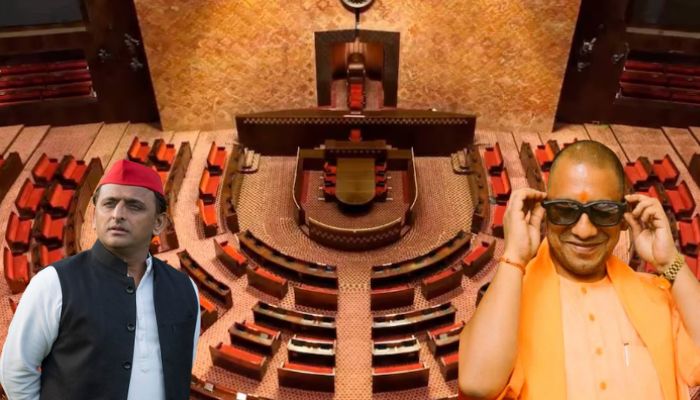
On Tuesday (27th February), the Samajwadi Party suffered a major dent when the party’s chief whip Manoj Pandey resigned from his post ahead of the crucial voting for Rajya Sabha seats. Pandey is an SP MLA from Unchahar in the Raebareli district. Ahead of the Rajya Sabha elections, he announced that he would be voting for the BJP candidate. The Samajwadi Party accepted his resignation and Pandey’s nameplate was removed from outside the chief whip’s office.
SP Chief Akhilesh Yadav accused Pandey of not being courageous enough to stand against the BJP and added that there is no place for such leaders in the party. He said, “Action will be taken because our party leaders want such people to be kept away from the party…”
Yadav, however, accused the BJP of putting ‘pressure’ through agencies or otherwise to force their leaders to vote for them.
#WATCH | Lucknow: On Rajya Sabha elections, Samajwadi Party chief Akhilesh Yadav says, " Not everybody has the guts to stand against the Government…pressure is put on everybody, is there anyone who doesn't know that BJP would go to any extent to win. BJP was dishonest during… pic.twitter.com/WFxqpQzeRc
Voting is currently underway for 15 Rajya Sabha seats from three states and the results for these seats will be announced on the same day. However, political activities intensified in UP where 10 Rajya Sabha seats are at stake.
While BJP fielded 8 candidates, SP has 3 candidates in the fray. As per UP assembly strength, BJP can secure 7 seats while SP was poised to win 3 seats but with cross-voting and new political alliances being forged in the state, SP may lose one seat to the BJP.
Leaders of both NDA and I.N.D.I Alliance have expressed confidence of making their candidates win the contested 10th seat. Yadav said, “We hope all three candidates of Samajwadi Party will win.”
UP Deputy CM Brajesh Pathak said, ” MLAs support and blessings are with BJP’s candidates. The results will be in favour of BJP…all candidates of BJP will win”
Apart from Manoj Pandey’s resignation, reports claim that around 8 SP MLAs could cross-vote for BJP. The development comes after 8 SP MLAs including Manoj Pandey skipped a dinner meeting called by party Chief Akhilesh Yadav on Monday in the wake of elections for the Upper House.
On the condition of anonymity, a senior SP leader said that the party chief had called a meeting to brief the MLAs about the voting process of the Rajya Sabha elections. However, Manoj Pandey and seven other MLAs – Mukesh Verma, Maharaji Prajapati, Pooja Pal, Rakesh Pandey, Vinod Chaturvedi, Rakesh Pratap Singh and Abhay Singh did not attend the meeting.
As per the latest reports, around 5 SP MLAs also met UP CM Yogi Adityanath after casting votes.
The number game explained
UP state assembly has a strength of 403 members where BJP is the largest party with 252 MLAs followed by SP having 108 MLAs. To get elected to the Rajya Sabha from UP, a candidate needs nearly 37 first-preference votes.
SP’s I.N.D.I. alliance partner Congress has just two seats. BJP’s NDA ally Apna Dal (Sonelal) has 13 seats, the NISHAD Party has six seats, RLD has nine seats, SBSP has six, Jansatta Dal Loktantrik has two and the BSP has one seat. Four seats are currently vacant.
After the announcement of Bharat Ratna to Chaudhary Charan Singh, his grandson Jayant Chaudhary had already declared RLD’s support for the BJP. RLD’s nine MLAs met with Chief Minister Yogi Adityanath and attended a strategy session at Lok Bhawan with NDA partners. Additionally, despite outreach from Akhilesh Yadav himself, Raja Bhaiyya’s Jansatta Dal-Loktantrik has promised to extend the support of its two MLAs to the BJP.
As per numbers, seven BJP candidates are guaranteed to win and the party candidates on these secured seats include former Union Minister RPN Singh, former MP Chaudhary Tejveer Singh, general secretary of the party’s Uttar Pradesh unit Amarpal Maurya, former state minister Sangeeta Balwant (Bind), party spokesperson Sudhanshu Trivedi, former MLA Sadhna Singh and former Agra mayor Naveen Jain.
But with the BJP fielding Sanjay Seth as its eighth candidate, a keen contest is on the cards in one of the seats. The SP has fielded actor MP Jaya Bachchan, retired IAS officer Alok Ranjan, and Ramji Lal Suman.
Unlike Lok Sabha which dissolves and goes for elections on a regular period, mainly a five year period, the Rajya Sabha is a continuous house that sees biennial elections for 33% of seats. The tenure for Rajya Sabha MPs is six years.