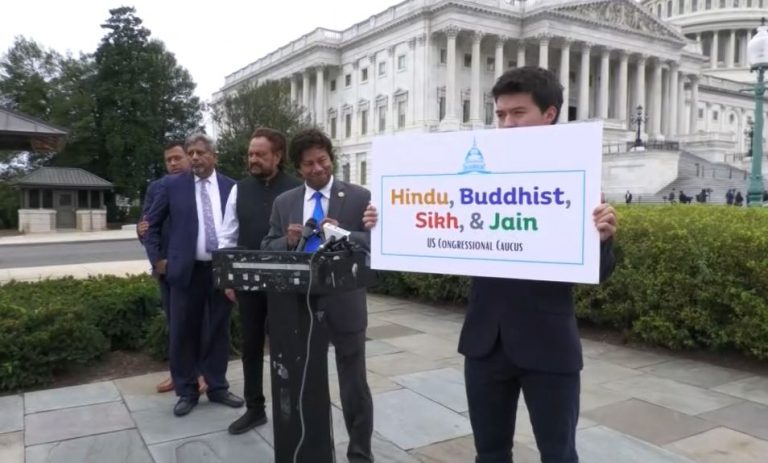
The “Samosa Caucus,” a group of Indian-origin representatives in the US Congress, is known for addressing issues related to India. Following a similar framework, the US Congress has recently announced the formation of the Hindu Caucus. This new group of lawmakers is dedicated to advancing and protecting the interests of the Hindu community.
Like other caucuses, the Hindu Caucus comprises members from various political parties, coming together over a shared interest. These caucuses operate much like ‘pressure groups,’ exerting influence within the legislative process to champion specific causes. By forming a caucus, these lawmakers can effectively address and support issues relevant to their communities, in this case, focusing on legislation that benefits Hindus.
Members of these caucuses collaborate to introduce legislation in Congress that aligns with and supports the interests they represent. The formation of such caucuses can be based on a variety of factors, including foreign policy interests, religious affiliations, ethnic backgrounds, or other specific group concerns. The primary objective of these groups is to rally as much support as possible for the causes or communities they are dedicated to.
For quite some time, there has been a concerted effort to establish a Hindu caucus in the US. This initiative recently gained momentum with Indian-American Congressman Shri Thanedar championing the cause. The formal establishment of the Hindu Caucus has now been officially announced by US Congressmen Pete Sessions and Elyse Stefanic.
Under the leadership of Chair Elysei Stefanik, the caucus is set to focus on safeguarding the rights of Hindu minorities in America. Concurrently, it aims to promote and uphold the values inherent to the Indian-American Hindu community.
The Hindu Caucus is established to represent Hindus originating from India, Pakistan, Bangladesh, Sri Lanka, Nepal, and Bhutan, as well as those in the United States and the Netherlands. Additionally, this caucus is committed to advocating for the interests of Sikhs, Jains, and Buddhists, encompassing a broader spectrum of religious communities.
The caucus, which includes several members beyond Stefanic, will champion policies that promote open trade, advocate for minimal government intervention, emphasize fiscal prudence, support family values, and endorse a foreign policy that stands against authoritarian regimes.
Speaking at its formation, Congressman Pete Sessions said, “The formation of the Hindu Caucus in Congress is an important step toward recognising and amplifying the voice of the Hindu-American community in our nation’s capital. We are committed to addressing their concerns, showcasing their contributions and ensuring that their vision finds a voice at the highest levels of government.”
About 35 lakh Hindus live in America. Most of them are Indians or of Indian origin. Hindus from many other countries also live in America. American Hindus constitute about 1% of the total population. This is an influential class of America.
Hindus are one of America’s most educated religious groups. According to research by the Pew Research Center, 77% of Hindus living in the US are graduates. This is more than any other religious group. Hindus are also one of the highest earners in America. Hindus earn more than any average American family.
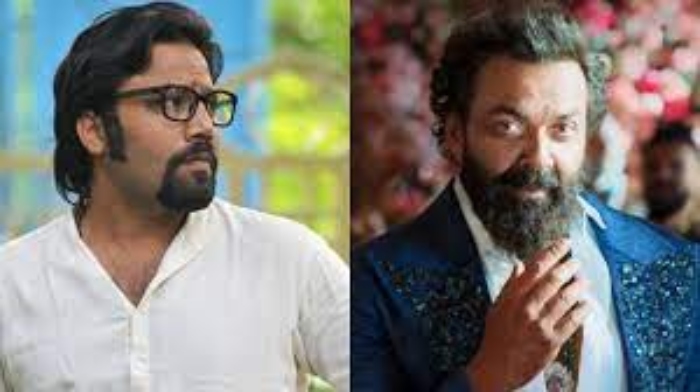
After strongly retorting to negative reviews and allegations of spreading ‘toxic masculinity’ by some ‘illiterate’ and ‘uneducated’ critics, Sandeep Reddy Vanga, director of the recently hit film, ‘Animal’ has now managed to silence the leftist-liberals and Islamist cabal which has been attempting to construct an anti-Muslim narrative around his film.
It’s interesting to note that a lot of so-called liberals, pseudo-seculars and Islamists have taken offence at the filmmaker for depicting Bobby Deol’s character’s religion as ‘Muslim.’ These people have never raised an eyebrow when a Hindu is shown as the antagonist in any given movie. In fact, they would dismiss it as ‘poetic licence’ and send Hindus on a guilt trip if they dared to protest what they would consider to be the ‘freedom’ of any artist or writer.
Dismissing this skewed narrative, Vanga in an interview with Galatta Plus, said that people often undergo conversions after having experienced setbacks, and that’s what Abrar did. Vanga stated to have personally witnessed the tendency of vulnerable people to gravitate to superstition and religion. In the movie, Abrar becomes silent due to the stress he endured following the death of his grandfather. He later turns against Ranvijay after learning of his brother’s death. Subsequently, their relationship is discovered.
Notably, in the film, Abrar, the character essayed by Bobby Deol, is the cousin of the protagonist, Rannvijay Singh (played by Ranbir Kapoor).
Further explaining his rationale behind depicting Bobby Deol’s character ‘Muslim,’ Vanga said that we often see a lot of people converting to Islam and Christianity but seldom do we see anybody converting to Hinduism. Moreover, it provided him with a rationale to create Abrar as a character with several wives.
We see a lot of people converting to Islam and Christianity; we never see anybody converting to Hinduism: Animal director explains his rationale for depicting Bobby Deol’s religion as Muslim
He said, “I’ve seen people, when they enter a zone of zero confidence, people will come and say to them, ‘Go to a church, or go to a baba, he’ll give some taweez, change your name…’ I’ve seen people changing their religion because so much has happened to them. At a low point, they feel like it’s a new birth, it’s a change of identity completely… We see a lot of people converting to Islam and Christianity; we never see anybody converting to Hinduism. So, I thought I’ll use this, because you can get multiple wives in Islam. I can have multiple cousins with different faces; the drama will be bigger. That’s the only reason Vanga told Galatta Plus adding, “there was no intention to show a Muslim in a bad light.”
Islamists and leftist liberals criticise ‘Animal’ makers for being ‘anti-Muslim’
It’s interesting to note that since its December 1 release, Sandeep Vanga’s film Animal has generated conversation for both right and wrong reasons. Film critics have harshly criticized the Ranbir Kapoor starrer despite the film’s remarkable domestic and international box office performance, citing the director’s misogynistic approach. Following criticism that it glorified misogyny, several leftist liberals and Islamists on social media are now criticizing the director for supposedly harbouring “Islamophobia.”
“What is Bollywood’s obsession with portraying Muslims as absolute psychos. Can they focus on their own Hindu mobs in India. Their second obsession is violence against women. Their third obsession is with Pakistan. Hate really sells, tragic,” wrote an X user going by the handle @zay9797_
What is Bollywood’s obsession with portraying Muslims as absolute psychos. Can they focus on their own Hindu mobs in India. Their second obsession is violence against women. Their third obsession is with Pakistan. Hate really sells, tragic.
“I just saw a snippet of Bobby Deol in Animal and I can’t believe my eyes. They’ve shown him as a pervert Muslim. The fact that these actors agree to take on such roles shows the hatred in their own hearts. Flop nepo kid. His brother is just as bad. What’s their obsession with us,” she added in her subsequent post.
A few other Islamists also took offence to the filmmaker showing the religion of Bobby Deol’s character ‘Muslim’.
Indian film makers and their obsession with showing Muslims as villians..! #AnimalMovie
Islamist social media channel Muslim Spaces also looked visibly angry at the makers of the movie for depicting Bobby Deol’s character as ‘Muslim.’ The anti-Hindu channel which has obviously, never been offended when a ‘Hindu’ is depicted as the antagonist in a film, bemoaned, “Animal connects with pro-Hindutva incels (‘trads’ in Indian context) at a visceral level. It brings to life some of their pet fantasies.”
Should @MaheshNBhatt clarify on this Islamophobia?#AnimalMovie: Why the Film Needed to Have a 'Muslim Villain'?
“Animal connects with pro Hindutva incels ('trads' in Indian context) at a visceral level. It brings to life some of their pet fantasies”, writes @AdityaMenon22
Animal’s Sandeep Reddy Vanga calls his critics ‘uneducated’, asks them to ‘teach English in China’
Notably, in a separate interaction with Galatta Plus, Vanga had earlier dismissed the charge that the film is promoting Misogyny in which he referred to the critics as ‘Jokers’.
He said, “Misogyny is disrespect to women. This is the actual definition, right? So no. Even Kabir Singh, even Animal, even me as a person. I always feel my production house name is Bhadrakali Pictures and I don’t know why people think…not too many people, only these 15-20 jokers. But it’s a wrong word to use on Kabir Singh, Animal.”
Responding to negative reviews and allegations of spreading ‘toxic masculinity’, Sandeep Reddy Vanga, director of the recently hit film, ‘Animal’ lashed out at the clique of ‘English’ critics calling them ‘illiterate’ and ‘uneducated’. In a conversation with Connect FM Cannada, Vanga admitted that negative reviews do hamper a film.
However, he argued that the film is doing good business at the box office because of the film’s craft. It’s not because Bollywood critics like Anupama Chopra, Sucharita Tyagi, and Rajeev Masand diss his films.
As per reports, Vanga’s Animal has done business for around Rs 522 crore in India and Rs 843 crore worldwide. It’s reportedly the biggest A-rated film ever, and behind Shah Rukh Khan’s Jawan and Pathaan, Animal is the third-biggest Indian film of 2023. Meanwhile, Vanga’s upcoming directorial ventures include Prabhas’ Spirit and Allu Arjun’s untitled film.
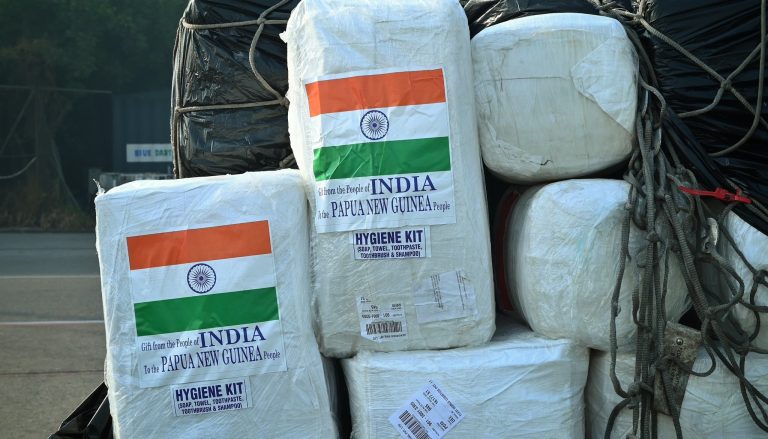
In continuation of India’s commitment to providing relief to the people of Papua New Guinea affected by the volcanic eruption, a special charter flight, loaded with supplies, took off from New Delhi on Thursday.
According to the Ministry of External Affairs (MEA), this initiative is part of the USD 1 million aid announced by India to assist in the aftermath of the disaster. The supplies include approximately 11 tonnes of disaster relief material and 6 tonnes of medical aid.
In a post on ‘X’, the official spokesperson of MEA, Arindam Bagchi wrote, “India’s humanitarian assistance for the people of Papua New Guinea! Pursuant to the USD 1 mn relief assistance announced by India for the volcanic eruption affected people of Papua New Guinea, a special charter flight carrying relief supplies takes off for Port Moresby.”
??’s humanitarian assistance for the people of ??!
Pursuant to the US$ 1 mn relief assistance announced by India for the volcanic eruption affected people of Papua New Guinea, a special charter flight carrying relief supplies takes off for Port Moresby. pic.twitter.com/m25edhh5Gc
The disaster relief material comprises tents, sleeping mats, hygiene kits, meals ready to eat, and water storage tanks, whereas medical aid includes essential medicines, surgical items, and sanitary pads, among other things.
“The supplies include approximately 11 tonnes of disaster relief material and 6 tonnes of medical aid. Disaster relief material comprises of tents, sleeping mats, hygiene kits, meals ready to eat, water storage tanks; & medical aid includes essential medicines, surgical items, sanitary pads, rapid antigen test kits, pregnency test kits, mosquito repellents & baby food among others,” the MEA said.
Notably, India is sending HADR (high availability disaster recovery) supplies for the people of Papua New Guinea (PNG) in the wake of the volcanic eruption.
A major volcanic eruption on Mount Ulawun in Papua New Guinea erupted on November 20 and forced the evacuation of over 26,000 people and created urgent humanitarian needs.
Expressing solidarity with the people of Papua New Guinea, India extended relief assistance. “As a close friend and development partner under the Forum for India-Pacific Islands Cooperation (FIPIC) and as a gesture of solidarity with the friendly people of Papua New Guinea, the Government of India extends immediate relief assistance to support relief, rehabilitation and reconstruction efforts in Papua New Guinea,” the statement said.
Ulawun, the South Pacific nation’s most active volcano, spewed smoke up to 15km (9.3 miles) in the air on November 20, the country’s Geohazards Management Division said, in its first significant blow-up in years, as reported by Al Jazeera.
India has firmly stood by Papua New Guinea during times of crisis and devastation caused by natural disasters, as it did in the wake of the earthquake that jolted the region in 2018 and the volcanic eruption in 2019.
Ulawun has repeatedly erupted since the 1700s and the last significant eruption occurred in 2019 that forced over 5,000 people to evacuate, according to Al Jazeera.
Papua New Guinea sits on the Pacific “Ring of Fire,” an arc of seismic faults around the Pacific Ocean where much of the world’s earthquakes and volcanic activities occur.
(This news report is published from a syndicated feed. Except for the headline, the content has not been written or edited by OpIndia staff)
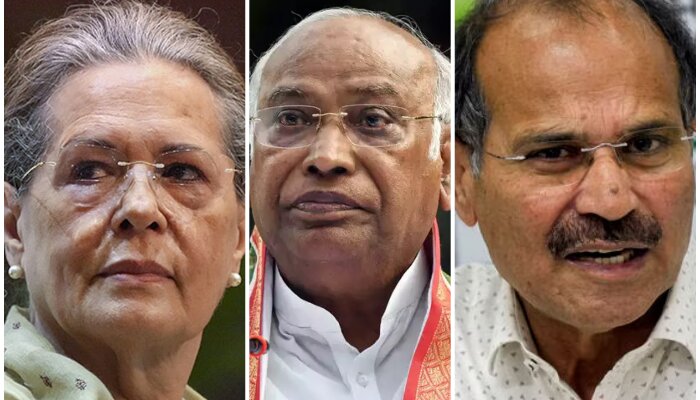
Congress president and Rajya Sabha MP Mallikarjun Kharge, former party president and Lok Sabha MP Sonia Gandhi and leader of the party in the lower house Adhir Ranjan Chowdhury have been extended invitations for the 22nd January consecration ceremony of the Ram Mandir in Uttar Pradesh’s Ayodhya. They have each received an invitation separately. However, the three are unlikely to attend the landmark event, based on sources. Interestingly, Wayanad Lok Sabha MP Rahul Gandhi and Priyanka Gandhi Vadra have not been invited yet.
Former prime ministers Dr Manmohan Singh and HD Deve Gowda have also been invited. The invitations are currently being sent out and more opposition figures will receive them in the next few days. Sonia Gandhi and Mallikarjun Kharge were reportedly invited to the ceremony by Nripendra Misra, Chairman of the Ram Mandir Construction Committee and an ex-officio member of the Trust as well as the Rashtriya Swayamsevak Sangh Akhil Bharatiya Sampark Pramukh Ram Lal and Vishva Hindu Parishad International Working President Alok Kumar.
According to accounts, Nipendra Misra requested a meeting with Dr Manmohan Singh, but the former prime minister’s staff turned him down citing the former PM’s precarious health. Heads of all political parties have been invited along with former President Pratibha Patil for the auspicious program. Governors and chief ministers are not invited to the inauguration ceremony. However, presidents of all national political parties have been invited and many chief ministers are also the supremos of their parties.
Furthermore, the group met with former President Ram Nath Kovind and Prime Minister H D Deve Gowda and invited them. According to sources, invitations have been extended to Aam Aadmi Party national convenor and Delhi chief minister Arvind Kejriwal, Bahujan Samaj Party chief Mayawati, Communist Party of India (Marxist) general secretary Sitaram Yechury and his Communist Party of India colleague D Raja.
As per reports, after the consecration celebration, each state would receive a set number of days to visit the temple and special trains could be arranged. Specific arrangements would be made for their reception and the chief ministers would also be asked to join the devotees from their respective states.
Large-scale preparations are underway in Ayodhya for the consecration ceremony, which will feature speeches by RSS Sarsanghchalak Mohan Bhagwat, Uttar Pradesh Chief Minister Yogi Adityanath and Prime Minister Narendra Modi for an estimated 8,000 attendees. The guest list for the ceremony has been “carefully crafted,” as per Champat Rai, Secretary of the Shri Ram Janmbhoomi Teerth Kshetra Trust, who made this statement on 18th December. A significant number of labourers involved in the construction of the temple, including S N Subrahmanyan of the L&T Group and Natarajan Chandrasekaran of the Tata Group have also been invited by the trust.
VHP spokesperson Vinod Bansal revealed, “Invitations have been sent to chiefs of all national political parties and former prime ministers of the country. Those who gave us time were given invitations personally, others have been sent the invitations through post. VHP has always maintained that whoever has the belief in Shri Ram and takes pride in the cultural heritage of the country is welcome for a darshan.”
According to a top VHP leader, there was no truth to the rumours that opposition politicians would not be invited to the sacred occasion since it was always the intention to invite every major political figure. He added, “Of course, everybody cannot be called since there is a logistical issue with how much crowd can gather for the event. That is why party presidents are being called. But all are welcome to visit Ayodhya after the ceremony.”
The Trust conveyed that invitations have been sent to all notable people who have contributed to the honour of the nation in any field as well as to saints who are highly respected in different traditions. A Tent City with six tube wells, six kitchen houses and a ten-bed hospital has been erected at the new Teerthakshetrapuram (Bag Bijaisi). The hospital has an agreement with over 150 physicians nationwide to use their services on a rotating basis. The Trust mentioned that around 4,000 saints from various sects have been invited to take part in the event.
Attendees include the spiritual leaders of important temples like Kashi Vishwanath and Vaishno Devi, yoga guru Baba Ramdev, Tibetan spiritual leader Dalai Lama, cricketers like Sachin Tendulkar and Virat Kohli as well as representatives of constitutional and religious organisations. Actors like Rajnikanth, Amitabh Bachchan, Madhuri Dixit, Dipika Chikhlia and Arun Govil, film directors like Madhur Bhandarkar and businesspeople like Mukesh Ambani and Anil Ambani along with renowned painter Vasudev Kamat and Indian Space Research Organisation (ISRO) Director Nilesh Desai are also invited. The VHP also reached out to veteran BJP leaders like Lal Krishna Advani and Murli Manohar Joshi who might not be able to attend owing to their health issues.
On Wednesday (December 20), Toyota announced a safety recall of over 1 million vehicles of 2020-2022 Toyota and Lexus models in the United States. The Japanese automotive behemoth has recalled its vehicles over a defect that could cause airbags not to deploy, jeopardising the safety of the occupants of the car.
Toyota stated in a notice issued on its website that a probable fault in the Occupant Classification System (OCS) sensors in the front passenger seat of affected vehicles might cause a short circuit. As a result, the airbag system may fail to detect the presence and weight of the passenger and fail to deploy as designed.
The press release said that Toyota and Lexus dealers will evaluate the OCS sensors and, if necessary, replace them at no cost to owners. Toyota will notify customers if their vehicles are subject to the recall by the middle of February 2024.
The recall affects various models of Toyota and Lexus vehicles manufactured between 2020 and 2022. Toyota Avalons, Camrys, Highlanders, RAV4s, Siennas, and Corollas, as well as some hybrids, are included in the recall. The Lexus cars included in the recall are the ES250 sedan and the RX350 SUV among others.
It is worth recalling that in August this year, it was reported that Toyota recalled around 1,68,000 recently manufactured vehicles in the United States due to a possible fire risk. Toyota Tundra and Tundra Hybrid vehicles from the model years 2022 and 2023 were recalled.
The company recalled 1.9 million RAV4 sport utility vehicles in the United States in November because the batteries can shift during rapid turns and potentially cause a fire.
Toyota also recalled about 751,000 Toyota Highlander SUVs in the United States on October 26 to address a problem with the tabs that secure the cars’ front lower bumper coverings. According to the company, even a slight collision could cause the bumper cover assembly to fall off, posing a danger to drivers.
Chhattisgarh’s newly elected state government is likely to pass a legislation or take administrative action to prohibit religious conversions rampant in the state.
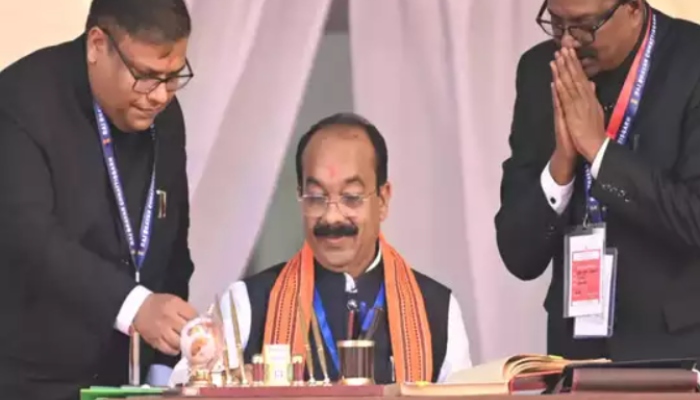
Deputy Chief Minister Arun Sao stated in an exclusive interview with News18 that the conversion of the tribal population to Christianity by missionaries operating throughout the state has been a significant problem. He added that it needs to be addressed with appropriate government action.
“We have to stop the conversion of tribal population in the state. It is a crucial issue that has to be addressed. We will take whatever measures are possible in the legal framework to stop this,” said Arun Sao.
Sao stated that one of the government’s top goals is to prevent religious conversion and that pertinent decisions would be made after the government’s second cabinet meeting and the formation of the council of ministers.
Arun Sao, meanwhile, added that the government has decided to construct homes for 18 lakh low-income recipients under the PM Awas Yojana during its first cabinet meeting on December 14. “In our first cabinet meeting held last week, we decided to build houses for the poor. In the first phase, houses will be built for 18 lakh beneficiaries under the Prime Minister Awas Yojana,” he added.
The state has long been subjected to demands from the RSS for an anti-conversion law. A law to halt the conversion was demanded by the RSS and its affiliates. Along with this, the RSS and its allies started a movement calling for the delisting of tribals who became Christians.
According to Sao, the administration will carry out every recommendation made in the “Modi’s Guarantee” election manifesto. “People will get everything that the party promised before elections. We will execute all programs and schemes which were mentioned under Modi’s guarantee,” said Sao.
In response to the probe into multiple corruption cases involving former chief minister Bhupesh Baghel and members of his party, Arun Sao declared, “We will adopt a zero tolerance for corruption policy. Every complaint of corruption will be recorded as a case. People’s money was embezzled. The law and order will be reinstated. Chhattisgarh will become one of the most advanced states.”
Sao carried on by expressing his gratitude to the senior leadership for choosing him to be the state’s deputy chief minister and for recognising his contributions. The state has got its first tribal chief minister Vishnu Deo Sai, while Arun Sao, Deputy CM, represents the OBC community.
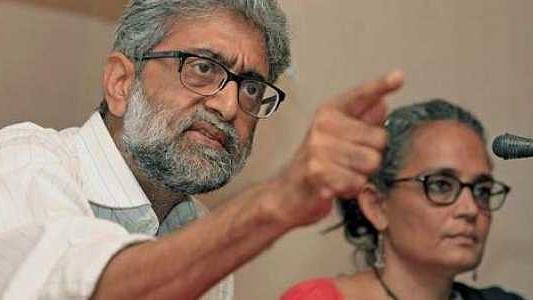
The Bombay High Court on 19th December granted bail to Bhima Koregaon violence accused Gautam Navlakha. In its order, the division bench comprising Justicce AS Gadkari and Justice SG Dige noted that Navlakha merely intended to commit the terrorist at and did not attempt the same.
The HC, in its order, stated, “In the present case, the incriminating material as adverted herein above does not in any manner prima facie leads to draw an inference that, Appellant has committed or indulged in a ‘terrorist act’ as contemplated under Section 15 of UAP Act.”
“According to us, the record prima facie indicate that, it was at the most the intention of the Appellant to commit the alleged crime and not more than it. The said intention has not been further transformed into preparation or attempt to commit a terrorist act, to attract Section 15 of the UAP Act.”
The court also stated in its order that Navlakha had not committed any covert or overt terrorist act. “Even though in the said documents, the authors of it have expressed their intention to cause fatality to the politically influential persons or to cause tremendous disturbance in the Society at large, the Appellant only being a member of the party cannot be prima facie held to be a co-conspirator to it. From the material on record, it appears to us that, no covert or overt terrorist act has been attributed to the Appellant,” the order states.
On the letter that Navlakha had written to the Judge of the US court for clemency to Ghulam Fai, the court said that it was not related to the present crime Navlakha is accused of.
The court further noted that it appeared that the letter was written by Navlakha in his individual capacity and at the most, it can be said, in the capacity of his being a party member and nothing more.
The court also referred to the point of the name ‘Gautam’ referred to in documents. The court said that prima facie it cannot be assumed that the ‘Gautam’ is the same person.
“..there is another person by name Gautam @ Kosa @ Gopanna @ Sadha, who is the Central Committee Member of the CPI (M) and therefore it cannot be safely inferred that, it is the Appellant only who has been referred to in those documents.”
“According to us, the identity of the Appellant being the same person ‘Gautam’ is in doubt as far as those documents are concerned. At this stage prima facie we cannot presume that, ‘Gautam’ is the same person as the identity of the said ‘Gautam’ is yet to be established beyond reasonable doubt by the prosecution,” the order states.
The court said that Navlakha is in “pre-trial incarceration for more than three years and eight months”.
The court stated, “The Appellant is in pre-trial incarceration for more than three years and eight months. The charge-sheet consists of about 20,000 pages in 54 Volumes and the prosecution has cited 370 witnesses in it. The learned Judge of the trial Court has submitted a report dated 18th September, 2022 stating that, it will require more than a year to frame charge. As a matter of fact, till date the trial Court has not framed charge. The possibility of trial of the Appellant being concluded in near future is very bleak.”
Bacground
The Elgar Parishad-Bhima Koregaon case pertains to an event organised at Shaniwar Wada called Elgar Parishad on December 31, 2017.
The following day, i.e January 1, 2018, large-scale violence broke out at Bhima Koregaon, where lakhs of Dalits had gathered to celebrate the 200th anniversary of the Battle of Bhima Koregaon, won by the British Army—comprising mostly soldiers from the Dalit community—against the Peshwas in 1818.
A total of 16 accused were apprehended in the case including Navlakha, who is now the seventh accused to secure bail.
Moreover, Navlakha had reportedly visited the United States thrice in the period between 2010-2011 and written to a US district court judge seeking clemency for Fai, who was arrested by the FBI in 2011 on the charges of accepting funds to the tune of several million from the ISI and the Pakistan government.
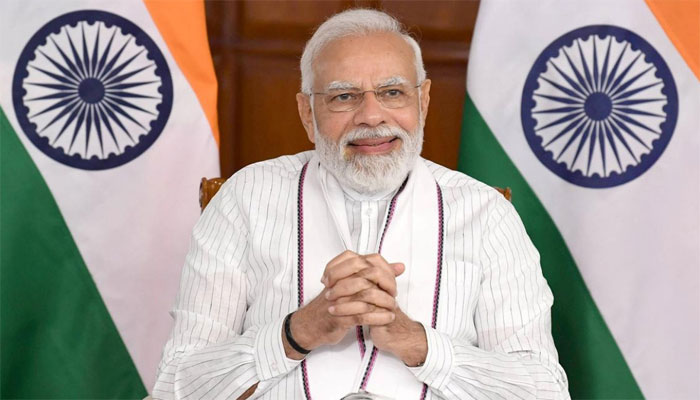
In an interview with UK-based Financial Times, Prime Minister Narendra Modi talked about India’s unity and tolerance of various religious communities with no discrimination whatsoever. PM Modi, when asked about the future of India’s Muslim ‘minority’ underscored, the economic success of the Parsi community while calling them the “religious micro-minority of India.”
“Despite facing persecution elsewhere in the world, they have found a safe haven in India, living happily and prospering. That shows that the Indian society itself has no feeling of discrimination towards any religious minority,” PM Modi told the Financial Times on Wednesday (December 20).
While FT says that PM Modi’s response does not make a mention of India’s 200 million Muslims, his mentioning of a religious micro minority, namely, the Parsis and their progress over the years reflects that the fact that Indians do not hate, oppose or discriminate against any religious minority, native or migrant legally residing in India.
Be it the Zoroastrians of Persia or the Jews of Israel, India has been safe heaven for persecuted communities around the world. It demonstrates the inclusive nature of Indian society and its Hindu traditional belief of “Vasudhaiv Kutumbakam” (the world is one family).
In the meanwhile, terror conspiracies to turn India into an Islamic country with prescribed deadlines have been uncovered in recent times including the now-outlawed PFI’s “India Vision 2047” document.
According to 2011 census data, Indian Muslims form the second-largest religious majority comprising approximately 14.2%. In fact, the data showed that India’s Muslim population is growing faster than the country’s Hindu population, as the Muslim population grew by around 24.6% between 2001 and 2011, compared to around 16.8% for Hindus over the same period. While the self-proclaimed champions of the rights of Muslim “minorities” are worried about the community’s ‘future’ the data raised concern over the potential population imbalance.
On being asked about claims of dissent suppression by his government, PM Modi laughed, noting that critics freely use their rights through various media outlets. He also maintained the freedom of stating facts in response to such allegations.
“There is a whole ecosystem that is using the freedom available in our country to hurl these allegations at us every day, through editorials, TV channels, social media, videos, tweets, etc. They have the right to do so. But others have an equal right to respond with facts, PM Modi said.
While discussing the aspirations of the Indian people, the prime minister pointed out that expectations had shifted over the last decade. “They realise that our nation is on the cusp of a take-off,” PM Modi remarked, pushing for accelerated progress and conveying confidence in the Bhartiya Janata Party’s ability to fulfil these aspirations.
As reported earlier, PM Modi raised concerns over extremist activities by foreign-based banned outfits in the guise of Freedom of expression. The prime minister said, “India was deeply concerned about the activities of certain extremist groups based overseas. These elements, under the guise of freedom of expression, have engaged in intimidation and incited violence.”
PM Modi’s comments came in response to the claims made by the US of an Indian link to an alleged foiled assassination plot against terrorist Gurpatwant Singh Pannun. Stating that he will “look into” any evidence, PM Modi alluded to the fact that US and Canada who have levelled allegations against India has not so far provided any evidence to back their charges against India. He, however, added that “few incidents” would not affect US-India ties.
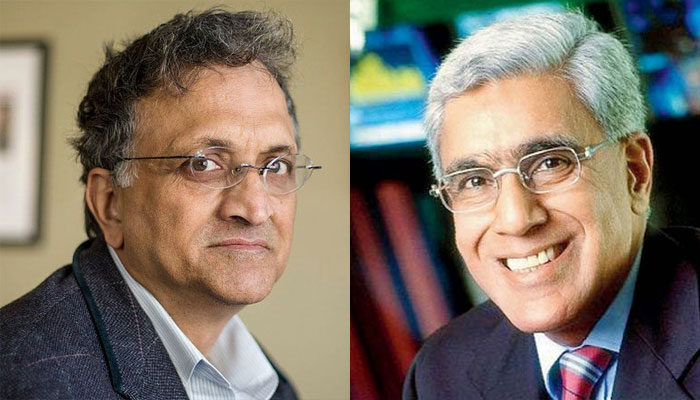
On 20th December, Karan Thapar of The Wire interviewed ‘historian’ Ramachandra Guha based on his op-ed in The Telegraph. The discussion between the two mainly revolved around Guha’s perspective on the political and cultural shifts in India, specifically regarding the prominence of Hindu identity in Indian politics. As expected, Guha vehemently expressed his concerns about the changing language of the political discourse. He claimed that the Indian society is shifting away from secularism.
The interview then delved into Guha’s apprehensions about the “implications” of the Bhavya Ram Mandir that is scheduled for inauguration on 22nd January, 2024, in Ayodhya by Prime Minister Narendra Modi. Guha claimed that he would not be celebrating the event because he “experienced the communal violence” that followed the demolition of the disputed Babri structure.
Guha also expressed his reservations about the monumental scale of the temple, claiming that it would potentially have implications for the country’s future. He claimed that the construction of Bhavya Ram Mandir is a step towards a “Second Republic” with a Hindu-first approach, which, according to him, contrasts with the secular ethos of the Constitution of India.
Ramachandra Guha questioned the need to construct such a monumental Mandir and criticised the endorsement it has received from the political leaders. The discussion then drew comparisons with the other Asian countries like South Korea, Singapore, Pakistan, Sri Lanka and Bangladesh. While giving examples of Sri Lanka, Guha asserted the way India is moving towards Hindu majority, the country may face a similar fate as the neighbouring country Sri Lanka. He said, “The civil war happened in Sri Lanka because the Sinhala-speaking Buddhist majority sought to put the Tamils, who are Hindus, in their place.”
Notably, during the interview, Karan Thapar made a bizarre statement that the inauguration of Swarved Mahamandir by the PM leads to Hindus taking the path of authoritarianism, which calls for a deep dive into the importance of Guru Parampara while attaining the path of spirituality.
Ayodhya Bhavya Ram Mandir and legal reclamation of sacred spaces
The way Ramachandra Guha expressed his views about the Ram Mandir in his op-ed, and the interview with Karan Thapar showed how misinformed he is about the Hindu culture and the ethos that ensured India remained secular. Notably, the Supreme Court verdict legitimised the rebuilding of Bhavya Ram Mandir, which the invaders destroyed. The judgment is a testament to Hindus’ belief in the legal and democratic approach.
Through the legal process, Hindus exercised their constitutional right to reclaim a sacred space of immense significance that they had fought for over 500 years. The land dispute between Hindus and Muslims spanned for decades and witnessed a legal battle that culminated in a verdict which recognised the complexity of the situation. One has to appreciate the balance between the cultural reverence and the rule of law that led to the construction of the Bhavya Ram Temple. It has given a ray of hope to every sane Hindu worldwide that their sentiments matter.
Every country has a different design, which Thapar and Guha forgot to comprehend
While discussing the “implications” of Ram Mandir’s construction on Indian politics, they asserted that India should learn from what happened in Sri Lanka and Pakistan. According to Guha, the civil war occurred in Sri Lanka because the Sinhala-speaking Buddhist majority sought to put the Tamils, who are Hindus, in their place. Similarly, the fundamentalists changed the country’s course of progress in Pakistan. They asserted that if India continues its chosen path, it will end up like these two countries. Furthermore, they stated that India should learn from Singapore and South Korea, where religion does not “find a place in the public view”.
Interestingly, while expressing their imaginative concerns, they completely ignored the nuanced nature of the secular fabric in Indian society shaped by the constitutional principles and the Hindu way of living that is rooted in “live and let live”. Unlike Sri Lanka and Pakistan, India is unlikely to become a religious state.
Left-liberals often forget that it is not the Hindus that conspired to make India a religious state. It was the Popular Front of India and other Islamic organisations that called for “Ghazwa-e-Hind” and wanted Sharia to be implemented in the country. Had PFI been not banned, they would have moved on with their plan for Sharia in India by 2047. Both Guha and Thapar ignored that India has a diverse religious landscape and the coexistence of multiple faiths for centuries. Furthermore, it is only because of Hindus that India has remained a secular state. Otherwise, it would have turned into the likes of Pakistan long ago.
Guha and Thapar’s suggestion for India to learn from South Korea and Singapore regarding religious ethos completely oversimplified the complex dynamics of religion in each country. While India has a rich history of religious pluralism, South Korea and Singapore have homogenous religious landscapes. India’s inclusive approach to diverse religious practices must be aligned with models designed for much smaller and more homogenous populations. Both failed to recognise India’s constitutional protections and its historical embrace of diversity in terms of religion.
Lack of understanding of Hinduism, spirituality and the importance of Guru Prampara
Now, coming to Karan Thapar’s bizarre statement that the inauguration of Swarved Mahamandir by the PM is Hindus taking taking the path of authoritarianism. He completely missed the point that Sanatan Dharma talks extensively about Guru Pramapara. The philosophies embedded in the Hindu traditions discuss the significance of having a spiritual guide.
Sant Kabir famously wrote, “Guru Gobind dou khade, kaku lagun paye… Balihari guru aapne, Gobind diyo milaye”. In the couplet, Sant Kabir said that when Guru and Gobind (Bhagwan) are standing together in front of you, bow down to the Guru first as he is the one who showed the path connecting with the divine.
In Sanatan Dharma, a Guru is not just a teacher. He is a spiritual guide who imparts wisdom. He facilitates self-realisation and leads disciples on the path of righteousness. What Thapar contended, failed to grasp the essence of the Guru-Shishya Parampara, the foundational element in the Spiritual journey within Hinduism.
The profound significance of Guru Parampara has been described in the life stories of many saints. For example, Guru Gorakhnath, one of the most prominent figures in Nath traditions, belonged to a strong lineage of Gurus who played a crucial role in preserving and disseminating spiritual knowledge. Chief Minister of Uttar Pradesh Yogi Adiyanath belongs to the lineage and currently holds Guru Gaddi after Mahant Avaidyanath.
Similarly, the great philosopher and theologian Adi Shankaracharya established the Advaita Vedanta tradition. His Guru, Shri Guru Bhagvapada, was crucial in shaping his profound understanding of Vedanta.
Sant Tukaram, the 17th-century saint and poet from Maharashtra, was influenced by his Guru Babaji Chaitanya. Swami Vivekananda became a renowned saint because of his Guru, Sri Ramakrishna Paramhansa, who introduced him to the universality of religions and the importance of direct experience in spirituality. Without Gurus, these saints would never have been what they became.
Guha expressed his dismay over the meditation centre and his amazement that someone would guide people on how to chant mantras, what to chant, what not to chant, etc. His assertions made it clear that he must know the importance of pronouncing the Mantras correctly. The right pronunciation and understanding of the inherent vibrations of the Mantras hold spiritual significance. In a way, Guha neglected the meditative and transformative aspects crucial for the spiritual growth of Hinduism.
Notably, Mantras are a bridge between the individual and the divine. Chanting Mantras plays a pivotal role in meditation and spiritual elevation of the devotee. Understanding their depth goes beyond the surface-level rituals and plays and significantly fosters a profound connection with the spiritual realms.
Notably, Hindu practices are not homogenous. A large spectrum of beliefs and paths in Sanatan Dharma can take an individual to spiritual realisation.
The critique of Hindu practices in the op-ed by Guha and the discussion with Thapar, particularly regarding the Ram Mandir, reflected their limited understanding of Sanatan Dharma. They dismissed the legitimate cultural reclamation and undermined the essence of spiritual teachings. Their misguided comparisons completely lacked nuanced comprehension and showed the immediate need for them to reconsider their perspectives.
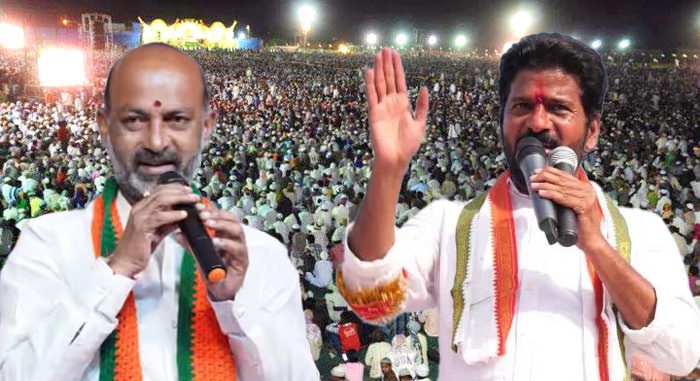
The Bharatiya Janata Party has strongly reacted to the decision of the Congress government in Telangana to provide Rs 2.4 crore for the Tablighi Jamaat congregation in Nematnagar village of Pargi Mandal in Vikarabad district from 6th to 8th January next year. BJP’s national general secretary and Karimnagar Lok Sabha MP Bandi Sanjay Kumar has urged Chief Minister A. Revanth Reddy to take firm action against the officers who granted authorization and initiated the process of releasing money for the event. Furthermore, he insisted that the gathering should be called off.
Pure evil and outrageous of Congress government in Telangana to fund Tablighi Jamaat meeting.
Does the newly elected government of Revanth Reddy know this? What are intelligence agencies doing? What do you want to do to Telangana with Tukde Tukde gang?
Bandi Sanjay Kumar took to X to slam the decision and stated, “Pure evil and outrageous of Congress government in Telangana to fund Tablighi Jamaat meeting.”
He questioned whether the state chief minister was aware of the development and referred to the Islamic movement as the “Tukde-Tukde gang.” He asked, “Does the newly elected government of Revanth Reddy know this? What are intelligence agencies doing? What do you want to do to Telangana with the Tukde Tukde gang?”
The BJP leader charged, “Congress government claims that state is bankrupt, but is funding program organized by Tablighi Jamaat which promotes terrorism and the spread of Islam. It is an unforgivable crime to commit such acts in the guise of secularism.”
He recounted that Tablighi Jamaat was the primary cause of the coronavirus’s transmission in India in 2020 during the Covid-19 pandemic. “During the Covid-19 pandemic, the main reason for the spread of the virus in India 2020, was the Tablighi Jamaat’s religious prayers. This organization’s entry into Telangana in the name of gatherings and meetings is leading to many suspicions, that too at a time when the coronavirus is spreading in India again.”
The parliamentarian accused, “It is outrageous that more than Rs 2.45 crores have been sanctioned for the arrangements of the meeting organized by the Tablighi Jamaat organization in the name of Islamic society in January in Parigi mandal of Vikarabad district.” He pointed out, “Islamic countries like Saudi Arabia, Uzbekistan, Tajikistan and Kazakhstan have banned the Tablighi Jamaat organization for promoting terrorism.”
He inquired about the brains behind the decision to give money to a group that propagates radical religions and forces people to convert to their religion and pushed for the scrapping of the program. “Who is the mastermind behind the government’s grant of funds to an organization involved in spreading extremist ideologies and forced religious conversions? On behalf of the party’s Telangana unit, we demand Strict action be taken and the meeting of the Tablighi Jamaat should be cancelled immediately.”
“As soon as the Congress government came, the conference was organised by the Tablighi Jamaat, a Muslim missionary organisation, had been funded. The funds were sanctioned at a meeting held in Parigi mandal of Vikarabad district. We are not against minorities, but why is the government giving money to an organisation that spreads the ideology of Islam and terrorism? Released on December 13, 2023, the Minority Welfare Department’s GO No. 123 sanctioning funds for the conference is dangerous for the country,” voiced BJP state spokesperson Rachana Reddy in a press conference on 20th December and accused Congress of unveiling its true face.
She added, “The Tablighi Jamaat has been banned in Saudi Arabia for its illegal conversion drive to Islam and its involvement in proselytizing activities. Saudi Arabia, the birthplace of Islam, has banned the Tablighi Jamaat. How can the government fund an organisation that indulges in the spread of extremist ideology and forced conversions without any intelligence inputs and without consulting the authorities.” She further expressed regret at the Waqf Board’s decision to permanently provide Tablighi Jamaat with amenities including parking and drinking water pipes.
The Congress government in Telangana has cleared the provision of Rs 2,45,93,847 crore to hold an Islamic congregation just one week after taking office. Two to five lakh Muslims from Telangana, Andhra Pradesh are anticipated to attend the Subaee Deeni Ijtema which is organised by Tabliqhi Jamaat.
Parigi Congress MLA Dr T RamMohan Reddy declared that he was able to swiftly acquire the cash after serious consideration and speaking with Chief Minister Revanh Reddy. A directive from Syed Umar Jaleel, the Secretary of Minority Welfare revealed that monetary assistance from several departments had been authorised for the conference.
A similar gathering was conducted by Tablighi Jamaat in Delhi in March 2020 during which the deadly Covid virus was prevalent and most of the attendees were infected. Moreover, they scattered around the nation, causing the virus to spread widely. It was found after a police inquiry that a large number of foreigners attended this event as well and travelled to different regions of the nation which presented a security danger.
The Tablighi Jamaat congregation and its activities are prohibited in many Islamic countries. Saudi Arabia outlawed Tablighi Jamaat in December 2021, referring to it as “one of the gates of terrorism.” The Islamic organisation was outlawed and classified as an extremist organisation in Kazakhstan in 2013. Furthermore, Iran, Russia, Tajikistan, Turkmenistan and Uzbekistan forbade the outfit.