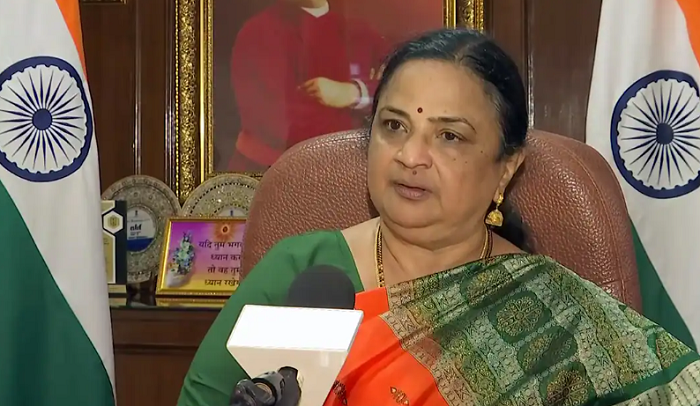
On Sunday, September 17, Santishree Dhulipudi Pandit, Vice-Chancellor of Jawaharlal Nehru University (JNU), raised questions on the working of the Supreme Court. She pondered whether would SC treat others as it did when it granted relief to activist Teesta Setalvad on a Saturday night.
The JNU VC was referring to the Supreme Court’s grant of interim protection from arrest to Setalvad on July 1 in a case concerning evidence falsification to frame innocent individuals in 2002 post-Godhra riot cases.
“The Leftist ecosystem still exists. You know, the Chief Justice of the Supreme Court opened the court on a Saturday night to give Teesta Setalvad bail. Will it happen for us,” she asked while at the launch of a Marathi book named ‘Jagala Pokharnari Davi Walvi’ (World-weakening Leftist Termites) in Pune.
Pandit has a long association with Pune as she was a lecturer in the Political Science department of Maharashtra’s Savitribai Phule Pune University. “To retain political power, you need (to have) narrative power. We need to have it. Unless we attain it, we will be like a directionless ship,” she said.
During the address, she also said that she was associated with RSS-affiliated organizations in her childhood years. “I was a Bal Sevika’ in my childhood. I got my sanskaras (values) from the RSS only. I am proud to say that I belong to the Sangh (RSS) and I am proud to say that I am a Hindu. I do not hesitate at all. Garv se kehti hu main Hindu hoon,” she repeated as the audience shouted the slogans of ‘Jai Shri Ram’.
“Left and RSS are individual ideologies. There has been a major paradigm shift post-2014 in the conflict between these two ideologies,” she said.
Pandit, who was appointed as JNU VC in February last year, stated that some individuals objected to her choice to display the national flag and Prime Minister Narendra Modi’s photograph on campus.
Pandit asserted she informed them they were eating free meals on campus paid for by taxpayers and that they should bow before the national flag and PM Modi’s portrait.
“Until I went to JNU, there was no photo of PM Modi, the President of India, or the national flag. Many people told me not to bring (them) on the campus. I told them you enjoy free meals here with taxpayers’ money, bow before them. He is the prime minister of the country. He does not belong to any party. More than a year has passed and nobody has protested against it,” she said.
In reference to the upcoming Nalanda University in Bihar, she stated, “I recently visited the Nalanda University at Bakhtiyarpur.” We should modify the name of Bakhtiyarpur. That’s a strange name.”
“Our Bharatiya civilization is superior, feminist, and the greatest in the world,” she said as she remarked on the country’s ancient civilization. “Draupadi is the first feminist and not one Simone De Beauvoir (French philosopher). Our civilization is nature-centric,” she said.
On July 1, a 3-judge bench of the Supreme Court granted interim bail to controversial activist Teesta Setalvad. A bench of Justices BR Gavai, AS Bopanna, and Dipankar Datta was hearing the case. The larger 3-judge bench was formed minutes after a 2-judge bench of Justices Abhay S Oka and Prashant Kumar Mishra failed to arrive at a consensus on the appeal challenging the Gujarat High Court order refusing regular bail.
As reported earlier, the 3-judge bench was formed within minutes, and the hearing was scheduled at 9.15 p.m. CJI Chandrachud, who was watching a Bharatnatyam performance at that time, got up multiple times and ensured the formation of a larger bench for the sake of Teesta Satalvad’s bail hearing.
On 16 September 2023, the government of Maharashtra held a special cabinet meeting in Chhatrapati Sambhajinagar in the Marathwada administrative division in the state. In the meeting, the state government took multiple decisions regarding Marathwada, approved many projects, and sanctioned various grants for development works in the region. In an interaction with the media after this meeting, Maharashtra’s chief minister Eknath Shinde said that the Marathwada Water Grid Project will be the game changer for this region and that it will bring prosperity to the farmers in the drought-hit Marathwada region.
CM Eknath Shinde said, “Marathwada Water Grid Project can be a very big game changer for this region. Unfortunately, during the two-and-a-half years of rule of the MVA government, it was put in cold storage. Had they been pushing it a little more, it would have advanced ahead by now. But it is our ill fate that they (Uddhav Thackeray’s government) did not do it. I don’t know if it was halted intentionally. We are taking it ahead. The union government and honourable Prime Minister Narendra Modi himself are ready to extend all the support we need for this so that the drought-hit region of Marathwada gets water and the farmers in the region prosper. So, in this way, it is a very big game changer project.”
#WATCH | Chhatrapati Sambhaji Nagar, Maharashtra: On the Marathwada Water Grid project, Maharashtra CM Eknath Shinde says,"…It could prove to be a game changer…Unfortunately, it was in cold storage…We are taking it forward…Prime Minister Modi will also help(for it) so… pic.twitter.com/8bi5Cjptrp
CM Shinde also took a dig at the previous state government and said, “Some people say that you only do announcements but I would like to tell them that in the whole year whatever decisions our government took from the first cabinet till now, we have kept in mind the welfare of people. We have granted 35 irrigation projects for farmers. How many grants have been given by the earlier government? So, we don’t just make announcements and keep them on paper, we implement them,” CM Eknath Shinde said.
Further, Deputy CM Devendra Fadnavis also spoke after the Cabinet meeting and said that the state government has sent a newly updated proposal of the Har ghar Jal programme to the Centre and requested them to help us. “When Har Ghar Jal program was announced many states sent their proposals to the Centre. Unfortunately, the Maharashtra CM at that time did not send any proposal. Now our government has sent a newly updated proposal and requested them (Centre) to help us,” Devendra Fadnavis said.
What is the Marathwada Water Grid Project?
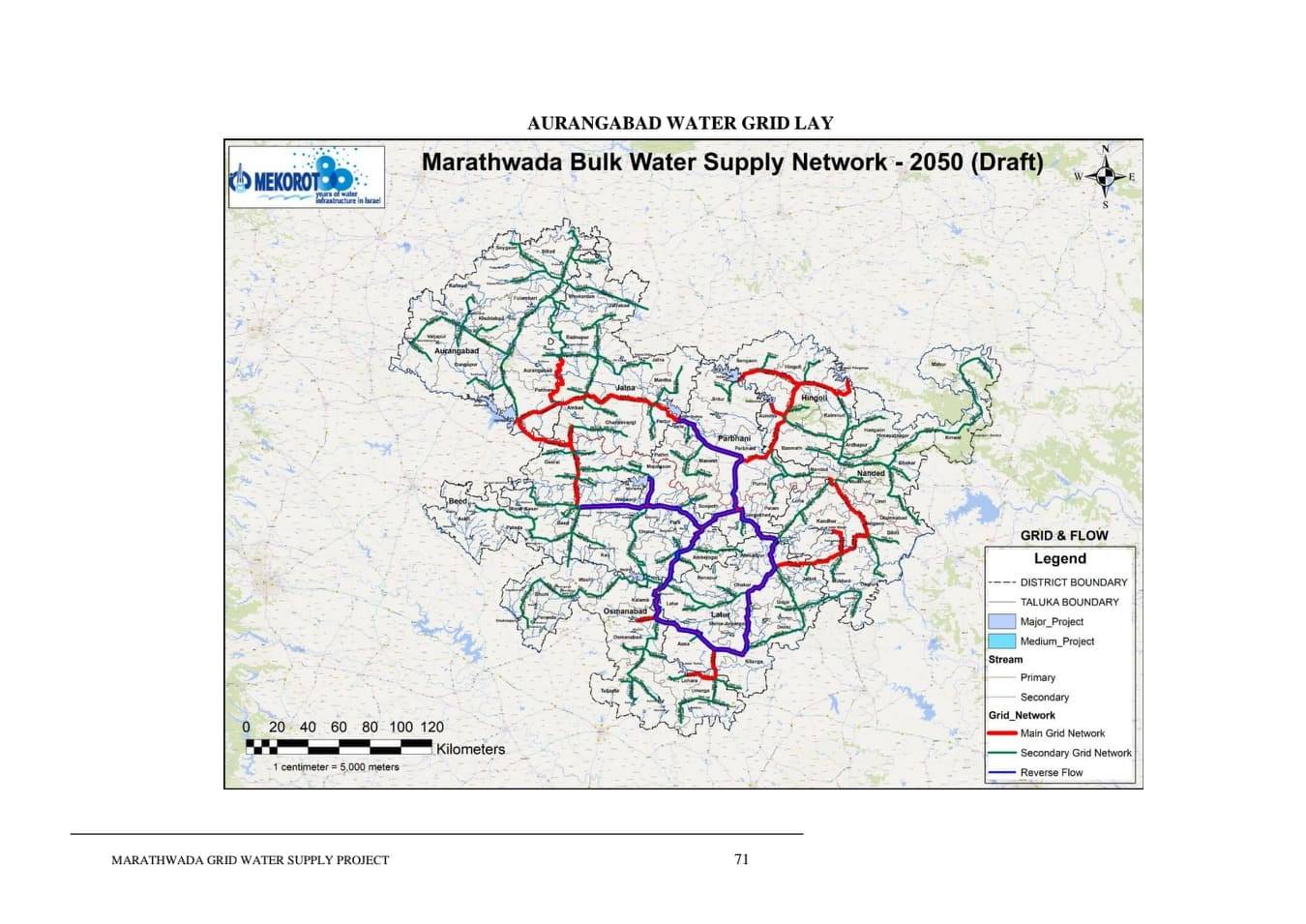
The Marathwada Water Grid Project is an ambitious project to provide a sustainable water supply to the drought-prone Marathwada region. The project was announced by former Chief Minister Devendra Fadnavis in 2016, with an initial budget of Rs. 25,000 crore. However, the budget has since been increased and can go up to Rs. 40000 crore till its completion which will be spent at various stages of the project.
Marathwada encompasses eight districts, namely Chhatrapati Sambhajinagar, Beed, Latur, Dharashiv, Parbhani, Hingoli, Nanded, and Jalna, collectively housing more than 12,000 villages.
In July 2019, the state cabinet approved Rs 4300 crores for the first phase of this water grid project in the Chhatrapati Sambhajinagar and Jalna districts. However, the government could not continue after the election in October 2019. The project which was stalled during the subsequent MVA government is now revitalised by the Eknath Shinde government in the recent cabinet meeting at Chhatrapati Sambhajinagar.
The project will involve connecting 11 dams in the Marathwada region through a network of pipelines. The dams to be connected in the region are Jayakwadi Dam at Paithan in Chhatrapati Sambhajinagar, Mula Dam in Chhatrapati Sambhajinagar, Siddheshwar Dam in Parbhani, Manjra Dam at Dhanegaon in Beed, Kesapuri Dam at Majalgaon in Beed, Terna Dam in Dharashiv, Sina Kolegaon Dam in Latur, Lower Terna Dam in Latur, Manar Dam in Nanded, Vishnupuri Dam in Nanded, and Yeldari Dam in Nanded district.
The total length of the pipeline network is expected to be around 3,000 km. The project will provide drinking water to over 2 crore people in 8 districts, 76 towns, 79 talukas, and over 12,000 villages. The pipeline, which will be laid for the water grid in Chhatrapati Sambhajinagar, will be 737 km long, while that in Jalna district will be 458.29 km long. The detailed plans for other districts are underway.
The Marathwada Water Grid Project is a complex project that will involve a variety of engineering challenges. One of the biggest challenges is the natural topography of the region. The region has a lot of hills and valleys giving it a topography of mid to high levels with diverse spreads of varying elevation over the terrain which will make it difficult to lay the pipelines. Devendra Fadnavis took up the challenge when he was chief minister of Maharashtra. After a halt of three and a half years to this project, he has taken the initiative to revive it as the deputy chief minister of the state.
To overcome this topographical challenge, the project will use a combination of gravity flow and pumping stations. Gravity flow will be used in areas where the natural topography is favourable. Pumping stations will be used to lift the water to higher elevations. The project will also use water purification plants to ensure that the water supplied to the people is of good quality. The water purification plants will be located at strategic locations along the pipeline network. The water supplied through this network will be used for drinking and civil use, irrigation, and industrial purposes.
In January 2018, a significant milestone was achieved as Mekorot Development & Services Ltd, the national water company of Israel, and Maharashtra Jeevan Pradhikaran signed a Memorandum of Understanding (MoU) for the Marathwada Water Grid Project. This collaboration with Israel, known for its expertise in water management, holds immense promise for the Marathwada region, which spans over 65,000 square kilometres and grapples with inadequate rainfall, resulting in distress among farmers and frequent crop failures leading to widespread farmer suicides.
The Marathwada Water Grid Project is an ambitious project that has the potential to transform the Marathwada region. The project will provide a sustainable water supply to the people, which will help to improve their quality of life and boost agriculture and industrial development in the region.
A Brief History of Marathwada Water Crisis Resolution Efforts
During the period of Congress-NCP governance, spanning from 1999 to 2014, a notable collaborative effort emerged within Marathwada, involving representatives from various political parties. Their common goal was to address the region’s pressing water crisis by linking the Krishna River basin to the Godavari River basin. This ambitious project envisioned the transportation of approximately 27 TMC (thousand million cubic feet) of water from western Maharashtra to Marathwada, primarily through Marathwada’s southwestern regions.
Vilasrao Deshmukh, a prominent Congress leader, held the position of Chief Minister of the state during this crucial time. His cooperative relationship and understanding with the opposition leader of the BJP, Gopinath Munde, played a pivotal role in forging a consensus. As a result, regional policymakers mutually agreed to divert 23 TMC of water from the Krishna River basin to alleviate Marathwada’s water woes.
Of the allocated 23 TMC, it was anticipated that villages in Beed and Dharashiv districts would receive 7 TMC of water through the Krishna-Marathwada scheme, sourced from the Ujani dam. However, it’s important to note that a dispute surrounding the allocation of the remaining 16 TMC of water from the Krishna basin to Marathwada remains unresolved and is currently pending before the Krishna Water Disputes Tribunal.
It is also notable that Vilasrao Deshmukh was chief minister of the state for more than nine years in three different terms. He hails from Latur in the southern part of Marathwada. He could not bring a drop of water to Latur. He had to face fierce opposition from the Congress and NCP MLAs from western Maharashtra before considering any demand of people from Marathwada. This also affected the funds allocation. Latur was also worst affected by the severe water crisis in Marathwada that lasted from 2012 to 2016.
In such a situation, Devendra Fadnavis became the chief minister of Maharashtra. It was Chief Minister Devendra Fadnavis who in 2015-2016 sent a water train from Miraj in western Maharashtra to Latur – the hometown of the second longest-serving chief minister of the state. Next year, Fadnavis came up with the idea of linking all the dams in Marathwada with a pipeline. This was named as Marathwada Water Grid Project. The project is expected to mitigate multiple issues in the region. Let us now dive deeper into the socioeconomic problems due to the scarcity of water in this region.
Water Scarcity is the root cause of many problems in Marathwada
The Marathwada region has historically had no other revenue source than agriculture. Nizam implemented the Jagirdari system where local feudal landlords would exploit others as labourers in their farms. After merging with the Indian Republic, the region experienced perpetual neglect. The water scarcity which already prevailed, was joined by the irregular rain pattern due to the climate change over the next decades. Every 2 decades, this region experiences a severe drought affecting the rainfall for continuous 3 to 4 years. This has given politicians an uncontrolled freedom to become more exploitative in this region which has the worst poverty index in the state.
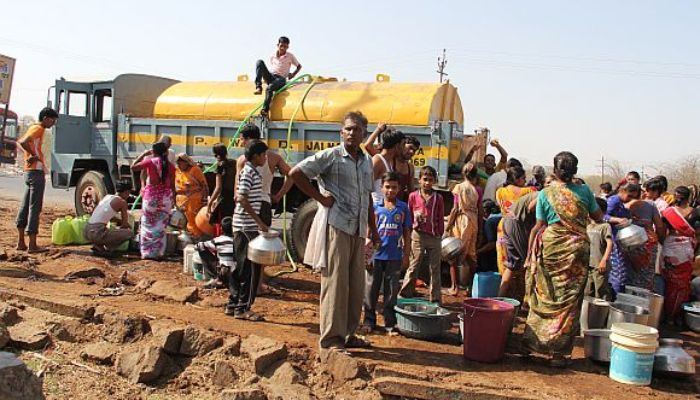
As a result, people gradually left farming and started pursuing higher studies. Migration to Pune and Mumbai became the life goal of the youth in Marathwada. After the Jayakwadi dam was built in 1976 near Chhatrapati Sambhajinagar, some industries dared to step into this region. With this dam, Chhatrapati Sambhajinagar went on to become the only industrial hub in the region and the sole option of migration within the region for the local youth. Operating water tanker services and illegal smuggling of sand from the dry river basins became attractive businesses for mafias.
As recent as 2018, about 4000 water tanker service operators were active in Marathwada. These operators take water from private borewells and sell it at any price. The cost goes up every week especially from the first week of February when most of the water bodies in the region see a near bottom level. This water tanker business has taken a heavy toll on the groundwater level of the region because nobody practised groundwater recharge for decades before Devendra Fadnavis brought in the Jalayukt Shivar Yojana (the water-rich farmland scheme) in 2016. This scheme was focused on groundwater recharge as well as broadening and deepening the river banks.
Implementation of this Water Grid Project is important; but not that easy
Like every audacious goal, the Marathwada Water Grid Project also has its own perceived challenges to address. Many self-styled experts have talked about those challenges. One of the biggest challenges is the scarcity of water in the Marathwada region. The region is frequently affected by droughts, and the dams in the region seldom fill up to their full capacity. This raises the question of how the pipeline grid will be profitable if there is scarce water in the first place.
The cost of the Marathwada Water Grid Project is estimated to be Rs. 40,000 crore. This is a huge investment, 60% of which is to be borne by the implementing company while 40% will be given by the state government under a hybrid annuity model. The 40% amount will be given during the construction period in instalments based on the percentage of construction completed and the rest of the amount will be given after the project completion. The advantage of HAM is that it gives enough liquidity to the developer and the financial risk is shared by the government. The pace of industrialisation growth after this project is expected to be higher. Farm produce is also expected to improve. But everything is just on paper right now, there is no clear idea about the time to recover the expenditure.
The pumping of water through the pipeline grid will require a lot of electricity. This will lead to high electricity bills for the consumers which are local bodies in this case. For example, the Latur municipal corporation pays crores of rupees for the electricity bill for pumping the water supplied to the city from the Manjra dam. Besides, the leakages and maintenance issues of the pipeline may lead to various local disputes. Therefore, carefully planned implementation of this project is extremely necessary to ensure that the people get the benefits aimed by this project.
Plight of Marathwada
The plight of Marathwada is much more than just the water and drought issue. The region was under the rule of the Nizam of Hyderabad till 17 September 1948, when it was merged into the Indian Republic after a brief military action of 4-5 days. The Nizam of Hyderabad was a Muslim ruler who ruled over a large part of the Deccan plateau, including Marathwada. The Nizam’s rule was oppressive and tyrannical. The people of Marathwada suffered under his rule. In 1947, India gained independence from British rule. However, the Nizam of Hyderabad refused to join the Indian Union. He wanted to remain an independent ruler. The Indian government launched a military operation in September 1948 to liberate Hyderabad. The operation was a success, and Hyderabad was merged into the Indian Union.
After independence, Marathwada was merged into the state of Maharashtra. However, the region has always received step-motherly treatment from the state government. Unlike Vidarbha, another drought-prone region in Maharashtra, Marathwada did not put any condition to merge in the Marathi state. However, it has always received step-motherly treatment from the state government. Nagpur in Vidarbha was given an assembly house and a dedicated winter session of the assembly, the status of a deputy-capital (or sub-capital), a high court bench, and whatnot.
But Marathwada got only a high court and a promise to hold an annual meeting of the state government’s cabinet in the Chhatrapati Sambhajinagar city. All other questions of the region went unanswered for the last 75 years as the cabinet meeting promise was also not kept. This cabinet meeting would not happen for years. Even in 2016, when Devendra Fadnavis was the chief minister, this meeting had taken place after a gap of 8 years.
As the Hyderabad liberation day which is also known as the Marathwada Mukti Divas in this region marks the completion of 75 years on 17th September 2023, this Marathwada Water Grid Project is seen as a ray of hope for the long-ignored region waiting to recover its eternal backlog of development.
On Monday, September 18, the special session of parliament began with Lok Sabha Speaker Om Birla congratulating the nation on the success of the G20 Summit under Bharat’s Presidency in New Delhi on 9-10 September.
“The success of G20 Summit under India’s Presidency has filled every Bharatiya with pride,” the Speaker said. He appreciated the Prime Minister’s vision of making Bharat’s G20 Presidency a people-run event. Speaker Om Birla highlighted and lauded the achievements of the G20 Summit including the New Delhi Declaration, inclusion of African Union in the G20, giving prominence to the voice of the Global South among many others.
“Bharat emerged as voice of peace and restraint in the world during G20 Summit,” he said.
The LS Speaker concluded his remarks on 75 years of Bharat’s Parliamentary Democracy by remembering Ganesh Vasudev Mavalankar, the first Speaker of the Lok Sabha of independent India. Following this, Prime Minister Narendra Modi began his address by recalling several momentous periods in the history of the Indian Parliament.
PM Modi recalled his first steps inside the Parliament
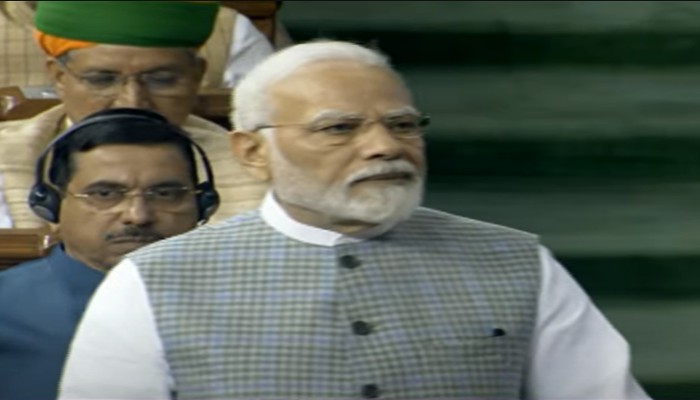
Prime Minister Modi, while delivering his last address in the old Parliament building, recalled the day he first entered the Parliament as an MP. He said, “Today, when we are going to leave this Parliament and head to the new Parliament, we are seeing that it is the opportunity to express the respect that has been given to the emotions of the common Bharatiya.”
“When I became the member of Parliament for the first time, and entered this building as an MP, naturally, I bowed down at the entrance of the Parliament and entered this temple of democracy. That moment was filled with emotions for me, I couldn’t have imagined. But it is the power of Bharat’s Democracy, it is the example of the devotion of the common citizen for the Bharatiya Democracy that a child from a poor family working at a railway station could enter the Parliament. I would never have imagined that the nation would bestow so much respect, so many blessings, and so much love on me. I had never thought,” the Prime Minister said.
A temple of Democracy built by Bharatiyas
PM Modi recalled Bharat’s 75 years of journey as a parliamentary democracy. He said that while the decision to build this structure was that of the foreign rulers, the work put into actually building it was done by Bharatiyas.
“Before independence, this Parliament was the place of the Imperial Legislative Council. After independence, this was re-identified as the Parliament building. It is true that the decision to build this structure was that of foreign rulers. But we can never forget that the sweat put into building this Parliament was that of my people, the hard work was that of my people and the money too was that of my people,” PM Modi said.
“Although we will be entering the new Parliament building, but this old Parliament, too, will continue to give inspiration to the coming generations. This is a significant chapter in the golden journey of the Indian Democracy which, through this building, will continue to introduce the world to how Democracy flows in India’s veins,” he said.
PM Modi congratulated Indian scientists in his last address at the old Parliament
Recalling Bharat’s historic Chadrayaan-3 success, the Prime Minister congratulated the Bharatiya scientist community at large for their continuous dedication and achievements across sectors.
“The world all over is talking about the achievements of Bharat and that too with pride. This is the result of our combined initiatives over 75 years. Not only Bharat, but the entire world is rejoicing the success of Chandrayaan-3. A new face of India’s capabilities, which is associated with advancement, science, technology, with the capabilities of our scientists, the power of 140 crore citizens, it is going to create a new impact on the nation and the world. This Parliament and through this Parliament, I would once again like to congratulate the nation’s scientists and their colleagues.”
Role of India’s federal structure in the success of G20 Summit
The Prime Minister thanked the Parliament for the successful culmination of the G20 Summit. “I believe you have increased the pride of the nation’s citizens. I thank you,” PM said.
“The success of G20 is the success of 140 crore citizens. It is Bharat’s success. It is not a person’s success, it is not a party’s success. Bharat, with its federal structure, its diversity, hosted more than 200 summits across 60 locations with various governments; this has left an impact on the world. This is worth celebrating.”
He recalled that it was during India’s Presidency that the African Union (AU) became a permanent member of the G20. “I cannot forget that emotional moment when the AU was declared (a member) and the AU President said to me that ‘it was such a moment in my life that I might cry while speaking.’ You can imagine how it was in India’s destiny to fulfil such big aspirations.”
The Prime Minister also took a jibe at doubters saying that naysayers were at it again doubting India’s Presidency but were proven wrong again. “Many people have this nature to doubt Bharat. This has been going on since India got independence. This time too it was being said that ‘there will be no declaration, it is impossible’, but it is Bharat’s power that the declaration was released, that too unanimously, with a road map for the future,” the PM said.
The Prime Minister welcomed the Speaker’s announcement for a P20 Summit where Speakers of Parliaments of the G20 nation states will meet ahead of the conclusion of India’s Presidency at the end of November this year.
PM Modi remembered 2001 terrorist attack on the Parliament
PM Modi also recalled the 2001 terrorist attack on the Parliament and paid tribute to the bravehearts who died in a bid to protect the nation.
He said, “The terrorist attack was not only an attack on the Parliament building but in a way, an attack on the soul of our Democracy. This nation can never forget that day. Today, I bow down to those who took the bullets in order to save the Parliament and the Parliamentarians. They are not amongst us, but they made the ultimate sacrifice.”
Tribute to freedom fighters
The Prime Minister recalled the bombings by revolutionary freedom fighters Bhagat Singh and Batukeshwar Dutt in the Central Legislative Assembly against the British Raj. He said, “This is that Parliament where once Bhagat Singh and Batukeshwar Dutt with their bravery shook the British Raj with a bomb blast.”
The Prime Minister added, “The echoes of that bombing will never let such people sleep who want the good for the nation.”
PM recounted historic events that took place in the Parliament
The Prime Minister paid tribute to former Parliamentarians in his address and recounted the momentous decisions undertaken in the Parliament in the past 75 years. He pointed out that all communities across the nation have been represented in the Parliament. He said that women too have played a key role in elevating honour of the Parliament.
The Prime Minister recalled former member of Lok Sabha Indrajit Gupta for his 43-year-long tenure as an MP. He also remembered Samajwadi Party MP Shafiqur Rahman saying that he is serving the Parliament even at the age of 93. He added, “It is the power of Bharat’s Democracy that 25-year-old Chandrani Murmu became the member of this Parliament.”
“Debate and discussion are something we have all exchanged and even initiated, and yet we have all participated like members of a family. Despite all the differences, we don’t leave with any bitterness. Even when we meet years after leaving Parliament, we don’t forget our colleagues and our time together. This has been my experience,” the PM said.
The Prime Minister recalled the terms during the pandemic as well. “Despite the threat of COVID-19, our Parliamentarians attended the House proceedings and did their duty. We did not let the nation’s work come to a halt. We maintained social distance, had to test repeatedly, wear masks, seating arrangements were changed, timings were changed, the members did it all so as to keep working for the nation”, he added.
The PM paid a special tribute to former Parliamentarians who continued their connect with the Parliament and fellow MPs even years after their tenures. “I have seen that those who must have served 30-35 years ago kept visiting the central hall without fail just like how people have a habit of visiting temples. This is how this place attaches you to itself, and many such leaders, who are not in service today, they continue to make visits once in a while. This is the effect of this Parliament.”
PM Modi also recalled Jawahar Lal Nehru’s first speech post-independence and the dark chapter of Emergency during Indira Gandhi’s tenure. “This is the very Parliament where Democracy was born again,” he said.
PM Modi recounted the unanimous assent given by the Parliament to the formation of Chhattisgarh, Uttarakhand, and Jharkhand but also remembered the violence in the course of demand for the formation of Telangana.
He also remembered former Prime Ministers Atal Bihari Vajpayee, Manmohan Singh, Narsimha Rao, and VP Singh, and their contributions. The Prime Minister also expressed gratitude to former President Ramnath Kovind and current President Droupadi Murmu for their guidance during his tenure.
While mentioning the historic decisions like revocation of Article 370, passing of One Nation One Tax, One Rank One Pension, and other such schemes, PM also appreciated and recognised the work done by the media in covering Parliament.
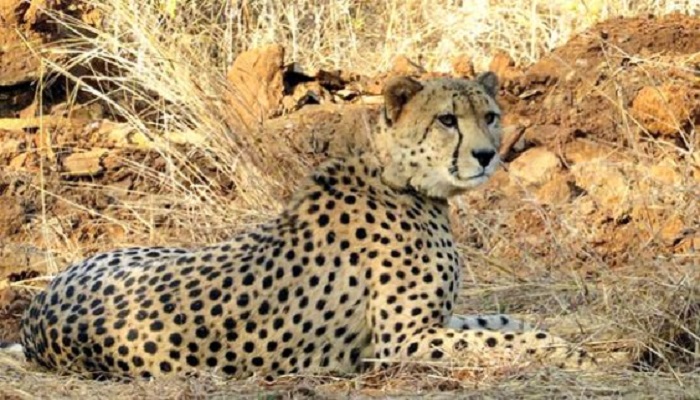
On Sunday (17 September), the Government of India released an official report on the completion of one year of the ambitious Cheetah reintroduction programme (Cheetah Project). According to the government report, four of the six criteria established for assessing the short-term success of India’s Cheetah Project have already been met.
The report highlighted that the initial progress has largely followed a favourable trajectory and it is well within the envisioned limitations. It asserted that the project is on the right path to becoming a successful large carnivore conservation translocation and population establishment endeavour.
The report read, “It cannot be overemphasised that the challenges are formidable. However, with concerted efforts by officials and managers from India, Namibia, and South Africa, along with support from the highest offices in all three countries, the project is on its assured path to recovery.”
Last year, the Cheetah Action Plan listed six short-term success criteria on the basis of which the Cheetah Project could be dubbed a success. These include –
50% survival of the introduced cheetahs for the first year establishment of home ranges in Kuno National Park
successful cheetah reproduction in the wild
survival of wild-born cheetah cubs past one year
successful F1 generation breeding, F1 stands for the first generation of offspring
cheetah-based revenues contributing to community livelihoods.
The report informed that the project has achieved four of these criteria. These include – 50% survival of the introduced cheetahs, establishment of home ranges, birth of cubs in Kuno National Park, and direct revenue contributions to local communities. The latter has been achieved through the engagement of cheetah trackers and indirect appreciation of land value in surrounding areas.
Last year, on his birthday, 17 September, Prime Minister Narendra Modi dedicated 8 Namibian cheetahs to India while launching the Cheetah Project in Kuno National Park, Sheopur. Since then, twenty cheetahs have been imported from Namibia and South Africa to Kuno in two batches – one in September last year and the second in February 2023.
Since March, six of these 20 adult cheetahs have died due to various reasons. In May, three of the four cubs born to a female Namibian cheetah died because of extreme heat, in a way, taking the overall tally to 9.
The remaining cub is being raised under human care for future wilding. The government report noted that all cheetah individuals released in the wild “fared well and showed no aberrations in their natural behaviour”.
No Cheetah died because of Radio collars or hunting/poaching
Earlier on 15 September, Head of Project Cheetah SP Yadav refuted reports that linked some of the Cheetah deaths with radio collars. He firmly stated that “not a single Cheetah died due to radio collars.” He also highlighted that no cheetah died at the Kuno National Park due to “hunting or poaching”.
Speaking with ANI, Yadav said, “A total of 20 cheetahs were brought from Namibia and South Africa out of which 14 (adults) are completely healthy and are doing well. Four cheetahs were born on the soil of Bharat and one of them is now six months old and is doing fine. The three cubs died because of climatic factors.”
He added that this was the first wild-to-wild translocation and there were a lot of challenges in it. Despite multiple challenges in such long-distance translocation where a cheetah may have died because it is a sensitive animal no such death occurred here and the translocation was very seamless.
The government report further explained that a few mortalities of cheetah occurred from bacterial infection, maggots, renal failure, injuries, and heat.
However, the report categorically stated that no unnatural deaths took place in free-ranging conditions despite some cheetahs traversing long distances in human-dominated areas. It added that such post-release mortalities are common in a project of this magnitude in Africa.
Earlier in August 2023, Srishti Choudhary of News18 prepared a detailed report after extensive deliberations with subject matter experts from South Africa and Namibia.
The media report highlighted that when cheetahs were being resettled in South Africa in 1966, a large number of them died. In fact, the process took 26 long years to complete during which more than 200 cheetahs lost their lives.
South Africa and Namibia is considered more suitable habitat for the Cheetah population having around 40% of the world’s cheetah population. Even then, South Africa alone registers the death of 60-70 Cheetahs every year.
Highlighting the example of Cheetah deaths in African habitats, experts have reiterated that the death of cheetahs in Kuno National Park is not unusual.
Further, the experts have emphasised the need to increase the ambit of the project stating that now the project has to look beyond Kuno National Park as its area is small for a big cat like Cheetah.
According to experts, apart from Kuno National Park, the Government of India will also have to look at Gandhi Sagar Wildlife Sanctuary in Madhya Pradesh and Mukundara Hills National Park in Rajasthan which are controlled places. A large number of animals like deer, chital, barashingha reside there and the presence of these animals creates ideal conditions for large predatory creatures.
They have also warned that before registering an increase in the Cheetah population, such wild-to-wild translocation generally witnessed a dip in predatory population in the initial phase. They have stated that the real breeding of Cheetahs in India may start in the year 2024, which will have more chances of survival as female Cheetahs will have become more adaptable to the Indian climate and its new habitat.
There are media reports that cheetahs will continue to be brought to India from South Africa and Namibia for the next 10 years and their number can go up to 100. Because the greater the number of Cheetah brought in, the faster they can be prepared to survive and reproduce here.
Of the five big cat species in the world, four are found in India. The Cheetah Project plans to rehabilitate the cheetah species which had become extinct in India seven decades ago. The project which started on 17 September day last year, is largely following a favourable trajectory, and its success could turn out to be a major templet for wild-to-wild translocation of large carnivores.
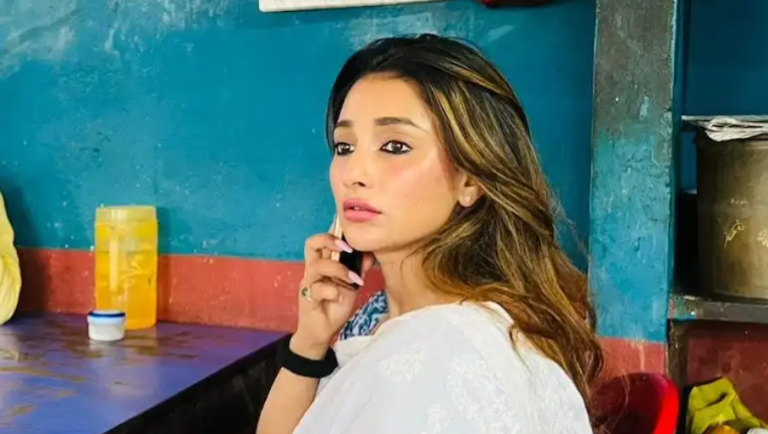
Bengali actress and Trinamool Congress leader Sayantika Banerjee walked off the sets of her upcoming film Chayabaj which was being shot in Cox Bazar in Bangladesh. After the media reported her sudden departure to Kolkata, leaving the project incomplete, the TMC leader and actress opened up about the harassment she faced on the sets compelling her to return.
Sayantika arrived in Dhaka on August 30 to work on the movie Chayabaz, directed by Taju Kamrul. The shooting was scheduled to continue until September 12, with the first portion focusing on music video shoots. While the filming of the initial song went smoothly, issues arose during the second song’s shoot, owing to a conflict between Sayantika and dance director Michael.
TMC leader and actor levels serious allegations against her choreographer
Speaking to Anandabazar Online, the actress revealed how she was harassed by her choreographer Michael on the sets. She also told the portal that there were several issues on the management front on the sets of the film, which left the actress and her team disappointed.
Speaking about the instance of harassment, Banerjee alleged that her choreographer repeatedly touched her inappropriately without her consent and also threatened her. She added that she raised objections and tried to communicate the issues on the sets with the producer Manirul Islam and director Taju Kamrul of the film but in vain. Islam and Kamrul did not support her and instead forced her to work with the same choreographer. She then returned to Kolkata from Bangladesh without finishing the shoot.
She said, “Initially, a teacher came for the dance shooting but he left because of monetary issues. Then the young boy called Michael came.” “Michael, without my consent, held my hand and I stopped him in front of everyone,” she added.
She also refuted allegations of not completing the shoot. “I am a professional artist and can’t think of doing such things.” “Time and again, I tried to contact the producer regarding some technical issues but did not get any response. He has no planning and no management. We were suddenly told that a dance sequence would be shot. When Manirul did not respond after being called many times, I said that I would not work with Michael like this,” added Sayantika. She said she waited for two days in Cox’s Bazar before returning to India, to hear from the producer, however, received no solution.
Co-actor Zayed Khan claims Sayantika Banerjee never objected to dance director’s presence on sets
Zayed Khan, Sayantika’s co-star, expressed surprise to The Daily Star, claiming that she had never opposed Michael’s presence. Sayantika finished her scenes and then left for Kolkata, according to Zayed.
“The disagreement had arisen regarding costumes, specifically the need for leather outfits in certain scenes. This issue had been duly reported to the producer. There were also complications regarding Sayantika’s remuneration, but a party is trying to spread misinformation,” actor Zayed Khan reportedly told the media.
Sayantika Banerjee is an Indian actress who is known for her work in Bengali cinema. The actress joined Trinamool Congress (TMC), ahead of Assembly elections 2021 in West Bengal. She was also promoted to the rank of officer in the TMC.
On 17th September, Taiwanese contract manufacturing company Foxconn’s India representative, V Lee, wished Prime Minister Narendra Modi a happy 73rd birthday in a LinkedIn post and said the company plans to double its investment and people it employs in India in the next year. The company plans to double the workforce within the coming year, increase foreign direct investment (FDI) and expand its overall business operations in the country, affirmed Lee.
In the post, Lee said, “Under your leadership, Foxconn has grown smoothly and rapidly in India. We will work harder to present you with a greater birthday gift next year, aiming for another doubling of employment, FDI, and business size in India.”
Minister of Communications, Electronics and Information Technology Ashwini Vaishnaw shared a screenshot of V Lee’s post on X (formerly Twitter) and said the Government of India is fully committed to supporting and facilitating Foxconn’s plans of expansion in India.
The announcement came at a time when Foxconn has a substantial investment in the country, particularly in the Southern states. The company will play a significant role in India’s journey towards becoming a global manufacturing hub.
Notably, Foxconn has an iPhone factory in Tamil Nadu that employs 40,000 people. In August this year, the Karnataka government said Foxconn was planning to invest USD 600 million in two projects in the state to make casing components for iPhones and chip-making equipment.
Foxconn’s chairman Liu Young-way said in August that India has a lot of potential and said, “several billion dollars in investment is only a beginning”.
The company also plans to invest Rs 1,600 crore or USD 194 million to build a campus in the Kanceepuram district near Chennai in Tamil Nadu.
Furthermore, the company has been exploring options in India focused on establishing a semiconductor manufacturing facility in Gujarat. It will enhance the country’s electronic manufacturing capabilities to a large extent.
The proposed investment in the country shows that the Taiwanese company has confidence in India’s growth potential and will contribute significantly to improving employment and technological advancements.
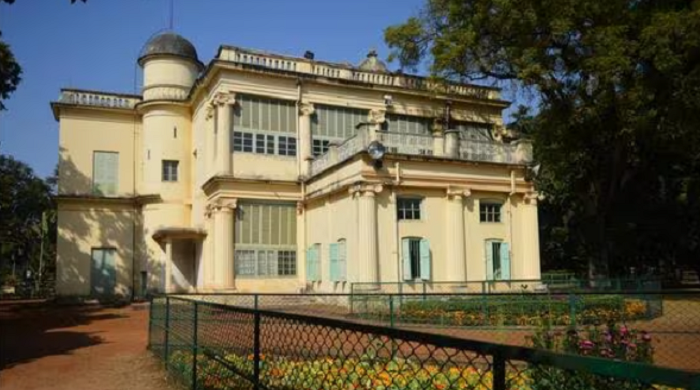
On Sunday, September 17, Santiniketan, the revered grounds in West Bengal where the illustrious poet Rabindranath Tagore founded Visva-Bharati more than a century ago, was inscribed on the UNESCO World Heritage List. The United Nations Educational, Scientific, and Cultural Organisation (UNESCO) announced the highly coveted honour on its official platform on Sunday. The decision to add Santiniketan to the distinguished list was made during the World Heritage Committee’s 45th session, which took place in Saudi Arabia.
“New inscription on the @UNESCO #WorldHeritage List: Santiniketan, #India. Congratulations!” UNESCO declared on Sunday on X, formerly Twitter. As per the reports, this historic title is the culmination of India’s long-standing efforts to gain a UNESCO designation for this cultural treasure in the Birbhum area.
— UNESCO ?️ #Education #Sciences #Culture ?? (@UNESCO) September 17, 2023
Permanent Representative of India to UNESCO, Vishal V Sharma, commented on the event while in Riyadh, Saudi Arabia, and said, “India rejoices and celebrates the inclusion of Santiniketan on the world heritage list. I thank the Ministry of Culture, GoI and Archaeological Survey of India for their tireless efforts. PM Modi is the Chancellor of Santiniketan, and it is his birthday today. Hence, the inscription of Santiniketan on the World Heritage list is a welcome gift.”
“Santiniketan situated in rural Bengal, is associated with the work and philosophies of Rabindranath Tagore, world-famous poet, artist, musician, philosopher, and recipient of the Nobel Prize in literature,” he added.
#WATCH | Riyadh, Saudi Arabia | On Santiniketan being inscribed on the UNESCO World Heritage List, Permanent Representative of India to UNESCO, Vishal V Sharma says "India rejoices and celebrates the inclusion of Santiniketan on the world heritage list…I thank the Ministry of… https://t.co/uhQz4fsNiZpic.twitter.com/i8JKE4avXM
“Established initially as an ashram in 1863 by his father, Tagore initiated its transformation in 1901 into a residential school and a center of art based on the ancient Indian teaching system of Gurukul. His vision was oriented on the unity of humanity or Viswa Bharati. Santiniketan embraced a unique brand of internationalism that drew upon ancient, medieval, and folk traditions of India as well as Japanese, Chinese, Persian, Burmese, and other art decor forms. Many of these things are seen in Geetanjali, his collection of poems which he wrote while living in Santiniketan,” Sharma further said, inviting everyone to explore the universalism of Santiniketan
Reports mention that Abha Narain Lambah, a renowned conservation architect played a crucial role in developing the dossier for Santiniketan’s UNESCO nomination. “We had worked on the dossier in 2009, and maybe the time wasn’t right then. But we always believed in the beauty of Santiniketan, and today we feel vindicated seeing it in the UNESCO list,” she was quoted as saying.
Lambah, who is based in Mumbai and whose works have received acclaim and UNESCO recognition, stated that once the International Council on Monuments and Sites (ICOMOS) approved Santiniketan’s inclusion, it was nearly guaranteed.
ICOMOS, an international advisory group based in France, recommended this landmark site for UNESCO World Heritage classification a few months ago. ICOMOS is an international non-governmental institution is composed of professionals, experts, and representatives from local governments, businesses, and heritage organisations. It is committed to the global preservation and enhancement of architectural and landscape heritage.
Other Indian properties that have made to the World Heritage List
As per the official website of the World Heritage Convention, there are around 41 Indian properties that have been inscribed on the World Heritage List. The said list is categorised into three parts namely, Cultural, Natural, and Mixed. While 33 Indian properties have been included in the Cultural list, 7 are mentioned under the Natural list, and one in the Mixed list. The list includes-
Cultural
Agra Fort (1983) Ajanta Caves (1983) Archaeological Site of Nalanda Mahavihara at Nalanda, Bihar (2016) Buddhist Monuments at Sanchi (1989) Champaner-Pavagadh Archaeological Park (2004) Chhatrapati Shivaji Terminus (formerly Victoria Terminus) (2004) Churches and Convents of Goa (1986) Dholavira: a Harappan City (2021) Elephanta Caves (1987) Ellora Caves (1983) Fatehpur Sikri (1986) Great Living Chola Temples (1987, 2004) Group of Monuments at Hampi (1986) Group of Monuments at Mahabalipuram (1984) Group of Monuments at Pattadakal (1987) Hill Forts of Rajasthan (2013) Historic City of Ahmadabad (2017) Humayun’s Tomb, Delhi (1993) Jaipur City, Rajasthan (2019) Kakatiya Rudreshwara (Ramappa) Temple, Telangana (2021) Khajuraho Group of Monuments (1986) Mahabodhi Temple Complex at Bodh Gaya (2002) Mountain Railways of India (1999, 2005, 2008) Qutb Minar and its Monuments, Delhi (1993) Rani-ki-Vav (the Queen’s Stepwell) at Patan, Gujarat (2014) Red Fort Complex (2007) Rock Shelters of Bhimbetka (2003) Santiniketan (2023) Sun Temple, Konârak (1984) Taj Mahal (1983) The Architectural Work of Le Corbusier, an Outstanding Contribution to the Modern Movement (2016) The Jantar Mantar, Jaipur (2010) Victorian Gothic and Art Deco Ensembles of Mumbai (2018)
Natural
Great Himalayan National Park Conservation Area (2014) Kaziranga National Park (1985) Keoladeo National Park (1985) Manas Wildlife Sanctuary (1985) Nanda Devi and Valley of Flowers National Parks (1988, 2005) Sundarbans National Park (1987) Western Ghats (2012)
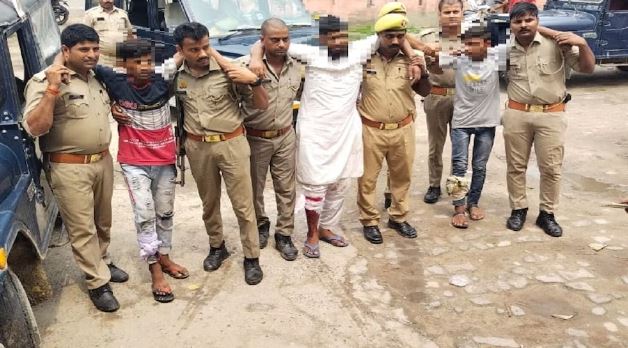
On September 17, the Ambedkar Nagar police arrested Shahbaz, Arbaz and Faisal in the harassment case, that caused the death of a schoolgirl in a road accident. All the accused have been booked under Sections 302, 354, 298 and 304 of the IPC along with relevant sections of the POCSO Act. The father of the deceased 17-year-old, Sabhajeet Verma, while speaking to the media described how unperturbed the father of two of the arrested accused Shahbaz and Arbaz, was when he learned of the incident and his son’s arrest.
Instead of being ashamed of his son’s deeds, Shahbaz and Arbaz’s father, after the arrest of his sons, purportedly boasted before the villagers that he had more than ten sons and that it didn’t matter if one or two were being tried in court or arrested. Many villagers heard him say this, the 17-year-old deceased girl’s father revealed.
Notably, the father of the deceased had earlier issued a statement to the media in which he had said how these accused used to often harass his daughter on her way to and from school. She had, in fact, complained to her parents about this.
On September 16, the accused on bikes were harassing a schoolgirl on a bicycle and pulled her dupatta, causing her to fall. Another accused came on a speeding motorcycle from behind and ran over her causing her death.
On September 17, Sunday, the three accused attempted to run away from Police personnel. In their fleeing attempt, the accused also tried to snatch weapons from the police personnel, prompting the police personnel to fire shots at them.
In the police encounter, two accused, namely Shahbaz and Faisal, were shot in the legs, while the third accused, Arbaz, broke his leg when he tripped while attempting to flee.
The victim’s friend who was accompanying her when the incident took place, narrated the ordeal. She said that she was returning home from school with her friends. Crying inconsolably, she added that Shahbaz, Faisal, and another boy were chasing her. They were regularly harassing them.
On Friday, one of them pulled her dupatta directly due to which she fell from the bicycle. Moments after that, Faisal ran the bike over her from behind. ‘By the time I reached there, blood was coming from her mouth and she could not say anything’, the friend said. Later, she was declared dead in the hospital.
The tragic incident unfolded in the Hirapur market area which comes under the jurisdiction of the Hanswar police station in Ambedkar Nagar, UP. The victim was a native of Barhi Aidilpur in the Hanswar police station area. The 17-year-old victim was studying at Ramraji Inter College in Haripur.
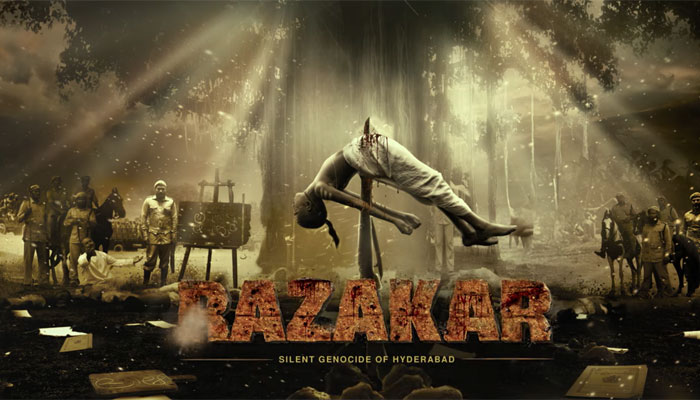
On 17th September, MLA Raja Singh released the teaser of the upcoming Telugu film Razakar. The film is a period drama from the time when Hyderabad was yet to join India post-independence. The movie will showcase the atrocities Hindus faced at the hands of Nizam rulers and their paramilitary force.
In a post on X (formerly Twitter), Raja Singh wrote, “An excellent film titled ‘#Razakar’ is soon to be released, focusing on the tragic events of the # Hyderabad massacre during India’s struggle for independence, specifically targeting Hindus. I urge people to help promote awareness of this movie nationwide and contribute to its success.”
आजादी के समय हैदराबाद में रजाकारों द्वारा किए गए हिन्दुओं के नरसंहार पर एक बहुत बढ़िया मूवी आने वाली है…
आप सभी देश वासियों से विनती है हैदराबाद में हुए इस नरसंहार को पूरे हिन्दुस्तान के हिन्दुओं तक पहुंचाए और इस मूवी को सफल बनाएं।
As per reports, the movie will showcase the horrors inflicted on the Hindus by the paramilitary forces known as ‘Razakar’ during the 1948 Hyderabad Liberation Movement. The teaser was launched on the occasion of Telangana Liberation Day. In the teaser, the emphasis remained on the background of the story.
Bobby Simha and Vedika are in the lead roles in the film produced by Gudur Narayana Reddy under the Samarveer Creations banner, and Yata Satyanarayana is the film’s director. Suddala Ashok Teja has written the songs for the movie, and Bheems Ceciroleo is the music director. The film is expected to release in 2024.
Operation Polo
After India gained Independence on 15th August 1947, the Nizam of Hyderabad Mir Osman Ali Khan was in a dilemma to choose which union he’d like his country to merge with and initially agreed to the ‘standstill agreement’ where the Republic of India would handle the external affairs and defence of Hyderabad but won’t interfere in the internal affairs. However, the state of Hyderabad violated this when it secretly loaned 15 million pounds to Pakistan and raised a semi-private military (Razakars) in the country.
Suppression of Hindus
Under the rule of Nizams, Hindus were brutally suppressed by the rulers. Hindus were routinely discriminated against due to their religion during their appointment to government posts and the state army. Of 1765 officers in the State Army, 1268 were Muslims, 421 were Hindus, and 121 others were Christians, Parsis and Sikhs. Of the officials drawing a salary between Rs. 600 and 1200 per month, 59 were Muslims, 5 were Hindus, and 38 were of other religions. The Nizam and his nobles, who were mostly Muslims, owned 40% of the total land in the state, showing the vast inequality in the distribution of wealth.
Frightened by the growing awareness amongst the Hindu population in Hyderabad, Nizam Khan ordered the formation of a semi-private army called ‘Razakars’ to suppress the agitations. The Razakars were a wing of the Majlis-e-Itihadul Muslimeen (MIM, or AIMIM as it is presently known). The Razakars managed to raise 1 lakh Jihadis under their commane within a span of days. The army managed to suppress the Hindus by mass-murdering and abducting Hindus in urban Telangana.
Formation of Razakars
The Razakars were intended to be the armed wing of the MIM (which is a present-day political party that goes by the name “AIMIM”) and uphold the Islamic domination of Hyderabad. By 1948, the Nizam didn’t want the growing public opinion of Hindus that Hyderabad should accede to India grow roots in the state, and ordered the Razakars to brutally suppress the Hindu population. Qasim Razvi was made the chief of the Jihadi force. The Razakars raised 2 lakh Jihadis in their force and raided Hindu-majority villages in Telangana.
In the book ‘Marathwada Under the Nizams’, historian P.V Kate records, “Some women became victims of rape and kidnapping by Razakars. Thousands went to jail and braved the cruelties perpetrated by the oppressive administration. Due to the activities of the Razakars, thousands of Hindus had to flee from the state and take shelter in various camps”.
Over 150 villages in rural Telangana were pushed to Islamic brutality, and over 40,000 civilians fled to the Central Provinces of India from Telangana for refuge. These refugees then proceeded to retaliate against the murderous Razakars through frequent raids to reclaim their land in the bordering areas of Central Provinces and Telangana.
Nehru and Patel
After receiving the details of the exodus of Hindus by the Nizam of Hyderabad, India’s first Prime Minister, Jawaharlal Nehru, was afraid that any attack on the princely state would attract retaliation from West and East Pakistan. Nehru was hesitant to take the decision of storming into the state and annexing it. On the insistence of Sardar Vallabhbhai Patel, Nehru hesitantly agreed to the annexure of Hyderabad and ordered the Indian Army to annexe the state of Hyderabad and storm into the state from all fronts.
On 13th September 1948, the Indian Army launched an attack on Hyderabad; this operation was named ‘Operation Polo’. The Indian Army, in a 5-day battle, annexed Hyderabad from the Nizam and integrated it into the territory of India. Despite the Indian Army having only 35,000 soldiers dispatched for this operation, it suffered only 35 casualties, whereas the Hyderabad State suffered 5,738 casualties despite having an army of 2,20,000 soldiers. The Indian Army had a sweeping victory over the Nizam and annexed the state.
Aftermath and surrender of Nizam to India
After the embarrassing defeat, the Nizam of Hyderabad surrendered to the Indian Home Minister, Sardar Vallabhbhai Patel and agreed to accede Hyderabad to India. Qasim Razvi was jailed from 1948-1957 after which he took asylum in Pakistan.
Razvi gave the responsibility of the MIM to Abdul Wahed Owaisi, thus letting the Owaisi family run what remained of the MIM. The MIM was banned for a brief period in 1948, after which it changed its name to AIMIM (All India Majlis-e-Itihadul Muslimeen) and contests elections to this day.
A dreadful case of Love Jihad and attempt to murder has come to the fore from the Purnea district of Bihar. Accused Mohammed Isahak, who is already a father of four children blackmailed a Hindu Adivasi girl by showing her some of her derogatory photographs and forced her to marry. Later, he converted her religion to Islam and tried to kill her with the help of his first wife.
According to a report by Jagran, the incident came to the fore after the girl managed to escape to save her life and reported the incident to Muffasil Police Station. The 19-year-old girl stated in the complaint that she was trapped by the accused, who established sexual relations against her will. He also captured some of her derogatory images and later used them to blackmail her.
He then forced the girl to marry using the photographs and changed her religion to Islam. The girl was given a new name, ‘Saira Khatun’, post-conversion. The accused continued to sexually assault her, and after a month or so, he attempted to kill her with the help of his first wife. The girl escaped the spot and reported the incident to the police.
The girl mentioned in the complaint that the accused used to come to her house to meet her father. “He was known to my father. One day, he took my sister’s mobile number and started talking to her. After a few days, he forcefully captured a derogatory photograph with me and threatened that he would publish that photo on social media,” the girl said.
The accused then forced the girl to marry and assured her that he would make a new home in Supaul town for her. On refusal, he issued death threats to her family members and got the marriage documents prepared in Purnea Court. He also forced the victim girl to sign the documents and then converted her religion to Islam.
The girl was then taken to a secretive property in Supaul. She was sexually assaulted for around 10 days. It was then that she knew that the accused was already married and that he was a father to four kids. The girl then escaped from the property and reached his home where she confronted him in front of his first wife and kids. The victim was mistreated and not welcomed in the house by the first wife of the accused. She refused to keep the girl in her home.
The accused and his first wife then attempted to murder her while she was fast asleep. The victim girl escaped from the spot and reached her home after which she reached the Police station to lodge an FIR against the accused and his first wife.
Hindu organizations like the Vishwa Hindu Parishad and other local Adivasi organizations also took cognizance of the event and demanded strict action against the accused and his family.
Brijesh Kumar from Bihar Police commented on the issue and said that an official complaint has been filed and investigations are underway. He also assured that the accused would be severely punished post-investigation.