Home Blog Page 1910

Court will only examine violation of the Constitution if any, will not reassess basis of govt’s decision: CJI on abrogation of Article 370

0

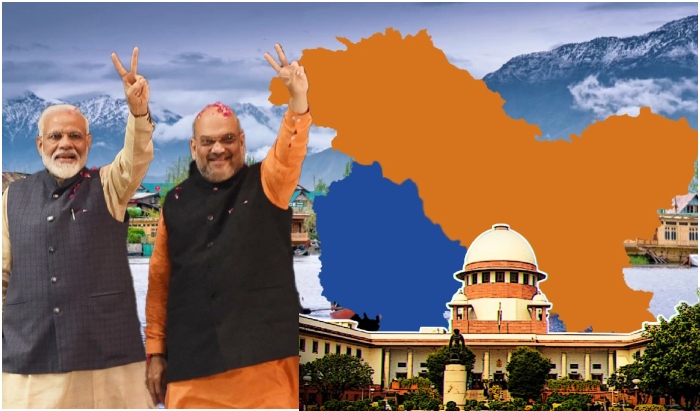
The Constitution bench of the Supreme Court is currently hearing a bunch of petitions challenging the central government’s decision to abrogate Article 370 of the Constitution, revoking the special status of Jammu and Kashmir. Today was the 7th day of hearing before the bench comprising Chief Justice of India DY Chandrachud, Justice SK Kaul, Sanjiv Khanna, Justice BR Gavai, and Justice Surya Kant.

Chief Justice of India DY Chandrachud, on August 17, made strong observation in the case saying that the court will only examine if there is a violation of the constitution and will not reassess the basis of the government’s decision.

He made these comments after Senior Advocate Dushyant Dave, representing the petitioners, argued that Jammu and Kashmir’s special status cannot be taken away. “Today’s house has no moral or constitutional authority to do this just because it has the majority. For the people of J&K, this was the essential feature of the Constitution. On August 5, President issues a proclamation. Then it is sent to Rajya Sabha. Rajya Sabha sends a recommendation on the same day. Then Rajya Sabha approves the reorganisation bill on the same day. Next day in Lok Sabha it is approved,” Dave said.

“These constitutional assembly debates took several years. These are men and women who were the most brilliant of those born in this country. We owe gratitude to them. If we were to interpret Constitution as today’s govt tells us, we’d be doing a great disservice to them,” he added.

To this, the CJI in response said that the Court would not reassess the basis of the government’s decision. “You want the judicial review to assess the intention of the government to abrogate Article 370? Judicial review will be for the constitutional violation, there is no doubt that if there is such violation this court will intervene but are you asking us to judicially review the wisdom underlying the decision to abrogate Article 370?” CJI asked.

Dave later continued to argue and said that the history, especially the constitutional history cannot be rewritten. He also said that there is no power to abrogate Article 370 under Article 370(3). The exercise of abrogation is a complete fraud on the constitution, he opined.

According to Dave, the BJP in its manifesto had promised abrogation of Article 370 from Jammu and Kashmir and the court has ruled that manifestos cannot be against constitutional scheme and spirit. “Now because you have a majority in Parliament you have done this, and it is all because you told people to vote for you. This shows power exercised for colourable considerations. President is not a rubber stamp majority does not speak, it is not a constituent power,” he claimed.

More than 20 petitions are pending before the Supreme Court challenging the Centre’s decision to abrogate Article 370. Senior advocates Dushyant Dave and Shekhar Naphade submitted their arguments on behalf of the petitioners on Thursday, August 16. Now Advocate Dinesh Dwiwedi is submitting his arguments in the case.

The hearing in the given case began on August 2 and today is the seventh day of the hearing. The Constitution Bench on August 3 had asked whether Article 370, which gave special status to Jammu and Kashmir, is being equated to the Basic Structure of the Constitution. However, the CJI stated that the Court would only examine if there is a violation of the constitution and would not reassess the basis of the government’s decision in abrogating Article 370 from the former state of Jammu and Kashmir.

5 times parole, 6 times furlough in 15 years: Delhi HC grants another 90-day parole to convicted serial killer Chandrakant Jha citing ‘satisfactory behaviour’

A single judge bench of the Delhi High Court on 16 August granted 90-day parole to serial killer Chandrakant Jha who is serving a life term after he was found guilty in three murder cases, as reported by LawBeat. He was granted parole by Justice Rajnish Bhatnagar who noted that the former had served more than 15 years behind bars and had not been released in the previous three years despite having “satisfactory behaviour” while inside the jail.

The court stated, “In the instant case, the petitioner has undergone more than 15 years and 6 months in judicial custody and he has not been released in the last 3 years. The conduct of the petitioner is satisfactory, he has also been released on parole on five occasions and furlough on seven occasions and there is no allegation that the petitioner had misused his liberty, therefore, this Court considers it apposite to allow the present petition.”

The convict received 90 days of parole from the judge after submitting a personal bond for Rs. 25,000 and two sureties for the same amount that was acceptable to the pertinent jail superintendent. The court ordered, “The petitioner shall provide his mobile phone number to the concerned Jail Superintendent and SHO (Station House Officer) concerned at the time of release, which shall be kept in working condition at all times.”

He is not allowed to leave the city without permission and “shall reside at the given address as per prison records.” He is also directed to appear at the local police station every third day. The judgment added, “However, he shall not be kept waiting for longer than an hour for this purpose.” He is further told to “positively surrender before the concerned Jail Superintendent on the expiry of the period of 90 days from the date of his release.”

The defence attorney for him asked for parole on the grounds that since he has four daughters and needs to select a suitable husband for the oldest. It is his responsibility as her father to do so and arrange for the girl’s engagement because his wife won’t be able to manage everything alone. There are no other male family members other than him, according to the submission.

She also claimed, “Lastly, it has been pointed out by the learned counsel for the petitioner that he has not been released in the last 3 years and thus, it has become extremely essential for him to be released to re-establish social ties with his family.”

The State, on the other hand, argued that according to the status report, Chandrakant Jha had a criminal history and had been proven culpable of three murders. It additionally stated that his overall behaviour was unacceptable and that if he was awarded parole, it was possible that he would violate it.

Who is Chandrakant Jha

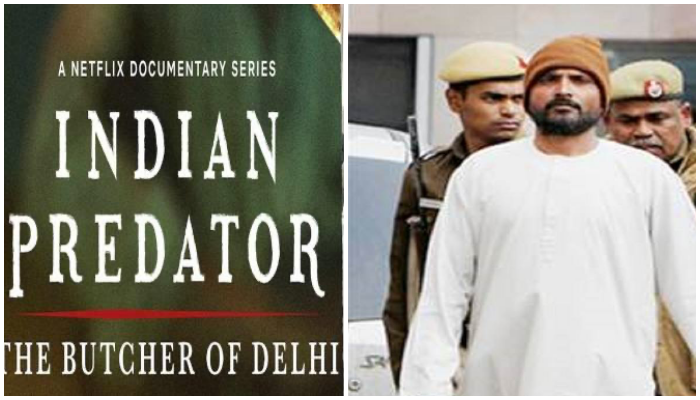
Chandrakant Jha who was born in Ghosai in the Madhepura district of Bihar in 1967 is a serial killer who befriended, then killed and dismembered 18 victims in west Delhi between 1998 and 2007. He is infamously known as ‘The Butcher of Delhi.’ He worked as a hawker in Delhi’s weekly bazaars.

His first killing took place in 1998 for which he was arrested and held in jail until 2002, when he was eventually released due to lack of evidence. He embarked upon a spate of killings after his release. Shekar and Umesh were first, followed by Guddu in 2005, Amit in 2006 and then Upender and Dalip in 2007.

He would make friends with migrant workers from Bihar and Uttar Pradesh and assist them in finding part-time work. Later, trivial arguments over things like theft, lying, or consuming non-vegetarian food would push him to strangle them to death. He took pleasure in taunting the police by leaving dismembered body parts around the city and outside the Tihar Jail with notes, daring the police to catch him.

He was found guilty on three counts of murder and received two death sentences and life imprisonment until death in February 2013. His death sentence was mitigated by the high court on 27 January 2016, to imprisonment for the “remainder of his natural life” without remission. He was ordered to be “emphatically and adequately punished” by the court for his horrific actions.

Notably, in February 2013, he was handed over a life sentence until death in a case concerning the murder of Dilip, whose headless body was discovered in 2007 and was dumped close to Tihar Jail.

The same trial judge that had condemned him to death in the first murder case ruled that his crime qualified as one of the “rarest of rare cases” since the savagery of what he had done demonstrated his inability to change. He obtained a death sentence from the trial court for the murder of Upender in 2007 and disposing of his headless body close to Tihar Jail.

He married twice, abandoning his first wife within a year. He has four daughters with his second wife and mostly lived away from his family.

The Netflix series ‘Indian Predator: The Butcher of Delhi’ was based on Jha’s crimes.

Chandrayaan 3 mission completes another milestone: Lander successfully separates from the propulsion module

0

India’s Chandrayaan-3 mission marked another giant leap in its lunar quest as the ‘Vikram’ lander module of the spacecraft successfully separated from the propulsion module on Thursday. 

The Chandrayaan-3 mission’s lander is named after Vikram Sarabhai (1919–1971), who is widely regarded as the father of the Indian space program. 

On Wednesday, the spacecraft carried out the final lunar-bound orbit reduction maneuver of the Chandrayaan-3 spacecraft, a week ahead of its scheduled landing on the south pole of the moon on August 23. 

A GSLV Mark 3 (LVM 3) heavy-lift launch vehicle was used for the launch of the spacecraft that was placed in the lunar orbit on August 5 and since then it has been through a series of orbital manoeuvres been lowered closer to the moon’s surface. 

It has been a month and two days since the Indian Space Research Organisation launched the Chandrayaan-3 mission on July 14. The spacecraft was launched from the Satish Dhawan Space Centre in Andhra Pradesh’s Sriharikota. 

ISRO is bidding to make a successful soft landing on the moon, which will make India the fourth country in the world to achieve the feat after the United States, Russia and China. 

Chandrayaan-3 components include various electronic and mechanical subsystems intended to ensure a safe and soft landing such as navigation sensors, propulsion systems, guidance and control, among others.  

The stated objectives of Chandrayaan-3, India’s third lunar mission, are safe and soft landing, rover roving on the moon’s surface, and in-situ scientific experiments. 

The approved cost of Chandrayaan-3 is Rs 250 crores (excluding launch vehicle cost). Chandrayaan-3’s development phase commenced in January 2020 with the launch planned sometime in 2021. However, the Covid-19 pandemic brought an unforeseen delay to the mission’s progress. 

Chandrayaan-3 is the ISRO’s follow-up attempt after the Chandrayaan-2 mission faced challenges during its soft landing on the lunar surface in 2019 and was eventually deemed to have failed its core mission objectives. 

The key scientific outcomes from Chandrayaan-2 include the first-ever global map for lunar sodium, enhancing knowledge on crater size distribution, unambiguous detection of lunar surface water ice with IIRS instrument and more.  

During the Chandrayaan-1 mission, the satellite made more than 3,400 orbits around the moon and the mission was concluded when the communication with the spacecraft was lost on August 29, 2009, according to the Indian Space Research Organisation (ISRO). 

Meanwhile, the Chairman of the Indian Space Research Organisation (ISRO), S Somanath last week expressed confidence in the progress of the Chandrayaan 3, providing reassurance that all systems were operating as planned. Chairman S Somanath stated, “Everything is going fine now. There will be a series of manoeuvres until it lands (on the Moon) on 23rd August. The satellite is healthy.” 

Moon serves as a repository of the Earth’s past and a successful lunar mission by India will help enhance life on Earth while also enabling it to explore the rest of the solar system and beyond. 

Historically, spacecraft missions to the Moon have primarily targeted the equatorial region due to its favourable terrain and operating conditions. However, the lunar south pole presents a vastly different and more challenging terrain compared to the equatorial region.

(This news report is published from a syndicated feed. Except for the headline, the content has not been written or edited by OpIndia staff)

The horrors of partition: How the British left a legacy of unrest which haunts us to this day

“So let us call genocide, genocide and not just deaths”, said Adam Schiff. It’s time to recognise and document the partition horrors of the Hindu genocide. India’s Partition is a horror story of genocide and generational loss that till a few years back, few wanted to talk about, hardly write or document.

The world’s worst historical horrors of mass genocide were the cold-blooded ruthless murder of Indians- babies, children, pregnant women, and men of all ages as they got displaced on account of an unwilling forceful partition.

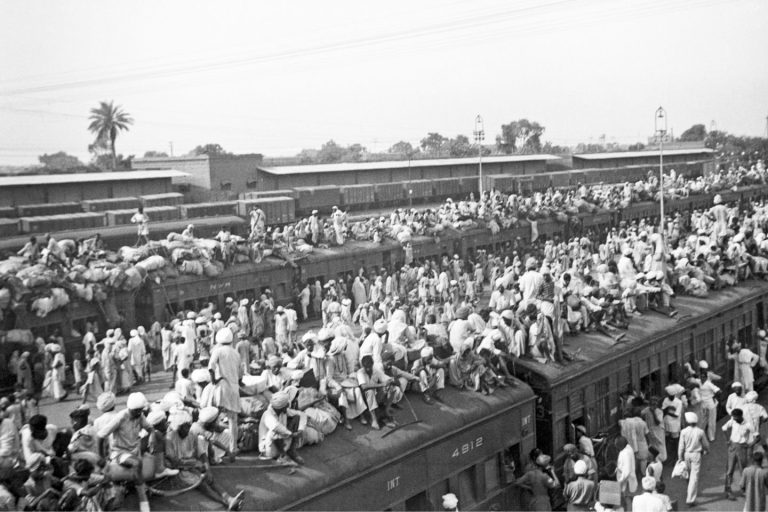
Around 14th August 1947, united India was cruelly divided, partitioning the once spiritual divine all-embracing land into 3 parts- India, West Pakistan and East Pakistan on religious grounds, while the Britisher preached secularism. And this partition came at a cost, at the cost of genocide of more than 2 million Indians. 

In world history, the largest forced migration that ever took place was of Indians, forcing our ancestors to leave their motherland in the name of partition. It was not just demarcating political borders and division but uprooting around 20 million Indians from their families, home, livelihood, business, property, and belongings. They were compelled to migrate to unknown territory with no idea of a destination or future. And it was not a happy migration. There was chaos, looting of both humans and properties, destruction and uncontrolled killings.

People were raped, murdered and burnt alive while they migrated post-partition. Trains transporting people were put on fire, and bodies were found in ashes when they reached the station. There was a bloodbath everywhere. Mass genocide of babies, women (pregnant women, mothers), men and elderly, continued for days – none were spared. And the ever so organisationally strong efficient Britishers simply looked on and allowed these to happen. They created mayhem of a cruel unwise unplanned partition, failing to provide protected passage, security or administrative help. 

A horror worse than the freedom struggle of 200 years. All due to the mindless division of the 5000-year-old ancient Indian civilisation that the colonial Britishers took control by brutal force and were unhappy to leave, as were compelled to leave India by the continuous fight of Indian freedom fighters. Unhappy for having to leave a rich resourceful, mighty country like India that in 300 years made the United Kingdom wealthy, helped build their country and infrastructure, uplifted and boosted its economy, fed its people, gave the queen ‘The Kohinoor’ – the world’s largest and most expensive diamond.

Pre-British rule, India’s share of the world economy was 23%, as large as all of Europe put together. By the time the British left India, it had dropped to just over 3%. In 1820, India’s GDP was 16% of the world total. By 1870 during British rule, it had fallen to 12%, and by 1947 had fallen to its lowest ever at 4%. Comparatively, in 1858 when the UK entered India its GDP was a mere 0.711 only and within 12 years in 1870 its GDP was highest at 23.8%. In 1947, Britain became super rich at India’s expense with a GDP of 10.432.

But what did the British do while leaving? Instead of giving the nation back to the original owners of the land, the Hindu Indians; they partitioned India on religious line, cut apart the nation illogically and separated land for Muslims and named it Pakistan. The Britishers, known to have pandered to the Muslims, carried a cruel divisive plan even in the partition of fuelling fire on religious and communal lines. Consequently, even after the partition, what followed was hatred and killings, unrest so much that the nation burnt like never before and was coloured in blood everywhere. The hatred still exists, still continues.

Years on, the pain lives on.

NorthEast, Assam & Partition

There was no corner of the country that was spared. For North East, especially Assam, partition divided our beautiful state, changing land and borders- interprovincial borders of the colonial era became international boundaries changing the dynamics, demography and economy of the state. Along with mass migration here too followed again by killings, and deaths, and partition largely destroyed a flourishing economy of the state and thereby of the entire northeast region. Partition after-affects still hover over Assam, from people to lives, geography to economy to demography.

If there is a single reason for Assam and the NorthEast to be alienated from the rest of India remaining landlocked for lifelong and a region deprived of development and growth and almost given away to China, it is only due to partition. Partition physically separated Assam and NorthEast(NE) from the rest of the country save a narrow passage of 22 kilometres commonly known as the Chicken’s Neck, which is only 17 km wide at its narrowest. Partition took away NorthEast’s natural outlet to the sea that existed since 1904 through the port of Chittagong which became a part of East Pakistan. It disrupted the natural channel of riverine communication, rail and road networks that provided connectivity to this area and had adverse effects on the economy of Assam. This alienated NE from mainland India, depriving it of support, attention from New Delhi and playing a big role in its under-development.

Assam also lost a wealthy district* in terms of the thriving tea, lime and cement industries which in turn resulted in a serious loss of revenue. Partition disrupted the social and economic lives of the various tribal communities in the region, destroying the traditional links that tribal communities, such as the Khasis, Jiantias and Garos, had with the East Pakistani districts of Sylhet and Mymensingh, leaving them split between India and Pakistan, based on their place of residence. 

The Census Report of 1951 categorically observed that ‘the far-reaching effects of this loss will continue to be felt by Assam for long.’ And truly, we are not yet able to be at par with the other states of India. The negative effects of the partition of Assam are hardly studied and hence the region languishes as an unacknowledged site of partition experience. Partition was also not taken kindly by the then East Pakistan, present-day Bangladesh and even after 75 years, Assam is to date continuously a target for usurpations by any means. The present means used is mass infiltration by illegal migrants trying to change the demography further; and future control of the state. It is only due to partition that today the National Registrar of Citizenship (NRC) had to be implemented as the changing demography of land and lives and the threat to Assamese identity looms large. Besides, the only connection through the Chicken Neck is the reason for the region being under constant threat from expansionist China and other neighbours fuelling separatist movements, unrest and terrorism.

Even after 70+ years, Assam is yet to recover from the great loss and can hardly regain back its prosperous economy that was once upon a time. Though in the last 9 years efforts are on to develop northeast and Assam, bring it to par with the rest of the nation and revive its economy through South Asian connect.

Yet the lives, land and livelihood lost can never be recovered back. The horrors cannot be forgotten, cannot be undone. The stories that still haunt the sufferers, the agony their ancestors have undergone can hardly be minimized. They still live on. No country needs to go through such times again.

*Sylhet which belonged to the northeast was the most economically important city along with being a spiritual and cultural centre. Sylhet Valley was a large oil and gas-producing region, a hub of tea production and famous for its high-quality cane and agarwood. To date, it produces the highest amount of tea, natural gas and fertilizer.

Himachal CM blames masons and labourers from Bihar for faulty construction after several houses swept away by floods and landslides

0

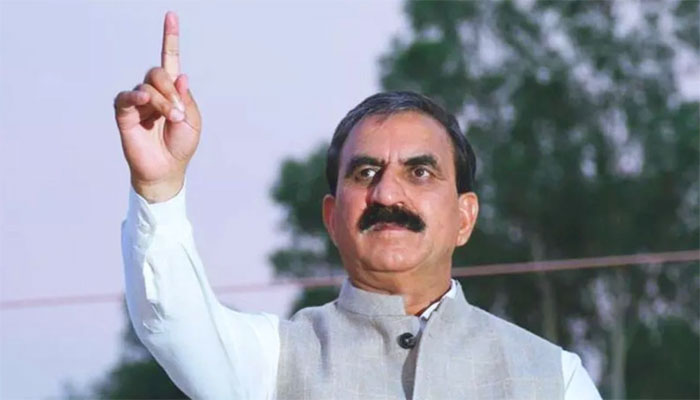
On August 16, Chief Minister of Himachal Pradesh Sukhvinder Singh Sukhu blamed migrant masons and labourers from Bihar for the destruction caused due to landslides following excessive rainfall. Himachal Pradesh is facing the worst natural calamity of the last 50 years. Due to excessive rain and landslides, several houses have been swept away. Around 70 people have lost their lives to date.

In an interview with the Indian Express, Chief Minister said that the architects and labourers from outside come to HP and construct floors on the floor without applying the scientific methods that lead to such disasters. He said, “The migrant architects (masons), whom I call ‘Bihari architects’, come here and construct floor on the floor. We do not have local masons.”

The popular tourist destination Shimla is one of the most affected regions during this monsoon calamity. Several buildings have collapsed, and new videos emerge on social media recorded by the locals where screams can be heard in the background as the buildings collapse like a pack of cards. The CM said the old Shimla city has a robust drainage system and tall government buildings are safe, which is evidence that the constructions in recent years did not follow structural engineering standards.

He said, “People construct houses without applying scientific methods. In recently made buildings, the drainage system is very poor. People believe they are draining the water without knowing that water is going nowhere but into the hills, making them fragile. Shimla is over one and a half centuries old, and its drainage system is excellent. Now there are buildings in the Nallas (runlets). The houses which are collapsing these days have not gone through the standards of structural engineering.”

CM added, “Our secretariat is a nine-storey building, and the building of Advanced Study in Himachal University, Summer Hill, is an eight-storey building. There was no technology when these buildings were constructed, but the structuring was there. We have never heard of these buildings being in danger, ever.”

Chief Minister also blamed improper cutting of rocks to widen highways. He said, “There is a way to cut the hills. Hills are always cut in slopes at an angle of 45 degrees, 60 degrees, etc., but not at 90 degrees, as was done at many locations between Kalka and Shimla.”

A yellow warning was issued by the local MeT station indicating heavy rainfall, thunderstorm, and lightning at isolated places from August 14 to 17 and predicted a wet spell in the state till August 19.

Bihar: Family burns 62-year-old Mohammad Kalimuddin to death for ‘hidden treasure’

In a shocking incident from Kishanganj in Bihar, 62-year-old Mohammad Kalimuddin was burnt to death by his own family members over the belief that he has a ‘hidden treasure’. The shocking incident happened on the evening of 15 August in Dulali village, which is within the jurisdiction of Bahadurganj police station.

A local occultist reportedly tricked the family of the 62-year-old man into believing that he had a secret treasure which consisted of riches and priceless jewellery. The family members continued to put pressure on Kalimuddin to reveal the location of the concealed wealth, but he repeatedly denied knowing anything about it, which incensed his relatives.

He was eventually wrapped in old clothes, doused with petrol and set ablaze on the night of Independence Day. The nearby villagers raced to the scene after hearing his cries, but by the time they arrived, he had already passed away. The Bahadurganj police responded promptly to the information and proceeded to the spot to question the family about the circumstances surrounding the horrifying episode.

Bahadurganj police station sub-inspector Pushpa Kumari said, “One of his sons told us that they burned him to death as it will fill their home with gold and precious jewels.” She added that it was a case related to superstition. She mentioned that every member of the family appeared “mentally ill.”

Another police official asserted that a local godman had deceived the deceased’s family members into believing that the victim was the owner of a buried treasure that was rich in gold and priceless ornaments. They then started exerting pressure on him to divulge the whereabouts of the treasure’s secret place.

The police official said that his family members became enraged and wrapped him in old garments before setting him on fire after putting petrol because he vehemently denied having any knowledge of the treasure. The locals rushed to their place after hearing his screams, but he had already passed away.

The dead body was found by the police, who subsequently sent it for an autopsy. The old man’s other son, who worked out of state, is expected to return soon, according to the authorities. Police conveyed, “We will act only after a formal First Information Report (FIR) is registered in this case. We are waiting for his son’s return.”

Complaint filed against Congress leader Randeep Surjewala in Indore over his ‘Rakshas’ and ‘Asura’ remarks against BJP and its supporters

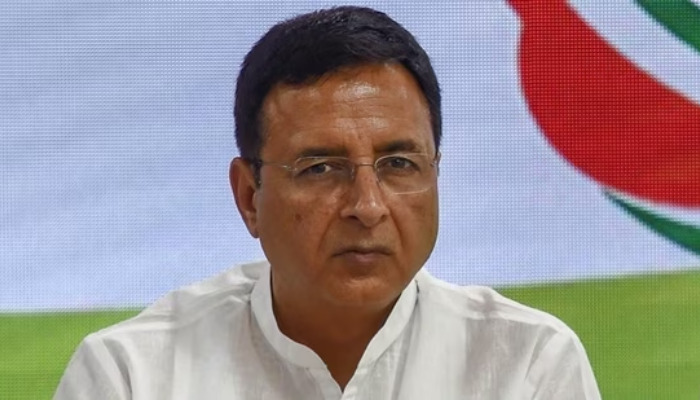
On Thursday, August 17, the Bhartiya Janata Party (BJP) filed a complaint against Congress leader Randeep Surjewala over his recent ‘Rakshas’ and ‘Asura’ jibes against those who voted for the BJP and Prime Minister Narendra Modi.

The complaint was filed at Indore district court in which it has been demanded that a case be registered against Randeep Surjewala under sections 290, 504, 505, 506, and 153A. Reportedly, the complaint has been submitted by Indore social media in charge of the BJP, Govind Singh Bains. The court has sought a report from the police by September 15.

Govind Singh Bains, who is a advocate told the media that his sentiments have been hurt as a voter due to the recent comments made by the Congress leader.

This comes after Randeep Singh Surjewala while addressing a public gathering in Kaithal in Haryana on Sunday “cursed” the voters of the BJP calling them “rakshas” (demons). Kaithal is the same constituency where Surjewala had lost by around 500 votes in the 2019 Lok Sabha elections.

“Demons of the BJP and JJP, you are demons. Those who vote for the Bharatiya Janata Party and those who support the Bharatiya Janata Party have demonic tendencies. I curse from the land of Mahabharat today,” Surjewala said.

A day after this, instead of apologising, Surjewala doubled down the attack on the BJP and PM Modi and called him an ‘Asura’.  

“Who is not filled with compassion, who does not love the people? He is not a ruler, he is an asura. The one who does not love the farmer, the labourer, and the youth,” Surjewala asserted. He also added that emotions and sentiments in dialogues are more important than words, which only a sensitive person can understand.

It is notable that the Congress leader has in recent days been on a spree of making insensitive comments about the BJP leaders and the voters. After attacking BJP with Rakshas and Asura barbs, Surjewala was heard using derogatory language for women during his public speeches. 

BJP IT Cell head Amit Malviya shared a video on X (formerly Twitter), wherein Randeep Surjewala was heard using abusive words for women while addressing the crowd in Kaithal. 

“After calling 23 crore countrymen who voted for BJP as demons, now Rahul Gandhi’s close aide Randeep Surjewala has also started abusing sisters and daughters in his public speeches. The party whose leaders use such indecent language for women can never be serious about women’s safety. A clear example of this is visible in Rajasthan,” Malviya wrote in Hindi.

BJP condemns remarks against PM Modi by Congress leaders

The comments by Congress leader Randeep Singh Surjewala have strongly been condemned by the BJP leaders and members. BJP spokesperson Shehzad Poonawala slammed the Congress leader saying, “Congress has crossed all its limits. Randeep Surjewala, who calls ‘Afzal Guru’ ‘Afzal guru ji’, and his party members call ‘Osama’ ‘Osama ji’, has started abusing Indian voters. Congress party says on foreign land that democracy has died and ‘Bharat Mata’ has been murdered.”

11-month-old boy mauled to death by a stray dog at a farm in Uttar Pradesh’s Deoria

0

An 11-month-old baby boy was mauled to death by a stray dog on August 15 in Uska Rajbhar Tola village of the Bhatni area of Deoria in Uttar Pradesh. The parents of the boy, originally from Kannauj, were working as labourers on a chicken farm in Deoria. The child was napping on the cot while his parents worked on the farm when he was taken to a field by the canine who killed him.

Neeraj Kumar lived with his wife Kiran and his infant child at Vishal Singh’s egg farm in the hamlet of Bhatni police station area. They were working there for the past 2 months. The couple was working on the evening of Independence Day and had put the infant, named Lalla, to sleep on the cot. Soon after, a dog arrived and lifted him from there.

The animal started to run after grabbing the victim in its mouth. The parents heard the child’s screams and started chasing after it. Afterwards, the dog along with the baby entered a field where it mauled him to death. He was brought to the Community Health Centre (CHC) by the parents with the help of locals where the medical staff pronounced him deceased.

Following the tragedy, the parents of the child are inconsolable. They have now returned to their village following the death of their only son. There is a sense of panic throughout the neighbourhood after the incident as people are scared of the menace of stray dogs.

According to Station Officer Dr Mahendra Kumar, information has been obtained about the death of a child in Uska village as a result of a dog bite. His parents have returned to their home. An investigation would be conducted if a complaint is registered. Vishal Singh mentioned that the pair from Kannauj had arrived to work on the egg farm two months earlier. He added, “Everyone has been shocked by the incident. Will be cautious about security after learning from the occurrence.”

Dogs attack a six-year-old

A few days ago, a pack of dogs attacked a six-year-old boy, named Ayush, who was following his father, Sankata Gond in Chhapia Jaidev of Bhatni region. He was severely bitten and scratched by them. As soon as he reached outside the village, more than half a dozen dogs simultaneously assaulted the innocent and started scratching him.

They abandoned him and fled as the nearby individuals raced after the screams were heard, but by then he had suffered major wounds. The family members took him to the Primary Health Centre for medical care, where he was directed to Maharishi Devraha Baba Medical College and even they referred him to Baba Raghav Das Medical College for treatment as his health situation grew critical.

Out-of-court settlement of Gyanvapi issue not possible, not ready to give up even an inch of the land: Advocate Vishnu Shankar Jain

0

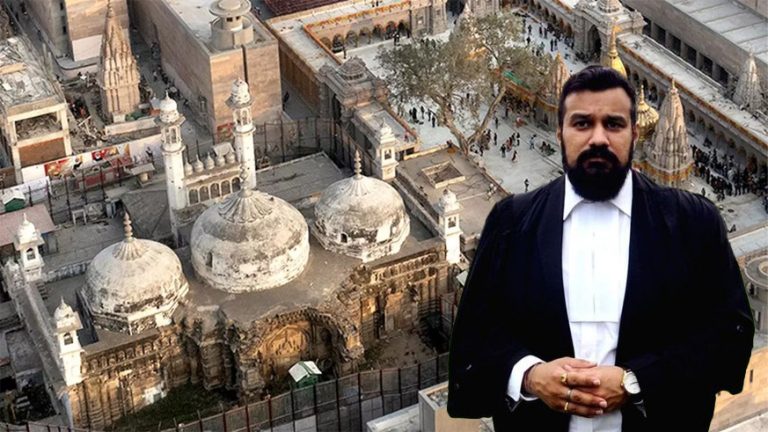
Representing the Hindu side in the Gyanvapi case, Advocate Vishnu Shankar Jain stated on Thursday that an out-of-court settlement in the Gyanvapi Mosque issue is not legally possible under the CPC. This statement was made after Jitendra Singh Bisen, the international president of the Vishwa Vedic Sanatan Sangh, wrote a letter to Anjuman Intejamia proposing an out-of-court settlement in the Gyanvapi case. 

“It has no legal value. Order 23 of the CPC clearly states that until all parties agree, no compromise can be made. And in matters related to the country and society, where a representative suit is filed involving the entire society, even if one person or party wants to settle alone, they cannot. So this initiative for an out-of-court settlement is not possible under the CPC, as it is not legally possible,” he said. 

He further added that “None of our parties or clients are ready for a settlement.”

While speaking to ANI, Advocate Vishnu Shankar Jain stated that they are not willing to compromise, as doing so would require giving up some of their rights. They are not ready to give up even an inch of land.  

“I want to ask through your medium, how will the settlement or compromise happen? A compromise only happens when you give up some of your rights and the other person gives up some of theirs. Here, we are not ready to give up even an inch of the land inside the barricade. We want the entire area inside the barricade,” he said. 

He further reiterated that “The way you have used a temple as a mosque, the Muslim side should apologise for using a temple complex in the wrong way, so there is no question of compromise.” 

The scientific survey of the complex, adjacent to Kashi Vishwanath Temple, excluding Wuzu Khana, began on August 4, following the Allahabad High Court’s order, which allowed the ASI to conduct the survey to determine if the 17th-century mosque was constructed over a pre-existing structure of a Hindu temple.  

The Allahabad High Court on August 3 had dismissed the plea filed by the Muslim side, the Anjuman Intezamia Masjid Committee, challenging the Varanasi court order allowing the ASI to conduct a scientific survey of the Gyanvapi mosque premises.


(This news report is published from a syndicated feed. Except for the headline, the content has not been written or edited by OpIndia staff)

Madhya Pradesh: Convict gets early release from jail for ‘good behavior’, brutally rapes another minor girl

0

 In a heart-breaking incident that has left Madhya Pradesh in shock, a 35-year-old rape convict who was released after getting relief in a jail term, raped another minor girl in Satna district on Wednesday evening, a police official said on Thursday.

The accused has been identified as Rakesh Verma (35), a resident of Krishna Nagar area, Satna. He took the minor by caressing her and then raped her. The health condition of the minor is critical and she has been referred to Rewa Medical College hospital for further treatment.

According to City Superintendent of Police (CSP) Mahendra Singh Chouhan, 12 years ago, the accused Verma had raped a minor girl (around four and half years old) in the district following which he was convicted and sentenced to 10 years of imprisonment.

The accused only served seven years of imprisonment and the remaining three years of jail was pardoned after his good behaviour in jail. Around one-and-a-half-year back he was released from the jail after completing the sentence and now he has committed the same crime again.

CSP Chouhan said, “The accused Rakesh Verma took the girl with him by caressing her from the Jagatdev Talab area in the district at around 5 pm on Wednesday. When we came to know about the matter, we searched for the minor and found that the accused had raped her.”

The minor was brought to the hospital and after primary treatment she was referred to Rewa for further treatment. The police registered a case under relevant sections in the matter and arrested the accused. Further investigation into the matter is underway, says the Police.

When asked about the bulldozer action on the properties of the accused, the CSP said that they would take all the necessary action into the matter.

(This news report is published from a syndicated feed. Except for the headline, the content has not been written or edited by OpIndia staff)