Home Blog Page 2564

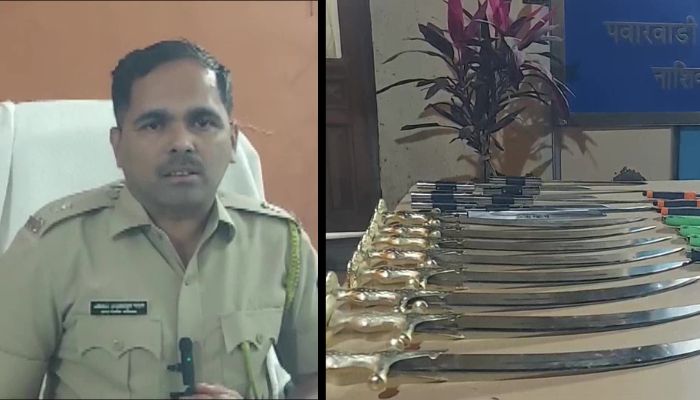
Maharashtra: Cops nab one Parvez Alam for illegally carrying 31 weapons

0

On Tuesday (January 10), the Pawarwadi police in Maharashtra arrested a man who was en route to Malegaon from Ajmer in Rajasthan. He was in possession of a total of 31 weapons, including 10 knives and 8 swords.

According to the news agency ANI, the accused has been identified as Parvez Alam.

He was travelling to Malegaon by bus when the police nabbed him. As per the police, the total value of recovered weapons has been estimated to be ₹17,400.

While speaking about the matter, Assistant Superintendent of Police (ASP) Aniket Bharti informed that a probe has been initiated into the matter.

According to Times Now, several arms and ammunition have been recovered in the past few months from communally sensitive areas of Maharashtra such as Nanded, Aurangabad and Jalgaon.

Kanjhawala hit and drag case: MHA asks Delhi police to slap murder charges against the accused, suspend cops who were on duty that night

0

The Ministry of Home Affairs (MHA) has ordered the Delhi Police to press murder charges against the five persons involved in the horrific Kanjhawala death case, in which the 20-year-old Anjali Singh died after being dragged by a car for about 12 km in the early hours of January 1.

Notably, earlier the accused were charged with culpable homicide not amounting to murder, causing death by negligence and criminal conspiracy.

The action was taken in response to a report submitted by an investigating committee led by Special Commissioner Shalini Singh. According to the report, based on the nature of the case and available evidence, the police have been ordered to investigate the matter by charging the accused in the Kanjhawala case under Section 302 of the Indian Penal Code (IPC).

Besides, MHA has also directed the Delhi Police to take disciplinary action against the police personnel on duty on the night of the dreadful incident.

As per the report, the ministry directed Delhi Police on Thursday to suspend all personnel deployed in the three PCR vans and two police pickets, with immediate effect, because they failed to respond to calls informing them of the hit-and-run incident. The MHA also asked the Delhi Police Commissioner to serve show-cause notices to the supervising officers of the PCR vans and police pickets for alleged dereliction of duties.

The MHA asked the Delhi Police to file the chargesheet in the case as soon as possible in order to punish the perpetrators. The city police have also been directed to guarantee that the investigation does not stall and to send fortnightly progress reports to the MHA.

The MHA also stated that action must be taken to enhance the capital’s law-and-order situation so that people, particularly women and children, can live in a fear-free atmosphere.

Additionally, a thorough investigation will be carried out to ascertain whether the PCR van units should be merged with the district police for better coordination. Notably, the PCR vans were split from the district police a few years ago.

The Home Ministry, in the wake of the horrific death of Anjali Singh, also instructed Delhi police to conduct thorough investigations in regions of outer Delhi where there are few or no CCTV cameras and street lights. The govt has instructed the police to work with civic agencies to install CCTV cameras and street lighting in such places, according to officials.

The heinous crime occurred in Kanjhawala, outside of Delhi, in the early hours of January 1. A car hit the victim Anjali Singh’s two-wheeler, after which her clothes got tangled with the car and her body was dragged for around 10-12 kilometres from Sultanpuri to Kanjhawala.

Delhi police, investigating the case, had earlier revealed that the accused were aware of Anjali being trapped under their car within minutes after her scooter was hit by them. The accused had claimed that they were drunk and while they knew that they hit the scooter, they were not aware that their car was dragging the woman.

Five accused in the case- Deepak Khanna, Amit Khanna, Krishan, Mithun and Manoj Mittal were first arrested in the case. Later the Delhi police arrested Ashutosh and Ankush Khanna, who had tried to protect the accused. The duo was accused of tampering with evidence and misleading the police. 

Delhi BJP slams AAP for spending government funds on advertisements; demands a refund of Rs 163 crores

On Thursday, January 11, the Bhartiya Janata Party (BJP) lambasted the Aam Aadmi Party (AAP) government over its expenditure on advertisements.

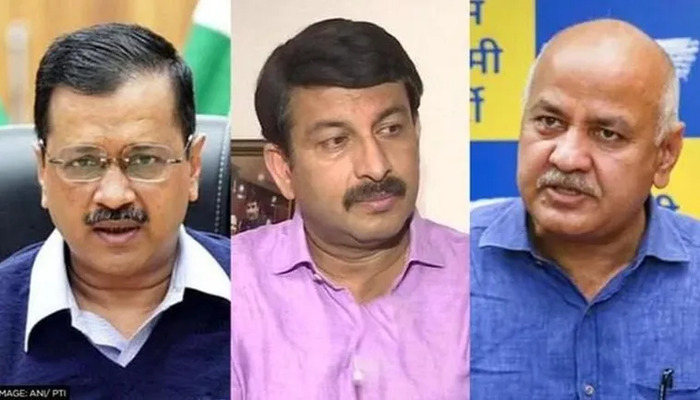
In a press conference, Delhi BJP leader Manoj Tiwari demanded a refund of the government funds spent on advertisements by the AAP. He also demanded that the bank accounts of AAP should also be seized. 

Citing reports that the Directorate of Information and Publicity (DIP) has issued a notice to the National Convenor of the Aam Aadmi Party, Arvind Kejriwal, to around Rs 163 crores within days.

“The AAP government is wasting the hard-earned money of Delhi residents on advertisements. We’ve been saying for a long time that this government is a government of fake advertisements.  The AAP will now be made to pay Rs 163 crores. Who gave them permission to spend so much money on advertisements?” Tiwari said.

He also slammed Manish Sisodia, who held a press conference after reports of the DIP issuing a notice to the AAP national convenor emerged, claiming that the BJP is using a government official against the Delhi CM. Sisodia had accused BJP of establishing an “unconstitutional control” over the Delhi government officials for its political gains. 

Furthermore, Sisodia alleged that the BJP used its control over the officials to issue a DIP notice against AAP. He added that the example of BJP exploiting its unconstitutional control over Delhi government employees is evident as it used an IAS officer Alice Vaz posted in DIP to issue a notice against CM Kejriwal. He went on to claim that the officer has “threatened” Arvind Kejriwal with “necessary action as per law” upon failing to deposit Rs 163 crores spent on AAP’s advertisements outside Delhi during the year 2016-17.

It is worth noting that the political war of words began after the Directorate of Information and Publicity served a notice on Arvind Kejriwal, the National Convenor of the Aam Aadmi Party, requiring him to pay up to Rs 163 crores within 10 days. The development comes just days after Delhi Lieutenant General (LG) VK Saxena directed the Chief Secretary to recover Rs 97 crore from AAP for political advertisements published under the guise of government advertisements during the fiscal year 2015-2016.

Pakistan: Food supply at risk as banks reluctant to open letters of credit for importing necessities

0

Amid the shortage of wheat, the banks in Pakistan remain hesitant in opening letters of credit (LCs) for the import of necessities, posing threat to the food supply, reported The News International.

The inability of banks to open LCs despite the State Bank of Pakistan’s (SBP) directives about import facilitation, poses a threat to the supply of food, as well as, could escalate price pressures and create a shortage of medications.

Thousands of shipping containers are stuck at the Karachi Port after offloading due to the banks’ reluctance to guarantee foreign exchange payments. Perishable and non-perishable foodstuffs and medical supplies are among the cargoes, reported The News International.

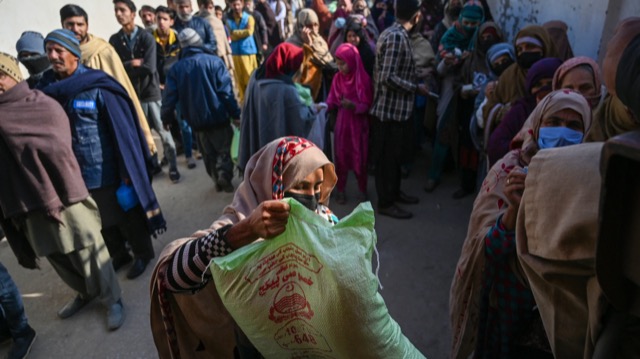
Pakistan is facing its worst-ever flour crisis with parts of the country reporting a shortage of wheat and stampedes reported from several areas in Khyber Pakhtunkhwa, Sindh, and Balochistan provinces.

Prices of wheat and flour have skyrocketed amid the ongoing crisis in Pakistan, The Express Tribune reported.

Flour in Karachi is being sold from Rs 140 per kilogram to Rs 160 per kilogram. In Islamabad and Peshawar, a 10 kg bag of flour is being sold at Rs 1,500 per kilogram while a 20-kilogram bag of flour is being sold at Rs 2,800. Mill owners in Punjab province have increased the price of flour to Rs 160 per kilogram.

Similarly, Khyber Pakhtunkhwa has been facing the worst-ever flour crisis as a bag of 20-kilogram flour is being sold for Rs 3100 after the government failed to control the price of the stable, The News International reported.

Last month, the SBP lifted import restrictions that went into force on January 2. “In view of the orders issued last month, the SBP has given banks the power to facilitate imports. Thus, banks are not restricted from opening LCs for the importation of essentials such as food and medicine. Banks are free to make their own decisions on the opening of LCs,” said SBP spokesman Abid Qamar.

According to the SBP, banks should give preference to or facilitate imports that fit into the category of necessary imports, such as those related to food (wheat, edible oil, etc.) and pharmaceuticals (raw materials, life-saving/essential medications, and surgical devices, including stents), reported The News International.

The SBP has also directed banks to prioritize imports of energy, goods from export-oriented businesses and inputs for agriculture.

More than 6,000 containers of pulses are stuck at ports, according to Abdul Rauf Ibrahim, chairman of the Karachi Wholesale Groceries Association. Banks have reservations about paying for these imports.

“This threatens the nation’s capacity to import these basic foods. Importers have paid shipping companies USD 48 million in detention fees for these stranded containers. In the month of Ramazan, there would be a new problem in the supply and cost of pulses if these containers are not released,” Ibrahim said.

Pakistan is grappling with a balance of payments crisis brought on by high foreign debt repayments and a lack of external financing, which have hammered its foreign reserves and created chronic dollar shortages.

As of January 6, the SBP’s foreign exchange reserves plummeted to almost a nine-year low of USD 4.3 billion, posing a significant challenge for the country in terms of financing imports, reported The News International.

(This news report is published from a syndicated feed. Except for the headline, the content has not been written or edited by OpIndia staff)


Democrats and media organisations knowingly propagated the ‘Russiagate theory’ hoax to discredit Donald Trump’s election victory: Twitter Files

On Thursday (January 12), the 14th tranche of the ‘Twitter Files’ was released on the social media platform, which exposed how the Democratic Party leaders and the mainstream media organisations used the ‘Russiagate theory’ to discredit the 2016 victory of the former US President Donald Trump.

The story was covered in detail by journalist Matt Taibbi who emphasised that Twitter employees found no evidence of Russian influence in the 2016 US elections, yet they continued to allow Democrats and media organisations to use their platform to push the notion that Trump had Moscow’s backing. “Twitter warned politicians and media they not only lacked evidence but had evidence the accounts weren’t Russian – and were roundly ignored,” he pointed out.

Former US House of Representative, Devin Nunes, had submitted a classified memo to the House Intel Committee on January 18th, 2018, pointing out several flaws in the Russiagate conspiracy theory.

Although the report was verified by the US Justice Department a year later in December 2019, the Democrats went all-out to cast aspersions on the memo presented by Devin Nunes.

The sceptics included Democratic leaders Senator Dianne Feinstein, Congressman Adam Schiff, Senator Richard Blumenthal and leftist propaganda outlets such as MSNBC, The Washington Post and others.

Interestingly, Democrats and their lap-dog media had unilaterally relied on an online dashboard called ‘Hamilton 68’, published by a national security advocacy group ‘Alliance for Securing Democracy’ to further their claims. The dashboard claimed to expose Twitter activity related to the supposed ‘Russian disinformation campaign.’

However, internal communications now show that Twitter employees (who are mostly Democratic Party supporters) had failed to gather any evidence that could lend credence to the Russiagate conspiracy theory.

Yoel Roth, former Global Head of Trust & Safety at Twitter, pointed out, “I just reviewed the accounts that posted the first 50 tweets with release the memo (hashtag) and…none of them show any signs of affiliation to Russia.”

‘Twitter Files 14.0’ revealed how attempts made by top executives to stop Democrats from posting unverified claims about Russiagate were in vain.

“It might be worth nudging Blumenthal’s staffer that it could be in his boss’ best interest not to go out there because it could come back to make him look silly,” emphasised one concerned Twitter employee about the political well-being of Democrat Senator Richard Blumenthal.

“Executives eventually grew frustrated over what they saw as a circular process – presented with claims of Russian activity, even when denied, led to more claims,” wrote journalist Matt Taibbi.

It became clear that Democrats went ahead with their outlandish claims about the ‘bogus’ Russian disinformation campaign, despite warnings from top Twitter employees.

Later, it dawned upon the Twitter employees that they were being exploited by the Democratic Party leader. “Blumenthal isn’t looking for real and nuanced solutions,” noted one executive.

“Despite universal internal conviction that there were no Russians in the story, Twitter went on to follow a slavish pattern of not challenging Russia claims on the record,” noted journalist Matt Taibbi.

“…Reporters from the AP to Politico to NBC to Rolling Stone continued to hammer the “Russian bots” theme, despite a total lack of evidence,” the author of ‘Twitter Files 14.0’ added.

Matt Taibbi said, “Russians weren’t just blamed for #ReleaseTheMemo but #SchumerShutdown, #ParklandShooting, even #GunControlNow – to “widen the divide,” according to the New York Times.”

Interestingly, the above-mentioned news outlets and Democratic Party leaders who peddled the Russiagate conspiracy theory refused to speak to Matt Taibbi.

While speaking about the matter, ex-US House of Representative member Devin Nunes said, “Schiff and the Democrats falsely claimed Russians were behind the Release the Memo hashtag, all my investigative work.”

He added, “By spreading the Russia collusion hoax, they instigated one of the greatest outbreaks of mass delusion in U.S. history.”

“This #ReleaseTheMemo episode is just one of many in the #TwitterFiles. The Russiagate scandal was built on the craven dishonesty of politicians and reporters, who for years ignored the absence of data to fictional scare headlines,” journalist Matt Taibbi concluded.

Entire Joshimath may collapse, 5.4 cm land subsidence reported in last 12 days: ISRO satellite images

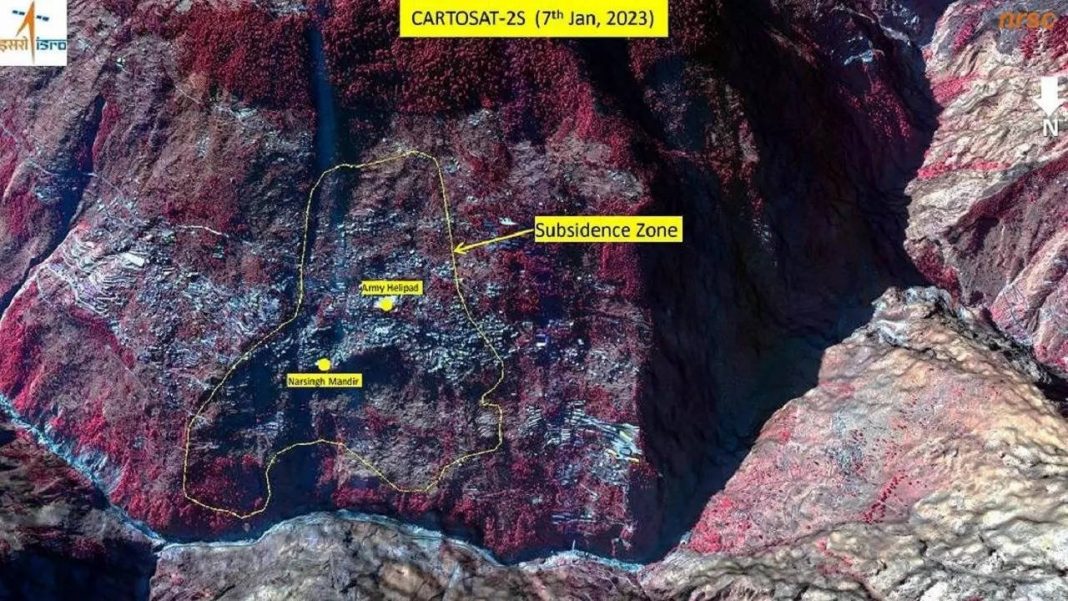
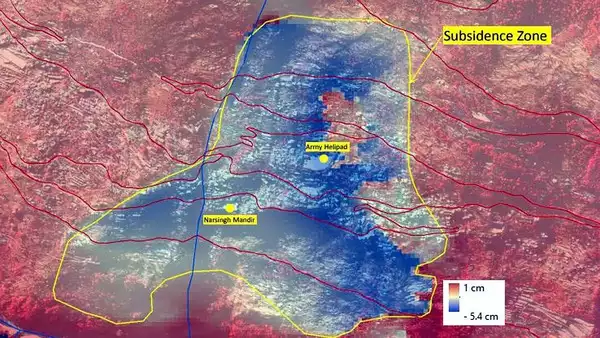
The National Remote Sensing Centre (NRSC) of the Indian Space Research Organisation (ISRO) has released satellite images and a preliminary assessment of the catastrophe underway at Joshimath. The pictures and report warn that the entire Joshimath may be susceptible to sinking.

Taken from Cartosat-2s satellite, the Hyderabad-based NRSC released satellite images of the areas that are sinking. The images show that the entire town of Joshimath, including the Army’s helipad and the Narasimha temple, has been marked as a sensitive zone.

Source: ISRO

The Uttarakhand government has initiated a rescue operation based on ISRO’s preliminary report, evacuating people living in sensitive regions to safer places. 

As per the report, the land subsidence was slow between April and November 2022, during which Joshimath had sunk by 8.9 cm. However, between December 27, 2022, and January 8, 2023, the pace of land subsidence escalated and the town sank by 5.4 cm in these 12 days.

Source: ISRO

The images also showed that the Joshimath-Auli road is going to collapse due to land subsidence.

While the scientists are still assessing the cracks that appeared in the houses and roads after the land subsidence in the town, the primary reports of ISRO and the satellite images have had the authorities concerned. 

Although scientists are still studying the cracks that appeared in the houses and roads after the land subsidence in the town, the findings in the primary report of ISRO are frightening.

Why is Joshimath sinking?

Joshimath is located on the middle slopes of the hill, bounded on the west and east by Karmanasa and Dhaknala, respectively, and on the other sides by Dhauliganga and Alaknanda.

With increasing urbanization, this small Himalayan town has come under increased strain. According to the researchers, urbanization has historically aggravated these issues because it disrupts natural water drainage, slopes, and results in an uncontrolled flow of water.

According to the District Disaster Management Department, 561 houses in Joshimath have developed cracks due to the continued subsidence of land. So far, more than 66 families have reportedly migrated from Joshimath. 

China harbouring a dream of becoming a ‘great maritime power’: Report

0

At the 18th Party Congress of the Chinese Communist Party (CCP) held in 2012, China had declared its ambition to be a haiyang qiangguo– that is, a strong or great maritime power, according to The Singapore Post.

As per the Singapore-based publication, a ‘maritime power’ is a country that has great comprehensive strength in terms of the development, use, protection, management, and control of the seas.”

In November 2012, then-president Hu Jintao, in his report to the CCP stated China should enhance its capacity for exploiting marine resources, develop the marine economy, protect the marine ecological environment, resolutely safeguard China’s maritime rights and interests, and build China into a strong maritime power.

During the 18th Party Congress, Hu also called for building a military (the PLA) that would be “commensurate with China’s international standing.”

“Building China into a maritime power is an essential path on the way to the sustained development of the Chinese nation and [achievement of the status of a] global power, according to the Liu Cigui, director of the SOA, or State Oceanic Administration.

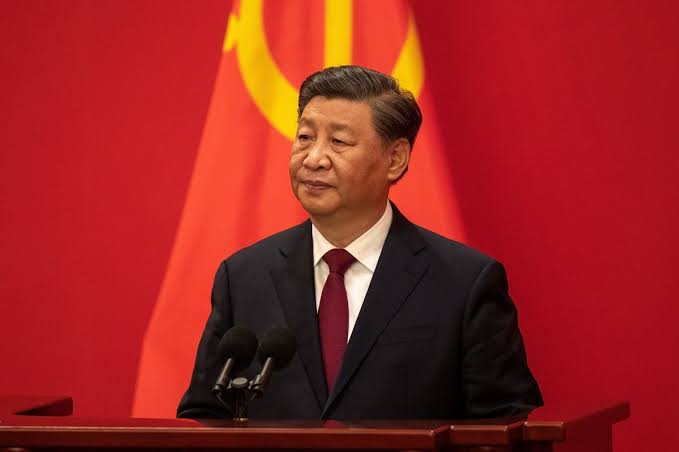
Moreover, President Xi Jinping also stressed on building China into a strong maritime country is a “major strategic task for realizing the great rejuvenation of the Chinese nation.” Back in 2013, Xi told the Political Bureau of the CPC Central Committee at a study session that a robust marine economy underpins the building of a strong maritime nation, reported The Singapore Post.

Xi’s vision is materializing as he steers the blue economy toward prosperity, with the size of the country’s marine economy exceeding 9 trillion yuan about 1.35 trillion US dollars) in 2021, a surge from 5 trillion yuan in 2012. It contributed 8 per cent to the growth of GDP last year, according to the Ministry of Natural Resources.

In recent years, Chinese President Xi Jinping proposed building a maritime community with a shared future and a 21st Century Maritime Silk Road. The reason for China to propose jointly building the 21st Century Maritime Silk Road, Xi said, is to facilitate maritime connectivity, pragmatic cooperation in various fields, and the development of the “blue economy.”

In the Chinese context, maritime power encompasses more than naval power but appreciates the importance of having a world-class navy. The maritime power equation includes a large and effective coast guard; a world-class merchant marine and fishing fleet; a globally recognized shipbuilding capacity; and an ability to harvest or extract economically important maritime resources, especially fish.

Although the intensity of fishing varies across regions, the depletion of fishery resources is a growing problem everywhere. China, which catches more fish than any other nation, vastly contributes to this problem with not only its fleet size and the tonnage of its catches, but also its fishing practices – which include illegal, unreported, and unregulated (IUU) fishing – and, above all, a fisheries policy that exports its environmental problems and thereby protects its own national marine areas.

Moreover, China instrumentalizes fishing to serve its revisionist agenda and its strategic interests more broadly, signalling its willingness to use traditional economic activities for geopolitical gain, reported The Singapore Post.

There have been many notable cases across nations where Chinese ships have been detained and found to carry illegal fishing stock which was being hauled to China on large cargo ships. These kinds of cargo ships are mostly owned by seafood corporation that have direct links to China.

China’s unregulated plunder of the global fish stock could pose a great threat to the livelihood and food security millions of people, reported The Singapore Post.

Regarding UNCLOS, China has fully participated and ratified UNCLOS, but it has increased its assertiveness in the South China Sea on the basis of “historic claims”.

The UN Convention for the Law of the Sea (UNCLOS) does not grant signatories the right to make claims based on historical legacy, and the concept of “historic claims” lacks a clear basis in international law.

China’s latest round of actions in the South China Sea (SCS) region through war exercises invoking fighter jets and warships ahead of the fifth anniversary of the international tribunal ruling is yet another brazen act of violation of international law on the 100th year of the ruling Communist Party of China.

As it is clear that, a wide variety of authoritative sources indicate that maritime power will also have an important global component.

The latest Chinese defence white paper indicates that PLA Navy strategy is transitioning from a single-minded focus on “offshore waters defence,” to broader global strategic missions that place significant importance on “distant-water defence.”

Whether it is the navy, the merchant marine, or China’s distant-water fishing fleet, the Chinese flag is going to be ubiquitous on the high seas around the world.

(This news report is published from a syndicated feed. Except for the headline, the content has not been written or edited by OpIndia staff)
Amazon begins layoffs in India, informs affected employees over email and promises them 5 months of severance pay

Days after Amazon CEO Andy Jassy confirmed that the firm is planning to lay off thousands of its employees globally, the eCommerce giant has reportedly begun laying off its employees in India. Earlier reports had suggested that Amazon India will cut 1% of its workforce in India. 

Even though the layoff was to begin on January 18, the company has started informing the impacted employees over email. As per an India Today report, loss-making teams are among the most impacted. Hitting multiple departments operating from India, across offices in Bengaluru, Gurugram, and others, the latest round of layoffs has affected both fresher and experienced employees 

In its email, the company reportedly asked the impacted employees to communicate with the leadership team to get more clarity on the situation. Moreover, the company has promised to provide 5 months of severance pay.

It is worth noting that Amazon CEO in a blog post on January 5 stated that the company will be laying off employees in additional roles mostly from Amazon Stores and People, Experience, and Technology (PXT) organizations. Andy Jassy said that in the last few years, the company has over-hired employees.

Along with severance pay, Jassy also offered to provide health insurance and external job placement support to the employees laid off.

“We are working to support those who are affected and are providing packages that include a separation payment, transitional health insurance benefits, and external job placement support, the Amazon CEO wrote in his blog post.

In another development, the Assistant Labour Commissioner’s office in Pune issued a notice to Amazon India following a complaint filed by the Nascent Information Technology Employees Senate (NITES), a city-based IT sector employees union.

NITES accused Amazon of “clearly violating the existing provisions of Indian labour laws” in a complaint filed last week with the assistant labour commissioner in Pune.

“The implemented voluntary separation policy was never submitted to the labour ministry for review, which is a violation of existing labour laws,” it continued.

“We will continue to fight for the rights of aggrieved employees who were unethically forced to opt for Voluntary Separation Policy and were laid off illegally,” said NITES president Harpreet Singh Saluja.

Keep jail inmates inclined towards propagating radicalisation in separate enclosures: MHA directs state, UT prisons

0

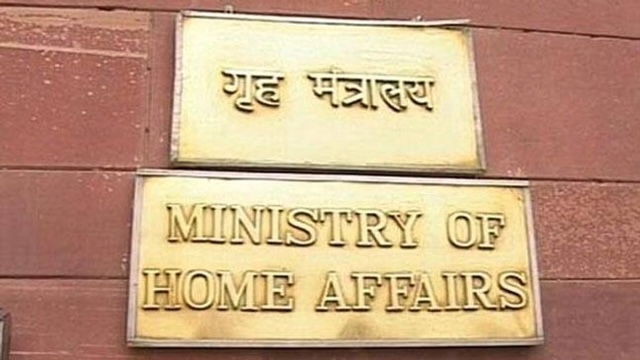
Ministry of Home Affairs (MHA) has issued a direction to the prison administration of all states and the Union Territories (UTs) to pay special attention to ensuring that “inmates inclined towards propagating the ideology of radicalization and those who have the propensity and potential to negatively influence other inmates are housed in separate enclosures”.

Similarly, the MHA advised, the inmates who are in custody for offences related to “narcotics and smuggling of drugs also need to be lodged separately, and to the extent possible not allowed to mix with other inmates”, again with the intention of keeping other inmates away from the influence of such unscrupulous individuals.

It is also suggested that the state prison authorities should also focus on organising “special de-radicalisation sessions” in all jails with the help of correctional and behavioural experts, on regular basis, as this can go a long way in bringing change in the mindset of misguided criminals.

The MHA’s direction was circulated on January 9 through a written letter to the Additional Chief Secretaries and Principal Secretary (Home) of all states and UTs as well as the Director General and Inspector General Prisons of all states and UTs.

The MHA also directed them to take measures for effective prison management, asking them to adopt the Model Prison Manual 2016 and bring in prison reforms in accordance with the guidelines provided in the manual.

In terms of the guidance contained in the Model Prison Manual 2016, on the admission of a prisoner in jail, the letter mentions, the prison administration has to ensure the separation of various categories of prisoners namely women, young offenders, under-trials, convicts, high-risk offenders and to lodge them in the jail separately with a view to ensuring the safety and security of inmates.

The letter clearly mentions that those states and UTs have not adopted the Model Prison Manual so far should expedite their move and take necessary steps for effective prison management and also filling up vacancies of Prison officers and staff in Jails.

Given the importance of Prisons and Correctional Institutions in the Criminal Justice System, the MHA said, it is the constant endeavour of the Government of India to share important guidelines with the states and UTs on varied aspects of prison administration in the form of advisories issued from time to time.

The Model Prison Manual 2016, forwarded to all states and UTs in May 2016, was also a step in this direction and was aimed at bringing uniformity in the basic principles governing the jails of the country.

However, despite constant follow-up by the MHA, several states are yet to confirm the status of the adoption of the Model Prison Manual 2016 in their jurisdictions.

“The states and UTs who have not adopted the Model Prison Manual so far are again requested to expedite the same and take necessary steps for adopting it and bringing in the prison reforms in accordance with the guidelines provided in the

Manual,” the letter said.

Citing the annual publication of the latest “Prison Statistics India, 2021” prison statistics collated by the National Crime Records Bureau (NCRB), the MHA noted that as many as 1,102 Jails in the country are equipped with video conferencing facilities.

The MHA mentions in the letter that the Department of Justice has informed that under the eCourts Mission Mode Project, a video conferencing facility between Courts and Jails has been enabled in 3,240 Court complexes.

Taking note of these, the MHA requested the state prison authorities “to make special efforts for making use of the video conferencing facility in all district level jails and the courts”.

“Wherever such a facility is not available, suitable arrangements may be provided by the state authorities by taking up the matter with the officers of the concerned courts on an urgent basis,” said the MHA in the letter.

To further augment the video conferencing facilities in the jails, the Ministry of Home Affairs said it is providing grants in aid to all states and UTs under the ‘Modernisation of Prisons’ project, and requested the states and UTs to make use of the grant in aid being provided to them and strengthen the video conferencing facility in the jails wherever required.

It is also noted from the NCRB publication ‘Prison Statistics India 2021’ that there is a national average of approximately 28 per cent of posts of Jail staff lying vacant in various states and UTs as on December 31, 2021. In some states, about 40 to 50 per cent of posts of Jail staff are lying vacant, which does not augur well for the efficient management of prisons and correctional facilities in the country.

It is further noted that various posts of Medical Officers, Psychologists and Psychiatrists are also lying vacant in the jails of many states and UTs, mentions the MHA letter.

Through the letter, the MHA also requested the state and UT authorities to “launch special recruitment drives to fill up the vacancies of all categories of Jail staff”.

It mentioned that “sensitive institutions like prisons and correctional services should not be understaffed as this is not only a potential security risk but also deprives the prison inmates of the correctional services to be provided to them for weaning them away from the path of crime and making them dutiful citizens of the country”.

(This news report is published from a syndicated feed. Except for the headline, the content has not been written or edited by OpIndia staff)

China exerting pressure on a reluctant Nepal to join the Belt and Road Initiative: Report

0

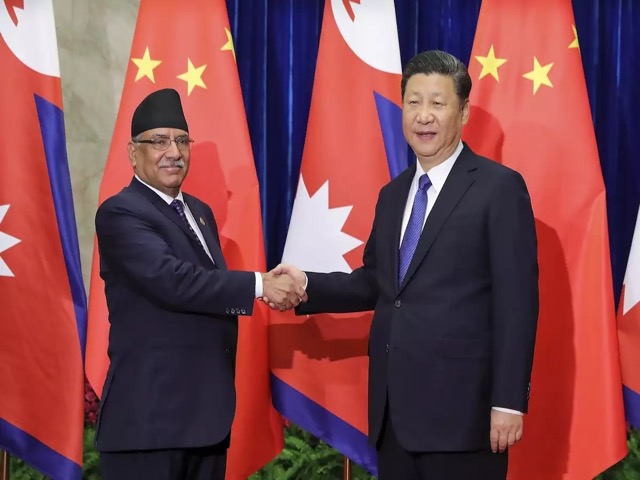
China has been trying to get the support of Nepal for its ambitious Belt and Road Initiative (BRI). Still, the Himalayan country is reluctant to join it as it also seeks support from the US and India which oppose Chinese policies, a Kathmandu-based online magazine Epardafas reported.

The Epardafas report claims that Nepal has not yet agreed to enter into BRI but there are still questions that the projects offered by China have offered are really beneficial. However, according to the recent global economic conditions the country where BRI was implemented has established a belief that BRI is a Chinese debt trap.

The inauguration of Pokhara Regional International Airport in August last year is an example of the pressure that China is trying to exert on China. During that time the Acting Chinese Ambassador to Nepal Wang Xin said that the airport was under the BRI plan. However, in reality, the airport was actually built with investments from the Nepal government and the loan investment of a Chinese Export-Import Bank of China (EXIM) bank, according to the Epardafas report.

Just a day before its opening the Chinese Embassy to Nepal tweeted “This [Pokhara airport] is the flagship project of the China-Nepal BRI cooperation.” However, in reality, Nepal had taken a concessional loan of Rs 22 billion for forty years from the Exim Bank of China. Its interest rate is 2.75 per cent per annum. The loan agreement between the Civil Aviation Authority and China’s EXIM Bank was nowhere mentioned in the tweet.

The Epardafas report said that the airport’s work had started before the BRI entered Nepal. In 2012, Nepal and China governments reached an agreement for the airport project. In May 2014, two years before the loan was agreed upon, China CAMC Engineering was given the construction contract, at a time when China’s BRI was in a nascent phase. Chinese President Xi first announced the idea of BRI in 2013 as ‘One Belt, One Road’.

The same report further mentions, while Nepal and China had entered just a framework agreement of BRI which initially had 35 projects to be undertaken, later most of these projects were withheld reducing the number to nine and the Pokhra airport project was not in them.

Leaving the airport project aside China had also put its hands into Damak Industrial Park and Kerung-Kathmandu railway project and they are stranded as the work of these projects has not yet progressed and the work on Damak Industrial Park in Jhapa has not yet begun, according to the same Epardafas report.

According to the agreement for the Jhapa project, the construction period of the park will take ten years and the Chinese will operate the park for 40 years, and then only it will be handed over to Nepal. It is claimed that this project will improve the economic condition of the country, and provide employment for one lakh people, according to the same report.

The same report by Epardafas also mentions that the real purpose of this Jhapa project is to be teasing India by taking the Chinese influence closer to the Indian border. It has been eight years now since the land was acquired for construction of the park named China-Nepal Friendship Industrial Park, Damak, and two years have passed since the foundation stone was laid, but the work has not yet progressed, the same report by the online magazine claimed.

The report by Epardafas further says that the locals of the area are now voicing their dissent as they claim that the price compensation given to them against their land for the park project is very low. Now the same project has become a victim of corruption, compensation disputes, and irresponsibility on the part of the Chinese side, the said locals.

Investment projects like these prove that China is trying to include Nepal in BRI forcibly. Although, this may ultimately create trouble for the country as other diplomatic allies of Nepal like the US and India oppose the policies of China.

This news report is published from a syndicated feed. Except for the headline, the content has not been written or edited by OpIndia staff)