Home Blog Page 2759

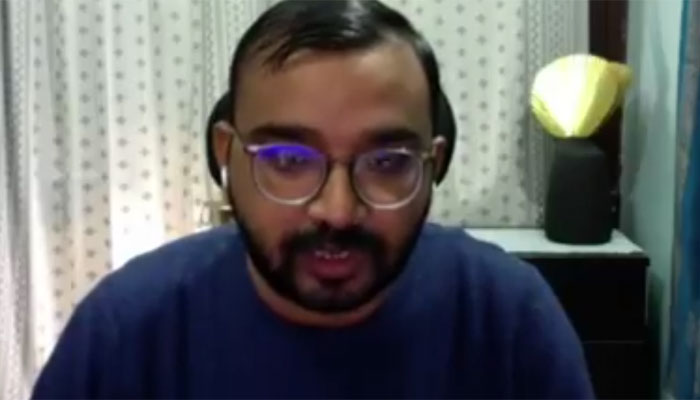
The Wire’s ‘tech expert’ Devesh Kumar appears before Delhi Police Crime Branch in Meta controversy

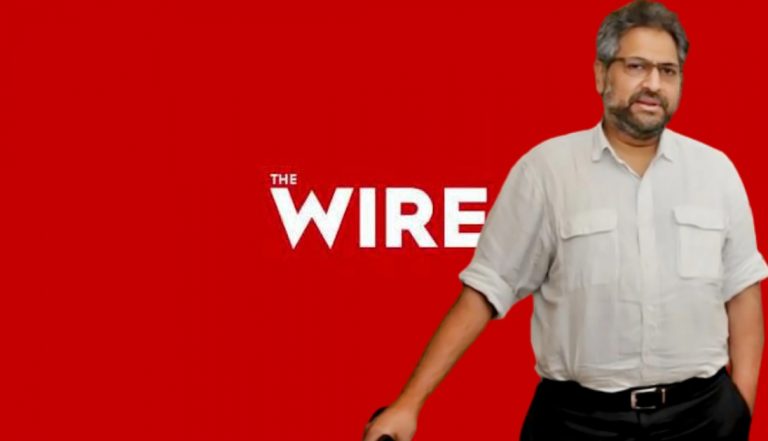
Devesh Kumar, The Wire’s technical specialist who played a major role in the Tek Fog and Meta articles that were brought down when they were discovered to be based on forged documents, arrived today at the Delhi crime branch office for interrogation.

This comes after Amit Malviya filed a case with Delhi Police on October 29 against The Wire, its editors, and reporters, alleging that they published a series of pieces with the goal to harm his image. Devesh Kumar was not named in the complaint by Malviya but was named in a separate complaint filed by The Wire.

Based on his allegation, an FIR was filed under Indian Penal Code Sections 420 (cheating), 468 (forgery with the aim to cheat), 469 (forgery to injure reputation), 471 (using forged document), 500 (defamation), 120B (criminal conspiracy), and 34 (common intention).

The Wire files complaint against its former employee

On October 29, The Wire filed a complaint at the Economic Offence Wing of the Delhi Police against its former employee and so-called ‘researcher’ Devesh Kumar, claiming he provided forged documents with “an intent to malign The Wire’s reputation.”

Furthermore, it was noted by The Wire in its complaint that Devesh named Philip Chua, APAC Head of Public Policy at Instagram as the person who provided him with a ‘Post Incident Review Report’ that had pointed fingers at Bharatiya Janata Party’s Amit Malviya as the person responsible for the post takedown.

Devesh seemed ‘highly disturbed mentally’, claims The Wire, Devesh denies

The Wire said in their complaint that when they tried to contact Devesh following an internal investigation and evaluation of his work by “reputed” outside sources, he did not answer. However, he called The Wire’s Product and Business Head Mithun Kidambi on October 27 and “confessed to fabricating all the material” that The Wire used in its Meta stories. “The impression Kidambi gathered was that Devesh Kumar seemed highly disturbed mentally,” claimed The Wire. However, Devesh Kumar has denied he is not mentally disturbed and said he did not appreciate the kind of language used for him by The Wire.

Australia: Queensland govt announces AUD 1 million reward for information on Rajwinder Singh, wanted in a woman’s murder case

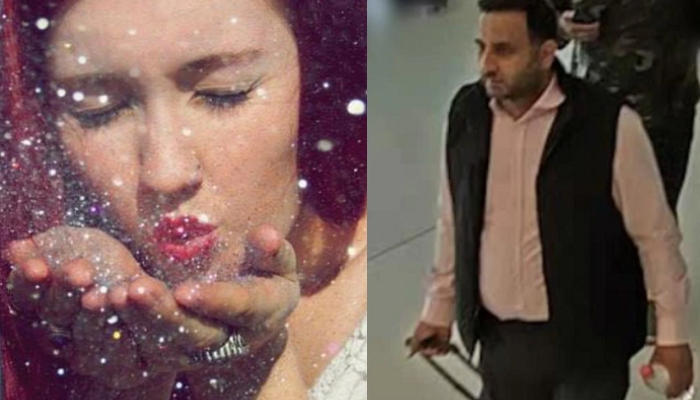
On Thursday, the Australian Police announced a monetary reward of one million Australian dollars (about Rs 5.31 crore) to anyone who would provide information leading to the location and arrest of an Indian national named Rajwinder Singh. Singh is wanted by the Australian Police in the murder case of 24-year-old Toyah Cordingley.

According to the reports, Cordingley was allegedly murdered by 38-year-old Singh in October 2018. The victim had gone missing on October 21, 2018, and her dead body was found the following morning at Wangetti Beach, Queensland. Singh lived in Queensland but originally belongs to the Buttar Kalan area of Punjab in India.

The Queensland Police has sought public assistance for information leading to the arrest of the accused who is believed to be in India. The High Commission of India issued a statement on Thursday to reveal that three officers of the Australian Federal Police are working with the Central Bureau of Investigation (CBI) in Delhi to nab the accused.

The Queensland government’s reward will aid Indian authorities in their efforts to find and apprehend Rajwinder, the Australian High Commission added in the statement. Notably, the monetary reward has been approved by Police Minister Mark Ryan as confirmed by the Queensland Police.

Rajwinder Singh was born in Buttar Kalan, Moga district, and is considered to be in India, though his exact location is unknown. On October 23, 2018, he was on his way to board a flight to India, leaving behind his wife and children, according to police. His brother had previously admitted that Rajwinder had arrived at Amritsar airport and was in psychological anguish due to work-related concerns. Since then, little is known about him.

Officers fluent in Hindi and Punjabi have been assigned to investigate the murder, which occurred while Cordingley was walking her dog. Her dead body was discovered by her father the next day at Wangetti Beach, Queensland.

“We know that people know this person, they know where this person is and we’re asking those people to do the right thing. This person is accused of a very heinous crime; a crime which has ripped a family apart”, said Police Minister Mark Ryan. Meanwhile, Detective Inspector Sonia Smith who is in charge of the case believes that there are people in Australia and overseas who can share information about the murder suspect.

“A dedicated team of detectives from Cairns, Far North and the Homicide Investigation Unit has continued to work tirelessly towards ensuring justice for Cordingley and her family. This is most definitely the time to come forward and tell us what you know”, she appealed. She further said that investigations into Toyah’s death, including bringing the person responsible to justice, remains a priority for the Queensland Police Service.

According to the local police, this is the first time a one-million-dollar reward has been announced to capture the attention of an international audience in order to find an accused. The Police have released his images at the airport and have said that anyone who has information about the accused can share it with the police via WhatsApp as well. Otherwise, people with information in India can contact the Australian Federal Police at the Australian High Commission at +91 11 4122 0972, the police noted.

UK: Dobby the house elf’s ‘grave’ at a beach in Wales allowed to stay, as long as Harry Potter fans stop giving him socks

0

For Harry Potter fans, the scene in the Deathly Hallows book where Dobby the house elf gets stabbed by an enchanted knife while saving the lives of Harry and his friends is one moment of deep sorrow, almost as shocking as Dumbledore’s death in the previous book.

The scene afterward, when Dobby dies in Harry’s arms at a beautiful beach, and Harry tries to deal with his grief by digging a grave for Dobby with his hands, without using magic, was one of the most touching and profound moments in the entire series. As it turns out, Dobby’s fictional grave that Harry was seen digging in the Deathly Hallows movie has been maintained at the Freshwater West Beach in Pembrokeshire, Wales, in the UK.

The site of the fictional grave at the beautiful beach has been maintained all these years by numerous Harry Potter fans who visit the site and leave messages for the beloved character. They also leave Dobby socks, a lot of them.

Dobby’s grave has been marked with decorated pebbles, endearing messages, and dozens of mismatched socks, just as the house elf loved them. Thousands of Potterheads, as Harry Potter fans call themselves, visit the grave every year.

As per reports, the local environment officials were worried that the popular site of Dobby’s fictional grave at the Freshwater West beach was becoming dirty as fans continued to leave socks and other gifts for Dobby.

After an 8-month-long review, during which the proposal to tear down the memorial for Dobby the house elf was considered by The National Trust Wales, it has now been decided that the popular memorial can stay, as long as fans stop leaving socks and other tributes for Dobby. They have asked fans to just visit the place and not leave anything on the beach.

‘Dobby is a free elf’, and a beloved Harry Potter character

For those who have not read the books or have not watched the movies, Dobby was an enslaved house elf of the Malfoy family where he was tortured. He was set free by Harry potter when Harry tricked Mr. Malfoy into giving a dirty sock to Dobby. As per the laws binding the house elves, they gain their freedom when they are presented with any item of clothing.

Dobby, a free, proud, and rebellious house elf who loved Harry, remains an endearing character throughout the series and gets paid to work at Harry’s school. As a mark of his freedom, he wears bright colors, and mismatched socks always. He even wears a tall headgear of badly made wool hats, which Hermione sewed to set other house elves free.

In the Deathly Hallows book, when Harry, Hermione, Ron, and a group of their friends, including Ollivander the wand maker are trapped inside the Malfoy Manor by Voldemort’s servants, Dobby appears to help them escape. Dobby manages to bring them to safety by apparition, but just when he was about to disappear, he gets stabbed by a magic knife thrown by the evil Bellatrix Lestrange.

After arriving safely at Shell Cottage, the beachside home of Ron’s brother, Harry realizes that Dobby has been mortally wounded. Dobby dies a free elf, in the arms of his favorite person, Harry. His last words were, “What a wonderful place to be with friends”.

‘Fear regime in Kerala under Pinarayi Vijayan’: Governor Arif Mohammad Khan

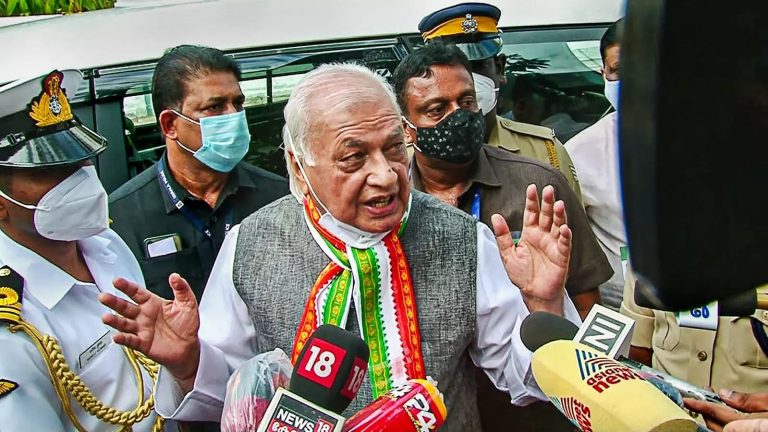
Kerala Governor Arif Mohammad Khan described the Pinarayi Vijayan-led Kerala government as a fear regime on Thursday. Speaking to reporters, Khan stated that there is a fear regime in the state, with the state administration arresting anyone wearing a black shirt and attending a program under the guise of putting an end to protests.

Governor Arif Mohammad Khan, who has been opposing the appointment of Vice Chancellors of Universities in Kerala, stated that he is not doing this for personal gain or to push RSS people into the system and that if the Kerala CM proves this is correct, he will resign, and if he fails to prove, the CM should resign.

“He is saying I am doing this to bring RSS people. If I have nominated even one person, not just of RSS, any person, using my authority, then I will resign. Will he be able to resign if he is not able to prove it?” the governor asked.

On October 23, Kerala Governor Arif Mohammad Khan demanded the vice-chancellors (V-Cs) of nine state institutions to resign, claiming that procedures were breached during their nomination. Khan highlighted the issue of the appointment of vice-chancellors to numerous institutions in Kerala, alleging that the Supreme Court had earlier indicated that the Governor was responsible for the selection of vice-chancellors and not the state government.

He claimed that the state government has no involvement in it and that any law approved by the government must adhere to the terms of the University Grants Commission (UGC) rules.

After the Supreme Court ordered on October 21 that the appointment of a university vice-chancellor would be illegal if the search committee offered only one candidate rather than three to five, as required by the UGC regulations of 2013, the governor requested that the VCs resign.

Governor Arif Mohammed Khan previously remarked that the state was replacing Punjab as the “capital of drugs,” and that he was humiliated that the southern state’s two largest revenue streams were lottery and alcohol. Governor Khan, who is in conflict with the Left government on a number of topics, including university appointments, asserted that while the rest of the country was fighting against alcohol use, Kerala was supporting it.

“Here, we’ve decided that the lottery and alcohol are sufficient for our development. What a disgrace for a state with a literacy rate of 100%. I am ashamed to be the head of state. What exactly is the lottery? You are robbing people. You are causing your people to become alcohol addicts. Do you know what the position is today? Kerala is replacing Punjab as the capital of drugs. Everyone does anti-alcohol campaigns, yet here, alcohol intake is encouraged. What a shame?” Khan stated at a book launch event.

Air pollution worsens in Delhi with increasing stubble burning, demand to shut down schools grows as average AQI nears 500

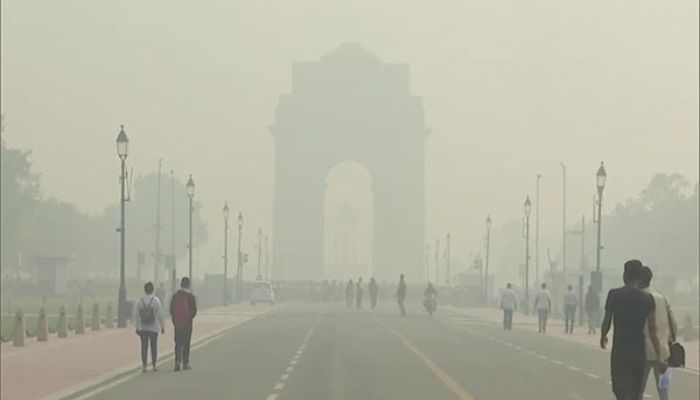
On Thursday, 3rd November 2022, residents of Delhi and the National Capital Region (NCR) complained of suffocating and “eyes scorching” as a result of smog and severe air pollution, which left many gasping for oxygen. At 7 am, the national capital’s Air Quality Index (AQI) was 408 (in the “Severe” category), and at 8 am, it was 364 (in the “Very Poor” category).

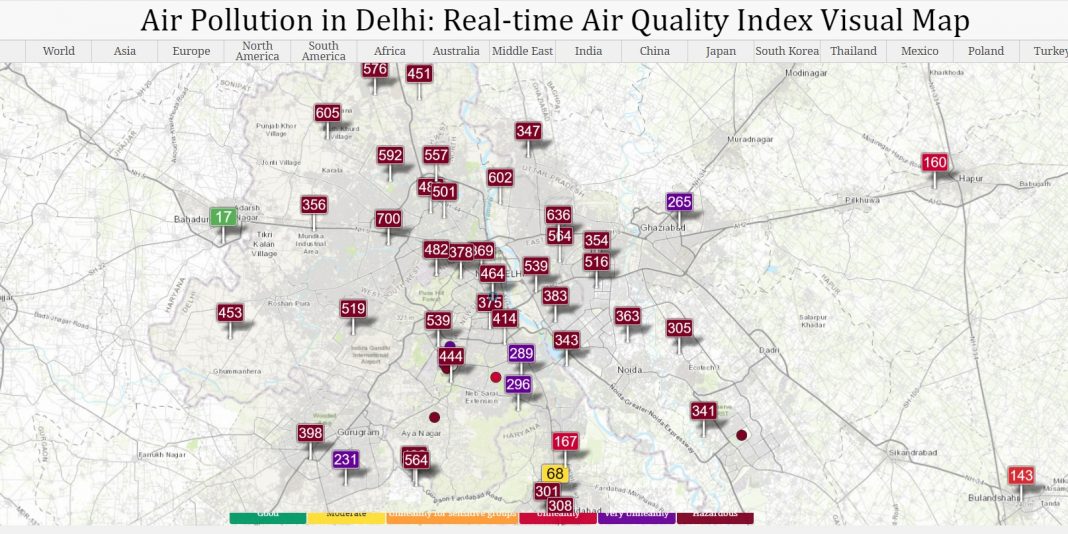
Later in the day, the AQI level went up in almost all zones in the city-state, with many places registering AQI above 500. The AQI was 700 at Punjabi Bagh and 605 in Pooh Khurd, according to aqicn.org live data. An AQI between zero and 50 is considered ‘good’, 51 and 100 ‘satisfactory’, 101 and 200 ‘moderate’, 201 and 300 ‘poor’, 301 and 400 ‘very poor’, and 401 and 500 ‘severe’. AQI above 500 is hazardous, and today, the air quality is marked as poor to hazardous in various places in the entire city. Among the pollutants, PM2.5 and PM10 are at dangerously high levels, reaching levels above 700, and even nearing 1000 in some places.

AQI levels in Delhi at 2 PM on 3/11/2022

According to a report by ANI, people are holding stubble burning in Punjab and Haryana responsible for the worsening air pollution in the national capital. However, some people are also complaining about the excessive fireworks in Delhi during Diwali despite a blanket ban by the Arvind Kejriwal government.

Noida resident Arjun Prajapati said that despite the government’s ban, there were allegedly massive sales of crackers throughout the Delhi and NCR region. He said, “Despite the government’s ban, so many firecrackers were sold leading to this condition post-Diwali. There is so much difficulty in breathing that I cannot even breathe. There is burning in the eyes. Pollution is increasing. The government should take cognizance of it.” However, Diwali was over a week ago, and stubble burning in Punjab has seen a massive rise in the last week.

In addition to this, as the city is wracked by pollution, elderly people are complaining of breathing problems. A senior citizen said, “Amid the baseload of pollution, we suffer difficulty in breathing, burning in the nose. When we came here for a morning walk, the whole area was covered in smog.”

Increased air pollution causes various health issues

According to data released by SAFAR (System of Air Quality and Weather Forecasting and Research) India, the National Capital Region (NCR) experienced poor air quality. Noida, which is a part of the NCR, dropped to an AQI of 393, placing it in the “very poor” category, while Gurugram’s AQI stood at 318 and remained in the “very poor category.”

Another resident of the NCR also woke up to a thick layer of smog in the morning. He said, “When I came for a morning walk suffered from eye-itching and throat infection. The neighboring states are failing to stop the farm fires. As of now, we are entering into the winter season which is contributing to the pollution.” Another person, however, blamed the stubble burning and said, “We should hold ourselves accountable, along with the politicians. People are suffering due to stubble burning too.”

Demands to close the school due to pollution

The school management was unanimously urged by the students to close the doors until everything was back to normal. Divyansh, a student at Gyan Ganga Siksha Niketan School in Haldoni, mentioned pollution coming from private automobiles’ exhausts. He said, “The schools should also be shut down, apart from this government should close factories and offices, so that people do not use private vehicles.”

Data from SAFAR show that Dhirpur in Model Town fell to an AQI of 457, which is a threshold at which even healthy individuals might become unwell. The AQI in the vicinity of IGI Airport (T3) was 346, which is considered to be “Very Poor.” The local AQI reading on Wednesday was 350.

The national capital’s air quality getting worse, and Delhi officials stopped all construction and demolition until further instructions. The Delhi government has been requested by the National Commission for Protection of Child Rights (NCPCR) to close schools till the air quality is better.

Spike in stubble burning incidents in Punjab

As per the data available, the stubble-burning incidents increased by 33.5% between September 15 and November 1 compared to last year. Last year there were 15,065 incidents reported. In 2022, 17,846 such incidents were reported. According to ET, in 2021, 1796 incidents of stubble burning were reported on November 1. In 2022, it increased to 1,846 incidents. Notably, 40% of the crop in Punjab has not been harvested yet, and more such incidents are expected to get recorded in the coming weeks.

Data suggests that 70% of the farm fires were reported in Amritsar, Sangrur, Firozpur, Gurdaspur, Kapurthala, Patiala and Tarn Taran districts. These districts were red-flagged in 2021 as well.

Haryana and UP recorded a decline in stubble-burning incidents

Data shows that Haryana and Uttar Pradesh are working extensively to reduce stubble-burning incidents. In 2021, Haryana reported 3,038 stubble-burning incidents. However, this year only 2,083 such incidents were reported marking a decline of 24%. In UP’s region around NCR, 53 stubble-burning incidents were reported in 2021, which has been reduced to 33 this year.

2000 Red Fort attack: SC rejects review petition of convicted LeT terrorist Mohammad Arif, upholds death penalty

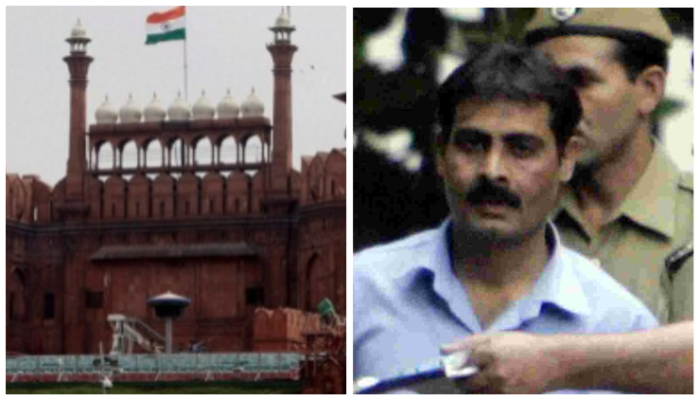
On Thursday, November 3, the Supreme Court of India rejected a review petition filed by Lashkar-e-Taiba (LeT) terrorist Mohammad Arif alias Ashfaq, upholding the death penalty awarded to him in the deadly terrorist attack carried out on the military shelter in the Red Fort in the year 2000. The attack had left two soldiers and a civilian guard dead. Arif was convicted by the trial court in 2005 and was awarded the death penalty, and the penalty was confirmed by the Delhi High Court and then the Supreme Court.

Mohammad Arif had filed a review petition challenging the Supreme Court’s decision to uphold his death penalty, but the apex court has rejected that plea now. A two-judge bench of Chief Justice Uday Umesh Lalit and Justice Bela M Trivedi said, “We have accepted the prayers that electronic records must be placed in consideration. His guilt is proved. We affirm the view taken by this court and reject the review petition”.

Arif, who is reportedly the prime accused in the deadly attack, originally from Pakistan’s Abbottabad, came to India and married Rehmana Yousuf Farooqui, a girl of Indian origin. Rehmana was also arrested as she was reportedly in full knowledge of Ashfaq’s plan and assisted him. Arif was convicted of murder, criminal conspiracy and waging war against India. Arif alias Ashfaq Ahmed has been lodged at Tihar jail since 2000.

A trial court on October 31, 2005, convicted seven accused LeT terrorists including Mohammad Arif and awarded him the death penalty in the case. The Delhi High Court confirmed his death sentence in September 2007. After that, the Supreme Court upheld the decision in 2011. However, the SC stayed his execution in 2014.

On December 22, 2000, LeT terrorists broke into the Red Fort under the guise of attending a light-and-sound show retelling the history of the ancient landmark. According to reports, six militants entered the Red Fort at about 7 pm through the Lahore Gate, the historic structure’s main entrance, with their weapons concealed inside leather jackets. They made their way to the 7:30 pm concert.

At around 9 pm, the Pakistan-backed terrorists sneaked into military shelters under the cover of darkness and fog, and opened fire on the guards of the seventh battalion of the Rajputana Rifles, killing two soldiers and a civilian guard. The terrorists then fled via the back wall of the Fort.

According to reports published then, the conspiracy was hatched in Pakistan and funded by top LeT operatives. The funds were reportedly transferred to terrorists through a Delhi-based hawala account operator, who was later nabbed by the Delhi police.

The Wire and its ignominy: What went wrong, its impact and how it should be

It is a time of considerable ignominy for The Wire. The organization was compelled to make not one but two retractions of major news stories it broke. The first withdrawal was a series of reports where The Wire claimed that the chief of the BJP’s Information Technology Department, Amit Malviya, holds special privileges that enable him to have posts removed from the social media website Instagram owned by Meta.

Meta summarily rejected the claims and called the evidence presented by The Wire, baseless and fabricated. After some back and forth, The Wire formally retracted its Meta stories. They apologized to its reader and claimed to be deceived by a “member of our Meta investigation team”. Yes, they claimed to be victims. Surprisingly or perhaps unsurprisingly, The Wire did not issue a public apology to the BJP or Amit Malviya about whom they made a spurious claim.

The second withdrawal was a three-part report that The Wire carried in January alleging that the BJP’s Information Technology Department used an application called Tek Fog to automate the retweeting of posts on Twitter, store a database of private citizens for targeted harassment and hijack inactive WhatsApp accounts. The Wire retracted the articles about Tek Fog On October 23, along with its stories about social media company Meta.

To adapt a famous quote by Oscar Wilde – To err once could be regarded as a misfortune, but to err so gravely twice is most definitely suspicious.

So What Went Wrong?

The Wire may not officially accept this, but its ideological and political stand is perfectly obvious to those consuming the content by the personnel they employ, and those who advocate for them.

It is this partisanship that is the core of the problem.

In the case of both Tek Fog and Meta stories, they were victims of confirmation bias. The story about the BJP being able to remove posts (critical of the government) from Instagram, engaging in targeted harassment, and spreading propaganda fits the narrative that The Wire has been pushing since its founding. This is the narrative that India under the BJP turning into a totalitarian state where there is no press freedom, any criticism of the government is censored, and there is targeted persecution of dissenters and rampant propaganda.

These are the kind of stories they dream of.

When they are presented with such stories, they were so overcome by the desire that it be true that they abandoned, whatever editorial standards they may have. One assumes they have a multi-level review of content that is published on their website, especially ones where such serious claims are being made.

But a multi-level review is meaningless when individuals at every stage of the review are also consumed by confirmation bias such that abandoned their primary instincts of skepticism. Hence they nodded at every juncture, patted each other on their back for the fine job they think they are doing, and pressed ‘Publish’.

The fact that they got two big stories so disastrously wrong certainly raises questions about the motives.

The impact of fake news

Mark Twain famously said that a lie will fly around the whole world while the truth is getting its boots on. Doubtlessly stories about Tek Fog and Meta were picked up by several news outlets around the world.

These organizations were also victims of confirmation bias and hold some responsibility for amplifying the bogus by abandoning journalistic rigor.  A news organization is responsible for every word they publish,  even if they attribute it to other organizations

Most news organizations who are ideologically and politically on the same plane as The Wire has lavished blandishments on The Wire, for their stories. Some continue to do so even now while they engage in whataboutery.

So what is the impact?

Perhaps reports such as the ones retracted by The Wire contribute to the periodic indices and rankings that are released about democratic rights and press freedom in India. There will be scenarios where some casual regular consumers read the stories but miss the retractions and hence presume them to be true. The loss both reputationally and economically caused by such stories can hardly be measured and is irreparable.

This is not to say that the media should not carry stories that show their country in a bad light, but they are obligated to be factual. The question remains should there be consequences for The Wire and other news organizations for getting things so disastrously wrong?

The Subscriber Model

This also brings up serious questions about the subscriber model. 

The proponents say that this model is superior to the sponsor model. They say that corporate sponsors could be arm twisted by the powers that kill certain stories, hence the subscriber model gives them freedom because the paying public can never apply pressure.

But what about an outfit such as The Wire which has taken a political stand already?

They have developed a subscriber base of like-minded people who tune in to have their biases confirmed. They probably only want to consume content that demonizes the BJP and the right. If the new organization were to adopt a stance of fairness and carry stories about some of the successes that the Modi government they will receive backlash and could be branded as ‘bhakts’ and traitors to the cause.

Soon there will be total abandonment.

Hence they give their subscribers who are actually their paying customers what they expect. They drive further and further in one direction and facts become the casualty. News outlets view their subscribers just as makers of horror slasher filmmakers view their fans. These fans expect to see blood, gore, and inventive ways to eliminate humans, and that is what the maker gives them. When an organization takes a political position, they have to break ‘shocking’ news to remain in the headlines. It broadens their subscriber base and increases donations.

Like horror fans who become desensitized by the relentless gore, the subscribers become desensitized by relentless breaking news, they want more sensationalism and shocking news. Hence news organizations go further and further in one direction until they fall flat. News has become a commodity from which where the paying customer expects predictability of content and this is deeply problematic.

Since funding is the bloodstream of any organization, irrespective of whether the fund emanates from corporate sponsors or from thousands of regular subscribers.

The organization will have to cater to those who supply the funds to run their business.

Perhaps subscribers prefer a false story that confirms their bias to factual news that goes against bias.

Will The Wire lose subscribers after being proven wrong?

Most likely not.

How it should be

When matters devolve into such chaos it is worth stating the obvious basic facts. The function of any news organization is to report facts and carry educated opinions about facts. Facts are undebatable, while opinions could be subjective. The hope is opinions are based on facts and are insightful because of the perspicacity and the domain experience of the author. 

Let’s consider an imaginary situation.

Fact 1: The Chief Minister launched a welfare scheme in his state four months before election day.

Fact 2: Some polls show CM’s political party leading by a wide margin and some show the party trailing for the elections to be held in a month.

Opinion 1: The CM sees his flailing poll numbers, and launches a welfare scheme in a desperate move to bribe voters, and prevent a humiliating routing at the polls.

Opinion 2: This scheme is linked to another hugely popular scheme previously launched by the CM. The CM had promised this scheme four and a half years ago when his party won the elections. The revenue collected by the state due to a boom in tourism has enabled this scheme. The CM is merely fulfilling a promise. It helps that it is near the elections. Many polls show the CM leading his opponent.

Both reports are based on fact and both are valid.

It is essential that the news outlet explicitly differentiates between reports and opinions. 

Reports must be meticulously reviewed to ensure that they are not colored by opinion. Numbers and statistics must be preferred over adjectives. In fact, adjectives must be avoided.

Alas, most news organizations blur this difference even in their reports. Their reports are tainted with bias based.

They either state facts without context or state facts selectively to drive a political point or resort to complete fabrication or ignore inconvenient facts.

Most reports are provocatively headlined especially by online portals to attract audiences.

The Solution

So is there a solution to the mess that The Wire finds itself in?

Ideally, any news organization that claims to be neutral must employ individuals from all political and ideological persuasions.

The group that opposes any story for ideological or political reasons must be assigned the task of reviewing and fact-checking. They must then be compelled to present their reasons for debunking a story before the editorial board.

But that will never happen in current times because news organizations have chosen already their political side. Some may be upfront about it, others may hide under a cloak of neutrality.

Most newsrooms have devolved into echo chambers where total surrender is perhaps explicitly or implicitly demanded. 

Perhaps the employees and even external consultants feel that going against the groupthink by expressing doubts will hurt their career prospects and pecuniary gains.

So hush up and nod obsequiously when they are asked about any ‘sensational’ story that fits their narrative and a spurious story makes it to their website.

A practical solution is to promote a culture of skepticism within a newsroom, and perhaps hire people of some variance within the ideological spectrum.  

There could be an individual who is perpetually loyal to both the party and the ideology. There could be another who is committed to the ideology but skeptical about the party. 

Every individual, within the newsroom, even a junior intern, must be empowered to speak and take an adversarial position against groupthink, especially for stories that fit the narrative and present ‘sensational’.

Einstein described Insanity as doing the same thing over and over and expecting different results.

It would be insane for news organizations to expect matters to improve without instituting drastic changes immediately

For the Reader

The quest for unvarnished facts hence becomes a very expensive and challenging pursuit for newsrooms.

Consumers have no choice but to assume that the news they consume is false until proven factual. They will have to apply effort and verify the same claims from myriad outlets before they develop an opinion about the facts. Sadly most people do not have much time and neither do they have the interest.

Consumers have no choice but to assume that the news they consume is false until proven factual. 

Gujarat poll dates announced: Voting to take place in two phases on December 1 and 5, counting to take place on December 8

0

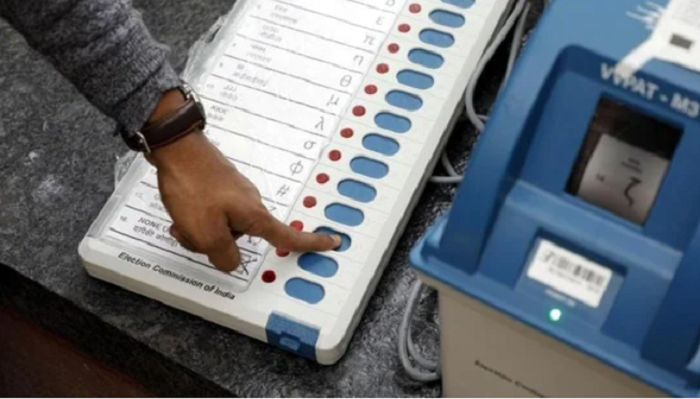
On Thursday, the Election Commission of India (ECI) announced the dates for the Gujarat Assembly Elections. The ECI said that the polls in the state would be conducted in two phases on December 1 and December 5, and that its results will be declared on December 8.

Chief Election Commissioner Rajiv Kumar began his media interaction by expressing heartfelt condolences to the families of those killed in the horrifying tragedy in Morbi. A bridge collapse there last week led to the death of 135 people.

The date for the Himachal Pradesh Assembly elections was also announced earlier this month by the poll panel which said that the state would vote on November 12. However, while announcing the Himachal poll schedule, the EC made it clear that the results of both states, Gujarat and Himachal Pradesh, would be declared on the same day, December 8.

Interestingly, this is not the first time when both the states Gujarat and Himachal Pradesh shared the date of poll results. In the year 2017 as well, election dates for both states were announced separately, but counting had taken place on one day, December 18.

As per the electoral roll, over 4.9 crore electors are registered in the state of Gujarat, out of which 4.04 lakh are PwD electors. However, the number of senior citizen voters is over 9.8 lakh and 4.61 lakh are first-time voters. The commission said that around 51,782 polling stations would be set up across 182 Assembly Constituencies to ensure a hassle-free comfortable voting experience during the polls.

Further, the ECI in a series of tweets mentioned that 1274 polling stations will be completely managed by women polling and security staff and 182 polling stations will be managed by specially-abled staff. “For the first time, to motivate young voters, 33 polling stations will be managed by youngest available polling staff”, it added. Besides this, the ECI also emphasised that it will focus on ensuring the participation of third-gender voters in the election process.

The Gujarat assembly’s term ends on February 18, 2023, while the Himachal Pradesh assembly’s term ends on January 8, 2023. According to the reports, the battle for Gujarat has heated up, with the BJP and the AAP springing up as the top two contenders. In 2017, the BJP  won 99 of the 182 seats, while the Congress won 77. The ruling party is this time attempting to secure its sixth consecutive term in the home state of Prime Minister Narendra Modi and Union Home Minister Amit Shah.

Farmers in other parts of India don’t burn stubble at this scale, read why Punjab parali is choking Delhi

Every year, the farmers in North India, especially in the state of Punjab, burn parali or stubble in order to get rid of the crop residue. The practice has become a common occurrence every year around October and November. The smoke from this stubble burning travels to the national capital, thanks to the wind patterns, and chokes Delhi.

Interestingly, paddy is grown across the country, but farmers in other parts of India do not burn stubble at the scale farmers from Punjab and neighbouring states, including Haryana etc., do. Author Sanjeev Sanyal shared some information about the root cause of the practice. In a tweet thread, Sanyal mentioned that the practice of crop burning has picked up pace only recently. Earlier, the farmers in Punjab and neighbouring states did not follow the practice with this dedication. So what changed in a decade and a half that started a chain of events choking Delhi every year?

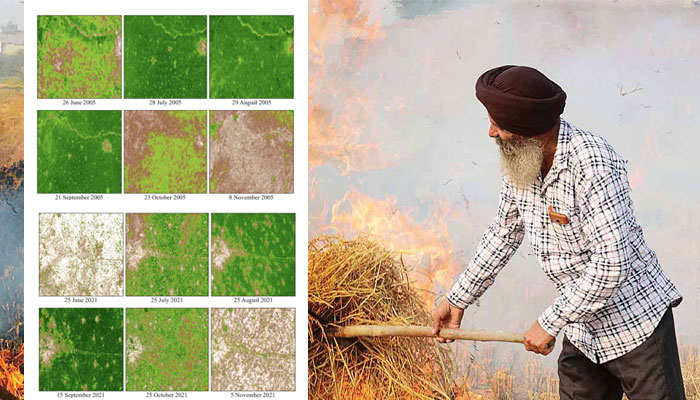
He shared satellite images of the Kharif crop cycle from 2005 and 2021 from the Economic Survey 2021-22.

The report reads, “The images in Figures 6A & 6B compare the Kharif crop cycle in Moga district, Punjab, between 2005 and 2021. The images show that the Kharif sowing cycle has shifted ahead by around two-to-three weeks, causing the Kharif harvest to almost coincide with Rabi sowing in November. Closing the gap is a likely factor that encourages farmers to burn stubble and may be related to restrictions on the early transplanting of Kharif paddy. These restrictions were introduced in 2009 in order to reduce pumping of groundwater but may have had the unintended consequence of damaging air quality.”

In November 2019, OpIndia published a detailed report on why stubble burning has become a huge problem in recent years. Before 2009, farmers from Punjab and Haryana used to sow paddy in April and May. As shown in the satellite images above, during those years, the harvest would have been completed by September and October. During these months, the wind patterns do not push the smoke toward Delhi.

However, things changed in 2009 when the governments of Punjab and Haryana introduced regulations and pushed the sowing time forward by three weeks. The idea behind the step was to discourage farmers from using the groundwater for paddy plants as the monsoon does not reach North during April and May. Paddy requires a lot of water to grow, and due to the lack of rain, farmers use groundwater without any restrictions.

Instead of encouraging farmers to use a different variety of paddy or discouraging them from sowing paddy altogether, the governments decided to push the sowing time by three weeks. The step taken by the government changed the harvesting period and pushed it to the months of October and November. As of now, 40% of the paddy crop is standing in Punjab, waiting to get harvested. The farmers in Punjab have burnt paddy residue at much higher frequency compared to previous years. A total of 35%+ increase in stubble-burning incidents have taken place in the state. Unfortunately, the state has miserably failed to implement measures to stop farmers from burning stubble.

Modern machinery adds to the problem

The combines, machines used to harvest the crop and separate the grains on the spot, only reap the grains, leaving the stalks of stubble standing in the field. When the crop is harvested manually, the crop is cut much below, and it is taken out of the field for processing, therefore, not much stubble remains on the field.

Moreover, the husk is fodder for cattle, so farmers harvest and stock it in other states, particularly in North-Eastern and Eastern states. Farmers harvest crops manually in these states, and as floods hit these states during monsoon, the harvested husk acts as feed for their livestock when the grazing fields are flooded.

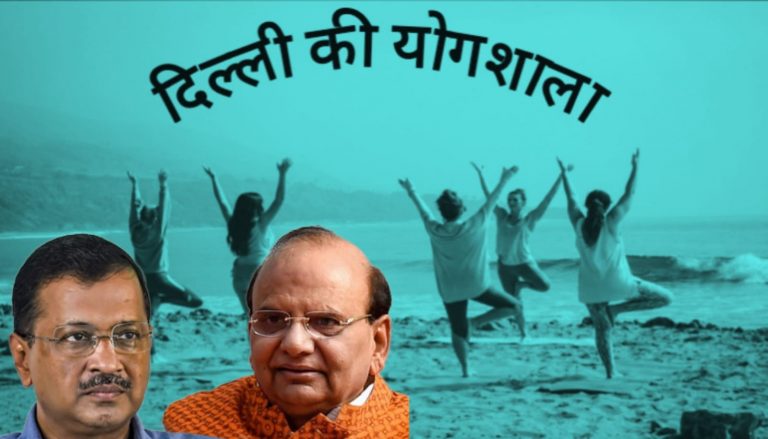
Is AAP lying? LG says they received no request from Delhi govt to extend ‘Dilli ki Yogshala’ program beyond 31st Oct

The Aam Aadmi Party (AAP) has initiated a new offensive against Lieutenant Governor (LG) VK Saxena by utilising the ‘Dilli Ki Yogshala’ program. The party led by Delhi CM Arvind Kejriwal has claimed that Delhi LG has denied approval for the extension of the ‘Dilli Ki Yogshala’ project beyond October 31. A claim, that has been categorically refuted by officials in the LG’s office who said they had not received any file seeking permission for the extension.

In a Tweet posted on November 3, Thursday, the Aam Aadmi Party claimed that they would be continuing the ‘Dilli Ki Yogshala’ programme ‘despite’ the Delhi LG not granting permission for the same. The post in Hindi read, “CM Arvind Kejriwal restarted yoga classes all over Delhi despite the LG not giving approval for the same. The promise made has been fulfilled.”

In a Tweet dated Thursday, Delhi Deputy Chief Minister Manish Sisodia also attacked Saxena. Calling him a ‘conspirator,’ Sisodia wrote in Hindi that the public of Delhi, by continuing to participate in the yoga programme, has given a befitting response to the governor, on whose order government officials are being intimidated, threatened, and pressured to stop the yoga classes.

Yesterday, Chief Minister Arvind Kejriwal-led Aam Aadmi Party (AAP) posted a video to attack the Delhi Lieutenant Governor accusing him of denying permission for free yoga classes for Delhi residents. In a video that appeared to be an effort at emotional manipulation, a yoga instructor was heard claiming that a 75-year-old Delhi resident approached her and encouraged her to tell him who he would visit and request so that these yoga classes would not be stopped.

The video was accompanied by allegations that the Delhi Lieutenant Governor has stopped the Yoga classes which is benefitting thousands of Delhi residents.

The particular controversy erupted on October 31 after Delhi deputy chief minister Manish Sisodia said the 590 yoga classes in parks run by the Delhi Pharmaceutical Sciences and Research University will be closed from November 1.

Sisodia claimed he met Saxena on October 28, seeking the continuation of the Dilli ki Yogshala programme. After the meeting, Sisodia alleged that Delhi government officials were being pressured to stop the yoga classes under the ‘Dilli Ki Yogshala’ program.

These allegations that the Aam Aadmi Party issued against the Delhi Lieutenant Governor, have been refuted by the office of L-G, saying that the LG office has not yet received any file seeking permission for an extension of the yoga program beyond October 31. “So it is wrong to state that the LG has not approved the extension of the program due to which it is being discontinued,” an official in the LG’s office said.

Political face-off between the AAP and LG

Notably, the political spat between the AAP administration and the LG erupted in July after Saxena recommended a CBI probe into the Delhi government’s excise policy 2021-22 for alleged violations of rules and procedural lapses.

In response, a number of AAP leaders launched a series of attacks against the LG, claiming he indulged in money laundering. AAP and its leaders were accused of defaming the LG by claiming on social media and press conferences that Vinai Kumar Saxena was involved in a scam worth Rs 1400 crore.

On August 31, LG House Officials said in a statement that the Lt Governor would take legal action against a number of Aam Aadmi Party leaders Saurabh Bhardwaj, Atishi, Durgesh Pathak and Jasmine Shah, among others, for highly defamatory and false allegations of corruption.

On Tuesday, September 27, the Delhi High Court passed an ad interim injunction order in favour of Delhi Lieutenant Governor (LG) Vinai Kumar Saxena and against Aam Aadmi Party and its five leaders in connection with a matter pertaining to their corruption allegations against him.