Home Blog Page 433

Supreme Court releases report on ‘cash scam’ involving Delhi High Court judge Yashwant Varma, shares video of burnt currency notes: Details

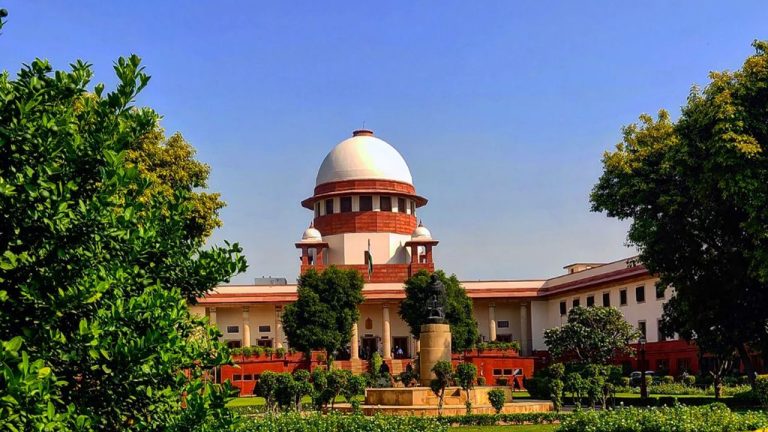
On 22nd March, the Supreme Court of India launched a high-profile inquiry into an alleged cash pile found at the residence of Delhi High Court Judge Yashwant Varma.

The Court also released documents, letters exchanged over the matter, photographs, and videos shared by the Delhi Police Chief on its website. The fire incident occurred on 14th March 2025. However, the report of burnt cash only reached the media on 20th March, when alleged sources revealed the information.

Initially, the Supreme Court and the Fire Department deemed the reports as rumours. However, after repeated denial of media reports, an official statement and evidence of the cash pile found at the judge’s residence have been made public. Delhi Fire Chief Atul Garg also accused media of running fake reports of denial of cash found at Judge’s residence.

The Supreme Court has now formed a three-member committee chaired by Justice Sheel Nagu, Chief Justice of the Punjab and Haryana High Court, alongside Justice GS Sandhawalia of the Himachal Pradesh High Court and Justice Anu Sivaraman of the Karnataka High Court. The committee will investigate the allegations and submit a report to the Chief Justice of India, Sanjiv Khanna.

In a press release issued on 22nd March, Justice Khanna announced that Justice Varma has been barred from judicial duties pending the probe. Interestingly, he was initially transferred to the Allahabad High Court, but following backlash, Justice Varma was barred from performing any judicial duties. The Chief Justice of the Delhi High Court has been instructed not to assign him any work pending the probe.

Fire ignites suspicion at judge’s residence

The fire incident occurred at Justice Varma’s residence on 14th March 2025, in the storeroom located in the official bungalow at 30 Tughlak Crescent, New Delhi. According to the police report included in the press note shared by the Supreme Court, a PCR call was placed at 11:43 PM by Justice Varma’s private secretary from a number registered to the Delhi High Court, alerting the authorities about the fire.

Two fire tenders were rushed to the scene. The fire was reportedly confined to a storeroom adjacent to a guard post manned by CRPF personnel. Initial assessment of the incident pointed towards a short circuit as the cause of the fire. However, the discovery of 4–5 half-burnt sacks containing remnants of Indian currency notes raised serious concerns. The press note confirmed that the discovery has prompted a deeper investigation into the matter.

The initial inquiry and the aftermath

On the next day, i.e., 15th March, Justice Devendra Kumar Upadhyaya, Chief Justice of the Delhi High Court, received a call from the Commissioner of Police, Delhi, Sanjay Arora, at around 4:50 PM. He informed Justice Upadhyaya that a fire had occurred in one of the rooms within the premises of the bungalow occupied by Justice Varma.

Upon learning about the discovery of the burnt cash pile, Justice Upadhyaya informed CJI Khanna, who gave instructions to trace the origin of the PCR call. The Commissioner confirmed that the call was made by the private secretary, who had been alerted about the incident by a servant at Justice Varma’s residence.

Justice Upadhyaya then sent the Registrar-cum-Secretary to inspect the site. He checked the room, accompanied by Justice Varma—who had just returned from Bhopal—and his private secretary, who had made the PCR call. The Registrar reported, “It was completely dark inside the room and the walls had developed cracks… all the walls had gone black on account of the fire, and some material was hanging from the roof.” Interestingly, there was no currency found at the spot, as claimed by the police. It was later revealed that the burnt cash and other materials had been removed following the incident.

Justice Varma denies knowledge of cash

Justice Varma categorically denied any knowledge of the cash. He was travelling in Madhya Pradesh with his wife when the incident took place and returned to Delhi on the evening of 15th March. On 17th March, he met Justice Upadhyaya at the Delhi High Court Guest House at 8:30 AM. When he was shown the photographs and video reportedly depicting burnt currency, Justice Varma insisted that he had no knowledge of any cash in the storeroom.

He said, “In the room where the fire had broken out, only unusable household articles like some furniture and mattresses etc. were kept.” He then expressed apprehension that there might be a conspiracy to frame him. Justice Varma elaborated, “I state unequivocally that no cash was ever placed in that storeroom either by me or any of my family members… The suggestion that one would store cash in an open, freely accessible and commonly used storeroom near the staff quarters… verges on the incredible and incredulous.”

Supreme Court steps in with formal probe

On 20th March, all the documents, photos, and videos were forwarded to CJI Khanna. On 21st March, the CJI directed Justice Upadhyaya to seek a formal response from Justice Varma by noon on 22nd March, posing pointed questions such as, “How does he account for the presence of money/cash in the room located in his premises? Explain the source of the money/cash which was found in the said room. Who is the person who had removed the burnt money/cash from the room in the morning of 15th March 2025?”

While seeking answers to the queries, Justice Upadhyaya, on the instructions of CJI Khanna, asked Justice Varma not to dispose of his mobile phone(s) and not to delete or modify any conversations, messages, or data from the mobile phone(s). Justice Khanna also sought call record details of the official or other mobile phone number(s) of Justice Varma for the last six months.

In his reply, Justice Varma denied all allegations and asserted, “Neither I nor any of my family members had stored or kept any cash or currency in that storeroom at any point of time… The question of explaining the source of the currency does not arise.” He also rejected claims of removal, noting, “I strongly deny and outrightly reject the insinuation… that we removed currency from the storeroom.” On 22nd March, the Supreme Court announced that it has formed a committee, pointing towards a rigorous investigation into the matter.

Patna: Private hospital director Surbhi Raj shot dead in her cabin

0

After the Director of a private hospital was shot dead inside her cabin a day ago, the father of the deceased demanded a high-level inquiry into the case, alleging a conspiracy in her death.

Speaking to ANI, Rajesh Sinha, father of the slain Asia Hospital director, said, “I saw her only in the ICU. I do not know what has happened. I don’t know if she has been shot. I came to know only later that she was shot. She had no dispute with anyone…I demand that the matter be investigated. There should be a high-level inquiry. There should be a CBI inquiry. There seems to be a conspiracy…”

Director of the private Asia Hospital, Surbhi Raj was shot dead, informed SDPO Patna City, Atulesh Jha on Saturday.

The victim was diagnosed with several gunshot injuries, after which she was referred to AIIMS, where she succumbed to her injuries.

The police received information about the incident at around 3.30 pm on Saturday when some staff went to her room and found her in an unconscious state.

An investigation has been initiated into the matter.

“At 3:30 in the evening, we got information that Surbhi Raj, the director of Asia Hospital, had been shot. When the police team reached there, they were told that when some staff went to the director’s room, they found her unconscious and covered in blood. She was shifted to the ICU, where she was diagnosed with multiple gunshot injuries, and from there, she was referred to AIIMS. Right now, the news of her death has come. The police team is collecting evidence from all angles. Investigation is underway”, Atulesh Jha said to ANI on Saturday.

Further details are awaited.


(This news report is published from a syndicated feed. Except for the headline, the content has not been written or edited by OpIndia staff)

Delhi: 17-year-old boy and a girl found hanging on a tree branch in Hauz Khas Deer Park

0

Two 17-year-olds, a boy and a girl were found hanging on a tree branch in the Hauz Khas area under the SJ Enclave Police Station on Sunday, Delhi police officials said.

According to officials, a 35-year-old security guard working in the area called the police around 6:30 AM regarding the hanging of a boy and girl.

“At 06:31 AM, a PCR call was made by Baljit Singh, R/o Hauz Khas Village, Delhi, age 35 years, working as security guard in district park, Deer Park, Hauz Khas, Delhi, regarding a boy and a girl hanging on the branch of a tree,” read a statement from Delhi Police.

The police team, reaching the spot immediately found the two hanging. The police suspected death by suicide, however, further proceedings are underway.

“On receipt of the call, police staff immediately reached the spot and found that a boy age about 17 years, wearing a black T-shirt, and blue jeans and a girl is about 17 years, wearing a green dress hanged themselves with the common nylon rope on a branch of a tree,” read the statement.

“Someone said that an incident has happened, so I came here and saw this. If someone has done this to them they should be punished, so that this type of incident does not happen again. This is condemnable and scary, we people also come to this park, we are of age but sometimes people come in here and do things, so we are scared,” Ashok told ANI, a regular visitor of the park.

Another visitor, however, has claimed that it is not possible to die by suicide from the tree the two people were found on, “We asked the police, they said that it looks like a suicide, there was a rope kept there. The way they are saying, it doesn’t seem possible–suicide by hanging from this, one can see the shape of the tree.”

The crime team was called for an inspection and the bodies of the two have been shifted to the mortuary.


(This news report is published from a syndicated feed. Except for the headline, the content has not been written or edited by OpIndia staff)

Delhi: Hindu man stabbed to death, victim’s wife reveals persecution by Muslim neighbours but police deny ‘communal angle’

A minor dispute between children in Northwest Delhi’s Wazirpur area turned into a tragedy for the only Hindu family living in the Muslim-majority area. The head of the family Radhe Shyam lost his life after being stabbed.

Several others including the son of the deceased sustained injuries in a violent clash that followed a minor dispute over a scooter in JJ colony in the area on Friday (21st March).

As per reports, a fight between two families that started with a children’s quarrel turned into a communal clash involving stone pelting and the stabbing of the 65-year-old deceased.

The deceased has two sons Kamal and Gautam. On the day of the incident, Kamal’s 8-year-old son had a minor scuffle with the children from Jamal’s family.

Soon, the elders from both families got involved in the fight and a heated altercation occurred between the deceased sons and Jamal and his son Irshad. The police were called and the dispute was resolved temporarily.

However, the fight resumed later in the day. According to Kamal Devi, the wife of the deceased, some people from the pelted stones at her house around 1 pm. She said that she locked herself along with her daughter-in-law and grandson in a room for safety.

She alleged that some people from the other side attacked her younger son Gautam with a knife and when her husband and elder son tried to stop them, they stabbed her husband.

“Me, my grandson, and my daughter-in-law locked ourselves inside the house. They attacked my son Gautam with a knife. When my husband, Radhe Shyam, and my younger son Kamal tried to save him, they stabbed them too,” Kamala Devi said.

“He (Radhe Shaym) was only trying to stop the fight but Irshad killed him. Nobody came to help. We called autos but they refused to come. I had to walk for a kilometre or two and finally begged a two-wheeler rider to help us. My husband could have been saved,” she added.

After being stabbed, Radheshyam was admitted to Deep Chand Badhu Hospital where he succumbed to his injuries. His body was sent for postmortem at BJRM Hospital. Kamal, Gautam, Jamaal and Irshad also sustained injuries and have been undergoing treatment.

According to police, a case of murder, attempt to murder, stone pelting and assault has been filed at Bharat Nagar Police Station. Two people have reportedly been taken into custody so far.

“A PCR call was received regarding a stabbing incident at Wazirpur JJ Colony on Friday night. A dispute between two groups over a fight among children escalated into violence, resulting in five persons being injured. Radhe Shyam (65), who was stabbed, was ‘declared brought dead’ at Deep Chand Bandhu Hospital,” DCP (Northwest) Bhisham Singh said.

The police have termed it a personal dispute denying any communal angle to it.

Kamla Devi alleges persecution

The Hindu family has alleged that the fight was not a spontaneous event but a pre-planned conspiracy to take revenge for a year-old fight. Kamala Devi alleged that about a year ago, Jamal and his sons misbehaved with her daughter-in-law. This resulted in a fight between the two families which was resolved by police intervention.

Kamala Devi also alleged that her family faces persecution from her Muslim neighbours who have been forcing them to leave the area. She said that being the only Hindu family living in the area, her Muslim neighbours threaten them.

“The entire Muslim neighbourhood threatens me. They question me as to why I live here. They tell me to vacate my house and leave the area.

On the other hand, the Muslim family has denied the allegations of stone pelting and has accused the Hindus of throwing stones at their own house to implicate them. Munni Devi, wife of Jamal alleged that she and her son Irshad were attacked by the sons of the deceased Radhe Shyam.

Uttar Pradesh: Monish and Arish molest Dalit minor, hurl casteist slurs and carry out mob attack on victim’s family with hot oil and sticks

On 20th March, a Dalit minor girl was molested by two youths, identified as Monish and Arish, while playing badminton outside her home in Muzaffarnagar, Uttar Pradesh.

When the girl’s family confronted the accused at their food stall, they were brutally attacked with hot oil, sticks, and stones. A video of the assault has gone viral on social media.

An FIR has been registered in the case against several accused under relevant sections, including the POCSO Act.

Content of the FIR

The FIR has been registered in the matter on the complaint of the father of the minor girl under sections 191(2), 191(3), 190, 125, 74, 115(2), 352, and 351(3) of the Bharatiya Nyaya Sanhita (BNS), sections 3 and 4 of the POCSO Act, 2012, and relevant sections of the SC/ST Act against Monish, Arish, Shahzad, Wasim, Salman, Sameer, Parvez, Ashu alias Behl, Kasim, Nazim, and one unidentified individual.

In his complaint, the girl’s father said that the victim was playing outside the house when two boys from a neighbouring community, identified as Monish and Arish, molested her. They grabbed her from behind and said, “We won’t let you go; we really like you.” They also touched her private parts. The girl managed to escape with great difficulty and reached home, where she informed her father about the incident.

When the father stepped outside to confront the accused, they, along with Shahzad, Wasim, Salman, Sameer, Parvez, Ashu, Qasim, Nazim, and 10-12 other unidentified boys, came forward. They abused the father with caste-based slurs and attacked him with sharp weapons, including knives, daggers, sticks, and batons. They also splashed hot oil on the father with the intention to kill.

They also raised religious slogans and pelted stones from the rooftop of the house. Hearing the commotion, many people gathered, and upon seeing them, some of the attackers threatened, “If he comes here again, we’ll kill him.” Fearing for his life, the complainant escaped and reached the police station to file a complaint against them.

Attackers turned violent after being confronted

In a statement to the police, the victim said that she was playing outside her house in the Charthawal police station area when the accused passed by and groped her from behind. She screamed loudly, which drew the attention of her sister, father, and brother. The accused hurled abuses and fled the scene. The family approached the local police station to file a complaint. However, the family claimed that no action was taken by the police in the matter.

When the family did not get any response from the authorities, they decided to confront the accused at their cart, where they sell halwa-paratha. The situation escalated as the accused and their family members allegedly poured hot oil on the girl’s family and thrashed them. The victim told the police that they switched off the lights deliberately during the attack. Around 25-30 individuals joined the assault, leading to serious injuries to the father, uncle, and brother of the victim.

A video of the incident was recorded by a bystander. It captured the disturbing visuals of the attack and screaming voices. After the video went viral, one of the accused was arrested by the police.

CO Sadar, Devvrat Vajpayee, confirmed that a case has been registered against multiple accused under relevant sections. Efforts are underway to apprehend the remaining accused.

The braveheart who stood up against Mughal barbarian Babar while having 80 wounds on the body: Know about Rana Sanga who was called a ‘traitor’ by Samajwadi Party MP

Samajwadi Party Rajya Sabha MP from Uttar Pradesh Ramji Lal Suman has sparked a controversy by calling Maharana Sangram Singh, popularly known as Rana Sanga, a traitor. Speaking in the Rajya Sabha on Saturday (March 22), the Samajwadi MP said that Rana Sanga had called Babar to India to defeat Ibrahim Lodi. He called Hindus the children of the ‘traitor’ Rana Sanga. Now the question is what actually happened.

Haters often claim that Rana Sanga called Babar to India to defeat the then Delhi Sultan Ibrahim Lodi. However, in reality, Rana Sanga had already defeated Ibrahim Lodi repeatedly. Apart from this, he had defeated the armies of the Sultans of Gujarat and Malwa several times and even defeated the combined army of both. So why would he need help from any outsider, that nobody answers.

Maharana Sanga, who became the ruler of Mewar in 1508, fought more than 100 battles in his life, but he was not defeated in any except in the battle of Khanwa. He was given the title of ‘Hindupat’ because of his valor. Due to these battles, he lost an eye and a hand. Even one of his legs did not work. There were more than 80 serious wound marks on the body. Yet, nothing stopped Rana Sanga.

Under the rule of Maharana Sangram Singh, the boundaries of Mewar spread far and wide. The boundaries of Mewar reached Agra (presently in Uttar Pradesh) in the east and the border of Gujarat in the south. According to Colonel James Todd, a scholar of Rajputana history, Maharana Sangram Singh had 80,000 horses, 500 elephants and about 2 lakh infantry soldiers.

Colonel James Todd said that Maharana Sangram Singh had seven high ranking kings, 9 Raos and 104 Rawals. The kings of Gwalior, Ajmer, Sikri, Raisen, Kalpi, Chanderi, Bundi, Gagraun, Rampura and Abu considered him their overlord.

Not just Ibrahim Lodi, Rana Sanga also defeated Sultans of Malwa-Gujarat

Rana Sanga fought 18 fierce battles with the Sultans of Delhi, Malwa and Gujarat and defeated them all. During his reign, he conquered and annexed modern Rajasthan, Madhya Pradesh, Haryana, northern parts of Gujarat and some other parts including Amrakot in Pakistan. He re-established Rajput rule in Malwa for the first time after the fall of the Parmar Empire in 1305 AD.

The Battle of Khatoli was fought in 1517 between the Lodi dynasty led by Delhi Sultan Ibrahim Lodi and the Mewar Empire led by Rana Sanga. In this battle, Rana Sanga badly defeated Ibrahim Lodi. He again tried to take revenge from Rana Sanga by attacking in 1518-19, but Rana Sanga again defeated him badly in Dholpur, Rajasthan. Ibrahim Lodi fled from there.

Ibrahim Lodi fought with Sanga several times, but every time he had to face defeat. Due to these wars, Ibrahim lost all his land in modern Rajasthan. At the same time, Rana Sanga extended his influence to Peeliya Khar in Agra. According to the 16th century manuscript ‘Parshvanath-Shravan-Sattavisi’, Rana Sanga defeated Ibrahim Lodi in Ranthambore just after the siege of Mandsaur.

In 1517 and again in 1519, he defeated Mahmud Khilji II, the ruler of Malwa. The battle took place at Idar and Gagron. He captured Mahmud and held him captive for 2 months. Later, Mahmud apologized and vowed not to attack again, so Rana Sanga released him following the Sanatan war rules. However, in return, he annexed a large part of Mahmud’s kingdom to his kingdom.

In 1520, Rana Sanga defeated the army of Nizam Khan of Idar state and pushed it towards Ahmedabad. Rana Sanga stopped his attack 20 miles away from the capital of Ahmedabad. After several battles, Rana Sanga successfully captured North Gujarat and made one of his vassals the ruler there. Rana Sanga defeated the combined army of the Sultans of Malwa and Gujarat at Hateli.

Similarly, Rana Sanga defeated Sultan Nasiruddin Khilji of Malwa badly and annexed Gagron, Bhilsa, Raisen, Sarangpur, Chanderi and Ranthambore to his kingdom. Maharana Sanga abolished the Jaziya tax imposed by Muslims on non-Muslims from all the kingdoms he conquered and got the mosques and tombs built by them demolished.

Rana Sanga defeated Babar in the battle of Bayana

After winning Punjab and Sindh, Babar planned to capture Delhi. He attacked the Sultan of Delhi Ibrahim Lodi. On 21 April 1526 AD, a fierce battle took place between Babar and Ibrahim Lodi in Panipat, Haryana. Babar won this battle and killed Ibrahim Lodi.

However, Rana Sanga in Chittor and Afghans in the east were creating problems for Babar. Rana Sanga started preparing to stop Babar’s growing power. He started preparing to attack Agra, which was under Babar’s rule. When Babar came to know about this, he called his son Humayun. Further, outside Agra were strong forts of Dholpur, Gwalior and Bayana.

Babar first planned to get these forts under his control. At the time, the fort of Bayana was under the control of Nizam Khan. Babar tried to reach a compromise with him. Later, Nizam Khan joined Babar’s side. On 21 February 1527, the armies of Babar and Rana Sanga came to the battlefield in Bayana. In this war, Babar’s army suffered a crushing defeat. He returned to Agra after the humiliating defeat.

In this war with Babar, Maharana Sanga was supported by Maldev, son of Rao Ganga, the ruler of Marwar, Medini Rai of Chanderi, Raimal Rathore of Merta, Akheraj Duda of Sirohi, Rawal Uday Singh of Dungarpur, Rawat Ratnasingh of Salumbhar, Jhala Ajja of Sadari, Jhala Sajja of Gogunda, Chandrabhan Singh from Chandawar region of Uttar Pradesh, Manikchand Chauhan and Mehndi Khwaja etc.

Scottish historian William Erskine has written that Babar already knew about the valor of Rana Sanga, but he faced him for the first time in the battle of Bayana. He has written, “In Bayana, the Mughals realized that they were facing a much more formidable army than the Afghans. The Rajputs were always ready to fight in the battlefield and did not hesitate to sacrifice their lives.” Regarding this war, Babar himself wrote in his autobiography ‘Babarnama’, “The infidels fought such a fierce battle that the morale of the Mughal army was broken. They were terrified.” According to historian VK Krishnarao, Rana Sanga considered Babar a tyrant and a foreign invader. He wanted to end the foreign invaders by conquering Delhi and Agra.

Battle of Khanwa

Babar was getting discouraged following the terrible defeat of Bayana. His soldiers started talking about leaving India. However, Babar wanted to try one more time. He invoked Islam to keep unity in his army. He tried to get the Afghans, who supported the Rajputs, to join him by calling them infidels and traitors. He filled his soldiers with enthusiasm in the name of Islam.

Babar told his soldiers, “Sardars and soldiers, every human being who comes to this world has to die. When we are gone, only one God will remain. It is better to die with honor than to live here with disgrace. God has been very kind to us. If we die in this war, we will be called ‘Shaheed’ and if we win, we will be called ‘Ghazi’. Therefore, we have to take an oath with the Quran in our hands that as long as we are alive, no one will turn his back in the war.”

On the other hand, Rana Sanga also wanted to give a final blow to Babar. He started preparing for the war. Finally, on 16 March 1527, the armies of Babar and Rana Sanga came face to face in Khanwa, 60 km west of Agra. It is said that Rana Sanga’s army had 1 lakh soldiers, while Babar had 80 thousand. All historians agree that Rana Sanga’s army was much more powerful than Babar’s.

This was the first time India was seeing gunpowder, cannons, and guns which were used by Babar’s Army. Historians believe that if Babar did not have cannons, it would have been difficult to defeat Rana Sanga. Like his ancestor Bappa Rawal, Rana Sanga was also fighting the foreign invaders by forming an alliance of Hindu rulers.

Historian Pradeep Barua writes that if Babar had not taken the help of cannons and had not repeated the Panipat strategy, then perhaps the saffron flag of Mewar would have been flying in Delhi. After this war, the alliance of Hindus formed by Rana Sanga disintegrated forever and the Mughals ruled India for the next 250 years.

Did Rana Sanga invite Babar to India

Historians believe that Punjab Governor Daulat Khan wanted to replace Delhi Sultan Ibrahim Lodi. He knew that Fargana ruler Babar was coming to India after conquering Afghanistan. At the same time, Ibrahim Lodi’s uncle Alam Khan also wanted to capture the Sultanate. Alam Khan and Daulat Khan invited Babar to come to India.

Actually, in 1523, Babar was invited to India by the prominent people of the Delhi Sultanate. This included Sultan Sikandar Lodi’s brother Alam Khan Lodi, Punjab Governor Daulat Khan Lodi and Ibrahim Lodi’s uncle Alauddin Lodi. These people had sought his help to challenge Ibrahim Lodi’s rule.

Alam Khan also visited Babar’s court. There, Alam Khan Lodi told Babar about the political instability in India. After this, Babar sent his envoy to Punjab. His envoy’s report found Alam Khan’s words to be correct. After this, Babar started dreaming of conquering Hindustan. He attacked India in 1503, then in 1504, then in 1518 and 1519. However, he was not successful.

After this, Babar attacked Ibrahim Lodi in 1526. Rana Sanga had already weakened him by defeating him in many wars. Due to this, in this battle of Panipat, Babar defeated Ibrahim Lodi badly and captured the throne of Hindustan. Earlier, he was trying to seize the throne, but he was afraid of Rana Sangram Singh, Rana Sanga.

Historians deny that Rana Sanga had invited Babar to defeat Ibrahim Lodi. Actually, Rana Sanga was the most powerful ruler of that time. He had formed an alliance by combining all the rulers of Rajputana (old name of Rajasthan). It was impossible to defeat him. He defeated everyone from the Sultan of Delhi to the Muslim rulers of powerful Gujarat and Malwa.

Rana Sanga defeated Ibrahim Lodi repeatedly. Once he even defeated Babar in the battle of Bayana. Therefore, it is completely wrong to say that Rana Sanga had invited Babar to defeat Ibrahim Lodi. After the defeat in the Battle of Bayana, Babar himself wrote in his autobiography Babarnama, “There is no greater ruler than Rana Sanga in Hindustan and Krishnadev Rai in the Deccan.”

Dr. Mohanlal Gupta, who wrote a book named ‘Influence of Mewar in National Politics’, also does not agree with this. He has written that Babar wanted to capture Delhi and he was aware of the enmity between Ibrahim Lodi and Rana Sanga. In view of this, Babar sent a messenger to Rana Sanga and said that Babar wanted to fight with Ibrahim Lodi, the Sultan of Delhi.

The messenger told Rana Sanga that this is why Babar has sent a letter of treaty with him. In his book, Mohanlal Gupta further writes that Babar further wrote that he would attack Delhi. However, most historians do not agree with this. They believe that the most powerful king of that time did not need the cooperation of any outsider.

Many historians like GN Sharma and Gaurishankar Hirachand Ojha believe that Babar had already planned to invade India. He had tried to invade India four times before winning the first battle of Panipat, but did not win. He was aware of Rana Sanga’s prowess. He wanted Rana Sanga not to interfere.

Supreme Court forms 3-member committee to probe ‘cash at judge’s house’ case, Delhi HC asked not to assign any judicial work to Justice Yashwant Varma

The Supreme Court of India on Saturday announced that the Chief Justice of India has formed a three-member committee to probe the allegations against Justice Yashwant Varma, a judge of the Delhi High Court. The CJI also asked the Chief Justice of Delhi High Court to not assign any case to Justice Varma.

The committee will probe the incident of the discovery of huge amounts of cash at Justice Varma’s house by firefighters after the house caught fire.

A press release issued by the Supreme Court stated that Justice Sheel Nagu, Chief Justice of the High Court of Punjab & Haryana, Justice G.S. Sandhawalia, Chief Justice of the High Court of Himachal Pradesh, and Anu Sivaraman, Judge of the High Court of Karnataka, will be members of the three-member committee.

“The Chief Justice of the High Court of Delhi for the time being has been asked not to assign any judicial work to Mr. Justice Yashwant Varma,” the Supreme Court stated in the press release.

The apex court further stated that the Report submitted by the Chief Justice of the High Court of Delhi, the response of Justice Yashwant Varma, and other documents, are being uploaded on the Supreme Court website.

The Delhi High Court had ordered an in-house inquiry into the allegations against Justice Varma, report of which was submitted with the CJI yesterday. However, the Supreme Court yesterday denied any link between Collegium’s proposal to transfer the judge to Allahabad High Court, saying that it was routine transfer proposal which has not been finalized yet. Media reports had claimed that collegium decided to transfer the judge due to the allegations against him.

The apex court in a press release had said that the transfer proposal is independent and separate from the In-house enquiry procedure.

On the other hand, media reports had yesterday claimed that Delhi Fire Chief Atul Garg denied finding cash at the house of Justice Yashwant Varma after a fire was doused on Holi eve. Today Garga denied making any such statement, confirming that he never said that firefighters didn’t find cash at the house.

100 new NABL-accredited Food Testing Labs to be established with financial support of govt: Union minister Ravneet Singh Bittu

In a bid to enhance food safety and quality, Union Minister Ravneet Singh Bittu on Saturday announced that the Ministry of Food Processing Industries (MOFPI) will financially support the establishment of 100 new NABL-accredited food testing laboratories across India in the financial year 2025-26.

Ravneet Bittu, who inaugurated a world-class food testing laboratory at Maharaja Ranjit Singh Punjab Technical University, highlighted the critical role of food testing in ensuring food safety.

“Food testing is vital for ensuring that food products meet safety standards and are free from harmful contaminants and pathogens,” he said.

According to an official release, the initiative is part of the government’s broader plan under the Pradhan Mantri Kisan Sampada Yojana (PMKSY), which has allocated Rs 503.47 crore for 205 laboratory projects. Out of these, 169 projects have already been completed, with Rs 349.21 crore disbursed.

These labs play a crucial role in meeting the requirements of major regulatory bodies such as the Food Safety and Standards Authority of India (FSSAI), the Export Inspection Council of India (EIC), the Agricultural and Processed Food Products Export Development Authority (APEDA), and international agencies like the USFDA and EU regulations.

Farmers and producers in sectors such as citrus fruits, green peas, cauliflower, carrots (both fresh and frozen), milk and milk products, basmati rice, wheat, millets like bajra and sorghum, mustard and sunflower oilseeds, and farm-produced shrimp will benefit from these state-of-the-art facilities. These laboratories help ensure compliance with global standards, support exports, and improve the overall quality of food products, ultimately contributing to higher income for farmers and job creation, particularly for skilled technical personnel.

The laboratory inaugurated at Bathinda will employ cutting-edge technologies like GC-MS/MS, ICP-OES, HPLC, and UV spectrophotometers for testing pesticide residues, heavy metals, microbiological contaminants, and more. With a total project allocation of Rs 253.12 lakh and Rs 191.259 lakh already released, the facility will serve food processors, farmers, and food businesses to ensure the safety and quality of food products.

Elaborating on the achievements of the food processing sector in Punjab, Ravneet Singh shared that the Ministry has approved 24 cold chain projects totalling Rs 553 crore, three agro-processing cluster projects worth Rs 70 crore, 16 food processing units with an investment of Rs 432 crore, and 10 food testing laboratories totalling Rs 48 crore.

Under the PMKSY scheme, 61 projects amounting to Rs 1557 crore have been approved in Punjab, with a grant of Rs 419 crore.

Additionally, six factories in Punjab have committed investments under the Production-Linked Incentive (PLI) Scheme, totalling Rs 126.31 crore. Over 2,500 micro-entrepreneurs in Punjab have received subsidies under the Pradhan Mantri Formalization of Micro Enterprises (PMFME) Scheme, and 1,296 members of Self-Help Groups (SHGs) have received seed capital approval amounting to Rs 3.99 crore. In Bathinda and Mansa, honey and milk-based products are identified as the key products under the “One District, One Product” initiative.

In Bathinda, 483 loans amounting to Rs 142.3 crore were disbursed, while in Mansa, 253 loans amounting to Rs 72.15 crore were granted. Additionally, Self-Help Groups in Bathinda and Mansa received seed capital funding of Rs 75 lakh and Rs 18 lakh, respectively, under the PMFME scheme.

Ravneet Singh also visited an exhibition organized by PMFME beneficiaries, showcasing their products.


(This news report is published from a syndicated feed. Except for the headline, the content has not been written or edited by OpIndia staff)

Is Bengaluru becoming the new hub for smuggling? Days after Mangaluru bust, woman caught with MDMA hidden in private parts

On 21st March, a 34-year-old woman, identified as Anila Ravindran from Anchalimmoodu, was arrested by Bengaluru police on charges of drug trafficking. The woman was concealing narcotics inside her private parts, which were recovered during a medical examination.

According to media reports, she was intercepted by a joint operation of the Shaktikulangara Police and Kollam City Police’s special anti-narcotics task force. Officials said in a statement that she was travelling from Bengaluru in a car when she was flagged down near the Neendakara bridge. Despite signals from the police to stop, she tried to escape, prompting a chase.

Her car was intercepted by the police and around 90 grams of MDMA were recovered during the search. Fifty grams were found hidden in the vehicle and another 40 grams were recovered from her private parts during the medical examination.

Reports suggest that the accused had been trafficking MDMA to supply it to school and college students in the Kollam city area. Police said that she is a repeat offender with a history of being involved in drug-related activities. Police have seized the car and an in-depth investigation into the matter is underway to identify her supplier and network.

Is Karnataka becoming a hub of drug trafficking?

In recent years, cases of drug traffickers getting caught in Karnataka have increased exponentially. On 16th March, it was reported that Mangaluru police busted the biggest-ever drug cartel in the state, in which two South African nationals were arrested. Thirty-seven kilograms of MDMA worth ₹75 crore were recovered. The breakthrough came from information gathered by the police from an arrest made six months ago. In September last year, police had arrested a drug trafficker named Haider Ali in Pumpwell and recovered 15 grams of MDMA.

The investigation led to a Nigerian national named Peter, who was caught with MDMA worth ₹6 crore. Further investigation revealed links to an international drug syndicate that was using the air route between Delhi and Bengaluru to smuggle narcotics. The two South African nationals arrested by the police were identified as Bamba Fant and Abigail Adonis.

In May 2023, authorities intercepted a vehicle smuggling 23.25 kilograms of ganja from Visakhapatnam to Mangaluru and Kerala via Bengaluru.

In February 2023, 119 kilograms of ganja worth ₹35 lakh were seized from a fish transport vehicle. Four people were arrested. The drugs were sourced from Andhra Pradesh.

In January 2022, the NCB nabbed a Ugandan woman with drugs worth ₹1.5 crore. They were concealed in baby food cartons to avoid detection.

Man joins virtual hearing of Gujarat HC from toilet, another man logs in while lying on bed, angry court imposes fine and community service

Recently, the Gujarat High Court came down heavily on people who failed to uphold the court’s dignity during virtual hearings. In two separate cases, the Gujarat High Court took strict action against two men who joined the virtual proceedings of the court indecently. One of them joined the online proceeding from a lavatory while the other joined lying on a bed.

Man joined virtual court proceeding from a lavatory, fined ₹2 lakh

A bench of Justice MK Thakkar condemned a man’s behaviour who joined the court’s virtual hearing held last month on 17th January from a toilet. The High Court imposed a penalty of ₹2 lakh on 42-year-old Dhavalbhai Kanubhai Ambalal Patel for lowering the court’s dignity. The court also imposed community service on Patel directing him to water and clean the gardens in the High Court premises for two weeks, serving 8 hours daily.

Patel reportedly joined the virtual hearing in a case in which his father was a respondent. At first he behaved indecently during the online hearing, causing the court to disconnect him. He then rejoined the hearing after some time, this time from a toilet. The incident remained unnoticed until its video went viral on social media leading to an inquiry. The court directed Sola Police Station to identify the person and submit a report.

An investigation by the police revealed that someone had joined the virtual hearing on 17th February under the name ‘Kanubhai’ but he was removed from the session due to indecent behaviour. He attempted to join again but he appeared in a lavatory and was immediately removed from the session. Later, he joined using another case number.

Subsequently, an order was passed by the High Court on 27th February directing Patel and his father to appear before the court on 5th March. On the day of the hearing, Advocate Amresh Patel appearing for the father said that the client’s son joined the High Court’s website through Zoom by mistake. The Advocate added that the mistake was unintentional and that his client had already apologised for the mistake. However, the court was not convinced by the explanation. The court noted that it is hard to accept that a 42-year-old man holding a B.Sc. degree and working with the Reliance Group was not familiar with the Zoom application.

“In such a scenario, the indecent act is not only unacceptable but it is shameful and is required to be strictly condemned. If Courts do not deal with such a person with strong hands then, that may result (in) lowering the dignity of the institution in the eyes of the public,” the court noted in its order passed on 5th March.

This Court deems it fit to impose exemplary costs of ₹2,00,000 to Dhaval Kanubhai Patel, who is present before this Court and same shall be deposited with the Registry within a period of two weeks from today. On depositing the costs, the Registry is directed to remit ₹50,000 in the account of the Shishugruh Paldi, Ahmedabad and remaining amount in the account of the Gujarat High Court Legal Aid Services Authorities,” the court said.

The court also directed Patel to clean and water the gardens on the high court campus at Sola for two weeks. His daily eight hours of community service ended on Thursday.

Man joined a virtual court hearing while lying in bed, gets fined and

On 13th February, another man named Vamdev Gandhi joined a virtual court proceeding in the court of Justice MK Thakhar while lying in his bed. When the court noticed the indecency shown by the litigant, it imposed a fine of ₹25,000 on him. “Online hearing facilities were provided for access to justice and larger public interest, but at the same time, the person joining the online link has to maintain utmost discipline and decorum for upholding the dignity and majesty of the court,” the court said.

“The petitioner was lying on his bed and watching the court proceedings as if he was enjoying a movie. Such conduct compromises the dignity and the decorum of the court, and therefore it cannot be tolerated. If such an act is not dealt with strong hands, that may result in lowering the dignity of the court in the eyes of the public,” the court noted in its order imposing a penalty on the litigant.