Home Blog Page 434

Adani Total Gas volumes rise 13% in March quarter, 15% in entire FY25 fiscal

0

Adani Total Gas reported its financial results for the January-March quarter and the entire financial year 2024-25 on Monday. The Adani Group’s business, in terms of volume, rose 13 per cent in the March quarter and 15 per cent in the entire fiscal year.

The Adani Group company’s combined network now has 1,072 CNG Stations, with 73 new stations added in the quarter.

PNG home connections crossed the 1 million mark (1.14 million), touching over 4 million lives on a daily basis.

The company grew its industrial and commercial connections to 10,417 by adding 468 new consumers during the quarter. It also completed a cumulative 24,906 inch-km of steel pipeline network.

In another key financial metric, the company’s revenue from operations, on a standalone basis, increased by 15 per cent, reaching Rs 1,448 crore in the January-March quarter. In the entire year, revenue from operations increased by 12 per cent, reaching Rs 5,398 crore, primarily due to higher volume in the CNG segment.

Adani Total Gas (ATGL), one of India’s leading energy transition companies, announced its operational, infrastructural and financial performance for the quarter and year ending March 2025.

During the year, Team ATGL has continued its thrust to expand access to PNG and CNG to large masses. ATGL has now expanded its infrastructure across CGD (close to 1 million PNG consumers and 647 CNG stations). ATGL has maintained momentum of delivering robust operational and infrastructure performance with a 15 per cent year-on-year increase in volume, accelerating operations excellence supported by digitalisation which has contributed in maintaining EBITDA of INR 1,167 Crs despite challenges faced by CGD sector on domestic gas allocation,” said Suresh P Manglani, ED and CEO, ATGL.

“Furthermore, ATGL made significant progress in its new sustainable businesses. In e-mobility, 3,401 charging points have been installed, of which 2,338 EV charging points are energised. In Biomass, besides stabilising CBG production at the Barsana plant, we have launched the brand “Harit Amrit” for the sale of an organic fertiliser. We have commissioned our 1st LNG station in Tiruppur. All the above efforts are in line with our commitment to spearhead India’s energy mobility transition journey with a customer-centric approach and continue to have sustainable growth,” Manglani added.

(This news report is published from a syndicated feed. Except for the headline, the content has not been written or edited by OpIndia staff)

Why are Indian Muslims marrying Pakistanis? As visas get cancelled after Pahalgam attack and victimhood stories flood media, read how it can be a security threat

The nation continues to grieve the cold-blooded killing of 26 Hindu tourists by Pakistan-backed terrorists in the Baisaran meadow of Pahalgam, on 22nd April. The Modi government downsized diplomatic ties with the Islamic Republic, implemented several important measures including ban on the country’s YouTube channels and decided to hold the Indus Water Treaty in abeyance, in response to the heinous attack. Subsequently, a frustrated Pakistan resolved to take similar action regarding the 1972 Simla Agreement.

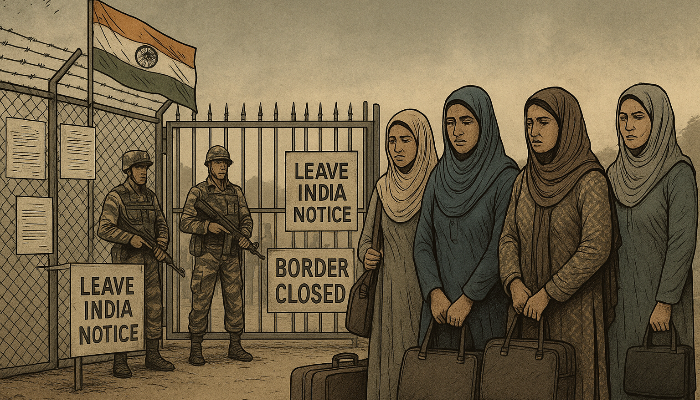
The center also issued “Leave India” notice to Pakistani nationals staying in the country. The cutoff date for individuals with SAARC (South Asian Association for Regional Cooperation) visas to depart India was 26th April while individuals with medical visas must depart by 29th April. The 12 visa categories that necessitate departure include visa on arrival, business, film, journalist, transit, conference, mountaineering, student, visitor, group tourist, pilgrim and group pilgrim.

The Immigration and Foreigners Act 2025, which became effective on 4th April, stipulates that overstaying, breaching visa conditions or trespassing in restricted areas can lead to a prison sentence of up to three years and a fine of Rs 3 lakh. Pakistani citizens failing to adhere to government orders will be subjected to the same penalities. Notably, the development has led to opposition among Muslim women, self-identifying as half-Pakistani, who are married to Pakistani men as many were spotted protesting against the action as India sealed the border with its hostile neighbour.

Women with Indian passports are also being denied entry by Pakistan’s administration. It is important to note that an Indian woman married to a Pakistani man is not eligible to apply for the country’s passport immediately following her marriage. She generally has to wait a period of nine years before becoming eligible, however, many even claimed that their citizenship applications had been pending for as long as ten years. Most women have declined to allow their children, who possess Pakistani passports, to travel to the country without their presence amid the ongoing ruckus at the Attari-Wagah border.

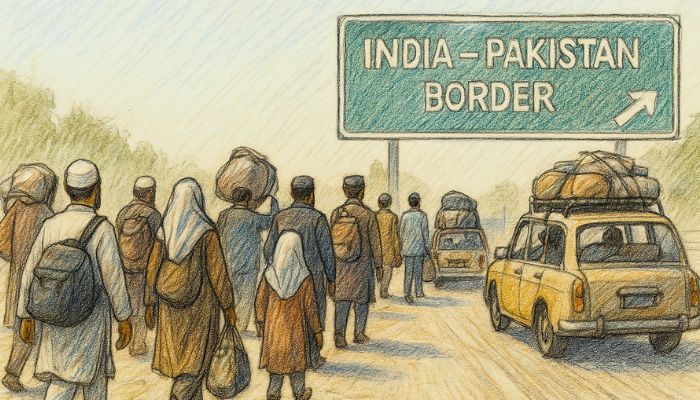
Meanwhile, at least 537 Pakistani people, including nine diplomats and officials reportedly left India through the Attari-Wagah border point in four days starting on 24th April. The international border crossing in Punjab has seen 850 Indians return from Pakistan in the same time frame including 14 diplomats and officials. According to the authorities, some Pakistanis might have also departed India through airports, adding that India and Pakistan do not have direct air connectivity, therefore they could have left for other nations.

Shocked netizens vent out their anger

The Indian law does not prohibit a citizen from marrying a Pakistani national. However, the alarming rate of these marriages has taken many by surprise. Many social media users have noted the instances of these women who have had children in India following their weddings with Pakistani men, suggesting that this could lead to the misuse of taxpayer funds and could potentially turn into a nightmare for the national security.

Author and columnist Neena Rai highlighted that Kashmiri women took pride in having Pakistani children during the 1990s militancy. She called on the government to enforce strict measures to counter such actions and proposed revoking the citizenship of these women. She remarked that “any child of an enemy country should be immediately sent packing off to Pakistan because this is what sharia law states – children belong to the father, not mother.”

A user asserted, “There is a long queue of women from one community who are married in Pakistan,” and further questioned are they struggling to secure husbands in India, or have they been manipulated by Pakistan’s intelligence agencies?

A person mocked the “liberal Indian state” for enabling these women to live on Indian ration and minority programs, as well as facilitating their travel to Pakistan for reproductive purposes.

TEDx speaker Anuradha Tiwari expressed her astonishment regarding the number of Indian women who are married in Pakistan. She remarked that it is even more outrageous that these women qualify for minority schemes and benefits such as “Ladli Behna Yojana” and concluded, “Disgraceful betrayal of Indian taxpayers.”

Sunanada Roy outlined that former Indian women are now married to Pakistani men and lament their visa cancellations. She labeled them as traitors who do not belong to India, indicating that while they cherish Pakistan, they are unwilling to leave India. She lauded Union Home Minister Amit Shah for the decision.

Another netizen brought attention to an Indian woman with three kids whose Pakistani husband was not responding to her calls and none of her in-laws were willing to recieve the children on the other side of the border. “Married for a decade, she holds an Indian passport to access free healthcare, rations and government programs,” the individual asserted.

The marriage of Pakistani women to Indian men has also raised concerns as firebrand Bharatiya Janata Party (BJP) leader and Lok Sabha MP Nishikant Dubey stated that more than 500,000 women from the neighbouring nation who have married Indian men, do not have the country’s citizenship. He also demanded an investigation into the underlying motives of these marriages.

On 23rd April, three advisors to the Pakistani High Commission in New Delhi who were involved in defense, militar, and aviation were declared Persona Non Grata and given a week to leave India. Additionally, five members of their support staff were also told to the same. The defense attache of India also left the Indian High Commission in Islamabad. The “Leave-India” order did not apply to people with diplomatic, official or long-term visas.

On the other hand, the Cabinet Committee on Security (CCS) defended the travel restrictions by referencing intelligence reports that linked the Pahalgam attack, resulting in the deaths of 26 civilians, to operatives based in Pakistan.

Marriages between Indian and Pakistani citizens to preserve religious, familial bonds

Once, Pakistan and India existed as one nation, characterized by a shared culture and language, despite its share of issues, until the betrayal by Islamists and their British facilitators led to its division. Consequently, numerous Muslims migrated from India to Pakistan while Hindus moved from Pakistan to India. Nevertheless, many Muslims chose to remain in India while their brothers, grandparents, families and close friends relocated to the Islamic nation.

As a result, families facilitate marriages for their children to uphold these religious and cultural ties. This is also true for the Hindu community, but the figures are negligible as their already dwindling population continues to decline because of the dreadful treatment by the Pakistani government and the extremist population of the country. It is common for marriages to occur among individuals who are familiar with one another.

According to Maulana Tehzeeb, the relationship between India and Pakistan has endured even after the partition. Many families have relatives, such as maternal uncles and aunts, who have moved to Pakistan, while other family members have stayed in India. When these relatives gather for family celebrations, new relationships are forged, resulting in marriages. The similar cultural, linguistic and food traditions between Muslims in both countries facilitate these unions.

He stated that people travel to India on visas to participate in the wedding celebrations and subsequently return to Pakistan. Occasionally, if the wedding party does not arrive, an online Nikah (Islamic wedding ceremony) is conducted, after which the bride is sent to the residence of her in-laws, whether it is located in Pakistan or India.

A Muslim intellectual from Ranchi remarked that the motivation behind these weddings is rooted in historical identity or familial ties. Such unions frequently transpire among families that were unable to remain united following the partition. Unlike the Sheikh marriages observed in Hyderabad, which involve monetary exchanges for daughters, the marriages between India and Pakistan are fundamentally grounded in family relationships.

“If I talk about myself, I am based in Ranchi and have no affiliations with Karachi, thus I do not understand the rationale behind sending my family’s daughter there or bringing a girl from that area. These kinds of relationships are often more visible in border territories,” he added.

Women from Pakistan, specifically from Amarkot and Chachro have entered into marriage in Marwar. A significant number of women belonging to the Rajput, Charan and Meghwal Muslim communities in Pakistan have relocated to India after marriage. There have been various matrimonial alliances between the two nations within the Barmer-Jaisalmer district. Several families travel to India to arrange marriages for their daughters, while others take the wedding procession to Pakistan.

According to the regulations set forth by the government, marriage itself does not need permission. Nonetheless, government orders are essential for visa acquisition, residency and change in citizenship. Moreover, security checks require government approval.

Exploitation of Indian healthcare infrastructure by Pakistanis?

It is commonly acknowledged that persons from the bordering nation regularly visit India for their medical woes. India has been providing emergency medical assistance to Pakistani citizens for decades. India frequently expedited visas for treatments that were urgent and critical. Thousands were allowed access only for humanitarian reasons, including open heart surgery, therapies for cancer and transplants.

India frequently loosened visa regulations and streamlined documentation requirements, often overlooking issues even amidst increased tensions. Indian hospitals provided medical care, often at no cost, to their Pakistani patients. Despite the numerous protections in place, India regularly demonstrated remarkable adaptability for humanitarian reasons. Urgent cases, such as those requiring visa extensions and authorization for follow-up surgeries or second opinions, often received special priority.

India’s increasing appeal as a medical tourism destination is demonstrated by the fact that more people travel to the country each year as patients from all over the world recognize and even celebrate the unique combination of cutting-edge facilities, highly qualified medical professionals and affordable treatment. The country’s medical tourism sector attracted approximately 7.3 million international patients in need of medical care, leading to a market valuation of $7.69 billion, last year.

Both domestic and international accreditation have contributed to building trust among medical tourists regarding the quality of healthcare in India. India’s neighboring countries are acutely aware of this situation, leading many to flock to India to seek medical assistance, given the dire state of healthcare in their own countries. Many Pakistani patients have reaped benefits from it.

Afsheen Gul, a 13-year-old girl from Sindh, was admitted at the Apollo Hospital in Delhi, in 2022, for corrective spinal surgery. She was able to walk, talk and eat on her own for the first time in her life following the treatment. Zafar Ahmed Lali (57) was flown to India in 2015 to undergo a high-risk heart operation at the Asian Heart Institute in Mumbai. The surgeons in India successfully completed the procedure and gave him a new lease on life, despite the complication due to several blockages and a malfunctioning valve.

Noor Fatima, a Pakistani child, was given a fresh lease of life in 2003 after receiving free heart surgery in India. Late Sushma Swaraj, the then-minister of external affairs, urgently granted visas for a liver transplant for a Pakistani man and 3-year-old child for an open heart surgery, in 2017.

This illustrates why Indian women who marry in Pakistan eventually return to the country to deliver their babies or to receive medical care, as the former severely lags behind India in various aspects, including healthcare infrastructure. More importantly, an Indian visa and their families as well as relatives within the nation further eases the process for them.

What happened in Kashmir in the 1990s

The radicals in Kashmir blatantly granted Islamic terrorists access to their young daughters and wives in the dark decades of militancy, viewing every terrorist with a gun as a hero, reported Business World. There were very few men in Kashmir who were angry at the terrorists for using the women, even young girls in their families as sex objects. There are accounts of women being proud that a Jihadi, rather than their spouse, fathered their first child. During the peak of terrorism in the 1990s, the slogan “Pakistan jaayenge, bachha leke aayenge” (We hope to be impregnated by a Jihadi from Pakistan) became a war cry among Kashmiri women.

These vile stories of sexual perversity were ignored to portray the perpetrators as helpless victims of a fascist Indian state and the terrorists as brave and moral freedom fighters. The Indian army is replete with anecdotes from apprehended terrorists who were promised attractive Kashmiri women as a reward for their violence and mayhem.

According to Indian army sources, Burhan Wani who rose to prominence as a symbol of terrorism in the valley in the last few years of his life had unrestricted access to local Kashmiri houses and the de facto right to have sex with any woman at will. Most of the time, the fathers of the girls enabled such deviant actions. Hundreds of explicit photos of Kashmiri females and an extensive list of contacts to meet his sexual cravings were found on Wani’s multiple mobile devices after he was killed by the Indian army in 2016.

Considering the startling reality of a considerable number of Indian women marrying into Pakistan, netizens could not turn a blind eye to the disturbing reality and brought it into the public attention.

Furthermore, multiple women from the Pakistan occupied Kashmir married Kashmiri men who traveled to the region for arms training to become terrorists in the 1990s. Many women even journeyed to Kashmir with their spouses via Nepal to take benefit from the Omar Abdullah government’s 2010 rehabilitation program. A 1971 ruling by the Jammu and Kashmir High Court in the Mohsin Shah case states that such couples are exempt from deportation since “one person had merely travelled from one part of India to another.”

Likewise, many dreaded terrorists and separatists, including Yasin Malik have Pakistani wives. The Jammu Kashmir Liberation Front (JKLF) chief’s wife, Mushaal Hussein Mullick has notably held the position of special advisor to the Prime Minister of Pakistan on human rights and women’s empowerment, under the interim administration led by Anwarul Haq Kakar.

Conclusion

It is important to recognize that Indian women who wed in Pakistan can typically return to India and utilize all the benefits and amenities available through the government, as they are still legally Indian citizens, until the government decides to restrict, or discourage cross-border weddings with Pakistan with substantive measures. They can also extend these benefits to their children who are essentially nationals of Pakistan, because young children do travel with the mother, and hospitals and other facilities in India are unlikely to turn them away on account of their citizenship. They are already coming to India to give birth, likely multiple times, and unless the Indian government brings in special measures to deal with such cases, it will continue.

Additionally, it may prove to be quite challenging to monitor and consistently oversee each of these visits. The surveillance of Pakistani citizens in India already presents serious difficulties to the authorities. 28 of the 32 Pakistanis who travelled to Kanpur in 2007 to watch a cricket match have gone missing for the past 18 years. The cricket fans came to India to attend matches during the 2007 India-Pakistan series, including one in Kanpur’s Green Park Stadium.

These people had obtained Exempted from Police Reporting (EPR) visas to enter India. They were able to move between areas with these visas without alerting the authorities. They capitalized on this and disappeared completely. Police efforts resulted in the deportation of four people, but the other twenty-eight have not been found.

It has been quite difficult to track them down because they had EPR visas, according to Rajesh Srivastava, Additional Deputy Commissioner of Police (ADCP) of the LIU (Local Intelligence Unit). Delhi appears to be in a similarly worrisome state of affairs. A list of about 5,000 Pakistani nationals who have been ordered to leave the country has been sent to the Delhi Police by the Intelligence Bureau (IB).

Given the difficulties in tracking Pakistanis, the intricacies of locating individuals with Indian visas dispersed throughout the country would be significantly more complex. Furthermore, the potential for marriages between Indians and Pakistanis to be exploited by Pakistan for its unscrupulous purposes cannot be disregarded, as evidenced by the anti-India propaganda initiated by the spouses of Kashmiri separatists, especially Mushaal Hussein Mullick. The issue will remain a ticking time bomb for the foreseeable future.


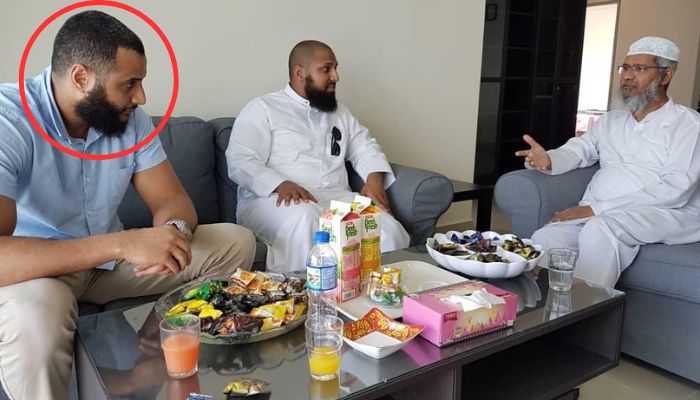
UK: Islamic preacher Mohammed Hijab, who instigated Leicester anti-Hindu riots, tells Indian Muslims to betray India for Ummah

On Sunday (27th April), UK-based Islamic preacher Mohammed Hijab appealed to the Indian Muslims to betray their homeland for the sake of Ummah in the aftermath of the Pahalgam terror attack.

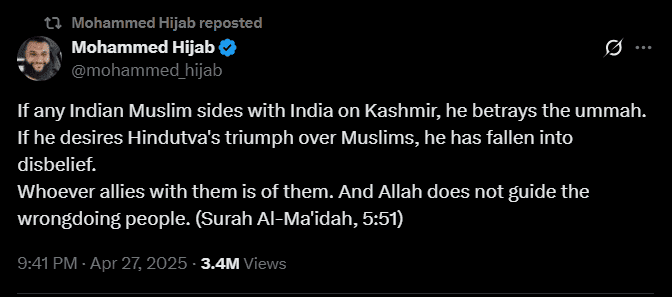
Hijab, who incited Muslims to attack Hindus in Leicester in 2022, tweeted, “If any Indian Muslim sides with India on Kashmir, he betrays the ummah. If he desires Hindutva’s triumph over Muslims, he has fallen into disbelief.”

“Whoever allies with them is of them. And Allah does not guide the wrongdoing people. (Surah Al-Ma’idah, 5:51),” he highlighted how a ‘true Muslim’ cannot be loyal to India.

It’s interesting to note that he omitted references to ‘Jews’ and ‘Christians’ from the Quranic verse cited by him.

Screengrab of the tweet by Mohammed Hijab

A total of 26 innocent civilians were shot dead by 4 Islamic terrorists in the Pahalgam terror attack, which took place on 22nd April.

24 of the victims were Hindus by Faith. All the terrorists were Muslims by Faith. Multiple victim testimonies have surfaced in the aftermath of the terror attack, which shows how Hindus were profiled before being killed.

They were forced to say their names, show ID cards, recite Kalma and even pull down their pants to show proof of ‘circumcision.’

When Mohammed Hijab incited Muslims to attack Hindus

In September 2022, Islamist ‘scholar’, Mohammed Hijab, was seen mocking Hinduism and inciting Muslims to attack the Hindus in Leicester.

In a video that surfaced on social media, he was seen interacting with mask-clad Muslim men and encouraging them to teach the local Hindu population ‘a lesson’.

“When I was on social media, I saw these people (Hindus) getting brave. How come today it is like pin-drop silence?” the British Egyptian ‘scholar’ was heard as saying.

He claimed that no Hindus were in sight after realising that Muslim mobs were coming at them in hordes. “Cause they (Hindus) fear us when they are near us”, responded an Islamist from the crowd.

Pumped by the support of the like-minded people in the crowd, Hijab said, “Deep down, they know we got the truth. If you want respect, then, learn to respect.”

“If they (Hindus) believe in reincarnation, what a humiliation of them to be reincarnated into some pathetic, weak, cowardly people like that,” the Islamist went on an anti-Hindu tirade.

“Hindutva (Hindus), you are trying to act like gangsters…Don’t ever come out like that again (referring to the protests by Hindus in Leicester). Do you understand? Are they going to come out again?” he continued his threats.

Amidst the war cry of Allah hu Akbar, Mohammed Hijab cautioned that he and his supporters would be there if Hindus ‘dared’ to protest against the violence, committed by his co-religionists.

In an Instagram post, Hijab was seen leading a frenzied mob of Islamists, with their faces covered in masks. “Muslim patrol in Leicester,” he wrote in his post.

5000 Pakistanis living in Delhi identified by IB, crackdown after Pahalgam attack; 28 Pakistanis who came to watch a cricket match in 2007 still untraceable

The Government of India has cancelled all short-term visas issued to Pakistani nationals. The step was taken in response to the Pahalgam terrorist attack that happened on 22nd April 2025 in Pahalgam, Jammu and Kashmir. Twenty-seven innocent Hindus lost their lives during the attack. Following the decision by the Indian government, several agencies began a crackdown on Pakistani nationals living in different parts of the country. The Intelligence Bureau (IB) and local intelligence units (LIUs) launched a massive hunt for Pakistani nationals living across the country.

Meanwhile, a shocking revelation was made that 28 out of 32 Pakistanis who came to Kanpur in 2007 to watch a cricket match have been missing for the past 18 years. According to media reports, during the India-Pakistan cricket series in 2007, several Pakistani fans came to India to watch matches, including one at Green Park Stadium in Kanpur, Uttar Pradesh. Out of these, 32 Pakistani nationals overstayed their visit and 28 of them have remained untraceable.

They had entered India on Exempted from Police Reporting (EPR) visas. These visas allowed them to travel across districts without notifying the police. The Pakistani nationals took advantage of this and disappeared without a trace. While police efforts led to the deportation of four individuals, the remaining 28 are yet to be located. According to the LIU’s Additional Deputy Commissioner of Police (ADCP) Rajesh Srivastava, as those Pakistani nationals had EPR visas, tracing them has been extremely challenging.

IB hands over list of 5000 Pakistani nationals to Delhi Police

The situation in the national capital, Delhi, seems to be equally concerning. The IB has provided the Delhi Police with a list of around 5,000 Pakistani nationals who have been directed to leave the country. The Foreigners Regional Registration Office (FRRO) handed the list to the Special Branch of Delhi Police, which is now conducting verifications across districts.

According to a senior police officer, Central and North-East Delhi have the highest concentrations of Pakistani nationals. There are around 900 of them living in Majnu Ka Tila and 600–700 around the Signature Bridge area. The Delhi Police has received two lists. The first list has 3,000 names and the second has 2,000 names. Some of the names might overlap and verification is underway. Media reports suggest that some of them might have already left the country.

Visa cancellations and special exemptions for Pakistani Hindus

Though the Government of India has asked all Pakistanis to leave, there is a catch. In relief to persecuted Pakistani Hindus who are currently living in India as refugees under Long Term Visas (LTVs), the Ministry of External Affairs officially clarified that they do not have to leave the country. Other than Hindus holding LTVs, all diplomatic and official visas were revoked, including the medical visas.

Notably, in Kanpur alone, there are around 50 Pakistani citizens on LTVs, out of which 42 are Muslim families and 8 are Hindu families. They arrived during the 1960s and 1990s and have since settled permanently through marriages. The police are reportedly maintaining a close watch on these residents.

Over 5,000 Pakistanis living in Maharashtra

On the directions of the central government, the Maharashtra government has also intensified the hunt for Pakistani nationals living in different parts of the state under various visa categories, including LTVs, yearly renewals, citizenship applications, and those married to Indian nationals. Out of these, 250 Pakistani nationals have been identified to be sent back, and the state has initiated the process.

The major concern for the state authorities is that 107 Pakistani nationals are currently untraceable. They have either gone underground or become untraceable after they entered India. Furthermore, 34 Pakistanis are living illegally in the state without valid documents.

Reportedly, 2,458 Pakistanis are living in Nagpur, out of which 25 are untraceable, followed by Thane (1,106 with 33 untraceable), Jalgaon (393), Pimpri-Chinchwad (290), Navi Mumbai (239 with 2 untraceable), and Pune (114 with 9 untraceable and 24 illegal).

Over 600 Pakistani nationals asked to leave South India

According to a report in One India, there are over 600 Pakistani nationals living in South India who have been asked to leave the country. In Kerala, there were 102 Pakistani nationals, and half of them were on medical visas. In Hyderabad, there were 208 Pakistani nationals, out of which 156 held LTVs. Thirteen of them had short-term visas and 39 had medical visas. LTVs are generally issued to those who have blood relatives in India or are married to Indian nationals.

In Tamil Nadu, there were 180–200 Pakistani nationals. A senior police official said while speaking to the media, “Around 180 to 200 Pakistan nationals would be present in the State at any given time. Except for the ones who have come to Tamil Nadu for medical emergencies, the remaining will have to go back as early as possible.”

The Indian government is not leaving any stone unturned to identify, trace, and deport Pakistani nationals residing illegally or overstaying their visas. The disappearance of individuals over the years, especially those who entered on relaxed visa conditions, has raised serious national security concerns. Those who held LTVs, except persecuted Hindus from Pakistan, medical visas, diplomatic visas, STVs, and other types of visas, have been asked to leave the country. As the crackdown continues, authorities remain vigilant to prevent any potential threats, determined to ensure that lapses of the past are not repeated.

Politicians line up to call Pahalgam victims liars and speculators, dismiss actual witness statements and try to whitewash Islamic terrorists

Days after the deadly Pahalgam terror attack, where Hindus were massacred by Islamic terrorists, politicians across party lines came forward to brand the victims’ families as liars.

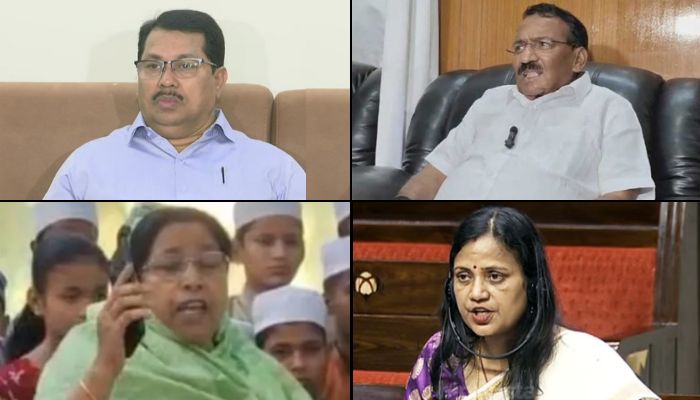
These politicians include BJD Rajya Sabha MP Sulata Deo, Congress MLAs Vijay Wadettiwar and R B Thimmapur, and TMC leader Marjina Khatun. They left no stone unturned to whitewash Islamic terror and negate the fact that Hindu tourists were ‘profiled’ before being killed.

Following the terror attack, Sulata Deo had claimed, “The number of people that died and the time it took to kill them, it is not at all possible to ask about religion or check religion in that time.”

“This is all speculation. No terrorist ever asks for anyone’s religion. Terrorists are never connected to religion, she brazened out.”

The BJD MP shrewdly gave a clean chit to the Islamic terrorists and suggested that the families of the victims were lying.

Maharashtra Congress MLA Vijay Wadettiwar also attempted to downplay the angle of ‘religious profiling’ and attempted to shift the blame of the terror attack elsewhere.

“The government is saying that terrorists killed people after asking them (about their religion). Do terrorists have time for all this?” he cast aspersions on the victim testimonials.

“Some people say that this did not happen. Terrorists have no caste or religion. Catch those who are responsible and take action. This is the sentiment of the country,” Vijay Wadettiwar further mouthed platitudes to protect his vote bank.

On Saturday (26th April), Karnataka Congress Minister R B Thimmapur courted controversy after he attempted to downplay the religious profiling of Hindu victims by Islamic terrorists during the Pahalgam terror attack.

R B Thimmapur, who serves as the Excise Minister in the Congress-ruled State, alleged, “The perpetrators of the attack in Pahalgam would not have asked the name and the religion of victims.”

“I personally don’t think the assailants would have asked the name and religion of the tourists…It is not just to add religious colour to cover up intelligence failure,” he brazened out. R B Thimmapur peddled these lies while interacting with the media in Bagalkot in Karnataka.

Trinamool Congress leader Marjina Khatun on Saturday (26th April) attempted to shield the Islamic terrorists by shifting the blame on the BJP.

While speaking to the media in West Bengal’s Malda, she alleged, “BJP carried out this attack to divert the public from the new Waqf law.” Marjina Khatun is the district council member and block President of the Trinamool Congress.

“BJP provides safe haven to terrorists. This was why there was no army personnel there,” she brazened out.

OpIndia had previously reported how the locals did not notify the security agencies, and the administration allowed tourist movement in the Baisaran area.

“The elections in Bihar are near. This is why the BJP is trying to create a communal environment,” Khatun resorted to peddling conspiracy theories to defend the Islamic terrorists.

The facts of the case

A total of 26 innocent civilians were shot dead by 4 Islamic terrorists in the Pahalgam terror attack, which took place on 22nd April.

24 of the victims were Hindus by Faith. All the terrorists were Muslims by Faith. Multiple victim testimonies have surfaced in the aftermath of the terror attack, which shows how Hindus were profiled before being killed.

They were forced to say their names, show ID cards, recite Kalma and even pull down their pants to show proof of ‘circumcision.’

Despite such overwhelming victim testimonials and disproportionate killing of Hindus, these politicians did not hesitate to discount religious angle, deviate focus from Islamic terrorists and whitewash the Pahalgam terror attack.

Lakshmi Mittal’s sponsorship of Pakistan Conference 2025 at Harvard sparks outrage amid escalating India-Pakistan tensions after Pahalgam horror

In the immediate aftermath of the barbaric Pahalgam massacre, where Pakistan-trained terrorists unleashed unspeakable horror on innocent Indian tourists—selecting their victims based on religious identity, subjecting them to degrading inspections, and executing them point blank for their inability to recite the Kalima—Indians around the world have united in grief and fury. The national sentiment is one of shock, rage, and an uncompromising demand for justice.

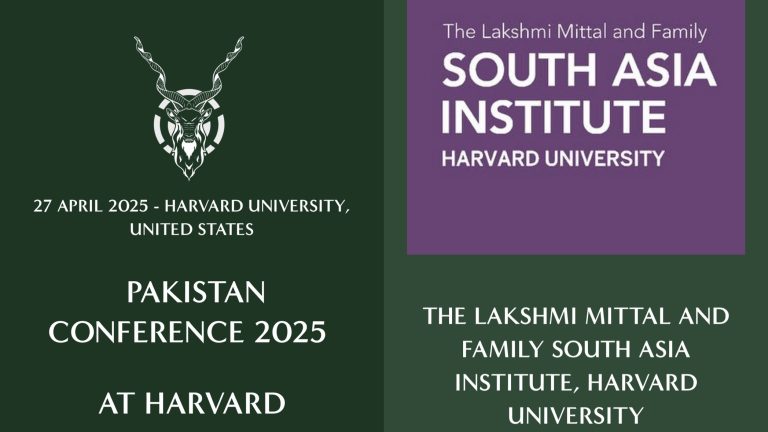
Yet even as the blood of innocents still stains the soil of Kashmir, a baffling and deeply disturbing development has come to light: The Lakshmi Mittal and Family South-east Asia Institute at Harvard University, heavily funded by Indian steel magnate Lakshmi Mittal, is sponsoring The Pakistan Conference at Harvard 2025.

On its website, ‘The Pakistan Conference at Harvard’ describes itself as “the largest student-led gathering on Pakistan in the United States, convening policymakers, academics, business leaders, and civil society experts to engage in critical discussions on Pakistan’s economic trajectory, governance, and global positioning.”

But beneath these lines containing word salad, it is unmistakable that it is a platform promoting Pakistani talking points, which is essentially, endorsing and propagating the Pakistani government’s agenda. It is an academic effort to project Pakistan’s soft power regardless of how insignificant or diminishing it is. But it is nevertheless an attempt through which Pakistan academia rationalise Pakistan’s state policies, which infamously includes its military doctrine of “bleeding India through a thousand cuts.”

Pakistan Conference 2025 at Harvard University website

What was shocking is that one of the partners listed on the website is The Lakshmi Mittal and Family South East Asia Institute at the Harvard University. An Indian businessman’s institute supporting a Pakistani conference is equivalent to turkeys voting for christmas.

The South Asia Institute at Harvard University is one of the sponsors of the Pakistan Conference

At a time when India is deploying several measures to isolate Pakistan for its role as a terror sponsor, such an endorsement from an Indian billionaire is not just tone-deaf—it is a betrayal.

The news of the sponsorship broke across social media like wildfire. Indian users from around the globe have expressed dismay and anger at Mittal’s decision. Hashtags like #BoycottPakistanConference and #ShameOnMittal trended on X (formerly Twitter), as thousands of netizens questioned how an Indian business icon could so callously ignore the wounds of his own people, and instead offer a platform—funded by his own generosity—to a nation whose hostility towards India is written in blood, not ink.

Adding to the sense of betrayal is the wider context of recent events. Just days before the announcement, demonstrations were held by the Indian diaspora in London, mourning the Pahalgam victims and demanding accountability. These peaceful protests were met with disruption and intimidation—again, notably—from Pakistani-origin individuals, many of whom openly voiced anti-India slogans and hurled abuses. The message could not have been clearer: even abroad, certain sections of the Pakistani diaspora continue to carry forward their government’s hateful agenda.

It is, therefore, of little doubt that the Pakistan Conference at Harvard 2025 would be anything different from what we witness in the TV studios in Pakistan and the online Pakistani social media space. It would echo the same rhetoric that Pakistanis have long championed: blaming Indian armed forces for the terror attacks that rock Kashmir and dismissing honest attempts to scrutinise Pakistan’s role in them as vindictive and borne out of its historical animosity towards Islamabad.

Given this atmosphere, the decision of a prestigious institution like Harvard’s South-east Asia Institute to sponsor a Pakistan-focused conference, and by extension endorse voices from a country that actively foments anti-India sentiment, is deeply unsettling. But more disappointing is Lakshmi Mittal’s role—or rather, his refusal to pull the plug on bankrolling a Pakistani conference.

At a time when the Indian government is leaving no stone unturned to pressurise the Pakistan government to relinquish its support for terror, Lakshmi Mittal’s sponsorship of the ‘Pakistan Conference at Harvard 2025’ is not only tone-deaf, but it reflects a deep sense of betrayal by the Indian steel magnate towards the innocent Indian tourists who lost their lives in Pahalgam at the hands of Pakistan-trained terrorists.

Businessmen of Mittal’s stature do not operate in a vacuum. Once they step into the public sphere with their enormous wealth, influence, and global visibility, they cease to remain private individuals. They carry with them the prestige of India, the hopes of its people, and, of course, the responsibility to stand up for the national interest when it is most under threat.

The moral and patriotic duty of Indian Businessmen

At a time when the Indian government is undertaking comprehensive measures to diplomatically corner Pakistan—cutting trade ties, launching international campaigns to highlight Pakistan’s role in sponsoring terrorism, pushing for Financial Action Task Force (FATF) sanctions—Indian businessmen have a moral obligation to complement these efforts, not undermine them.

The reality is stark: Pakistan’s narrative survives on two legs—state-sponsored terror on the ground, and image rehabilitation abroad through academia, media, and diplomacy. By funding academic platforms that host Pakistani-centric conferences, Indian billionaires like Mittal inadvertently provide oxygen to Pakistan’s softer, “victimhood” portrayal, making it harder for India to expose its brutal realities before the world.

It is no longer acceptable for Indian elites to compartmentalize their patriotism. One cannot wave the tricolour at public events and quietly write cheques that fund platforms for a hostile nation. This is not business as usual. These are times of war—if not declared, then certainly waged by Pakistan in the form of asymmetric terror.

Supporting forums that promote Pakistani talking points is betrayal of Pahalgam victims

The stakes are not limited to sentiment. They are strategic. Every act of engagement with Pakistani academia, diplomacy, or business strengthens the very structures that deny and justify terrorism against India. Every platform given to Pakistani narratives chips away at India’s hard-fought efforts to present the truth globally.

Worse, it sends a demoralizing signal to the families of the dead: that the elite of India are too self-serving, too enamoured with their own global status, to care about the lives lost back home.

In a world increasingly shaped by narrative wars, silence is complicity. Financial support is endorsement. And lack of clarity is betrayal.

Indian business community must stand with the government

Lakshmi Mittal, and others of his influence, must take decisive action. First, by immediately withdrawing financial and institutional support to any event that legitimizes Pakistan’s narrative. Second, by issuing a strong, public condemnation of Pakistan-sponsored terrorism. Third, by aligning with India’s diplomatic efforts at international forums—not just through token words, but through tangible actions like funding think tanks, advocacy groups, and academic projects that expose Pakistan’s terror apparatus.

True patriotism demands sacrifice—sometimes of money, sometimes of reputation, but always of indifference and apathy.

The Indian business community must realize: this is not the age where you can afford to be apolitical. To stand with India today requires courage, clarity, and commitment. Anything less is an unforgivable abdication of duty.

The sponsorship of the Pakistan Conference at Harvard by an Indian-funded institute, particularly in the wake of the Pahalgam massacre, is a moral outrage. It must be condemned not just in angry tweets, but through collective action demanding accountability.

Lakshmi Mittal has a choice: to continue down the path of globalist detachment, or to stand tall with Bharat Mata, in her hour of grief and defiance.

History will not forget which side he chose.

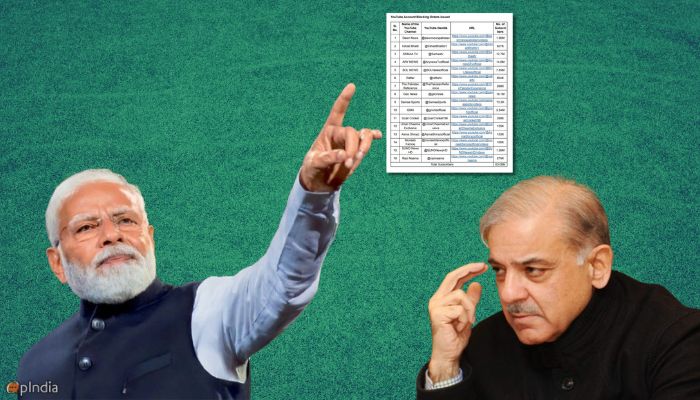
Centre bans 16 Pakistani YouTube channels for spreading disinformation after Pahalgam terror attack, check full list

0

On 28th April, the Modi government banned 16 Pakistan-based YouTube channels from being viewed in India in the aftermath of the deadly Pahalgam terror attack.

Based on the recommendations of the Union Home Ministry, the Government of India banned major YouTube channels, Pakistani news outlets and individual ‘analysts’ who were peddling disinformation and anti-India propaganda after the Pahalgam attack by Pakistan-backed Islamic terrorists.

Among the accounts banned are Geo News, Dawn, Raftar, Bol News, ARY News, Samaa TV, and Suno News. Additionally, YouTube channels of well-known journalists, including Muneeb Farooq, Umar Cheema, Asma Shirazi, and Irshad Bhatti, have been blocked. Other banned handles include Uzair Cricket, The Pakistan Reference, Razi Naama, and Samaa Sports.

These Pakistani propaganda channels collectively have around 63 million subscribers.

Government sources are reported to have said that the YouTube channels in question have been propagating content that is inflammatory and communally sensitive. Moreover, these channels were pushing false and misleading narratives and disinformation about India, its Army, and security services.

The Modi government’s strong action comes amid deterioration of the already strained relations between Bharat and Pakistan following the Islamic terrorist attack in Pahalgam, in which Jihadis belonging to Pakistani terror outfit Lashkar-e-Taiba’s offshoot The Resistance Force, murdered 26 people after confirming their Hindu identity.  

Pakistan flag or Islamic flag: Indian Muslims object to ‘disrespect’ of Pakistani flag during protests against Pahalgam terror attack, say it is Islamic flag

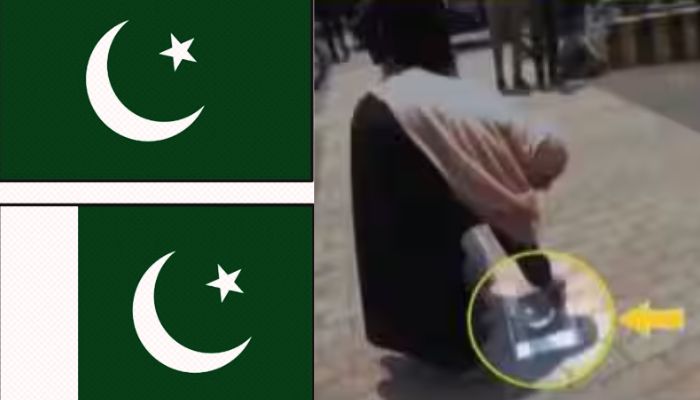
The Pakistan-sponsored Islamic terrorist attack in Jammu and Kashmir’s Pahalgam, which claimed 28 lives, has caused widespread anger among the Indian people. Tensions between India and its hostile neighbour are rising while Indian people are united, expressing their anger against Pakistan in various forms of protest. In many areas, some people pasted Pakistani flags on roads and other places for people to trample upon them. However, there have been instances wherein some Muslims objected to the disrespect to the Pakistan flag, saying that it is the “Islamic flag”.

Maharashtra: Two incidents in Nalasopara where Muslims objected to disrespect to Pakistani flag, claiming it to be the Islamic flag

In Maharashtra’s Nalasopara, protests were held against the Pahalgam terror attack on 27th April, wherein the protestors laid Pakistani flags on the road. However, some Muslim youths objected to this, claiming that the flag was Islamic. The protest was near Orange Heights, Yashwant Complex, when some Muslim youths, including one Usman, started arguing with the protestors over the flag.

Meanwhile, the local police have registered a case and taken two youths into their custody.

In another such incident reported to be from Nalasopara, some Burqa-clad women and Muslim men objected to placing the Pakistani flag on the road. Despite it being visibly evident and being told by those protesting against the Pahalgam terror attack that the poster contains a Pakistani flag and not an Islamic flag, the Muslim men and women remained adamant about stopping the protestors from disrespecting the Pakistani flag.

Pakistan flag burning irks Muslim mobs, clashes erupt in Mumbai’s Santacruz

In Mumbai’s Santa Cruz, clashes erupted over flags of Pakistan, Bangladesh and Palestine being pasted on a road in Santacruz East on Saturday night (26th April). During the clash, two to three people sustained injuries. The incident unfolded on Nehru Road.

Meanwhile, seven people have been arrested. According to the police, a mob of 25-30 persons was involved. The local police reached the spot and brought the situation under control. An FIR has been registered in this matter, and further investigation is underway, the Vakola Police said.

Karnataka: Bajrang Dal activists pasted Pakistani flags on the road in Kalaburgi, Burqa-clad Muslim women removed them

In Karnataka’s Kalaburgi, two-Burqa clad Muslim women carefully removed Pakistani flags pasted on roads, ensuring that it is not damaged. In the video of the incident, the two Muslim women could be heard saying “take our photos”, suggesting that they do not fear police action or public backlash.

These flags were pasted on the streets of Jagat Circle, Aland Naka, Market Chowk, and Sath Gumbaz by activists belonging to the Hindu rights group Bajrang Dal in protest against a Pakistan-orchestrated Islamic terror attack in Pahalgam. The Kalaburgi police were reported to have taken six Bajrang Dal activists into preventive custody, citing a lack of prior permission.

City Police Commissioner Sharanappa S D, and other officials visited the affected areas and ordered the removal of Pakistani flags.

West Bengal police stopped Hindus from burning Pakistan’s flag

On Saturday (26th April), BJP spokesperson Amit Malviya shared a video where the West Bengal police were seen stopping Hindus from raising slogans against Pakistan and burning the hostile nation’s flag. The incident occurred in Ashoknagar in West Bengal. In the video, a police officer was heard saying, “This is a sensitive area. You cannot do these here. This is a sensitive area”.

Rajasthan: Muslim mob protest against Hindus for putting up ‘Pakistan Murdabad’, ‘Terrorism Murdabad’ posters

On 25th April, the atmosphere in Jaipur’s Walled City area turned tense after members of the Muslim community became violent over posters with slogans of “Pakistan Murdabad” and “Terrorism Murdabad” pasted outside Jama Masjid. The posters were put up by Bharatiya Janata Party (BJP) MLA from Hawamahal, Baba Balmukund Acharya, and his supporters during a protest in response to the recent Pahalgam terrorist attack in Jammu and Kashmir.

Following the incident, the Muslim community pressured police to file an FIR against MLA Balmukund and several BJP workers at Manak Chowk police station. As the FIR was registered against those who condemned a terrorist attack and Pakistan, the hostile neighbouring country, it raises questions about why it caused such outrage among the Muslim community.

Outrage by Muslims over trivial reasons is an attempt to deflect attention from real issues, and play victim?

Evidently, many Muslims are ignoring the larger facts and are outraged over trivial things, including the supposed similarity between Pakistani and Islamic flags. However, this outrage over trivial matters to play victim and get offended is a pattern.

Back in 2015, the offices of the Marathi newspaper Lokmat witnessed angry protests by outraged Muslims who claimed that the newspaper had insulted their faith by publishing a ‘blasphemous’ picture. Copies of the newspaper were burnt at various cities in Maharashtra and the protesting men demanded arrest of the editor and the artist who drew the illustration. A couple of offices are reported to have been attacked too, as the editor extended an immediate apology.

Alongside a social media boycott campaign, protests were held at various cities such as Malegaon, Dhule, Nandurbar, etc. To keep the situation in control, the police registered cases against the editor and the writer of the article at Aurangabad, Jalna, Pune, Jalgaon, Parbhani and Yavatmal.

The outrage was triggered over an article explaining how Islamic terror group ISIS gets funding to carry out Jihadist attacks. The article also carried an illustration that showed symbols of various national currencies – representing international sources of funding – falling into a piggy bank, which was painted like the ISIS flag i.e. black in color with the terror group’s seal depicted in Arabic script. Since the piggy bank is supposed to look like a pig, and pig is considered a haraam animal in Islam, the Muslim groups claimed that the illustration was blasphemous, for the ISIS seal has elements of the Islamic shahada. Ironically, Muslim had never outraged to this extent against Islamic terrorism and beheading carried out by Jihadis after raising Islamic slogans, but over a harmless illustration.

Indian Muslims failing to differentiate between a Pakistani flag and an Islamic flag is outrageously shocking. The Pakistani flag ironically has a white vertical strip which represents its religious minorities, which the country never really respected. In contrast, the Islamic flag carrying a star and crescent moon does not contain any white strip. It thus, raises question whether there is genuine confusion among several Muslims or the excuse of ‘confusion’ is being used to defend Pakistan and prevent its much-deserved humiliation despite the hostile neighbour not only sponsoring jihad against Indians, particularly, Hindus, but also issuing nuclear attack threats.

TMC leader Marjina Khatun claims BJP orchestrated Pahalgam terror attack to shield Islamic terrorists, Mamata Banerjee made similar claims about Pulwama

Days after the massacre of Hindus in the Pahalgam terror attack, Trinamool Congress leader Marjina Khatun on Saturday (26th April) attempted to shield the Islamic terrorists by shifting the blame on the BJP.

While speaking to the media in West Bengal’s Malda, she alleged, “BJP carried out this attack to divert the public from the new Waqf law.” Marjina Khatun is the district council member and block President of the Trinamool Congress.

“BJP provides safe haven to terrorists. This was why there was no army personnel there,” she brazened out.

OpIndia had previously reported how the locals did not notify the security agencies, and the administration allowed tourist movement in the Baisaran area.

“The elections in Bihar are near. This is why the BJP is trying to create a communal environment,” Khatun resorted to peddling conspiracy theories to defend the Islamic terrorists.

When Mamata Banerjee called Pulwama terror attack ‘staged incident’

In July 2023, West Bengal Chief Minister Mamata Banerjee courted controversy for trying to pass off the 2019 Pulwama terror attack as a ‘staged incident.’

She made the contentious remarks during the Martyr’s Day rally at Esplanade in Kolkata.

At about 14 minutes and 37 seconds into her speech, Banerjee claimed, “I will tell the students and the youth that the BJP is planning to pull off staged events such as Pulwama (terror attack).”

“They are planning to create fake, staged videos like in movies. They will stage dramas, shoot videos and defame Bengal. This is their conspiracy,” she brazened it out.

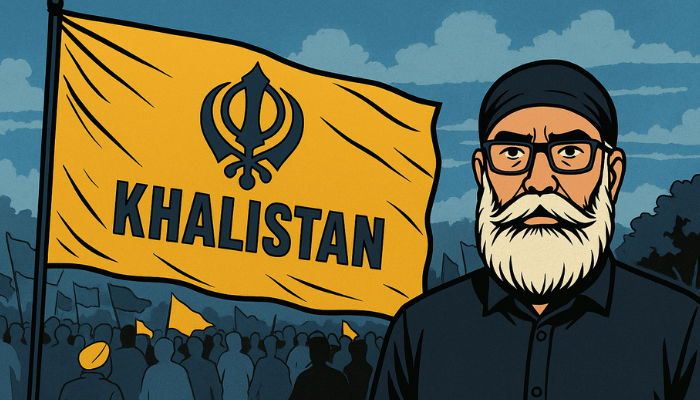
Khalistani terrorist Gurpatwant Pannu claims in interview with Pakistani media that Sikhs won’t let Indian Army fight with Pakistan

On 27th April, Pakistani propaganda YouTube channel Azaad Siasat published an interview with Khalistani terrorist Gurpatwant Singh Pannun. During the interview, Pannun made several baseless and provocative claims, including that two crore Sikhs living in Punjab would not allow the Indian government to attack Pakistan. He also claimed that it was Indian agencies who carried out the Pahalgam terrorist attack so that the Bharatiya Janata Party (BJP) could gain political mileage for the upcoming Bihar Assembly elections. The interview was conducted against the backdrop of the recent Pahalgam terrorist attack, which led to the loss of lives of 27 innocent Hindus who were in Kashmir as tourists.

Gurpatwant Singh Pannun tried to whitewash Islamic terrorists, claims Indian agencies behind Pahalgam attack

During the interview, Gurpatwant Singh Pannun made baseless claims to whitewash Islamic terrorism sponsored by the Pakistani government and Army. He claimed that Pakistan was not behind the Pahalgam terrorist attack and that it was Indian agencies who killed innocent Hindus. According to him, the attack was politically motivated to secure electoral gains for the Bharatiya Janata Party for the upcoming Bihar Assembly elections. Pannun claimed that such incidents are meticulously timed with visits from US leaders, suggesting that Indian agencies used proxies to carry out attacks and malign the image of Pakistan on the international platform.

Pannun claimed Sikhs, including Sikh soldiers, are with Pakistan

Pannun made a shocking and outrageous claim that not only the people of Punjab but also Sikh soldiers and officers of the Indian Armed Forces are with Pakistan at his call. Citing India’s announcement that the Indus Waters Treaty would no longer be followed, Pannun claimed that India wants to block Pakistan’s water supply. He also referred to the statements made by the Army Chief and Prime Minister of Pakistan warning India that any action to stop water would be treated as an act of war. He raised concerns about the fate of Sikhs living on the Indian side of Punjab in the event of conflict between India and Pakistan.

Pannun claimed that Sikhs would support Pakistan and asserted that the current situation is different from that of 1965 and 1971. “This is 2025,” he said, and asserted that Sikhs would stand with Pakistan like a brick wall. He emphasised that Sikhs would not allow Indian forces to attack Pakistan through Punjab. However, this would be possible, according to him, only if Pakistan openly supported the cause of Khalistan, a separate Sikh nation.

He demanded that the Pakistani government should actively raise the Khalistan issue at the United Nations Security Council and internationally legitimise the ongoing Khalistan Referendum as a peaceful and democratic process. He claimed that the entire Sikh diaspora would unite with Pakistan if it stood firmly behind the Khalistan movement. He claimed that India has demonstrated aggression against Pakistan repeatedly and gave examples of the 1971 war that led to the formation of Bangladesh. He asserted that now India wants to break Balochistan from Pakistan, as announced by Prime Minister Narendra Modi to destabilise Pakistan from within.

He argued that open support for Khalistan is Pakistan’s “trump card”. He claimed that Pakistan’s official endorsement of the Khalistan movement would ensure that millions of Sikhs in India’s Punjab would stand with Pakistan. He claimed that many Sikhs are already ideologically aligned with this cause and are merely awaiting formal support.

Further making the statement more unbelievable, he claimed to have been working on outreach programmes to convince Sikh soldiers in the Indian Armed Forces to abandon loyalty to the Indian state. He claimed that his efforts have led to sedition charges against him by the Indian authorities.

He further attacked the Indian government and claimed that Sikhs are now aware that Pakistan is not their enemy. “Your real enemy is the Indian government,” he said, referencing the 1984 Operation Blue Star, the anti-Sikh massacres in November 1984, and the years of action against insurgency in Punjab between 1984 and 1995 by the Indian forces. According to him, thousands of Sikh youths were killed during that period, making India’s government, not Pakistan, the true enemy of the Sikhs.

Pannun on Pakistan’s gesture towards Sikhs

Pannun then thanked the Pakistani government for continuing to facilitate Sikh pilgrimages to Kartarpur Sahib while rejecting visas for Indians. He called it a noble gesture but emphasised that mere visa policies are not enough to counter India’s aggression. He insisted that Pakistan must take active, decisive steps, including openly supporting Khalistan at the United Nations Security Council. Pannun argued that millions of Sikhs worldwide were ready to stand with Pakistan and that India would not dare to cross Punjab to attack Pakistan if Khalistan received official support.

Reflecting on the so-called Khalistan Referendum, he stated that despite the lack of government backing, the movement had steadily progressed through the collective efforts of the Sikh community. He pointed out that the voting would soon be extended to Punjab in India and stressed that people of all religions, including Hindus and Muslims, would be able to vote there. He further highlighted that the 17th August Referendum voting in Washington DC would be important as it is a global political hub. He claimed that he and his associates are carrying out lobbying efforts at the White House and US Congress under the campaign titled “Punjab Vote for Independence”.

Pannun’s defiance against Indian actions and global developments

Pannun claimed that India has escalated its crackdown on Khalistani terrorists and sympathisers, citing the murder of Khalistani terrorist Hardeep Singh Nijjar as an example. He further claimed that Indian agencies carried out an attack on UK-based Khalistani terrorist and SFJ associate Paramjit Singh Pamma, highlighting the growing risk to his life. He claimed that there is a bounty of $500,000 for his beheading announced by a BJP MP and asserted that he is not scared of death. He further challenged Prime Minister Narendra Modi to an open fight between Sikhs and RSS, head-on.

Pannun’s message to Kashmiris and call for Khalistan support from Pakistan

Pannun claimed that pro-Khalistani Sikhs have supported Kashmir’s freedom movement and expressed disappointment over the inaction of Kashmiris living abroad. He praised the Islamic terrorists carrying out terror activities in Jammu and Kashmir, referring to them as “freedom fighters”. However, he criticised Kashmiris living in the US, UK, and Canada for not carrying out protests outside Indian embassies.

Pahalgam terrorist attack

On 22nd February, terrorists affiliated with The Resistance Force (TRF), which is an offshoot of Pakistan-based Islamic terrorist outfit Lashkar-e-Taiba, orchestrated the deadly Pahalgam attack that claimed the lives of 27 Hindus. The victims were asked if they were Muslim and told to recite the Kalma. Their trousers were pulled down to check if they were circumcised. Those who failed the circumcision test were shot dead.

Who is Gurpatwant Singh Pannun?

Gurpatwant Singh Pannun is a US-based Khalistani terrorist who has citizenship in both the US and Canada. He poses as an attorney in the US and claims to be a frontrunner in the fight for the rights of Sikhs. In reality, he consistently propagates the Khalistani sentiments and often issues threats against India. He has been actively promoting violence against Indian diplomats in Canada, the US and other countries where pro-Khalistani Sikhs have been living. He was designated as a terrorist by the Government of India under the Unlawful Activities (Prevention) Act (UAPA) for his anti-India activities. His organisation, Sikhs For Justice, was also listed as a terrorist outfit by the Government of India.