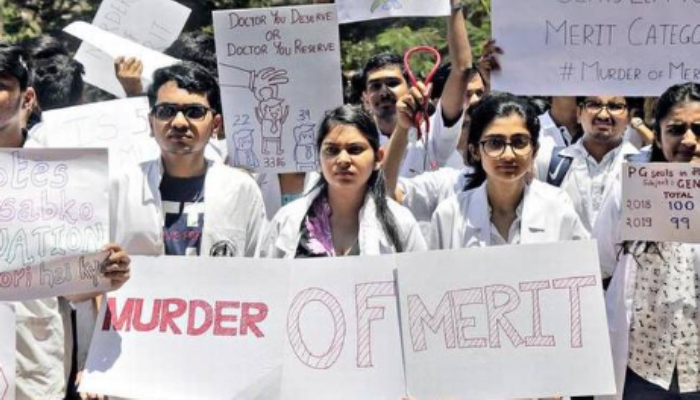
On Wednesday, 29th January, the Supreme Court stated that domicile-based reservations in PG medical seats are unconstitutional as they violate Article 14 of the Indian Constitution. The court said that such reservations would be impermissible. The court indicated that the admissions to the students for this course should be given based solely on the National Eligibility cum Entrance Test (NEET).
“Residence-based reservation in PG medical courses is clearly violative of Article 14 of the Constitution,” the three-judge bench comprising justices Hrishikesh Roy, Sudhanshu Dhulia, and SVN Bhatti said.
The bench stated that providing admissions based on residence-baed reservations would violate the constitutional guarantee of equality and hence, it can’t be allowed. “We are all domiciles in the territory of India. There is nothing like a provincial or state domicile. There is only one domicile. We are all residents of India,” the bench said.
The bench further added that Article 19 of the Constitution states that any citizen of India can reside, trade, and pursue a profession wherever he/she wants. “The Constitution also bestows the right to seek admission in educational institutions across India, and that any form of domicile-based restriction at the PG level disrupts this foundational principle,” the court said.
The bench further stated that reservations for MBBS seats might be allowed, but domicile-based reservations for any specialization course would not be allowed.
“Considering the importance of specialized doctors in PG medical courses, reservation in higher levels based on residence would be violative of Article 14 of the Constitution,” the bench said.
“This judgment will not affect the domicile reservation already granted. Students who are undergoing PG courses and those who have already passed out from such residence category will not be affected,” it added.
Mahakumbh DIG Vaibhav Krishna said that the police are looking into the causes of the stampede-like situation that occurred in the early hours of Wednesday.
Vaibhav Krishna said that Amrit Snan is about to begin and police and administration will assist all the akharas in completing their traditional processions.
“Amrit Snan is about to begin… Everything will be carried out traditionally… The police and administration will assist all the Akharas in their traditional processions… The situation is under control. We are looking into the causes of this morning’s incident. It happened because of a huge rush of devotees. More than 10 crore devotees are expected to arrive,” DIG said.
SSP Kumbh Mela Rajesh Dwivedi said, “There was no stampede. It was just overcrowding due to which some devotees got injured. The situation is completely under control. No kind of rumours must be paid heed to… Amrit Snan will soon begin… All preparations for Amrit Snan have been made… Many ghats have been developed and people are easily taking a dip in those ghats… I don’t have numbers on casualties or injuries…”
#WATCH | Prayagraj #MahaKumbh2025 | DIG Mahakumbh, Vaibhav Krishna says, "Amrit Snan is about to begin… Everything will be carried out traditionally… The police and administration will assist all the Akharas in their traditional processions… The situation is under control.… pic.twitter.com/ZaBx0s5kxY
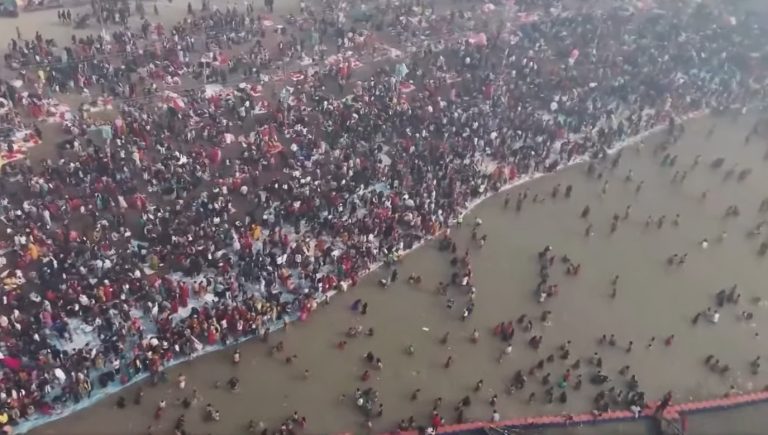
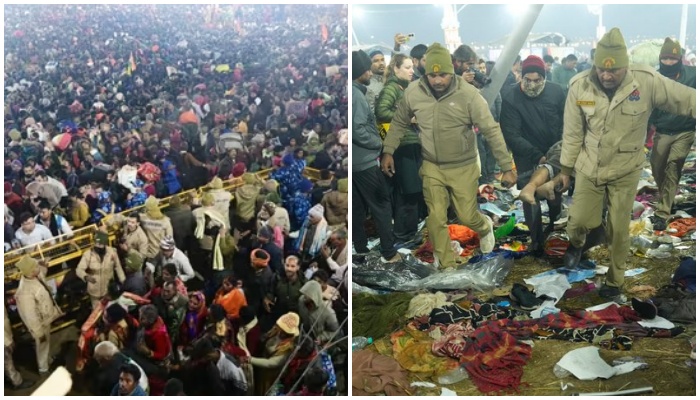
A stampede-like situation arose at the Mahakumbh in Prayagraj in the early hours of Wednesday, resulting in several injuries. This incident occurred as millions of devotees gathered at the confluence of the Ganga and Yamuna rivers to take a holy dip on the auspicious occasion of Mauni Amavasya, which is also the day of the Second Shahi Snan.
Meanwhile, after a brief halt following the incident saints continue to arrive, though in smaller processions, at the Triveni Sangam for the second Amrit Snan on the occasion of Mauni Amavasya..
Prime Minister Narendra Modi expressed his condolences to the devotees who lost their loved ones in the stampede-like situation in Maha Kumbh and wished for the speedy recovery of all the injured.
“The accident that happened in Prayagraj Mahakumbh is extremely sad. My deepest condolences to the devotees who have lost their loved ones in this. Along with this, I wish for the speedy recovery of all the injured. The local administration is engaged in helping the victims in every possible way. In this regard, I have spoken to Chief Minister Yogi ji and I am constantly in touch with the state government,” PM Modi said on X.
Prime Minister Narendra Modi and Home Minister Amit Shah had already reached out to Uttar Pradesh Chief Minister Yogi Adityanath, assuring him of full support from the Centre.
Notably, 36.1 million devotees have taken the holy dip in Triveni till 10 am on Wednesday, according to the Uttar Pradesh government. Other significant days during the Mahakumbh include February 3 (Basant Panchami), February 12 (Maghi Purnima), and February 26 (Maha Shivaratri).
(This news report is published from a syndicated feed. Except for the headline, the content has not been written or edited by OpIndia staff)
The Islamic State (ISIS) is no longer limited to waging war on the ground. It has been silently building an army of ‘online jihadis’ through a carefully crafted digital manual. ISIS’s propaganda magazine Voice of Khurasan has been playing a vital role in fulfilling ISIS’s dream of recruiting jihadis worldwide using social media and other online means.
Started in Issue 27 of the magazine, the series titled Light of Darkness serves as a step-by-step guide for radicalisation, digital security, and covert operations in cyberspace. The series, whose five parts have been published so far, teaches ISIS supporters how to remain anonymous online, evade intelligence agencies, use encrypted platforms, and recruit new members without detection.
These chapters highlight the importance of “cyber jihad” and digital warfare and how an ‘untraceable’ network of online jihadis can continue ISIS operations globally. This particular section in several issues of the magazine is not merely limited to preaching ideology but aims to train recruits in practical tactics such as hiding digital footprints and communicating securely to spread ISIS propaganda and facilitate terror funding.
The series lays the foundation for a self-sustaining, decentralised terrorist network, which is highly problematic and must be addressed by security agencies to ensure online jihadis are stopped before they act from behind the shadows of the internet.
As the use of social media, messaging apps, and darknet platforms increases, ISIS is evolving. The terror outfit is moving from traditional armed insurgency to a sophisticated online battleground. Until a decade ago, online warfare occurred only between enemy nations. However, with the involvement of terror outfits like ISIS in online warfare, the methodology of the war against terrorism must change sooner rather than later.
The Light of Darkness series is a chilling revelation of how terrorism is adapting to the modern age, turning digital spaces into recruitment hubs and training camps. Each of the five chapters published to date focuses on a different aspect of ISIS’s digital strategy, ranging from radicalisation and encryption to recruitment.
The origins – Justifying online jihad and cybersecurity concerns
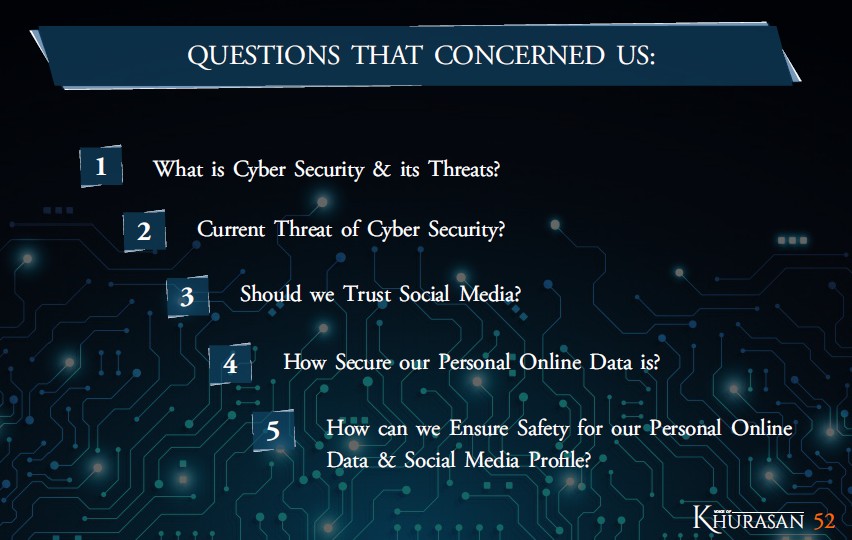
The first part of the Light of Darkness series was published in the 27th issue of Voice of Khurasan. It set the stage for digital jihad, its importance, and how ISIS sympathisers can navigate the cyber world safely. This was not a traditional recruitment or ideological piece. Instead, it focused on rationalising the use of the internet for jihadist activities while addressing concerns about digital safety.
Source: Voice Of Khurasan
The author acknowledged that there was a divide within jihadist circles over the use of the internet. One segment was completely against it, believing that the internet is a dangerous space where operatives can be easily tracked. Others, however, saw it as a necessary battlefield, crucial for spreading ISIS propaganda and coordinating operations. The author argued that, though security concerns were valid, completely avoiding the internet was not the solution, especially when it comes to interacting with ISIS sympathisers in the modern world. The message was clear: learn how to use the internet safely and turn it into a tool for ISIS’s “cause”.
The first chapter in the series served two key purposes. First, it justified why ISIS and its sympathisers should not shy away from engaging in online operations, explaining how digital space can be used as a battlefield where ideology can spread faster than through traditional methods. Second, it laid down the foundational need for cybersecurity, introducing the concept of protecting one’s digital footprint. Notably, the emphasis on cybersecurity was not about protecting personal privacy in the conventional sense. Rather, it was about hiding jihadist activities from government surveillance.
The author referred to government agencies tracking jihadi activities online as Tawagheet (tyrannical rulers, referring to Western and allied governments). The idea was to reinforce a paranoid but strategic mindset, emphasising that government agencies are constantly monitoring every aspect of the internet. Therefore, hiding behind firewalls, fake accounts, and encryption was presented as a necessity for survival. The chapter also encouraged ISIS sympathisers to self-educate about digital literacy. It was suggested that every jihadist should study cybersecurity, learn about cyber threats, and understand how to protect their online identity. This was not just about avoiding arrests; it was about creating a sustainable online presence that could spread propaganda and coordinate activities without being easily detected.
The dangers of digital footprints and online surveillance
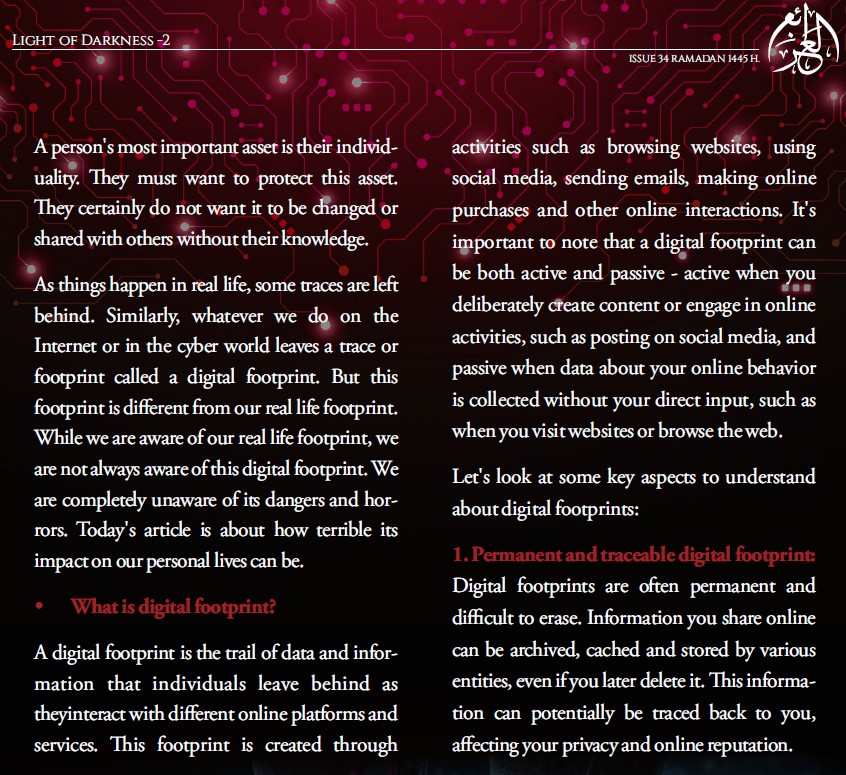
The second part of the series was published in the 34th issue. It mainly focused on digital footprints, online surveillance, and the need for extreme caution in internet usage. While the first part justified the need for a jihadist online presence, the second part was specifically designed to provide guidelines on how to avoid detection by intelligence agencies, corporations, and other entities.
Source: Voice Of Khurasan
The author explained how every activity on the internet leaves a trace, which can be used in the future against the person who published it. Furthermore, the article stated that posting on social media, using search engines, or even clicking on certain links accumulates digital footprints, which can expose an individual’s identity, location, and activities.
The article specifically discussed government surveillance and claimed that intelligence agencies worldwide actively monitor social media, communication platforms, and online transactions. The idea was to warn ISIS sympathisers that their online activity could lead to their arrest. It cautioned that many online services, including free educational courses and religious forums, require users to register with personal information, which could be used by authorities to build digital profiles of potential jihadists.
To counteract these risks, the guide recommended several privacy-enhancing techniques. It advised jihadists to minimise personal data sharing, avoid using real identities, and refrain from posting content that could reveal their locations or activities. It suggested using encrypted communication channels and anonymising tools such as VPNs and Tor to obscure online movements.
The article drew a historical parallel, arguing that just as early Muslims had to conceal their movements to survive, today’s digital warriors must do the same to avoid being tracked and arrested. The author concluded with a call for continuous vigilance, urging supporters to educate themselves on evolving cybersecurity risks to ensure their survival in the digital space.
Social media as a battlefield – Control, surveillance, and counterstrategies
The third part of the series was published in the 36th issue. It focused on the role of social media in jihadist operations. The author warned readers that social media platforms are both a tool and a trap, providing opportunities for spreading messages while also exposing users to surveillance and censorship. This part examined how Western governments and tech companies monitor and restrict ISIS content, while also outlining strategies to evade detection and continue digital operations.
Source: Voice Of Khurasan
The author argued that platforms like Facebook and Twitter were designed as tools of surveillance, citing the Cambridge Analytica scandal, where a simple quiz was used to collect user data. The article claimed that social media companies collect data on their users, flag suspicious accounts, and collaborate with intelligence agencies to track online jihadist activities. It framed this as a direct attack on jihadists, portraying account suspensions, bans, and reduced content reach as deliberate acts of oppression against the Islamic cause. One of the most important security recommendations in this chapter was minimising personal exposure on social media. The article advised jihadists never to share real names, locations, or identifiable information online. It warned that even casual posts, photos, or interactions could reveal crucial details. The article primarily focused on avoiding data leaks across different platforms, as such leaks could potentially help intelligence agencies trace jihadist activities.
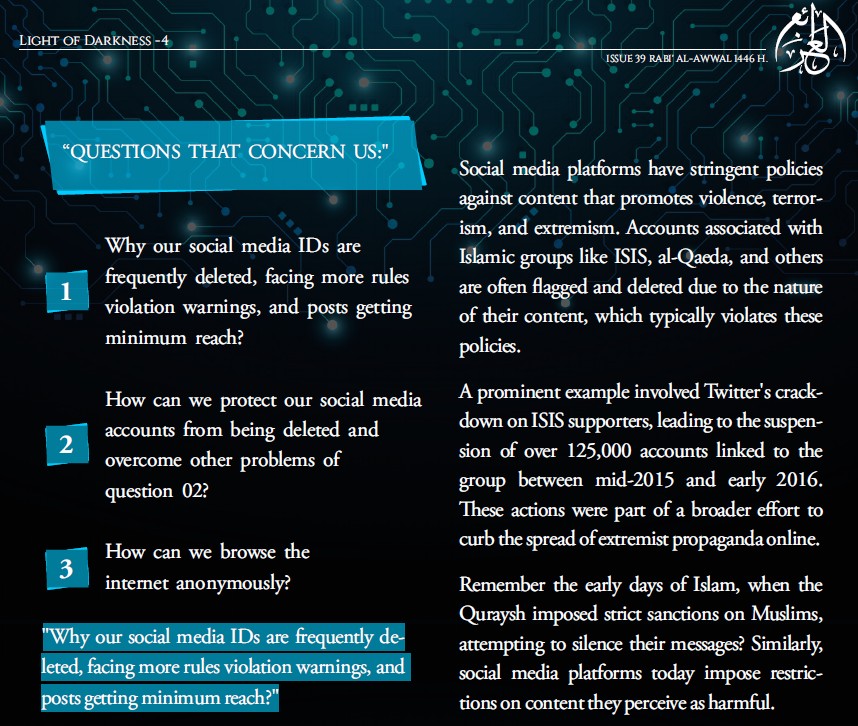
The fourth part of the series was published in the 39th issue. In this article, the focus shifted to reinforcing digital security and maintaining anonymous communications. This chapter provided detailed guidance on encryption, secure browsing, and privacy-enhancing tools, ensuring that jihadists could continue operating online without exposing themselves to intelligence agencies. It also discussed how Western governments and tech companies monitor and restrict ISIS content, while outlining strategies to evade detection and continue digital operations.
Source: Voice Of Khurasan
Another major focus was privacy settings and social media account management. The author urged jihadists to regularly update their privacy settings, reviewing what information was publicly available on their profiles. It encouraged the use of disposable email addresses and anonymous accounts, warning against linking any jihad-related activity to personal identities. The article also highlighted the importance of reading app permissions carefully, cautioning that many applications request unnecessary access to contacts, location, and personal data, which could be exploited by intelligence agencies.
The article introduced privacy-focused browsers and search engines, recommending the use of Tor and VPNs to mask online activity. It explained how Tor routes internet traffic through multiple layers of encryption, making it harder to trace the user’s actual location. It also suggested combining Tor with VPNs for an added layer of security.
A critical aspect of this chapter was password management and multi-factor authentication. It advised using unique, complex passwords for each account and warned against reusing credentials. It also recommended password managers to securely store login information, ensuring that passwords were not written down or saved in unencrypted files. Additionally, it stressed the importance of enabling two-factor authentication (2FA) wherever possible to prevent unauthorised access to accounts.
The author also covered secure messaging practices, highlighting the importance of encrypted apps like Telegram and Signal. It was explained how these platforms provide end-to-end encryption, preventing third parties from intercepting communications. However, the author warned that simply using encrypted messaging apps was not enough—users needed to take extra precautions, such as enabling disappearing messages, avoiding group chats with unknown individuals, and frequently clearing chat histories.
Telegram and the illusion of privacy
The fifth part of the series was published in the most recent issue, the 43rd. It mainly focused on messaging apps, specifically Telegram, which is among the most widely used communication platforms for jihadists. The article primarily examined whether Telegram could truly be trusted by jihadists and provided best practices for maintaining anonymity on the app.
Source: Voice Of Khurasan
The article began by acknowledging Telegram’s reputation for strong privacy features, particularly end-to-end encryption, secret chats, and limited cooperation with Western intelligence agencies. It positioned Telegram as a preferred platform for jihadist communications, given its ability to host large private groups, anonymous channels, and self-destructing messages. However, the author also warned that Telegram’s policies were changing, advising readers to be cautious about assuming that the app was completely secure.
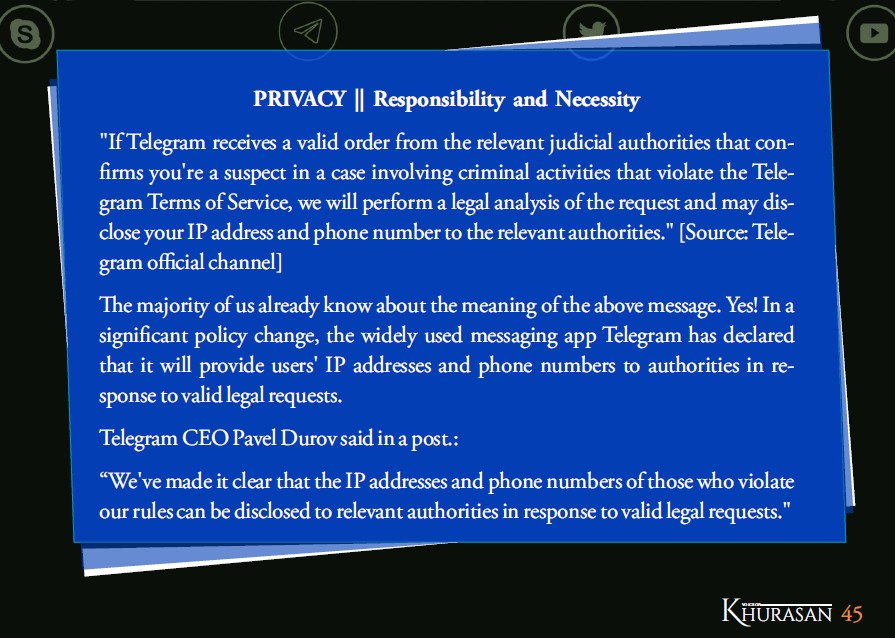
The author’s key concern was that Telegram had stated it might share user information with authorities if a government order was served. The author warned that, although Telegram had historically resisted some takedown requests, it had shown signs of cooperation with authorities in cases involving terrorism-related activities. This signalled a potential future crackdown on pro-ISIS content, making it risky to rely solely on Telegram for communication.
The article provided detailed operational guidelines on how to use Telegram while minimising risk. It recommended measures such as using secret chats instead of regular chats, hiding phone numbers and using disposable SIM cards when registering accounts, enabling two-step verification (2FA) to prevent account hijacking, avoiding unnecessary exposure in public groups where infiltration by intelligence agencies was a possibility, and using VPNs to mask IP addresses while accessing Telegram.
The case of Mehdi Masroor Biswas
A striking example of an online jihadist operating in India was Mehdi Masroor Biswas, who played a crucial role in spreading ISIS propaganda and recruiting jihadists through social media. Between 2012 and 2014, Mehdi, under the Twitter handle “@ShamiWitness”, became one of ISIS’s most influential digital operatives in India. Unlike traditional jihadists, Mehdi never engaged in direct combat but instead leveraged social media as a tool for radicalisation, recruitment, and operational support for ISIS.
Mehdi Masroor Biswas was an engineer in Bengaluru who led a double life as a jihadist propagandist. Through his social media activity, he translated and disseminated ISIS’s battlefield updates, glorified terrorist attacks, and encouraged Islamists from Western countries to join the terror group. He facilitated communication between jihadist recruits and ISIS networks, effectively making Twitter a recruitment hub for aspiring terrorists. His content was not only radical but also inciteful, targeting non-Muslims, particularly Hindus, with hate-filled propaganda.
By the time of his arrest in December 2014, Mehdi had amassed 17,700 followers, including active jihadists fighting in Syria and Iraq. His digital influence was so significant that his Twitter account was regarded as one of the key English-language sources for ISIS propaganda. His conviction was seen as a major breakthrough in counterterrorism efforts, but as he was released in December 2024, it raised concerns about the potential resurgence of his online jihadist activities.
conclusion
The Light of Darkness series revealed a sophisticated blueprint for online jihad, instructing ISIS supporters on how to engage in digital operations while avoiding detection. It is not merely an ideological manifesto but a technical training manual, equipping jihadists with the skills to communicate securely, operate anonymously, and evade intelligence agencies.
Union Health Minister JP Nadda on Wednesday spoke to Uttar Pradesh Chief Minister Yogi Adityanath on the stampede-like situation at the ongoing Mahakumbh Mela and assured full support with regard to health services to manage the situation effectively.
Prime Minister Narendra Modi and Union Home Minister Amit Shah have already spoken to UP CM Yogi Adityanath after the stampede-like situation that occurred in the early hours of Wednesday.
Meanwhile, after a brief halt due to large crowds, saints began their procession as they headed to Triveni Sangam for the second Amrit Snan of MahaKumbh 2025 on the occasion of Mauni Amavasya on Wednesday.
Heavy security was deployed at Triveni Sangam as police paved the way for the akharas and saints for their Amrit Snan.
Mahakumbh DIG Vaibhav Krishna said that the crowd is under control and all preparations for the akharas and saints are in place.
“We expect more than 10 crore people today. All our officials and personnel have been deployed for crowd regulation since yesterday evening. People are bathing at all the ghats here peacefully. In the morning, there was pressure and a huge crowd. Many Akharas told us to regulate the crowd and that they would come out for the snan later,” he said.
“Now that the crowd is under control, our preparations for the Akharas and saints are in place. The Akhara Marg and Akhara Ghat are ready. The whole area is sanitised and we have conveyed this to the Akharas and they will soon start coming here for snan. We do not have official numbers of stampede victims since we have been involved in crowd control here. The injured are being treated,” he added.
Uttar Pradesh Chief Minister Yogi Adityanath on Wednesday appealed to devotees at the ongoing Mahakumbh in Uttar Pradesh’s Prayagraj to take a holy dip at the ghats nearest to them and advised them to not insist on taking a dip at Sangam Ghat due to large crowds.
He said that around 8 to 10 crore devotees are present in Prayagraj on Wednesday and there is continuous pressure due to the movement of devotees towards the Sangam Nose. He said that a few devotees have suffered serious injuries when they tried to cross barricading on Akhara Marg.
Meanwhile, 36.1 million devotees have taken dip in Triveni till 10 am on Wednesday, according to the Uttar Pradesh government.
(This news report is published from a syndicated feed. Except for the headline, the content has not been written or edited by OpIndia staff)
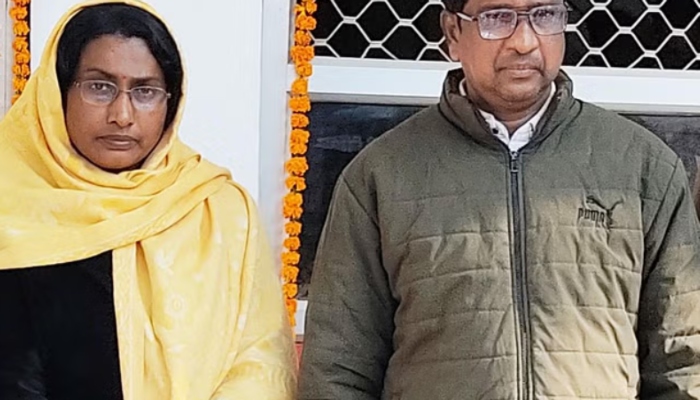
The Uttar Pradesh Police on Sunday, 26th January arrested an Odisha-based missionary couple for attempting to convert Hindus to Christianity. The accused persons identified as Samrendra Singh and his wife Sushmita Singh had been practising forceful religious conversion in the Bindki Kotwali area of Fatehpur district of Uttar Pradesh.
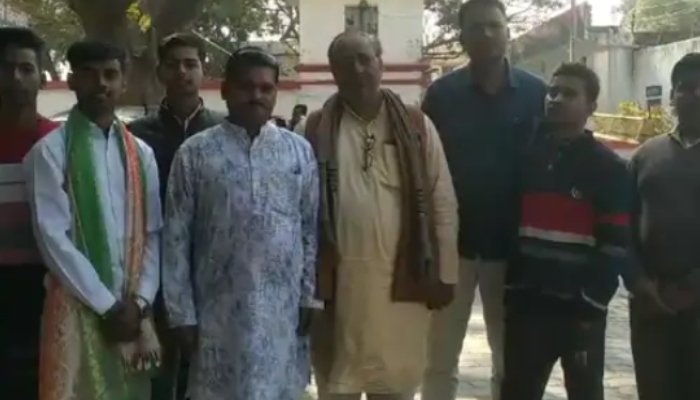
As per the local reports, the police took action against the accused based on the inputs provided by the Vishwa Hindu Parishad and Bajrang Dal members. As per the members, the conversion was happening in the Chhota Lalpur village at around 1 pm on Sunday, 26th January afternoon.
The members also stated that the couple had arrived in the village just 10 days ago and had taken a premise on rent from Ajay Kumar in Paigabar Muhalla for Rs 6,500. “The sole purpose of the arrival of this couple into the village was religious conversion,” the police were informed.
Based on the information provided by the Vishwa Hindu Parishad city president Rajesh Singh and Bajrang Dal city convenor Vimlesh Kumar Bajpai, Kotwali in-charge Inspector Sunil Kumar Singh along with the police force immediately reached the spot. During the investigation, it was found that the accused couple were residents of Odisha and had been practising religious conversion on poor tribals using various lures.
VHP and Bajrang Dal members (Amar Ujala)
The accused persons lured the victims with money, food grains, and also good women to marry. They were also conducting ‘healing camps’ with the promise of freedom from disease and poverty. It has come to the fore that the accused couple was being funded by an unidentified source to practice religious conversion. The police registered a case of conversion by taking both of them into immediate custody.
During interrogation, the police learned that the accused persons were associated with a church located in Kanpur. The police also recovered several incriminating materials used for conversion from the accused persons. One of the accused persons named in the FIR is Om Prakash, who probably assisted the primary accused couple in forcefully converting people. However, Om Prakash managed to flee from the spot.
The police have at present arrested the accused couple and are making all the efforts to arrest the absconding accused.
Several prominent activists of Vishwa Hindu Parishad and Bajrang Dal were present on the spot during the incident, including Rajesh Singh, Arvind Bhartiya, Sajal Sharma, Abhay Soni, Aniket Gupta, Harshit Dwivedi, Akhilesh Yadav, Anil Dubey and Piyush Pandey. Police said that constitutional action had been initiated against the accused couple.
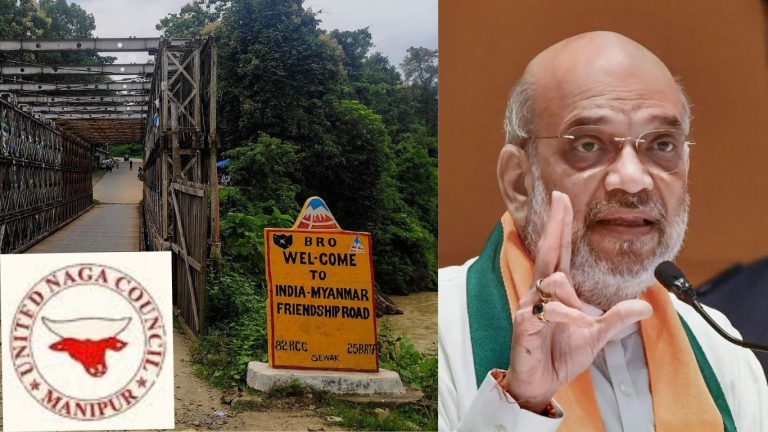
Reiterating its strong opposition to the India-Myanmar border fencing, the United Naga Council (UNC) directed its units to ‘initiate stringent steps’ to stop the project in their areas. The UNC reportedly issued a directive on January 27, 2025, asking the Naga population, particularly those under the jurisdiction of the Chandel Naga People’s Organisation (CNPO), to abide by the directive and stop any activities related to the fencing project.
As per reports, preceding the recent directive, a resolution was passed during the UNC Presidential Council meeting on 7th November last year opposing the proposed fencing project on the Indo-Myanmar border. The UNC President Ng. Lorho termed the Indo-Myanmar border fencing project as a ‘sinister design’ by the government of India to alienate the Naga people from their ancestral lands by imposing artificial boundaries.
The UNC terms fencing as encroachment on Naga sovereignty
The UNC has instructed its subordinate bodies and local units in the affected areas to take strong steps to stop the fencing project in their respective jurisdictions. The council also issued a warning to individuals and organisations against cooperating with the agencies in fencing stating that non-compliance would attract serious consequences as per the council resolution. Urging the Naga community in Manipur to remain vigilant and united in resisting the project, the council described the fencing project as an encroachment on ‘Naga sovereignty’ and identity. The council further urged the Naga people to be prepared for ‘any eventualities’ in their fight to protect their land and heritage.
MZP writes to the Union Home Minister opposing the fencing
The Indo-Mynamar border fencing project also faces strong opposition from the Mizo Zirlai Pawl (MZP), a student body in Mirzoram. The MZP sent a letter to the Union Home Minister Amit Shah through Governor VK Singh, urging the Centre to reconsider its decision to set up a fence along the Indo-Myanmar border and alter the existing Free Movement Regime (FMR) along the border. The MZP said that the FMR had played a pivotal role in preserving and fostering the Mizo way of life and the cultural ties between the ethnic Mizos of the Itwo countries by facilitating cross-border contact, economic activities, sharing of resources and mutual participation in cultural, religious and community events.
“The proposed termination of the FMR and the fencing of the Indo-Manmar border threaten to sever these bonds, depriving us of our cultural rights and access to essential resources. The decision disregards the geographical, historical, and economic interconnectedness of our communities, which have long transacted political boundaries”, the letter read. “Such actions would not only infringe the rights of Indigenous communities but also jeopardise the cultural and economic fabric of our lives,” it added.
Evoking the United Nations Declaration on the Rights of Indigenous Peoples (UNDRIP), 2007, the MZP highlighted that India is a signatory to it and therefore is bound by Article 36 of the UNDRIP which affirms the right of Indigenous people to maintain and develop cross-border relations. “It is disheartening to witness the world’s largest democracy act contrary to this principle, undermining the rights of its Indigenous people”, it said.
Manipur Meitei community supports fencing
Following the opposition by the UNC and the MZP, Lt. Gen. Raghu Srinivasan, Director-General of the Border Roads Organisation (BRO), called on Manipur Governor Ajay Kumar Bhalla at the Imphal Raj Bhavan to give him a brief on the Indo-Myanmar border fencing work. While the Kuki-Zo and Naga organisations oppose the fencing project, the Meitei community in Manipur has supported the fencing attributing the ongoing ethnic conflict in the state to infiltration and narco-terrorism from Myanmar.
What is the FMR
The India-Myanmar border touches four Indian states – Arunachal Pradesh, Nagaland, Manipur and Mizoram. The Indian government has decided to change the existing Free Movement Regime (FMR) along the India-Mynanmar border. The FMR was adopted in 1968 considering that the communities on either side of the Ido-Myanmar border shared familiar and ethnic ties. Initially, the territorial limit of free movement was 40 km which was reduced to 16 km in 2004. Some additional regulations were enforced in 2016.
Last year on 6th February, the Union Home Minister Amit Shah announced the decision to set up a fence along the 1,643 lm long India-Myanmar border. On 8th February, Shah announced the decision to suspend the FMR agreement with Myanmar in the interest of internal security and preserving the demography of the Northeast states. The decision was opposed in the Mizoram and the Nagaland Assemblies which adopted resolutions against the decision on 28th March and 1st March last year respectively.
In December 2024, new guidelines were reportedly issued by the Centre indicating the FMR had not been entirely scrapped instead, stricter regulations have been put in place reducing the range of the FMR from 16km to 10 km. Specific border-crossing points were to be set up along the border and border passes were to be issued for cross-border movement.
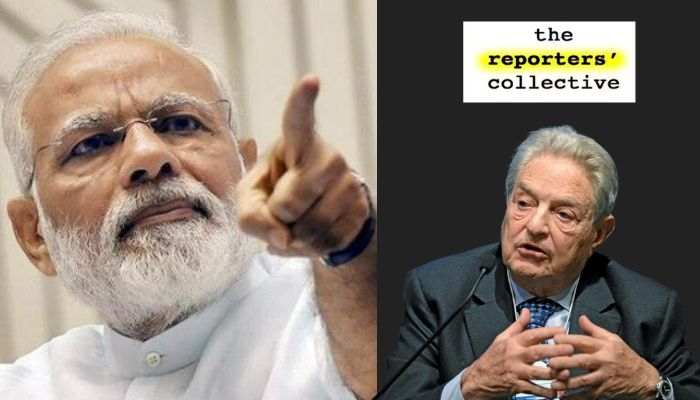
On Tuesday (28th January), Reporters’ Collective took to X (formerly Twitter) to inform that the Modi government has stripped it of its ‘non-profit status.’
The development comes a month after the controversial group of journalists, funded by the American Deep State, published fake news about the Centre rigging data to show a dramatic decrease in poverty in India.
In a statement, the Reporters’ Collective claimed that the group had been existing as a ‘non-profit trust’ since July 2021.
Tax authorities have revoked our non-profit status, claiming journalism does not serve any public purpose and therefore cannot be carried out as a non-profit exercise. It severely impairs our ability to do journalism. Our statement: https://t.co/79tTEVW8URpic.twitter.com/ZXRkCaSMcv
“But now the tax authorities have cancelled our non-profit status, claiming journalism does not serve any public purpose and therefore cannot be carried out as a non-profit exercise in India,” it alleged.
The Reporter’s Collective claimed that being revoked of ‘non-profit status’ by the tax authorities would hinder its ability to continue its ‘journalistic work’.
The Soros-funded group of journalists alleged, “The order cancelling our non-profit status severely impairs our ability to do our work and worsens the conditions for independent public-purposed journalism in the country.“
The Reporter’s Collective announced that it would seek legal remedies to undo the action of the Modi government.
“We are seeking legal remedies to protect the idea of journalism as a public good and our right to carry out investigative journalism, research and training free of encumbrances, fear or threats at The Collective,” it concluded.
Lies peddled by Reporters’ Collective
Reporters’ Collective published a report on 18th December 2024 alleging that the Narendra Modi government had rigged a “Homemade Poverty Index” to show a dramatic decrease in poverty in India.
It claimed that the government’s report of pulling 25 crore people out of poverty in 10 years was false because the govt of India added two important parameters to the global index.
The report alleged that because international agencies that publish global rankings couldn’t be bullied, the Modi govt invented its own index, and rigged the results to show good results.
Revealed: To show dramatic reduction in poverty, Modi gov't conjured up a new index and cherrypicked data to fit predetermined results, show confidential records.
Reporters’ Collective provided no evidence at all about this claim of rigged data and just made several vague claims.
The Global Multidimensional Poverty Index was developed by the Oxford Poverty & Human Development Initiative (OPHI) and the United Nations Development Programme (UNDP).
And, the Reporters’ Collective report itself mentioned that the NITI Ayog, which created India’s own Multidimensional Poverty Index, partnered with OPHI and UNDP to develop the index.
Therefore, the creators of the global index agree with the addition of extra parameters for the Indian index. But dimwits at the Reporters’ Collective believe that it made the data ‘rigged’.
Links to American Deep State
It is important to look at the organisations behind Reporters’ Collective. A look at the list of donors of its parent organisation shows that it is backed by usual suspects behind the ongoing anti-India campaign.
Reporters’ Collective is run by the National Foundation for India, an FCRA-registered NGO.
A perusal of its donor list shows that the National Foundation for India is funded by the Ford Foundation, the Open Society Foundation of George Soros, the Omidyar Network, and the Rockefeller Foundation, among others.
National Foundation for India’s donor list from its annual report
All these organisations are part of the American Deep State network and have funded numerous anti-India campaigns and initiatives. The Reporters’ Collective is a part of the anti-India front of the American Deep State.
The fake news published by it in December last year is in line with the textbook approach adopted by George Soros and his Open Society Foundations to influence civil society and ‘distort’ public perspectives across different nations.
In Prayagraj, Uttar Pradesh, a stampede situation occurred near the Sangam during the ongoing Maha Kumbh 2025. People had gathered in large numbers due to the occasion of Mauni Amavasya on 29 January.
As per reports, while a large number of people were moving towards Sangam ghat, at around 1.30 am in the night, a sudden stampede like situation emerged and people started running over fallen persons. Visuals from the incident site shared by news channels show many women lying unconscious. There has been no official confirmation on the number of casualties yet.
Over 70 ambulances were reportedly rushed to the site. Inured persons were taken to the government hospital at Sector 2. Bhaskar reported that their ground reporter at Swaroop Rani Hospital stated that around 14 bodies had been taken away for post-mortem. There has been no official confirmation of deaths from government sources yet.
Dainik Bhaskar has reported 14 deaths while Jagran has reported 17 deaths so far. But there has been no official confirmation from government sources yet.
CM Yogi has shared posted on X asking people not to try to move towards Sangam area and take the holy dip in their nearest ghat.
मुख्यमंत्री श्री @myogiadityanath जी महाराज ने की श्रद्धालुओं से अपील –
माँ गंगा के जिस घाट के जो समीप है, वहीं स्नान करें, संगम नोज की ओर जाने का प्रयास न करें।
प्रशासन के निर्देशों का अनुपालन करें, व्यवस्था बनाने में सहयोग करें।
As per reports, both PM Modi and HM Amit Shah have spoken to CM Yogi about the issue and have asked for all possible help from the Central government.
On the occasion of Mauni Amavasya, over 5 crore people are expected to be inside the city limits of prayagraj and tent city area.
As per reports, NSG and other security personnel have taken full control of the Sangam area. The Amrit Snan procession of all 13 Akharas has been put on hold and new devotees are currently barred from entering the Prayagraj city.
#WATCH | Prayagraj | Massive crowd of devotees continue to gather in Mahakumbh area to take holy dip in Triveni waters on Mauni Amavasya
1.75 crore people have taken holy dip today till 6 am; a total of 19.94 crore people have taken holy dip till 28th January, as per UP govt. pic.twitter.com/AsNs81fUa9
In the meanwhile Maha Kumbh snan is ongoing as usual in Prayagraj. ANI reported that by 6 am in the morning over 1.75 crore people have already taken the holy dip. A total of 19 crore people have taken holy dips in the Ganga so far in this Maha Kumbh.
Adani Group has committed to invest Rs 2.3 lakh crore in Odisha over the next five years across sectors such as power, cement, industrial parks, aluminium and city gas.
Karan Adani, MD, Adani Ports and SEZ Ltd, met Odisha CM Mohan Charan Majhi and exchanged MoU for investments in Odisha over the next five years.
‘Utkarsh Odisha – Make in Odisha Conclave 2025’ was inaugurated by Prime Minister Narendra Modi on Tuesday.
The proposed investment by the Adani Group is said to be the biggest investment intent by any business group in Utkarsh Odisha 2025.
Also, the first test flight landed at Dhamra Airstrip successfully on Tuesday.
On the occasion of Utkarsh Odisha, six projects of Adani Total Gas in Odisha, were commissioned today.
The projects are EV charging station at Bhubaneswar airport, City Gate Station-cum-Mother station project completion and Gas in from GAIL Tapoff, groundbreaking for LNG Cum multi-fuel hub at Bhadrak, project completion of CNG station at JIO BP RO in Balasore (will be open to public shortly after getting PESO approval), first domestic PNG connection gas charging and burner on in Bhadrak, and CNG station project completion at Rairangpur (first in city) of Mayurbhanj district. It will be open to the public soon.
Utkarsh Odisha – Make in Odisha Conclave 2025 is a flagship Global Investment Summit, being hosted by the Odisha government, which aims to position the state as the anchor of the Purvodaya vision as well as a leading investment destination and industrial hub in India.
(This news report is published from a syndicated feed. Except for the headline, the content has not been written or edited by OpIndia staff)
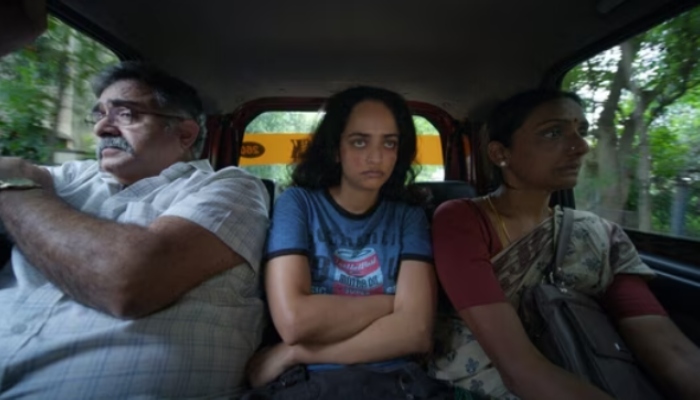
The recent release of a teaser of a Tamil movie named ‘Bad Girl’ starring Anjali Sivaraman in the lead role has sparked a controversy with many stating that the film portrays the Brahmin community in a bad light. The movie has been directed by Varsha Bharath and is produced by Vetri Maaran and Anurag Kashyap. The film is slated to be premiered at the International Film Festival in Rotterdam on January 31st, 2025.
From the teaser, it appears that the makers of the movie intend to portray the story of a young girl from the Tamlian Brahmin family who wants to be rebellious and disobeys her parents to live her life to the fullest, which involves having drinks and having intimate relations with strangers.
The movie teaser has received criticism from many, including Director Mohan G. for depicting a Brahmin girl negatively. “Portraying a Brahmin girl’s personal life is always a bold and refreshing film for this clan. What more can be expected from Vetrimaran, Anurag Kashyap & Co.. Bashing Brahmin father and mother is old and not trendy… Try with your caste girls and showcase it to your own family first,” he said on X.
Portraying a brahmin girl personal life is always a bold and refreshing film for this clan. What more can be expected from vetrimaran, Anurag kasyap & Co.. Bashing Brahmin father and mother is old and not trendy.. Try with your own caste girls and showcase it to your own family… https://t.co/XP8mtnaFws
Apart from Mohan G, several other netizens slammed the movie makers for portraying the Brahmin community in a negative light. “Encouraging harmful stereotypes against Men is “coming of age” humor? Wow,” said one of the users.
Another user stated that the movie portrayed ‘poisonous feminism’, spoke against family values, and taught school-going girls to objectify and dehumanize men. The user also said that the movie instigated violence against men as one of the girls in the movie said that she intended to kill all the men on this planet.
#Badgirlthemovie fetishizing Tamil Brahmin girls to spread pseudo-progressive ideas of wokeism & family breakdown that the West is now rejecting. Everyone looked at the Brahmin girl,& didn't realize these disturbing ideas apply to all youth! 1. Grooming – school & teenage is all… pic.twitter.com/ehcZtWYBLH
“What Nonsense is this? Aren’t the makers ashamed of producing such a movie? Don’t spoil school-going kids with these crap movies. We don’t need Bad Girls we need Good Girls in Tamil Nadu. This is not Feminism,” said another user.
What Nonsense is this Mr. VetriMaaran Aren't you ashamed of producing such a movie. Don't Spoil School Going Kids like this crap movies. We don't need Bad Girl we Need Good Girl in our Tamil Nadu. This is not Feminism.#Vetrimaaran#BadGirlTheMoviepic.twitter.com/5CuG4ftyhX
Supporting movies like Bad Girl which promote degeneracy, secretly enjoying the degradation of Brahmin women onscreen, is like growing snakes in your backyard and expecting them to bite only your neighbours. The snakes will come after your womenfolk one day.
Meanwhile, many others like actor Vijay Sethupati, director Pa Ranjith and Dhanush supported the film. “Happened to watch #BadGirl, and it’s truly a bold and refreshing film! Director #VetriMaaran deserves immense credit for backing such a daring story. The film powerfully portrays women’s struggles and society’s expectations through a unique new-wave cinema style. Congratulations,” said director Pa Ranjith in an X post.
Happened to watch #BadGirl, and it’s truly a bold and refreshing film! Director #VetriMaaran deserves immense credit for backing such a daring story. The film powerfully portrays women’s struggles and society’s expectations through a unique new wave cinema style. Congratulations… pic.twitter.com/EanrwiDE2I
“Teaser of my good friend Varsha’s “Bad Girl” produced by Vetrimaaran. God bless Varsha. Great things are waiting for you,” actor Dhanush said sharing the movie teaser.
Teaser of my good friend Varsha’s “Bad girl” produced by Vetrimaaran. God bless Varsha. Great things are waiting for you. https://t.co/2nV3Trnqx7
“#BadGirl teaser is here, Presented by @anuragkashyap72 & #VetriMaaran, this coming-of-age drama premieres at #IFFR2025! Watch the teaser now! Best wishes to the team!” actor Vijay Sethupathi said promoting the film.
The debutant director Varsha also made comments about women during the launch of the teaser which sparked outrage. She said that she, as a director, intended to build such a character that would be against the ‘flowery’ image of the women. She said that women usually are believed to be and shown as flowery, devoted, nice girls. “It’s too much pressure on them,” she said which further irked the netizens.
'Bad Girl' director Varsha about wanting to break the narrative of women being portrayed as flowers, pure, Pathini (chaste & devoted), motherly/godly because it was too much pressure for women.
The movie is being criticized for portraying the Brahmin community as regressive and orthodox. It shows that the women in the Brahmin families have to play by the rules of the parents or elders and that they can’t do anything on their own.
Apart from Anjali Sivaraman, the film also stars Shanthi Priya, Saranya Ravichandran, Hridhu Haroon, TeeJay Arunasalam, and Sashank Bommireddipalli in key roles. The film is slated for its international release at the International Film Festival Rotterdam on January 31st, 2025.