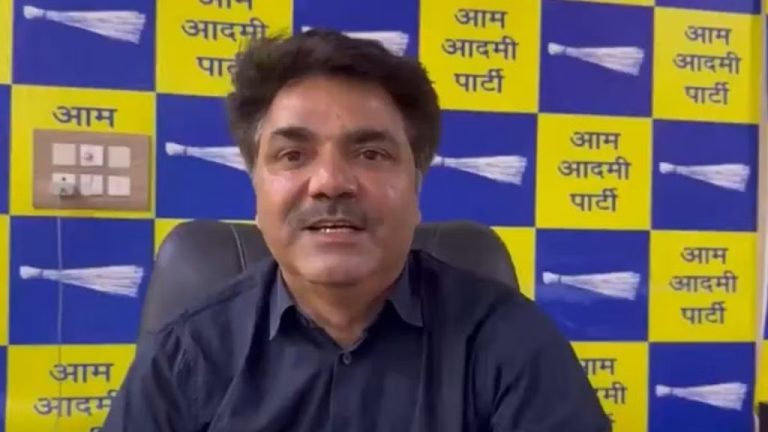
AAP MLA Naresh Balyan, on Tuesday requested the Delhi High Court for urgent interim relief and sought direction for custody parole. He stated, “I can pay for parole during custody. As a sitting MLA, I will remain in custody. My wife lacks experience, and the campaigning period is almost over.”
Special Public Prosecutor Amit Prasad countered, noting that while the Supreme Court had granted custody parole to Tahir Hussain, he was also a candidate and the investigation in his case had concluded, unlike in this case. He requested more time to file a response regarding the custody parole issue.
The bench took note of this and adjourned the matter for hearing tomorrow, clarifying that further arguments will be heard on January 29. On the next hearing date, the court will address whether custody parole can be granted in this case.
Earlier while opposing the bail plea of AAP MLA Naresh Balyan in the MCOCA case, Delhi Police revealed that the investigation uncovered the involvement of Balyan and his absconding associates in organized crime.
They allegedly conspired to dispute the legitimate properties of witnesses to gain financial or other undue advantages. The accused, along with his associate Kapil Sangwan (alias Nandu), reportedly threatened the rightful owners of these properties to coerce them into selling at significantly lower prices than those agreed upon in the sale contracts.
The applicant, Naresh Balyan, is said to have used agreements in the name of an absconding individual, Umed Singh, who has been evading arrest since Balyan’s detention. Following the agreements, Balyan would manipulate the properties into disputed status, enlisting Sangwan to intimidate the legitimate sellers.
The Trial Court has issued a non-bailable warrant against Umed Singh, and statements from public witnesses have been recorded to support these claims, stated Delhi Police in its reply filed opposing Balyan’s bail plea.
Delhi Police further stated that audio clips, allegedly containing voice conversations between Naresh Balyan and syndicate leader Kapil Sangwan (alias Nandu), have been recorded. The voice sample of Balyan was obtained after permission from the Trial Court and was sent to the CFSL for analysis. The questioned audio clips, along with the samples, were seized for further investigation.
The police also noted that several other suspects, whose names have surfaced, have yet to be identified, and further inquiries are ongoing to fully uncover the scope of the organized crime and trace the illicit financial gains made by Balyan and his associates.
Balyan, along with Kapil Sangwan and other members of the syndicate, is alleged to have assisted in committing or supporting the ongoing unlawful activities of organized crime, whether through logistical planning, providing information, or executing criminal actions. The syndicate has caused significant harm to society and accumulated vast illegal wealth. According to police, Kapil Sangwan, the syndicate’s leader, is currently abroad, living a lavish lifestyle, which suggests that the proceeds from these crimes are being used both domestically and internationally, said Delhi Police.
Senior Advocate Vikas Pahwa, in his argument, strongly contended that the charges against Naresh Balyan under the MCOCA were baseless and lacked any substantial evidence. He pointed out that the case was politically motivated, especially given Balyan’s active role in the upcoming assembly elections and his wife’s candidacy.
Pahwa further criticized the allegations as being part of a larger attempt to hinder his client’s political involvement, asserting that there was no material connection between Balyan and the alleged criminal activities. He called for the grant of interim bail, emphasizing that Balyan’s constitutional right to participate in the electoral process should not be compromised.
In its January 15 order, the trial court, led by Special Judge Kaveri Baweja, noted that there was substantial evidence linking Balyan to an organized crime syndicate.
The court emphasized that Balyan appeared to be actively involved in ongoing unlawful activities as a member of the group.
Balyan is facing charges under the stringent Maharashtra Control of Organised Crime Act (MCOCA), and the trial court recently denied him bail in the case. He was arrested on December 4 in connection with the MCOCA case, although he had previously been granted bail in an extortion case.
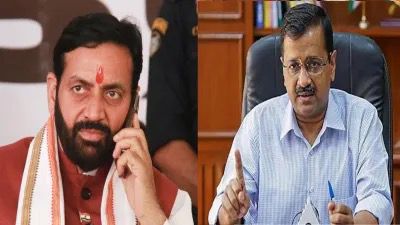
Haryana Chief Minister Nayab Singh Saini, while addressing a public rally in the Narela assembly area on Tuesday, took a dig at Aam Aadmi Party (AAP) national convener Arvind Kejriwal over the ongoing Yamuna water issue.
Saini stated that Kejriwal would not be able to clean the Yamuna River no matter what efforts he put in.
Addressing the media, Saini said “He (Arvind Kejriwal) used to say that he would clean Yamuna. After 10 years, he is asking for five more years. He will not be able to clean no matter what he does…”
The Chief Minister further claimed that the people of Delhi had already made up their minds. “This is not AAP. This is ‘aapda’…The people of Delhi have made up their minds such that he will not even get the time to look outside from the Tihar jail… You sold lies, you never worked, only lied. People want work done today…” he added.
Saini also promised that the Bharatiya Janata Party (BJP) would bring a positive change to Haryana. “BJP government will bring a change to Haryana. I appeal to people to be awake and I am proud to say that the PM has stood on his word of bringing housing facilities for the people in Delhi,” he said, while applauding the BJP government.
The Chief Minister also met with the Chief Election Commissioner in Delhi to discuss the Yamuna water issue.
Meanwhile, BJP MP Manoj Tiwari also took a dig at Kejriwal over his allegation against the BJP-ruled Haryana government of ‘poisoning’ Yamuna water, saying that the national capital needs change, not excuses. Manoj Tiwari said that AAP is even stealing songs.
“They stole water, Delhi’s happiness; please don’t steal songs now,” Tiwari said.”We are saying what the public wants to say… We conducted national water sports in Haryana’s water. We bathe in the water that is coming from Haryana… Arvind Kejriwal should be ashamed… Delhi needs change, not excuses,” the BJP MP added.
The remark came after Aam Aadmi Party (AAP) national convener Arvind Kejriwal levelled serious allegations against the Bharatiya Janata Party, stating that the BJP-ruled Haryana government has “poisoned” the Yamuna water supplied to Delhi so that “people die” and the blame comes on the AAP.”
BJP’s Haryana government has poisoned the water in Yamuna. If this water had entered Delhi only to be mixed with the drinking water, many people would have died in Delhi. It would have caused mass genocide,” the former Delhi chief minister alleged. Kejriwal said in a press conference while claiming that the alertness of the Delhi Jal Board prevented the mixing of alleged poisoned water with drinking water.
The political atmosphere in the national capital has intensified, with Congress, BJP, and AAP vying against each other over various issues. The Aam Aadmi Party is eyeing a third term while the Bharatiya Janata Party — which has been out of power in Delhi for close to three decades — is leaving no stone unturned to wrest back power from the ruling party.
(This news report is published from a syndicated feed. Except for the headline, the content has not been written or edited by OpIndia staff)
On 25th January, the National Investigation Agency (NIA) arrested two proclaimed offenders in connection with the 2019 murder of PMK leader Ramalingam in Tamil Nadu. The arrested accused, Abdul Majeeth and Shahul Hameed, are both residents of Thanjavur district. They were among the six accused declared absconders in the case. Majeeth and Hameed were members of the now-banned Popular Front of India (PFI) and had been on the run for years.
The two accused carried a reward of Rs 5 lakh each, announced by the NIA. The investigative agency apprehended them from an undisclosed location and stated that efforts are underway to arrest the remaining three absconders.
Ramalingam, a PMK leader and social activist, became a target after he opposed the Dawah activities of the Popular Front of India (PFI). He was killed in a well-orchestrated manner by PFI members on 5th February 2019.
On 28th January, NIA conducted several raids across Tamil Nadu linked to the case.
Accused declared proclaimed offenders in December 2022
Notably, according to court documents accessed by OpIndia, on 12th December 2022, a special NIA court in Chennai declared six accused, including Majeeth and Hameed, as proclaimed offenders as they failed to respond to summons issued by the court. The court directed that evidence against the absconders be recorded under Section 299 of the CrPC, allowing for their trial in absentia.
Furthermore, the court also authorised the prosecution to initiate action under Section 83 of the CrPC for the seizure of properties belonging to the accused. While Rahman Sadiq, one of the proclaimed offenders, was arrested in 2021, the others continued to evade capture until the recent breakthrough.
Chronology of NIA’s investigation
The NIA’s investigation into the Ramalingam murder case has spanned several years. The matter was officially transferred to the NIA on 7th March 2019, following which the central investigative agency re-registered the case. The original FIR in the matter was filed on 6th February 2019 by Tamil Nadu police. The incident was classified as a terrorist act under the Unlawful Activities (Prevention) Act (UAPA), prompting the NIA’s involvement.
The first major action in the matter was taken by the NIA in May 2019 when the agency raided 20 locations in Tamil Nadu, including the homes of the accused, offices of the PFI, and other sites linked to the conspiracy. During these searches, the NIA seized an array of incriminating materials, including 16 mobile phones, 21 SIM cards, laptops, hard drives, and over 100 documents. The agency also recovered weapons, including a sword and a sharp-edged knife, and Rs 2 lakh in cash. The recovered evidence further established the premeditated and violent nature of the crime.
The first arrests in the case were made in May and June 2019. Key conspirators in the case, including Mohammed Faruk and Myden Ahmed Shali, were arrested. Faruk, a resident of Trichy, was apprehended after evidence linking him to the attack and subsequent conspiracy came to light. Furthermore, Shali, identified as the head of the Dawah team involved in the altercation with Ramalingam, was arrested a month later. Both arrests were critical to the investigation as they unveiled the role of PFI leaders in orchestrating the murder.
Over the years, the NIA’s investigation expanded, focusing on the absconding accused. In July 2023, the agency conducted statewide raids at 21 locations in Tamil Nadu. The agency recovered digital evidence and documents tied to the PFI’s activities.
The recent arrests of Majeeth and Hameed mark a crucial milestone in the investigation. They had been on the run since 2019 and were traced to their hideouts after years of meticulous efforts by the NIA. Three accused remain absconding, and the agency is pursuing the matter to arrest them.
The NIA filed a charge sheet on 2nd August 2019 against 18 accused in the Ramalingam murder case before the NIA Special Court in Chennai. The charge sheet invoked multiple sections of the Indian Penal Code (IPC), including Sections 341, 294(b), 302, and 120B, as well as Sections 15, 16, 18, 18B, 19, and 20 of the Unlawful Activities (Prevention) Act (UAPA). The document detailed the sequence of events leading to the murder and provided evidence of a criminal conspiracy hatched by the accused to eliminate Ramalingam for opposing the Dawah activities of the Popular Front of India (PFI).
According to the charge sheet, the confrontation between Ramalingam and the PFI’s Dawah team on the morning of 5th February 2019 triggered the crime. The accused met at the Periyapalli mosque and planned the violent attack to send a chilling message to those resisting religious conversions. Later that night, Ramalingam was ambushed near his home in Paku Vinayakam Thoppu, where he was brutally assaulted with weapons, including a billhook and knives. His hands were chopped off in the attack, and he succumbed to his injuries.
The NIA’s investigation established that several of the accused played specific roles in the conspiracy. While some carried out reconnaissance on Ramalingam’s movements, others provided logistical support, including vehicles and weapons. The head of the Dawah team, Myden Ahmed Shali, participated in planning the attack, while key PFI leaders oversaw the execution. The NIA categorised the killing as a terrorist act intended to spread communal discord and terrorise dissenters.
Among the 18 accused named in the charge sheet, 10 were initially arrested, while six were declared absconders. Two of the absconders, Abdul Majeeth and Shahul Hameed, were apprehended recently, marking significant progress in the case.
Details of the case
The investigation revealed that the murder of Ramalingam was not a random act of violence. It was a meticulously planned conspiracy. Ramalingam, a PMK leader and social activist, became a target of the Popular Front of India (PFI) after he opposed their Dawah activities. The PFI had sent a Dawah team to the village of Pakku Vinayakam Thoppu in Thanjavur district to carry out religious conversions among underprivileged Hindus.
Photo of victim Ramalingam. Source: One India
On 5th February 2019, Ramalingam confronted the Dawah team and challenged their attempts to convert Hindus to Islam. During the heated altercation, Ramalingam publicly expressed his dissent against forced conversions. According to the NIA’s investigation, the confrontation enraged the PFI members, who viewed him as a threat to their conversion agenda. A criminal conspiracy was hatched by PFI and SDPI members to eliminate him and send a strong message to those opposing their activities.
OpIndia accessed copy of a bail order of accused no.2, Mohamed Riyas, in the case, that provided more details about the conspiracy and the murder. The accused named in the case are: Mohammed Asarudeen (A-1), Mohammed Riyas (A-2), Nijam Ali (A-3), Sarbudeen (A-4), Mohammed Rizwan (A-5), Mohammed Thoufik (A-6), Mohammed Farvees (A-7), Thowheeth Batcha (A-8), Mohammed Ibrahim (A-9), Mohammed Hasan Kuthous (A-10), Rahman Sadiq (A-11), Mohammad Ali Jinnah (A-12), Abdul Majeeth (A-13), Bhurkhanudeen (A-14), Shahul Hameed (A-15), Nafeel Hasan (A-16), Mohammed Faruk (A-17), and Myden Ahamed Shali (A-18). All these accused have been implicated in connection with the conspiracy and murder of Ramalingam.
According to the details mentioned in the court document accessed by OpIndia, on the day of the incident, 5th February 2019, members of the Popular Front of India (PFI), including Majeeth, Shali, and others, were engaged in Dawah work in the village of Pakku Vinayakam Thoppu in Thanjavur district. This Dawah activity was reportedly focused on converting underprivileged Hindus to Islam, a practice that Ramalingam, a local PMK leader and social activist, opposed vehemently. Around 8:30 AM, Ramalingam encountered the Dawah team and confronted them about their activities.
During the altercation, Ramalingam, in a symbolic gesture to demonstrate the equality of religions, removed the religious skull cap of Shali, a Dawah team leader, and placed it on his own head, while also applying holy ash on Shali’s forehead. The situation escalated into a heated verbal exchange, but it was temporarily defused with the intervention of local villagers. Ramalingam’s son, who was present at the scene, recorded a portion of the confrontation on his mobile phone.
Despite the peaceful dispersal, the confrontation enraged the PFI members. By late morning, a conspiracy was hatched by PFI leaders, including Shali, Majeeth, and others, near the Periyapalli mosque. They decided to “teach a lesson” to Ramalingam and deter any future opposition to their Dawah activities. The conspirators met again later that day to finalise the plan.
By night, PFI members, including Hameed, Shali, and Majeeth, organised reconnaissance of Ramalingam’s movements. Around 11:15 PM, as Ramalingam and his son were returning home in their mini-truck, the assailants ambushed them near New Muslim Street in Thirubhuvanam. The narrow street forced Ramalingam to halt his vehicle, giving the attackers the opportunity to block his path using a Maruti Swift Dzire car.
The attackers, armed with lethal weapons, forcibly stopped Ramalingam and assaulted him. They threw chilli powder at him, immobilising him briefly, and then inflicted severe injuries, including chopping off his hands. Despite his son’s cries for help and the alarm raised by nearby residents, the attackers fled the scene in their car. Ramalingam was rushed to the hospital but succumbed to his injuries shortly after midnight on 6th February 2019.
Mohammed Asarudeen and Mohammed Riyas, along with eight other accused approached the Madras High Court seeking bail. The plea was heard by a bench comprising Honourable Mr Justice P.N. Prakash and Honourable Mr Justice RMT. Teekaa Raman. However, the court rejected the bail petitions, citing the gravity of the offence and the available evidence.
While rejecting the bail plea, the court emphasised that the materials gathered by the National Investigation Agency (NIA) and the testimonies of witnesses so far did not meet the conditions stipulated under Section 43D(5) of the Unlawful Activities (Prevention) Act to grant bail to the appellants. The court noted that there were “reasonable grounds for believing that the accusations against the appellants were prima facie true” and directed the trial court to expedite the examination of protected witnesses.
The trial against 13 accused in underway in Special NIA Court in Chennai.
Details included in this report are based on Special NIA Court, NIA Press Releases and Madras High Court documents connected to the case.
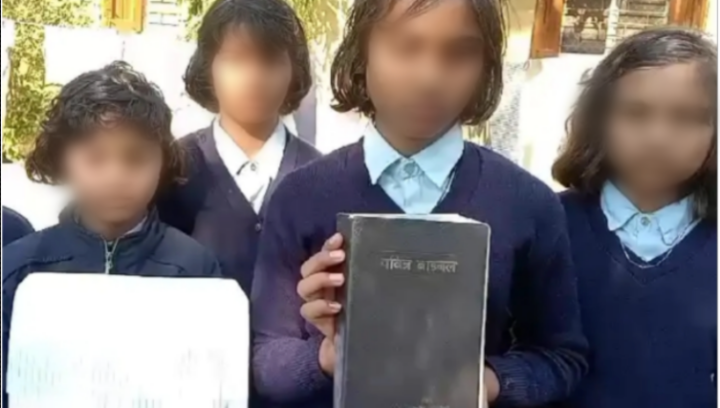
A matter regarding attempt to conversion has come to light in a hostel for tribal girls at Chirwa of Bhikangaon located in the Khargone district of Madhya Pradesh. The students have accused the warden Rita Kharte of forcing them to read the Bible and perfrom Christian prayers at night. They were also made to do other work at the facility including washing utensils and cleaning wheat.
After being subjected to mental and physical abuse by the warden, 15 pupils from classes four and five left the hostel and went home. However, they were assaulted upon their return. Dineshchandra Patel, the Bhikangaon Block Education Officer (BEO), examined the hostel after learning about the critical issue. During the investigation, Bible books and copies with religious prayers were recovered from there.
Sangeeta Yadav has been appointed as the new superintendent as Rita Kharte was removed with immediate effect after the investigation revealed that the charges were valid. The parents of the female students have called on the administration to conduct an impartial probe into the matter. The BEO has recommended severe action against the offenders in a comprehensive report that was delivered to the Assistant Commissioner Tribal Affairs Department.
All of the hostel’s students, distressed by the abuse and intimidation, went to the District Magistrate (DM) to voice their concerns. When the locals questioned the girls, they disclosed that Rita Kharte, the hostel warden, requires them to pray and read the Bible every morning and evening. She orders them to clean the utensils, restrooms and sweep. If they don’t, she even beats them.
“The warden makes us clean wheat at 5 in the morning. She sends her husband to sell it. He comes back after selling it by 6 am. Not only this, the warden also thrashes us. When two girls ran away from our hostel, she assaulted them. She also directs us to clean the bathrooms and orders us that if anyone asks, tell them that other people do it. She pushes us pray to Lord Jesus at 12 in the night and then at 5 in the morning. She even pressures us to read the Bible,” disclosed one victim.
The girls stated that they don’t bad quality food which even contains worms sometimes. They students later agreed to stay at the hostel after the former warden was ousted and the SDM (Sub-Divisional Magistrate) assured them of better treatment after reaching the spot.
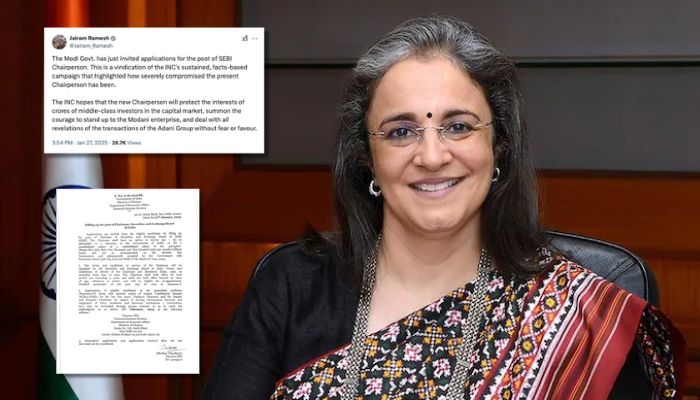
As the Ministry of Finance put up a notification inviting applications for the position of Chairperson of the Securities and Exchange Board of India (SEBI), the Congress party saw an opportunity to find joy in patting itself on the back for a routine bureaucratic transition.
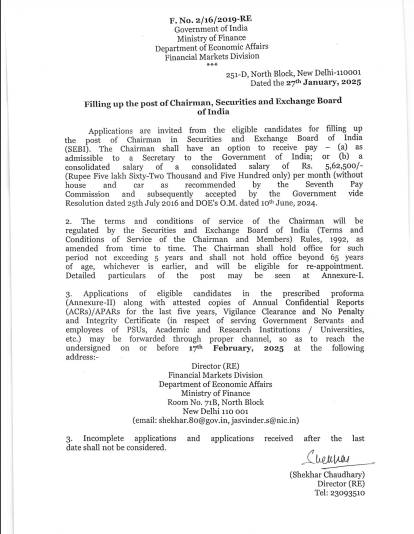
In the notification dated 27th January 2025, The Ministry of Finance, through the Department of Economic Affairs (Financial Markets Division), has advertised for the post, “Government of India invites applications from the eligible candidates for filling up the post of Chairman in Securities and Exchange Board of India (SEBI), Mumbai.”
According to the ministry, the selected candidate will have the option to receive remuneration equivalent to the pay scale of a Secretary to the Government of India or a consolidated salary of Rs 5,62,500 per month. However, this consolidated salary does not include perks such as a government-provided house or vehicle. The ministry said that the deadline for submitting applications is 17th February 2025.
Congress declares itself as the winner of the “Buch battle”
Soon after the Ministry of Finance’s notification inviting applications for the post of SEBI chairperson was issued, Congress MP Jairam Ramesh claimed that this was a vindication of Congress’s “sustained, fact-based” campaign against outgoing SEBI chairperson Madhabi Buch.
“The Modi Govt. has just invited applications for the post of SEBI Chairperson. This is a vindication of the INC’s sustained, facts-based campaign that highlighted how severely compromised the present Chairperson has been. The INC hopes that the new Chairperson will protect the interests of crores of middle-class investors in the capital market, summon the courage to stand up to the Modani enterprise, and deal with all revelations of the transactions of the Adani Group without fear or favour,” Ramesh posted on X on Monday.
The Modi Govt. has just invited applications for the post of SEBI Chairperson. This is a vindication of the INC's sustained, facts-based campaign that highlighted how severely compromised the present Chairperson has been.
The INC hopes that the new Chairperson will protect the…
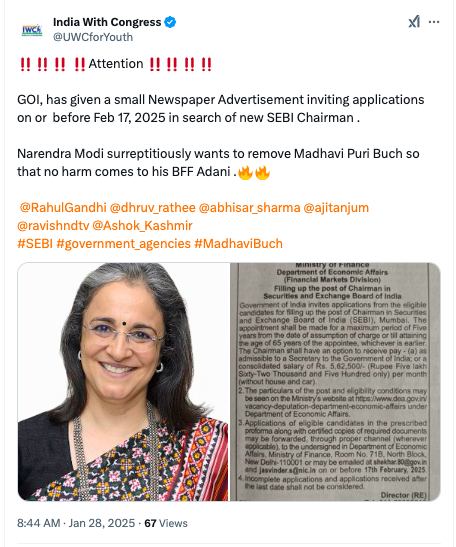
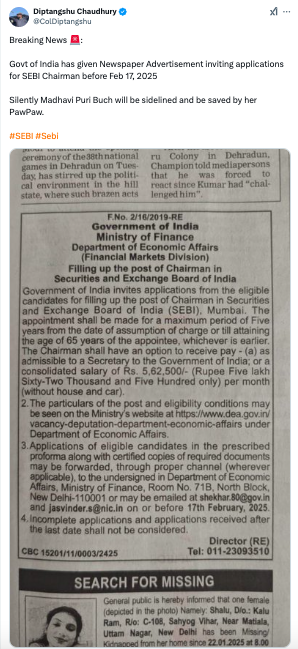
One Congress supporter “India with Congress” said, “GOI, has given a small Newspaper Advertisement inviting applications on or before Feb 17, 2025, in search of new SEBI Chairman. Narendra Modi surreptitiously wants to remove Madhavi Puri Buch so that no harm comes to his BFF Adani.”
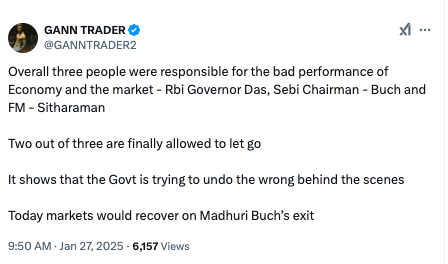
Meanwhile, another X user said, “Overall three people were responsible for the bad performance of Economy and the market – Rbi Governor Das, Sebi Chairman – Buch and FM – Sitharaman. Two out of three are finally allowed to let go. It shows that the Govt is trying to undo the wrong behind the scenes. Today markets would recover on Madhuri Buch’s exit.”
Another one said, “Govt of India has given Newspaper Advertisement inviting applications for SEBI Chairman before Feb 17, 2025. Silently Madhavi Puri Buch will be sidelined and be saved by her PawPaw.”
Is the Finance Ministry’s notification for recruiting new SEBI chief a vindication of Congress’s smear campaign against Madhabi Buch?
Congress leader Jairam Ramesh and the party’s supporters are claiming that somehow the Ministry of Finance inviting applications for replacement of outgoing SEBI chairperson Madhabi Buch’s successor is a vindication of their campaign attacking her and demanding her resignation over alleged conflict of interest and financial misconduct.
Contrary to the assertions made by the Congress party, the recruitment notification for SEBI chairperson has been issued as Buch’s tenure comes to an end on 28th February 2025. It has nothing to do with Congress’s campaign targeting her or with any alleged financial misconduct. Thus, there is no question of any ‘vindication’ and it is only a continuation of Congress’s fertile imagination of making the Modi government quiver in its boots with their baseless allegations.
Ironically, the Congress party is pushing a narrative that somehow Madhabi Buch not getting an extension or the Finance Ministry issuing notification for appointing the next SEBI chief as ‘vindication’ of the party attacks on her based on the dubious Hindenburg hit-job against Buch.
It must be recalled that in August 2024, Hindenburg Research published a report that claimed that SEBI chief Madhabi Puri Buch and her husband Dhaval Buch had investments in an offshore firm used in the Adani money siphoning case. The report also alleged that the SEBI chairperson’s involvement showed a lack of transparency in the market regulator when it came to investigating the Adani group. The next day on 11th August, SEBI chief Madhabi Buch and her husband released a joint statement, calling the report baseless and saying that their financial records were an open book. OpIndia reported earlier that Hindenburg Research’s hit job on Madhabi Buch proved nothing about her supposed ties to any offshore funds connected with the Adani Group.
Despite this, the Congress party and the anti-BJP cabal had heavily relied on the Hindenburg report to attack Madhabi Buch and the Modi government. They claimed that somehow the SEBI chairperson’s integrity is compromised and the Central government was complicit in her alleged financial misconduct.
Things, however, turn even more interesting given the fact that in October last year, Buch was cleared of any wrongdoing following a probe since the investigation found nothing incriminating against her. And just months later, Hindenburg Research, the very source of the continuous attacks on Adani Group and Madhabi Buch, announced its closure. The US-based short-seller’s shutdown came just days after US Attorney for the Eastern District of New York Breon Peace, who brought fraud and bribery charges against Adani Group chairman Gautam Adani and seven other executives, announced his resignation. Peace has been accused of having ties with regime change enthusiast and billionaire George Soros who has been vocal in his opposition to Indian Prime Minister Narendra Modi.
Soon after Hindenburg Research announced its shutdown, its founder Nate Anderson (Nathan Anderson) was accused of colluding with hedge funds like Canada’s Anson Funds. It emerged that Anderson collaborated with Anson Funds to produce targeted reports. Now when the integrity of Hindenburg Research itself is questionable, there is no doubt that its reports targeting the Adani conglomerate or SEBI chief Madhabi Buch cannot be taken seriously or relied on to level corruption allegations against them. Thus forget vindication, Congress’s attacks on the SEBI chief, Adani Group and the Modi government deserve condemnation for using dubious reports by foreign entities for political motives.
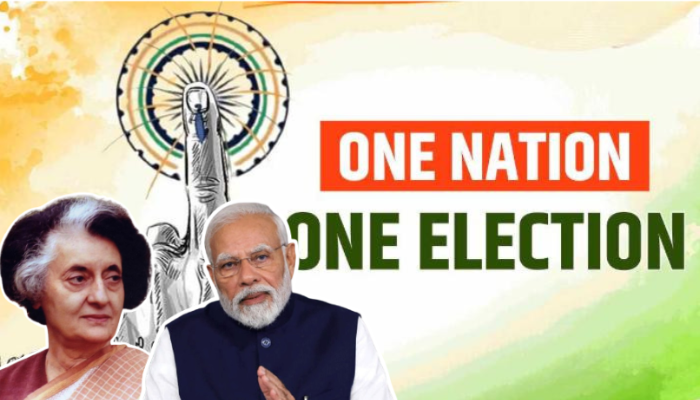
India’s democratic system, which allows citizens to actively influence governance at all levels, rests on the strength of its electoral process. However, a nation with over 1.4 billion people and the potential third-largest economy in the world shouldn’t be constantly engaged in elections. Therefore, the purpose of the “One Nation, One Election” bill, which was presented to the Parliament last December, is to bring an end to the country’s endless election cycle.
The Bharatiya Janata Party (BJP), which leads the National Democratic Alliance (NDA), is preparing to implement the party’s long-standing electoral promise across the country to streamline the complicated process, lessen the burden on the country’s resources and save valuable time. The idea, commonly known as simultaneous elections, proposes scheduling the elections for the state legislature and the Lok Sabha on the same dates. Voters would be able to exercise their democratic right to vote for both levels of government in their constituency and on the same day, even though the exercise might occur in phases across the country. The strategy seeks to minimize interruptions brought on by frequent elections, address logistical issues and cut expenses by coordinating these election calendars.
In 2024, the high-level committee report on simultaneous elections in India was published, offering an extensive implementation plan for this goal. On 18th September 2024, the union cabinet approved its recommendations, which was a major step in the direction of electoral reform that could enhance administrative effectiveness, lower election-related expenses and encourage policy stability. The idea of “One Nation, One Election” has surfaced as an essential development that specifies thorough consideration and acceptance as India seeks to streamline governance and maximize its democratic procedures.
Historical background
In India, simultaneous elections are not a novel concept. Elections to the Lok Sabha and the state legislative assemblies were held concurrently from 1951 to 1967 after the Constitution was ratified. Three more general elections took place in 1957, 1962, and 1967, maintaining the trend of holding the first general elections to the Lok Sabha and state assemblies together from 1951 to 1952.
The first general elections in 1952, which were followed by elections for the president and vice president, marked the beginning of the nation’s experiment with simultaneous Lok Sabha and assembly elections. “One Nation, One Election” was last observed in India in 1967. There were 3,563 assembly seats and 520 Lok Sabha seats at stake in the nation’s fourth general elections. The majority of the polling took place from the 15th to the 21st of February. Most states had just one phase of the election but Uttar Pradesh underwent four.
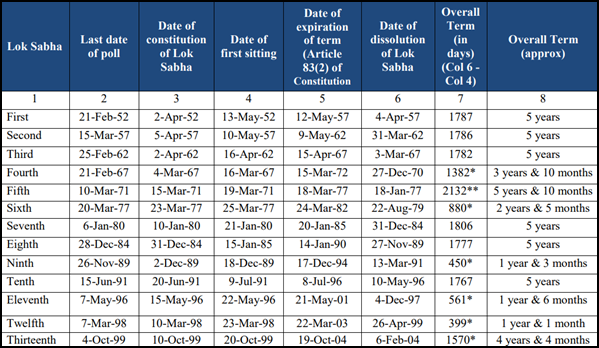
However, the early dissolution of certain state legislative assemblies in 1968 and 1969 interrupted this cycle of synchronized elections. Additionally, the fourth Lok Sabha was dissolved early in 1970, and new elections were conducted in 1971. The fifth Lok Sabha’s term was prolonged until 1977 under article 352 due to the imposition of “Emergency,” in contrast to the first, second and third Lok Sabhas, which all completed their entire five-year terms. The eighth, tenth, fourteenth, and fifteenth Lok Sabha terms are the only ones that have spanned the entire five years since then while the sixth, seventh, Nnnth, eleventh, twelfth and thirteenth were among the others that were dissolved early.
Over the years, state assemblies witnessed similar interruptions. Term extensions and premature dissolutions are now frequent problems. The current pattern of staggered electoral schedules across the nation is the result of these events, which significantly disrupted the cycle of simultaneous elections.
Image via Press Information Bureau (*Mid-term polls were held. Dissolution took place before the elections.**Extension due to proclamation of Emergency).
India saw significant social and political transformations after the 1962 elections. The battle between China and India demoralized people. Pandit Jawaharlal Nehru, the nation’s first and longest-serving prime minister, died on 27th May 1964. Lal Bahadur Shashtri, who signed a statement to end the 1965 India-Pakistan war, replaced him. He passed away in Tashkent on 11th January 1966. A two-year drought was then plaguing many regions of the nation and anti-incumbency sentiment was fueled by an astounding price increase.
On 24th January 1966, Pandit Nehru’s daughter Indira Gandhi assumed leadership of the country amid these challenges when she defeated Morarji Desai in the election of the leader of the Congress Parliamentary Party (CPP). As evidenced by the 1967 polls, this caused a split between Indira and Congress veterans like Desai. Meanwhile, parties including the Bharatiya Jana Sangh (BJS) led by Pandit Deendayal Upadhyay, the Swatantra Party headed by C Rajagopalachari and J B Kripalani as well as the Samyukta Socialist Party (SSP) helmed by Ram Manohar Lohia, the opposition went through a significant revival.
The Congress had been accumulating over half of the seats in the Lok Sabha and the assemblies till 1962. The SSP was founded by Lohia in 1964 in opposition to the Congress. His catchphrase, “Congress hatao (remove Congress)” helped him win a seat in the Lok Sabha in a 1963 by-election from Farrukhabad, Uttar Pradesh.
Political assertions of farming groups and strong opposition exacerbated Congress’ problems
Following the Green Revolution, there was an increase in political assertiveness by farming groups in addition to the struggle of the opposition parties against the Congress. The opposition parties made an effort to capitalize on their dissatisfaction by mobilizing these groups with slogans such as Lohia’s “Pichhade Paavain Sau Mein Saath (Other Backward Classes must get 60%),” which was crucial for undermining the Congress in North India. Furthermore, in states like Tamil Nadu, the Congress was defeated owing to the alliance between the Dravida Munnetra Kazhagam (DMK) and the Swatantra Party.
According to the 1961 census, 43.87 crore people were living in the country, but there were only 25.03 crore electors in that year. Voters above the age of 21 could cast votes. The turnout was 61.33%, the highest since 1952, per the surveys. The Congress won 283 seats out of 520 to gain a majority in the Lok Sabha, however despite maintaining a 40.78% vote share, this was the party’s lowest number since 1952. With 44 seats, the Swatantra Party became the main opposition in the lower house.
DMK obtained 25 seats, SSP secured 23, PSP (Praja Socialist Party) won 13, Communist Party of India (CPI) claimed 23 and Communist Party of India-Marxist (CPM) gained 19 while the BJS succeeded in 35 seats. The Swatantra Party also became the main opposition in a few states. As a result of the grand old party’s defeat, the opposition parties formed the Samyukta Vidhayak Dal (SVD) to create coalition governments in several states. Despite being the largest party in 13 assemblies, the Congress failed to secure a straight majority in states such as West Bengal, Punjab, Rajasthan, Bihar, and Uttar Pradesh.
Significant defections to the Congress in a few of the states resulted in the establishment of SVD governments in those states. Before the elections in Bengal, Ajoy Kumar Mukherjee left the Congress to start the Bangla Congress. On 1st March 1967, he took the oath of office as chief minister of the SVD. On 5th March 1967, Mahamaya Prasad Sinha, the only MLA (Member of the Legislative Assembly) of his party’s Jan Kranti Dal was sworn in as chief minister of Bihar as he became the leader of the SVD. A few days later on 8th March 1967, Gurnam Singh of the Akali Dal was elected as the chief minister of the SVD in Punjab. Rao Birender Singh quit the Congress to start the Vishal Haryana Party in Haryana and on 24th March 1967, he also took office as the chief minister of the SVD.
Other opposition figures who became chief ministers were Rajendra Narayan Singh Deo of the Swatantra Party in Odisha on 8th March 1967, E M S Namboodiripad of the CPM-led United Left Front in Kerala on 6th March 1967 and C N Annadurai of the DMK in Madras on the same date. Chaudhary Charan Singh departed the Congress on 1st April 1967 and on 3rd April he took the oath of office as chief minister of Uttar Pradesh from the SVD. Similar events occurred in Madhya Pradesh where on 30th July 1967, Congress dissident Govind Narain Singh was sworn in as the first non-Congress chief minister. The Congress fell four seats shy of a majority in Rajasthan. Governor Hukum Singh was accused of engaging in “mockery of democracy” despite administering the chief minister’s oath to Congressman Mohanlal Sukhadia.
More than a dozen parties, ranging from the far right to the far left, formed some of these governments. However, a few months after they were established, the SVD governments began to fall apart. Midterm elections were held in 1968-69 in several states, including Haryana, Punjab, Uttar Pradesh, Bihar and Bengal. Politics in these states has become progressively unstable ever since.
How Indira Gandhi broke the “One Nation One Election” cycle
The prime minister at the time, Indira Gandhi addressed the country on the evening of 27th December 1970. The announcement made by Indira Gandhi on the chilly winter night shut down the election process for decades until the country tried to switch back to the previous system of simultaneous polling. “In the present situation, we cannot go ahead with our proclaimed programme and keep our pledges to our people,” she pronounced while stating that the dissolution of the Lok Sabha was taking place fifteen months ahead of its term. She added, “We are concerned not merely with remaining in power but with using that power to ensure a better life for the vast majority of our people.”
The Lok Sabha was dissolved for the first time after India’s independence. After being expelled from the Congress, Indira Gandhi led a minority administration that was put together with the help of the DMK and other regional parties. She would have served as prime minister until February 1972 but she craved more than just power. She desired to hold an absolute grip on authority. The legislative election would be separated from the state elections due to her decision to dissolve the lower house and organise the general election fifteen months early.
The simultaneous poll cycle, which would become gradually obstructed in later decades, fell apart in 1971 when Prime Minister Indira Gandhi decided to hold the Lok Sabha elections 15 months ahead of schedule. However, several states had already conducted mid-term assembly elections, including Bihar (1969), Haryana (1968), Kerala (1970), Punjab (1969), Uttar Pradesh (1969) and Bengal (1969). Only a few states, including Bengal, Tamil Nadu and Odisha went through the 1971 assembly elections and the Lok Sabha elections.
Interestingly, in 1967, the Election Commission of India (ECI) considered setting a set time for synchronized elections to avoid issues for governments when the budget sessions started. “The best time for holding simultaneous general elections all over the country is the first week of March rather than the third week of February, but, unless the financial year is changed, e.g., to the year commencing on 1st July, we shall have to follow more or less the programme adopted as at this year’s general elections and, both at the centre and in the states, the first budget session of the newly constituted houses will have to be hustled through at the start,” read ECI’s report for the 1967 polls. Nevertheless, as the nation hasn’t undertaken simultaneous elections since such plans have remained a pipe dream.
Congress’ infighting and eventual split
The development took place throughout the 1960s, a time of significant upheaval and change within the Indian National Congress which observed a period of disintegration in the late 1960s following the passing of Jawaharlal Nehru and Lal Bahadur Shashtri. Following Prime Minister Lal Bahadur Shastri’s unexplained death, Indira Gandhi was sworn in as prime minister with the backing of the “Syndicate,” which was not supportive of her otherwise. She was not, however, the leadership’s preferred candidate as an unofficial faction predominated the party. K Kamraj, Atulya Ghosh, Neelam Sanjiva Reddy, S Nijalingappa, SK Patil and Biju Patnaik were among the members of the influential “Syndicate.”
While Morarji Desai, who also aimed for the prime minister’s chair, had to be content to be her deputy, Indira Gandhi was given the top position. Except for her brief tenure as the Information and Broadcasting Minister in the Shashtri Cabinet, Indira Gandhi’s qualifications had not yet been put to the test, even outside the Congress fold. Ram Manohar Lohia, a socialist mainstay, even called her a goongi gudiya (the dumb doll) after she seemed too apprehensive to read aloud a Budget speech. Indira Gandhi knew she was not very popular with her party members, especially the “Syndicate” and as a result, she began to solidify her standing with the general public.
According to Tariq Ali’s book “The Nehrus and the Gandhis,” an aggressive Indira Gandhi had sprung into the central ring, defying K Kamaraj’s belief that she was “a pliable, weak lump of clay they could mould and remould.” She ran a vigorous campaign with the slogan “Garibi Hatao (remove poverty)” during the 1967 Lok Sabha election. Her views on privy purse and bank privatization did not sit well with Morarji Desai and the “Syndicate.” She was expelled from the Congress in November 1969 for “violating party discipline” due to growing criticism within the party.
Pupul Jayakar in “Indira Gandhi A Biography” remarked, “The Syndicate had never forgiven her (Indira Gandhi) for the independent stand she had taken on vital issues relating to the country.”
Indira Gandhi’s new party
When President Dr Zakir Hussain died on 3rd May 1969, his selection of his successor intensified internal strife within the Congress that was in power. After being ousted, Indira Gandhi launched a new party, the Indian National Congress (Requisitionists), in opposition to the Indian National Congress (Organisation), which was headed by K Kamaraj and then Morarji Desai. This was a watershed moment in the history of the party and triggered political unrest throughout the nation. While alternative governments were established in some states, the president’s power was invoked in others.
Indira Gandhi’s party then partnered with the DMK and other left-wing parties to create a minority administration to maintain its grasp on power. President VV Giri dissolved the Lok Sabha on her recommendation. Inder Malhotra in “Indira Gandhi: A Personal and Political Biography” revealed, “Indira’s government after the split was vulnerable, and she was advised by (her secretary) PN Haksar to call a midterm election in 1971 to get the popular endorsement of her policies.”
Political scientist Myron Weiner mentioned that Indira Gandhi called the polls a year earlier in 1971 due to some factors, including the Congress’ loss in the 1967 elections, a period of drought, rising prices, two wars with Pakistan, increasing corruption, the decision to devalue the rupee, and the deaths of two prime ministers in quick succession. Despite the risks involved in the choice, Indira Gandhi’s risk paid off. The Indian National Congress (Organisation) was only able to secure 16 seats in the lower house, whereas Indira Gandhi’s Congress ultimately garnered almost 43% of the vote or 352 seats out of 518.
Therefore, Indira Gandhi’s hasty dismissal of the Lok Sabha led to an early election in March 1971, which otherwise would have happened in 1972. This was the first time Parliament had been dissolved before its entire term in India’s twenty-three years of independence. Indira Gandhi successfully separated the cycle of the national election from that of the state assembly, whose terms were not yet over, by pushing up the polls.
Notably, some states had already switched to a separate poll calendar, even though Indira Gandhi’s decision to conduct the general election early was a major element in ending the simultaneous vote cycle. The ‘first elected Communist administration in the world’ was the Kerala government under E M S Namboodiripad, which Prime Minister Jawaharlal Nehru recommended President Rajendra Prasad to overthrow as early as July 1959.
The Kerala government was dissolved on the grounds that it was unable to govern in accordance with the constitutional mandate, which historian V Krishna Ananth described as “a significant abuse of Article 356 of the Constitution.” Midterm elections were forced upon non-Congress state governments after they were overthrown in 1968 in Haryana, Bihar, Punjab and Uttar Pradesh. West Bengal’s precarious administration also fell.
Prime Minister Narendra Modi also stated that Indira Gandhi “misused” Article 356 of the Constitution 50 times to overthrow elected governments. Therefore, unstable state administrations were removed from the simultaneous election calendar, and Indira Gandhi’s 1970 decision ensured that the parliamentary election and the state polls would be held individually.
Steps taken by BJP-led central government regarding “One Nation, One Election”
The Election Commission reintroduced the idea of simultaneous polling in 1983 and the BJP pledged to bring back “One Nation, One Election” in 1984. The Law Commission also recommended simultaneous elections in its report (Justice BP Jeevan Reddy) in 1999. The BJP after storming to power in 2014 has taken the initiative to bring back “One Nation, One Election” and has even started the process. NITI (National Institution for Transforming India) Aayog in 2017 reaffirmed the 79th Parliamentary Standing Committee report’s support for simultaneous elections in 2015 which was an integral part of the saffron party’s election manifestos for 2019 and 2024. The BJP-led NDA government even hosted an all-party meeting on the issue in 2019.
Former President Ram Nath Kovind chaired the High-Level Committee (HLC) established by the NDA Government in September 2023. After six months of deliberations, the panel delivered its report to President Droupadi Murmu in March 2024. The Constitution (129th Amendment) Bill and the Union Territories Laws (Amendment) Bill were introduced by the centre in December 2024 and both were referred to a Joint Parliamentary Committee for further consultation.
A tiered strategy to synchronize elections was laid out in the 18,000-page Kovind report. Lok Sabha and state legislative assemblies will be held first, followed within 100 days by local body elections. Of the 47 political parties that responded to the panel, 32 supported simultaneous elections. The idea, according to these parties, which include the BJP, the Biju Janata Dal (BJD), the Janata Dal-United (JDU), and the Shiv Sena, will preserve social harmony, save limited resources and promote economic growth.
The state assembly’s term is also not shortened to fewer than five years under the bill. The same is guaranteed by Articles 83 and 172. The articles of the Lok Sabha and Vidhan Sabha’s mandates, unless dissolved early, were meticulously crafted by our Constitution’s founders to be no more than five years. The report discussed the possibility of amending the constitution to introduce an extra article 82A, which would change the period of state assembly and align their terms with that of the Lok Sabha.
Both the Lok Sabha and the Rajya Sabha will need to pass several tests for several constitutional amendments that address the span of the state and Lok Sabha assemblies, the duration of the assemblies in the three Union Territories (Jammu and Kashmir, Delhi, and Puducherry), elections in urban and rural wards, and a single electoral roll.
The single electoral roll is one of the bill’s overlooked but crucial proposals. With the introduction of EPIC or Elector’s Photo Identity Card, the committee advised that simultaneous elections must enable the Election Commission and multiple state election commissions to coordinate their operations in order to prepare a single electoral roll. This will provide a self-correction mechanism by replacing the traditional voter card and doing away with voting redundancy.
“Another measure that promises to redefine the terms of good governance is the Bill introduced in Parliament to synchronise election schedules in the country. The ‘One Nation, One Election’ plan can promote consistency in governance, prevent policy paralysis, mitigate resource diversion, and reduce the financial burden, apart from offering many other benefits,” pointed out President Droupadi Murmu in her Republic Day speech.
PM Modi has regularly advocated for the same. “After independence, elections at the state and central levels were held together for a long time. But over time, this pattern broke down, causing significant challenges for the country. Today, there is an important debate about ‘One Nation, One Election.’ Holding the Lok Sabha and state elections simultaneously could alleviate disruptions and enable a more focused governance approach,” he highlighted while addressing a National Cadet Corps (NCC) rally on 27th January.
In reality, “One Nation, One Election” is a pursuit of the original concept that was executed at the beginning of our growing Republic rather than a fresh start. Beyond history, though, the concurrent Lok Sabha elections and elections in Odisha, Andhra Pradesh, Arunachal Pradesh and Sikkim are evidence of India’s blossoming federalism. There have been six simultaneous elections in the state of Maharashtra, five in Haryana and three in Jharkhand, one of India’s newest states which are a testament to the country’s towering democratic traditions.
On Monday, 27th January, the Supreme Court stated that illegal religious conversion is not “as serious a crime” as murder, theft, rape, or dacoity. The court opined this while granting bail to a Maulvi who had deceptively converted a mentally challenged boy to Islam.
Justices JB Pardiwala and R Mahadevan meanwhile also slammed the trial court and the high court for not exercising their discretion while considering the bail plea. “There was no good reason for the High Court to decline bail. The offense alleged is not that serious or grave like murder, dacoity, rape, etc,” the duo said.
“Every year so many conferences, seminars, workshops, etc. are held to make the trial judges understand how to exercise their discretion while considering a bail application as if the trial judges do not know the scope of Section 439 of the CrPC or Section 483 of the BNSS,” the bench said.
“We are of the view that the High Court should have exercised its discretion by granting bail to the petitioner. There was no good reason for the High Court to decline bail. The offence alleged is not that grave like murder, dacoity, rape etc. We can understand that the trial court declined bail as trial courts seldom muster the courage to grant bail, be it any offense. However, at least, it was expected of the High Court to muster the courage and exercise its discretion judiciously” the court stated further while slamming Allahabad High Court for denying the bail.
The Maulvi accused of illegal religious conversion was charged under sections 504 (Intentional insult with intent to provoke breach of the peace) and 506 (criminal intimidation) respectively of the IPC and Sections 3 and 5 of the Uttar Pradesh Prohibition of Unlawful Conversion of Religion Act, 2021.
The court slammed the lower courts and said that the case shouldn’t have reached the top court. The trial court should have granted bail, if not, the higher court should have. “We fail to understand what harm would have befallen the prosecution if the petitioner would have been released on bail subject to appropriate terms and conditions,” the Supreme Court said.
“Discretion does not mean that the judge on his own whims and fancy declines bail saying conversion is something very serious,” it added.
Cases of illegal conversions in India
It is crucial to note that illegal religious conversions where the victims are misled, threatened and even blackmailed to convert have constantly emerged in the last few years. Islamists torture victims, especially women, assault them, and harass them mentally before forcing them to convert to Islam. On the other hand, Christian missionaries target poor tribals and lure them with money, superstitions, and food grains before forcing them to embrace Christianity.
Recently, a young Hindu woman committed suicide after being raped, cheated, and forcefully converted to Islam by accused Faraz Attar, from Shahdara in Delhi.
On 26th January, Lakhimpur Kheri police arrested two individuals, Baburam and Pastor Pramod Kumar Balmiki, over allegations of forced religious conversions in Bejham village under Neemgaon police jurisdiction. The two missionaries lured villagers into conversions with false promises, including healing powers, rice, and magical water. The accused also coerced individuals to abandon Hindu practices by removing their tilak and idols of deities from their homes.
In the given case, the accused Maulvi who converted a mentally challenged boy to Islam had been in custody for 11 months. The petitioner demanded bail saying that the allegations were not that serious. Meanwhile, the state argued that the charges included sections 504 and 506 of the Indian Penal Code, along with provisions of the state’s anti-conversion law, which prescribes a maximum penalty of up to 10 years in prison.
Rejecting the objections, the court bench clarified that keeping the accused in custody during the bail period was unnecessary, as prolonged detention could not be justified solely on the gravity of the allegations. The bench reiterated that the lower courts would have exercised their rights and shouldn’t have allowed the case to reach the top court. The Allahabad HC had denied bail to the Maulvi in May 2024.
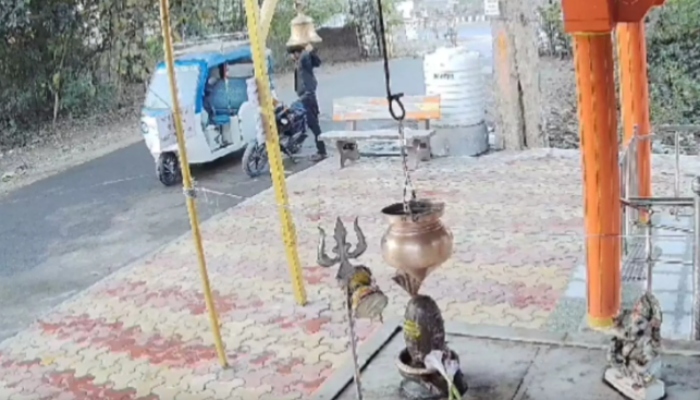
On Monday, 27th January, an auto-driver identified as Mohd Ishaq Khan threatened Hindu temple authorities for playing Hanuman Chalisa in the Bilaspur district of Chhattisgarh. He said that if the authorities had so much urge to ‘showcase’ love for their religion, they should go to Ayodhya where a huge Ram temple has recently been built. He also said that if the rendition of ‘Hanuman Chalisa’ was not stopped, he would vandalize the premises.
“If you are so much fond of becoming a Hindu, then go to Ayodhya. Don’t keep on doing ‘Hindu-Hindu’ here, otherwise, I will remove the ‘chonga’ from the Mandir and throw it away,” he threatened using abusive language as he asked the authorities to stop playing Hanuman Chalisa on speaker.
The video of the incident has gone viral over the internet in which the accused can be seen arriving in his vehicle and threatening the temple authorities. He also used vulgar language to threaten the temple authorities and made offensive remarks against Hindu deities.
"If you are so fond of becoming a Hindu, then go to Ayodhya (abusive language). Don't keep saying 'Hindu-Hindu' here, otherwise I will remove the 'chonga' from the Mandir and throw it away (abusive language)."
The incident sparked outrage among the community raising communal tensions. The Hindus started protesting against the event and demanded strict police action against the accused. Dhananjay Giri Goswami, a member of the Hindu Sanatani Group, said that Ishaq Khan needed to face the law as he had made derogatory comments about Hindu deities and abused Hindu religion.
“The sound from the temple causes discomfort to him. Who is going to tell him that the sounds of Azaan that come out of Masjids five times a day also cause discomfort to many? How dare he talk about other religions when his own religion practices the same? Ishaq Khan constantly talks against Hindus. Now this can’t be tolerated. We would continue to recite and play Hanuman Chalisa here. He can’t tell us what to do and what not to do,” Goswami was quoted as saying.
The incident is believed to have happened on the 27th of January morning at 7 AM. The Hindus gheraoed the police station after the video of the incident went viral over social media. They demanded the strictest punishment against the accused person.
OpIndia contacted the Bilaspur Police Station to know whether the FIR in the case had been filed. Later the police returned the call and confirmed that the accused had been arrested and charged under sections 170 (Arrest to prevent the commission of cognizable offenses), 126 (security for keeping the peace), and 135 (prevention of a breach of the peace or disturbance of the public tranquillity), and 3 of the Bharatiya Nyay Suraksha Samhita, 2023.
The police also confirmed that the arrest was immediately executed by the Police in an attempt to maintain peace within the district.
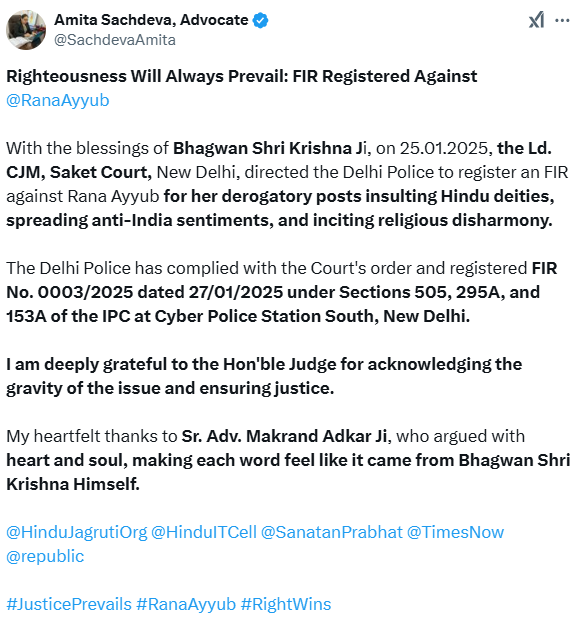
On 27th January, the Cyber Police Station South, New Delhi, lodged an FIR against propagandist and alleged journalist Rana Ayyub following directions from a Delhi Sessions Court. The FIR was filed based on a complaint by Advocate Amita Sachdeva under Sections 505, 295A, and 153A of the Indian Penal Code (IPC). OpIndia accessed the court order and the complaint filed by Advocate Sachdeva.
Advocate Amita Sachdeva confirmed an FIR has been lodged against Rana Ayyub. Source: X
FIR details
OpIndia accessed copy of the FIR registered by the police. According to the FIR, the complainant has accused Rana Ayyub of using her platform to insult revered Hindu deities, malign Indian unity, and incite hostility against India, including disparaging the Indian Army. The FIR highlighted that the case was registered following directions from the Delhi Sessions Court (Saket, South District) of Chief Judicial Magistrate Himanshu Raman Singh.
What the complainant said
In her complaint, Advocate Sachdeva said that Rana Ayyub had made multiple derogatory social media posts on X (formerly Twitter) between 2013 and 2017. These posts insulted revered Hindu deities, spread anti-India sentiments, and incited religious disharmony. She argued that such posts, amplified by Ayyub’s public profile, were provocative and intended to disturb communal harmony.
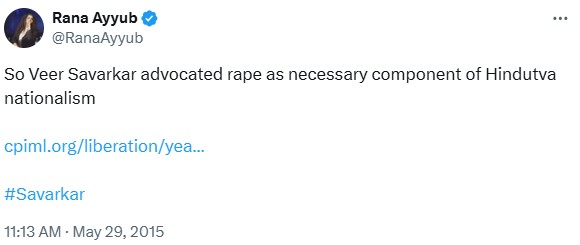
Advocate Sachdeva cited several examples of Ayyub’s posts to highlight her constant misleading claims and anti-Hindu rant. For instance, in a post against Veer Savarkar and Hindutva, Ayyub wrote, “So Veer Savarkar advocated rape as a necessary component of Hindutva nationalism.” Advocate Sachdeva categorically called the post baseless and inflammatory, adding that it sought to defame a revered historical figure and attack the Hindutva ideology, which is central to millions of Hindus.
Post on X (formerly Twitter) by Rana Ayyub against Savarkar and Hindutva. Source: X
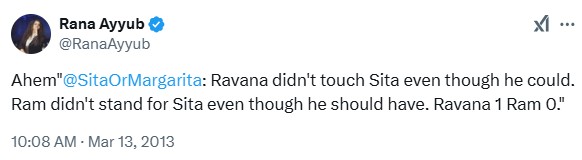
In another post from 2013, Ayyub mocked Bhagwan Ram and wrote, “Ravana didn’t touch Sita even though he could. Ram didn’t stand for Sita even though he should have. Ravana 1 Ram 0.” Advocate Sachdeva said that this post demeaned Bhagwan Ram, glorified Ravana, and insulted the core beliefs of Hindus.
Post on X (formerly Twitter) by Rana Ayyub against Bhagwan Ram. Source: X
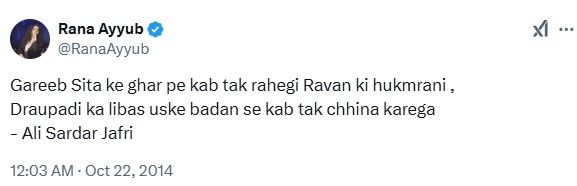
In another post from 2014, Ayyub, according to Advocate Sachdeva, trivialised the ordeals of revered figures like Mata Sita and Draupadi and wrote, “Gareeb Sita ke ghar pe kab tak rahegi Ravan ki hukmrani, Draupadi ka libas uske badan se kab tak chhina karega.” The complainant argued that this statement crossed all boundaries of decency and mocked the sanctity of Hindu traditions.
Post on X (formerly Twitter) by Rana Ayyub against Mata Sita and Draupadi. Source: X
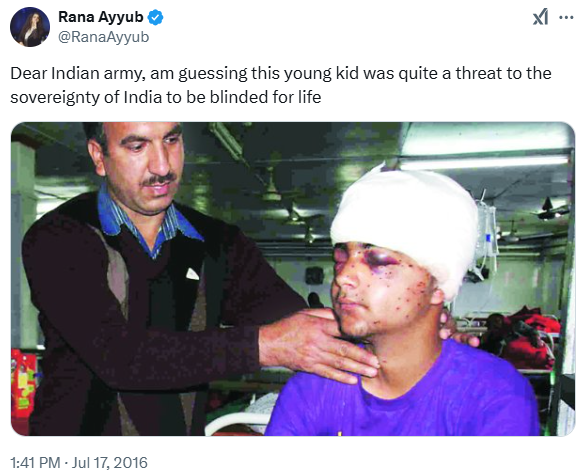
Rana Ayyub also published posts criticising the Indian Army. In 2016, she wrote, “Dear Indian Army, am guessing this young kid was quite a threat to the sovereignty of India to be blinded for life.” The complainant said that this post was an irresponsible and disparaging comment, designed to undermine public trust in the Indian Armed Forces.
Post on X (formerly Twitter) by Rana Ayyub against Indian Army. Source: X
Advocate Sachdeva pointed out that despite filing a complaint with the National Cyber Crime Reporting Portal on 11th November 2024 and repeatedly following up with the Cyber Police Station in South Delhi, no action was taken. The inaction of the police, coupled with the gravity of the offences, prompted her to approach the court.
What the court said
On 25th January, Chief Judicial Magistrate Himanshu Raman Singh of Saket Courts, South District, New Delhi, observed that the allegations presented in Advocate Sachdeva’s complaint disclosed prima facie cognisable offences under Sections 505, 295A, and 153A of the IPC. The court said, “From the facts of the case, prima facie cognisable offences are made out under sections 153 A (punishment for promoting enmity between different groups on the ground of religion, race, place of birth, residence, language, etc.), 295 A (deliberate and malicious acts, intended to outrage religious feelings of any class by insulting its religion or religious beliefs) and 505 (statements conducing public mischief) of the IPC.”
The court noted that state intervention was necessary due to the gravity of the allegations, as the complainant would not be able to collect evidence independently. “The facts pleaded by the complainant are such which necessitate intervention of the state machinery in the form of police investigation and the complainant (advocate) would not be in a position to collect evidence,” the court added.
The court directed the Station House Officer (SHO) of the Cyber Police Station South to file an FIR and conduct a fair investigation into the matter. The court further emphasised the need for expedient action. Following the court order, the FIR was registered by the concerned police station. The matter is listed for hearing on 28th January 2025.
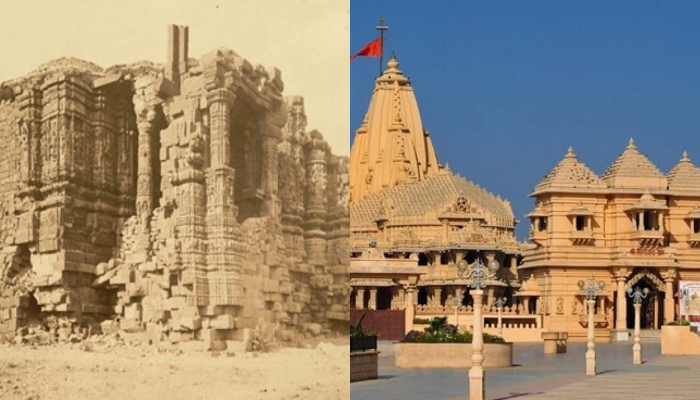
The consecration ceremony of the Ram Mandir (temple) epitomized the culmination of the enduring struggle of Hindus, marked by the sacrifice of countless generations, to revive the indigenous faith of the nation and re-establish Dharma on the holy land of Ayodhya in Uttar Pradesh. Likewise, 74 years ago another historic event was written into the nation’s collective memory – the inauguration of the Somnath Mandir, also called Someshvara.
The majestic temple is situated near Prabhas Patan of Veraval, in the Gujarati state of Saurashtra, along the coast. It is one of Lord Shiva’s twelve sacred Jyotirlingas. The Shiva Purana’s chapter 13 also refers to the temple of Somnath. The temple is mentioned as a spot of pilgrimage in ancient Hindu texts. It is known as Triveni Sangam because of the meeting of the Kapila, Hiran and Saraswati rivers. The moon god, Som, bathed in the Saraswati River to restore his lustre after losing it due to a curse, according to Puranic history.
It is believed to be one of the locations where Lord Shiva manifested as a flaming column of light. The identity of the first shrine’s founder is not recorded in history, nonetheless, it was built many years before the Christian era, based on its mention in the scriptures. A Yadava king of Vallabhipura in coastal Gujarat in 649 was one of the first few rulers to participate in the construction of the temple.
The Chaulukya kings Mularaja, Bhima I and Kumarapala were among those who played a role in rebuilding the temple after frequent invasions. The Chudasama king of Saurashtra, Mahipala I, Paramara king Bhoj of Malwa and his son Khengara rebuilt it again after its destruction.
However, the temple also shares a troubled history akin to that of other prominent Hindu religious places including Ram Mandir. The temple has undergone numerous reconstructions after suffering extensive damage from various Islamic invaders, particularly Mahmud of Ghazni, who launched multiple assaults during the eleventh century. Once reduced to ruins, the temple was restored to its formal glory and it continues serve as a symbol of Hindu renaissance in post-independent India.
Somnath Mandir was formally inagurated on 11th May 1951 by late Rajendra Prasad, then President of India. The journey leading to the significant day was marked by painful memories, including attacks by Muslim tyrants and petty vote-bank politics of the Congress party, yet it also narrated a story of the unwavering determination and remarkable resolve of the Hindu community which resulted in the manifestation of its unwavering belief.
First attack on Somnath: 725 CE
During the Umayyad Caliphate, an Arab named Junayd ibn Abd ar-Rahman al-Murri, also known as Al-Junayd, was appointed as the governor of Sindh. He held power until 726 after being appointed in 723. His reign was an important period in the growth of the Umayyad dynasty in India. He invaded Gujarat and Rajasthan and ravaged, looted and destroyed the Somnath Mandir in 725. During his reign in 815, Nagabhata II, a Gurjar Pratihar monarch, visited the location. He discovered the temple was nearly destroyed. Red sandstone was used to rebuild the temple by him.
The rise of Mahmud of Ghazni
Medieval India’s history underwent an unprecedented shift with the advent of the Yamini Turks. The onset of Turkish dominance over Ghazni in Afghanistan forced the Indians to brace themselves for a new phase of barbarism after they had repelled innumerable incursions by the imperious Arabs for many years. The beginning of Turkish rule over the city of Ghazni was the product of Alptigin (Turkic), a slave commander of the Samanid Empire.
The region saw the return of aggressive tactics toward its neighbouring kingdom after the city was secured. The Turks conducted an array of attacks on the northwest regions of India after Sabuktigin took the kingdom of Ghazni later in 977 but they were opposed by Jayapala, the Shahi King of Udabhandapur. However, the Turks won after years of tenacious struggle from the courageous Shahi ruler. The conflict between the Turks and the Indians intensified dramatically when Abu al-Qasim Mahmud ibn Sabuktigin, the former’s son took the throne of Ghazni in 998.
He came to be known as Mahmud of Ghazni and reportedly swore to wage an annual ‘holy war’ against the country of the infidels. He crushed the Shahis after defeating Jayapala’s successors, Anandpala (in 1008) and Trilochanpala (in 1013) and decisively overthrew the Hindu king Jayapala as well as expanding the boundaries of his empire. He conducted at least 12 raids in India, sacking cities and temples just like other Muslim kings and generals.
He attacked Thaneswar in 1011 and destroyed all of the idols there. He burned the temples in Mathura during 1018–1019 and the idols were taken to Ghazni. This devastation persisted for twenty days. Similar to Mathura, Kanauj was pillaged as he increased his fortune due to the loot. However, his siege on Somnath was the most infamous of them all. According to archaeological research, the temple had undergone almost three reconstructions prior to the attack by Mahmud. The temple had been assaulted and destroyed at least six times.
Sack of Somnath: 1025-1026 AD
According to many historians, Somnath Mandir was constructed on enormous slabs of stone, with 56 timber pillars supporting its roof which was shaped like a pyramid and had thirteen levels with fourteen golden domes on top. A Shivalinga, measuring 7.6 feet in height and 4.6 feet in width was situated inside the temple. Furthermore, a 6-foot section of linga was concealed beneath the base. The temple accommodated up to 1000 Brahmans at a time for worship and religious rituals. The temple was a treasure trove of gold, silver, pearls and diamonds. The chamber contained a huge chain of gold that weighed 200 mann.
Mahmud of Ghazni, the cruel monarch of the Ghaznavid Empire, planned the military expedition known as the “Sack of Somnath” between 1025 and 1026 against the Chaulukya dynasty of Gujarat. This invasion resulted in the demolition of the sacred temple followed by strategic captures and pivotal battles. His army succeeded despite fierce opposition and heavy losses. The Hindus who fought to defend their lands and temples bravely opposed the onslaught on Somnath Mandir.
He gave his archer orders to assault and drive out the idolaters to force them to leave the temple. Hindus fought valiantly during the siege, which lasted for several days notwithstanding the lack of hope for victory. A sturdy fort that was guarded by Hindus encircled the Somnath temple at the time. Furthermore, half of the Hindus were likely Brahmans who were inside the temple carrying out their last pre-war ceremony.
The defenceless guardians of Somnath put up a brave resistance when Mahmud ordered a violent charge. The people, armed with only a few weapons fought until nightfall. The Hindus within the temple emerged and attacked the Turks following their earlier advance. The devotion of vulnerable Hindus stood firm against the invasion of a highly skilled military leader whose battered army chose to withdraw. The fort wall was damaged by the Turks, but the Hindus swiftly restored it and when the battle started on the second day, the latter fought even harder.
On the third day, an army of Kshatriyas arrived to support the Hindus. There was complete chaos as a result and numerous groups of individuals stormed inside the temple to defend their deities. However, Mahmud’s brutal tactics aided his wicked goals as the Turks killed over fifty thousand people. Muhammad Khandamir, a Persian historian, stated that over 50,000 people died in the mayhem as they fled inside the temple to battle to the end.
Following this slaughter, Mahmud entered the temple, dismantled the Shivalinga and stole all the riches which totalled over 20,000,000 Dirhams. Notably, the invaders nearly lost sight of their true route when they arrived at Kutch and found themselves on a desolate plain where a Hindu offered to help Mahmud’s exhausted army.
Mahmud’s army was led by the guide, a devotee of Somnath, to the hostile region of the desert devoid of water. The forces were tricked for three days by the Hindu who declared, “I had dedicated my entire life to Somnath and you mercilessly plundered it. Now I have brought you here where there is no water and the army of Hind is waiting to crush you,” in response to Mahmud’s question about their whereabouts. He killed the guide afterwards and fled to safety in the Sind region (perhaps to avoid combat with the Bhima I, who was waiting for Mahmud to pursue this route).
Mahmud stayed away from Bhima I and his army, but the Jats assaulted and tormented his troops and he arrived in Ghazni in 1026 with a hefty treasure taken after massacring innocent Hindus. Mahmud gained the notorious moniker “The Idol Breaker” after he ruined Somnath Mandir. After the temple was demolished, the linga fragments were sent to Ghazni and positioned on Jama Masjid’s stairs to further humiliate Hindus.
“When Sultan Mahmud, the son of Sabuktagin, went to wage religious war against India, he made great efforts to capture and destroy Somnath, in the hope that the Hindus would then become Mohammedans. The Indians made a desperate resistance. They kept going into the temple weeping and crying for help and then they went forth to battle and kept fighting till all were killed. The number of the slain exceeded fifty thousand. The king looked upon the idol with wonder and gave orders for the seizing of the spoil and the appropriation of the treasures. There were many idols of gold and silver, and countless vessels set with jewels, all of which had been sent there by the greatest personages in India. The value of the things found in the temples of the idols exceeded twenty thousand thousand dinars,” Persian Geographer Kazvini professed his joy over the cold-blooded murder of Hindus.
An inscription from 1169 revealed that Kumarapala of the Chaulukya dynasty renovated the temple of Somnath in “excellent stone and studded it with jewels,” which was replaced by a decomposing wooden structure by Mahmud.
Alauddin Khalji’s invasion of Gujarat: 1299 AD
The Muslim Conquest of Gujarat, also known as the Alauddin Khalji Conquest of Gujarat, started in 1299 when the ruler of the Delhi Sultanate, dispatched an army to pillage the Vaghela king Karna’s Gujarat province. Several important cities, including Anahilavada (Patan), Khambhat, Surat and Somnath were razed by his army. Later, Karna managed to retake at least some of his territories. However, in 1304, the Vaghela dynasty was permanently overthrown by Alauddin’s armies in a second invasion, which led to Gujarat’s accession to the Delhi Sultanate.
Ulugh Khan, his brother and general, commanded the Islamist army as they advanced on the Somnath Mandir with the hopes of stealing wealth, however, they encountered opposition there. Two “Vaja” warriors, Malasuta and Padamala, were killed at the entrance of the temple on 6th June 1299, while battling the Turushkas (the Turkic people), according to an inscription.
Alauddin’s forces destroyed the temple after slaughtering the Hindus on his order. Amir Khusrau, gleefully claimed that the temple was angled toward the Kaaba to imply that the Hindu God was subservient to Muslims. Persian poet and historian Hasan Nizami, who lived in the 12th and 13th centuries, also boasted about the looting of Somnath in his book Taj-ul-Maasir, the first official history of the Delhi Sultanate, about Alauddin Khilji. He noted that “more than twenty thousand slaves, and cattle beyond all calculation fell into the hands of the victors,” and that “fifty thousand infidels were dispatched to hell by the sword.”
The Rajput Prince Biram Dev of Jalore targeted the Muslim army as they were making their way back to Delhi with the Shivling, Hindu prisoners and the spoils. They defeated Ulugh Khan and took the Shivling and the treasure. The Hindu inmates were also released. Firoza, Alauddin’s illegitimate daughter, fell in love with Biram Dev. The Sultan pointed out that he should convert to Islam while simultaneously demanding his hand in marriage to his daughter. The marriage proposal was, however, rejected by him after which he attacked Alauddin’s army and seized the Shivling and the loot.
A furious Alauddin dispatched a large force to Jalore. The fight went on unabated for two arduous years. Biram Dev and his father Kanhadadev lost their lives protecting Jalore as many Rajput women committed jauhar. Alauddin’s forces killed all Hindus and ruined the entire Jalore fort as well as demolished all temples. He looked extensively but was unable to find the Shivling or the stolen goods from the Somnath Mandir. The destroyed fort was later transformed into a Muslim monument by him. According to other accounts, after stealing the temple’s riches, he took the main idol to Delhi where the pieces were dumped for Muslims to walk on. Somnath Mandir was then again reconstructed in 1308 by Mahipala Deva, the Chudasama king of Saurashtra.
Zafar Khan’s assault on Somnath: 1395 AD
Muzaffar Shah I, often called Zafar Khan, was the monarch of the Gujarat Sultanate from 1407 to 1411 and belonged to the Muzaffarid dynasty. He was selected as the governor of Gujarat by Tughluq of the Delhi Sultanate, and when Delhi was in disarray after Timur’s assault, he declared independence and formed the Gujarat Sultanate. He was a Khatri or Tank Rajput who converted to Islam. He went to Somnath in 1395 AD, when he destroyed the temple, constructed a Jumma mosque, spread Islam and set up a thana in the city of Somnath Patan, alias Deva Patan.
Mahmud Begada desecrated Somnath: 1451 AD
The Sultan of Gujarat, Mahmud Begada, also called Mahmud Shah I, desecrated the Somnath Temple in 1451. He had also launched an attack on Dwarka.
Portuguese assault on Somnath: 1546 AD
The Portuguese who first landed in India in 1498, when Vasco da Gama arrived in Calicut and ruled over the country from 1505 to 1961 also attacked the Somnath Mandir and took away its riches.
Last destruction of Somnath by Aurangzeb: 1665 AD
During his rule, Aurangzeb, the Mughal despot who captured the throne over the dead bodies of his family members, had ordered temples all around his empire to be destroyed. Although the temple of Somnath was repeatedly destroyed and its valuables plundered by invaders and malevolent foreign forces, it was rebuilt by succeeding emperors to regain its former splendour and grandeur. Hence, Aurangzeb mandated that any temples, including the Somnath, that were rebuilt must be destroyed so that Hindus would not be able to resume worship there.
The Somnath Mandir was vandalized by local Muslims of Prabhas and some of Aurangzeb’s troops under his orders, based on SH Desai’s book Prabhas and Somnath. Hindus flocked to the site in great numbers just as they were ready to demolish the temple. A Muslim official responded by killing two temple priests and butchering a calf. A confrontation broke out between the two groups. When Aurangzeb’s forces were outnumbered by Hindus, they departed the area. Only later, with a larger army, did they manage to demolish the temple and plunder the treasury.
“Local Muslims when came to know about Aurangzeb’s order directing vandalization of idols and closure of temples, tried to implement it with the help of a (local) official named Muhammad Afzal. One day, Muhammad’s troupes and local Muslims together attacked the Somnath temple and started dismantling it. As soon as this news spread Hindus, Desais, Brahmins, Mahajans etc rushed to the spot and asked Muslims not to do this. One Muslim official named Malek Zia insulted Hindus and slaughtered a cow in response. He killed a Brahmin and one priest too,” the book read.
It further read, “Agitated Desai Ganpat Sarangdhar killed Malek Zia followed by an attack on Muslims by Hindus. A clash erupted in Somnath Mandir itself. As the Muslims realized they had fewer armed soldiers, and the entire town had stood up against them, they left the place. Hindus conducted the cremation of dead bodies at Triveni( a ghaat nearby). Hindus were very well aware of the fact that this incident would result in an even bigger attack. Then arrived Fauzdar Sardarkhan who brought an end to turmoil but destroyed the dome and vandalized the Somnath temple.”
“The temple of Somnath was demolished early in my reign and idol worship (there) put down. It is not known what the state of things there is at present. If the idolators have again taken to the worship of images at the place, then destroy the temple in such a way that no trace of the building may be left, and also expel them (the worshipers) from the place,” he released another order in 1704 during his end days.
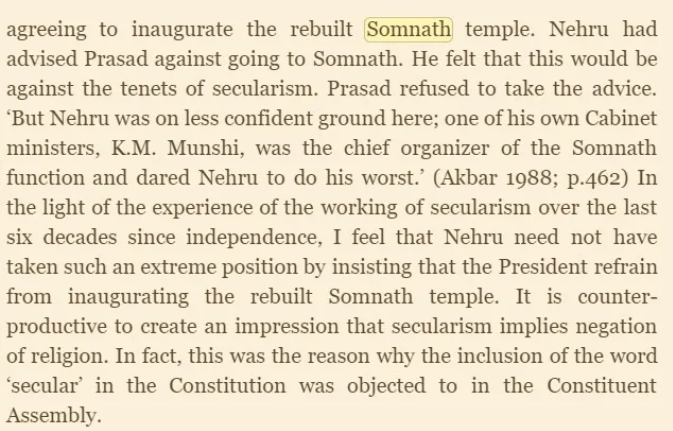
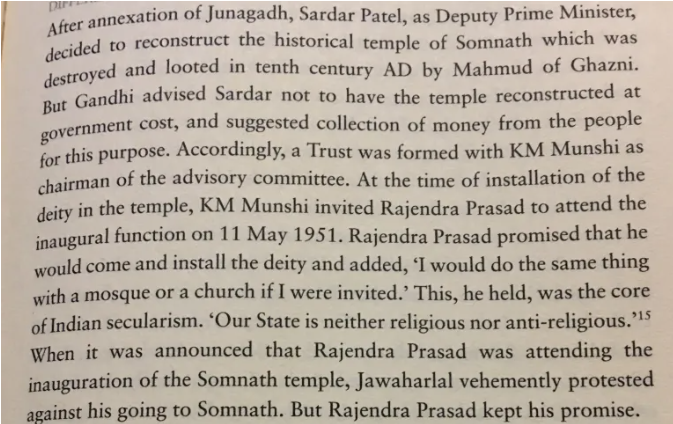
Nehru’s opposition to Somnath Mandir
One might have assumed that Hindus would at least be allowed to freely practice their religion after a century of their rights and beliefs being restricted under the repressive rule of imperial forces. However, former Prime Minister Jawarhar lal Nehru did not want them to have the authority to reclaim their most revered religious places, even after the nation suffered through a brutal religiously motivated separation. More importantly, if former home minister Sardar Patel hadn’t been actively involved in the revival of Somnath Mandir, Hindus would have been compelled to endure a rigorous struggle, just like the Ram Janmabhoomi movement.
On 13th November 1947, Sardar Patel reached Junagarh to a roaring welcome from the state’s citizens, promising to restore the Somnath Mandir. After his return to Delhi, a cabinet meeting decided to reconstruct the temple and determine that the state would cover the costs. However, Mohandas Karamchand Gandhi wanted people to cover its expenses which led to the decision being overturned. He was killed in 1948 and Sardar Patel passed away in 1950 after which Kanhaiyalal Maneklal (KM) Munshi, the cabinet minister at the time became chairman of the trust’s advisory committee, which was tasked with restoring the temple.
“I don’t like your trying to restore Somnath. It is Hindu Revivalism,” Nehru reportedly told Munshi. Bharatiya Janata Party patriarch Lal Krishna Advani described in detail the latter’s correspondence with Jawaharlal Nehru which read:
“Yesterday you referred to Hindu revivalism. You pointedly referred to me in the Cabinet as connected with Somnath. I am glad you did so; for I do not want to keep back any part of my views or activities. I can assure you that the ‘Collective Subconscious’ of India today is happier with the scheme of reconstruction of Somnath sponsored by the Government of India than with many other things that we have done and are doing. The intention to throw open the temple to Harijans has evoked some criticism from the orthodox section of the Hindu community. However, the objects of the Trust Deed make it clear that the temple is not only to be open to all classes of the Hindu community but, according to the tradition of the old temple of Somnath, also to non-Hindu visitors.”
“Many have been the customs which I have defied in my personal life from boyhood. I have laboured in my humble way through literary and social work to share or reintegrate some aspects of Hinduism, in the conviction that that alone will make India an advanced and vigorous nation under modern conditions. It is my faith in our past which has given me the strength to work in the present and to look forward to our future. I cannot value India’s freedom if it deprives us of the Bhagavad Gita or uproots our millions from the faith with which they look upon our temples and thereby destroys the texture of our lives. I have been given the privilege of seeing my incessant dream of Somnath reconstruction come true. That makes me feel – makes me almost sure – that this shrine once restored to a place of importance in our life will give to our people a purer conception of religion and a more vivid consciousness of our strength, so vital in these days of freedom and its trials.”
When the Somnath Mandir underwent reconstruction in 1951 Dr Rajendra Prasad was invited by KM Munshi to officially inaugurate the temple and install the Jyotirlingam. There are multiple accounts of Jawaharlal Nehru’s strong opposition to his participation in the occasion. Madhav Godbole, a former Indian bureaucrat, in his book “The God Who Failed: An Assessment of Jawaharlal Nehru’s Leadership” remarked:
The reference is found on page 462 of MJ Akbar’s “Nehru the Making of India.”
Nehru’s contempt for the renovation of the Somnath Temple is further defined on page 53 of RNP Singh’s book, “Nehru, a Troubled Legacy.”
The letter Nehru addressed to Dr Prasad explaining his reasons for not wanting him to attend the Somnath Mandir’s inauguration can be read in another book by Rajnikant Puranik. “I confess that I do not like the idea of your associating yourself with a spectacular opening of the Somnath Temple. This is not merely visiting a temple, which can certainly be done by you or anyone else but rather participating in a significant function which unfortunately has several implications,” the former wrote.
Somnath Mandir suffered through numerous instances of destruction and plunder in the most severe manners and it even encountered opposition from the Prime Minister of independent India. Nevertheless, those who have opposed and attacked the temple have been muted by the relentless passage of time, as it stands proudly, esteemed by countless Hindus across the globe.