Home Blog Page 5886

The ‘lynched’ man for whom Harsh Mander’s ‘Karwan e Mohabbat’ did a spontaneous ‘fund collection’ comes back alive

0

A bizarre story has emerged from Bihar. Krishna Manjhi, previously believed to be murdered in a case of mob lynching, has returned from the dead. The Police say that his dead body was identified by his wife and father. Investigations are currently underway to discover the accurate identity of the murdered individual.


Twenty-three people were even arrested for the murder of Krishna Manjhi. The wife claims that she was told by the Police that it was her husband and the Police had identified the person based on the clothes worn by the corpse. Meanwhile, Manjhi himself says that he had gone out of town to work but he wasn’t aware that he had been murdered in the meantime.

Meanwhile, Harsh Mander’s ‘Karwan e Mohabbat’ had used the ‘lynching’ to peddle the narrative of rising hate crimes in the country. The wife of the deceased, Rudhi Devi, is a poor woman and a mother of six. Mander wrote, “Everyone in the Karwan e Mohabbat delegation was badly shaken and moved by our encounter with Rudhi Devi, her children and her husband’s father. People who had joined the Karwan quietly made a spontaneous fund-collection of money we carried in our pockets, which they silently pressed this into Rudhi Devi’s hands. She did not resist. But we knew that this would only help the family survive through a few more weeks. What would happen after that?”

Read: Harsh Mander’s article shows how ‘seculars’ are the real bigots and believers of the 2-nation theory

He continued, “Two senior volunteers in the Karwan e Mohabbat – Anwar ul Haque who heads our work with homeless people, and Ibrahami, a retired IAS officer from Bihar – decided that they would do nothing until they were able to extract some promise from the state administration for action to sustain the survival with dignity of Rudhi Devi, her children and her father-in-law.”

Mander concluded with the following words, “But the whole day, I could not forget the faces of Rudhi Devi and her children, the faces which Gandhiji had advised us to recall in times of uncertainty and confusion. I thought also of the talisman which the Mahatma had given us in his last months among us before he fell to the forces of hate. It is evident that we, his people, have lost his talisman somewhere in the blinding glitter of our wealth and the heady intoxication of our hate. How many generations will pass, I wondered, before we find his talisman again?”

The only good thing that has emerged from the entire fracas, it appears, is that the poor family received some monetary assistance from Harsh Mander, hopefully.

Muslim parties to file review petition against Ram Janmabhoomi judgement, AIMPLB decide to reject 5-acre alternate land

The All India Muslim Personal Law Board (AIMPLB), on November 17, said that it has decided to file a review petition in the Supreme Court of India against the Ram Janmabhoomi case verdict.

According to the reports, the AIMPLB after holding a crucial meeting on Sunday decided to challenge the Supreme Court order by filing a review petition on the Ram Janmabhoomi judgement that was delivered by the top court on November 9.


“We have decided to file a review petition in the SC. Since the SC, in its judgement, said that the mosque was not built by demolishing a temple, still the mosque was not given to us. So, we will file a review petition and ask for what is rightfully ours,” said Arshad Madani of the Jamiat Ulema-i-Hind. He also said that though they are sure the review petition will be thrown out, one must be filed.

Reportedly, the AIMPLB has also decided to reject the 5-acre land which was promised by the Supreme Court as compensation. The AIMPLB contended that once a Mosque was built at a spot, it remains there and Shariat does not allow for anything to be accepted in lieu of the same.

Read: A Hindu perennially ashamed and guilty: How narrative after Ayodhya verdict is trying to achieve it

The decision was taken after the Jamiat’s highest decision-making body, the working committee, gave permission to file a review petition following extensive deliberations involving lawyers and experts.

On November 9, in a historic judgement, the Supreme Court had ordered handing over of the disputed Ram Janmabhoomi-Babri masjid land to the Hindu parties, making way for Hindu devotees to have a grand Ram Mandir at the birthplace of Lord Ram.

The court had ordered for the construction of a Ram temple by a government trust at the disputed site in Ayodhya and ruled that an alternative five-acre plot must be found for a mosque in the Hindu holy town.

Earlier on Saturday, the All India Muslim Personal Law Board (AIMPLB) held a brainstorming session with different Muslim parties over the Supreme Court verdict in the Ayodhya case in Lucknow.

The decision to file a review petition comes a week after the UP Sunni Central Waqf Board had welcomed the Supreme Court verdict on the Ram Janmabhoomi case. The Sunni Waqf Board had made it clear that it will not file any review or curative petition against the same.

On Friday, the Jamiat Ulama-e-Hind (JuH), a key Muslim litigant in the Ayodhya title suit, had taken a similar position, stating that they will not be accepting the 5-acre alternative land for building a mosque as mandated by the Supreme Court.

The working committee of Jamiat Ulama-e-Hind had met in Delhi on Thursday, declared that nothing would be acceptable as an “alternative” to a mosque, be it money or land. Jamiat had not ruled out the possibility of going for a review of the Supreme Court verdict.

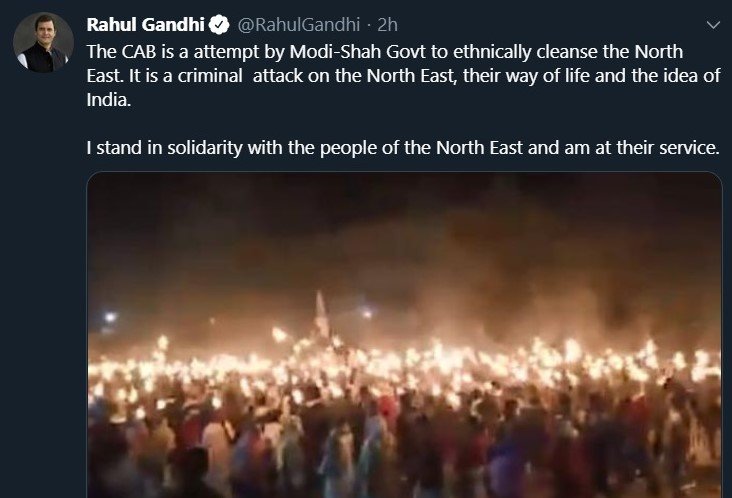
39 bills to be introduced in the Winter session of Parliament including Citizen Amendment Bill: Read what these bills are

‘She is a BJP agent,’ minister in Kamal Nath’s cabinet in Madhya Pradesh loses his cool on Congress worker

Harsh Yadav, a minister in Madhya Pradesh government lost his cool at a recent function organised in Sagar district and lashed out on a female colleague of his and called her a ‘BJP agent’.

As per reports, in a function where Madhya Pradesh Home Minister Bala Bachchan was present, a lot of Congress leaders came up to meet him. When a photo-session was underway, Congress leader Anita Mishra also came up for a photo. Along with Bachchan, Kamal Nath government’s cabinet minister Harsh Yadav was also present. Yadav suddenly lost his cool on seeing Mishra and lashed out on her. “Don’t listen to her, she is a BJP agent. She had worked for BJP during elections,” Yadav told Bachchan about Mishra.

Read: Madhya Pradesh: Civic body officials beaten up by Kamal Nath cabinet minister’s supporters for removing birthday greeting hoardings

To that, Mishra responded by saying she has been with Congress since past 35 years. After that, she asked another Congress karyakarta to click her picture with Bachchan. Oblivious to this, Bachchan continued meeting and greeting other Congress workers present there.

Remembering Balasaheb Thackeray: A legacy shunned by Shiv Sena within seven years of his death

Seven years ago, on this very day, Shiv Sena icon Balasaheb Thackeray passed away after a long and fruitful life. After his demise on the 17th of November, 2012, he was awarded a state funeral by the government. The entire city came to a grinding halt and hundreds and thousands of people gathered at his funeral to pay their respect to the stalwart.

As respected and revered as Balasaheb was, he never formally held any position in the Shiv Sena. He did not need to, everyone knew who the King was. There’s a certain lesson in there for the current Shiv Sena supremo Uddhav Thackeray who has committed harakiri in his pursuit of the chair of Chief Minister of Maharashtra.

A lot has been said about how Balasaheb would have viewed the Shiv Sena’s conduct post the 2019 Assembly Elections in the state. While politics is a funny sport and people should expect the unexpected, the late stalwart did reserve some very harsh critique for the people his son is now trying to ally with. Uddhav Thackeray has abandoned the BJP and appears desperate to ally with the Congress and the NCP.

Read: Shiv Sena barters ideology for CMship: Agrees to 5% Muslim reservation, no Bharat Ratna for Veer Savarkar as per reports

In an interview to NDTV in 1999, Bal Thackeray had used the term “scoundrel” when asked about the possibility of an alliance with the NCP. He rejected the possibility of any alliance with Sharad Pawar. He said, “It is for a man to decide whether he wants to remain a gentleman or a scoundrel. How can I stop? If anybody is trying to become a scoundrel… Okay. But I will not go along with a scoundrel, whoever he may be.” “I will never, never, an enemy is an enemy,” Balasaheb further said.
[youtube https://www.youtube.com/watch?v=FQfuvkfcIXc]

In January 2012, Balasaheb raked up the issue of Sonia Gandhi’s “foreign origin” during an interview to Saamna, the Shiv Sena mouthpiece. “What love will she have for this country and what is her contribution here,” he asked. “You see what is going on in the country. There is controversy over the Army chief’s age and the matter is in court. Whose reputation is in jeopardy? There is no question of Sonia’s reputation as she is a foreigner,” he said.

Read: Shiv Sena: An untrustworthy ally and a sorry excuse for the party Balasaheb Thackeray built

Balasaheb did not spare Rahul Gandhi either. He said, “He was born yesterday and wants to be prime minister today. Is the PM’s post up for auction?” He had heavily criticized the series of corruption cases during the Congress regime as well. He asserted, “The Yuvraj of Congress (Rahul Gandhi) is very vocal on the corruption by Mayawati. However, he is not saying anything about the corruption by his government.” He also wrote, “His mummy (Sonia Gandhi) is also quiet on the issue. The Prime Minister is also not opening his mouth. The truth is hidden in the silence”.

Balasaheb had even claimed once that it would be better to hand over India back to the British than being governed by Sonia Gandhi. In a video message in November 2012, he said, “Overthrow the Congress governments in the state and at the Centre, which are a ‘cancer’.” It’s no wonder then that Sonia Gandhi was extremely displeased with Pranab Mukherjee when the Congress stalwart met with Balasaheb during his presidential campaign in 2012.

Shiv Sena’s role in the demolition of the Babri Masjid is also well known. It is also a documented fact that Balasaheb never felt apologetic about the entire incident. The Liberhan Commission Report documents the stalwart as saying, “We will not stop now. Hindus have united as never before.  The nation needs a strong united force of Hindus. They want to project the United Hindutva front. We want BJP to be power in New Delhi. Political compulsions compelled BJP to discard the moderate stand of Vajpayee. I am glad that I have breathed life into the Hindus. Since the time of the Muslim invasion, nine centuries back Hindus had lost their souls. The need to get their spine back, I did just that. That Rath even if it is power-driven appeals to the Hindu. Arjun received the Gita from Lord Krishna in a Rath. Anyone who takes to Rath is truly resurrecting the spirit of Hindutva. I am proud of having done that. I am also proud of my organizing skills. Everyone knows that I am the power behind the power — no aspersions on my friend Joshi – the Murli (flute) beautiful (Manohar) notes. Nevertheless, no flute can strike the right notes unless someone who knows how to place the right finger at the right spot at the right time.”

Read: The Liberhan Commission report on Babri Masjid Demolition: 10 things ‘liberals’ don’t want you to read

He continued, “On December 6, 1992, found how much power I gained in inspiring people. In fact, it was a moment of exultation. I also noticed that I had all the power, so long as I swung the mob but the moment I tried to make them turn back from their onwards assault towards the monument, I found nobody would listen to me. You can lead a horse to water, but you cannot stop it from drinking. That is the modern version of the old proverb I learnt during the operation.”

Politics is a funny game. At the end of the day, it is about preserving self-interests. However, in his pursuit of power, Uddhav Thackeray has turned his back on the legacy of his father, the late Balasaheb Thackeray. Everything that the late Shiv Sena stalwart has been shunned by the man who took the reins of the party after his demise. And on the seventh death anniversary of Thackeray, it can be safely said that the apple has fallen very far from the tree.

RSS leader Gagneja murder: NIA chargesheets 11 with Khalistani links, murder aimed to revive Khalistan terrorism

0

The National Investigation Agency (NIA) has filed a charge-sheet against 11 accused persons with Khalistan terror links, including a British national in connection with the murder case of Punjab unit RSS vice-president Brigadier Jagdish Gagneja (retired).

According to the reports, the NIA spokesperson on Saturday said that the agency filed the charge-sheet in the Special NIA Court in Mohali on Friday. The probe agency said that during the investigation, it was found that the killing of Gagneja was part of a trans-national conspiracy hatched by the senior leadership of the Khalistan Liberation Force (KLF).

The main accused is identified as Hardeep Singh alias Shera alias Pahalwaan. The others accused are Ramandeep Singh alias Canadian alias Bagga, Dharminder Singh alias Guguni, Anil Kumar alias Kala, Jagtar Singh Johal alias Jaggi alias Johar, Amaninder Singh alias Mindu, Manpreet Singh alias Mani and Ravipal Singh alias Bhunda have been arrested.

Read: Pakistan’s official song on Kartarpur Corridor features Bhindranwale and other Khalistani terrorists

The NIA has charged all the five accused with murder, conspiracy and under Unlawful Activities (Prevention) Act and the Arms Act.

In October this year, the NIA court had supplied a copy of the charge-sheet in RSS leader Ravinder Gosain murder case after framing charges against the five accused, who were all accused in Gagneja murder case.

According to the charge-sheet, Gagneja’s murder was part of a trans-national conspiracy hatched by senior KLF leadership under targeted killings. He was shot dead by two motorcycle-borne assailants in the Red Cross Market area in Jalandhar, Punjab. He was immediately shifted next day to DMC Hospital in Ludhiana but died on September 22 due to critical injuries.

Read: Former Pakistan army chief says Pakistan will use Kartarpur corridor to revive Khalistani terrorism in India

Reportedly, the killing of RSS leader was one of the firsts in a series of assassinations carried out by the trans-national Khalistan terror group. Eight acts of such targeted killings were executed as part of this conspiracy between January 2016 and October 2017 in Punjab. All the persons targeted belonged to the right-wing organisations.

In its charge-sheet, the NIA said the objective of the conspiracy was to destabilise the law and order situation in Punjab and to revive the Khalistani terrorism in the state. The Punjab government had transferred the cases to NIA after the killing had trans-national links.

The NIA investigations had revealed that funds were supplied from Italy, Australia and the UK to the perpetrators of the killings. These funds were used by the accused to purchase weapons to execute the murders as well as other logistics.

Read: Shifting focus: Is the Khalistan movement really ‘Justice for Sikhs’?

“As part of the conspiracy, large amounts of funds were supplied from Italy, Australia and the UK to the perpetrators of the killings -Hardeep Singh and Ramandeep Singh,” said the official stating these funds were used by them to purchase weapons for executing the killings as well as logistics.

The NIA official also said that another UK national, Jagtar Singh Johal, who has been arrested in the case was involved in the funding of the conspiracy. The man behind day-to-day coordination of the conspiracy was Pakistan-based Harmeet Singh aka PhD.

Paramhas Das expelled from Tapasvi Ki Chhavni for making objectionable remarks against Ram Janmabhoomi Nyas chief

0

Paramhans Das, disciple of Mahant Sarveshwar Das, head of Tapasvi Ki Chhavni, has been expelled from the organisation for allegedly making objectionable comments against Ram Janmabhoomi Nyas chief Mahant Nritya Gopal Das.

Das, whose original name was Uday Narain Das, was a self-proclaimed mahant and ‘jagatguru’ and had never discharged his duties as a saint. Mahant Sarveshwar Das also urged fellow saints to not give refuge to Paramhans Das in their circle.

Read: Hindu Mahasabha writes to PM, HM and UP CM, demand withdrawal of Babri demolition cases against Kar Sevaks

As per reports, in a television debate, Paramhans Das had made objectionable remarks against Ram Janmabhoomi Nyas chief Mahant Nritya Gopal Das. “He is like our guru. How can one say such things about one’s guru?” Mahant Sarveshwar Das reportedly said. Following his remarks, disciples and supporters of Mahant Nritya Gopal Das had gathered outside his ashram. Paramhans Das was then escorted outside his ashram by administration.

Next day, Paramhans Das reportedly accused Mahant Nritya Gopal Das of conspiring to murder him. Following this, he was expelled from Tapasvi Ki Chhavni. Paramhans Das has reportedly fled Ayodhya and not returned since.

A Hindu perennially ashamed and guilty: How narrative after Ayodhya verdict is trying to achieve it

The Ayodhya verdict righted a historical wrong. While the Supreme Court treated it as purely a land dispute to ascertain whether Ram Janmabhoomi belonged to the Hindus or the land, where Babri Masjid once stood, (after demolishing a Hindu temple at the site) belonged to the Muslims. The court adjudged that the entire 67-acres belonged to the Hindus and the Muslims would get an alternate site in Ayodhya to build their mosque.

One criticism of the judgement could possibly be that if the court did decide that the land indeed belongs to Hindus, giving Muslims a separate 5-acre plot was futile if the case was being treated purely as a land dispute. For example, if miscreants throw me out of my house and take possession of it, the court is surely not going to accord to miscreants a separate house to compensate for taking away their illegally possessed house and giving it back to its rightful owner.

Hence, the verdict too certainly had an element of faith attached to it and no amount of denying that can possibly help.

So far, the criticism of the verdict has also been the basis of the faith of the Muslim community even though, elements like Owaisi have tried to package it as legal arguments. Personally, I would not fault the Muslim community for feeling upset over the verdict. The issue was a charged one with deep religious, cultural, historic and civilisational underpinnings and it was expected that the community that lost would be upset over it. However, Ram Janmabhoomi has 5-century long struggle attached to it and since the Babri Masjid was built by invaders after tearing down and desecrating a Hindu temple, the civilisational scales are tipped vastly in favour of the Hindu community.

While the Muslim community being upset is understandable, there are several other parallel narratives that are being pushed post the Ayodhya verdict which point towards a deeper issue not just with sections of the Muslim community but also the media, which is often considered the propaganda wing of the Muslim fundamentalist faction.

Walking on egg-shells around the Muslim community post-Ayodhya and did it help?

Even before the Ayodhya verdict was pronounced, there was a host of requests being made for calm to be maintained. While this sounds advice of maturity, the undercurrent was palpable and deeply disturbing. Mostly, due to the historicity of Ram Janmabhoomi, despite the valiant efforts by Left historians, it was almost considered a foregone conclusion that Hindus would get Ram Janmabhoomi back. The only doubt in the mind of the sceptics was perhaps whether the ‘secular’ establishment would play spoilsport and split the land between Hindus and Muslims and these sceptics mostly belonged to the Hindu community itself.

For most belonging to the establishment, the sense of which way the wind was blowing was evident and thus, started the pontification. Hindus were asked to keep calm. Hindus were asked to not offend the Muslim community. Hindus were asked not to celebrate the culmination of a 5 century-old battle for a piece of land their faith was inextricably tied to. Hindus were asked to not consider this a victory. Hindus were asked to maintain ‘marayada’ while celebrating the return of their King, Marayada Purshottum Ram, essentially, Hindus were told that any celebration would mean a direct instigation of the Muslim community.

And Hindus did oblige. There was hardly any celebration other than muted ‘Jai Shree Ram’ tweets. Hindus did not come out on the streets to celebrate. Hindus walked on egg-shells lest they offend the easily provocable Muslim community and let one of the most glorious victories slide with sombre maturity.

Essentially, the assumption here was that Muslims would react in a manner that would be violent. While the assumption by the ‘secularists’ goes against the picture of victimhood they wish to paint of the Muslim community, the narrative was simple. The mighty Hindus must be magnanimous to the scared, demured Muslim community.

Did it help? Not really.

Hindus in general and Hindu leaders specifically have kept a mature stance on the issue. We had Sri Sri Ravi Shankar and Baba Ramdev talk about how this is not an issue of a victory or a loss, but in fact, just closure to a chapter in history. Even VHP, interestingly, observed a mature silence on the issue. However, the Muslim leaders and sections of the Muslim population, in general, did not follow suit.

We had Asaddudin Owaisi spew venom and reject the Supreme Court verdict. We had him take to Twitter and claim that he wants his masjid back. We had a group of Muslim women in Telangana hold a “prayer meeting” and should slogans like “Ram Mandir todenge”. While the women were booked, not one ‘liberal’ who had been pontificating to Hindus before the verdict, came forward to condemn such programs or even the utterings of Owaisi.

Essentially, the pontification to the Hindus achieved the first step in a long project for the Muslims and the Liberals.

‘Liberal’ pontification: A project to induce ‘Survivor’s Guilt’

One has to wonder what did all the incessant and annoying pontification actually achieve. Was it merely a force of habit where they pretend to be the harbingers of some lofty, yet ultimately useless virtue? Was it because they just dislike Hindus and want to “civilise the unwashed masses”? Was it because they think Hindus don’t measure up to the elite values of being divorced from faith? Perhaps yes, for many. However, there is a completely different agenda at play here.

Inducing ‘Survivor’s Guilt’.

‘Survivor’s Guilt’ is essentially guilt that consumes a person who survives a traumatic incident, when others don’t. It is often seen in survivors of plane crashes, for example. They wonder why they survived the crash while others didn’t. The guilt often consumes a person to a point where they feel mentally paralysed, incapable of living their life how they should.

When Hindus are told that their victory, one they have fought tooth and nail for over a span of 500 years, is not something that they must celebrate, it is essentially a practice in inducing paralysing guilt. The Ayodhya struggle was a traumatic one for both sides, especially for Hindus. Hindus first lost their temple to invading, barbaric hoards. Then, Indian Muslims refused to recognise that Hindus had a rightful claim over what they lost. When Hindus struggled to get it back, they were called bigots, criminals. They were shot at, killed, maimed. They were branded as terrorists. A neighbouring Islamic country destroyed tens of temples after the Babri demolition. There were widespread riots where Hindus and Muslims both died. On the part of Muslims, they were confronted with a civilisational battle that their indoctrination had rendered them incapable of understanding or handling.

By all standards, the Ayodhya struggle was a traumatic one for both Hindus and Muslims. Eventually, Hindus got their rightful claim while the court made the Muslims realise that their claim was unfounded from the beginning. Hindu claims survived. Muslim claims didn’t.

What the liberals wanted with their elaborate charade is to make Hindus feel guilty. When a people can’t celebrate a victory that they fought for over the span of 500 years, you essentially tell them that they do not ‘deserve’ the victory. That their ‘victory’ was not rightful. There was no justice in their triumph. That while they got what they wanted, they should hang their heads in shame because the other side, the ‘rightful side’, lost. They ensure that Hindus feel guilt so paralysing, so self-deprecating, that they lose sight of how they reclaimed their civilisation. How reclamation of their civilisation was their right. They won.

Hindus did not celebrate. Hindus stayed mute. Hindus tried not to offend the Muslims. Hindus tried to not even let themselves realise the enormity of the civilisational battle that they had just won. Sections of the Muslim community, the AIMPLB and Owaisi in particular, continued to spew venom.

How Media Jihad-apologists helped

It has long been established that the media is the propaganda arm of Jihad. That they are the spokesperson of the worst lot of the Muslim population that prefers to arm-twist the government and the majority population into giving them exactly what they want. They are the ideological backbone and the intellectual shield that the most violent section of the Muslim community depends on for nourishment.

In the aftermath of the Ayodhya verdict, the conduct of the media and the Jihadi elements in the media was no different.

The media launched a 4-point agenda:

  1. Guilt trip the Hindus for winning a 500-year long battle
  2. Paint Muslims as the victim – ‘Hindus took something away from the Muslims’.
  3. Subtly wonder why the Muslim community was not rioting on the roads, and if they are lucky, cajole the Muslim community to rum amock, causing riots, so they can demonise Hindus further and use the riots to beat Hindus into ideological submission.
  4. Exploit the Ayodhya win of the Hindus and the guilt they were working hard to invoke, to arm-twist Hindus into submitting to some unrelated demands of the Muslim community.

To understand how the narrative was built, we analyse the writing of 4 de-facto Jihadi ideologues in the media fraternity.

Rana Ayyub

A night before the verdict was announced, Rana Ayyub, the foremost Jihad apologist in the media space, took to Twitter to launch her narrative early.


On the day of the verdict and before the pronouncement, Rana then took too Twitter to compare Muslims to Jews.


It would be tragic, if not so transparently hilarious. Invading tyrants destroyed a temple, raped and killed and converted Hindus, build a Masjid on the ruins of Hindus faith but Muslims are like Jews. The Babri Masjid, built by invading tyrants who raped, killed and converted Hindus and destroyed a temple to build it in the first place was a monument of faith for Muslims. Its destruction ‘othered Muslims’. However, Ram Janmabhoomi was not a matter of faith for Hindus. If it was, the Jihad apologists didn’t care. If Hindus get their rights back, if Hindus have their faith respected, if the Ayodhya verdict goes in the Hindus’ favour, the country, the entire country disappoints Muslims. That was a precursor to the narrative.

Then came an article in Washington Post headlined “India’s Supreme Court endorses right-wing vision relegating Muslims to second-class citizens”.

In the article, Rana Ayyub mentions that the lawyer chanting ‘Jai Shree Ram’ was akin to Hindus gloating. The guilt-tripping starts early. A Hindu lawyer, fighting tooth and nail in the court of law to reclaim the Hindu faith, the Hindu civilisation, was hate.

She then says, “Like many Indian Muslims back home, I’ve struggled to make sense of the kind of “justice” that is being celebrated, this closure and relief many speak of. Whose closure? As a child of the 1992 anti-Muslim riots that followed the demolition of the holy mosque, I was made to revisit the traumatic decade, when a wake of communalism changed the narrative on secularism in the world’s largest democracy”. 

The Babri Masjid was ‘a holy mosque’. Ram Janmabhoomi, where the Hindu faith resided much before the Babri Masjid even came up, is not ‘Holy’. It is not ‘sacred’. The Hindus are tyrants for taking away a Mosque that was built on the ruins of their faith.

The rest of the article is an attempt to lie and paint Muslims as victims. She falsely claims that there were hundreds of rapes of Muslim women. She forgets the Hindu victims and essentially, paints Hindus as rioting fanatics who desecrated the faith of Muslims.

She further said, “A resounding message has been sent to the more than 200 million Muslims in the country that they must bear every humiliation and injustice with the silence expected of an inferior citizenry.”

She builds the base for any future arm-twisting – “You made us feel like second class citizens then, meet our demands now”.

By this, Rana Ayyub had achieved the vital three steps in the project – guilt-tripping Hindus, painting Muslims as the victims, setting the stage for future arm-twisting.

Then came the crucial final step – subtly wonder why the Muslim community was not rioting on the roads, and if they are lucky, cajole the Muslim community to rum amock, causing riots, so they can demonise Hindus further and use the riots to beat Hindus into ideological submission.

She tweeted:


She wonders why Muslims are silent. Why they are not on the streets. Rioting. So the violence can be used to guilt-trip Hindus further – “Look what you did”.

The loop was complete.

Barkha Dutt

Barkha started with her guilt-tripping, just as the others, with guilt-tripping and cautioning Hindus to not be celebratory.


Then came a masterful article where she achieved all four steps in one swift motion.

Barkha wrote an article headlined “What India owes its Muslim citizens after the Ayodhya temple verdict”.

Barkha writes:

Though the response to the judgment has been muted thus far, it will take time to figure out whether this is due to fatigue, a generational shift or the asymmetry of power between Hindus and Muslims. Once again, the aftermath could be lethal. In fact, real closure will depend on how, going forward, India treats its more than 175 million Muslim citizens. Anything other than equitable justice will only leave deep scars and gaping wounds.

Essentially, Barkha says the following in just 5 lines:

  1. Muslims have been ‘muted’ but there is a chance they will riot in the future
  2. Muslim are not rioting just as yet because they are weak, since Hindus are more in number and hence, the aggressors.
  3. Unless Hindus catapult to Muslim demands, however, unreasonable, they might start rioting.

She further writes (emphasis mine):

Proponents of the campaign argued that 16th-century Mughal invaders desecrated an already existing temple and built a mosque on its ruins. India’s Supreme Court has now said the specifics of this particular argument are hazy. Nevertheless, it has judged that the Hindu groups are better able to establish continuous worship over centuries at the site, where the remains of a structure that is “not Islamic” have been reported beneath the mosque. The decision will allow the BJP and Modi government to bolster its political fortunes further, with the construction of a grand Ram temple possibly just ahead of elections in Uttar Pradesh, India’s most politically significant state.

In an attempt to guilt-trip, Barkha says that there is no proof that Muslim invaders desecrated a Hindu temple to build the mosque. Interestingly, she also mentions how the court held that a ‘non-Islamic’ structure did exist under the Mosque. The Non-Islamic structure could have been a pub or a shopping mall perhaps? Or perhaps the studio of Tiranga TV? Either way, this was an attempt to guilt-trip the Hindus rather effectively. The central argument here that Barkha tried to make was that the Hindus did not win because Ram Janmabhoomi is there civilisational right, but because their lawyers were better.

She then writes:

In this moment, ideologues should also show generosity and compassion to India’s Muslim citizens. On the eve of the Ayodhya verdict, the prime minister appealed for harmony and warned against seeing the outcome as a victory or defeat for either side. One way to nip any majoritarian gloating in the bud is for his party to recast its most contentious Hindutva policies. For starters, proposed new legislation on citizenship rights, which links citizenship to religion and enables only non-Muslim refugees or immigrants from neighbouring countries to become Indian citizens, must be scrapped or altered. It is patently discriminatory against Muslims.

After establishing the guilt of Hindus two ways to Sunday and warning Hindus of possible riots if Hindus don’t concede to other demands by Muslims, Barkha goes on to list those demands,

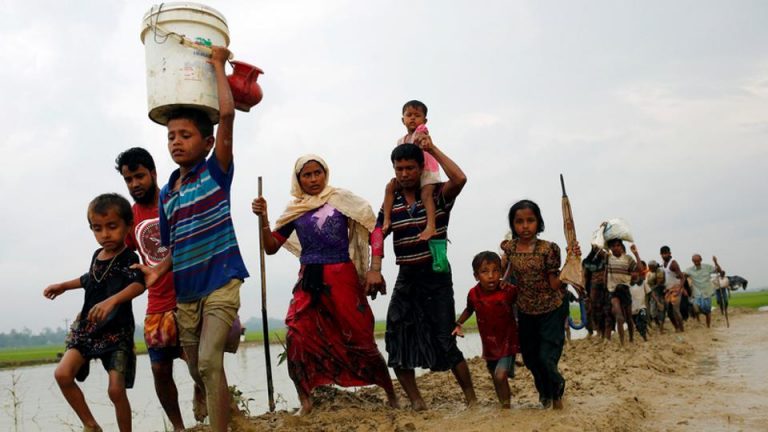
First demand – scrap Citizenship Amendment Bill that proposes to give citizenship to non-Muslim persecuted minorities from neighbouring Islamic nations. There are several points to be made here. Firstly, India is the natural home for Hindus and that cannot be denied. Secondly, it is the Muslims who are persecuting the non-Muslims in neighbouring Islamic countries and thus, it is only fair that those non-Muslims be given refuge. Thirdly, the Muslims who are being persecuted by fellow-Muslims, not because of their identity but in spite of it. The Muslims consider certain sections of Muslims inferior, Murtads, and hence, they are persecuted. This is the internal strife of the Muslim world and thus, India has no civilisational or moral responsibility to play the arbitrator of the Muslim Ummah.

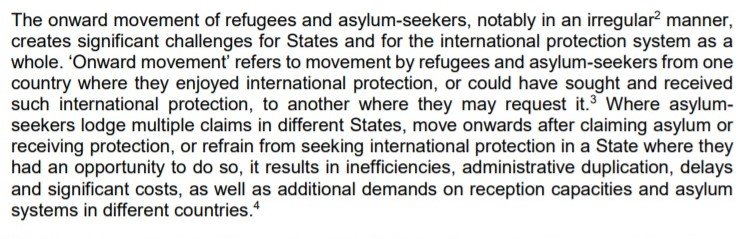
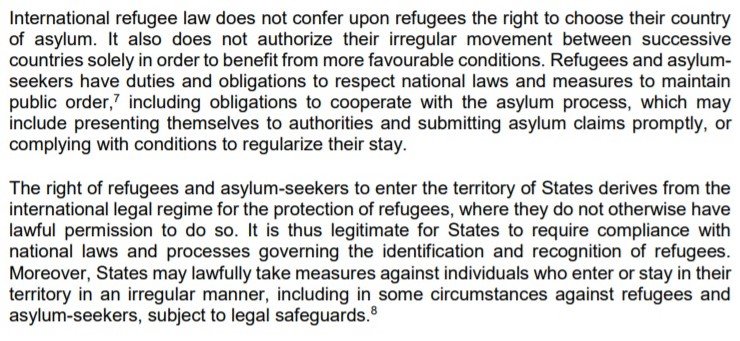
Since India has no legal obligation to take in refugees, the section of persecuted people it chooses to take in is her prerogative. It would be “Non-Muslim” is Indian Muslims were being discriminated against by CAB. They are not. Hence, Barkha’s demand, that she makes on behalf of the Muslim community, is nothing but pandering to the Muslim Brotherhood and Ummah.

Next, Barkha demands, on behalf of the Ummah, that BJP must ensure that more Muslims contest from their ranks. Though there is no comparison between BJP and extremist political outfit AIMIM, one wonders why after every Hindu-Muslim riot or after every genocidal statement made by either of the Owaisi brothers, Barkha has never demanded that more Hindus be inducted into the party. That demand too would have been asinine since every political party has the right to establish who fights on their ticket. Another attempt by Barkha to arm-twist BJP into following the path that Congress did, during whose regime, Barkha could be an instrumental part of the Radiia Tapes.

Further, she writes some nonsense about multi-faith prayers at Ram Janmabhoomi which is such a moronic suggestion that it should not even be dignified.

Barkha, with her article, plays a dangerous game but sticks to the ‘liberal’ script – guilt-trip Hindus, threaten with Muslims rioting, arm-twist to meet unrelated demands of the Ummah.

The Wire’s Arfa Khanum Sherwani

Arfa Khanum Sherwani is such a rabid Islamist that ideally, her utterings should be ignored. However, those who write about the Media and the embedded Jihad apologists therein, would not be doing justice if they did not analyse how the Jihad-apologist-in-chief furthered the same narrative as Barkha Dutt, which is actually an indictment of Barkha Dutt and not Arfa herself.

Arfa blatantly, more so than others, declared Muslims as the victims and Hindus as the aggressors.


Muslims are the community that has been wronged. Hindus are the ones who have wronged Muslims – as clear a statement as could be. The guilt of Hindus is so evident in her statements, that how she wanted to guilt-trip the Hindus does not even need further examination.

Then, Arfa went on to write an article headlined, “For A Young Girl Who Fled Home in December 1992, Ayodhya Verdict Brings No ‘Closure’”.

Arfa writes (and this is the crux of her article apart from copious amounts of tear-jerking):

The Muslim community has also largely been quiet and non-reactive. A few religious/social leaders maintain that they respect the Supreme Court’s verdict although they disagree with it. But should the lack of reaction from the Muslim community at large be seen as acceptance of the verdict? Has the court been successful in its ultimate objective of delivering a verdict not leading to disturbance of social peace?

Or is this silence emanating from the fear Muslims at large have of a backlash against them from not just the majority community but from a system that has so openly worked against them and their interests since the Narendra Modi government first came to power in 2014? Has the humiliation and helplessness resulting from brazen anti-Muslim politics – including gau raksha and ‘love jihad’ – made them lose hope for justice and parity in their own country?

The rues the “lack of reaction”. She essentially rues that Muslims, as they did in the past, have not spilt on to the streets to intimidate the ruling class with violence. She assumes that the Muslim community is scared simply because they are not out on the streets displaying their strength in numbers and their willingness to perpetrate violence.

This sentiment of Arfa was not only limited to her article, but the out-of-the-closet Jihad apologist went on to say exactly the same on video too.


What is to be noticed here is that she too, like Barkha, brings in unrelated issues that put the Muslim community in a tight spot. In her article, she mentions gau-raksha and love jihad. That love jihad is real has been proved by the innumerable victims who have come out and spoken about how they were duped to convert. That gau-raksha as a cause today exists simply because cattle-smugglers threaten the livelihoods of several Hindus (and Muslims in some cases) is missed. At the end of the day, Arfa wants the Ayodhya verdict to be used as a tool to not only guilt-trip Hindus but to ensure that the ensuing guilt stops Hindus from raising their voice when Muslims commit crimes that affect the Hindus’ livelihood and their faith directly.

Saba Naqvi

Since I have explained the modus-operandi in details while scrutinising the other Jihad-apologists in the media, with Saba, I will simply list out the points and leave it up to the reader to connect the dots.

The poor victims and the mighty aggressors. Saba Naqvi in her article writes:

It had always been a lose-lose situation for the minority community, damned if they win, damned if they don’t. It was the temple issue that most effectively created the template for casting Muslims as the “Other”, in this case for apparently denying the majority community their right to worship Lord Ram in the spot claimed as his birthplace. As Muslims are still the faces against which people are being mobilised on multiple fronts, fighting on about the mandir-masjid after the apex court verdict would be self-defeating. The way politics and debates are framed these days the Muslim community needs to be tactical about issues it allows itself to be dragged into.

Besides, had the Muslim side won, what could they have done? They could not have rebuilt a mosque, but they could have claimed a constitutional victory and that would have counted. At the end of this long journey, there is also a recognition that the only battles the community needs to engage with are for jobs, education and health. But will they be allowed to do so? Is there any guarantee that more issues seeking to extract “historical revenge” will not be resurrected?

Muslims are the faces against which people are being mobilised, Saba writes. She is essentially alluring to all other issues which her comrades and her want to paint as anti-Muslims, including CAB, NRC etc. In the process, she paints the Muslims as victims rather vociferously and might I add, naively. She says that whether the Muslims would have won or lost, conveniently, they would have been the victims.

Further, she writes:

Finally, the onus of making this a moment of national reconciliation rests not on the minority community but with the government and India’s pre-eminent political party.

After alluding to “other issues”, Saba writes that the onus is on BJP to ensure “reconciliation”. Essentially saying that the Muslims have kept quiet and not taken to the streets, hence, now the BJP must compromise on other issues that the Muslim community (more so eminent apologists like Saba) view as contentious.

The Guilty Hindu

Perhaps the vilest, most degenerate emotion is the guilt of an innocent man. It is worse when the ones who have sinned hold the victim by the head, look into their eyes, and in all earnestness, with a firm mask hiding the face of malice, tell the victim that he ought to feel what the sinner must. It is the worst form of treachery since it exploits the innate goodness of the victim. Guilt is not the burden of the guilty. It weighs on the hearts of men and women who still have divine goodness in them. Whose sense of morality becomes their greatest folly. A morality that makes them so vulnerable, that even when have not sinned, they can be made to feel like sinners.

It is important to realise that the Jihad apologists don’t despise Hindus per se. They simply want that the Hindu community never gets over its insurmountable capacity to absorb hate, humiliation, defeat, murder, rape, conversion and the desecration of their faith. For the capacity to absorb humiliation to continue, the Hindu must be made to carry the burden of undeserved guilt perennially.

The guilt that the Jihad apologists wish to root in the Hindu exploits the innate goodness and principles of Sanatan, perhaps that is what makes it so vile. The Hindu mustn’t consider their own land as a natural home for Hindus – it is anti-Muslim. The Hindu must not value the land that has been nurtured by the blood of her brave – it is anti-Muslim. The Hindu must not speak up when they are converted forcefully – it is anti-Muslim. The Hindu must not detest the waves of violence that have been unleashed against it historically till the present day by fundamentalist Muslims – it is anti-Muslim. The Hindu must not value their faith that was historically desecrated by Muslim invaders – it is anti-Muslim. The Hindu must not be proud, must not be vocal, must not be celebratory, must forget history, must be guilt-ridden, must not fight for what is rightfully theirs, must not lift their heads, must, forever, keep their head down and take the injustice, the violence, all in the name of a syncretic culture.

The guilt helps the Muslim community arm-twist a nation-state. the guilt, that is so insurmountable, that the Hindu is forced to pretend like the tyranny never existed.

The Hindu must shut up. The Hindu must roll over and consider himself lucky, that he is only being used as a doormat and not being an example out of – like Kamlesh Tiwari.

What irks them today, is that surely, but slowly, the Hindu is raising his head and shedding the baggage of forced guilt.

The Hindu must be forced into submission again. The question remains – will the Hindu be manipulated yet again.

The BHU controversy: Demanding that ‘Hindu Dharma Vigyan’ be taught by a Hindu and not a Muslim is not bigotry

Students at the Sanskrit Vidya Dharma Vigyan (SVDV) in Banaras Hindu University (BHU) have been protesting over the appointment of a Muslim professor, Dr Firoz Khan, at the institution. As expected, the students have been demonized as bigots and the matter has been given a hue of communal bigotry when the matter is a lot more complicated than that.

Our ground report on the matter mentions the allegations of corruption in the recruitment process, which are pretty serious in nature, but even if allegations do not hold true, the students have got a very good case. And it has nothing to do with bigotry. Student leader Chakrapani Ojha explains the issue quite eloquently.

He said, “If we do not protest now, then 15 years hence this department will have one Muslim professor, department head and even dean. They will appoint more Muslims and a time will come when the ones who will be in charge of ‘Hindu Dharma Vigyan’ stream will be non-Hindus. Those who do not have any connection to Hindu Sanatan traditions, Yagnas and Jyotish.”

Ojha further explained that ‘Sanskrit Vidya Dharma Vigyan’ is the full name of the stream. There are two parts to it. First is “Sanskrit Vidya” and other is “Dharma Vigyan” (theology). While it’s true that Sanskrit can be taught by any person with the necessary skill set, it will be much too much to expect that Hindu theology could ever be taught by a person of a different religion who doesn’t have any faith in the scriptures he is supposed to teach.

Read: ‘Not against Muslims’ – protesting students at BHU explain their position. An OpIndia exclusive

Another student said, “We do not have teachers, we have gurus. Everyone here keeps a ‘choti’, touches feet of the elders and conduct havans and yagnas. The professor who has been appointed identifies his religion as ‘Muslim’. If he is appointed, will it not be discrimination against the students who follow the Vedic Sanatan traditions?”

Under such circumstances, it is unimaginable to think that Khan could ever do justice to the traditions of the institution. It is not his fault but it’s not the fault of the students either. Someone who doesn’t have faith in the sacred texts of the Hindu faith doesn’t have the necessary skill set to teach Hindu theology to students. This is not communal bigotry, these are facts.

Throughout the entire controversy, we witness again the utter lack of respect for sacred spaces. Under the universalist march of Secularism, Hindus are expected to even surrender the teaching of their theology to non-Hindus. This desire to trample upon the sentiments of the Hindu community, regardless of consequences, is precisely what leads to unfortunate circumstances such as the one at BHU.

It’s the same mentality that encourages the desecration of the Sabarimala Temple. The secularists have no respect for the fact that different rules apply to the abode of Swami Ayyappa and an individual has to meet certain criteria to be eligible to enter the Temple. There are ‘sacred spaces’ in any society and the rules for entry to such places will vary according to the nature of the place. It’s not communal bigotry to assert that a person who does not meet the standard should not be permitted entry to it.

Hindu Theology cannot be adequately taught by non-Hindus for the same reason that Christian theology cannot be taught by non-Christians or the Quran cannot be taught by non-Muslims. It’s not communal bigotry for students of a particular religious disposition to assert that they are taught the same by a person who has faith in the religious doctrines. Scriptures cannot be taught by a person who has no faith in them. This is not a controversial opinion.

Authorities in a sane society are expected to understand such simple matters. Society, at the end of the day, is dependent upon social norms and traditions. If society is to function smoothly, such norms ought to be respected. However, secularists have no respect for such laws. They wish to impose their own version of morality and rules and regulations in violation of social norms. Thus, conflict such as the one we are currently witnessing at BHU is inevitable.

The mainstream media, which rewards and thrives upon gross incompetence, is again at the throat of the protesting BHU students. They are being accused of being bigots, fundamentalists and much worse. And for what exactly? Because they wish to be taught Hindu religious doctrines by someone who actually has faith in them?

Have we, as a society, abandoned all common sense? Are we seriously arguing that Hindus should consent to being taught the Hindu religion by atheists? Because that’s what monotheists essentially are, atheistic to Hindu doctrines. If secularists insist upon imposing their own set of beliefs on Hindus, there will be resistance and justifiably so. Should Hindu theology by allowed to be taught by someone whose religion assumes that Hindus are Kafirs?

For those who argue that BHU is a government-funded institution and therefore, secular norms must apply to it, they should remember that considering the huge amount of money the secular state loots from Hindu Temples, funding a Hindu institution with explicitly Hindu departments is the least the secular state can do. We can argue about the government-funded nature of the institution once the secular state has stopped looting Temples and after minoritarian schemes have been put an end to. Before that, such arguments are pointless.

Nevertheless, even in a secular state, if there are departments at any Universities that teach Hindu religious doctrines, it is ridiculous to assume that the doctrines can be adequately taught by someone who has no faith in them. And students, who have taken admission to the particular university to learn precisely that, have every right to protest if the University fails to meet the adequate educational standards.

Telangana HM Mahmood Ali orders an inquiry in incident where ‘Ram Mandir todenge’ slogans were chanted by Muslim women

Telangana Home Minister Mahmood Ali has ordered an inquiry in the case where sedition charges were levelled against two Muslim women who along with over a 100 Muslim women raised provocative slogans on Thursday at Saidabad Ujale Shah Eidgah grounds. As per a report by Deccan Chronicle, the probe has been ordered following ‘public uproar’ as Muslims from not only Hyderabad but even Delhi are ‘upset’ with filing of sedition charges.

Telangana Home Minister Mahmood Ali said that the Muslim community has asked him to look into the matter. He has reportedly ordered an inquiry. Ali further said that it is the police’s duty to maintain law and order. “When ulemas across India had agreed that they would abide by the Supreme Court judgement, why have these women come out to protest?” he said.

Read: Owaisi creating terror through statements, no difference between Baghdadi and him: Shia Waqf Board Wasim Rizvi

However, Amjedullah Khan of Majlis Bachao Tehreek (MBT) defended the women and said that the congregation was in an edigah where they offered namaz and it was within those four walls. “Police could have brushed it aside. By pressing charges, they have created an issue and brought it to limelight. The videos circulating around are not clear. How can 30 to 50 women threaten a country?” he said.

On Thursday, a group of women belonging to a Muslim organisation held a congregation at Saidabad Ujale Shah Eidgah grounds. Over a hundred Muslim women congregated to hold a “prayer meeting” protesting the Supreme Court verdict in the Ram Janmabhoomi case where the court awarded the entire 67-acre land to Hindus and mandated that the Muslims would get an alternate 5 acre land in Ayodhya to build their Mosque. The main leaders of this congregation were two daughters of one cleric Maulana Abdul Aleem Islahi — Shabista and Zille Huma.

The police had initially denied permission to them, but later it granted conditional accord, saying they were not supposed to disrupt peace and refrain from communal utterances. However, the group of Muslim women who had congregated to protest against the Ayodhya verdict raised several communally charged slogans.

In a video that emerged, the Muslim women can be seen raising several slogans like ‘todenge todenge, Ram Mandir todenge’ (we will break Ram Mandir), ‘laathi goli khayenge, Babri Masjid banayenge’ (we don’t mind being beaten up with sticks or being shot at, but we will make the Babri Masjid), ‘humari arzoo, shahadat shahadat’. With the slogans of Naara-e-Taqbeer and Allaho Akbar, the Muslim women were seeing stoking tension by vowing to break the Ram Mandir that will be built at Ayodhya and build Babri Masjid.

While sedition charges were slapped on these two women, they are yet to be arrested.