Home Blog Page 6800

Uttarakhand becomes the first state to launch universal health insurance scheme

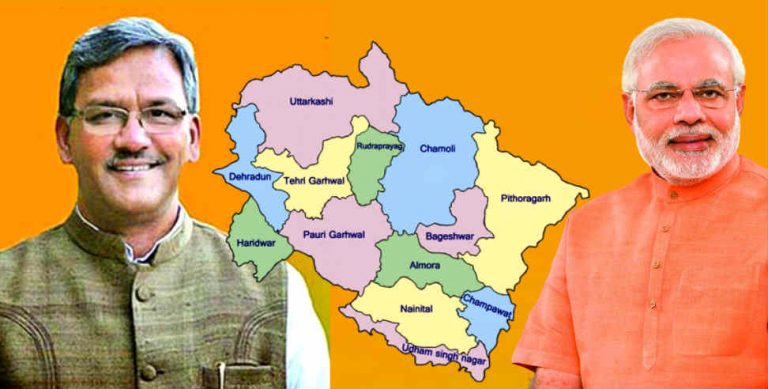
The Cheif Minister of Uttarakhand, Trivendra Singh Rawat, following Prime Minister Narendra Modi’s footsteps, launched India’s first Universal Health scheme in Dehradun today. With this, Uttarakhand has become the first state in the country to initiate such a health scheme covering the entire state population.


The Uttarakhand government launched this first of its kind initiative on the birth anniversary of former Prime Minister, Atal Bihari Vajpayee.


Being an extension of PM Modi’s flagship, Ayushman Bharat Scheme, the ‘Atal Ayushman Uttarakhand Yojana’, is a state-run scheme benefitting all 22.5 lac families of the state. Under this scheme, all the families can get free medical facilities up to five lakh rupees per family.

All state-run hospitals and listed private hospitals will be covered under the scheme for providing free health care to all the families in the state. Moreover, 1350 various types of illnesses will be covered under the scheme and it will also result in starting of new hospitals in remote locations.

The State is augmenting its fleet 108 ambulances with brand new vehicles. Besides, the state has also launched Telemedicine in 40 Primary Healthcare’s (PHCs) of remote districts of Uttarakhand under Corporate Social Responsibility (CSR). The state is also set to provide teleradiology services.

Uttarakhand government has been steadfast in recruiting new doctors to improve its health services and deal with the shortage of doctors in the hilly and remote districts of Uttarakhand. The government further plans to launch Air Ambulance services from 26th Jan 2019.

To avail the benefits of the Atal Ayushman scheme, the person concerned should have a photo identity card. Health friends will be deployed in the medical clinics listed, to assist patients. Health friend’s mobile number will be available at the medical help desk.

the Uttarakhand Cheif Minister applauded PM Modi’s vision for a New India-2022 and hailed his initiative of providing health insurance to 10 crore families in India through the Ayushman Bharat scheme.

Who served the Middle class: In a match between BJP and Congress, BJP wins the set 30-0

With the recent loss of BJP in Rajasthan, Madhya Pradesh and Chhattisgarh much has been said about BJP and how it might not be doing much to benefit the ever-ignored middle-class. Over the decades, the middle-class voter has mostly been treated as a stepchild whose fair share is often denied. While the Congress chose to ignore this segment, the BJP has always focussed greatly on the middle-class.

When it was realised that this extremely crucial segment was firmly voting for the Modi government, Congress fanned a crafty narrative that aimed to disenchant the middle-class voter against BJP. While this narrative was fanned incessantly, Congress proceeded to oppose crucial GST rate cuts that would benefit the middle-class.

The middle-class voters are like weather updates of London. Accurate and predictive. While the vote share loss that accrued to BJP because of this faulty narrative cannot be ignored completely, the middle-class largely stuck to the BJP despite the negative campaign. However, with 2019 looming large, it becomes imperative to impartially understand what is it that the BJP, in the last 4 and a half years, has done for this ever important segment of voters, vs what Congress did for the middle class in its 10-year reign preceding 2014.

Voter’s behaviour can be studied in four ways.

1) Vote share patterns (mathematical analyses).

2) Fundamental analyses (major events).

3) Actual performance catering to the sample (example: middle class).

4) Perception analyses.

This article aims to study point number 3 (actual performance catering to the sample – middle class).

We have designed a methodology in which we will consider 30 different categories divided into 11 different parameters to compare what both Governments, Congress and BJP, have done for the middle class.

Finance, Investment and Taxation

The first parameter that we will be reviewing is finance, investment and taxation where we study IT exemptions, Goods and Service Tax (GST), stock market performance, Forex (Foreign Exchange) reserves and 80C and 80D deductions.

Component of tax is one of most crucial elements in the salary structure for middle-class employees. An appropriate taxing policy helps improve savings and ultimately enhances the lifestyle of people.

Section 80C allows a tax filer to make deductions by declaring his/her investments in the taxable income. Whereas section 80D allows deductions for the premium paid in the form of medical insurance. These different modules of investments contribute back to the budget and help to improve the overall economy of the country. Here we observe that in every parameter the current Government surpasses the achievements of the previous Congress Government.

Insurance

If we compare the Global Insurance industry within 2016, China leads the top 5 emerging nations with market revenue of $466 Billion in 2016, which is nearly 6 times more than that of India. The insurance market is an open space for growth for countries like India when compared with fully developed countries like the United States and the United Kingdom.

The next parameter we cover is insurance where we compare the insurance premiums written and growth in the renewal of insurance premiums.

A robust Insurance system in the country will lead to a great deal of savings in the economy.

Healthcare Facilities

India currently spends cumulatively 4.2 percent of its GDP on healthcare. At only 1% in 2013, the contribution by the public sector on Healthcare was amongst the lowest globally. The Government recognized the need and invested heavily in the healthcare sector. Owing to this the healthcare market now is growing at the CAGR of 16% and is expected to reach US $280 billion by 2020 if the current surge in healthcare spending continues

Modi Government has taken crucial efforts to improve healthcare facilities in the nation. Pradhan Mantri Jan Arogya Yojana has provided benefits like hospitalization coverage, healthcare for non-communicable diseases and childcare facilities to crores of Indian citizens.

In healthcare facilities, we compare infant mortality (number of deaths per thousand births) and maternity benefits. IMR dropped by 13.97% during BJP rule and by 13.68% during Congress rule.

 Railway Electrification

Railway electrification, total broad gauge railway tracks laid and rate of laying new railway tracks are compared in the next parameter. The modernization of railways under Suresh Prabhu and quick implementation of projects under Piyush Goyal has helped in considerable progress of railways. Metro Transit system, Bullet Trains, Hyperloop and other high-speed rail projects are also in the pipeline of implementation.

At this rate Indian Railway market will the third largest accounting to 10% of the global market and Metro Rail will be 70% of the railway market in India.

The BJP Government has identified these prospects and invested heavily in railways. Owing to this the difference between the two governments is gigantic in spite of Congress having big leaders like Laloo Prasad Yadav and Mamta Banerjee as their Railways ministers.

Transport

“To enhance growth, we will need to promise that India will open more to trade and FDI (foreign direct investment)” quotes top economist Jagdish Bhagwati. To improve the trade we need to have modern and sustainable infrastructure facilities in the nation. India has a requirement of Investment worth Rs 50 Trillion (US $ 777.73 Billion) by 2022. There is an immense scope of improvement as only 24 percent of national highways are four-lane roads. Nitin Gadkari has said that the transport sector has the potential to create 15 lakh jobs and his ministry will contribute to 2 percent in India’s GDP if all the projects are completed soon. His Ministry has also given the topmost priority to waterways to reduce transport costs.

It is pretty evident by the table that the growth spurt in highway construction led by Minister Nitin Gadkari beats the Congress regimes construction by a mile and a half. The Ganga Rejuvenation project and road accessibility in Northeast India have also achieved cognizable heights in the Transport sector.

 Inflation and Petroleum Prices

Next, we compare inflation, gross revenue – gross expenditure and petroleum prices. BJP inherited a dwindling economy and it has done well to recover it. The CPI inflation in 2013 and 2014 was 10.21% and 9.49% respectively. Currently, the average for 2018 is 3.58% coming down from a high of 5.97% in 2015. Prime Minister Narendra Modi’s foreign visits have helped to build a strong relationship with countries like Saudi Arabia. This step was very important as Oil and the Gas Industry is amongst the six core industries of India. This industry contributes around 15percent to India’s GDP. (Figures include refining, transportation and marketing cost)

This is evident from fact that the foreign minister of Saudi Arabia has considered revision of oil prices to India. Also, the fiscal deficit of the nation has been kept under substantial control improving the economy of the nation


Crime and Corruption

In Crime and corruption parameter we can see that the corruption index has gone down so have the violent crimes. Cases registered for crimes against women have also reduced. There hasn’t been a single case of corruption or impropriety in the central government since Narendra Modi took over as the Prime Minister. No major terror attack has been reported across nation owing to effective communication of all the Intelligence agencies and a strong NSA.

 Performance Parameters

The country has successfully registered a 77th place in the list of Ease of Doing Business by improving its policy procedures. Prime Minister Narendra Modi’s foreign visits have also helped to improve the relationship with multiple nations with aid of MOUs signed across multiple sectors. The Government has signed more than 150 MOUs in 2018 alone and is giving top priority to the execution of these MOUs.

Technology Adoption

India Tech Opportunity a report tabled by McKinsey Global Institute says that the Indian Economy has a potential to add $ 1 Trillion in the GDP by 2025.

McKinsey Global Institute (MGI) further elaborates that India’s digital Index rose by 56 percent during 2014-2017 from 18 to 29 on the scale of 100. This has placed the country second in terms of growth among 17 emerging and mature digital economies. This has only been possible because the Government is implementing schemes like digital India.

Technology adoption is a key factor for any new age government. We now compare technology adoption by each government. The current BJP led government has made strides in this sector with 66% TV penetration and 83.5 crore viewers across the country.

Education

The education sector in India is estimated to reach US$ 101.1 Billion by 2019. With the largest population in the world from the age bracket of 5-24 years and a huge English speaking population (India was ranked 27 out of 80 countries in English proficiency index in 2017). There is a high demand-supply gap in education in India.

The Government has initiated a series of reforms like 100% FDI in the educational sector(better implementation), National Accreditation Regulatory authority bill, Foreign education bill and many more,

Modi Government has also improved the primary education system by the adoption of digital platforms in schools. Primary education has been made more affordable by this government which remains the major factor for the rise in enrollment. Also, the advent of digital schools promises to make the carrying of heavy bags redundant. The Modi government also made private school education more affordable

Utilities

We have just stated 2 out of 1200 plus items which were taxed 31 percent or more during the Congress government.

Today only 27 items come under the 28% tax slab in the GST.

Conclusion

We designed a methodology where we considered 30 different categories divided into 11 different parameters to compare what both Governments had done for the middle class.

Our Analyses showed that BJP was better than Congress on all parameters; the score was 30-0 in BJP’s favour.

Our methodology is effective as we have only used mathematical data (Technical analyses) and not depended on opinions (Fundamental analysis).

This is the comparison of only those parameters which hold relevance to the middle class. We have not included welfare schemes and prices of commodities as they pertain to a larger set of audience which is not limited to the middle class.

The middle class is a section that believes in what they see. There has been a decrease in taxation (GST via á vis VAT and service tax) for most basic amenities.

The insurance sector has been able to pick up because of the savings on tax. Tax deduction has been increased by 50%.

Competitiveness index ranking improved enabling a better business environment for new entrants.

Corruption is lower, so are the violent crimes. Crimes against women have dropped. People, women, in particular, can feel safe now. Inspire of media nitpicking each and every case against women and dissecting it on national television, the stats show otherwise.

There hasn’t been a single terrorist attack since this government took over. This speaks volumes for the steps taken for national security by this government.

The primary education is now accessible and private schooling has been made more affordable.

In spite of the critique of the current government, it is pretty evident that the middle class has been a big beneficiary of the steps taken by this Government. Despite what Bollywood has to say the country is a safer place.

The stats speak for themselves.

Christian Michel domino effect: After Mallya, Mehul Choksi says he is in touch with banks to settle dues

0

Fugitive billionaire Mehul Choksi has appealed to Prevention of Money Laundering Act court, to dismiss Enforcement Directorate’s plea to declare him fugitive, and cited his personal health for absence in during proceedings. Choksi also claimed that he is constantly cooperating with banks to sort out the issues.


In a 34 page application submitted through his lawyers, Choksi informed the court that his health doesn’t allow him to take a 41-hour flight to India. He said that he is willing to volunteer via Video Conferencing. Choksi has also accused that that ED is misleading people by hiding his health condition.

Choksi was represented by advocates Sanjay Abbot and Rahul Agarwal, who said that ED had deliberately obscured facts to incriminate client Choksi. They also alleged that ED had deliberately undervalued the attached assets of Mehul Choksi, in order to confiscate more.

This settlement offer by Choksi comes days after AgustaWestland chopper middleman Christian Michel’s extradition to India from UAE. Following which fugitive businessman Vijay Mallya had also offered to repay the loans to banks he had defaulted. Later, Indian agencies also successfully convinced the London’s Magistrate Court that Vijay Mallya is a fugitive and should be extradited to India, for further proceedings.

The proposal by Choksi also seems to be coming out of the feared process of extradition and action by agencies. This month, on request of CBI the International Police Organisation (Interpol), had issued a Red Corner Notice (RCN) against the diamond merchant.

Nirav Modi, his uncle Mehul Choksi and others are being probed under various criminal laws after the Indian financial sector was rocked by a startling revelation of fraud this year following a complaint by the Punjab National Bank (PNB). He had since been living in a self-imposed exile in Antigua and Barbuda. Currently, India doesn’t have an extradition treaty with the country.

According to the bank, the fugitives had allegedly cheated the nationalised bank to the tune of over Rs 13,000 crore, with the purported involvement of a few employees of the bank.

No Namaz in park, Noida police clarify they are upholding the DM’s orders

0

In a recent development, the Noida police have issued an advisory notice to companies in sector 58, asking their administrations to dissuade their employees from visiting nearby parks for offering namaz. The police asserted that the companies must ensure that their officials use office premises or mosques for Namaz but not public places.


Sector 58 to sector 62 in Noida house multinational and national IT companies. According to a report by Times Now, Muslim employees of these companies located in sector 58 used to assemble together and offer namaz in the nearby park. Earlier, the group had 20-25 regular members but then the number soared to more than 300. As the congregation of such a large group in a public place created concern for the officials, as per the report, a gruop of employees had apprached the District Magistrate for permission but the DM did not grant them the permission to offer namaz in the park. Despite this, on December 14, the Muslim employees had again gathered to offer namaz in the park.


While speaking to OpIndia, Noida police representative said, ” The group of people who were employees of multinational IT companies used to offer namaz in nearby parks in sector 58, they approached the district magistrate to seek the permission to offer their prayers in the park but the magistrate didn’t grant them the approval for the congregation in public.”

He further added that despite district magistrate’s denial, the employees of these companies continued to offer namaz in the park. It is then that the Noida police intervened to uphold district magistrate order and issued an advisory to the companies to ask their employees to refrain from offering namaz in the parks. “The advisory pertains to this case alone and the companies in the sector 58. This shouldn’t be misconstrued as a blanket ban on offering namaz in public places across UP or Noida. We were simply upholding district magistrate orders,” he added.

The order issued by the Noida police to the companies cites the district magistrate’s order that ‘No religious activities’ including namaz can be offered in the authority parks. The police also added that namaz should be offered in Mosques and Idgahs.

Earlier, Haryana CM Manohar Lal Khattar had evoked critical reactions from people when he said that namaz should be offered in their designated places such as mosques and idgahs and not in public.

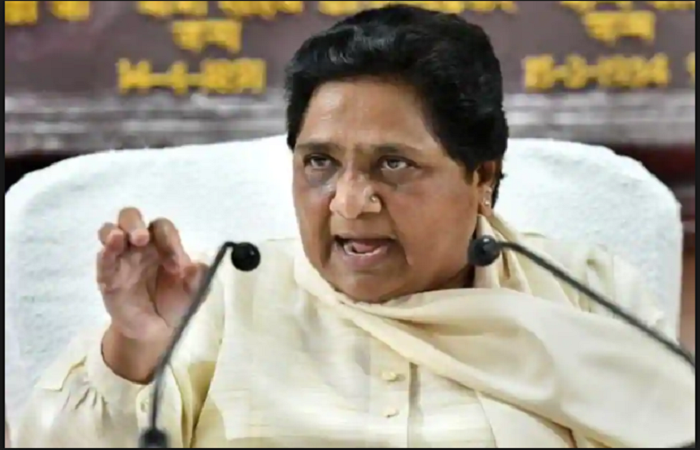
Mayawati dampens Rahul Gandhi’s Mahagathbandhan plans, to contest all Lok Sabha seats in Madhya Pradesh in 2019

Bahujan Samaj Party Supremo Mayawati has yet again given a blow to the Congress-led Mahagatbandhan. BSP Vice-President Ramji Gautam has declared party’s stand to contest all Lok Sabha seats of Madhya Pradesh in 2019 Lok Sabha elections.

In the recent assembly elections of MP also BSP had fought alone after negotiations with Congress on an alliance failed. BSP managed to win 2 seats in the elections and later extended support to Congress party to form the government as it was short of the majority. Mayawati had said that she is extending support only to keep BJP out of power. In Chhatisgarh assembly elections too, BSP had forged an alliance with expelled Congress leader Ajit Jogi’s Janta Congress Chhattisgarh (JCC). By partnering with JCC, Mayawati had given an open indication of unwillingness to form an alliance with Congress in future.

In Uttar Pradesh, BSP and Samajwadi Party (SP) are in talks to cobble up an alliance for Lok Sabha elections. However, reports suggest that SP-BSP is mutually trying to keep Congress at bay. During seat-sharing, it came to fore that Congress has been given only two seats, Rae Bareli (Sonia Gandhi bastion) and Amethi (Rahul Gandhi’s bastion), to fight from the alliance.

According to reports, Om Prakash Chautala’s Indian National Lok Dal of Haryana, SP and JCC of Ajit Jogi have decided to project Mayawati as PM candidate in 2019. Along with these developments, Mayawati is also in talks with Telangana CM KC Rao, regarding the ‘Third Front’ or the ‘Federal Front’, which will consist neither BJP nor Congress.

The speculations around forming a Federal Front gained momentum after KC Rao’s TRS retained their Telangana throne in recent assembly elections. KC Rao on 24 December held a meeting with Biju Janta Dal (BJD) supremo and Odisha Chief Minister Naveen Patnaik and discussed the probabilities of forming the Front. Later, KC Rao also met with TMC leader and West Bengal Chief Minister Mamta Banerjee.

Congress and its friendly regional satraps are already expressing scepticism over the formation of the Third Front. Recently, at India Today conclave Andhra Pradesh CM Chandrababu Naidu criticised KC Rao for forming Federal Front and said that it will only help BJP in elections by splitting the votes.

Congress spokesperson Abhishek Manu Singhvi also alleged KC Rao of doing politics of division, by putting efforts to materialise the Third Front and expressed a veiled concern that this front will only help BJP.

Even during the announcement of the extension of support to Congress in Madhya Pradesh, Mayawati had said that previous Congress dispensation has proved detrimental to marginalised sections of the state and she is extending support with a heavy heart.

Youth Akali Dal members blacken Rajiv Gandhi statue, Congress workers ‘purify’ it with milk

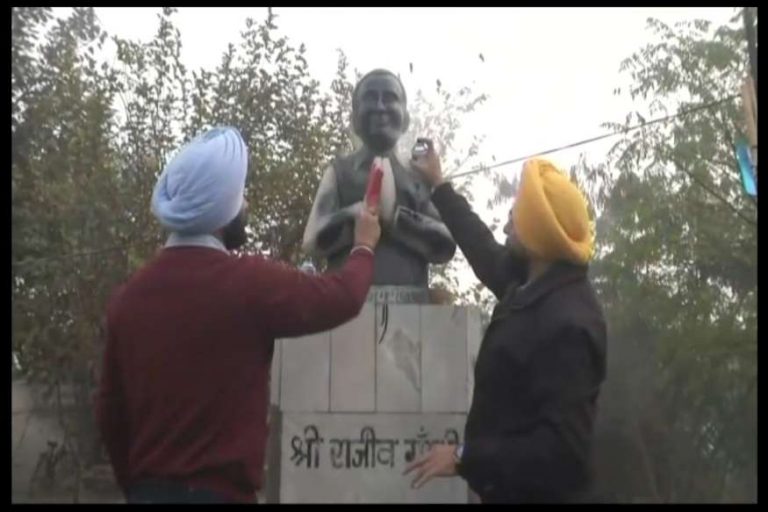
Protesting against the 1984 Anti-Sikh riots, some members of the Youth Akali Dal blackened the bust of former Prime Minister Rajiv Gandhi in Ludhiana on Tuesday. The Youth Akali Dal workers sprayed black paint over the statue and demanded the revocation of Bharat Ratna awarded to Rajiv Gandhi.


After the conviction of former Congress leader Sajjan Kumar in relation to the 1984 riots, the Akali Dal had objected to the appointment of Kamalnath as the Chief Minister of Madhya Pradesh by Congress for his alleged involvement in the 1984 riots. The Party has demanded that a special session of Punjab Assembly should be called to pass a proposal for the withdrawal of Bharat Ratna from the late Prime Minister.

Last week, the Delhi Assembly had also passed a resolution demanding from the Centre the withdrawal of Bharat Ratna from Rajiv Gandhi, who was given the highest civilian award posthumously in 1991, alleging that he justified the 1984 riots. The resolution was surrounded by lots of drama as Aam Admi Party leader Alka Lamba had tweeted that the party was demanding her resignation from the membership of the party after she refused to support the resolution.

Hours after black paint was sprayed by the Youth Akali Dal members on the statue, Congress workers cleaned the statue with milk to ‘purify’ it.

Attempt by political parties to play Dalit politics over Sanjali’s death falls flat, own cousin turns out to be murderer

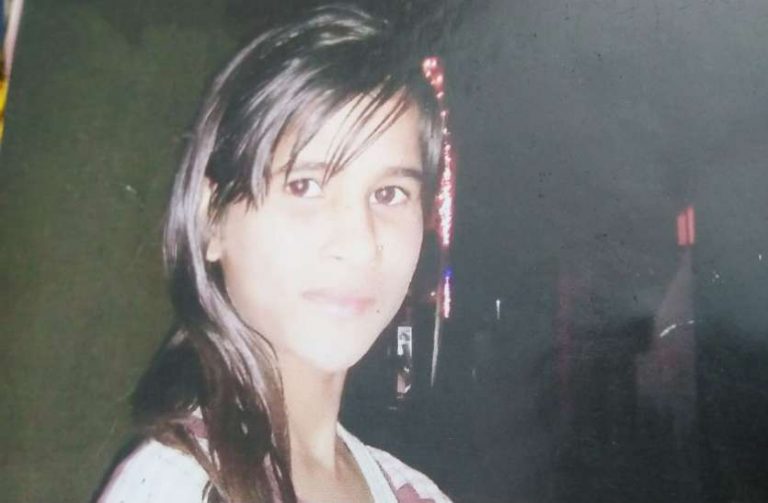
The horrific murder of a 15-year old girl Sanjali, after she was set ablaze by two bike-borne men last Tuesday has taken a surprising turn after the Uttar Pradesh police found that her own cousin brother Yogesh, who had committed suicide after the incident is behind this gruesome crime, reported Jagran.

Several political parties, especially Congress, had insensitively attempted to politicise the issue and had accused the Yogi Adityanath government of harassing members of the girl’s family including Yogesh instead of nabbing the criminals.

Uttar Pradesh Congress Chief Raj Babbar on Monday had met the family members and had accused state police of losing its effectiveness under Yogi Adityanath government. Babbar had said that the police was making up stories to target the family to hide its failure to crack the case. He went on to claim that the action of the police had driven Yogesh towards suicide.

According to reports, the UP police after a serious investigation has now found out that it was Yogesh who burnt Sanjali to death. The police have said that one-sided romantic affair of the accused had resulted in the murder of the girl. The Uttar Pradesh police had questioned Vijay and Aakash, the relatives of Yogesh, who then confessed that they had helped Yogesh in committing the murder. The Uttar Pradesh police had suspected the involvement of Yogesh in the murder of Sanjali from the very beginning.

Police have reportedly recovered the bikes used for the murder. The vehicles belong to Yogesh and Vijay. Sanjali had named Vijay as one of her main attackers in her statement to police before she succumbed to her injuries. As per reports, the police had also examined mobile chats between Sanjali and Yogesh. Sanjali’s father was attacked by some miscreants last month and Sanjali had reportedly suspected Yogesh for his involvement in the attack.

The gruesome incident took place when Sanjali, a class 10 student, was returning from Asharfi Devi Chidda Singh college, Naumeel village and Yogesh, assisted by the other two accused, attacked and burnt Sanjali by pouring petrol on her. The girl had suffered serious injuries and later succumbed to the injuries in Safdarjung Hospital, Delhi.

The incident had created a tense situation as family members of the girl had blocked the road demanding justice from the state government. The opposition parties citing an opportunity to target the government had staged protests. The Samajwadi Party (SP) and  Bahujan Samaj Party (BSP) had targeted the Yogi government and had hinted towards making Sanjali’s killing an electoral issue.

Controversial Gujarat MLA Jignesh Mevani soon jumped in to give it a casteist angle by terming it as an attack on Dalits without knowing the fact that victim’s own cousin was the prime suspect in the case. Bhim Army chief Chandrasekhar Azad created a major issue over the murder and threatened to shut the whole country down.

Now that it has been proved that Sanjali’s murder had no caste angle to it, none of the political leaders peddling casteist agendas in the last couple of days over the brutal murder of a young girl have issued apologies for using the incident to fan casteist discord among people.

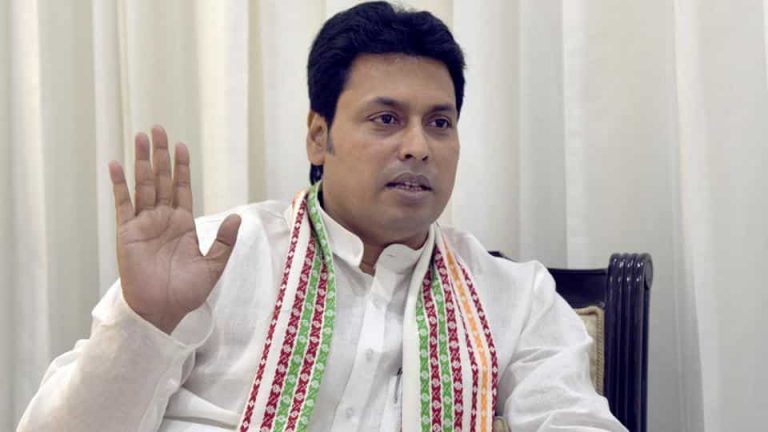
Biplab Deb compares Communists with the Mughals and the British, says they try to mislead people

Tripura Chief Minister Biplab Deb on Monday attacked the Leftists saying that they are destroying the Indian culture. While addressing a gathering at a conference of the Akhil Bharatiya Itihas Sankalan Yojana, he said that the Communists are misleading people.

“The communists have created a batch of goons instead of cadres and trying hard to destroy the Indian culture and civilization. The communists want to gag the peoples’ voice and mislead them”, he said.

He said the people of Tripura have discarded the communist ideology and are following the ancient Indian culture and civilization. He defended his party and said that the BJP is not trying to saffronise the country. “The BJP is not trying to saffronise the country, it is the communists who have unsuccessfully tried to make the whole world red,” he said.

Comparing the communists with the Mughals and the British, he said they unsuccessfully tried to destroy the Indian culture and now communists are also trying hard to do the same. He gave the example of how Alexander had come to conquer India but he had to bow to the self-esteem of a king like Porus.

Bogibeel bridge: NDTV peddles ‘job loss to boatmen’ narrative, gets roasted on Twitter

Years after the former Prime Minister, late Atal Bihari Vajpayee, announced its construction, PM Modi is set to inaugurate the 4.94 km long double-decked railroad bridge connecting Assam and Arunachal Pradesh, which today stands complete as India’s longest railroad Bogibeel bridge.

The railroad bridge will bolster infrastructure development of Dibrugarh and Dhemaji. Major hospitals and colleges which are situated in the Dibrugarh district are set to become a big business hub after Guwahati. Connectivity with Dhemaji will give people access to premium health services in Dibrugarh. The bridge will also be a big boost for ease of troops movement to the difficult terrain of North Eastern India.

This is merely common sense that any infrastructural development which happens in a country obviously contributes to the country’s betterment. But sadly, instead of applauding the government’s initiative there are few media houses who are once again trying to squander the government’s efforts, by introspecting this superlative news in an altogether worthless perspective.

Instead of accentuating the brighter side and the bigger opportunities which will originate from this venture, media houses like NDTV are busy highlighting the trivial issues which are in reality no issues at all.

The controversial media agency, NDTV, thought it to be prudent enough to highlight the ‘job loss’ few boatmen fear, ahead of this historic development, managing to possibly report this iconic advancement in the worst possible way. Completely ignoring the strategic and economic potential that this engineering marvel can bring, NDTV preferred to peddle the narrative of some boatmen being inconvenienced.

NDTV’s perspective on India’s longest railroad bridge

Several Twitter users astounded by NDTV’s hypocritical standard reminded the media house of its duplicity.

A Twitter user pointed out how, NDTV had in October reported of the adversities the students of Assam were facing due to the lack of a bridge and now when India’s longest bridge is ready to connect Assam with Arunachal Pradesh, bettering its connectivity to various hospitals, schools etc, NDTV is managed to find a trivial excuse to belittle the achievement.


Another user further exposed NDTV’s double-standards by sharing a report it published in October, exhilarating over a bridge that was constructed in China, wondering if China’s endeavour could be celebrated by the channel then why not India’s?


There were many on Twitter who took offence over this biased reporting and castigated NDTV for the same.


Some Twitter users also pointed out the predictability of NDTV’s narrative being on par with other leftist propaganda websites like The Wire and The Quint.


Shekhar Gupta’s The Print had earlier shown similar acrimony when its crusaders indulged in writing outlandish op-eds in a deliberate attempt to belittle the Statue of Unity, the tallest statue in the world, dedicated to one of the tallest leaders in India.

Apart from twisted narratives, NDTV is also a habitual offender of peddling fake news.

It’s time we realise that why media is considered to be the fourth arm of democracy. In addition to providing entertainment and information, media plays a pivotal role in shaping public opinion and cultivating perception in the minds of common man.

Having said that, it is high time the media realizes that with power comes a lot of responsibility. The most important responsibility of the media is to report the truth, which often these so-called ‘liberal’ cabals seem to conveniently transgress.

Celebrations on Christmas and negativity during Diwali represents the Abrahamisation of the liberal mind

Like millions of people across the world, Senior Congress leader Shashi Tharoor is in quite a celebratory mood during Christmas. His Twitter feed suggests he has been visiting a lot of Churches, greeting people and participating in the festivities. And indeed, that is how it should be.


However, contrast this with Tharoor’s sentiments regarding Diwali.


Not just Tharoor, even Times Now, after it spread rampant negativity during Diwali was in quite the festive mood during Christmas. During Diwali, the news channel had asked its followers to exercise restraint to achieve their weight loss goals. Ahead of Christmas, however, it was urging them to partake in high-calorie delicacies.

It has become par for the course in recent times. Every Hindu festival is mired in negativity. From Holi to Makar Sankranti to Dussehra, efforts are made to raise environmental concerns on these particular days while ignoring them for the rest of the year. Delhi’s air quality is still extremely poor but how many activists have raised their voice against it since Diwali?

Our festivals have become events for motivated social activists to hijack them from their own agenda. No one cares about animals during Eid but everyone suddenly develops a soft spot for animals in their hearts during Jallikattu. Karwa Chauth is branded a patriarchal tradition by the same people who oppose a ban on Triple Talaq and Nikah Halala.

As I have said before, it’s because of the Abrahamisation of the elites of our society. In their hearts, liberals are quite the Abrahamics. And therefore, they are in an extremely celebratory mood during Abrahamic festivals and like Abrahamic fundamentalists, do not like Hindu festivals very well. And of course, since they are ‘secular’ or at least pretend to be, they invent ‘secular’ reasons for their opposition such as patriarchy and environmental concerns.

Hardly anyone talks about the victims of clerical sexual abuse and its shameful and abhorring cover-up by the Church during Christmas. Hardly anyone talks about the manner in which Churches protected and still protects paedophile priests and sexual predators in their ranks during the festival. Almost none of these self-proclaimed compassionate people refrain from participating in festivities with the organization that stoutly defends and protects sexual predators and paedophiles. They are reminded of social concerns only during Hindu festivals because Abrahamic fundamentalists cannot tolerate a pagan festival without having it tarnished by negativity.

It also reminds me of NSA Ajit Doval’s words in a video clip from one of his speeches that went viral on social media. In the video, Doval says that history is the greatest judge and it only favours the strong. He made the argument that the Hindu civilization has suffered so much misery because Shakti was not on our side.

The same cause can be attributed to the negativity that surrounds Hindu festivals. The Hindu civilization needs to regain its strength so that it can assert its authority. Detractors only respect strength. And it’s absolutely essential that we become strong, only then will we able to celebrate our festivals in peace and keep alive the traditions of ancestors. Only then will we be able to continue our worship of the Gods of our ancestors.