Home Blog Page 6799

Tainted cop Sanjiv Bhatt’s wife casts aspersion on judiciary, says bail denied to please ‘political personalities’

0

Controversial disgraced cop Sanjiv Bhatt was arrested in September by Gujarat CID over the 1998 drug planting case after the High Court directed a probe. Since then, his wife has been handling his social media account, which he usually used to share fake images and spread anti-India propaganda. His wife has since regularly posted on social media asking for ‘justice’ for her husband.

In her latest post shared last night, Shweta, Bhatt’s wife cast aspersions on the judiciary and alleged that the bail hearing is being postponed to ‘appease certain political personalities’.

Sanjiv Bhatt's wife's Facebook post
Facebook post of Sanjiv Bhatt written by his wife Shweta Bhatt

In her post, she says, Bhatt has been ‘maliciously penalised’ under the ‘facade of blatant and shameless judicial delays’. She alleges that his bail hearing has been ‘shamelessly convoluted and prolonged to appease certain political personalities’. Claiming Bhatt’s innocence, she says that he is being denied bail because of ‘political vendetta’ while ‘murderers are expediently acquitted’.

On 24th December, the Gujarat High Court sought a reply from the state government after Bhatt moved the High Court seeking bail. Bhatt’s bail was dismissed by a Palanpur court in Banaskantha on 7th December following which he moved the High Court.

In November, the CID chargesheet said that Sanjiv Bhatt, who was then the Superintendent of Police of Banaskantha district, gave Rs 20,000 to a policeman to buy opium from a particular place to falsely implicate the lawyer. He had instructed policemen to buy 1 kg of opium and plant it on the Rajasthan based lawyer. After the plant was complete, they conducted a fake raid to implicate the lawyer.

The lawyer, Sumer Singh Rajpurohit was allegedly kidnapped from Pali (Rajasthan) and the drugs were planted on him by Palanpur police. In a sordid twist, it was also alleged that the Palanpur police had done so to get the lawyer to vacate the property which allegedly belonged to the relative of the then Gujarat HC judge, Ramanlal Rajmal Jain.

Sanjiv Bhatt is accused of being the mastermind behind the entire operation of kidnapping the lawyer and plating the narcotics that implicated the Rajasthan based lawyer.

ISIS module busted: NIA conducts raids in 16 locations across UP and Delhi

0

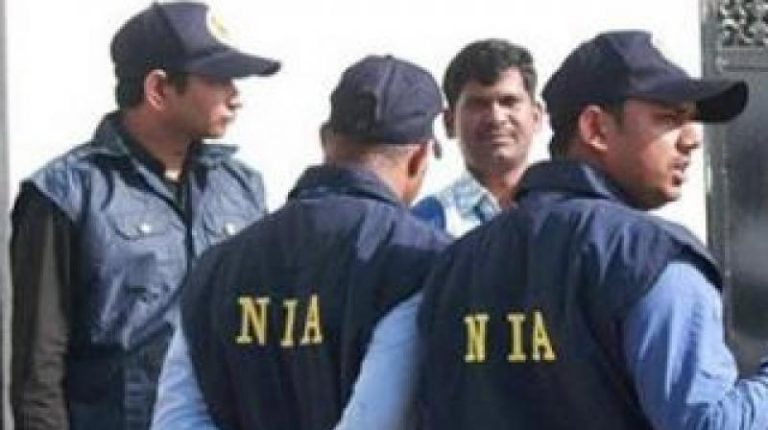
The National Investigative Agency (NIA) in a joint operation with the Uttar Pradesh anti-terrorism squad on Wednesday conducted searches in 16 locations in Delhi and Uttar Pradesh in connection with a new ISIS module named ‘Harkat ul Harb-e-Islam’.

Amroha district which is about 150 km away from the National Capital is being kept as the epi-centre for conducting these search operations.

An FIR related to this new wing which is suspected to have connections with ISIS has been registered by the Lucknow unit of the NIA and search operations are being carried out in collaboration with the UP ATS.

NIA officials have confirmed that the search operations are continuing.


The agency has put Amroha district in Uttar Pradesh on high alert. Based on preliminary investigations, the Delhi Police Special Cell and ATS have taken five people into custody for their suspected involvement with the terrorist organisation, three from Saidpur Imma village of Nogawa Sadat. They are being interrogated.

The NIA reportedly conducted this raid as it was suspected that terrorist Zakir Musa was currently hiding in Amroha district of Uttar Pradesh.

Earlier, the Punjab police had been put on high alert after terrorist Zakir Musa, Al-Qaeda’s commander and one of the most wanted, was spotted in Punjab on November 16. The intelligence inputs had claimed that the terrorist and his group may be moving towards the national capital, New Delhi.

More information awaited.

Indian fans livid as Australian cricketer racially abuses debutant Mayank Agarwal

0

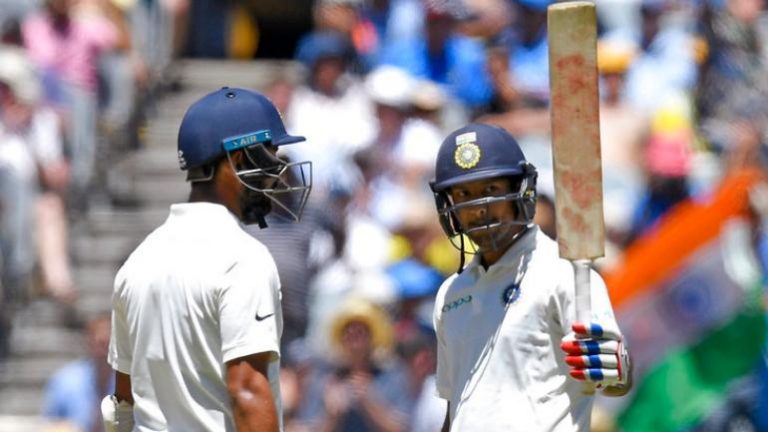
Kerry O’Keeffe, an undistinguished former cricketer from Australia and a radio show host has caused a massive controversy after his commentary took a racist turn to abuse Indian first class teams and also test cricketer Mayank Agarwal, who incidentally made his debut today at Boxing day test match at Melbourne.

Reportedly, former Australian leg-spinner O’Keeffe while commentating for Fox Sports tried to undermine the debutant Mayank Agarwal’s brilliant knock of 76 against the Australia cricket team at the MCG. O’Keeffe perhaps disturbed by the dominance of the Indian team against Australia went on the question the quality of Indian first-class cricket system by racially abusing players who play in domestic cricket.

O’Keefe said that players like Mayank Agarwal may have scored his 300 against “some canteen staff or waiters” referring to the spectacular runs he scored in India’s first-class cricket tournament, Ranji Trophy, which included a brilliant triple century against Maharashtra in 2017.

Social media users were shocked to the racist comments made by an underachieved cricketer against a batsman who has been performing brilliantly in the last couple of years. Some users took a strong offence against O’Keeffe for racially abusing Indians as “Canteen people” and “waiters”.


Another cricket fan said that the domestic tournaments which O’Keefe racially abused have produced great players like Virat Kohli, who has been hammering the Australian cricket team every time he tours Australia.


Melinda Ferrel, a sports journalist also dismissed the statements made by O’Keefe saying that it is not proper to ridicule first-class cricket tournaments.


The Australian Cricket team rocked by a humiliating Sandpaper-gate scandal recently has not performed well against the visiting Indian team as expected by their fans and Australian cricket management. Some of the Australians perhaps frustrated by the brilliant performance of the Indian cricket team has resorted to racial abuses to undermine their achievement.

Hardik Patel may contest upcoming Lok Sabha elections from Rajkot seat

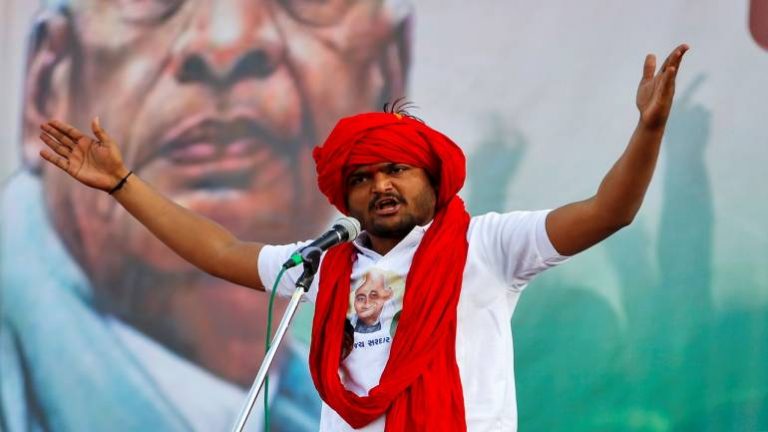
Patidar Anamat Andolan Samiti (PAAS) leader Hardik Patel who is spearheading the Patidar reservation movement is now contemplating contesting the upcoming 2019 general elections. For the same, he is expected to meet Dalit activist and Congress-supported ‘independent’ MLA from Gujarat, Jignesh Mevani and Gujarat Congress leader Himmat Patel.

As per reports, Hardik is preparing himself for the general elections and hence instead of spending time on reservation related programs, he is attending more political programs. For the first time, Hardik Patel, Jignesh Mevani and Congress leader Himmat Patel will publicly share stage on the forum of “Hamari Awaz, Hamara Adhikar” NGO.

Hardik could not contest the state assembly elections in Gujarat last year as he was few months short of 25 years. He is expected to contest from the Rajkot Lok Sabha seat.

The controversial Patidar leader rose to prominence when he led the reservation agitation in 2016 which quickly turned violent. Hardik Patel is now convicted for causing riots in Mehasana and has been found guilty of charges related to arson and creating a ruckus at the office of BJP MLA Rushikesh Patel. He is also accused of large-scale violence in the state of Gujarat during the 2015 Patidar Andolan seeking reservations for Patidar community. A sedition case is also going on against him in an Ahmedabad court.

Assam: A month after centuries old idol was stolen, Guwahati’s Ugratara temple to get a new idol

0

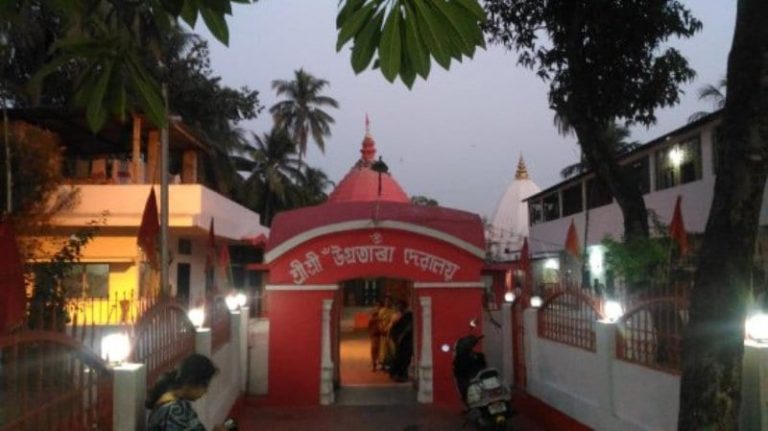
Days after the centuries-old idol went missing from a Guhawati temple, the Bardeuri Samaj and the Ugratara temple management committee at a meeting held under the presidentship of Doloi Parameswar Deva Sarma today decided to install a new Ashtadhatu (eight metals) idol of Goddess Ugratara at the temple.

Almost forty days after the main Astadhatu idol of Goddess Ugratara, that was inside the ‘Saktipeeth’ Ugratara Temple, was stolen from the heart of the Guwahati city, in the Uzan Bazar area, the police have not been able to locate the stolen idol so far.

The thieves in wee hours of November 16 had looted and vandalized the temple and took away the main idol besides valuables and offerings. Though the police had earlier successfully nabbed all the culprits, were unable to recover the stolen items.

According to the management of the temple, the idol will be brought from Kolkata. Members of the management committee will visit Kolkata during the first week of January.

“It is not proper to keep the temple without the idol and hence today’s meeting unanimously decided to install another idol. We have formed a committee to look into various aspects including the cost of making an idol. Only goldsmiths of Kolkata, Benaras and south India are into Ashtadhatu idol-making and we plan to install the idol by next Magh-Fagun,” Kailash Sarma, secretary of the temple management committee, said.

“We will also visit Varanasi and see if anyone can sculpt the Ashtadhatu idol of Goddess Tara,” said a member of the temple management committee.

The temple is likely to get the new idol before January 15, the day which is celebrated as Magh Bihu in Assam. It is the Assam celebration of Makar Sankranti.

The Ugratara Temple, dedicated to Goddess Tara, is located in the western side of Jor Pukhury tanks in the heart of the city in the Latasil locality. The idol has been worshipped in the temple since 1044 AD and the temple is revered as one of the 52 holy places of pilgrimage for the Hindus in the country.

Last month apart from this centuries-old idol, five other temples in Assam were vandalised and robbed within a few days.

Farmers lathicharged as severe mismanagement of urea supply rocks Congress-ruled Madhya Pradesh, Rajasthan

Within days of the Congress governments taking charge, Madhya Pradesh and Rajasthan are now facing severe outrage from the farmers in the state after the respective governments created a crisis by mismanaging the supply of urea.

According to reports, Rajasthan farmers are unable to procure urea which has led them to stand in long queues outside distribution centres. The farmers have started to protest against Congress-ruled state government which has resulted in clashes with the police in various districts of the state.

The newly elected state governments’ inability to distribute urea has a created a situation of shortage of urea during the crucial rabi season in both Madhya Pradesh and Rajasthan, which is further delaying their agricultural activities.

Ashok Gehlot, the Chief Minister of Rajasthan has been facing severe flak over the state for the crisis, but the Chief Minister had put the blame on the Centre claiming that the Urea crisis has been artificially created by the Centre after BJP’s electoral losses in these states. However, rejecting the claims of urea shortage, the Ministry of Chemicals and Fertilizers has provided details of monthly supply and stocks available at the state level and asserted that enough stock has been provided and the local distribution of urea is the responsibility of state governments.

Rahul Gandhi who claims to be the messiah of the poor has been totally silent on the issue of severe mismanagement in the state. Interestingly, Congress President Rahul Gandhi has appointed Ashok Gehlot as the chief minister of the state whose family members themselves have involved in alleged anti-farmer scams. Agrasen Gehlot, the brother of Chief Minister Ashok Gehlot, is himself accused in a fertilizer scam, where he had allegedly diverted a crucial ingredient used for making fertilizers.

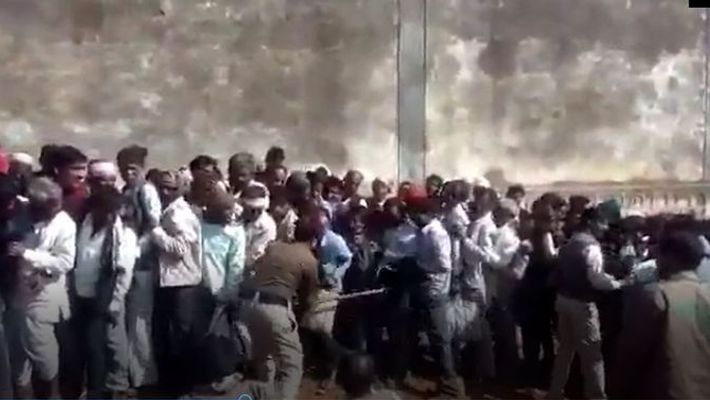
Meanwhile, as the urea crisis looms large, large queues of farmers to get the fertilizer are being reported from the states. In Madhya Pradesh, videos of farmers being lathicharged for have also surfaced.


Rahul Gandhi led Congress which came to power in various states promising several sops of loan waivers, high MSP to the farmers seems to have started on a very bad note. The Congress-JDS government in Karnataka has completely failed in waiving off farm loans which have resulted in two deaths of the farmers, while many farmers have also received repayment notices from the banks.

Meanwhile, two farmers have also lost their lives in the state of Madhya Pradesh after failing to repay the farm loans, as the Congress party brought in new conditions for waiving off loans contrary to Rahul Gandhi’s claim of unconditional loan waivers.

In a year when markets have sunk across the world, Modi’s India shines, tops China in corporate deals

The Wall Street Journal has found that India, under the leadership of Prime Minister Narendra Modi, with $92 billion in corporate deals has moved ahead of China as a favoured target.

Untitled

This is even more impressive when you think in terms of the fraction of GDP. Remember that China’s GDP is almost five times that of India’s. Despite such a huge gap, if India is able to beat the Chinese in terms of absolute numbers, it tells a story of the strength of the Indian economy under Modi.

The Wall Street Journal goes on to mention that:

Untitled.png

Don’t miss the part about the “better bankruptcy system”, a reference to Modi’s Insolvency and Bankruptcy Code (IBC), that has made defaulters address Rs 3 lakh crore of stressed assets out of fear of losing control over their companies.

Also, do not miss the part about how India was once seen as “bureaucratically sclerotic”. Wonder who pioneered the system that made India seem that way? Hint: some of our “visionary” Prime Ministers who awarded themselves Bharat Ratnas might be to blame.

The numbers in the Wall Street Journal also tell a story that is quite opposite to the narrative that some people with an agenda have been feeding the public for a while now. This applies in particular to JNU type economists, some “public intellectuals” who were expecting favours from the Modi government but didn’t get any and of course one very handsome ex-RBI governor.

The distinction of India being the “fastest growing (major) economy in the world” is Modi’s crown jewel which India has held for four straight years under Modi.

In comparison, India achieved the “fastest growing economy” status just twice in the 10 years of Dr Manmohan Singh. The first was in 2007-08, right before the crash. The second time was in 2009-10, just after the crash, when Dr Singh gave a massive stimulus package that boosted the economy for exactly one year before sending it spiralling downwards. Let’s just hope this is not the kind of “economics” they teach at Cambridge.

In contrast, Modi’s India has been unshakable at the top of the global GDP growth table. This achievement is even more remarkable when you consider the fact that this was achieved despite implementing a complete overhaul of the tax system with GST.

A lot of noise has been made over “faulty GST implementation”. Of course, there are going to be glitches when a $2.8 trillion economy of 125 crore people switch to a new tax system. But “faulty” compared to what? Which country has ever done a better job of GST implementation?

A quick comparison with GST implementation around the world shows just how spectacularly well GST was pulled off. Here is the chart that shows the effect of GST implementation in Australia.

Untitled.png

See that giant drop of 2% in GDP growth rate as Australia adjusted to GST? Now think of a developed country like Australia implementing GST with a population of just 2 crore people and a fully formalized economy. Imagine the challenges before India with its 125 crore people and massive informal sector.

And here is how Canada fared when they implemented GST:

Untitled.png

Watch! Canada went hurtling into an actual recession… with the economy shrinking by 2.1%.

And yet, India remained the world’s fastest growing economy as it implemented GST. Modi’s India did a better job of implementing GST with 125 crore people than developed Western countries like Australia or Canada could do with their 2-3 crore people!

The world over it is understood that GST is a near-term growth depressant that is an investment in the country’s future. Modi made this investment and he kept India secure from the worst that could have happened.

At the time when GST was implemented, anyone with sense would have given Modi a break as the whole of India adjusted to a radically new tax system, slowing down growth. But not those with an agenda. They wanted to make the most of the interim, blaming Modi for the near term slowing of growth.

But the world didn’t fail to notice that India remained the fastest growing economy. That it implemented GST and reined in defaulters with a new Bankruptcy Code. We have all heard how India jumped to No. 77 in the World Bank’s Ease of Doing Business rankings, up from Rank 142 of the Manmohan Singh years.

Now take a look at this

Look at the depressing picture of global markets for the year 2018:

Untitled.png

Sigh!

Wishing there were some bright spots somewhere in the world? Modi’s India is one and really the only one!

Untitled.png

The Indian market has gained 4.1% since the beginning of the year, making it #1 in the Asia Pacific Region. In fact, the last column shows that India is one of just 2 countries to give a positive return for the year 2018, the other being New Zealand, whose economy is tiny compared to ours.

Just look at Europe! Everything down in the deep red for the year 2018:

Untitled.png

The “best” performer seems to be a small Hungarian market that is up by a mild 0.5%. Everything else in Europe seems to be down by almost double digits!

This is the story that they will not tell you. In a year when markets have sunk across the world, Modi’s India shines.

Why? Because we are the fastest growing economy in the world. Let’s not forget that. Don’t let “mahaul” win over “data”.


Law minister Ravi Shankar Prasad asks the Supreme Court to fast-track hearing in the Ayodhya title suit

0

Union law minister Ravi Shankar Prasad has said that the Supreme Court should fast-track the hearing in the Ayodhya title suit. Speaking at the Akhil Bharatiya Adhivakta Parishad in Lucknow on December 24, he said that if the apex court can hear the Sabarimala petitions on an urgent matter, same can be done with the Ayodhya case also which is pending for a very long time.

Clarifying that he was making this comment in his personal capacity and not as a minister in the central government, he said, “I appeal to the Supreme Court in my personal capacity to hear the Ram Janmabhoomi issue like fast-track court for a prompt disposal of the case.”

“When the Supreme Court can give its verdict on the Sabarimala Temple case promptly, why is the Ram Janmabhoomi issue pending for the past 70 years,” the minister asked. He also said why we must Babar. He said that the Constitution mentions Ram, Krishna, even Akbar, but Babar is not mentioned. He added that a different kind of controversy is created when people talk about such topics.

The Union Law Minister also made a significant announcement that an all India judicial services system may be formed for the appointment of judges in future. Recently, the Niti Ayog also had suggested an All-India judicial services examination on a ranking basis to maintain high standards in the judiciary, as a part of judicial and legal reforms. A report prepared by the Ayog said that UPSC may be entrusted with the responsibility to select judges for lower judiciary, Indian Legal Service, public prosecutors, legal advisors and legal draftsmen.

The union government is trying to form a consensus to bring an all-India service to recruit judges for the lower judiciary, but it has met with opposition from judges at several high courts. The proposal to set up an All-India Judicial Service (AIJS) was first mooted in 1961, but it has not materialised so far.

The impact on India’s economy of demonetised currency returning to banks

In November 2016, Prime Minister Modi announced the withdrawal of two high-value currency denominations from circulation with immediate effect. Some social media economists and mainstream journalists had speculated that a large chunk of unaccounted cash may not return to the banks, thus resulting in a windfall for the government.

When most demonetised currency returned to the banks, questions were raised on the success of demonetisation itself. However, evaluating demonetisation’s success on this basis alone would be jumping the gun.

In December 2016, Tim Worstall in his article in Forbes had argued that  –

The only practicable method of retaining the value of those old notes was to deposit them into the banking system.

However, we should also note that those same amounts of cash which have been deposited are now inside the reporting system for tax. And undoubtedly there will be some decent portion of those deposits which were formerly black money and which now will be righteously taxed.

In other words, a chunk of currency not returning to banks would have ensured a large but one-time dividend to the government. On the other hand, most money returning to banks would ensure sustained benefits in tax revenue spread over the long term.

Two years later now in December 2018, data on tax revenue has confirmed this hypothesis, as detailed below.

Expansion of Taxpayers base

  • Per published data, the number of Income Tax returns have zoomed by 57% since demonetisation
    • IT returns filed in FY14 were 3.79 crore
    • IT returns filed in FY16 was 4.36 crore, implying that growth over 2 years period before demonetisation was 15%
    • IT returns filed in FY18 was 6.84 crores, implying that growth over 2 years period after demonetisation was significantly higher at 57%
  • Number of High Net Worth individuals, declaring income above Rs 1 crore, has surged by 68% since demonetisation
    • Filers with 1 crore+ declared income in AY15 were 48,416
    • Filers with 1 crore+ declared income in AY18 were 81,344 (up by 68%)
    • Filers with 1 crore+ income, added in 69 years before demonetisation were 48,416
    • New filers with 1 crore+ income, added in just 2 years after demonetisation were 32,928

A surge in Direct Tax collections

  • The direct tax growth rate has soared to a 7 year high of 17%
    • FY15 – 8.9%
    • FY16 – 6.9%
    • FY17 – 14.6% (noticeable jump in growth rate after demonetisation)
    • FY18 – 17.1%
  • Direct tax buoyancy has more than tripled after demonetisation and touched 1.9
    • FY16 – 0.6
    • FY17 – 1.3
    • FY18 – 1.9
    • from FY08 to FY16, direct tax buoyancy had hovered between 0.5 and 1.1
Source: Financial Express
  • Higher tax buoyancy after FY16 indicates increasing tax compliance
    • At Tax buoyancy of 0.5, an 8% increase in GDP results in (0.5 * 8) only 4% increase in tax revenue for government
    • At Tax buoyancy of 2.0, an 8% increase in GDP results in (2.0 * 8) 16% increase in tax revenue for government
    • Hence, with the same economic growth, the government can now expect a much higher tax collection year after year to spend on healthcare, education and infrastructure development

Exponential growth in Digital Payments:

Lack of cash during demonetisation provided the necessary impetus to bring behaviour change in consumers adopting digital payments. As per the data published by National Payments Corporation of India (NPCI):

  • UPI (India’s homegrown payment system) based digital payments in India have grown exponentially since 2016
    • the number of transactions:
      Aug 2016 – 93,000
      Nov 2018 – 52.5 crore (up by 5,645 times)
    • value of transactions:
      Aug 2016 – 3.1 crore
      Nov 2018 – 82,000 crore (up by 26,451 times)
Source: India Brand Equity Foundation
  • Morgan Stanley has reported that digital payments are up almost three times, from 2.5% of GDP to 7% of GDP
  • The proportion of cash transactions in total consumer spending has reduced by 10% (from 78% in 2015 to 68% in 2017) as reported by the head of payments practice for the Asia Pacific at Boston Consulting Group
  • The exponential rise of digital payments in India received global attention and was covered extensively in Forbes, International Business Times, livemint, Entrepreneur, Financial Express, Bloomberg and other business publications

Deposited amounts are traceable to source and are under scrutiny

  • During demonetisation, deposits were made in about 1 crore bank accounts
  • Just 1.5% of these accounts (about 1.5 lakh accounts) hold more than two-thirds (Rs. 10 lakh crore) value of deposits with an average deposit of Rs. 3.31 crore in each account
Data Source: Time of India
  • So far, 18 lakh accounts where deposits do not match known sources of income have been discovered. Tax notices have been sent to them and recoveries are expected from many
  • The outcome and status of government scrutiny are accessible on the government portal for Operation Clean Money. Few prominent Success Stories of such tax recoveries and detailed reports are accessible on the portal
  • Many companies who deposited large cash amounts were later found to exist only on paper. Many such companies have not come forward to claim those deposits due to fear of legal action. Per MoneyControl, such unclaimed deposits amount to Rs. 37,500 crore as of now

It must be understood that since demonetisation in November 2016, only one tax cycle has been completed so far.

  • Demonetisation – November 2016
  • End of Fin Year – March 2017
  • Next End of Fin year – March 2018
  • Tax filing deadline – August 2018

Individuals who deposited large amounts during demonetisation would be cross-checked for their tax filing in AY18 and subsequent future years. Hence, the benefits of demonetisation need to be evaluated over a long-term into future.

The pre-mature clamour based on single dimensional criteria of “all the money came back to banks” is meaningless by itself.

Andhra Pradesh: Pregnant cow brutally raped and assaulted, locals demand arrest of culprits

0

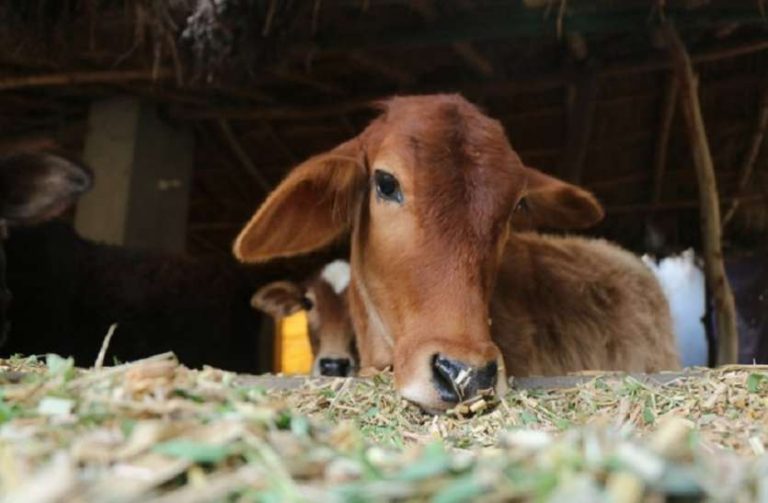
In a barbaric incident, a three-month pregnant cow in Andhra Pradesh’s East Godavari district was brutally assaulted and raped by unidentified men.

The police received a complaint from a dairy farmer named, Nama Buchicharaju, who alleged that his cow had been missing since Sunday in the district’s Pithapuram Mandalam area. After a search operation conducted, the animal was found tied to a nearby tree with bleeding genitals, a police officer said.

A local veterinarian confirmed that the cow was sexually assaulted. The Pithapuram rural PS police registered a case under section 2(1) (a) of Prevention of Cruelty to Animals Act 1960 and a probe has been initiated to ascertain more details.

As soon as the news spread, locals gathered in the police station staging protest, demanding the arrest of the accused.

Many incidents of bestiality and barbarism towards animals have been reported in recent months.

In a shocking incident earlier this month, two men named Nafees and Tauseef were arrested for raping a stray dog in Ghaziabad, Uttar Pradesh and dragging her to death after tying her behind a scooter.

In Baghpat of Uttar Pradesh, a youth named Arif was also arrested for allegedly raping and killing a four-month-old calf. Prior to that, it was reported from Mewat, Haryana, that eight men had raped and killed a pregnant goat.