Home Blog Page 6900

Delayed again: Supreme Court rejects plea seeking an early hearing in Ram Janmabhoomi case

0

The Supreme Court on Monday rejected a petition seeking an urgent hearing in the Ayodhya title suit. The petition in the apex court was filed after the apex court had deferred the hearing on the matter till January, reported ANI.

The Supreme Court was hearing a plea filed by Akhil Bhartiya Hindu Mahasabha seeking an early hearing of the Ram Janmabhoomi case. A bench comprising Chief Justice Ranjan Gogoi and Justice SK Kaul observed that the petitions had already been listed in January.

“We have already passed the order. The appeals are coming up in January, permission declined,” the bench said while rejecting the request of early hearing. The petition was brought by lawyer Barun Kumar Sinha, appearing for Akhil Bharat Hindu Mahasabha.

The Supreme Court on October 29th had adjourned hearings in the Ayodhya dispute until January next year. The Supreme Court has also said that it will decide in January whether the case should be heard in February, March, April or after that.

The Apex Court was hearing a batch of pleas challenging Allahabad High Court’s 2010 verdict which had divided the disputed site into three parts. The order had awarded one-third portion each to the Nirmohi Akhara, the Sunni Central Wakf Board of UP and Ramlalla Virajman.

The Court will now hear the case in the first week of January for fixing a schedule for hearing.

The demand for the Ram Mandir at Ayodhya has been steadily growing as several Hindu groups have come out on the streets against the Supreme Court’s decision to postpone the hearing. The Hindu organisations are also planning the future course of action regarding building the Ram Mandir at Ayodhya. Recently, more than 3000 Hindu saints from all the 125 communities of the Hindu religion had come together in Delhi to discuss the crucial issue of building Ram Temple in Ayodhya.

Various Hindu Organisations including the RSS have been putting severe pressure on the BJP to bring in an ordinance relating to the early construction of Ram Mandir. RSS has said that it will take up another agitation similar to the one in 1992 “if needed” in order to ensure the construction of a Ram temple in Ayodhya.RSS Chief Mohan Bhagwat at his annual Vijayadashami celebration speech had urged the Narendra Modi-led BJP government of bringing in a law to build a Ram Mandir at the disputed land in Ayodhya.

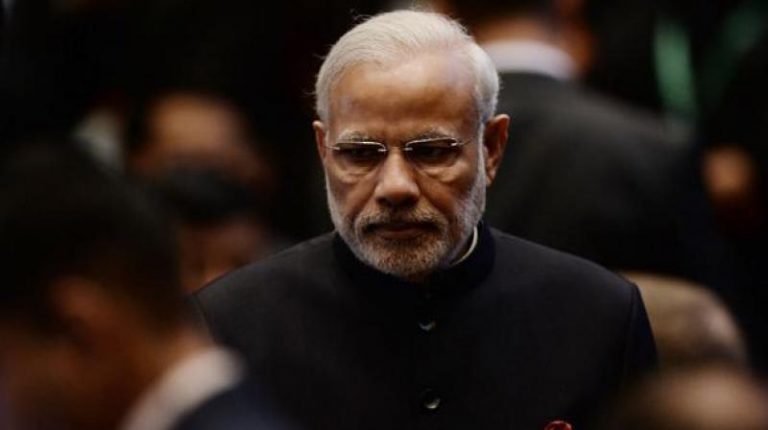
PM Narendra Modi has drawn a straight line between Urban Maoists and Maoist Terror

Prime Minister Narendra Modi, in a recent election rally, spoke about how Urban Maoists live in big cities but wreck the lives of those living in rural areas. He also spoke about Congress’ support to these Urban Maoists.

This needed to be said.


All my life I have wondered. How come no leftist sitting in a TV studio, a university or a think tank is ever asked to answer for what left-wing extremists are doing in this country?

On the other hand, the left has never been shy of connecting any transgression, no matter how small, committed by a right-winger (real or perceived) directly to the Hindu right. Some right winger on Twitter posts an angry tweet directed at a woman. Within minutes the left wing propaganda news channels and websites are buzzing: Modi must answer.

Meanwhile, liberal terrorists are carrying out an armed occupation of large parts of the country. Literally, hundreds of people are murdered by these liberal terrorists. But don’t you ask the oily liberal sitting in TV studios and lecturing us about democracy. Apparently, we must learn to respect the difference between CPI(XYZ) and CPI(X) and CPI(XY) and CPI(XY)(Z) faction.

Total nonsense. Typical of terror outfits to conceal their hands behind a maze of political organizations.

Somebody needed to talk about the front organizations for liberal terror operating in our TV studios think tanks and universities. PM Modi has gone to Bastar, the heart of liberal terror and drawn a straight line linking fashionable liberals to their terrorist arm.

The people of India deserved to hear this said out loud.

Above all, the local people of Bastar needed to hear this. The liberals enjoy life in air-conditioned luxury, send their children to study in America. And when (and if) they return, they have cushy jobs waiting for them, all provided by the liberal cocktail circuit. They are promoted as “intellectuals” and opinion makers in media and academia.

Meanwhile, the poisonous ideology flowing from the liberals in Lutyens is disseminated with pamphlets and guns to youngsters in Bastar. While the youth is sucked out of Bastar and sent to perish in the forests for a rotten cause, the liberal masterminds are sipping government subsidized wine at the top clubs in Delhi. Occasionally, a liberal will actually grab some forest land from local Adivasis and build a nice bungalow where they can come and chill out for vacation.

During these vacations, these creative liberals will take notes about the “struggle” of adivasis against the Indian state. These notes are then polished for a global audience.  Multi-million dollar book deals are struck and then the liberal flies around London and New York collecting adulation and awards.

Remember that TV media cried for a week when some “tribal rights activist” was put under “house arrest”, whatever that means.

Remember that Trilochan Mahato was an actual tribal. He was just an 18 year old boy. And because he supported BJP, the liberal goons murdered him and hung his body from a tree. It was all so brazen that liberals even wrote on his shirt that he was being murdered for supporting BJP. The liberal TV media barely even covered this story.

Remember how surrendered Naxal Pahad Singh, who was interviewed by OpIndia, claimed that he saw Arun Ferreira, one of the arrested Urban Maoists in a central committee meeting deep in the jungles. He was a tribal. Remember how he was trashed and discredited when he said that these ‘jobless intellectuals’ are responsible for the bloodshed of Adivasis.

Tribal rights “activists” matter. An actual tribal doesn’t matter. See?

Today, more than ever, we need to be conscious of the danger of Urban Maoists among us.

Let me tell you why. Because after the collapse of the Soviet Union and the political collapse of overtly Stalinist parties in India, the left has made a crucial change of strategy. 

In the past, the left tried to enforce its ideology through armed invasion and occupation. In Bengal, leftists would break into the homes of dissenters, slaughter them publicly and then make the mother eat the rice soaked in the blood of her sons.

The liberals realize that those days are over. Their terrorism claimed thousands of lives but ultimately it did not manage to overthrow the Indian State. 

The left has now changed its tactics.

The left is now selling its ideology on the free market. Like ISIS. 

And remember that the free market is always the most efficient way to distribute something.

Instead of invading people’s homes by breaking down the front door, the sinister liberal has found a smoother way. They can just enter your home through your television, through the social media on your computer and the newspaper left on your front door. When your young son or daughter goes to school or college, there is a liberal waiting to teach him how to be a traitor.

In the language of social justice, of course. They have mastered the art of using the devices of the Indian state to destroy it.

The Stalinist of yesterday has become the human rights activist of today.

Dig into the histories of the liberals you see on TV. You will find their roots in college AISA and SFI unions. Some of the older liberals and their friends will openly tell you about the heady days of the 1970s when they dreamed of “revolution” and possibly worked for it.

Do not be fooled. There is no such thing as an ex-Communist.

They have merely changed their strategy. But they still serve the same master. And their objective is precisely the same: the overthrow of the Indian state.

This is an information war. Like ISIS, the liberals understand advertising, PR strategies and mass psychology very well. They market social justice, in the same way, ISIS recruiters on the web package and sell the vision of an “Islamic Caliphate” to impressionable people everywhere.

The antidote is to tell people about the reality of the Islamic State, the atrocities they carry out and the horrors of life under ISIS.

Similarly, we can stop the Communist evil only by lifting the curtain and exposing the direct line from liberal intellectuals to Maoist terrorists. Like ISIS agents online, the urban Maoists offer utopian visions of a wonderful and fair world. The reality is that they want to recruit people to carry out mass murder in the forests of Chhattisgarh.

Every Indian deserves to know this.

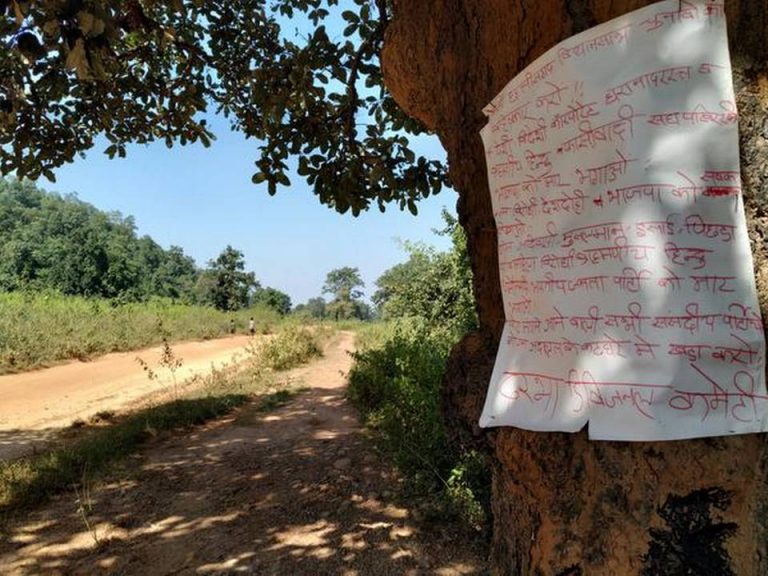
Chhattisgarh: A day before voting, Maoists put up posters threatening villagers to boycott elections

As the first phase of the assembly elections is underway in 18 out of 90 assembly constituencies in Chhattisgarh, the Maoists in Chattisgarh have threatened the local villagers of Dantewada, Bijapur and Sukma to not only ‘boycott’ the elections but also to vacate the area.

Image courtesy: AajTak

Naxalites wrote in their posters, “Boycott the fake Chhattisgarh assembly elections, the imperialism, the Brahmin Hindutva, the fascist beating the BJP. Stand in public court for other political parties who come to demand votes.”

According to the reports, the Maoists occupying the forest interiors have put up posters not only to boycott the polls but also the “Government backed by the corporates”. The posters are being put up by the Darbha Divisional Committee, which was responsible for the attack on Congress leader Mahendra Karma and his team ahead of the 2013 polls.

The Maoists have also resorted to vandalism and blackening of the EC posters put up to encourage voting in Maoist affected areas. The EC notices around polling booths in areas of Hiroli, Pirnarh or Perpa under Samalwar panchayat have been vandalised by the Maoists and have painted their slogans, flags or messages all around EC notice, asking the police and officials to leave the village.

“Seems they [Maoists] want their presence felt and we even had to carry three trucks of banners and posters out of Bhairamgarh area a few days back, to clear the area of Maoist material,” a senior police official said.

Samalwar panchayat chief Nandram Madkams said that the tribals around the village are completely helpless. He added that the Maoist cadre are carrying out meetings in villages, telling the villagers not to vote.

Earlier today Naxals set off Improvised Explosive Devices (IED) on Tumakpal-Nayanar road at around 5:30 am to target the security forces before the polling began in Naxal-affected Dantewada region of Chhattisgarh today. In Sukma, a makeshift polling booth was set up under a tree after an IED was detected nearby.

The first phase elections are being conducted on Monday in 18 assembly seats across seven districts in Chhattisgarh’s Maoist-affected areas across seven districts in Naxal-affected Bastar region and Rajnandgaon district. Reportedly, the officials of Election Commission of India along with the state administration have deployed 100,000 security personnel and nearly 900 election officials, who are being air-dropped from helicopters to their polling stations to ensure their safety.


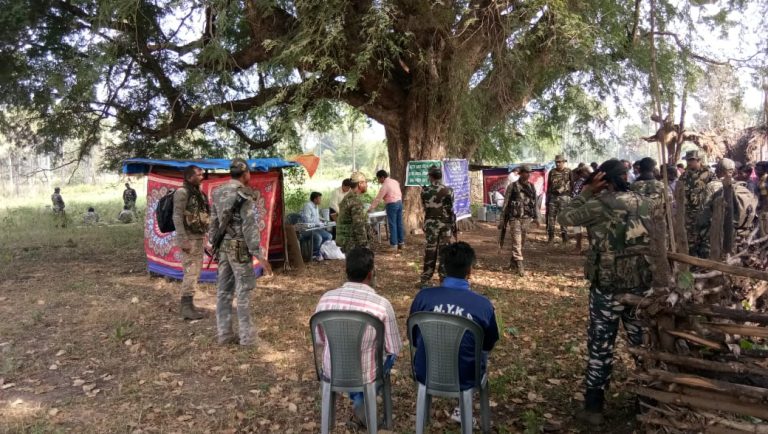
Chhattisgarh: Makeshift polling booth established under a tree in Sukma after IED was detected

After an IED (Improvised Explosive Device) was detected in Konta’s Bonda, a makeshift polling booth was created under a tree in Sukma, one of the districts of the Naxal-affected ‘Red Corridor’.


Earlier we had reported how Naxals blasted an explosive minutes before polling began in Dantewada. An IED was also reportedly recovered in Bijapur where PM Modi is expected to address a public rally in few hours.

10.7% voter turnout is reported till 10 am in the first phase of elections in 18 constituencies.

Voting is underway in 18 assembly constituencies today, of which 12 seats are considered ‘Naxal hotbed’. As Chhattisgarh prepared itself for the assembly elections, many parts in the state saw setting up of polling booths for the first time. Katekalyan’s Talem village of Dantewada is one such village.

Out of total 90 assembly seats, 18 are up for polls today. Remaining will vote on 20th November. The counting will take place on 11th December.

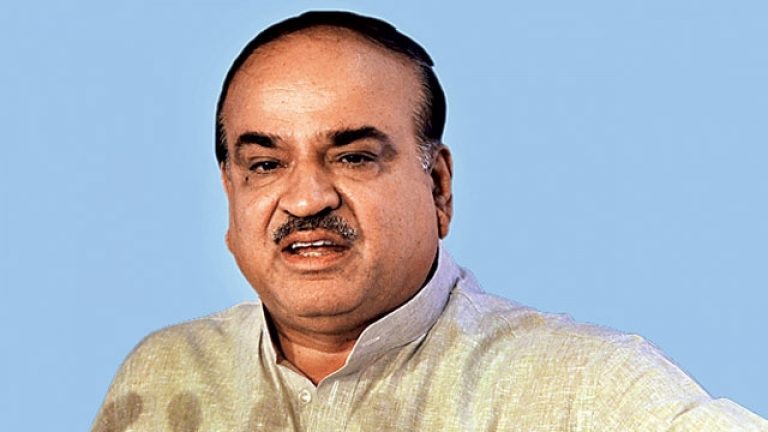
A look back at the life of Union Minister Ananth Kumar as he passes away at 59

Union minister HN Ananth Kumar, 59, passed away in Bengaluru in the early hours on Monday. He was suffering from severe complications and infection and was on ventilator support for the last few days.

The mortal remains of Ananth Kumar will now be taken to his house in Bengaluru and it will be placed in National College Grounds.

Union Minister Ananth Kumar was born into a middle-class family of Shri Narayan Shastri and Smt Girija N. Shastry on 22nd July 1959. He graduated in the faculty of Arts (B.A) from K.S.Arts College at Hubli and later, completed his bachelor’s in law (L.L.B) from J.S.S. Law College in Mysore.

When in college, inspired by nationalistic belief, he joined Akhila Bharatiya Vidyarthi Parishad (ABVP) to begin his political career. He rose to become one of the most popular and influential students’ unions leader in Karnataka.

Ananth Kumar rose to fame when he participated in the movement against Indira Gandhi government in 1975-77. Inspired by Jayaprakash Narayan, he protested and fought against the Emergency and was imprisoned at the age of 16.

Ananth Kumar has extensively worked at the grassroots level and has served various positions in ABVP to become National Secretary in 1985. In 1987 he entered active politics by joining the Bharatiya Janata Party. Ananth Kumar with his exceptional organisational skills took the challenge of building Bharatiya Janata Party in the southern state of Karnataka. In 1995 he was appointed as the National Secretary.

He contested and won his first elections in 1996 from Bangalore South constituency. He was a member of various committees coming under the ministry of railways and industry. In 1998 he was inducted into the Union Cabinet headed by Atal Bihari Vajpayee as the Minister for Civil Aviation. He is widely considered to be the man behind the development of present Kempegowda International Airport at Bangalore.

In 1999, he won his third term from Bangalore South Lok Sabha constituency and became one of the most important Cabinet ministers in the NDA government. He handled various ministries including Tourism, Sports & Youth Affairs, Culture, Urban Development and Poverty Alleviation.

During his term as the Cabinet Minister, he began to put together a National Urban Transport Policy, which became the blueprint for developing Metro Rail projects at Kolkata, Ahmedabad, Delhi, Lucknow, Mumbai, Hyderabad & Bengaluru. Union Minister Ananth Kumar is also responsible for the development of Namma Bengaluru Metro project, which was approved by the then Vajpayee Cabinet in 2003.

In 2003, Ananth Kumar became the President of the Karnataka BJP, which is often cited as the golden era for Karnataka BJP. For the first time, under his leadership, BJP emerged as the single largest party in the elections in 2004 with 79 seats in the State Assembly and 17 seats in the Parliament.

Ananth Kumar is credited to be the person behind BJP’s rise in the southern states. Made National General Secretary from 2004 onwards, he played an important role in building the BJP in Madhya Pradesh, Jharkhand, Chhattisgarh and Bihar.

He successfully won his sixth term to Lok Sabha in 2014 from Bangalore South constituency. He was the Union Cabinet Minister for Chemicals, Fertilizers & Pharmaceuticals in the Modi Cabinet in 2014 and initiated reforms in fertilizers sector by bringing revolutionary changes like the adoption of Neem Coated Urea and reviving & restarting the then fertilizer sector.

In July 2016, he was assigned the portfolio of Parliamentary Affairs in addition to Chemicals, Fertilizers & Pharmaceuticals. As the Minister for Parliamentary affairs, he ensured that the historic constitutional amendment for the GST (Goods & Services Tax) was passed unanimously in the Lok Sabha & Rajya Sabha.

Chhattisgarh: 900 officials and security personnel air-dropped to polling stations to ensure safety

As Chhattisgarh goes to vote in the first phase of the assembly election, as many as 900 officials along with security personnel were air-lifted and dropped to their polling stations to ensure their safety.


The first phase elections are being conducted in 18 assembly seats in Chhattisgarh’s Maoist-affected areas across seven districts in Naxal-affected Bastar region and Rajnandgaon district. Chief Minister Raman Singh is contesting from Rajnandgaon where Congress has fielded Atal Bihari Vajpayee’s niece Karuna Shukla against him. Raman Singh will be fighting to secure his fourth term as the Chief Minister of state.

Reportedly, the officials of Election Commission of India along with the state administration have deployed 100,000 security personnel and election officials, who are being air-dropped from helicopters to their polling stations to ensure their safety. In the first phase, 190 candidates are in the fray and as per electoral rolls, there are 31,80,014 voters.

The first phase to elect members to Chhattisgarh Legislative Assembly will be held today, while the second phase will be held on November 20th. The results of Chattisgarh polls will be declared along with other five state election results on December 11.

Chhattisgarh: Naxals blast explosives minutes before polling begins in Dantewada’s Katakalyan block

Naxals set off Improvised Explosive Devices (IED) minutes before the polling began in Naxal-affected Dantewada region of Chhattisgarh today.


As per reports, IED was triggered by Naxals on Tumakpal-Nayanar road at around 5:30 am to target the security forces. No harm to security forces as well as polling party has been reported. An IED has also reportedly been recovered in Bijapur.

Voting is underway in 18 assembly constituencies today, of which 12 seats are considered ‘Naxal hotbed’. As Chhattisgarh prepared itself for the assembly elections, many parts in the state saw setting up of polling booths for the first time. Katekalyan’s Talem village of Dantewada is one such village.

As a runup to the elections, Dantewada saw a spike in Naxal attacks on security personnel. In October, the Naxals attacked a patrolling party in Anantpur area of Dantewada in which Doordarshan TV crew member Achutyananda Sahu lost his life and two CRPF personnel were martyred as well. Before that, the Naxals barged into the BJP leader Nandlal Mudami’s house and grievously bludgeoned him. A day prior to that incident the Naxals ambushed a bullet-proof bunker vehicle killing 4 CRPF personnel and seriously injuring 2 others. In September, the Naxals had issued a warning to the locals in their stronghold of Bastar and Kanker region to desist from voting in the upcoming assembly elections.

Not just that, a day before Prime Minister’s rally in Chhattisgarh, Naxals blew up a CISF vehicle in Dantewada where 1 CISF personnel and 3 civilians lost their lives.

Out of total 90 assembly seats, 18 are up for polls today. Remaining will vote on 20th November. The counting will take place on 11th December.

Chhattisgarh Congress Vice President Ghanaram Sahu resigns hours before first phase of state assembly elections

In a major blow to the Congress party, Chhattisgarh Congress Vice President Ghanaram Sahu has resigned just hours before the state goes for voting in the first phase of state assembly elections tomorrow, 12th November. He submitted his resignation to Chhattisgarh Pradesh Congress Committee chief Bhupesh Baghel today and is expected to joint the BJP tomorrow in presence of BJP President Amit Shah.

In a letter accessed by Republic TV, Sahu has hit out on party’s state president Baghel and the OBC wing president Tamra Dhwaj Sahu accusing the latter of having an anti-women. Last month, Chhattisgarh Congress’ working president Dam Dayal Uike had quit Congress and joined the BJP. Uike is considered one of the influential leaders in the tribal regions.

He has been a three-time MLA, of which two times he had fought on Congress ticket. Sahu had won elections as an independent candidate in 1972 and became a Congress member in 1977 and fought elections on Congress ticket which he won by 11,000 votes. In 1998, he was again given ticket from Congress which he won by 9,000 votes. However, he lost elections on Congress ticket in 2003 and 2008 from Gunderdehi constituency. He had been asking for a ticket from Gunderdehi constituency for 2018 but he had not filed his nomination.

Chhattisgarh goes to voting for the first phase tomorrow, 12th November and second phase will take place on 20th November. The counting will take place on 11th December along with the other four states, Rajasthan, Madhya Pradesh, Mizoram and Telangana.

Bihar: Four minors missing from Patna’s Asha Kiran shelter home, search operations underway

0

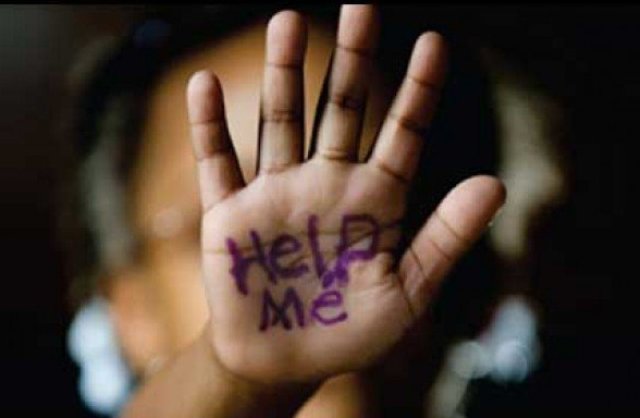
Nearly six months after the Muzaffarpur shelter home rape case, which had sent the country into a deep shock, four women have been reported to be missing from Patna’s Asha Kiran shelter home on Sunday. A case was registered in Pataliputra police station and search operation was underway.


Thane in-charge, TN Tiwari confirmed that all the four girls who went missing were minors. One of them was aged twelve, while the rest three were sixteen years old.

The sordid incident of children of shelter homes in Muzaffarpur being sexually abused and tortured came to light in June this year when the Tata Institute of Social Sciences (TISS) submitted a report, based on conversations with several girls at the home.

Underage girls residing at the Seva Sankalp Evam Vikas Samiti shelter home had been allegedly raped and tortured by the officials and employees of the shelter home. Most of the girls affected were speech impaired and according to the medical reports, 34 out of 42 inmates were allegedly raped.

The prime accused in the Muzaffarpur rape case, Brijesh Thakur, who had kept media abuzz by confirming that he was set to contest elections on Congress ticket was, however, arrested and last month the Supreme Court directed for shifting him to Patiala prison from Bihar’s Bhagalpur jail.

Recently, Chandrashekhar Verma, the absconding husband of former Bihar social welfare minister Manju Verma who had stepped down following allegations against her husband having links with Brajesh Thakur, the prime accused in the Muzaffarpur shelter home sex abuse case, surrendered before a court.

Seventeen people, including Thakur, have been arrested so far in the case and the agency is on a lookout for five more.

Pakistan’s Philatelic brazenness: Waging a proxy war against India one Stamp at a time since 1954

“One cannot wage war under present conditions without the support of public opinion, which is tremendously molded by the press and other forms of propaganda.”

–Douglas MacArthur

In the last week of September this year, a furious India called off a meeting between External Affairs Minister Sushma Swaraj and her Pakistani counterpart Shah Mehmood Qureshi at the UN citing the release of postal stamps “glorifying” Hizbul Mujahideen Militant Burhan Wani who had been gunned down by the Indian Army in Kashmir.

Pakistan had released a Miniature Sheet of 20 stamps on July 8 this year to commemorate ‘Kashmir Martyr’s Day’.

A spokesperson of the MEA explained: “The latest brutal killings of our security personnel by Pakistan-based entities and the recent release of a series of 20 postage stamps by Pakistan glorifying a terrorist and terrorism confirm that Pakistan will not mend its ways.”

Terming the stamps as ‘Atrocities in Indian Occupied Kashmir’, the stamp set features stamps on human shields, victims of alleged chemical weapons, pellet guns, fake police encounters, braid chopping etc. The brochure issued with the stamp set gives a detailed commentary on these.

In her address at the United Nations, a combative Sushma Swaraj lambasted the duplicitous actions of Pakistan and thundered “The country prints postage stamps glorifying terrorists. If we do not act now, we will have to deal with conflagration later.”

This was a watershed moment in India’s Kashmir diplomacy as successive governments since independence, had turned a blind eye to Pakistan’s use of postage stamps as instruments of its brazen propaganda on Kashmir.

Propaganda has been the most effective tool for oppressive regimes to garner public support for their own ill deeds. Since 1947, Pakistan has perfected the art of fooling its people into believing what its all-powerful Army desires; a continued state of hostility, aggression vis-à-vis India and perpetual claim on the Indian State of Jammu & Kashmir.

Having suffered reverses in Operation Gulmarg in 1947 to capture Kashmir, Pakistan hit upon the idea of fooling its own people and the world community into believing that it had a legitimate claim over the erstwhile Princely State of Jammu & Kashmir. One clever tool in its bag of dirty tricks was Philately.

Stamps are perfect means of propaganda; cute little pictures often used to honour a nation’s heroes, momentous events, symbols and culture. Stuck on envelopes, they reach the far reaches of the country as well as across the world.

As early as 1954, Pakistan issued 2 stamps; the first of these of 9 pies denomination had a mountain peak in Gilgit with Pakistan’s flag.

The second stamp of 2 Annas denomination was on the Conquest of Mount K2; both areas were part of the erstwhile Princely State of Jammu & Kashmir and under illegal occupation by Pakistan.

In 1955, Pakistan went further and issued a set of 3 stamps, which depicted the map of what was at that time, West Pakistan. The stamps again conveniently showed the Pakistan Occupied Kashmir (PoK) as a permanent part of Pakistan.

Bolstered by the lack of challenge by the international community to its earlier blatant efforts, Pakistan released a set of 4 stamps in 1960. All these stamps depicted the area of Indian State of Jammu & Kashmir as ‘JAMMU & KASHMIR (FINAL STATUS NOT YET DETERMINED).

The First Day Covers of the set were even more inflammatory and stated ‘The correct position of Jammu & Kashmir vis-à-vis Pakistan & India March 23 1960’.

Clearly, by now Pakistan had changed its tactics and was laying claim to the entire state of Jammu & Kashmir. Pakistan was not making any headway in the battlefield or in international diplomacy, but it had already usurped entire Kashmir in stamps.

True to its position, in 1974 Pakistan issued another stamp of 20 paise denomination, titled ‘Shahrah-e Pakistan’.

The map showed PoK as part of Pakistan, while it depicted the Indian State as ‘Disputed territory’.

To maintain its illegal stand over Jammu & Kashmir and to fool its own people and the international community, Pakistan issued a set of 2 stamps in 1982 as part of its Independence Day celebrations.

The 85 paise stamp in this set had a map of Pakistan, which again depicted the Indian State of Jammu & Kashmir as ‘Disputed Territory’.

Evidently, Pakistan was working on a two-pronged strategy; that of legitimizing its own illegal occupation of part of J&K and also disputing the accession and merger of State of Jammu & Kashmir in the Indian Union. The lack of any appropriate response from India too helped its cause.

Postage stamps were an established tool of in its propaganda armamentarium by now. However, it was in 1985, that Pakistan’s philatelic brazenness reached its pinnacle. To commemorate the first ever SAARC meet in December in Bangladesh, Pakistan issued a set of 2 stamps, in which the 1 Rupee stamp depicted Jammu & Kashmir as a separate state from the Indian Union!

The Indian delegation was alerted to this incident and Prime Minister Rajiv Gandhi put his foot down and had a chat with the Pakistan PM Zia ul Haq, and demanded the stamps be withdrawn. Bowing to the pressure exerted by India, Pakistan had to withdraw the stamp set.

Unchastised by the previous experience, Pakistan issued yet another stamp and miniature sheet in 1997, which showed the map of Pakistan and depicted Jammu & Kashmir as ‘Disputed Territory’.

Pakistan, continuing its philatelic warfare issued a set of 3 stamps in 1999 to mark the silver jubilee of Allama Iqbal Open University, with the 5 Rupee stamp in the set showing PoK as part of its territory and the rest of Jammu & Kashmir as an independent country.

In 2004, Pakistan issued a stamp on the Silk Road, which showed Haramosh Peak in the Gilgit region. This was yet another attempt by Pakistan to give legitimacy to its illegal occupation of PoK.

In 2007 at the Economic Cooperation Organization (ECO) Summit, Pakistan issued a 10 Rupees stamp, which again showed PoK as part of its territory and the rest of Jammu & Kashmir as disputed territory.

In 2011, Pakistan issued a 10 Rupees stamp which showed the entire State of Jammu & Kashmir as an independent entity separate from India.

Working on the belief that If you repeat a lie often enough, it becomes the truth, Pakistan hoped that the International Community will start looking upon Kashmir as a flashpoint between 2 nuclear nations fighting over a ‘disputed territory’.

Pakistan has also used stamps as propaganda for other issues as well. After its resounding defeat at the hands of the Indian Armed Forces in the 1971 war, over 90,000 Pakistan Army soldiers had tamely surrendered to the Indian Army. These Prisoners of War were dealt with in a just and humane manner by the Indian Army and imprisoned in camps across India. However, this didn’t stop Pakistan from issuing a stamp of the denomination of 1.25 Rupees in 1973, with ’90,000 Prisoners of War in India, Challenge to World Conscience’written over it.

Even the First Day Cover issued on 18th April 1973 mentioned ’90,000 Pakistani Prisoners of War Languishing in Indian Camps for over 15 months’.

This is hilarious and ironical as generations of Pakistani kids have been taught that the Instrument of Surrender was mistakenly signed by General Niaz.

After lying and deceiving the entire world that its regular army soldiers were not a part of the Kargil intrusion in India in 1999, in a tacit admission of the fact that its troops were indeed part of the Kargil misadventure, Pakistan quietly issued a set of 3 stamps in 2013, which honoured 3 of its Northern Light Infantry Soldiers with Pakistan’s highest gallantry award ; Nishan-e-Haider as well as with Hilal – I- Kashmir.

This exposed how Pakistan routinely lies and tries to deceive the international community about its military aggression.

Unable to defeat India militarily in the 4 wars fought between the two countries, Pakistan has chosen a low cost agenda to bolster its proxy war against India; that of using philately.

In the last 3 decades, India has been the victim of cross border terrorism inflicted on it by terrorists, trained and supported by Pakistan. Mumbai serial blasts, train bombings, the attack on the Parliament, 26/11 attacks; the list is endless. Thousands of innocent Indians have lost their lives in these Pakistan sponsored attacks. Yet till date, India has failed to use philately as a mean and a tool to educate and sensitize the global community to the dastardly acts of Pakistan.

In a first, in 2015 India issued a set of 3 stamps titled ‘Valour & Sacrifice – 1965 War’, to commemorate 50 years of the 1965 war.

However, India must do a great deal more.

India has not issued map stamps since 1957.It has also failed to issue any stamps for its military victories of 1948, 1965, 1971 or even the 1999 Kargil war. Not only have this, the military campaigns for liberation of Goa, Operation Meghdoot, Operation Cactus etc, have all gone largely uncelebrated.

This asymmetry needs rectification at the earliest.

India has unparalleled philatelic firepower, and yet till date it has failed to land any counter-punches in response to the Pakistani propaganda. With 155,015 post offices, India Post has the most widely distributed postal network in the world. India Post also has over 68 philately bureaus and 1111 philatelic counters, including all head post offices. Indian stamps are also amongst the most sought-after collector items across the globe.

India can use these strengths to counter Pakistan propaganda effectively and also sensitize the international community to the terrorist activities that Pakistan routinely indulges in India. A campaign of special releases of stamps with such themes can be printed in bulk and supplied across various bureaus globally.

India also has enormous reach and access across the globe. The fast-growing GDP and the large middle class offers large opportunities to various countries to invest in India. India should leverage these strengths to strip Pakistan of its façade on Kashmir & also expose it as the global epicentre of terrorism.

Philately, in tandem with its diplomatic prowess, and growing international economic power and soft clout, can take the wind out of Pakistan’s sails. All it requires is a little willpower and concerted effort by the government and other stakeholders. We cannot afford to ignore our philatelic muscle.