Home Blog Page 6946

Kerala Nun rape case: Father Kuriakose who testified against Franco Mulakkal found dead in mysterious circumstances

0

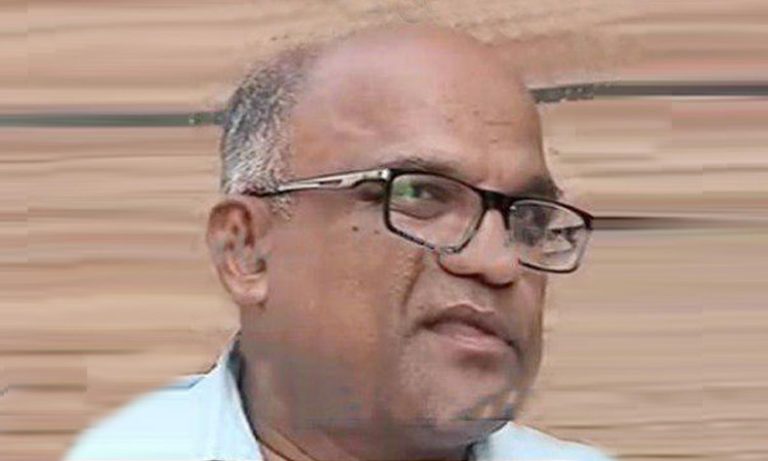
In a shocking incident, Father Kuriakose Kattuthara, a 60-year-old priest who spoke vigorously against the rape accused Bishop Franco Mulakkal was found dead in Bhogpur in Jalandhar on Monday morning, reported Mathrubhumi.

According to news reports, Father Kuriakose Kattuthara had stood against the rape accused Bishop Franco and also had given a statement to the police against him relating to the nun-rape case. While Father Kuriakose is said to have been suffering from age-related ailments, a group of priests have alleged conspiracy in the sudden death of Father Kuriakose.

Father Kuriakose’s brother, Jose Kattuthara while speaking to Mathrubhumi news has put forth his that suspicion regarding his brother’s death and alleged that he has been killed for giving a statement against Bishop Franco Mulakkal.

Earlier, Father Kuriakose had claimed that he was constantly threatened by church officials for standing against the rape accused Bishop. In an earlier interview to Mathrubhumi, Fr Kuriakose had said, “The sisters had approached me complaining about Bishop Franco. They did not approach the Kerala police fearing the bishop. In fact, I fear what will happen to me for speaking out against him.”

Father Kuriakose worked as a priest and teacher at the Jalandhar diocese and had supported the Missionaries of Jesus nun, who had accused Bishop Franco Mulakkal of rape. As per police, blood pressure tablets were found at the spot and it was found that he had vomited over the bed.


The police has said that no injuries were found on him and they will investigate the case.

Rape accused Bishop Franco was granted conditional bail in the case on October 15 in the nun rape case. The bishop has also been ordered by the court to surrender his passport to the court and visit the investigation team once every two weeks.

After his release, Bishop Franco was given a grand welcome in Jalandhar where people had arrived in large numbers. People garlanded him while reciting slogans and chants to honour the rape accused. The embracing of an accused who was out on a conditional bail had resulted in not only victim shaming but was also considered as an attempt to derail the ongoing investigation.

Bishop Franco Mulakkal, Archdiocese of Jalandhar, Punjab, was arrested by the police officials on September 21st after the investigating team finally found evidence that linked him in the sexual harassment case. A nun from Kerala had accused a Bishop from Jalandhar of raping her. The accused, Franco Mulakkal, Bishop of the Roman Catholic Diocese of Jalandhar, is said to have raped her at a guest house in Kuravilangad in May 2014 and exploited her sexually on several other occasions.

Sabarimala: ‘No-donation campaign’ initiated by devotees as a mark of protest

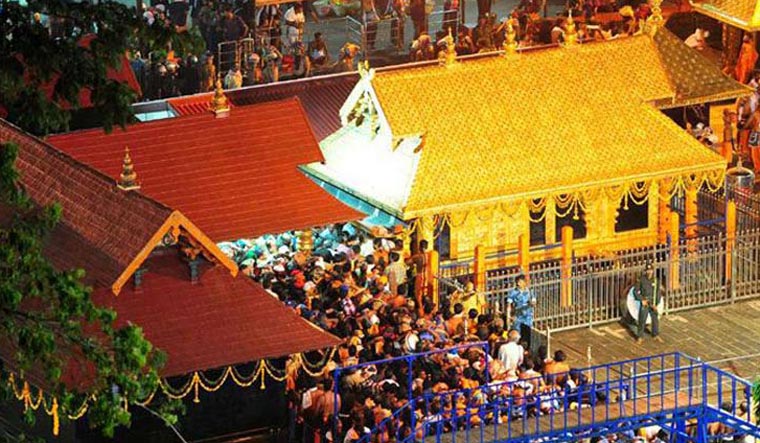
The Travancore Devaswom Board (TDB), which is an autonomous body managing over 1200 temples including the Lord Ayyappa Temple faces predicaments amidst the mounting protest following the controversial judgement of the Supreme Court allowing women of all ages to enter the Sabarimala temple.

Owing to the ongoing protests, the footfall that the temple has seen for decades has gone down considerably. Now, there seems to be a decline in the total revenue collection of the shrine, which was already deeply affected due to lower footfalls as a result of the ongoing agitation.

Sources within TDB have told The Indian Express that the revenue in temples has fallen by around 40 per cent after the TDB’s decision to not accept offerings by devotees as part of the ‘no-donation campaign’ to mark protest over women entry in the temple, initiated by former TDB president Prayar Gopalakrishnan.

Instead of money, the former TDB president urged devotees to deposit paper pieces with the writing ‘Swami Saranam’ in the offering boxes. TDB officials claimed that several temples offering boxes were jammed with pieces of paper. “It is almost sure that the revenue at Sabarimala would see a drop owing to the protests. The campaign has affected revenue at other temples as well,” they said.

Other Devaswom Boards in the state along with TDB, irked with this decision are also devising strategies to counter the campaign to avoid monetary offerings to temples.

While the Cochin Devaswom Board president M K Sudarsan said the current “false campaign” was a continuation of the Sangh Pariwar’s malicious propaganda to defame the Devaswom Boards, the Malabar Devaswom Board president O K Vasu claimed that if ‘no-donation’ campaign succeeds, it would be the fourth setback to the Malabar Devaswom Board in a row. The other three factors affecting the decline in the revenue being demonetisation, Nipah and floods.

“We will not allow the campaign to gain momentum. I will lead the campaign against the Sangh Parivar-backed move to decrease the Board’s revenue,” he said. The Nipah scare and the recent floods severely affected the revenue of MDB temples, Vasu said. “There was a drop of five lakh muttaravu vazhipadu (an offering) at the Kadampuzha temple alone,” he added.

However, the devotees of Lord Ayyappa have made themselves rather clear, first with the protests and now the refusal to donate to temples, that they will not stand for their traditions being desecrated. The thousands of devotees protesting have been at the receiving end of police brutality as well, however, they have maintained their stand firmly. Today, the Communist government of Kerala has also reportedly decided to send journalists away and cut communication from Sabarimala. This has fuelled speculation that the Kerala government might be planning something untoward on the last day of the Sabarimala temple being open.

The Home Ministry had also warned the Kerala government that Left Wing Extremist groups might try to foment violence at Sabarimala, a warning that was clearly ignored by the Communist government.

Four Himalayan peaks near Gangotri glacier named after Atal Bihari Vajpayee

0

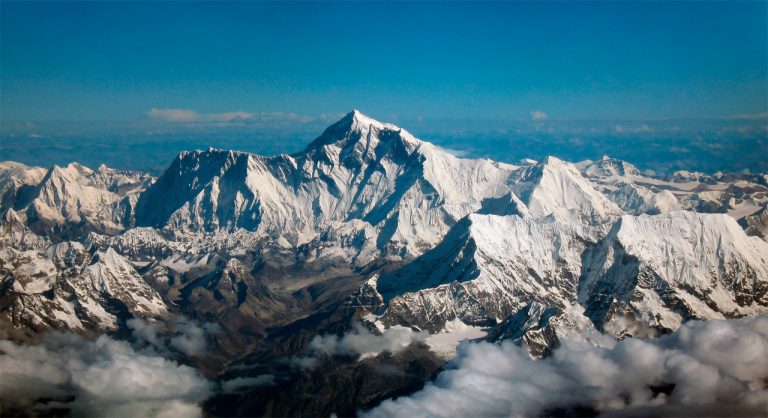
In a bid to honour one of the greatest leaders of the country, four peaks of the Himalayas situated near Gangotri glacier have been named after former Prime Minister Atal Bihari Vajpayee.

According to Colonel Amit Bisht, principal of Nehru Institute of Mountaineering and leader of the mountain climbing team which recently scaled these Himalayan peaks said that the renamed peaks are located at the height of 6,557m, 6,566m, 6,160m and 6,100m on the right side of Gangotri glacier.

Reportedly, the mountaineering team had hoisted the national tricolour on each of these peaks. The new peaks named Atal-1, 2, 3 and 4 are located near Sudarshan and Saifi peaks in Raktvan valley, Colonel Bisht said.

The Chief Minister of Uttarakhand, Trivendra Singh Rawat had flagged off these expeditions from Dehradun on October 4. The expedition was jointly conducted by Nehru Mountaineering Institute (NMI) and the Uttarakhand tourism department.

Uttarakhand State Tourism Minister Satpal Maharaj had recently said that an unexplored Himalayan peak in Uttarakhand will be named after the former prime minister and BJP founder Atal Bihari Vajpayee. The idea to name a peak after Vajpayee was considered in view of the former prime minister’s love of nature and the mountains, he said.

Various state governments, urban local bodies had earlier decided to rename public institutions, cities, universities, colleges, parks in the name of Bharat Ratna Atal Bihari Vajpayee to pay their tributes to one of the country’s finest Prime Ministers.

The Jharkhand government had announced to rename seven places after AB Vajpayee. Similarly, the Chattisgarh government had decided to change the name of Naya Raipur to Atal Nagar. The Chattisgarh Government led by Dr Raman Singh had also decided to rename the Bilaspur University after Bharat Ratna Atal Bihari Vajpayee.

The states of Jharkhand, Chattisgarh and Uttarakhand were formed out of Bihar, Madhya Pradesh and Uttar Pradesh respectively in the year 2000 during the rule of NDA government headed by Atal Bihari Vajpayee.

The former Prime Minister passed away on 16th August following a prolonged illness and was cremated in Rashtriya Smriti Stall with full state honours.

‘Angrezi jeb me rakho’, JNU PhD scholar’s definition of ‘concentration camp’

In states where illegal immigrants are detected as foreigners by the Foreigners’ Tribunals (FTs) under the provisions of the Foreigners Act, 1946, if they go untraced for a long time, it creates hurdles in deporting them to their country of origin. Hence to restrict their movements and to ensure they do not ‘perform the act of vanishing’ it was decided that they would be kept in detention centres. The central government has authorised state governments to set up detention centres and accordingly, there are six detention centres in Assam at Goalpara, Kokrajhar, Tezpur, Jorhat, Dibrugarh and Silchar.

Recently, it was reported that two persons who were in one of the centres, died, one of whom, Mohammad Jabbar Ali died of old age-related health issues. As per the reports, they had papers to show their nationality, but were unable to provide the same to Foreigners’ Tribunals due to “wrong legal advice”.

JNU freelance protestor and PhD scholar Shehla Rashid decided to compare the detention centres, which have been mandated by the Central Government under the provisions of Section 3(2) (e) of the Foreigners Act, 1946 and Para 11(2) of the Foreigners Order, 1948, to the ‘concentration camps’ set up by the Nazis in Germany during the second world war to hold and torture political opponents as well as millions of Jews, Romanis, Serbs, Poles and disabled people.

In this entire fiasco, it must be remembered that this comparison was drawn by Shehla Rashid while sharing a news article that spoke about an individual dying of old-age related issues. One has to wonder why Shehla would take the news of a natural death and spin it in a manner that enables her to call mere detention camps and concentration camps indicating that he died of “torture by state”.


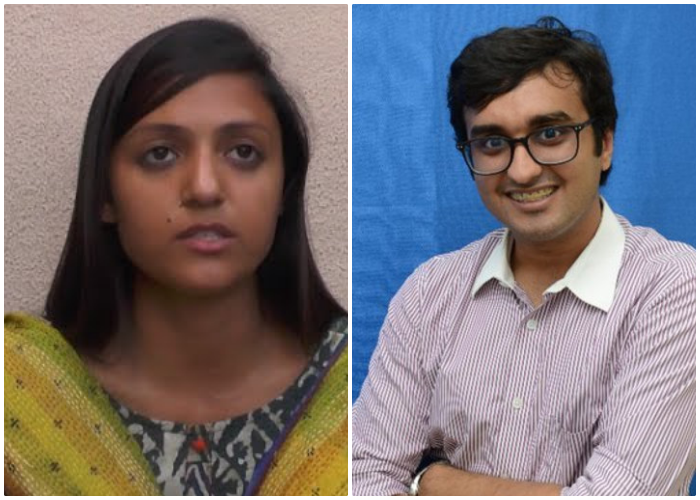
Such casual usage of one of the worst crimes against humanity in the 20th century made many people question her trivialising the Holocaust. Karan Bhasin, researcher and LSE (London School of Economics) alumnus, asked her if she knew what a ‘Concentration camp’ is. To that, Rashid lost her cool and evaded answering his question by calling him a ‘supporter of the genocidal BJP lynching regime’.


Bhasin replied how his political views or ideologies are unrelated to his academic assessment and again asked Rashid to provide some proof of ‘genocide’, a term many people use rather casually to refer to the 2002 riots which took place following the Godhra carnage where 59 people were burnt alive inside a train while they were returning from Ayodhya.


Seeing that she is losing the argument, Rashid took a dig on Bhasin’s educational qualifications and said that he couldn’t write economics essays and support ‘genocide’ at the same time. This, while Bhasin has nowhere claimed he supports genocide.

When he again asked her to provide some evidence to the tall claim she was making, Rashid went on to label him a ‘white collar Nazi’ who ‘supports genocidal regime back home’. In spite of that, Bhasin kept his cool while Rashid continued with the rhetorics.

What is unfortunate to note here is the casual use of terms like ‘genocide’ and ‘concentration camps’, thereby trivialising the atrocities and human rights violations carried out by Nazi Germany by comparing it to NRC (National Register for Citizens) and detention centres to Holocaust and concentration camps. What is more disturbing is that rather than countering with facts, Rashid resorts to name calling and labelling and accusing Bhasin of elitism just because he asked her a question in English, especially when she herself was tweeting in English. She dismisses his questions, where all he asked was evidence for the serious allegations she is making, just because he studied abroad.

It is indeed true when you are losing an argument, grace is the first thing that gets kicked out of the window.

Newslaundry presents half-truths and whole lies to spread misinformation about Ayushman Bharat

In the Union Budget for 2018, NDA government announced the world’s largest healthcare scheme, targeted to provide an annual health cover of Rs. 5 lakh per family for approximately 50 crore people. Soon after the announcement, a lot of myths about the coverage and cost of the scheme had started floating around social media, which were debunked by OpIndia.

On 23 September 2018, PM Modi formally launched the ‘Ayushman Bharat’ scheme, which provides cashless and paperless access to 1350 medical packages including surgery, diagnostics, daycare treatment and cost of medicines. The scheme also covers all pre-existing conditions, a feature which many private medical insurances do not provide.

In addition to government hospitals, the scheme has so far empanelled 14,000 hospitals on board. 10.74 crore households have been identified as the beneficiaries of Ayushman Bharat, of which 8.03 crore are rural households. Within just 10 days of the launch, Ayushman Bharat had already benefited thousands of people – an early indicator of the scheme’s necessity and success. The Deputy CEO of Ayushman Bharat announced on 21st October 2018 that 1,03,810 patients treated in Ayushman Bharat since the launch 4 weeks back.

However, the usual suspects are back with mischievous propaganda against Ayushman Bharat. The latest attempt is by Newslaundry, a serial offender in spreading half-truths and whole lies. The website recently published an article titled “NL Cheatsheet: Are you excluded from Modi’s Ayushman Bharat?”. The sub-heading of the article says “Fifty crore people are supposed to benefit from the scheme but if you even own a landline or a fridge, you’re excluded from ‘Modicare'”. The said article includes a video which talks about the inclusion and exclusion criteria for beneficiaries of Ayushman Bharat.

Below are some claims made by Newslaundry, and fact-check done by OpIndia:

NL Claim #1: Surprisingly, according to the guidelines issued, even those owning a fridge or a landline phone appear in the exclusion list.

Fact: The beneficiaries of Ayushman Bharat have been identified based on the  Socio-Economic and Cast Census (SECC) conducted in 2011. While it is true that households owning a fridge and landline phone will be excluded from Ayushman Bharat, NL does not mention here that this exclusion criterion was defined in the SECC for determining the socio-economic status of households.

SECC provided for 14 automatic exclusion criteria (including owning a fridge or landline) and 5 automatic inclusion criteria for determining the level of ‘deprivation’ in rural households. So if Newslaundry had done a little research about SECC, they would have realised that there is nothing ‘surprising’ about the exclusion criteria specified in the Ayushman Bharat guidelines.

The table below summarises the findings of SECC 2011 for Rural India:

(Source – SECC Website)

The data shows that 8.73 crore households displayed at least one deprivation (D1-D7). For Ayushman Bharat, rural households belonging to D1, D2, D3, D4, D5 and D7 criteria will be eligible. According to official data, that number is 8.03 crore.

There are two important points to note here:

  1. Deprivation findings have been reported after applying the exclusion criteria, i.e. the 8.03 crore rural households eligible for Ayushman Bharat have already passed the exclusion criteria test of the refrigerator, motorised vehicle, etc.
  2. The exclusion is based on the status of households when SECC was conducted, i.e. in 2011, not today. For example, a household which owns a refrigerator today, but did not have one in 2011 will be eligible for Ayushman Bharat provided it didn’t fall under any other exclusion criteria in 2011.

NL Claim #2: If you thought that slum dwellers and rickshaw pullers in urban areas have something to celebrate about this scheme, think again. A family with even a single member earning more than ₹10,000 a month does not qualify under the Ayushman Bharat (scheme).

Fact: While the Ayushman Bharat guidelines do not explicitly mention about the applicability of exclusion criteria, a self-proclaimed ‘watchdog’ like Newslaundry didn’t bother to do basic research. SECC defined exclusion criteria for calculation of deprivation indicators for rural households only. The SECC questionnaire for urban areas did not have any question related to the monthly income of household members, which means monthly income data is not available for urban households. Thus urban households cannot be excluded/disqualified from Ayushman Bharat based on monthly income. The exclusion criteria of Rs. 10,000 monthly income is, for all practical purposes, applicable to rural households only (SECC rural questionnaire included a question on income levels).

NL Claim #3: Delhi auto-wallas can thank Chief Minister Arvind Kejriwal because Delhi has refused to sign the MoU like four other states.

Fact: Again, going by the SECC definition, the exclusion criteria has been defined only for rural households, and most of the data points related to exclusion criteria are not available for urban households. But irrespective of whether auto-wallas are excluded or not, it’s ludicrous to say that Delhi auto-wallas should thank Kejriwal for refusing to participate in Ayushman Bharat. Kejriwal’s refusal has resulted in the exclusion of not only auto-wallas but also all other eligible beneficiaries.

NL Claim #4: Households having Kisan credit cards with a credit limit above ₹50,000—which is a big chunk of small-scale farmers—don’t qualify.

Fact: As per SECC 2011, only 3.6% of rural households had Kisan Credit Cards with a credit limit of above ₹50,000. How 3.6% translates to “a big chunk of small-scale farmers” is unfathomable. Maybe Newslaundry folks studied some other type of Math which we don’t know.

NL Claim #5: A large chunk of agricultural families have 2.5 acres of irrigated land with at least one irrigation equipment. (The presenter confidently says, “note it when I say this” while making this claim).

Fact: Households having 2.5 acres of irrigated land with at least one irrigation equipment are not eligible for Ayushman Bharat. However, while reporting this, Newslaundry again displayed their inability to do basic research. The presenter confidently claims that “a large chunk” of agricultural families in India fall in this bucket. However, if NL had bothered to give a cursory look at the SECC data, they would have realised that (and NL folks should note it when we say this) only 4.5% of rural households have 2.5 acres or more of irrigated land with at least one irrigation equipment.

NL Claim #6: The obvious question everyone wants to ask you, Prime Minister Narendra Modi, is that who exactly is benefiting from the (presenter uses air quotes) “world’s biggest” health care scheme. The presenter further claims that the current eligible beneficiaries (10.74 crore households) could be excluded if they fall under any exclusion criteria.

Fact: As explained above, the list of 10.74 crore households who are eligible for Ayushman Bharat has been prepared after applying the exclusion criteria. Throughout the video, the presenter gives details of various exclusion criteria, insinuating that all those criteria would result in the large-scale exclusion of deserving households. He fails to mention anywhere in the video that the beneficiary households identified by the government have already passed the exclusion criteria test. So talking about refrigerator or landline phones is inconsequential at this stage.

It is also important to note that Ayushman Bharat was never intended to cover 100% population. From the beginning, the government has been clear that the scheme would be targeted at the 50 crore people at the bottom of the socio-economic strata. If we multiply 10.74 crore households by the average size of household (4.8), the result is 51.55 crore beneficiaries, which is consistent with the target coverage of the scheme.

Only time will tell how successful Ayushman Bharat is, but as far as the claims about the selection and inclusion/exclusion of beneficiaries is concerned, the claims by Newslaundry and other sundry commentators are unfounded.


SP Manju who wanted to enter Sabarimala temple fought election on a Congress ticket

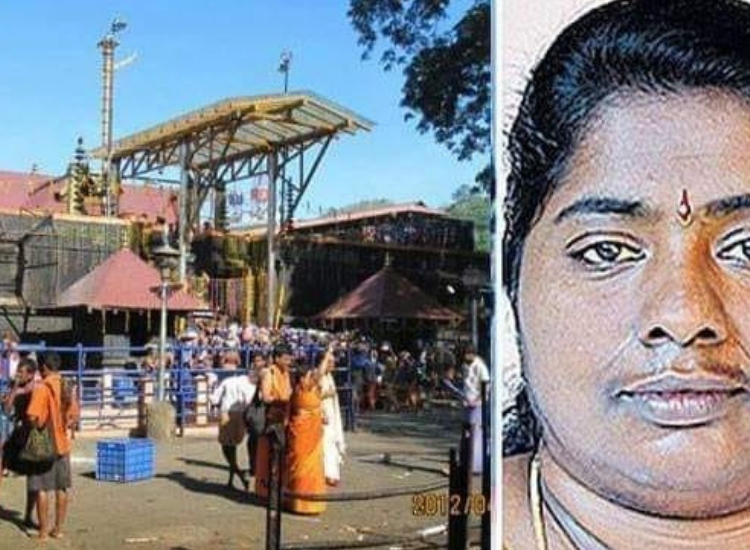
As the standoff between thousands of devotees in Sabarimala and the government of Kerala continues, it was reported that another woman named SP Manju wanted to enter the shrine.

According to reports, while the woman SP Manju had arrived in Pamba on Saturday afternoon and tried to continue her journey further, the Kerala police had stated that they will not be able to provide her security unless a background check is run to verify that she was a devotee and not an ‘activist’. There were also reports that she has over 14 criminal cases pending against her.

Inspector general of police S Srijeeth had reportedly told media that seeing heavy rains and a huge turnout of devotees, the police will announce their decision on whether to provide her protection only after checking her background on Sunday.

However, many reports on social media have hinted at a new political conspiracy behind Manju claiming to be a devotee and seeking entry in the revered temple. Reports have stated that SP Manju, presently the 38-year-old president of the Kerala Dalit Mahila Federation, Chathannoor is, in fact, a Congress leader and she had reportedly even fought the election on a Congress ticket.


Social media users are sharing local tv reports claiming that SP Manju’s full name is SP Manju Joseph and she was a Congress candidate in local body elections in the past. Manju’s name indeed features in the list of candidates for the 2010 local body elections and she is registered as an Indian National Congress candidate for Ndeumpana in Kolam district.

According to a report in Livemint, Manju was earlier a CPM and SFI activist. The report quotes P Ramabhadran, the president of Kerala Dalit Federation as saying that Manju had also contested the 2015 local body elections on a Congress ticket.

Many media reports are citing Manju as the ‘Dalit devotee’ seeking entry in the temple, social media users in support of protecting the tradition at Sabarimala are of the opinion that she is just another activist and her seeking entry to the temple has exposed Congress’ double standards as the party has earlier stated that it stands with the devotees of the temple who wish to protect the traditions.


The Kerala government has reportedly ordered media persons to vacate the Sabarimala temple area and also Pamba. Citing reports of a possible attack on media persons, the government has ordered all media persons to be evicted from the shrine area and Pamba. So the latest status of SP Manju’s onward journey is not clear, though several social media users are claiming that she is on her way to the temple under police protection.

Sabarimala devotees had claimed that the media eviction is a tactic planned by the Kerala government to use force on the devotees and making a few women activists enter the temple.

Kerala: Communist govt asks journalists to leave Sabarimala, devotees see conspiracy to desecrate temple

In a rather suspicious act, the Communist government of Kerala through its state police have informed media present around the temple and also at Pamba to vacate the area as police officers claim that there are inputs of an attack being planned on the media, reported ANI.

The recent diktat by the Kerala government has disturbed the devotees of Sabarimala, as they see a well-planned plot by the Kerala government to use such orders to ask media to leave the premises and then use the brutal police force to remove the devotees from the shrine to allow few women enter the Sabarimala shrine on the last day.

According to some devotees, the Kerala government may use huge force to evict devotees present near the temple by depicting that they were creating violence against the state. With directing the media to stay away from the shrine, the Pinarayi Vijayan government may get a free hand in using police force to target the devotees. It is also feared that, if at all some media organisations decide to stay back, there might be concerted efforts to target the media personnel so that the government can claim that there was an attack on media and can use force against protesters.

K Surendran, General Secretary of Kerala BJP said that they have a clear evidence that Kerala Government is secretly putting in efforts to violate the traditions of Holy Sabarimala. “We personally witnessed Journalists leaving by tractor from Sabarimala. Police have also decided to suspend Internet and Mobile connectivity in Sabarimala. This is a clear indication of the Governments intent to push entry of women on the last day before the sacred temple closes for the month”.

Interestingly, journalists of some media organisations seemed happy to leave the premises as soon as Government demanded, who usually restrain from obliging to such diktats, said Surendran. “We have no clue despite serious exploration as to who threatened them and what was the threat? Is the Government intends to turn Sabarimala into a battlefield and shed blood there? We hereby warn that Government that this is a very dangerous game and they are playing with fire”.

Some Devotees of Lord Ayyappa see a large conspiracy of the Kerala government to not only create chaos near the shrine but also discredit and insult Hindus by depicting them in a bad manner.


Few others believe that Kerala government may block the mobile services and ask the devotees to leave so that the government can allow a group of women including Rehana Fatima to enter the temple


The alleged controversy around Sabarimala shrine comes after the Supreme Court in its recent judgement had ordered Sabarimala Shrine to open its doors to women of all ages, repealing the age-old tradition to not let women of a reproductive age of 10-50 enter the Sabarimala shrine.

AAP leader Atishi, who had dropped ‘Marlena’ surname, now named as ‘Atishi Singh’ on banner

It seems AAP leader Atishi has changed her name again, going by the latest party posters bearing her name. The new name of the AAP’s probable Lok Sabha candidate for East Delhi Constituency is Atishi Singh.

In August this year, AAP leader Atishi Marlena had dropped her last name ‘Marlena’ from her name. It was alleged that the name was dropped because it was ‘Christian sounding’, which may not be suitable in her campaign during Lok Sabha elections. The party had denied the allegations, saying that her real surname was Singh and the Marlena surname was given by her parents, which is a combination of Karl Marx and Vladimir Lenin.

Subsequent to this change, the party poster carried only her first name Atishi, and she had changed her Twitter handle from @Atishimarlena to @AtishiAAP. The name was also changed in all party records and campaigning materials and on the AAP website.

At that time, Atishi had said, “My actual surname is Singh and I come from a Punjabi Rajput family. Had I wanted to appease voters then I would have gladly used my real surname.” One AAP leader had said that BJP was trying to project her as foreigner and Christian, and the party didn’t want to waste time and effort in clarifying this allegation, that’s why the decision to drop the Marlena surname was taken.


Two months later, now there has been another change in the name of the AAP leader, at least on banners. On 21st October, the official handle of AAP Delhi posted few photos on Twitter where Deputy CM Manish Sisodia and Atishi was seen in an event related to Vijaya Dashami. And it can be seen that the banner on the background of the stage mentions Atishi’s name as Atishi Singh.

The poster bearing the name Atishi Singh

It is not yet known whether she has decided to change her name again, or it was a ‘mistake’ done by some party worker. The AAP website still mentions her name as Atishi only. During the last name change, she had claimed that she didn’t use her real surname Singh as she didn’t want to appease voters based on caste. In that context, it will be interesting if the AAP leader decides to use her surname now.

Odisha: Uncle, cousin practising black magic held for allegedly beheading minor boy as sacrifice to Goddess Durga

0

The mystery behind the gruesome murder of a nine-year-old minor boy missing since October 13, hailing from Sindhekela village, whose beheaded body was found a few days back from a riverside in Gandhala village of Bolangir district, was finally resolved by the Odisha police.

The decapitated body of the minor, who has been identified as Ghanshyam Rana, was reportedly sacrificed by his uncle, Kunja Rana who is an occultist, and his cousin brother Sambhaban Rana, a believer of black magic. The duo reportedly practised black magic on the minor boy and subsequently sacrificed him as part of a ritual to appease Goddess Durga during Durga Puja.

According to police, both the accused have been arrested and have admitted to the crime.

In August 2017, another man allegedly sacrificed his 10-year-old son on the first day of Navratra “to make my Devi happy.” In November, a man killed his 13-year-old son in Chhattisgarh’s Baloda Bazaar district and chopped off his genitals after a witch doctor convinced him that sacrificing his son will solve all his problems.

In December same year, a six-year-old girl was found murdered with her throat slit in east Delhi’s Gazipur dairy farm area. The father has suspected ‘black magic’ to be the be the reason for her murder as a piece of flesh in the neck area was missing.

In January 2016, it was reported how a Chhattisgarh man had killed his 14-year-old son for the “well-being of his family”.

The National Crime Records Bureau (NCRB) started compiling separate data on human sacrifice since 2014. Altogether 52 persons were reported to have been “sacrificed” to appease some god. 16 in 2014, 24 in 2015 and 12 in 2016. Most of the victims have been minors. Besides, 156 people were killed due to witchcraft in 2014, 135 in 2015 and 134 in 2016.

‘Difficult for Congress to come to power in 2019 on its own’, says Salman Khurshid

0

Senior Congress leader Salman Khurshid feels that it is difficult for Congress to come to power in 2019 Lok Sabha Elections on its own as reported by Indian Express.

“It is difficult for the party to come to power on its own in the present situation, but opposition alliance must not be formed at the “cost of containing Congress”. The allies should also be ready to make sacrifices and adjustments for defeating the BJP in the 2019 general elections”, he told PTI in an interview.

Expressing the keenness of his party to form an alliance against the BJP in the upcoming Lok Sabha elections, Khurshid said, “All our leaders have made it very clear that an alliance (is needed) to change the country’s government. BJP must go. Whatever it takes to sacrifice, adjust and negotiate to make the alliance a reality, Congress is willing to do. But it is only fair that it should be the same attitude of other (opposition) parties.”

Talking about the possibility of Congress coming to power on its own he said, “It is obviously difficult today. If that is the objective (majority on its own) then we will have to work over a period of five years. Because you cannot work towards an alliance for three years and then suddenly say we will fight to win (on our own). You have to fight for five years. Today we are committed to the alliance and we will do our very best to ensure that the alliance succeed”.

While making a comparison between Congress and the other parties of grand alliance, he said, “Congress is the only party that gets seats from all over the country and all other (opposition) parties get seats from their respective states”.

“Now the elasticity in numbers is much greater when you are talking of seats from all over the country and when you are talking of seats only from your state. This is the practical reality with which all the leaders have to deal with an open mind,” he added.

Forming a grand alliance does not appear to be easy as it seems right now. BSP Chief Mayawati has decided to go alone in the upcoming assembly polls in Rajasthan, Madhya Pradesh and Chhattisgarh. The Samajwadi Party has also decided not to forge an alliance with the Congress in Madhya Pradesh, blaming it of being non-committal for too long.

Reminding the opposition parties of the objective of the grand alliance Khurshid said, “the objective of the grand alliance is to defeat the Modi government. If the participants of the grand alliance forget this objective, then obviously it won’t happen and it will be a loss for every party and the country”.

Khurshid expressed hope of getting BSP back in fold saying that the issues in the assembly polls are different from those of the Lok Sabha polls. “Once these five state elections give us some indications of what the public mood is, tying up the grand alliance may become easier,” he said.

Regarding the issue of the post of Prime Minister Khurshid said, “the post of prime minister won’t be an issue in forging the grand alliance when opposition leaders have clearly said that the issue will be decided once the alliance win the election. I think those who are raising this issue (prime ministership) do not want us to succeed against the BJP.”

Khurshid showered praises on his party President Rahul Gandhi for “infusing fresh energy
and determination” into the party and said it was a time for making sacrifices and give the best to the party. “We lost some elections, but we won Punjab and kept the BJP away in Karnataka. In some places, we were ahead of BJP, but they misused power to form government…the upcoming elections in five states will be a measure of how much we have got back on our feet in the last four years,” he said.

Dismissing BJP’s claim that the opposition alliance did not have a leader Khurshid said that there were “leaders in the opposition alliance” along with four to five strong regional parties and that the “Congress even in its weak form is strong across the country”.

Criticizing the foreign policy of Modi government he said, “the Modi government had failed to build upon on what they had got from the previous governments and nothing much to show in terms of accomplishments”.

Khurshid blamed the Modi government for injecting disharmony in the society and called it ‘disastrous’.