Home Blog Page 6993

Sushma Swaraj gives a cold shoulder to Pakistan Foreign Minister, leaves SAARC meeting early

In a huge snub to Pakistan, External Affairs Minister, Sushma Swaraj, walked out of the SAARC meeting, which was also attended by her Pakistani counterpart Shah Mehmood Qureshi, mid-way, after issuing a strong call to end the ecosystem of terrorism.

Sushma attended the informal meeting of the SAARC Council of ministers held at the sidelines of the 73rd UN General Assembly, chaired by the Foreign Minister of Nepal Pradeep Kumar Gyawali on Thursday.

The MEA reportedly made a strong statement, indirectly hinting at her Pakistani counterpart, on terrorism threatening peace and stability in South Asia, she said, “The number of threats and incidents that endanger South Asia are on the rise. Terrorism remains the single-largest threat to peace and stability in our region, and indeed in the world. It is necessary that we eliminate the scourge of terrorism in all its forms, without any discrimination, and end the ecosystem of its support. I would like to stress that meetings, including high-level ones, can only be effective if expressions of resolve are translated into concrete action on the ground.” She left the meeting early.

This, however, attracted criticism from Qureshi who later told reporters, “no I didn’t have any talk with her (Swaraj). On the positive gesture, I can say she left the meeting mid-way, maybe she was not feeling well”.

Though being blamed by Qureshi for leaving the meeting mid-way, the Indian diplomatic sources revealed that it was nothing unusual that Sushma Swaraj did by leaving the mid-way as it was quite normal in a multilateral meeting to leave early after one has delivered its country’s statement.

The sources furthered that Swaraj was not the first minister to leave the meeting as her counterparts from Afghanistan and Bangladesh had also left before her.

Last week, India had agreed on holding peace talks after the recently-elected Pakistan Prime Minister Imran Khan had written a letter to PM Modi requesting for the same.

However, New Delhi cancelled the proposed meeting a day later.

MEA spokesperson Raveesh Kumar had confirmed to media that at the wake of 2 major incidents, the abduction and killing of policemen at Shopian and the release of 20 postage stamps by Pakistan that glorifying terrorists in Kashmir, India has decided not to go forward with the scheduled meeting between the two foreign ministers.

He further added that the evil agenda of Pakistan has been exposed and behind the claims of peace, the true face of the newly elected prime minister has been revealed.

It is notable here that India had suspended all diplomatic dialogues with Pakistan after the Uri attacks in 2016. On September 14, Pakistan’s new PM Imran Khan had proposed the MEA level meeting at New York which India had initially accepted but cancelled later.

‘Liberals’ prove that they are willing to trample over democracy for sake of ideological supremacy

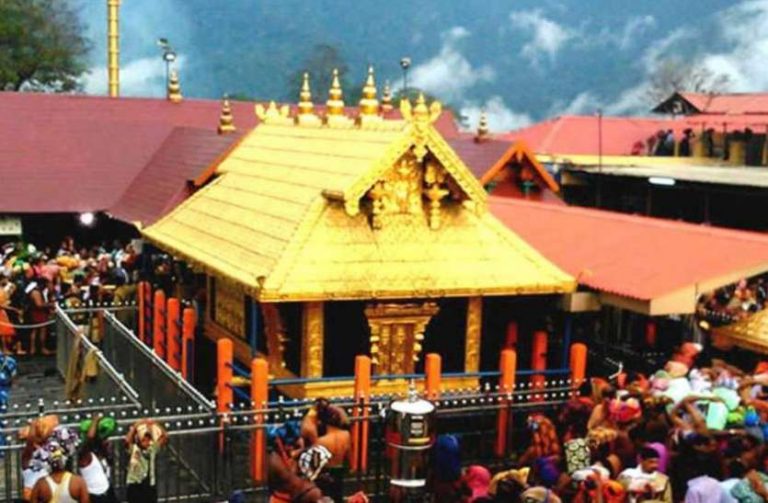
In a critical judgment, the Supreme Court has lifted the ban on the entry of women of a certain age group into Sabarimala Temple in Kerala. Even after a spirited defence of Hindu traditions by lawyers like Sai Deepak, the Court reached the conclusion that the ban should be lifted.

The judgment, however, has exposed the illiberal tendencies of self-proclaimed progressives. The progressives are hailing the encroachment of the Judiciary on the domains of the legislative. Barkha Dutt, for instance, hailed the fact that we are living in a ‘judicial democracy’.


One would expect liberals to be concerned about the fact that an unelected wing of the state is encroaching upon the domain of elected representatives. However, they appear to be celebrating as the decisions are going in their favour. They should be cautious that decisions will not always favour them and they might come to regret the fact that they were cheering when unelected branches of the state were accumulating too much power for themselves.

Such a mentality also exposes the fact that liberals are not too fond of democracy themselves and have little regard for the will of the people. They harp on about democracy only when it suits them. They bat for unelected people to make major decisions on law and policy when it suits them. Only the victory of their ideology matters while the means can differ as per their convenience, the rest is irrelevant.

The fact that liberals are cheering for judicial activism reveals the extent to which they are committed to their ideology. They care very little for the opinions and traditions of the laymen. As long as their ideological positions succeed, democracy is a very little price to pay.

The dangerous aspect of such a vociferous support for judicial activism is it makes people sympathetic to illiberal forms of governments. If the people they have elected as their representatives do not voice their concerns and do not serve their interests while unelected people make decisions for them, why shouldn’t they turn to a tyrant who promises both of those things? You won’t be able to convince people that a tyrant should not be looked up to because he will not respect their wishes if unelected people in a democracy are overriding elected representatives anyway and making decisions beyond their mandate. It’s a dangerous precedent to set and liberals should be wise enough to refrain from cheering for judicial activism.

The gravest problem with unelected people taking sweeping decisions in a democracy is that it undermines the very notion of accountability. India is a Republic, therefore the decision falls on elected representatives to take decisions on behalf of the populace. Therefore, they are accountable for their decisions to his constituents. But a Judge is accountable to no one and nothing. If judges encroach on the domain of the legislative, who will the people hold accountable? The end result of all of this will be people losing faith in the system itself and they might very well turn towards a tyrant who promises to listen to their concerns and serve their interests.

Even Markande Katju, a former Justice of the Supreme Court who is certainly not a fan of the rightwing, disagrees vehemently with the “perilous unpredictable path of over activism” that the Supreme Court has embarked upon.


Judicial activism undermines the very basis of democracy. That liberals are cheering for it will further endanger democracy as their opponents will soon return fire with fire and abandon adherence to democratic principles for ideological victory. Because if liberals are not playing fairly and are openly discrediting democracy for ideological victories, then why should their opponents let democracy get in the way of victories in the ideological front?

Maharashtra CM Fadnavis welcomes SC judgement upholding arrest of 5 activists in Bhima Koregaon matter

0

The Maharashtra Chief Minister Devendra Fadnavis has welcomed the decision of the Supreme Court to stay away from the arrest of the activists by the Maharastra Police in connection with a plot to kill the Prime Minister and for their alleged role in Bhima-Koregaon violence. Devendra Fadnavis hailing the decision of the top court called the verdict as “Great victory for Pune Police and country”.

“We welcome the decision. On basis of investigation conducted & evidence collected by Pune Police, it has been considered valid & SC has said it’ll not interfere in the investigation” Fadnavis said.  He further added that the Supreme Court has accepted that there is no political influence and the arrests were not made to suppress the voice of the opposition.

According to the reports, Fadnavis said that the Maharastra Police have become aware of many more instances of Urban Naxal network and their modus operandi, while they were investigating the arrests of these five activists. “They were trying to create a civil war, they were trying to give an urban face to the Naxalites in the country and were trying to shield them.” the Chief Minister said while addressing the media in Mumbai.

Maharashtra Chief Minister slammed the critics and said, “Certain Pseudo-liberals, neoliberals and so-called liberals were using the media to claim that there was no evidence. We have got all the material pieces of evidence, which we will provide to the court”, said Fadnavis. While speaking to the media, he said that the Urban Naxals were doing this for many years but the probe agencies did not have sufficient evidence to investigate them.

The statements from Devendra Fadnavis comes after recent Supreme Court verdict, which refused to interfere with the arrests and also refused to constitute SIT and asked the Pune police to go ahead with their probe in connection with the arrest of five activists who were allegedly involved in an assassination plot to kill Prime Minister Narendra Modi.

The Pune Police had conducted raids and arrested the five accused last month. The arrested persons were accused of links with Maoists networks. The arrests were in relation to the Bhima Koregaon violence. Earlier, the Pune police had arrested Rona Wilson, Surendra Gadling, Shoma Sen, Mahesh Raut and Sudhir Dhavle in the case. The arrested persons in August raids had moved to the Supreme court and had obtained an order for house arrest instead of judicial custody.

Does Sabarimala verdict push state power over religion?

The tug of war between the power of the state and the rights of the people is at the heart of a constitutional democracy. Today’s verdict from the Honorable Supreme Court, delivered through majority judgement, demands that women of all ages should be permitted to enter the Sabarimala Temple in Kerala, the ancient abode of Lord Ayyappan.

This verdict immediately raises many important questions, each having to do with the boundaries of state power and the limits of religious autonomy. Can a temple, or any other place of worship, be forced to carry out practices that they sincerely believe to be against their religion?

In this case, the Sabarimala Temple had religious objections to the entry of women aged between 10 and 50 years of age. As Hindus, you and I may have a lively debate regarding the propriety of that, but there is no doubt about what the temple authorities wanted.

If a temple is to be treated as a public place, how far does this argument go? The Constitution of India gives equal rights to all people, irrespective of gender or religion. Does this mean that a Hindu temple is also obligated to admit non-Hindus? How about discrimination on the basis of food habits? Several Hindu temples do not allow non-vegetarian food. Would that also be considered illegal?

How about forms of dress? Several houses of worship impose certain dress codes, both on men and women. Do we need to follow those or not? What if somebody were to try to enter a temple wearing a shirt covered with abusive slogans against Hindu gods? If a temple is to be treated as a public space, must they submit to such forms of Freedom of Expression or not?

There are many Indian states such as Bengal or Karnataka or Kerala, where cow beef is not banned. If a temple is to be treated as a public space such as a park, does it mean that Krishna temples in Bengal or Karnataka should be forced to allow beef consumption on their premises?

And here is the simplest question of all: if a temple is a public space, how can it sponsor any religion at all? Isn’t India supposed to be a secular state? So shouldn’t there be an outright ban on temples?

Hopefully, you have answered “No” to at least some of these questions. Or at the very least, they have made you think. And question the idea of blindly applying laws governing public spaces to a religious group who want nothing more than to run their temple according to their religious beliefs.

At stake here is the basic principle of what the state can and cannot interfere with. Generally speaking, the state cannot interfere with your property. If you own a house, you can choose who to invite to your house. The Constitutional Right to Equality in Article 14 in no way implies that every Indian is equally entitled to live inside your house. The same principle more or less applies to communally owned property, such as a temple.

Most modern democracies believe in the right to bodily autonomy. This means that we own our bodies and can do what we want with them. Basic rights such as freedom of speech, thought, expression, religion, the freedom of peaceful assembly, the right to peacefully petition our government, etc all follow almost directly from this.

The recent Supreme Court judgement decriminalizing homosexuality was built essentially on the same foundation. The fact that we citizens own our bodies.

However, it is also clear that these rights are not absolute. The state can and does interfere with them in exceptional circumstances or matters of compelling public interest. Here are some simple examples:

(1) When the country is at war, the state may seize your property to serve the war effort. Such as commandeering vehicles and airplanes or using your privately owned land for troop training or deployment.

(2) While we do have the right to do what we want with our bodies, this right does not extend to consuming a drug such as heroin. Here the compelling public interest of saving the nation from ruin prevails over our personal right.

(3) Ending widespread systematic discrimination could be seen as a compelling public interest. Such as the practice of untouchability which is expressly forbidden by our Constitution. The United States similarly used the Civil Rights Act of 1964 to end the systematic exclusion of black Americans.

(4) The protection of particularly vulnerable members of the citizenry, especially children, is a matter of compelling public interest. For example, the reprehensible cultural/religious practice of female genital mutilation is forbidden by law in most democratic countries. Incidentally, our Supreme Court is still dithering on whether female genital mutilation in the Shia Dawoodi Bohra community should be outlawed in India.

(5) Taxation. The very existence of the state, running the military, funding schools, hospitals, roads, railways is seen as a compelling public interest. This is what allows the state to take away a portion of our what we earn as taxes.

In each of these instances, the compelling public interest is obvious. If there were no taxes, the Indian state would cease to exist. As a civilized country, we have to protect our baby girls from genital mutilation. And the systematic exclusion of so-called ‘untouchables’ from places of businesses and worship is an extreme injustice that needed to end.

The question is whether the case of Sabarimala Temple can really be put in the category of compelling public interest. This was in no way a form of systemic exclusion, this was a practice at *one* temple, based on what the devotees of Lord Ayyappan consider to be the celibate oath of their living god. Every Hindu temple is unique in its beliefs in some way. This was a singular matter of *one* temple. The very opposite of systemic.

And guess what? There absolutely are Hindu temples and rituals which are women only, with men not allowed. This is part of the inherent plurality of the Hindu way of life. Every Hindu temple is believed to house a living god, who is worshipped as per their preferences. And given the extreme diversity within the Hindu way, there is no question of systemic exclusion of anybody. Just like all across this nation, we have people of various persuasions, beliefs and tastes.

It is my personal belief that the heavy, homogenizing hand of the state has come down upon Sabarimala Temple today, depriving Lord Ayyappan’s devotees of their choices in life and stripping away a bit of the plurality in the Hindu firmament. This is my personal belief. And in no way does my personal belief take away your choices in your life.


‘We take inspiration from what Justice Indu Malhotra said’: J Sai Deepak, advocate in the Sabarimala Temple case

0

The verdict is out on the Sabarimala Temple case and the Supreme Court Bench, by a 4-1 majority verdict has decided that women of all ages should be allowed in the Kerala temple.

And by this majority verdict, the apex court has struck down the Rule 3(b) of the Kerala Hindu Places of Public Worship (Authorisation of Entry) Rules, 1965, which restricted the entry of women between the ages of 10 and 50 into the Sabarimala Temple.

The sole dissenting voice was that of Justice Indu Malhotra. Her Ladyship Malhotra observed that matters of deep religious sentiment should not be interfered by the court. She said that the shrine and the deity are protected by Article 25 of the constitution and hence, the court should not interfere unless there is an aggrieved person from that religion or section.

She observed that the subject of rationality should not be seen in religious beliefs and that there are clear attributes that there exists a section with identifiable characteristics, they constitute religious denomination.

She observed that the people worshipping in Sabarimala have attributes of a religious denomination and that Sabarimala gets funds from Devaswam Board, not from CFI.

J Sai Deepak said:

While we are disappointed with the majority view, we draw huge inspiration from the dissenting view of Justice Indu Malhotra and considering that dissent is the flavour of the season, in a matter which concerns women’s right, two things have actually supported our position and can be considered shots in our arm.

One, on 1st of August which was the last day for arguments in the petition, out of the 5 female petitioners, 2 withdrew saying that they now understand the practice of the temple and that they no longer see it as discrimination.

Secondly, we are so happy that her Ladyship Justice Indu Malhotra has understood the point of view that we were placed before the court, has looked at the evidence and has accepted and endorsed our position. In fact, she went to the extent of saying that in such matters, Judges should keep their personal views aside. That Judges should apply constitutional morality but not an individual or personal morality. That is a powerful statement in a matter such as this. And I think it offsets to a very large extent the position taken by the majority view. Most importantly, she has struck a beautiful distinction between diversity and discrimination, citing the plurality and the diversity of this country, the various practices that exist and their reasons.

Thirdly, she has clearly supported the position that right to equality and individual right to equality cannot prevail over the rights of the devotees and the rights of the institutions when it comes to religious places, until and unless the practice is so egregious that it shocks the conscience of any reasonable person. She has clearly recognised that this case is not where the practice shakes the conscience because this practice is not based on menstruation but the character of the diety, the celibate nature of the diety.

She has also categorically recognised that the Sabarimala temple is not state-funded and therefore, fall under the definition of the arm of the state. This was something that was touted very heavily. In her conclusion, she categorically said that the petition deserves to be dismissed for the lack of standing and eligibility. Because those who do not put faith in the tradition or do not believe in the place of worship they seek to enter into, cannot seek a right to access citing the right of equality. The position which was taken by Justice Indu Malhotra, therefore, clearly reflects the position taken by us on behalf of women devotees and the People For Dharma.

In his conversation with OpIndia.com, J Sai Deepak added that People For Dharma and him would explore all possible legal options in this matter.

During the hearing, J Sai Deepak had argued before the bench that if the deity of the Sabarimala shrine can be taxed as a juristic person, he also has rights under articles 21, 25 and 26. He added that the deity’s right to remain a ‘Naisthika Bramhachari’ comes under article 25. Deepak further added that the case is not men vs women, but it is men vs men and women vs women. Sai Deepak asserted that if they allow dismissal of age-restrictions for women, tomorrow even men can seek exemptions from the 41-day ritual.

He further added that the denominational character of the temple as per article 26 is independent of the right of the temple to allow entry. Ayyappa devotes constitute the denomination. He asserted that denomination is not decided based on the background of the devotees’ faith but on whether the devotee believes in what is an essential characteristic of the temple deity and the status of the denomination is not bestowed by the court. Sai Deepak also stated that the public character of an institution does not take away the very identity of an institution. He also added that ‘Naisthika Brahmacharya is, not a men-only practice and hence the rituals associated cannot be regarded as patriarchal.

Pakistan testifies Dawood aide’s ‘good character’ as UK rejects his bail plea for the second time

0

Jabir Moti, one of the top aide’s of the underworld don Dawood Ibrahim was denied bail for the second time by a UK court even though Pakistan had extended support to his bail application calling him a man of ‘good character’. His extradition case would be heard on 19th October.

The letter from the Pakistani High Commissioner, Sahebzada Ahmed Khan, was submitted to the judge during his ongoing extradition case hearing at Westminister Magistrate’s Court in London in support of his application for bail, which was, however, not considered and bail was denied thereafter.

Though the UK court didn’t mention Dawood’s name, the judge hinted that Moti was a ‘senior member’ and ‘top lieutenant’ of a ‘leader’ based in Pakistan. Jabir was arrested from a hotel in London last month on money laundering, extortion charges and for trafficking narcotics. He was allegedly involved in investments in Dawood’s business and had regular financial dealings with Dawood’s wife, Mahajabeen, his son Moeen Nawaz and daughters Mahrookh and Mehreen along with son-in-laws Aurangzeb and Junaid (the son of former Pakistani cricketer Javed Miandad).

Barrister James Lewis, representing Jabir, tried and used the letter from the Pakistani High Commissioner, which defended Jabir by calling him a ‘well known and respected businessman’. However, Judge Emma Arbuthnot was not convinced with the explanation and rejected the bail application.

Moti had arrived in the UK on business on a 10-year visa and was due to leave the UK on 22nd August.

In August we had reported, what was seen as a big diplomatic victory for India over Pakistan, a criminal court in Thailand has declared that Sayyed Muzakkir Muddassar Hussain, also known by aliases Mohammad Saleem and Munna Jhingra, a senior D-Company operative and a close associate of India’s most wanted underworld criminals, Dawood Ibrahim and Chhota Shakeel to be a Indian National, which Pakistan had disputed, and ordered his repatriation to India within three months of the judgement.

Coming as a big blow to the underworld don, it was reported that Dawood Ibrahim’s aide Farooq Takla, against whom a Red Corner Notice was issued in 1995 in connection with the 1993 Mumbai serial blasts, had been brought to Mumbai in March 2018 after being deported from Dubai.

This slow fragmentation of the kingpins dynasty will definitely be considered a welcoming move as Indian agencies have been painstakingly tracking the movements of Dawood Ibrahim for the last 23 years. Agencies like RAW, IB, CBI, NIA, police in Delhi and Mumbai and other agencies have worked all these years to stop Dawood’s illegal activities in India and abroad. The mastermind of the 1993 serial blasts in Mumbai has been allegedly sheltered by Pakistan for the last 23 years.

Congress did not even sign a deal with Dassault, Rahul Gandhi. When do you plan to stop lying?

0

Since Rahul Gandhi can’t stop talking about Rafale, we also can’t stop talking about Rahul Gandhi talking about Rafale. Continuing his campaign for upcoming assembly election in Madhya Pradesh, Rahul Gandhi addressed a rally in Rewa today, where he repeated the same lies that he is been saying for last several weeks.

Rahul Gandhi said that during the UPA regime, the government had done a deal to buy Rafale jets at the price of ₹536 crore per plane, and NDA government is buying the same fighter for ₹1600 crore. He also says that had HAL got the contract to build the planes, youths in India would have got jobs.


Now we want to ask, where are those Rafale jets that UPA government bought at an excellent price of ₹536 crore? During the term of 10 years of the Congress-led government, how many fighter jets were bought? Why the fleet of Indian Air Force is reduced to just 32 squadrons when the requirement is of 42 squadrons?

If UPA government had finalised the deal with Dassault, why the deal was not completed? After selection of Dassault as the winner of the tender, why the process did not proceed further? Dassault refused to take responsibility for jets made by HAL, what does Rahul Gandhi has to say about that? Dassault had formed a joint venture with Mukesh Ambani’s Reliance and not Anil Ambani’s Reliance Defence. Why Rahul Gandhi is ignoring that? Dassault had won the bid for the MMRCA contract in January 2012 itself, what happened in two years after that before the 2014 elections?

Rahul Gandhi says had HAL got the contract, youths would have got jobs. Now several companies, both public sector and private sector, including HAL, BEL, DRDO etc, have got offset contracts for the Rafale deal. These private and public companies do not employ people? Only HAL provides employment opportunity to youths?

Does Rahul Gandhi want to say that Anil Ambani is going to build the jets himself and Dassault-Reliance JV will not employ any worker? What is this obsession with HAL, a company that is struggling to make the LCA for 30 years, that Rahul Gandhi wants that the company should get every contract in India, should make everything, shoes, shirts and mobile phones included? DRDO has got one-third of the offset business in the Rafale deal, including vital technology transfer. Is DRDO not a public sector unit? Does DRDO not employ people?

Why is DRDO bad and HAL good? Why is Anil Ambani bad but Mukesh Ambani good?

Why is Rahul Gandhi telling so many lies? Why does he keep repeating them?

Too many questions.

In poll-bound Madhya Pradesh, number of voters goes up by almost 8 per cent

0

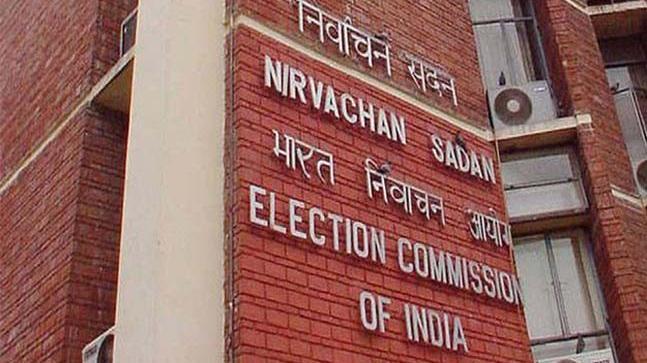
The Election Commission of India (ECI) has published the final list of photo electoral rolls in poll-bound Madhya Pradesh for all the 230 assembly constituencies which show a rise of 8 per cent.

The number of voters in Madhya Pradesh has gone up from 4.66 crores in 2013 to 5.03 crore in 2018. Of these, 2,63,14,957 are males and 2,40,77,719 females. Of these, 1,37,83,383 voters belong to the age group of 20-29 years, which is the biggest segment. Mahobai, a 104-year-old resident of Badnapur village in Burhanpur, is the eldest registered voter in Madhya Pradesh who will vote for the 14th time. There has also been an improvement in gender ratio from 905 women per 1000 men earlier to 917 women for 1000 men now.

1,410 people have registered themselves as the third gender, which has also gone up by almost 500 from last time. In 2013, 970 people had registered themselves as the third gender. Tamil Nadu has the highest registered third gender voters at 4,720. 18 years ago, Shabnam Mausi, country’s first eunuch MLA was elected in a bypoll from Sohagpur seat in Katni in 2000. However, when she went to the Congress office to take primary membership, she was turned down.

Madhya Pradesh legislative assembly tenure ends on 7th January 2019 and the state is expected to go to the polls by year-end.

After connecting all MRIs, Rahul Gandhi now wants to buy shoes, mobiles and shirts from HAL

It seems that there is no end to Congress President Rahul Gandhi’s political gaffes. Rahul Gandhi, at his absolute best, has yet again become successful in giving his opponents the chance to question his absurd rationality and intelligence, as he now wants to buy mobiles, shirts and shoes from Hindustan Aeronautics Limited (HAL).

Rahul Gandhi, who wanted Government of India to buy Mobile Phones from BHEL earlier has now come up with another bizarre idea. Rahul Gandhi while speaking at a ‘Sankalp Yatra’ in Madhya Pradesh seems to have struck with another brain fade and ended up saying that he wants mobiles, shirts and shoes to be made in Hindustan Aeronautics Limited (HAL).

According to the reports, Congress President Rahul Gandhi was speaking at a rally in poll-bound Madhya Pradesh was found repeatedly talking about his intent to manufacture mobile phones in Madhya Pradesh. While speaking at a gathering, he said, “We want that on the back of your cell phones, on the back of your shirts, under your shoes, ‘Made in Madhya Pradesh’ is written. We want ‘Made in India’ to be written. We want ‘Made by HAL’ to be written”.


Rahul Gandhi, who is at Madhya Pradesh to take part in ‘Sankalp Yatra’ has been travelling throughout the state and making controversial statements. Recently, while speaking at Satna, Rahul Gandhi had repeated the same lie about the statue of Sardar Patel being ‘Made in China’. The BJP President Amit Shah had slammed Rahul Gandhi for insulting Sardar Patel and accused Gandhis of trying to erase the legacy of Sardar Patel.

This is not the first time Rahul Gandhi has made such statements which ended up puzzling people. Once while speaking at an event in Singapore, he had come up with an idea of connecting all MRI (Magnetic Resonance Imaging) machines or scanners. In another incident, 47 years old ‘youth icon’ Rahul Gandhi had said that the founder/owner of Coca-Cola brand was a Shikanji vendor in America.

The wisdom of Rahul Gandhi seems to be a big mystery for both Congress and the BJP. It is not surprising today as whenever Rahul Gandhi makes any public appearance, BJP seems to claim a small pie of victory. It would seem like the BJP has finally found another star campaigner in Rahul Gandhi after Prime Minister Narendra Modi and the party president Amit Shah.

Rahul Gandhi keeps talking about making mobile phones in India, Modi government is already walking the talk

As we have already observed, Rahul Gandhi is obsessed with mobile phones. Not a single rally goes where he does not talk about phones. In every rally, he says that at present mobiles phones we buy India are made in China and hence he dreams of seeing mobile phones made in the place where he is speaking. Perhaps he is laying the groundwork so he can later claim credit for increased manufacturing of cell phones if he comes to power. After all, the Prince will have to say something to substantiate his ‘achievements’.

While it has become a source of great amusement on social media, actually there is nothing wrong with promising a mobile phone making factory, or any factory, in an area. That’s the kind of promises politicians make before elections. But there is a big problem with the assumption that Rahul Gandhi makes while talking about mobile phones. He assumes that currently no phones are made in India and all phones come from China only.

Which is absolutely not true. Although China remains the global manufacturing hub of mobile phones, India has started to catch up in this sector. Giving a fillip to the Indian government’s Make in India initiative, several phone manufacturers have either set up their own manufacturing plants or have entered into pacts with other companies to manufacture their phones in India. Let us have a look at some of them.

iPhone

This iconic phone that kickstarted that smartphone category is now manufactured, or rather assembled, in India. Apple has entered into an agreement with Taiwanese contract manufacturer Wistron to make the phone, and the production has already begun. Wistron has set up a plant in Bengaluru where they started by assembling the iPhone SE and later started making the 6s model also. The plant is being scaled up to manufacture more models of the phone.

Samsung

In July this year, Korean giant and global leader in mobile phone sales Samsung opened the world’s largest mobile phone factory, in Noida, UP. Samsung was already making phones in India, and after an investment of around ₹5,000 crore, they expanded the plant to double the capacity. Now the company will be making 120 million phones per year in India, up from 68 million earlier. Samsung is not just assembling parts imported from other countries, they are in fact populating the Printed Circuit Boards (PCB) for the phones in India itself. Samsung makes all models under the smartphone portfolio of the company, including the flagship Galaxy S9, S9+ and Galaxy Note8, in its Indian plant.

Xiaomi

Xiaomi, considered the Apple of China, has not one, not two, but as many as six plants to meet the growing demand for their phones. All the smartphone plants of the company have been set up in partnership with Foxconn, the Taiwanese contract manufacturing giant. The company had built its first plant in 2015 in Sri City, Andhra Pradesh, while its second plant came up in the same location in 2017. The company opened its third plant in Noida in 2017 in partnership with Hipad Technology. Initially set up for manufacturing power banks only, later this plant started making smartphones also.

In April this year, the company started three more phone manufacturing factories, located in Sri City in Andhra Pradesh and Sriperumbudur in Tamil Nadu. Along with these, the company also has set up an SMT (Surface Mount Technology) plant for making PCBs in Sriperumbudur. According to the company, they now make two phones per second in its six phone plants. These plants along with Foxconn now employ more than 10,000 people, more than 95 per cent being females. More than 90 per cent of Xiaomi phones sold in India is made in India.

Almost all companies that sell mobile phones India have set up manufacturing bases in the country. Vivo has its plant in Greater Noida, while Oppo has set up two plants in Noida. Huawei has set up a plant at Sriperumbudur in Tamil Nadu in collaboration with global electronic manufacturer Flex Ltd. All Indian phone makers like Micromax, Karbonn, Lava, Intex, iBall etc have set up manufacturing units in the country. Premium phone maker OnePlus gets their phones assembled by Oppo in India.

source: Counterpoint Research

These are just a few examples of phone manufacturing plants in India. In the year 2014, there were just two mobile phone manufacturing units in India, by the year 2017, India has become home to 123 factories making mobile phones.


As per a report by the Indian Cellular Association (ICA), India is now the second largest manufacturer of smartphones in the world. According to data provided by ICA, 11 million units of phones were made in India in the year 2017.

India is also the world’s second-largest smartphone market, which no phone maker can ignore. As India is an extremely price conscious market, companies are preferring to make their phones for the Indian market in India only, as they can save on import duty and international shipping costs, which help in keeping prices low.

Although so many phones are made in India now, most of them are actually assembled here using parts imported from abroad. But that would change, as India establishes itself as a major manufacturing hub for phones, companies will also start moving component making to India. In fact, that process has already started, Samsung and Xiaomi have around 60 per cent share in the smartphone market, and both companies have started PCB manufacturing in the country.

Made in India

And while India manufactures lots of mobile phones now, contrary to what Rahul Gandhi believes, we still can’t answer some of his other questions about phones. Like, why the Indian government does not buy mobile phones from Bharat Heavy Electricals Limited (BHEL), or when Hindustan Aeronautics Limited (HAL) will start making phones.

Unfortunately for Rahul Gandhi, phones manufactured in various Indian places don’t carry the tag like ‘Made in Noida’ or ‘Made in Sri City’ etc, they all say and will say ‘Made in India’.