Home Blog Page 7027

Interpol issues red corner notice against Nirav Modi’s sister in connection with PNB scam

0

Interpol has issued a red corner notice (RCN) against Purvi Modi, a Belgian national and absconding billionaire jeweller Nirav Modi’s sister, in connection with the alleged 13,000 crores PNB scam, officials said Monday.

The notice, which was requested by the Enforcement Directorate (ED), and which also acts as an international arrest warrant, states that Purvi Deepak Modi, 44, is required on charges of ‘money laundering’.

An official from the department reportedly said that the ED wants her to join the investigation as this would help the department to take the investigation forward. Purvi Modi is accused of helping her brother to launder the money from the PNB scam. she was named by the ED in their first charge sheet filed in March.

Once a Red Corner Notice (RCN) is issued against a fugitive, Interpol asks its 192 member countries to arrest or detain the person if he/she is spotted in their territory so as the extradition or deportation process can begin.

A similar notice was recently issued against Mihir R Bhansali, a top executive of Nirav Modi’s US business concern, who is a co-accused in the PNB case and has also been absconding.

A few months back, the International Criminal Police Organization more commonly known as Interpol had issued a similar red corner notice against the absconding Nirav Modi in connection with the Punjab National Bank Scam.

The Modi government has been in relentless pursuit of Nirav Modi, the diamond tycoon who rocked the nation in February 2018 with a scam that amounted to around Rs 13000 crores. The case pertains to cheating the state-run Punjab National Bank through the fraudulent issuance of Letters of Undertaking (LoU) and Foreign Letters of Credit worth over USD 2 billion (about Rs 13,000 crore) by Nirav Modi and his uncle Mehul Choksi, both absconding since the first week of January. Nirav Modi has been traced to the UK while Mehul Choksi is reportedly residing in Antigua, after getting citizenship status.

After severe crackdown on naxals, CPI-Maoists looking to recruit new ‘educated and intellectual youth’

0

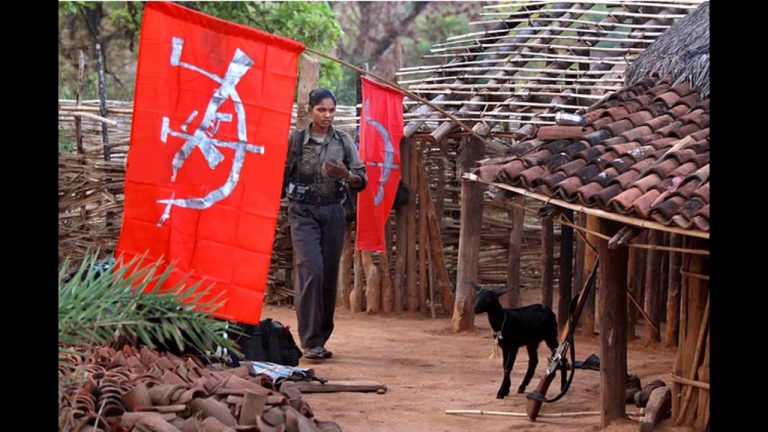
The debilitated left-wing terror groups after facing a heavy onslaught from the security forces seem to be struggling to recruit new members. According to the reports, the Communist Party of India (Maoist) is looking for new urban members and intellectual youth to assist the armed wing and educate tribals and Dalits.

Reportedly, Naxal groups are facing a severe shortage of cadres, after the successful crackdown under the present NDA government. The CPI-Maoist party mouthpiece ‘Lal Chingari Prakashan’ has called for urban youth and intellectuals to join them, as the party is in a shortage of educated masses, said politburo member Prashanta Bose, alias Kishanda.

The report says that the CPI-Maoist has recently launched a retirement scheme for the aged and physically unfit leaders, who cannot operate from the underground and carry out its activities.

Bose claimed that the biggest challenge for the party has been building a second line of leadership. He further admitted that the CPI-Maoist had failed to groom effective future leaders. This comes as the present government has been successful in cracking down on the Naxals-both in tribal and urban areas.

“Except West Bengal, in areas of Assam, Bihar and Jharkhand we have created base among Dalits, tribals and the poor. So, in such a situation where the level of education is low, making them understand the real meaning of principles of Marxism is a tough job,” the 72-year-old leader said. He further added that party is in search of revolutionary, educated and intellectual comrades to train and educate the tribals, Dalits and the poor. It needs a lot of determination to train and educate the Dalit and the poor cadre of our party. The number of educated cadre in war zones is very less,” Bose said.

According to Prashanta Bose, the banned outfit has asked all its committees to send “educated students and its intellectual comrades, who are true to the principles of the revolution, to Left-wing conflict zones” as early as possible. He added that they are confident of finding such educated, young and dynamic comrades very soon and he said the party will start building a good third and second generation leadership.

Last year, reportedly, the CPI (Maoist) central committee had adopted a resolution to relieve the leaders who are unable to fulfil their responsibilities and to provide work according to their capacity. This resulted in creating a vacuum in the mid and senior level leadership. The banned outfit has also prepared an organisational and political document along with a training manual to train next level leaders, but the plan is supposed to have failed.

Coming down hard on Naxals, especially in Urban areas has been one of the major achievements of the present government. We had earlier reported that how extensive and targeted action on Naxals by security agencies combined with wide-spread socio-economic development has resulted in the massive desertion of Naxals and joining the mainstream for better livelihood opportunities.

Left wing terrorists put banner in support of arrested ‘Urban Maoists’

0

The recent series of arrests of the ‘Urban Naxals’ seems to have been a major setback for Maoist terrorists. Interestingly, it took a new turn when the police recovered banners from banned Communist Party of India (Maoist) outfit’s Perimili Dalam supporting recently arrested Naxal sympathisers.

According to a report by Times of India, this is the first time that any left-wing terror groups operating in the Tribal areas have openly supported the alleged over-ground Naxal sympathisers/members living in urban areas.

Banner in support of recently arrested ‘Urban Maoists’

The police have recovered banners at Perimili near Gadchiroli, put up by the Maoists, which appeals to the masses to condemn the arrest of 10 Urban Naxals for their alleged role in Bhima-Koregaon violence. The Maoists have demanded the immediate and unconditional release of their fellow comrades. The Reds have also urged the masses to condemn the BJP-RSS government for labelling the activists as ‘Maoists’ to deprive them of their rights.

Reportedly, the banners were found near Arenda phata, around 2.5km from Perimili, they had names of the 10 ‘Naxal sympathizers’ including the five arrested– Varavara Rao, Gautam Navlakha, Sudha Bharadwaj, Vernon Gonsalves, and Arun Ferreira, who were arrested by the Maharashtra Police in a nationwide crackdown against ‘Urban Naxals’.

The banner also contains names of arrested Naxal sympathisers-Shoma Sen, advocate Surendra Gadling, Gadchiroli-based Mahesh Raut, Delhi’s Rona Wilson, and Mumbai’s Sudhir Dhawale, who were arrested by Pune police for their alleged involvement in a plot to kill Prime Minister Narendra Modi. The Maoists interestingly refer the arrested sympathisers as ‘social workers’.

Deputy Inspector General of Police (DIGP), Naxal range, Ankush Shinde, said the banners would be sent to Pune police for further investigation.

The present NDA government has started a massive crackdown on the left wing terrorism-against both armed Maoist Guerrilla units in the tribal areas and also against the ‘Urban Naxals’ masquerading in the cities as Social activists, professors, and Human Rights’ defenders. We had earlier reported on the series of nationwide raids conducted by the Police to arrest more than 10 Naxal Sympathisers.

In the first raids, the police had arrested Delhi based activist Rona Wilson, advocate Surendra Gadling, professor Shoma Sen and Mahesh Raut from Nagpur and Mumbai’s Sudhir Dhavle in connection with ‘Elgar Parishad’ held in Pune leading to Bhima-Koregaon riots. The police then went on to arrest few more-Gautam Navlakha in Delhi, P Varavara Rao in Hyderabad, ‘activists Vernon Gonzalves and Arun Pereira in Mumbai, ‘civil rights’ lawyer Sudha Bhardwaj in Delhi, civil rights ‘activist’ Anand Teltumbde in Goa and ‘activist’ Stan Swamy in Ranchi in connection with an alleged plot to kill the Prime Minister.

Earlier in a shocking report, it was revealed that Varavara Rao, one of the five arrested Urban Naxals had allegedly attended the funeral of a top Maoist terrorist Kapuka Prabhakar, killed in the Gadchiroli encounter in April this year.

In a series of reports published, we had put forward the nexus between the so-called civil society organisations, human rights activists and the left-wing terrorism. The reports suggest that the phenomenon of ‘Urban Naxals’ is very deep and enjoys a wide range of support from a network of active Human rights organisations.

ED moves court to cancel Karti Chidambaram’s interim relief from arrest

0

The Enforcement Directorate on Monday moved a Delhi court seeking cancellation of the interim relief from arrest granted to Karti Chidambaram, son of the former Finance Minister, P Chidambaram, who has been in news for his allegedly unlawful involvement in the Aircel-Maxis money laundering case for quite some time now.

The Delhi court in its order passed on 7th August 2018 had extended the interim protection from arrest which was granted to Congress leader P Chidambaram and his son, Karti Chidambaram filed by the CBI and the ED for the alleged offences of corruption and money laundering, respectively in the Aircel- Maxis case till 8th October.

P Chidambaram and his son were named in the charge sheet filed by the Central Bureau of Investigation (CBI) in the case on July 19. The ED is also probing a separate money-laundering case in the Aircel-Maxis matter and a charge sheet was filed against Karti by the agency on July 13.

The CBI has also been subsequently probing how Congress leader, P Chidambaram, who was the finance minister in 2006, granted a Foreign Investment Promotion Board (FIPB) approval to a foreign firm when only the Cabinet Committee on Economic Affairs (CCEA) was empowered to do it. Taking a cue from the CBI FIR the ED has also been probing the involvement of Chidambaram in the Rs 3,500-crore Aircel-Maxis deal and the INX Media case involving Rs 305 crore.

Though being questioned by the ED on several occasions, P Chidambaram and Karti Chidambaram, have continuously denied the allegations levelled against them. Delhi court has sought a response from Karti Chidambaram by 18th September on ED’s plea for custodial interrogation.

2018: The summer of Ishant Sharma

0

India has come up short in yet another series overseas, they are trailing 1-3 and, in all probability, will end up losing 1-4 as England are working towards a match winning lead in the 2nd innings at The Oval.

However, one heartening thing for captain Virat Kohli must be the performance of his fast bowlers. Ishant Shamra, Jasprit Bumrah, Mohammed Shami have all bowled impressively this series and must give a lot of confidence to the Team management ahead of the Australian tour.

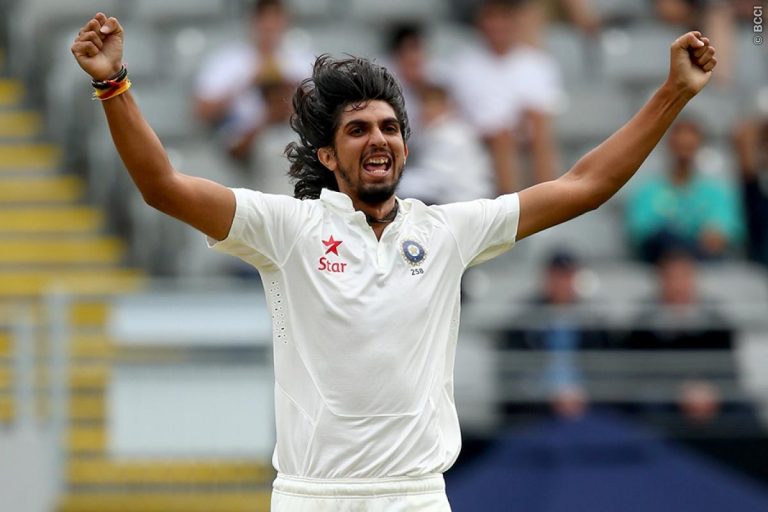
The leading wicket taker among the three has been the veteran Ishant, who crossed 250 Test wickets during the course of the series, and is 1 wicket away from the best ever performance by an Indian bowler on an England tour. That record is currently held by Bhuvneshwar Kumar, sidelined from this series due to an injury.

When Ishant was bowling at Ricky Ponting all those years ago in Perth, he got everyone in India excited about the prospects of having a genuine fast bowler playing for India. Anyone who was watching him bowl that day, will fondly recall everything about that spell, including the ball that eventually did get Ponting. However, things haven’t gone as well as he might have hoped, even though at 256 test wickets, he is currently the 7th most successful bowler ever for India.

Over the years, ‘unlucky Ishant’ has been heard a bit too often while talking about the lanky fast bowler. Either his balls were a touch too short, missing the edge on the way to the keeper, or the ball swung too much when he bowled an inswinger to trap the batsman LBW, but not during this tour of England.

His county stint ahead of the Test series, where he worked under Jason Gillespie for Sussex, seems to have done a world of good for him. His length has been fuller, he has found the edge, some of those edges have even been taken, he has picked up wickets and has bowled as well as he has ever bowled, just ask Alastair Cook.

After not being part of the side for India’s first Test match this year at Centurion, he has come back to pick 30 wickets at an average of 21 so far, his best average in any calendar year by a distance, he never averaged below 30 in any year before this. His bowling average has fallen below 35 for the first time since 2010 and he has firmly become the leader of this pace attack.

Of course, in Kohli-Shastri era, nobody’s place is safe in the side, with Kohli being the only player to play in all the Test matches this year (even Pandya eventually got dropped), but after this summer in England, Ishant surely has done enough to become one of the first names on the team sheet right now.

‘Urban Maoists’ are real and Maoist literature prove it. Liberals dressing it up as ‘dissent’ are being dishonest

0

The left has not only been highly unreasonable to complain that the ‘Urban Naxal’ concept is a mere tool to avoid questions on the Modi administration, but they have also been grossly insincere when asserting how ‘dissent is being curbed’ through its medium.

When liberal circles criticise, disparage and unfairly trivialise the phrase for it to be painted as a mere ‘tool of propaganda’, it is a necessity for us be armed with facts to take down the dangerous narratives.

Let us start by even conceding to the average left-leaning liberal that people are just labelling those who question Modi as “urban Naxals”. And even if that is the case, there is just one important question every responsible citizen has to ask themselves: just because select few individuals call dissenters ‘urban Naxals’, do we suddenly gain the prerogative to conclude that the entire phenomenon ceases to exist?

Obviously not.

But the sort of discourse that has occupied the mainstream media and the intellectual spaces, makes it abundantly clear that a majority of individuals who found the phrase being trivially used, chose to be unfair to its original purpose. And with very little consideration to the heaps of evidence that is out in the open, a number of left-leaning liberals were more than happy to jump the gun and rubbish the seriousness behind the claims.

For instance, I find attempts to hijack the #UrbanNaxals hashtag with those like #MeTooUrbanNaxal or #UrbanNazi, to be genuinely petty, simply because they prove to address a trivial side of the issue (i.e. the name calling part) over the threatening implications of the ultra-left finding resonance in cities.

Having established the meaninglessness behind addressing the empty name-calling and branding, we must remember the deeply intellectual basis behind the terminology. It is well worth asking ourselves what an ‘urban Naxal’ really is; if we do not understand what an ‘urban Naxal’ really means, our discourse runs the risk of being trivialised by people, as has happened already.

Thus, I would submit that an ‘urban Naxal’ is an intentional or unintentional proponent of revolutionary Maoist propaganda. 

And so, what leads to one being termed an ‘Urban-Naxal’, is following the prescribed path of carrying out “revolutionary propaganda”. And the point at which one crosses the line of criticism to adhere to the ulterior motives that are spoken of in the Maoist doctrines is the point at which credential-based questions will occur.

But now, we approach the elephant in the room: establishing the presence of urban Naxals. If it can be proved that the urban Naxal phenomenon is a reality, then the premise of many left-leaning liberals falls flat on its face. And there is no better way to prove that, than examining the documentation provided by the Maoists.

A manifesto named ‘CPI (Marxist-Leninist-Maoist) Urban Perspective: Our Work in Urban Areas’, on its own, serves as conclusive proof to understand the existence of Maoists masquerading as civilians. Below are excerpts from the same document, that state the importance of Naxalites in urban areas and the systematic checklist that must be ticked off while operating.  This also serves as a direct counter to those who naively limit the movement to India’s jungles:

Screen Shot 2018-08-29 at 5.56.52 PM (2).jpg

The CPI (Maoist)’s Urban Perspective

screen-shot-2018-08-29-at-5-57-35-pm-1-e1535792236112.jpg

But even though people are happy to accept that such a phenomenon of ‘urban Naxals’ can exist, they gladly undermine its threat in cities, citing the fact that these people too “love the country” and want to “democratically communicate their message for a revolution” by fighting for “minorities and Dalits”.

However, a deeper look into the same set of doctrines will tell us how opportunistic the movement gets, and how dangerous their utopia is. For instance, in the above excerpt, they talk about setting up committees for minorities, women, dalits and so on. But it is later, that they expose why they pretend to strive for them. Take Muslims, for instance:

Screen Shot 2018-09-01 at 12.38.43 PM.jpg

It is very important to note that “Muslims being ghettoised” is something the urban Maoists savour because it moves them into the “semi-proletariat” (working class), whom they only want to mobilise for “the people’s war”. Those who talk about the supposed pleasantness and alleged nobility of the Maoists ought to reflect upon how exploitative a group must be to hound on the poverty of a community and exaggerate it, just so they can assimilate its people. And these are the social justice warriors of our time.

Not only should we remember the existence of the urban Naxal in our biggest cities, but we must reflect upon their systematically malicious operation in places where they are unknown. In no uncertain terms, the Maoist manifesto claims harbour their covertness and the fact that they are underestimated in urban areas.

At this point, it is very important for us to acknowledge the fact that those like Sudha Bharadwaj, Varavara Rao, Vernon Gonsalves and Arun Ferreira, aptly fit the ‘urban Naxal’ definition. And there cannot be any diplomacy when stating that. Why?

Simply because they are proponents of the revolution and are almost directly influenced by Mao. At some point, people like Sudha Bharadwaj, Varavara Rao and Gonsalves have even had their pieces published as ‘exemplary writings’ of sorts, in Maoist journals.

For instance, Sudha Bharadwaj had a couple of pieces of hers published in the Maoist ‘Information Bulletin’:


Screen Shot 2018-08-21 at 5.01.39 PM.png


The fact that the Naxalites have commended the views of Sudha Bharadwaj implies that they fully subscribe to her views on the subject of Naxalism and adivasis. And so, it is axiomatic that she is a proponent of the line of argument employed by the Maoists on their biggest area of conflict. But still, that does not mean she is necessarily guilty of being “funded” or “planning to kill the Prime Minister”; it just means that she is (either an intentional or unintentional) proponent of the Maoist propaganda. In that regard, nobody would be wrong to call it a case of urban Naxalism.

Likewise, those like Rona Wilson, Rao, Ferreira, and Gonsalves have actually been very open to suggesting that they “support liberation” and the ‘armed revolution’ that must be strived towards, just like the Maoists do.

Many people are knowingly or unknowingly tossing aside the exploitative and violent threat of urban Naxals, just because of a few people on social media resort to name-calling and cacophony. And there are heaps of evidence to establish the reality of the dangerously propounded Maoist ideology in the biggest cities of our country.

An optimistic part of me hopes that we recognise the toxicity of urban Naxalism irrespective of where our sociopolitical views stand. But another realistic part of me says that a few affiliated urban Naxals will try as hard as they possibly can, to stop that. The need of the hour is for our society to see through such attempts of belittlement and denigration so that we unite against a serious existential threat.

1984 anti-Sikh pogrom accused Sajjan Kumar heckles Republic TV journalist at a Congress party protest

0

1984-pogrom accused and senior Congress leader Sajjan Kumar was seen leading the party’s Bharat Bandh protests over high fuel prices near Pusa Road, Delhi. When Republic TV reporter, Piyush Mishra attempted to confront him, supporters of the party leader could be seen making efforts to intimidate the journalist.


The Congress leader could be heard saying “Sorry” repeatedly, although it is unclear exactly what he was apologizing for. The apology could have been for his alleged role in the anti-Sikh pogrom that he is accused of, or to his party for embroiling it in a controversy by participating in the protest, or to the reporter conveying his reluctance to entertain his questions.


Sajjan Kumar’s participating in the protests comes at an interesting moment. Only a few days, Congress party President Rahul Gandhi had denied the involvement of his party in the anti-Sikh pogrom that was initiated by the assassination of the late Indira Gandhi during his foreign tour. Many had interpreted Rajiv Gandhi’s remarks as an approval of the pogrom by the top echelons of the Congress party. It is also pertinent to note that Captain Amarinder Singh had mentioned Sajjan Kumar in the Punjab Assembly as a Congress leader who was involved in the pogrom.

Sajjan Kumar’s participating in the Bandh also not received well on social media.


The Congress party and its supporters have a history of heckling and intimidating journalists they perceive to be critical of them. We have reported earlier on how Republic TV journalists have been heckled numerous times on several other occasions. Senior Congress leader, Mani Shankar Aiyer, was also caught on camera yanking off the mike of the hand of a Reoublic TV journalist and abusing him. More shockingly, an India Today journalist was seen shielding Aiyer during his tirade against the journalist. On another occasion, a journalist from a different organization was attacked at the Congress headquarters in Delhi after being labeled as Modi Bhakt. Most recently, as claimed by a female journalist at Republic TV, she was made to sit with her harassers at an NBSA hearing following her harassment by crowd at a Jignesh Mevani rally, an occasion when a women’s dignity was sacrificed at the altar of competitive rivalry.

Two-year-old dies as vehicle gets stuck in Bihar’s Bharat Bandh

0

A 2-year-old girl has reportedly died in Bihar’s Jehanabad after the vehicle that was carrying her to a hospital got stuck during the Bharat Bandh protests. According to reports, the girl was ill with severe breathing problems and her parents were rushing her to the Jehanabad civil hospital.


Several cities in Bihar are witnessing massive protests and ruckus created by political parties supporting the nation-wide Bharat Bandh today. In Patna, workers of Jan Adhikar Party have reportedly vandalised vehicles, and disrupted roadways and railway transport in the region.

In Mumbai and Pune too. MNS workers have reportedly vandalised several vehicles and disrupted traffic in the cities. Union Minister Ravi Shankar prasad has condemned the incident and stated that everyone has the right to protest but damaging public properties and putting lives at risk is wrong.


1969 : When India formally applied to be part of the Muslim world

Not surprisingly, the successfully concluded World Hindu Congress in Chicago has raised the hackles of the organized anti-Hindu mafia in India. Some have accused the event of being casteist, others communal. From what I saw of the actual event on the internet, the WHC called for a universal Hindu unity. I can see why opposition parties in India that ask for votes in the name of various castes, including the recent “Brahmin DNA”, would be nervous.

Others accused the WHC of “staining” the reputation of Hindus, most prominently, the NGO Avaaz which spent USD 26,000 on a full page ad in the Chicago Tribune. The same NGO Avaaz, that had earlier morphed the sacred “Om” symbol into a Nazi Swastika (Hooked Cross) and projected it onto the British Parliament.

Yet others wanted to know why the Hon. Vice President of India Shri Venkaiah Naidu would be present at an event that caters exclusively to one religious group. And that too at a cost to the public exchequer. I guess these people have never heard of the hundreds of crores that the Indian public spends on Haj Houses. In particular, one of the “journalists” who asked this question has recently finished a PhD from Aligarh Muslim University, a publicly funded Muslim institution that has been laughing off Supreme Court verdicts, India’s secular constitution and democratically elected government since the 1960s. At least she should have known better. But then you can’t wake up people who are pretending to sleep.

This prompts me to tell you of an episode from the history of the “secular” Indian republic, a particularly embarrassing one. It’s from 1969 when India formally applied to become a part of the Muslim world.

But we didn’t become a part of the Muslim world. Not because our government was held back by our secular constitution. But because the Muslim world refused to let us in, formally berating us Indians “conmen”, “crafty” and “persona non grata.” Exact words. No joke. Read on to find out why.

You see in 1969, the “Muslim world” decided to form its own international organization, something that would be “the collective voice of the Muslim world.” It was called the OIC (Organization of the Islamic Conference), later renamed in 2011 as the Organization of Islamic Cooperation. The first conference was to be held in Rabat in Morocco.

Among the countries jostling to be part of the “Muslim world”: secular and democratic India under Prime Minister Indira Gandhi.

But India made some key mistakes. Because the event was to be held in the capital of Morocco, India asked its ambassador in Morocco to lead the negotiations. This, as it turns out, was a goof up. As the Times of India tells us:

“Of course, as former foreign secretary JN Dixit wrote, India itself goofed up — by letting its ambassador Gurbachan Singh lead the negotiations and not an Indian Muslim leader.”

Sending Gurbachan Singh instead of an Indian Muslim leader was a mistake? You can just feel the “secularism” gushing through the veins of this tolerant Islamic organization, can’t you?

But India did realize its mistake and it tried to make amends.

“In fact, subsequent delegation to OIC from India, led by Fakruddin Ali Ahmed, did not make it beyond Rome.”

Prime Minister Indira Gandhi quickly replaced a Sikh representative with a Muslim just in time to show how secular we were. Blame it on bad air connectivity back in the day, but full marks to Indira Gandhi for her commitment to secularism. And her determination to join this very secular Organization of Islamic Conference.

As you can tell from the opening lines of the OIC charter that India was so desperate to sign:

“In the name of Allah, the most Compassionate, the most Merciful We the Member States of the Organisation of Islamic Cooperation, determined …. to be guided by the noble Islamic values of unity and fraternity … to endeavour to work for revitalizing Islam’s pioneering role in the world … ”

So secular.

What a loss for Indian secularism that we could not become a part of this historic endeavour to revitalize Islam’s pioneering role in the world. It’s left a big hole in the “idea of India.”

Okay, so who saved us from formally becoming a part of the Muslim world? When Pakistani President Yahya Khan heard that India was going to join the OIC, he threw a tantrum and threatened to leave Morocco on the pretext of being “unwell.”

For the Muslim world, the choice was clear. They could have Pakistan OR they could have India. Not both.

Who would the Muslim world go for? The “believers” from Pakistan or the “non-believers” from India? What do the “noble Islamic values of unity and fraternity” say?

What if the “non-believers” from India sweetened the pot by withdrawing their Sikh representatives in favour of Muslim representatives?

Sorry, but in the end, a non-believer is just that: a non-believer. And so it was that Pakistan President Yahya Khan received a joint apology from King Faisal of Saudi Arabia, King Hussein of Jordan and the host King Hassan of Morocco. They blamed everything on us Indians, especially our Ambassador who happened to be a Sikh:

Untitled.png

An apology was given to Pakistan by Islamic nations, calling Indians crafty, conmen, barring our delegation from entering and declaring our ambassador as persona non-grata.

How do you like your Indian secularism now? Feels great, doesn’t it?

India gets its first railway varsity, offers two undergraduate courses

According to a Times of India report, India’s first institute offering a degree course in the transport sector, the National Rail and Transportation Institute (NRTI), started its operation this week. The institute is currently operating out of National Academy of Indian Railways, Vadodara.

The institute is funded by Ministry of Railways and has international partnerships with international institutions such as the University of Berkeley, University of California and Cornell University. The University, as of now is offering two undergraduate courses – Bachelor of Science in Transportation Technology and Bachelor in Business Administration in Transportation Management. Both courses have fifty students enrolled in each.

The University envisages launching a total of five post-graduate courses and a few other undergraduate courses along with  PhD programmes in the next five years. Lily Pandeya, Executive Director-Special Projects (University), Ministry of Railways told to a media house that the university plans to introduce five Master of Science and a Master of Business Administration course in the academic year 2019-2020.

She further stated that a total of 103 students formed the inaugural batch of students in this unique institution. Pandeya also stated that the University has started with visiting faculties from top institutions around the country like XLRI and IIT Madras, to name a few.

The incumbent government earlier created the countries first sports university in Manipur. The National Sports University is offering thirteen courses through four schools.