Home Blog Page 7129

BJP calls the 1975 Emergency a ‘black period’, will figure in textbooks says the HRD minister

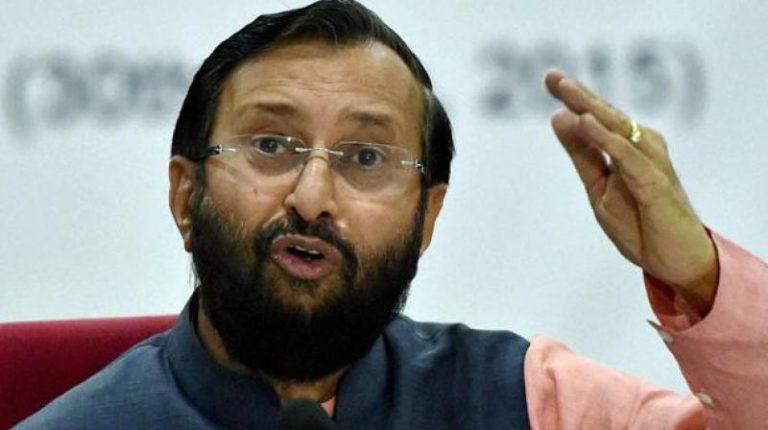
The HRD minister, Prakash Javadekar, speaking at a Delhi BJP function today, termed the 1975 Emergency period as a ‘black period’ and an assault on democracy of the country. He said that his ministry would work to include some content on it in textbooks to make the new generation aware about it. Terming it the darkest phase in Indian democracy, Javadekar said some columns and chapters on Emergency will be reviewed and more chapters will be included.

Javadekar also spoke of facilitating the party men who were jailed during the Emergency announced on June 25, 1975, by the Indira Gandhi-led Congress regime. Javadekar said that Congress President Rahul Gandhi should seek apology before talking about freedom of press and judiciary in the country.

Javadekar said that though now Emergency appeared to be a mere term, it was actually a “tale of bravery” and a “festival of struggle” that was fought for ending the era of restrainment and curtailment of rights. Recapitulating the Emergency period, Javadekar praised the then Jan Sangh veterans for the sacrifices they made to fight for the rights of the people, and for keeping the interest of the people of the nation over theirs.

Union Minister Mukhtar Abbas Naqvi also said that chapter on Emergency should be included in textbook. Referring to the Emergency as a ‘dirty deceit against democracy’, Naqvi said a chapter needs to be included as younger generation needs to be made aware about the atrocities and torture committed during the period which witnessed destruction of the soul of the democracy and the Constitution. He further added that ‘Inclusion of the chapter on the Emergency in the text books will be a strong and effective message of power of democratic values against the dictatorial mindset.’

Kerala priests accused of blackmail and sexual abuse

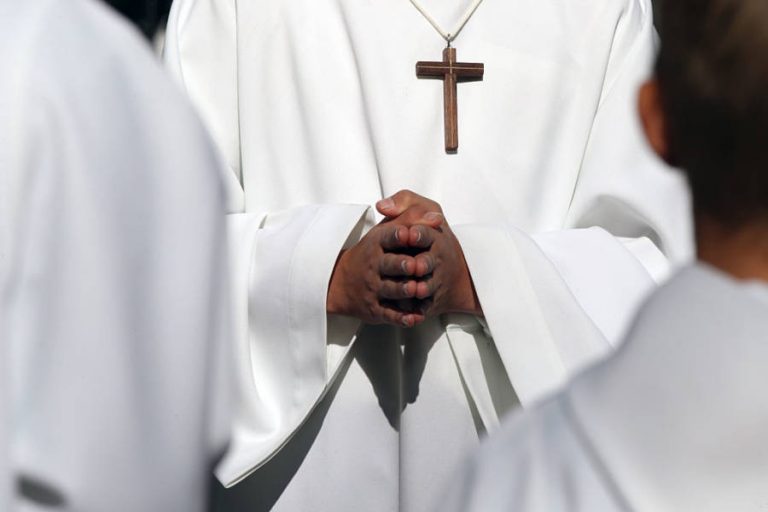
Five priests of an orthodox church in Kerala have been accused of sexual abuse and blackmailing, by a married woman in Kerala. As per reports, an inquiry panel had been formed to look into the allegation against the five priests from the Malankara Orthodox Syrian Church who have been working under the administration of the Kottayam church. Father M O John said that the five priests have been asked to keep away from officiating all priestly duties and function as head of parishes. While they are not yet suspended, an inquiry report will decide their fate.

As per reports, the victim’s husband complained to the church through an audio clip in which the man has narrated the ordeal where she was allegedly sexually abused by one of the priests before they got married, who even made advances towards her after they got married. He has accused that during his daughter’s baptism, his wife confessed this to another priest who also allegedly exploited her.

Shockingly, however, the Father John has reportedly said that this incident does not deserve a police probe. He questioned the husband, who has accused the priests of abusing his wife 380 times, on what were they doing till the time the figure reached 380. He has reportedly also said that there is no substance in woman’s allegation.

This is not the first time that the churches in the country have been accused of doing things which are considered to be a contravention to law. Recently, another priest who once served in India was accused of involvement in child pornography. In March last year, a preist of  St Sebastian Church in Kannur, Kerala was accused of raping and impregnating a minor.

Recently in Vallampadu, Andhra Pradesh, a 45-year-old pastor was booked for brutally raping an 11-year old girl. In July 2017, Father Saji Joesph, a priest who was the director of a children’s home in Kerala’s Wayanad district, was arrested after allegations of sexually abusing minor boys. In 2013, an illegal shelter home housing dozens of children from extremely poor families in North Eastern India was reported in Jaipur. One girl had accused priest Jacob John of rape and as many as 13 girls were suspected to have been sexually abused by the priest. The children were all found to be living in cramped rooms amongst rotten vegetables in an utterly unhygienic environment. In 2011, a heartbreaking case had come to light in Guntur when a local church priest had set a minor girl on fire after sexually abusing her for over a year. The girl succumbed to her injuries after suffering 90% burns. In 2010, a priest named Habib Joesph was arrested for alleged sexual abuse of a minor. The sister of the minor girl had died in the same institution a year earlier. The girl alleged that she and her sister were both being sexually abused regularly and this was known to the nuns in charge of the girl. The girl’s elder sister had died allegedly after being raped by the priest and beaten by the nun. Habib Joseph was granted bail within a day.

Grandmaster Praggnanandhaa’s coach appeals for change in policy for sports awards

12-year-old Chennai boy Praggnanandhaa became world’s second youngest Grandmaster at 12 years, 10 months and 13 days. For any sportsperson to excel, the contribution of a coach is unparalleled. Hence, congratulations are in order for little Praggnanandhaa’s coach Ramesh RB, too.

After congratulating Praggnanandhaa on his victory, Ramesh BB took to Twitter to express his displeasure over the government policy in awarding sports awards, especially to coaches. He expressed his apprehensions and discomfort that for a coach to be eligible for the prestigious Dronacharya Award, the coach must apply himself.


He said the award must go to the deserving coach without him or her having to apply for it. He recounted how many awards his students have won over the years.


He said that having coached so many students to bring laurels to India, he had applied for Dronacharya Award back in 2014, but was awarded zero points by the authorities.


To put things in perspective, World Chess Olympiad is the 2nd biggest sporting event after Olympics in terms of countries participating. He said how this was not a pleasant experience for him. He said how the cash award application by his students for him as a coach are also ignored and that no chess coach has been awarded cash award since past 15 years.


He said how he quit his job in 2008 to start giving training for the sport, and how the cash award would have given some financial relief to his family back then.


Saying how non-Olympic sports are considered illegitimate child, he said how chess coaches are ignored for Dronacharya Awards.


He thanked the public for the support he has been receiving, but disillusioned by government policies, he has decided not to apply for awards again for fear of getting ‘similar treatment’ again.


He appealed that non-Olympic sport should also be given equal opportunity to be considered for Dronacharya Award and other awards.


Dronacharya Awards are sports coaching honour [pdf] given to coaches who produce outstanding results in different Olympic sports disciplines, non-Olympic sports disciplines recognised by Government of India and other sports as recognised by Government. Since its institution in 1985, the award has been awarded to chess coaches only twice, Raghunandan Vasant Gokhle in 1986 and Koneru Ashok in 2006.

Modi government likely to double minimum pension for organised sector employees

As per reports, the Narendra Modi led government is mulling to double or treble the minimum monthly pension of the retired employees of the organized sector in the country. The move, if implemented, could benefit lakhs of pensioners while costing the government a sizable additional expense.

Three months ago, a three-member committee, constituted by the labour ministry, had concluded that the existing pension of 1000 rupees was too low, and needed to be increased. Though the final decision is still pending one of the members of the labour ministry-constituted committee on pension, Ravi Wig stated, “We have discussed that the minimum pension should be between Rs. 2,000 to 5,000 instead of the present Rs. 1,000.”

“The committee has suggested that the government should immediately announce Rs. 2,000 as the minimum pension. The further enhancement up to Rs. 5,000 can be debated and arrived at over time. The government has a responsibility and, I think, the poor workers should be provided with an enhanced pension,” said Wig, who is also a central board member of the Employees Provident Fund Organisation.

Ravi Wig further went on to explain that the current pension if divided comes to approximately 33 rupees a day, which is not even sufficient to procure two square meals a day, even for a pensioner living in a rural area, leave alone the ones stating in urban areas, where things are much more expensive. He said the previous additional secretary of the labour ministry heading the committee has been promoted as the secretary, labour, and employment, and he is hopeful that the ministry will take a view on the issue sooner or later.

While a labour ministry spokesperson said he was not aware of any detail of the development, Prabhakar Banasura, a central board member of the EPFO, said that he is expecting a detailed discussion on pension during the subsequent meetings this week.

Employees provident fund organization has an active member base of over 6 crores(with an at least one-month contribution during the year). Every month, an organized sector employee contributes 12% of his basic salary and HRA to EPFO as a provident deduction, and a similar amount is contributed by the employer. From the employer’s 12% contribution, 8.33% goes to employees’ pension scheme and the rest to the provident fund. As of now, EPF contribution is mandatory for employees earning a monthly salary of up to 15,000 in companies and establishments with 20 or more workers on its payroll.

In an attempt to encourage institutions to create jobs, the BJP government in the budget announced for the fiscal year 2019, had announced that the government will pay the employer’s contribution of 12% of basic salary towards the retirement corpus of individuals in the Employees’ Provident Fund (EPF) in the first three years of employment.

The new Union budget 2018 has also proposed to amend the Employees’ Provident Funds and Miscellaneous Provisions Act, 1952 to reduce women employees’ contribution to the EPF to 8% for first three years of their employment, from 12%. The employers’ contribution will, however, remain at the existing 12%.

Dalit organisation praises Modi govt, calls it a better performer than UPA

The Chairman of Dalit Indian Chamber of Commerce and Industry (DICCI) – Milind Kamble on Sunday, praised the Modi government performance and called it better than the UPA government, PTI has reported.

As per Kamble, maximum work has been done for the betterment of the Dalits under the Narendra Modi led government. This as per the chairman included, formulation of pro-Dalit schemes and their effective implementation. One of the initiatives praised was the Mudra scheme, which as claimed by Kamble benefited about 2.75 crore youths belonging to the scheduled castes and scheduled tribes.

Kamble even went on to say that the Modi government’s performance has been comparatively better than that of the erstwhile UPA government led by former Prime Minister Manmohan Singh.

The Chairman also chose to be prudent in his expectations by asserting that no government could ensure employment for each of the total 19 crore educated Dalit youths in the country. He thus claimed that DICCI was trying to empower them by encouraging their indulgence in trade and business.

Incidentally just a day after the Chairman’s remarks, Uttar Pradesh Chief Minister Yogi Adityanath looked to bolster his party’s pro-Dalit outreach by demanding that seats be reserved for Dalits at minority-run institutions like the Aligarh Muslim University and the Jamia Milia Islamia. He also appealed to the Dalit rights activists to demand the same.

Such an endorsement by the DICCI might also provide a boost to the Modi government’s relations with the Dalits, which a few months ago were marred by mass protests and a violent Bharat Bandh by the SC/ST communities triggered by the Supreme Court’s verdict, which called for a curb on the misuse of Scheduled Caste and Scheduled Tribes (Prevention of Atrocities) Act.

Centre proposes to make board affiliation and geo-tagging mandatory for madarsas

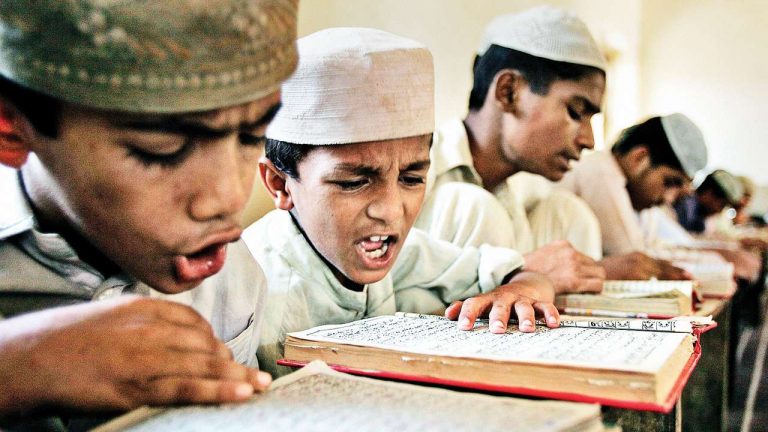
According to a report published on News18.com, in an effort to revamp the madarsa education structure in India, the Human Resource and Development (HRD) Ministry is planning to make it mandatory for such institutions to be affiliated to either madarsa boards or state boards under the Scheme to Provide Quality Education in Madrassas (SPQEM).

As per the report, the scheme is aimed at bringing about qualitative improvement in madarsa education and act as an enabler for students attending such institutions in attaining standards at par with the national education system in formal subjects.

Another initiative taken up under this scheme is to try and make a map of madarsas functioning in this country based on their GPS. In order to achieve this, The HRD ministry is pondering upon the idea of making unique identification mandatory for every madarsa to trace their physical location via GPS.

Last year the HRD ministry had asked for the physical location data of those madrasas covered under SPQEM and the ones which were non-compliant had to wait for teacher’s payment.

This is just one of the many steps the government has taken to modernise madarsas. Last year in August, Yogi Adityanath led Uttar Pradesh government had introduced subjects like maths and science as well as introduction of NCERT books in madarsas. The UP government had also launched a Madarsa portal to provide transparency in employment, infrastructure and educational details of the several hundred madarsas operating in the state.

Meanwhile, some madarsas are likely to oppose the move of the Centre as they see the reform measures as ‘government interference’ in their autonomous functioning.

FIR filed against former Congress CM Siddaramaiah in matter involving illegal purchase of land

Former Karnataka Chief Minister and senior Congress leader Siddaramaiah has landed into trouble after an FIR was filed against him by the Mysuru police on Sunday, PTI has reported. The sections under which the FIR has been registered include, section 169, 420 and 468 of the IPC involving unlawfully buying property, cheating and forgery.

The report has claimed that the FIR has been filed against the Congress leader and three others in connection with a land denotification case falling under the Laxmipuram police station area in Mysuru. The FIR was lodged on 18 June following directive issued by Mysuru’s Chief Judicial Magistrate.

The three other accused against whom criminal proceedings have been initiated are, C Basave Gowda, D Dhruvakumar – former chairmen of Mysuru Urban Development Authority (MUDA) and current chairman of MUDA –  P S Kantharaju.

As per a report by The Hindu, a RTI activist N. Gangaraju has alleged that Siddaramaiah while being the state’s deputy chief minister in 1997 had purchased 10 guntas (1011 square metre) of land in the Vijayanagar 2nd layout which was developed by MUDA.

This as alleged by Gangaraju was done via indirect denotification and Siddaramaiah using his influence to secure various clearances. As per the report, a house was later built on that land and it was sold in 2003. The PTI report too claims that the accused had usurped government property and Siddaramaiah had purchased the said land illegally.

The Congress party in their leader’s defence has termed this allegation as baseless.

Incidentally following the former Chief Minister’s political career, one finds that he has been embroiled in quite a few other controversies.

We had reported last year that permission had been sought to prosecute Siddaramaiah for nepotism and misuse of power. Besides this, a complaint has been filed against him and 27 others for allegations of large scale corruption in exchange of transfer of police officers.

In April 2016 he had faced allegations of nepotism after a contract to set up a CT and MRI lab at the government-run Bengaluru Medical College was given to a company headed by his son.

Battleground 2019, ahead of the general elections, regional parties look at digital platforms to woo voters

Social Media has rapidly grown in importance as a forum for political activism in its different forms. Social media platforms, such as Twitter, Facebook, and YouTube provide new ways to stimulate citizen engagement in political life, where elections and electoral campaigns have a central role.

Understanding the importance of social media reshaping structures and methods of contemporary political communication by influencing the way politicians interact with citizens and each other, the regional parties of India are ready to woo voters through various digital platforms.

Ahead of the 2019 Lok Sabha elections the Trinamool Congress, West Bengal’s ruling party is strengthening its “digital wing”. Starting with holding workshops, roping in MNCs to train cadres, the TMC is going all out to ensure that it has a strong digital wing and presence in social media, that are increasingly being harnessed by political parties to influence voters.

The digital wing of the TMC, known to be devised by Abhishek Banerjee, MP, and president of the party’s youth wing, as well as a nephew of chief minister Mamata Banerjee, has already set up a huge IT cell with a team comprising 40,000 members who are operating from all the 42 Lok Sabha constituencies in the state with presence in every district, block and booth level.

TMC, claiming to be the top regional party in utilizing social media to ‘counter trolls and fake news’ and simultaneously creating the consciousness for its policies and propaganda, plans to create 10,000 WhatsApp groups with 256 members in each.

The party has a huge centre in Kolkata with all kinds of sophisticated gadgets to control and monitor social media and. It has a core team of 230 professionals who are responsible for publishing and posting contents on social media and microblogging sites.

With the other regional parties too, understanding the significance of social media, Bihar’s ruling RJD in May 2017, organised a three-day training programme for party leaders and workers, particularly in the use of social media, in preparation for the 2019 Lok Sabha elections.

The Rashtriya Janata Dal led by former Chief Minister Lalu Prasad is committed to providing training to hundreds of its leaders and workers to use social media to connect increasingly with people and to ‘counter the propaganda’ against the party. Lalu Prasad, his sons former deputy chief minister Tejaswi Yadav and former health minister Tej Pratap and RJD Rajya Sabha MP and Lalu’s daughter Misa Bharti, were among the leaders participating in the camp. Lalu understanding the significance and power of social media had also joined Twitter in 2014, and since then been, though not very active but making his presence felt time and again on Twitter.

Another regional party joining the trend is the Samajwadi party who has now decided to counter the propaganda and campaign by its main political rival – the ruling BJP – on the social media by launching its own brand of tech-savvy ‘digital army.’ The decision to go digital, say party leaders, was also taken with an eye on the 2019 Lok Sabha elections in which 65% of voters would be in the age group of 18-35 years.

Talking about social media presence, who can ever ignore the potentiality of Aam Aadmi party, perceived as one of the most active, vocal and abusive party on social media. Arvind Kejriwal and his supporters have often lowered their own standards of decency and have been seen trolling, harassing and abusing people on Twitter. AAP leaders are often slammed on Twitter for playing low-level politics, but this does not stop them from creating new standards of paltriness each time they appear on social media.

With 2019 fast approaching, it will be interesting to see what approach political parties take to reach out and communicate to the voters, who now have information on their fingertips.

Why 60 year old Mira Maheshwari had to flee from Pakistan to India

“My daughter was abducted and forced to convert to Islam. We tried to find her, and also approached court for the same, but we could not find her. Some other people took over the possession of our shop and home, and hence we decided to leave Pakistan.”

Words from Mira Maheshwari, who fled from Pakistan 10 years ago. Imagine the barbarism of the nation from that forced a woman who is at 60 years of age to pack up and leave for a new life across the border.

We will probably never know what ultimately became of Mira Maheshwari’s daughter. She is probably lost forever among those who follow the ‘religion of peace’ in the ‘land of the pure’. We know that the torment of these children of Bharat will never make the UN take notice; we know that their crying will never make the cover of TIME Magazine.

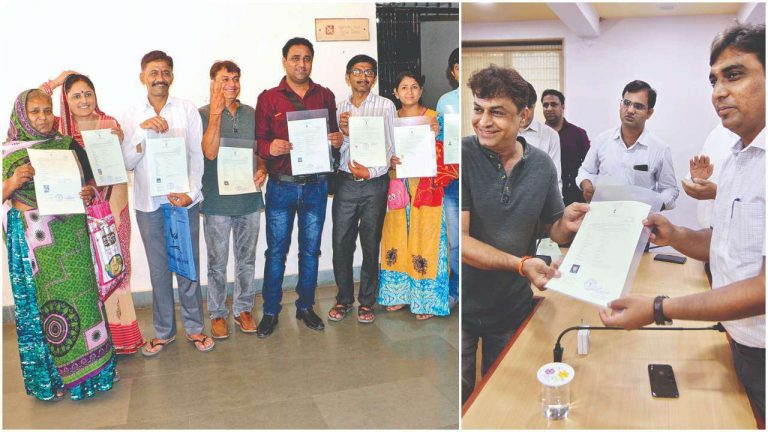
But I can give you a bit of good news. Mira Maheshwari is one of 90 Pakistani Hindus who formally received Indian citizenship at a ceremony in Ahmedabad yesterday. Roughly 70 years after Partition, India’s daughter, now 70 years old herself, has been embraced by the land of Bharat.

Untitled.png

Take a moment to look at those shining faces. Observe how they beam with pride, joy and relief at being Bharatiya. These are the real faces of “Azaadi”.

I dare one of those snobbish academic or media elites to try convincing one of these people that there should be “Bharat ke tukde”.

Guess what? Bharat has been broken into pieces before and it was a nightmare. Ask these people. They had to live this nightmare all their lives until this very moment.

Look at their faces again. Don’t they look just like our friends, our neighbors and our family? They look just like us who sometimes end up taking their Indian identity for granted.  But look at those shining faces and you will know how blessed we are and how proud we should be of being Indian.

In a Dec 2016 notification, the Govt of India decided to speed up the process of giving citizenship to persecuted minorities (Hindus, Sikhs, etc) from Pakistan, Bangladesh and Afghanistan. Accordingly, local district collectors were given the power to issue certificates of citizenship instead of clogging the system all the way up to Delhi. Since then, the office in Ahmedabad has given citizenship to 320 Pakistanis (now Indians! Yay!) and another 200 or so applications are pending.

We on social media are angry all the time. We argue over everything. After all, India is this big crazy place that is buzzing with a billion plus voices. A billion plus dreams and aspirations jostling for space. We disagree all the time. Sometimes we end up hating each other. In the midst of this, sometimes we forget how lucky we are to be born in this land of Bharat.

We kids get too busy with our daily lives and we end up forgetting about our mother. We end up taking her for granted. But she is always there for us and always will be.

Bharat Mata ki Jai! Let’s say it for her sometimes.

The media maintained silence, while the Congress rubbed shoulders with separatists

0

Saifuddin Soz is no ordinary Congress leader. Since the 1980s, he’s often been in Lok Sabha and Rajya Sabha either on National Conference or Congress representation. A multiple-time Union minister, the last time under Manmohan Singh’s UPA between 2006-2009, he was one of the front-runners for the post of Vice-President in 2007 and 2012.

Soz draws his heft because of his influence in the Kashmir Valley. He surely has had access to separatist leaders of the state: A US diplomatic cable leaked by Wikileaks claimed he was a go-between contact between the Indian government and secessionist forces. Indeed, the leaked cable of US Ambassador to India David Mulford to US State Department described Soz as a long-standing “contact” of the US Embassy’s political section.

Soz is now in news because of his new book. By claiming that the first choice of Kashmiris is independence, a stance similar to terrorists and secessionists for three decades now, he has put the glare on his party. Congress is also under the lens because the dreaded terrorist organization Lashkar-e-Taiba (LeT) run by Hafiz Saeed from Pakistan soil, has come out in praise of Congress and a statement by Congress leader Ghulam Nabi Azad.

In case the readers need a reminder, LeT has been banned as a terrorist organization by US, UK, European Union, Russia, Australia and of course India. Its stated objective is the secession of Kashmir. A traumatized India has accused LeT of its involvement in the 2001 Indian Parliament and 2008 Mumbai attacks. Hafiz Saeed, as its founder in 1987, had received funding from Osama bin Laden.

Congress has further earned the ire of millions of Indians because one of its senior leaders, Ghulab Nabi Azad, once the Chief Minister of Jammu and Kashmir, has accused Indian army of planning a “massacre” in the Valley. Congress’ dug the knife deeper with its insensitive attempt to defend Azad, As millions see it, Congress is rubbing shoulders with the secessionists and are deep in trenches with them against the Indian army.

Congress may yet take action against Soz or slap the wrist of Azad. But discerners see no sign from them on standing next to the brave and beleaguered Indian army. Their human rights begin and end on Kathua; there is never a word of praise when our jawans gun down a terrorist; never a drop of tear for their martyrdom or wailing widows.

On June 22, our security forces killed 4 terrorists identified with Islamic State (IS) in Anantnag district. In view of the oncoming Amarnath Yatra, starting this week (June 28), it was a laudatory achievement. The whole nation stood up as one to applaud the action. But how did Congress react?

I looked for reactions on Congress’ official stand on the matter and how its’ leaders have reacted. The Congress’ Twitter handle has nothing on Soz or Azad or terrorists tackled: all it has is a retweet of PC Chidambaram and his concern “Will-there-be-a-war-with-Pakistan?” This time-tested tactic is to weaken the resolve of the Indian state, peddle appeasement which in turn is an invitation to secessionist forces for the next strike.

Rahul Gandhi’s tweets? No mention. In any case the Congress supreme tweets once in two days. And when he does it is to run down Modi and his government. Shashi Tharoor? Blank.

And what about the partners Congress’ could be in bed with for upcoming elections? That mahagathbandan to “save democracy” in the country? Mamata Bannerjee? Blank. Akhilesh Yadav? Blank. Sitaram Yechury? Blank. Arvind Kejriwal? Blank. None of them has any time for our forces; the sacrifices they make; the goals they achieve; the threats and cost they pay to themselves and their families. It is no different to the length these forces went to deny the “surgical strike.”

The message that goes across is alarming: that secessionists are acceptable but not our soldiers; that a terrorists’ life is valuable while the ones of soldiers are not; that India-breakers have unconditional support while those for India-Unity can go and jump from the Himalayas.

You may have a like or dislike for Narendra Modi; you may feel elated or cheated on account of his term so far, but you can’t be standing in support of secessionist forces. Those who want to rule India can’t be seen in sync with India-breakers.

While the readers ponder over the piece; it’s worth dropping a line on Tariq Hammed Karra who is a “Pakistan proxy” and “recently joined the Congress in the presence of Smt. Sonia and Rahul Gandhi,” as Union Minister Ravi Shankar Prasad lashed out in his press conference on Friday.

It is worthy to note that most of Lutyens media were silent on these shenanigans of the Congress. Most of Lutyens Media never questioned Rahul Gandhi. Most of them stood by and said nothing.