Home Blog Page 7161

Muslim mob allegedly attacks Hindu man after he tries to save a Muslim friend during a dispute

The village of Khanjahanpur falling under Muzaffarnagar’s Khatauli region in Uttar Pradesh has bore witness to communal violence as reported by Amar Ujala.

The report quotes the police as claiming that two village residents namely Arshad and Nazim got into a business-related dispute on Saturday evening. The dispute soon escalated into a fight. Seeing this, another villager named Vikas – a friend of Nazim came to his rescue. The matter as per the report settled for a while.

Later though it is alleged that, while Vikas and his brother Praveen were relaxing at their home, Arshad and his dozen so associates came barging in to mount an assault. The mob, some of whose members have been identified as Bilal, Munna, Usman and Javed have also been accused of harassing women present in the home.

As a result of the assault, tension spread in the village that night, following which the accused fled the area.

A Jagran report which also covered the incident too claims that Vikas was abused and assaulted by members of a “particular community” while he was sitting at his home. Later Pravin and Nazim who got involved were also assaulted by the mob. About Rs 35,000 were also allegedly looted from Nazim.

In the fight which ensued, three people were reported injured. Damage was also reported to a litchi farm in the village.

The report quotes Vikas as claiming that he had a complaint against the poor quality of cement which led to the attack. Incidentally, Arshad, on the other hand, is claiming that Nazim and his associates attacked his home during their dispute. He further alleged that his household members were assaulted and later a fake case was filed against them.

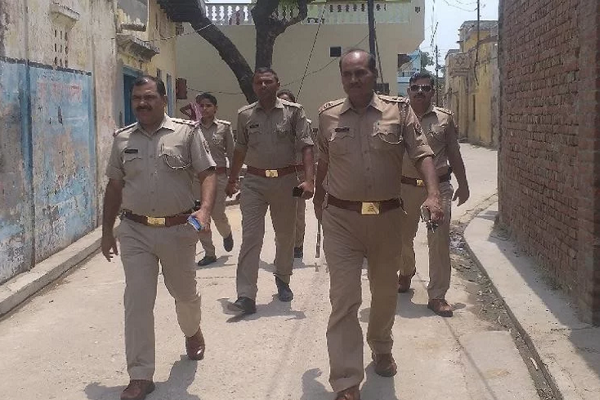
Following the incident, a police complaint was lodged, which resulted in the police conducting a flag march and inspector Ambika Prasad Bharadwaj deploying a force. The inspector has been quoted as saying that one group filed a complaint on Saturday night and another did so on Sunday morning. The police also strongly warned people against quarrelling or spreading rumours.

India responds to Sunil Chhetri’s heartfelt appeal : Match tickets sold out!

Sunil Chhetri, the captain of the Indian football team had appealed to Indian football fans to come out to watch the matches in stadiums. He had requested Indians to come and encourage the players. A day after his appeal, India has given an overwhelming response to its football stars as reportedly all the tickets to the India- Kenya match to be held at Mumbai Football Arena have been sold out.

After Sunil Chhetri’s appeal, support and encouragement poured over the football star from all quarters. From Cricket superstars to politicians, all supported the Indian football captain’s appeal and encouraged Indians to support football players.


Even Spanish Football club La Liga had supported Chhetri’s cause.


According to reports, the online booking website started showing errors due to full bookings as early as today noon. Mumbai based Youtuber Nikunj Lotia who is known as BeYouNick announced that he had bought an entire stand and giving away free tickets to football fans.


On Saturday’s match against Chinese Taipei, Chhetri had scored a hat-trick. Chhetri’s appeal seems to have moved Indians to awaken to football.

Will there be an end to the stone pelting saga written by the Islamist mobs in Kashmir?

Even though the central government announced a cessation of operations in Jammu and Kashmir during the month of Ramzan, attacks on security forces have been continuing. According to reports, in Batpora, Shopian today, 16 people have been reportedly injured, including civilians when terrorists hurled grenades at a police vehicle. One young girl has reportedly lost her life.


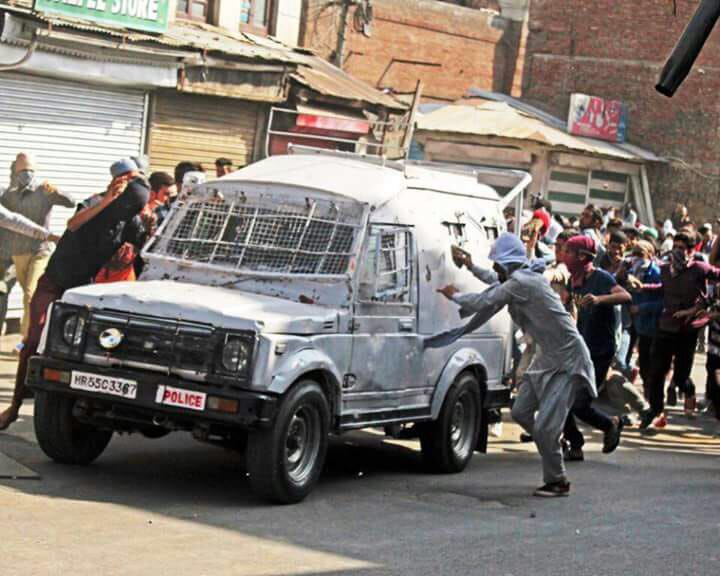
Attacks on security forces seem to be on a constant rise. Today in Pulwama, stones were pelted on the vehicle of security forces in what is believed as a retaliation of one terrorist from Pulwama being killed by the forces on 27th May. On 27th May, security forces had killed 5 terrorists near the border in Tangdhar and seized a huge cache of weapons and materials bearing Pakistan markings. The terrorists were trying to infiltrate into Indian border.

On the very next day, a camp of 50, Rashtriya Rifles was attacked by terrorists in Pulwama where one soldier and one civilian were killed. There have been many such attacks since then. As per reports, there have been as many as 14 grenade attacks on security personnel in 4 days.

On June 1st, a murderous mob of stone pelting jihadis had brutally attacked a CRPF convoy in Nowhatta in Srinagar. Even though the CRPF personnel showed exemplary restraint in order to not hurt bystanders, the CRPF was criticised by a section of media and terror apologists for accidentally running over 2 stone pelters in the commotion.

On the LOC too, Pakistan has been continuing unprovoked firing. Yesterday two BSF personnel were reported killed in Pakistan’s firing. It has been reported that the BSF soldiers were killed by snipers. The incident has happened just days after DGMOs of both countries agreed to honour the 2003 ceasefire agreement.


Jammu and Kashmir CM Mehbooba Mufti had called for a unilateral ceasefire in Kashmir during the month of Ramzan which the Ministry of Home Affairs had accepted. The central government had later explained that it is only a suspension of operation during the month of Ramzan and the Minister of Home Affairs Rajnath Singh had also stated that the government is ready to talk to Hurriyat leaders if they come forward.

The two giant positives for Hindu unity from Karnataka elections

Elections come and elections go. A government lasts five years at the most. But our civilization, our nation and our culture is forever.

So why do I say that there were two giant positives for Hindu unity coming out of Karnataka elections?

Well, since time immemorial, we Hindus have always taken the bait. We have fallen apart for the smallest of reasons, fought among ourselves and always let the invader get a free pass. Once the British left, the Congress internalized this lesson and used it to keep India under the boot. No matter that the whole world progressed for 40 years while India was left in the dust. The Congress was always able to play off one caste against the other because we Hindus were suckers for it every single time.

Then came RTE, the grandest of all the Trojan horses, a great evil even by the standards of the Sonia led UPA government. As many commenters noted even at the time, it was a plan to tie the hands and feet of Hindu institutions and put them at a competitive disadvantage versus those run by a minority, usually belonging to an Abrahamic faith.

Here is one question that needs to be resolved. Why did RTE appear only in the Sonia led UPA era? Why did the Congress not think of this anti-Hindu measure before, back in the days when it used to have 300-400 Lok Sabha seats?

Because the RTE was a response to the growing prosperity of Hindus in India. For most of the history of independent India, Nehruvian socialism kept Hindus completely impoverished. As such, other than a handful of venerable exceptions, Hindus never had the money power to run their own institutions.

But the economy fell apart and the nation became ungovernable in 1991. The fruit of 40 years of Nehruvian socialism. Economic reforms happened. In the new India, slowly but surely, Hindus began to prosper for the first time in one thousand years.

By 2004, the writing was on the wall. The Congress may have actually gained from the BJP’s premature “India shining” campaign, but there was no denying India’s rise as a nation on the world stage. The time had come. It was only a matter of time before India became a superpower. They knew it. We knew it. I think everybody in the world believes it now.

By sheer force of numbers, it was manifest that most of the wealth in this shining new superpower would lie with the Hindus. This new India would need no ricebags from abroad. And Hindus would be dominant, Hindu institutions would be dominant.

Hence, RTE. To chain the bird before it flies the cage. And it was packaged as a Teflon coated “pro-poor” measure. As a political tactic, simply brilliant.

But the RTE had yet another sting in its tail. There was yet more firepower in the belly of the Trojan horse. Not only could RTE be used to clamp down the Hindus, it could also be used to hold them hostage. The RTE could be used as a bargaining chip. The Congress could promise smaller Hindu communities freedom from the shackles of RTE, on condition that they renounce their Hindu identity.

This extra sting in the tail of RTE was revealed for the first time in the Congress Party’s Karnataka strategy.

If the Congress’ Lingayat card had worked, there is no doubt that it would have been deployed nationwide. One by one, piece by piece, thread by thread, the Congress would have taken apart the entire Hindu Samaj.

As a Hindu, I owe the Lingayats a huge debt of gratitude. They saw through the trick. They understood exactly what the Congress was doing and why it deserved to be punished. Instead of splitting the Lingayat vote, the Congress set off unprecedented Hindu solidarity among them.

Sure, the Congress may still use this card elsewhere and Hindus may fall for it. But for the moment, the Congress has learned a lesson they will remember.

So that was the first positive for Hindu unity in Karnataka elections. Where did the other one come from?

It came from Coastal Karnataka. The place had been ground zero for the massacre of RSS/BJP workers by cadres of secular outfits. Egged on by liberal intellectuals in Delhi, the Congress never saw the anti-incumbency wave in any other region of the state. One of the most “reputed” polling organizations gave the Congress Party a staggering 47% vote share, a lead of 17% over the BJP.

Untitled.png

But in Coastal Karnataka, the anger was all too visible on the ground. I bet even CSDS could have foreseen it. What was the Congress going to do about it?

Well, Siddaramaiah thought he had yet another ace up his sleeve. Being the much celebrated “folk hero” of Karnataka (as numero uno analyst Rajdeep Sardesai referred to him shortly before elections), he couldn’t bear to lose in Coastal Karnataka.

Untitled.png

The Muslim outfit SDPI …. oh, excuse me, the secular outfit SDPI decided to sit out the election in Coastal Karnataka where it has a sizeable influence. It was evident that the entire ‘secular vote’ would be freed up to go tactically against the BJP.

There is a reason analysts thought that the BJP was toast in Coastal Karnataka. As usual, they thought Hindus would split their votes, while peaceful communities would consolidate theirs.

In keeping with its strategy of too clever by half, the Congress denied that there was an alliance between them and SDPI. The proof? The SDPI decided to put up three random candidates against the Congress in three random seats where it had no influence. One was even in Bengaluru (LOL)! The aim was to convince Hindus that there is no alliance between the ‘secular’ Congress and the Muslim SDPI.

The trap was fully set for Hindus to get crushed under the Trojan horse. And then a miracle happened.

Untitled.png

In most of Coastal Karnataka, the BJP ended up polling over 50% of the vote. Considering that Hindus account for only around 65% of the population in the area, that’s nearly 77% of the Hindu vote going to the BJP.

That’s the second giant positive for Hindu unity.

The Karnataka election also taught Rahul and Sonia other lessons. There was a complete rejection of the regional chauvinist narrative being pushed by the Congress and its ecosystem. Siddaramaiah paid dearly in the election for calling the Prime Minister of India a “North Indian import.” The people of Karnataka have shown Madam Sonia Gandhi who is their own and who is not.

The BJP may not have formed the government in Karnataka. With the Congress retaining a toehold on power, crimes against Hindus are likely to increase in the state. But, at the very least, the Hindus of Karnataka have shown the Congress that they do keep their eyes and ears open.


Research Scholar slams the western media and academia for its bias against Indian ‘rightwing’

Thomas Jackson, a Research Fellow at the India Foundation and former President of the Oxford University Conservative Association, recently penned an article for the Open Magazine on the twisted perception of the Indian ‘Rightwing’ the western academia appears to have.

In his article, Jackson claims that he was led to believe by his acquaintances in the academia and western media outlets that the Indian Right is too extreme with one of them even saying that working for an Indian rightwing think tank was akin to working for an organization supportive of the Nazi party in 1930s Germany. He admits that the opinions of those around him led to him having many preconceptions about Indian conservatives, all of which turned out to be false. It also confirmed to him how out of touch the western academia and the media were with the realities of India.

Jackson also criticizes ‘Indian thought leaders’ who are creating a false narrative about the country in the west. He writes, “More shockingly, though, is the fact that Indian thought leaders, who I suspect is perhaps still bitter that Congress is out of power, are creating such a false narrative of their own country for us in the West.”

He concludes his piece with the words, “The idea that Indian liberalism and tolerance are dead if they did in fact ever exist, is firmly planted in the mind of the Western media and academics. My experience suggests that this cannot be further from the truth, and I’ve even heard many people I work with make the claim that Hinduism and the Indian way of life encourage liberalism, pluralism and tolerance. I am inclined to believe this.”

We have, on multiple occasions, reported on how western journalists and academia have spread fake news about India which exposed their own bias. Propagandist C.J. Werlemen has on several occasions spread false narratives about rising Islamophobia in India and was even berated by the Police for his tweet. Very recently, the BBC was forced to retract its report claiming that the Sikh cop who had allegedly saved a Muslim man from a Hindu mob was receiving death threats after we exposed their lies. The New York Times as well has peddled false narratives on several occasions to malign Hindus and target the BJP government.

‘Pranab Mukherjee attending RSS event will create undesirable difference in the country’ : Congress’ Veerapa Moily

Ever since Former President Pranab Mukherjee accepted RSS’ invite to speak at the valedictory address at the function of Third Year Sangha Shiksha Varga (SSV) of the Rashtriya Swayamsevak Sangh (RSS) at Nagpur, Congress and some of its leaders have been miffed. They have made all sorts of ridiculous comments in order to dissuade Mukherjee from attending and speaking at the event.

Continuing on their reservations on Pranab Mukherjee’s visit to RSS event in Nagpur, another Congress leader has spoken out against Mukherjee’s decision.

The third-year Sanga Shiksha Varga is for volunteers who have qualified the first and second year training camps and after attending the third year, the volunteers will become full time ‘Pracharaks’ for the Sangh.

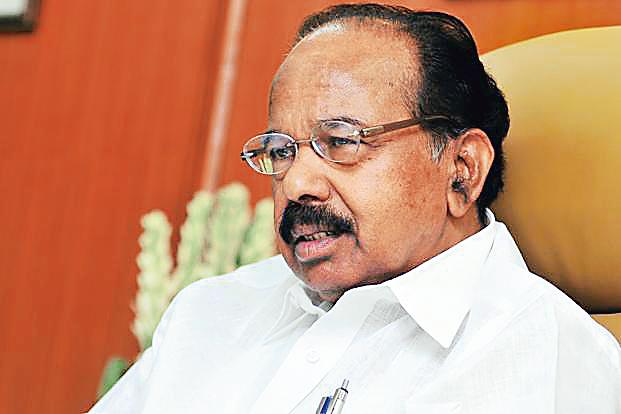
Senior Congress leader, M Veerapa Moily on Monday said the attendance of a former president to the RSS event will create what he terms to be an “undesirable differences” in the country. He said, “The very gesture of attending (RSS event) will make a difference which is not desirable for the country.”

Veerapa Molly has stated that the gesture of attending the RSS event will surely make an undesirable difference in the country. He also believes that the idea of RSS is in stark contrast with those of Congress and the Indian republic.

This statement comes after several Congress leaders already stated their grievance with Mukherjee via letters and phone calls. The former president has maintained his position of attending the event, stating that he will respond to all the grievances at the event itself.

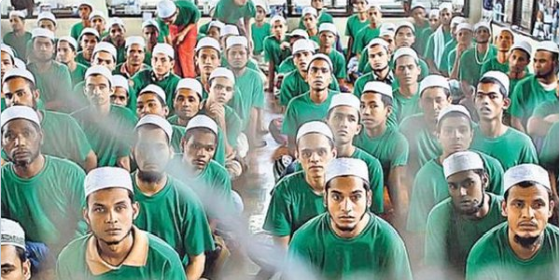
Rohingyas a security threat, vulnerable to radicalisation: Centre urges states to prevent their entry

The Center has asked all state governments to prevent the entry of Rohingyans into the country. In a letter to state governments, Anuj Sharma, Joint Secretary, Ministry of Home Affairs, urged them to “kindly review this matter (of the entry of illegal migrants) and issue instructions to take necessary steps and share updated information in the prescribed form .. as soon as possible..”

The Center asserted again that Rohingyas pose a security threat. It said that the entry of Rohingyas “has security implications since some of the migrants have been found to have indulged in illegal activities and are vulnerable to radicalization”.

The letter goes on to add,”It has been brought to the notice of the Government that some of the Rohingyas/foreigners are involved in crimes, anti-national activities, money laundering, procuring fake/fabricated Indian documents; and some of them have illegally and fraudulently obtained Indian identity documents e.g. Pan Card, Voter Card, etc.”

The Center has taken a strong stand against the immigration of Rohingyas into India ever since the controversy came up. A report in a Bangladeshi newspaper claimed that India had deported 18 Rohingyas despite ‘SC stay’. Kiren Rijiju, Minister of State for Home Affairs, has also stated that Rohingyas are illegal immigrants who need to be deported. Manipur is one of the states that has taken a strong stance against Rohingyas. Its Police have arrested several Rohingyas after search operations and found human traffickers among them.

A soldier’s confusion : It is time for the Modi government to introspect

0

In the run-up to the 2014 elections, Modi’s expressed intentions and sentiments about the armed forces caught the imagination of a substantial section of the military community, serving as well as veterans. This translated into overwhelming support in the elections, which continued thereafter in debates on mainstream or social media. Some actions by the Prime Minister reinforced this sentiment – spending Diwali with soldiers deployed on the far-flung frontiers as he has been doing every year, for instance. He asked people to acknowledge soldiers in public as is the norm in some other countries. Few doubted the sincerity of his words – least of all soldiers or veterans themselves.

But as Ralph Waldo Emerson said, “What you do speaks so loudly, I can’t hear what you’re saying”. A series of ill-considered decisions by the Ministry of Defence over the past four years has been in stark contrast to these sentiments of the PM. Taken under three successive Raksha Mantri (RM), they have had an adverse impact on the welfare, dignity, and status of the soldier. The fact that the country has had three successive RMs in four years, including a part-time one initially itself raises doubts about the priority of the ministry in the overall scheme of things.

The government took off on a wrong footing with the inordinate delay in implementing the OROP, an election promise made by the Prime Minister himself. Flimsy excuses proffered by the minister and ministry officials – that its a complex issue requiring complicated calculations – cut no ice in this computerized era. The delay finally led to the sorry spectacle of aged veterans and their families agitating peacefully for months at Jantar Mantar. Adding insult to injury, the peaceful demonstrators were attacked by the police on the eve of Independence Day, something that angered even serving soldiers to no end. The final implementation was preceded by unsavoury haggling and caveats, and what should have been a graceful fulfilling of a promise was turned into an acrimonious battle by the officials and minister involved. To this day, utterances made by the then minister leads a section of veterans to feel that the promise was diluted. The government ended up delivering what the Congress had said was “not feasible”  and yet losing out on some of the goodwill that this would have generated had it been handled in a more graceful manner.

Implementation of the 7th Pay Commission for the armed forces was the next sordid episode. The armed forces pointed out several anomalies in the recommendations concerning soldiers. While the three chiefs preferred to implement the recommendations only after resolving the anomalies, they were ordered to go ahead and implement nevertheless, while the anomalies would be addressed subsequently.

Some recommendations of the pay commission seemed to specifically single out the armed forces for belittlement. This could possibly be attributed to deliberate sabotage by a pay commission appointed by the previous government. But it was up to the government to decide whether to accept them or not. However, these were, inexplicably, accepted by the government without much application of mind about the negligible savings accruing on one hand and the bad optics of acting against the stated intent of doing the best by soldiers on the other hand.

Three cases stand out – a reduction of disability pension of armed forces personnel (while hiking it for other services), capping of education allowance admissible to the children of martyrs and disabled soldiers, and stopping entitled rations for officers posted in peace stations, replacing it with a ration allowance. None of these made any sense, and two of them have subsequently been reversed – but not before they caused considerable consternation amongst serving and veteran soldiers and a loss of face for the government in having to roll back its decisions frequently. Even the third is reported to be actively under consideration for reversal because the implementation is causing complications as officers posted in peace stations also become entitled to rations in kind when they move out for training, field firing and operational alerts, which is usually for about four to five months in a year.

Another curious case was a letter issued by a middle-ranking MoD official, downgrading the uniformed officers and JCOs vis a vis their civilian counterparts of the Armed Forces Headquarters cadre. The outrage caused by equating Captains and Lieutenants of the army with non-gazetted civilian officers, and JCOs with clerical grades, once again resulted in the government having to take a U-turn about the decision and restoring status quo ante.

And the latest issue is opening of cantonment roads, that has a serving, veterans, and families up in arms once again. The ill-considered orders were passed by the Raksha Mantri, overruling the objections of the army and disregarding the obvious security implications of allowing free passage of traffic through military areas across the country. While the RM may have been swayed by local MPs and MLAs appealing about inconvenience being caused to local residents in having to take detours around closed roads, the cantonment land has been the target of land grabbers for a long time. Interestingly, the Cantonments Act was amended by the UPA government in 2006, diluting the powers of the military authorities vis a vis the bureaucrats of the Defence Estates department – some of whom have been involved in such land grab instances themselves.

As a veteran who voted for BJP in 2014, and will do so once again in 2019, I am nevertheless amongst many who feel let down by this constant back and forth by a government that we considered had the best interests of soldiers at heart. While one or two incidents can be explained away as errors of judgment, the series of instances described above indicate a pattern. It appears that all these decisions were taken on advice which was either consistently ill-considered or given with malafide intent. The lower bureaucracy in MoD has been notorious for acting against the interest of the services for decades to an extent that they use funds meant for the welfare of veterans to hire expensive lawyers to fight cases against disabled veterans in the Supreme Court. But it is the political leadership that is ultimately accountable to the people, and must, in turn, hold the bureaucrats accountable. In none of the cases where the government has had to rescind a decision, any bureaucrat has been held accountable by the minister.

One of the expectations that people like me had with this government, especially from the Prime Minister, was that with his genuine regard for soldiers, such frequent pinpricks will come to an end. On the contrary, not only have they continued, but the frequent change in Defence Ministers has exacerbated the gap between the political intent of the Prime Minister and actions on the ground. Maybe its time that decisions concerning the armed forces and veterans are not taken purely on bureaucratic advice, but after interactions with the stakeholders to understand the nuances of the impact of such decisions. With the presence of two cabinet colleagues who are senior veterans themselves, the Defence Minister could easily pick up the phone and have an informal chat with them to understand the implications of any such decision on the morale of soldiers and sentiments of the families and people at large.

As the government celebrates the completion of four years of effective governance, and its achievements in areas like electrification, infrastructure, connectivity, ease of doing business etc have been phenomenal, it needs to introspect on how it has fared in dealing with issues related to the armed forces. There may be a need for some damage control, and a year is long enough to do so, while simultaneously ensuring that mistakes of the past are not repeated.

Congress spreads sensational conspiracy involving Nirav Modi and Income Tax dept, gets promptly refuted

The Congress party on Sunday shared a Tribune news report which alleged a sensational conspiracy theory involving absconding diamond merchant Nirav Modi and the Income Tax department.

As per the tweet put out by the Congress party’s official twitter handle, it alleged that “in a convenient turn of events papers relating to Nirav Modi, had been burnt during the fire at the tax agency’s offices in Mumbai. To take things further, the party then alleged how Nirav Modi was photographed with PM Modi before “pulling off” the banking fraud:


Incidentally the party wasn’t alone in this regard and this theory was peddled by other media outlets and AAP supporter cum fake news enthusiast Dhruv Rathee.

About 45 minutes after Congress’ tweet, and after noticing the media reports the Income Tax department decided to swing into action and called the above allegations as “false and misdirected”:


The IT department further explained that documents relating to the investigation into Nirav Modi and Mehul Choksi had been previously transferred to other buildings. Incidentally following the debunk, Tribune – the source of Congress’ allegation, has pulled down its report:

Congress spreads sensational conspiracy involving Nirav Modi and Income Tax dept, gets promptly refuted
Tribune removes its story

Despite the fact that the allegations have been refuted by the IT department, it did not stop actor Richa Chadha continued peddling this conspiracy, which was also endorsed by Javed Akhtar:


It remains to be seen whether the IT department would take some legal action against those who spread the allegation which it describes as false and misdirected.

73,000 deregistered companies deposited Rs 24,000 crore post demonetisation, shows govt data

In data released by the Ministry of Corporate Affairs, almost 73,000 companies have been deregistered and have made to deposit more than Rs. 24,000 crore in bank accounts post demonetisation.

The Government started its fight against black money and is working towards tracking down the flow of illicit funds and illicit assets. It has taken steps to deregister the names of around 2.26 lakh companies which have been dormant for many years. It has also come to the government’s notice that these companies in the past had also involved in illegal fund flows.

The Ministry, which has compiled the data said that more than 1.68 lakh companies out of the 2.26 lakh deregistered companies have deposited the cash in their accounts post demonetisation. Out of this, 73,000 companies deposited Rs 24,000 crore. Details of companies from various banks are under process, the ministry said in a document. In another report, the data shows that the direct tax collection post demonetisation has increased by 15.3%, which amounts to the collection of Rs. 9.80 crores of direct tax alone.

The Ministry document said that there are 68 companies are under investigation. The Serious Fraud Investigation Office (SFIO) is also probing 19 companies while the Registrars of Companies (RoC) are investigating 49 firms, it added.

It seems that the government has taken the issue of black money and illicit fund flows very seriously. Earlier, the Modi government intensified the crackdown on Benami Transactions by announcing a reward scheme to clamp down on benami properties. Under this scheme, the person who passes on any specific information about Benami transactions will be rewarded upto Rs 1 crore.

In several addresses, to the nation, PM Modi has said that he is committed to rooting out black money from the system by cracking down on benami properties. The present government has taken several steps like withdrawing of high currency values, from usage, enforcing strict measures to track illicit funds and other steps to eliminate the menace of black money from the system.