Home Blog Page 7162

The ‘Core agenda’ must be implemented as an election strategy, here’s why

0

The Core Agenda is aimed at ensuring constitutional equality to all Indians and countering the machinations of the “Idea of India” gang that exerts a mafia-like influence over policy-making at all levels of government in India. In most civilized countries, there wouldn’t even be a need to articulate something like the Core Agenda. But not in India, where denying equal constitutional rights to the majority Hindu community has been deemed a necessity to maintain communal harmony and ensure the safety of the minorities. For the uninitiated, an introduction to the Core Agenda can be found here. This post is motivated by two articles, one published in Swarajya and the other in OpIndia, and several twitter discussions.

Our constitution and its various later amendments have sanctified discrimination of Hindus to such an extent that anyone venturing to challenge this system is labelled a reactionary and a religious fundamentalist. BJP’s rise as a political force in the late 80’s can be ascribed directly to the exploitation of resentment among the Hindus against this step-motherly treatment by the Indian state. That was the period when Advani coined the term “pseudo-secularism”, Shourie exposed the Leftist agenda and Vajpayee spoke against the injustice to Shah Bano. But the “Idea of India” gang has been so successful in ingraining this anti-Hindu doctrine into the Indian psyche that even staunch BJP supporters find it hard to challenge. So much so that the most stringent opposition to the Core Agenda today comes not from Congressmen or the Leftists but for self-proclaimed diehard supporters of Prime Minister Narendra Modi. There are two often repeated points by the critics of the Core Agenda that I’ll take up here and discuss how they might be wrong.

That PM-candidate Modi never promised to correct the discriminatory, anti-Hindu, provisions of the RTE Act or to free Hindu temples from government control.

It is true that repeal of RTE or freeing of temples were never explicitly part of Modi’s stated agenda during 2014 elections. In fact, I don’t remember him ever talking, positively or negatively, about the RTE act and its contentious provisions. He is still a trustee of the Somnath Temple Trust; so, probably is not opposed to political interference in temple administration. It is also equally true that Modi’s most prominent slogan during the campaign was, and still is, Sabka Saath Sabka Vikaas. I understand the first part of that slogan (the part that I have highlighted) to mean discrimination of none. Such a slogan cannot be driven by honesty and conviction if it means the continuation of political and government interference in the affairs of only Hindu places of worship. Or if only the Hindu-run private-funded schools have to bear the financial burden of educating the underprivileged.

That the Core Agenda has no electoral relevance outside the social media echo-chamber.

The author of the OpIndia article I referred to at the beginning asks, “Ladies and gentlemen of the ‘core’, why was a manifesto that promised “proper utilization of temple funds” rejected in Karnataka? Is it not weird that you want BJP to fulfil the Core agenda and at the same time, you reject a manifesto that wants to test ‘Core’ waters?” The author, it has to be said, is being dishonest in framing his questions. Proper utilization of temple funds or even the “utilization of revenue from temples only and fully for expenditure on temples and related religious activities”, as promised in BJP’s Karnataka manifesto, is not really the demand of the “ladies and gentlemen of the ‘core'”. It is complete freedom from “secular” government’s interference in running our religious affairs.

Even if we accept that what has been promised is a partial acceptance of the core agenda in order to test the waters, BJP did not highlight this promise at any point of time during their Karnataka campaign. Modi did not even once refer to it in his 21 or so well attended rallies. Neither did Amit Shah or Yeddyurappa in the meetings that they addressed. First and only time this promise is mentioned is as a nondescript point hidden inside the manifesto. All it needed to become a national talking point was for Modi to mention it just once in any one of his election speeches. Instead, it ended up as a talking point among BJP’s twitter supporters.

Let’s do a thought experiment. Keeping all the issues relevant during the 2014 election campaign the same – corruption, policy paralysis, economic stagnation, security threats, etc. – would the BJP be able to win 282 Lok Sabha seats if its PM candidate was not Modi but Sushma Swaraj or Arun Jaitley or even L K Advani? Would the numerous people who volunteered for the campaign, sometimes leaving their day jobs, be still prepared to do that? What was that X-factor that Modi as PM candidate brought into the campaign? That is what a commitment to act on even a single point from the Core Agenda can do.

The real electoral contribution of the Core Agenda is not in terms of the number of votes it gets for BJP or for NOTA. It is in how it can transform the morale and energize the party cadres in the run-up to a crucial election. Almost every BJP supporter agrees that a verdict from the Supreme Court in the Ram Janmabhoomi case will definitively tilt the scales in favour of the party. Considering how desperate Kapil Sibal was to get the case postponed till, after the next general elections, Congress party also seems to agree with this. However, the Ram Janmabhoomi issue does not hold much relevance anymore to a majority of Hindu constituency. So, then, who is it going to influence to tilt the scales in favour of BJP? It is the ordinary grassroots party worker who will work that much harder in the summer heat conducting door-to-door campaigns. It is what spurs them to bring voters to the booth and to ensure that every vote for the party is cast. It is what motivates them to dare murderous assaults in Bengal and Kerala.

Imagine the effect of Modi declaring that he’ll ensure if elected back, that Hindus, and only Hindus, will have total control of Tirumala or Puri temples. How will it influence the Andhra voters who are currently angry with BJP?  Imagine him promising that educational institutions under SC, ST or OBC managements will have the same protections as minority institutions. How would that move the Ezhava votes in Kerala? Imagine him promising to enforce reservations for Dalits in admissions and employment at government-aided minority institutions. What would that do to the Dalit atrocity propaganda being peddled by the left-libbers?

At this point, you might think I am advocating old style, manipulative political machinations. Far from that, what I am pointing out is the positive political side-effects that could be accrued by showing a little courage to do what is right. The Core Agenda needs to be acted upon, not because it’ll get you a few additional votes or help you outsmart the opposition. Rather, because that is the right thing to do, ethical thing to do and just thing to do. Because that is what adherents of Dharma would do.

Rebel AAP leader to join BJP? Vijay Goel says ‘Doors always open for people like Kapil Mishra’

Union Minister Vijay Goel today paid a visit to rebel AAP MLA and former minister in Arvind Kejriwal government Kapil Mishra. After the visit, Vijay Goel stated that he has known Kapil Mishra for a long time and BJP is always on, the lookout for young and dedicated leaders who work for the people.


After the meeting, reports quoted Vijay Goel as saying that the doors of BJP are always open for people like Kapil Mishra. Goel also added that it is upon Mishra to decide whether he wants to join BJP or not. Goel’s visit to Mishra was reportedly a part of the nationwide ‘Sampark se Samarthan’ initiative by BJP in the run-up to the 2019 general elections.


It is notable here that Kapil Mishra has been a fierce critic of Arvind Kejriwal and his policies and has put allegations of corruption on Kejriwal and many of his ministers. Mishra was expelled by Kejriwal from the AAP last year. Mishra was also the former chief of Jal Board and his work includes taking the water mafia by horns and initiating a number of reformative steps.

Mishra had alleged that Kejriwal is hesitant to take actions against Satyendra Jain despite being aware of the corruption charges against him. He had even alleged that Kejriwal himself is too deeply involved in the corruption activities done by Jain. He had claimed that the 10 crore PWD scam which had Kejriwal’s brother in law Surender Bansal as a suspect had happened with Kejriwal’s knowledge and approval.

From questions on the prevailing mystery over AAP worker Santosh Koli’s death to foreign trips taken by AAP MLAs, Kapil Mishra had been always critical and vocal against the Kejriwal government. He had made claims that Kejriwal had received illegal funds from shell companies to contest the 2014 general elections and Kejriwal had been one of the worst hit politicians after demonetisation because much of the currency was seized by ED. He had also alleged that Kejriwal had wasted development funds worth Rs 17,000 crores. In April, Mishra had alleged that the appointment of 9 advisors by the Delhi government was a scam as the advisors like Raghav Chadha were there to have access to sensitive financial details and later intended use of that information for getting donations for the AAP.

Mishra is yet to formally announce his decision on joining the BJP.

Late trains would mean late promotions; Piyush Goyal warns Railway officers against train delays

If Railway Minister Piyush Goyal has his way, passengers won’t be the only individuals who would suffer thanks to train delays. As reported by the PTI, Goyal has warned zonal General Managers that a train delay would result in their appraisals too getting differed proportionally. Following this, he gave them a month’s time to implement corrective measures.

Hence the report claims that if the situation doesn’t improve by 30 June, the erring General Managers would not be considered for promotions. Goyal also brought in a competitive spirit between the zones by supposedly stating that the performance ratings would depend on how they fare as compared to the peers. Hence if they rank lower on the delay list, the worse they fare.

As per the report, Goyal in a meeting last months had also warned the officers that the excuse of maintenance work won’t do as an explanation for train delays.

To put out the figures, 30 per cent of Indian Trains didn’t run on time from 2017-18. The Northern Railway fares the worse with a dismal 49,59 per cent punctuality rate till 29 May, seeing a dip of 32.74 per cent in performance. The Eastern and Northeast Frontier zones had seen a dip of 26 and 27 per cent respectively.

As reported by Swarajya, the Indian Railways considers trains to be on time if they are delayed by less than 15 minutes. But soon the railway might revamp it by proposing five grades of punctuality where trains would be classified as, “excellent”, “very good”, “good”, “fair” and “bad” based on the criteria laid out.

Incidentally, such a warning closely follows guidelines proposed by aviation minister Jayant Sinha, where a flyer would be eligible for a full refund if an airline cancels a flight or delays it by more than 4 hours.

The proposed compensation laid out is Rs 5000 if a passenger misses a flight due to a three-hour delay. For delays ranging from four to twelve hours the compensation would be Rs 10,000 and for delays more than that a passenger would be eligible for a Rs 20,000 compensation.

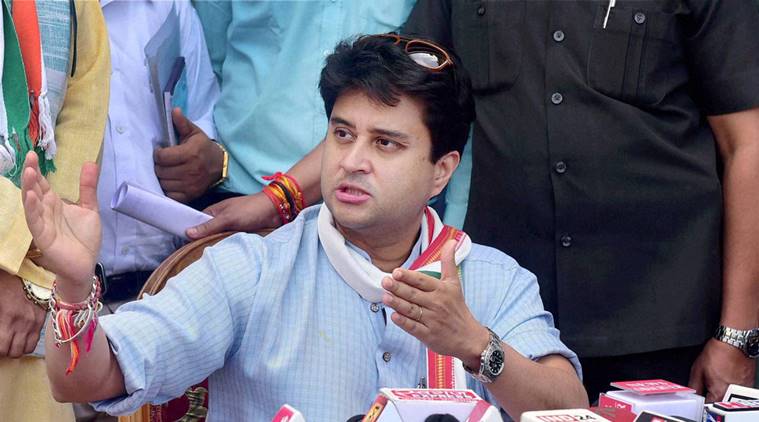
Jyotiraditya Scindia thinks everyone, like the Congress President, defies biology and common sense

0

At almost 50, Congress President Rahul Gandhi is still considered ‘Youth leader’. Not that I’m an ageist, but I’m sure Congress has leaders other than someone from the Nehru-Gandhi family, younger than Rahul, who could be propped up as a ‘leader’. With no leadership quality to showcase except for having been born in ‘The Family’, Rahul Gandhi has not aged. And if Congress leader Jyotiraditya Scindia is to be believed, Rahul isn’t the only Peter Pan we have.

Jyotiraditya Scindia displaying his arithmetical prowess

Scindia believes that if population increases by 24% in 10 years, how can the number of voters increase by 40%? That he thinks an increase in population is linear, despite having studied economics at Harvard, is baffling. The logic is so brilliant, I have to wear glares to shield my eyes from all the shine it is spreading.

Soon people tried to point out the logical fallacies.


Some even questioned his degree in Economics from Harvard.


And some questioned whether the company of people he is keeping these days rubbing off him.


Or maybe it is a collective effort by all Congress leaders and supporters to make Rahul Gandhi look smarter. After all, the only way to make a short line appear longer is to draw a shorter line right next to it.

Perhaps we could send Scindia to attend the same school as Congress spokesperson Priyanka Chaturvedi so both could learn mathematics before they attempt any such ridiculous equations in future.

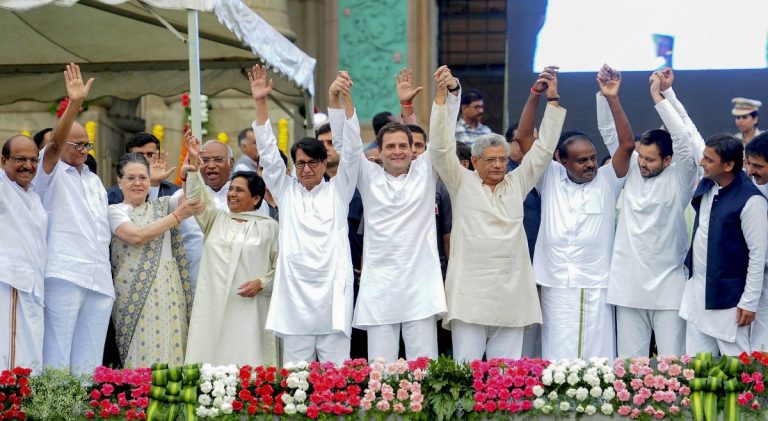
As Rahul Gandhi gets praises for ‘coup’ in Karnataka, senior party leader resigns due to ‘bad performance’ in elections

SR Patil, the working President of Karnataka North Congress has reportedly submitted his resignation. According to reports, he has cited ‘unsatisfactory performance’ in the recent assembly elections as the reason.

The usual singers in media and Congress have been hailing Rahul Gandhi as the hero of the Congress-JDS coalition government and calling it as a victory for Rahul Gandhi and his leadership, but the chinks in Congress’ armour have never been more visible.

Patil has reportedly stated that he has sent his resignation via email to Rahul Gandhi taking moral responsibility for the party’s unsatisfactory performance in the recent assembly elections and added that had his party won more seats in North Karnataka they would have formed the government on their own. Patil has reportedly emailed his resignation to Rahul Gandhi on May 25 but is yet to receive a response as Rahul Gandhi is currently on a vacation abroad.

There are some reports claiming that Patil has resigned due to ‘ill-treatment‘ received after the elections. The reports, citing sources from party insiders state that Patil was miffed as he was neither consulted on the alliance with JD(S) nor his efforts of being the deputy CM under Lingayat quota were successful and hence has decided to resign.

There were also recent reports stating that senior leaders who have served two terms as ministers in the previous governments would be kept out of the cabinet and assigned party work. It is notable here that in north Karnataka, which is Lingayat dominated region, the Congress has won only 8 seats despite their tactics of a separate Lingayat religion.

The Karnataka BJP has called the incident of SR Patil resigning as the ‘beginning of the downfall’ of the Congress-JDS alliance government.


Congress has mostly made a mess out of the Karnataka verdict. Be it the prolonged tussle for the deputy CM post of the distribution of cabinet berths, the friction and disagreements between the alliance partners have been quite apparent. Then Kumaraswamy officially declared that he is at the mercy of Congress as far as running Karnataka is concerned. Looking at the long history of animosity and political rivalry between the two parties, that is bound to have made some JDS leaders angry. Days after the election results, a Congress MLA had declared that the tapes that were alleging BJP’s attempts to bribe the MLAs were fake.

The Kumaraswamy government passed the floor test on May 25th but the state of Karnataka is yet to get its cabinet ministers. After many reports of squabbles and disagreements, it is only 3 days back that the parties have declared they have finally ‘agreed’ on the number of berths being shared. The ministers are yet to be sworn in as Rahul Gandhi and Sonia Gandhi are yet to return from abroad.

Anti-BJP media and political mass have hailed the coalition government in Karnataka the victory of democracy, but Kumaraswamy’s affirmation to Congress’ mercy and the recent developments have only clarified one thing, that it has been only a mockery of democracy where a leader with 37 MLAs gets to become CM and later declared he is unable to work for the state as he is at the mercy of the bigger partner. There are too many power tussles and too many delays in the Karnataka’s government’s functioning. It only reaffirms the doubts that the government in Karnataka is on a shaky boat, a boat that is already showing cracks.

Irony died and went to hell when Rajdeep Sardesai advised others to ‘not play politics over dead bodies’

0

Rajdeep Sardesai, the Senior Journalist with India Today who is known to do fluff interviews of Mamata Banerjee, Sonia Gandhi and the Yadavs and who once proudly proclaimed that he is anti-national, has once again managed to expose his own hypocrisy on Twitter.

Rajdeep Sardesai took to Twitter today to urge everyone to ‘hold their peace’ until a thorough investigation is conducted and asked people to ‘stop playing politics over dead bodies in Bengal’. He was referring to the 2 BJP workers who have been found brutally murdered and hanging from trees in Purulia district of West Bengal within a week. Incidentally, Mamata Banerjee, Bengal Chief Minister’s nephew had not too long ago stated that he wanted to make Purulia ‘opposition free’. The BJP has squarely blamed the TMC government for murdering BJP cadre.

While Rajdeep’s demand doesn’t sound unreasonable at the outset, it is how he has reacted to incidents in the past that are a reflection of how he tries to shield any non-BJP government from criticism and passes judgements when BJP government is in power.

When Gauri Lankesh, journalist and columnist, was gunned in Karnataka, a Congress-ruled state, even before a day of enquiry could be conducted, Rajdeep had already proceeded to inject the “Hindutva” narrative into her murder.

After the unfortunate lynching of a Muslim youth called Junaid, the narrative of how he was lynched for “carrying beef” was meticulously spun. From journalists to activists. Even Rajdeep Sardesai wrote an elaborate blog headlined “The poison of Kuch Log” (whatever that is supposed to mean) blaming Hindu Nationalists and attributing the murder to Hindus wanting to teach Muslims a lesson about everything from the Mughal invasion to the Partition of India. He even got Gau Rakshaks into the discussion.

While Rajdeep today urges people not to use dead bodies for politics, he then called Junaid’s father and asked him whether the grieving father believed Junaid was lynched over seat issues in the train to somehow ensure he can blame the “Hindutva types” specifically.

We had earlier reported how Professor Anand Ranganathan had turned exposing Rajdeep’s hypocrisy into an art form. And today, Rajdeep’s hypocrisy too wasn’t lost on Netizens who remarked how in other cases, where he had the opportunity to either blame the BJP government or weave a narrative blaming Hindus, he never waited for an enquiry as he wishes to do now.


Some even mocked him implying that Rajdeep should be giving this advice to himself rather than others.


It is indeed tragic that the brutal murders of BJP workers seem to mean paltry little to our “eminent journalists”. The reasons could be plenty. Their hatred for BJP is so intense that even the blood of innocents wouldn’t quell it. Or that they are hesitant to criticise the Knight in shining armours, the opposition, who are their last hope of re-establishing status quo and defeating the incumbent BJP government. Perhaps the fact that they couldn’t blame Hindus, or Gau Rakshaks, or Hindu Nationalists for a murder put a damper on the “journalism”.

Either way, hypocrisy has a way of being exposed, especially on social media.

Rajinikanth’s remarks on Tuticorin protests cast shadow on his new film Kaala

Film star Rajinikanth is receiving flak for his comments on the ongoing Sterlite protests as his film Kaala is set to release on 7th June. Rajinikanth had blamed the anti-socials for the violence during the anti-Sterlite rally on 22nd May which resulted in the death of 13 people in police firing. He had even asked for an ‘iron fist’ policy to crush the anti-socials.

However, his statements don’t seem to have gone down too well. DMK leader M K Stalin and AIADMK rebel leader TTV Dhinakaran have intensified their attack on the actor. As per reports, the film has already hit controversies in Karnataka where film distributors and theatre owners have not shown much excitement over screening the film. The Karnataka Film Chamber of Commerce (KFCC) has even disallowed the release of the film. Reports also say the film is facing troubles in north and south Tamil Nadu as well. Some theatre owners in Tamil Nadu have also asked for additional deployment of police to control the crowd during the release of Kaala.

Actor Kamal Haasan, whose statement on Tuticorin protests reminded people eerily of Kashmir uprising, slammed Rajinikanth and is reported to have said that if the protestors are anti-social, so am I. Meanwhile, opposition leaders have already branded Rajinikanth as BJP’s team B.

Income Tax department refutes media claims of Nirav Modi case files to have been gutted in fire

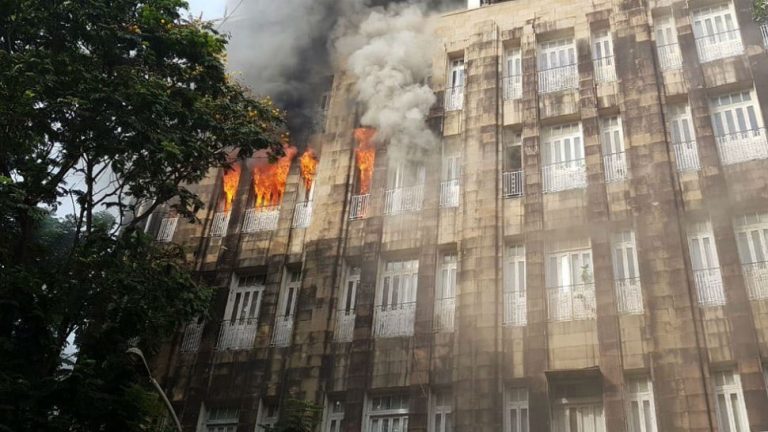
On 1st June, a massive fire broke out in Scindia House (commercial), Mumbai, which houses the income tax department’s investigation and debt recovery tribunal.


Following the fire, many media houses spread speculative news that fire destroyed sensitive files on Nirav Modi case. Some even included that along with Nirav Modi, files of Mehul Choksi and Vijay Mallya were also ‘destroyed‘ in the fire. Some publications even asserted that the files were destroyed.

Tribune news on fire at Scindia House
Amar Ujala claiming files of Nirav Modi were destroyed in fire.

Aam Aadmi Party supporter, who has been accused of spreading fake news, also took to Twitter to spread speculative news.

However, Income Tax department today issued a statement refuting all such claims and said that these news and false and misdirected.

They clarified that such documents pertaining to the case were already transferred to assessment units housed in another building as part of investigation.

Dear football fans, it’s time to throng to the stadiums to watch the Indian team play

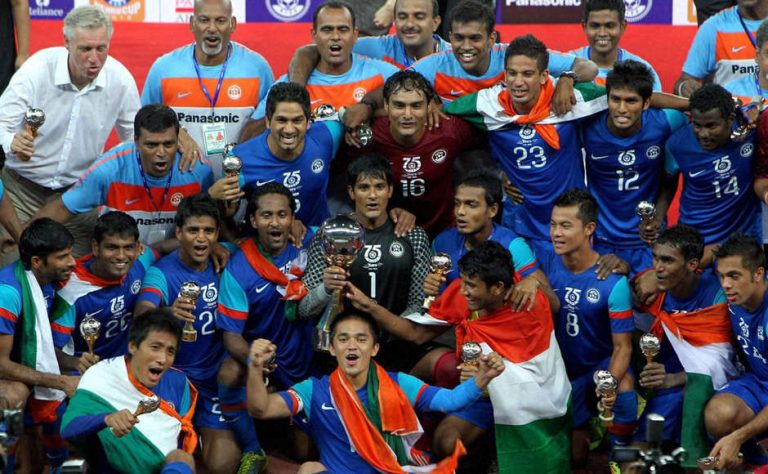
Sunil Chhetri, the captain of the Indian football team, took to Twitter on Saturday to appeal to Indians to go watch the team play in the stadiums.


In his heartfelt plea, Chhetri thanked the fans who had gone to watch them play and pleaded with the rest to visit the stadiums and encourage the team with their presence. Chhetri admitted that the level of football is not anywhere close to that in European leagues, however, he assured that the determination and desire of the players will make the visit worth it. He even said that it was perfectly acceptable if the fans abused the players in the ground, he only wanted them to come.

That Sunil Chhetri, one of the most decorated football players in Indian history, has to plead to fans to attend football matches says a lot about the footballing culture in India. It’s not that India doesn’t have passionate football fans, there are in large numbers, especially in cities, however, most wouldn’t consider visiting stadiums to watch India play football merely because it’s not an essential feature in their lives. In Europe and South America and all other footballing nations, football is an integral feature of the culture of the country. The football clubs have an intimate relationship with the people in the city or locality. Football fans travel miles every matchday to watch their teams play and scream their hearts out. For many many of those fans, it is the highlight of their week. Travelling to watch their teams play is as natural as drinking water and having food. That is simply not the case in India, where people have different priorities and interests.

Such a footballing culture where football fans share an intimate relationship with the team they support is not built during the course of a day. It takes decades and decades to develop a culture where football is much more than just a sport, it is their entire life for some fans. But developing such a culture has to begin from somewhere. And that will begin with a massive investment in creating an adequate infrastructure where a football club is firmly associated with the culture of the city.

Let’s take a look at Kolkata for example. It can be safely concluded that Kolkata is the footballing capital of India. The derby between East Bengal and Mohun Bagan is one of the most fiercely fought derbies in the entire world. And the atmosphere in the stadiums during the matches is absolutely breathtaking. East Bengal and Mohun Bagan are deeply rooted in the history of the city. And such an intimate relationship was not built in a day, it took years and years for such a relationship to emerge. Such connections inspire even people who are not fans of the sport to throng to the stadiums to watch the spectacle at display.

One could argue that the reason why football fans don’t throng to stadiums to watch the national team play is that the team hasn’t been able to build an intimate relationship with the fans over the years. With Sunil Chhetri’s appeal, however, things could be headed for a change. More football players need to come forward to establish a relationship with the fans, it could play a pivotal role in increasing the attendance at stadiums. It’s true that many people are not interested in football because the team is very weak, however, before the team can perform at the highest level, there are certain things that need to fall in place. And a massive display of support from fans is crucial towards achieving those goals.

To those who love the sport but haven’t been inspired enough to mark their presence in the ground, I implore them to visit the stadiums to watch the teams play. I still remember my first trip to the ground, it was the East Bengal-Mohun Bagan derby. And it was one of the experiences that I could never forget. Hordes of fans in the colours of the team they support, flags flying high, deafening roars of the crowd accompanied by the loud beating of drums, it was one of the experiences that stay fresh in your memory forever. And believe me when I say, if you do not experience that once in your life, you are missing out on a lot.

Of course, the level of football is nowhere close to that in European leagues. But there’s a certain joy in watching the Indian national team or the clubs play because at the end of the day it’s your team or one based in your city or country. For Indian football to truly emerge on the global scene, the participation of the fans is absolutely essential. European football leagues are vastly popular in India. However, to ensure that Indian football starts improving consistently on the international scene, it is absolutely imperative that we start demanding more from our players and from the establishment. And how can we, as fans, expect to be taken seriously if we aren’t even motivated enough to go to the stadiums to watch our team play?

Many of us go to movies with our friends on weekends to have a good time. We could easily make it a point to instead go watch the local team play at least once a month. If we are fans of football, we could surely do that, couldn’t we? The movies may not always be good but in football, you are always guaranteed entertainment. Moreover, I have seen many football fans complain about the lack of investment in Indian football and the lack of infrastructure. To them I say, if you are not serious enough about the sport to go watch your team play on a regular basis, how can you expect others to be serious enough about it to actually invest their money on it?

One of my friends who has played football professionally in Kolkata in the 2nd division says it’s essential for fans to be present at the ground. “It’s the job of the fans to keep their players motivated and to do that they have to be present at the stadium and cheering for the team,” he says. He went on to add, “A team is not complete without their fans and the players must feel valued and feel that they belong there. And it’s the fans who create this sense of belonging. Even winning in an empty stadium reflects poorly on the team as a unit.”

Dear football fans, it’s time to go to the stadiums to support our national team and the clubs so that a culture can be developed which ensures that India rises to become a footballing powerhouse in the decades to come.

Congress unhappy with Kumaraswamy’s chief ministership, a repeat of 1996?

As reported earlier, Congress and JD(S) alliance does not appear like a great idea, as time goes by, more and more signs of a repeat of 1996 are getting clearer. According to a report, several Congress leaders have raised concern about granting H.D. Kumaraswamy the entire five-year term as the Chief Minister of Karnataka.

The Congress leaders feel as they have been handed an unfair deal. Lok Sabha MP Mallikarjun Kharge has criticized  Venugopal’s decision to declare Kumaraswamy’s full-term chief ministership by a joint declaration during a joint press conference with JD(S), which took place on Friday. Kharge failed to understand the logic of giving Kumaraswamy and JD(S) the chief ministerial position when JD(S) has only managed to won 37 seats, whereas, on the other hand, Congress managed to win 79 seats in the state.

Many leaders in the Congress, including M. Veerappa Moily reportedly felt disappointed for the decision taken by the Congress Chief of Karnataka, Venugopal, regarding the chief ministerial berth and key portfolios which have been given to JD(S) despite of them winning nearly half the number of seats than Congress managed to, in the state.

The Congress state leadership clarified on Friday about the full-term chief ministership of Kumaraswamy when talks of Congress wanting a 30:30-month rotational chief-minister for the alliance was making rounds. The Deputy Chief Minister G. Parameshwara said that the central Congress leadership took the decision to award Kumaraswamy the full term.

In 1996 general elections the mandate produced a hung assembly just like in Karnataka assembly polls, 2018. Similarly, then also BJP came out as the single largest party bagging 160 odd seats, the Congress won 140 seats, their worst till that point in history. The Janata Dal won 45 seats and other parties won around 100 seats. No party or coalition had the required numerical strength to form the government.

The then President Shankar Dayal Sharma asked the largest party leader, Vajpayee to form the government, Vajpayee was sworn in as the Prime Minister of India but he resigned right before the floor test. The Karnataka fiasco saw a similar scenario where BJP’s Yeddyurappa was asked by the Karnataka Governor to form the government and after the swearing in ceremony, Yeddyurappa also tendered his resignation before the house with minutes remaining till the commencement of floor test.

In both instances, the Congress manipulated and subverted the people’s mandate. It was Congress who provided support to the then coalition helping it to assume power. In 2018, it is the same Congress which helped junior Gowda to assume power.