Home Blog Page 7183

China’s top Islamic regulatory body asks all Mosques to hoist the National Flag

The top Islamic regulatory body in China has asked all the mosques in the country to raise the national flag for promoting a spirit of “patriotism among Muslims”, Times of India has reported.

The said “China Islamic Association”  also called for the flags to be placed in a prominent position in the Mosque courtyards, via a letter published on its website on Saturday. As per reports, China has about 20 million Muslims in the country who belong to 10 different ethnic groups.

The letter also asks the Mosques to publicly display the socialist values of the communist party and also explain it to the devotees via Islamic scriptures.

The organisation thus claims that implementing such measures would strengthen the understanding of national, civic ideas and instil the spirit of patriotism among the Muslims.

As per a Channel News Asia report, the China Islamic Association is a body affiliated to the government and holds a monopoly over accrediting imams. The report also claims that the notification comes in the light of China’s new regulations on Religious Affairs.

These regulations are supposed to have intensified state supervision for preventing extremism and increasing punishments for unsanctioned religious activities. The report claims that finally the association hopes for the mosques to become a platform for studying nation and party’s laws and policies.

Such a notification comes in the light of reports of atrocities against the Muslims in the country, for making them give up their Islamic beliefs and align themselves with communism. These measures include forcing Xinjiang Muslim in “re-education camps” to eat pork and drink alcohol – both forbidden in Islam if they don’t follow orders.

These “re-education” camps are supposedly an effort by the Chinese government to check Islamic extremism and separatism in the troubled province. It has been speculated that hundreds and thousands of Muslims have been sent to such camps.

‘Passenger Charter of Rights’ draft : Benefits include refund, compensation, inflight WiFi among other facilities

Minister of State for Civil Aviation Jayant Sinha has announced new compensation and cancellation rules for the airlines. According to reports, the Minister has stated that the ministry has proposed a 24 hours lock-in period from cancellation charges on flight tickets.


According to reports, the ministry has released the first draft of the passengers charter and the new rules will come into effect after being approved by the union cabinet. According to the charter, the airline will have to compensate passengers if a flight is delayed due to the airline’s fault. The passengers will be eligible for a full refund if an airline cancels a flight or delays it for more than 4 hours. The charter also addresses issues regarding loss and damage of baggage and facilities for persons with disabilities.


The charter also states that a passenger will be eligible for a full refund if he cancels a flight ticket within 24 hours of booking it. It states that if a passenger is informed about the cancellation of a flight less than 2 weeks before and up to 24 hours of the scheduled departure time, the passenger must be provided with an alternate flight within 2 hours of the scheduled time or refunded fully.

The cancellation fee can be in no condition, more than the base fare. The charter also reportedly specifies that if a passenger misses a flight due to a delay of over 3 hours, the compensation would be Rs 5000. It would Rs 10,000 for a 4 to 12 hours delay and for delays more than 12 hours, it would be Rs 20,000

Jayant Sinha also reportedly announced that both domestic and international flights operating in India will now be allowed to offer internet services to passengers after obtaining a licence from the ministry.

Former ISI chief praises Vajpayee, laments not having someone like him as Pakistan’s PM

Former ISI chief Muhammad Asad Durrani has heaped praise on former Prime Minister Atal Bihari Vajpayee, News18 has reported. These snippets are part of a book titled The Spy Chronicles: RAW, ISI and the Illusion of Peace, which records conversations between Durrani and former RAW chief AS Dulat.

As reported, Dulat was quoted as praising PM Modi for doing more in his first two years for India-Pakistan relations than what his predecessor Manmohan Singh managed during his time.

During the exchange Durrani claimed that Modi was likely to get a second term and after switching his attention to Vajpayee stated that:

We would be happy if someone like Vajpayee was Prime Minister in Pakistan. Poet, philosopher, he could have been a good Prime Minister for us

Besides this, Durrani has also been quoted as claiming that Doval has made India’s Pak policy more hardline, and even indirectly acknowledged Pakistan’s role in Kashmiri insurgency. When asked about the biggest failure of the ISI, he was quoted as lamenting about the shape which the Hurryat took after its formation.

The announcement of the book though wasn’t without its controversy. The fact that spies belonging to two different countries, who have a long history of enmity were sitting down to record a candid on record discussion, puzzled a people who as a result raised questions over the veracity of the book:


One Foreign Affairs expert blasted the spy agencies over the outlook exhibited in the book:


It remains to be seen as to how is the book received after its released, especially by the Pakistani government.

Dear Mumbai Mirror, you disgust us! Sincerely – All women

0

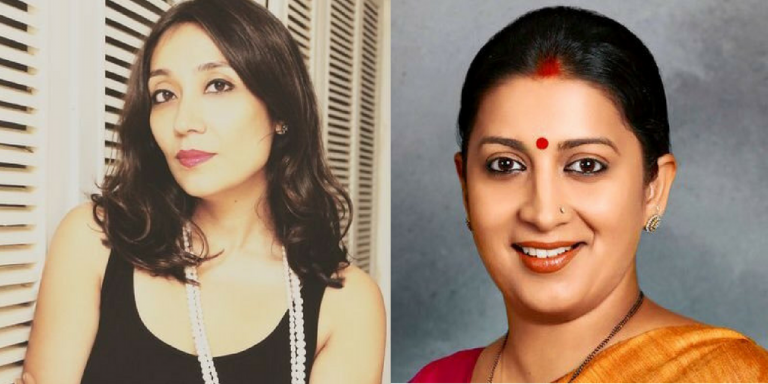
Every time I decide I will try and reach one step closer to mental peace, I end up reading something that pushes my resolve back. Scratch a self-proclaimed ‘feminist’ and you’re most likely to find misogynist or a woman who would not think twice before putting another woman down just because their political ideologies don’t match. Mumbai Mirror today published an article by one Namrata Zakaria, who otherwise writes on fashion and believes that Sonia Gandhi is a bigger style icon than Sonam Kapoor, referring to Sonia Gandhi as ‘Sonia G’ (Soniaji?).

While such crass pieces don’t deserve to be dignified by giving a response, the more I read it the more I felt it needs to be called out. That the veil of feminism and liberalism needs to be brought down. Because if one is biased, better wear it on your skin.

The fashion blogger starts the article by talking about how Union minister Smriti Irani was ‘punished’ by the top brass and was ‘sent back to her room with her knitting needles, which, I presume, is what the men in the arriviste monogrammed suits think of the Textiles Ministry’. Of course, an industry which accounts for 2% of India’s GDP, 15% of India’s export earnings, employs over 45 million people directly and is one of the biggest employment generating industries in the country is a ‘room with knitting needles’ which the fashion blogger ‘presumes’ what the people higher up think of textile ministry. This is what makes people mock fashionistas who make political commentary, because of their own lack of comprehension skills.

Moving on, she says the textile ministry portfolio was ‘left to an annoying, noisy woman to take care of. A girl’s job. Like ‘go and bring us some tea instead’.’ Does the fashion blogger, who also identifies herself as ‘feminist’ thinks handling a ministry which provides second highest employment, directly and indirectly, in the country, is ‘bringing some tea’?

She states how her previous columns have dealt with issues related to textile industry and suggests some ‘eye-opening changes’ which could turn small local shops into global players. Curiosity got the better of me and I looked up her other blogs. I was shocked to see her well researched piece:

Some of her other researched pieces are here:

Guess it is a good thing Irani skipped her columns.

The blogger then calls Irani a poster girl for the wrong kind of feminism. Perhaps for taking on the sexist and misogynist comments that are thrown at her by politicians and media persons.

Zakaria writes on how Smriti’s career has been marked with controversies, ‘It all started with a peeping Tom allegation against a particular outlet of Fabindia, saying its staff had hidden cameras in the ladies’ changing rooms. They are still to be found.’ If only the fashion blogger would’ve spent time following up with real news instead of wondering why salwars have hit rock bottom, she’d know that an accused staffer had been arrested by the police for allegedly changing the position of the camera.

Zakaria explains how Smriti has reached where she has:

Irani has come to be the woman in the office who’s only there because she sucks up to the boss. When others complain of her high-handedness, he sets her right for a bit and takes away her corner office. After some more praising, idolising and retweeting, she’s back in the corner office again.

How is this any different from people saying a woman got promotion in office only because of her ‘cleavage’ show or ‘she must have slept her way to top’? How can a decent woman claim herself to be a feminist and still belittle someone’s achievements as ‘sucking up to the boss’? Says more about her as a person and the upbringing which she has received than the person she is talking about.

She then describes other female ministers who carry themselves with dignity (unlike Smriti Irani)

Umm. Sitharaman is India’s first full time female defence minister, not second. Prior to her, only Indira Gandhi held the portfolio, which she had allocated to herself when she was the Prime Minister of India. And Maneka Gandhi’s maternity bill has its own share of drawbacks.

However, here comes the clincher. The fashion blogger has very constructive insight into how Smriti Irani has become ‘BJP’s albatross’?  

Despite quitting her thriving career, she joined politics and now she is facing downfall because ‘she put on oodles of weight’ even as other ‘male politicians’ slimmed themselves. She even quotes disgraced former IPS officer Sanjiv Bhatt, who has a history of tweeting derogatory tweets against women while peddling anti-India propaganda. Oh, and you can’t accuse the fashion blogger of fat-shaming (because one of her previous blogs, she actually endorsed it.) She defended fat shaming because ‘thin will always be ‘in’ in the business of looking good’.

It may be an occupational hazard to concern oneself with what people are wearing, but even as peopled flubbed around, I was only interested in counting Emma Stone’s ribs in her fringed Givenchy floor-sweeper. Could she get any gorgeouser? Could she get any thinner?

Here you could see her endorsing eating disorder in the same article.

So essentially, according to the petty and shallow fashion blogger, Smriti is now BJP’s burden because she has put on weight and only way she can ‘earn her stripes’ is having to work her way up the ladder (as she has already asserted Smriti has achieved all that she has by sucking up to her bosses) and ‘an image makeover’.

The greatest shame of this asinine, disgusting article, is that it has been authored by a woman, and published in a paper whose Editor is also a woman. Meenal Baghel. Even though Meenal seems to be a bit wonky after writing tear-jerking articles about Pakistani terrorist Ajmal Kasab and appears to have signed a mercy petition for him, one would imagine that being a woman, at least she would have the decency and good sense to not let such trash be published. Forget gender for a moment, editorially, is can be considered a terrible decision to have a stray article by some stray blogger tarnish an established newspaper in this fashion. But of course, going after Smriti Irani in the most terrible manner seems to have taken precedence.

Certainly, it is people like Zakaria who give feminism a bad name by their petty and shallow thoughts.

Read five statements by HD Kumaraswamy that reveal the opportunistic nature of Congress-JD(S) alliance

0

HD Kumaraswamy, the man who is now the self-proclaimed ‘king’ of Karnataka has benefited from the hung verdict after Karnataka assembly polls. Just like his father who was lucky enough to be Prime Minister with just 16 seats in Lok Sabha, Mr Kumaraswamy is also going to take the top post in the state with just 37 seats. Since Kumaraswamy has won from two seats, the number will now be 36.

The stated aim of Congress-JDS alliance is to ensure that Karnataka has a “secular government”. But the reality is, the alliance is nothing but a marriage of convenience and has absolutely nothing to do with secularism. It has absolutely no agenda for governance as of now. Media reports suggest that the two parties are bargaining hard for ministerial portfolios.

A common voter is usually not surprised when politicians say one thing today and say something opposite after a few days. But sometimes, the contradiction of statements is so huge that one is forced to ask the question – ‘Do these leaders have any conscience at all?’. The common man must remember five statements of HD Kumaraswamy who will take oath as the CM of Karnataka.

Rahul Gandi doesn’t know ABCD of Karnataka politics

Interview to Livemint on March 27, 2018

“Poor Rahul Gandhi doesn’t know the ABCD of Karnataka politics. They (Congress) use us when required and are now calling us the BJP’s ‘B’ team. Who is the reason for me joining hands with the BJP earlier (in 2008)? Before criticizing us let Rahul Gandhi go to his mother and ask what was promised and why people rejected their party which was ruling (at the centre).”

After questioning the political acumen of Congress president, the JDS leader is now standing meekly between the mother son duo after the results. If he does believe that Congress party follows a use and throw policy, why is he forming a government along with them?

Congress is more dangerous than BJP for Democracy 

Interview to Livemint on March 27, 2018

“I have said this many times, in the democratic set-up of this country, they (Congress) are more dangerous than the BJP. Today if we stand next to the BJP and just cough, the Congress will be washed out of Karnataka. Whatever little dignity the Congress party has is thanks to the JD(S). The Congress led by Siddaramaiah should be the Z or Y team of the BJP. By discussing about the JD(S) time and again, you (Congress) are inviting your own ouster, as predicted by the BJP, from Karnataka.”

If Congress is more dangerous than BJP why is Kumaraswamy allying with them? No one in Karnataka has doubts regarding his intentions. The CM seat for a junior partner is an offer that cannot be refused in coalition politics. Only time will tell whether he can pursue policies or run the government without hiccups from the big brother.

Karnataka Pradesh Congress Committee will become an ATM for Congress 

The Hindu report on April 9, 2018

“For Rahul Gandhi, Karnataka Pradesh Congress Committee and Mr. Siddaramaiah will become like an ATM. If Congress is voted to power, the State will be looted.”

This remark is probably true. The only major state where Congress has a government today is Punjab. Will Kumaraswamy now fund the campaign of Congress in 2019?

If you want your Kumaranna to be alive, please make us win.

On the final day of the campaign, Times of India on May 10, 2018. Also reported in Suvarna News (video link).

“Despite all constraints, I have been working tirelessly to secure 113 seats and bring the JD(S) to power. If you want your Kumaranna to be alive, please make us win. If you save me by ensuring my victory, I will save you. Only you have the strength to save me and I am ready to work for you. If our candidates win, we will win.”

Definitely, the outcome of this poll was a matter of life and death for JDS. How can a party survive if it is out of power for fifteen years in a row? The concern for self preservation has taken precedence over the interests of the state for Mr HD Kumaraswamy

I will not ally with any party in case of a hung verdict

In a TV program prior to the elections, the JDS leader had said that he would not get into alliance even if other two parties come to him with an offer. The Kannada translation of the conversation is below.

HD Kumararaswamy: We will not go for alliance either the Congress or the BJP, we will sit in the opposition. If need be we will go for another election but will not join with any party. We will go for another poll.

Anchor : What if Congress or BJP come to you on their own and offer you support?

HD Kumararaswamy: I can write this on a Bond paper and give it to you. In case of a hung verdict, we will sit in opposition of get ready for fresh polls.


Someone should have given him a bond paper and made him write his statement. We could have shown it to the JDS leader and asked him some questions before he takes oath as CM tomorrow. Meanwhile, Karnataka might have to pay the price for giving a hung verdict which has enabled the party with least number of seats to lead the government in the state, in the form of terrible misgovernance by an alliance that has nothing in common.

The scandal unfolding in Tirumala Hills has a larger message for all Hindus

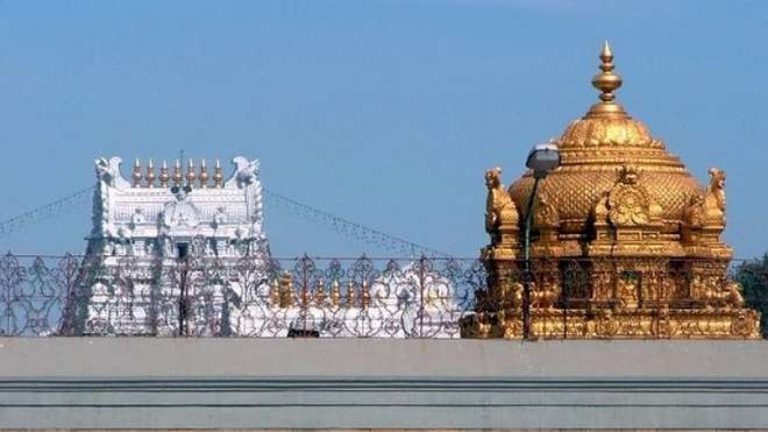
The recent revelations of financial irregularities at Tirupathi Tirumala, the abode of Lord Venkateswara is indeed troubling. Dr A V Ramana Dikshitulu, the former chief priest, who has served the temple for more than twenty years, has come out with a series of stunning allegations that has literally thrown the Tirupathi Tirumala Devasthanam (TTD) Board as well as the Andhra government under the bus. Ever since he went public, a continuous stream of alleged serious irregularities is tumbling out indicating that all is not well in the management of the famed temple of Lord Venkateswara.

The allegations range from missing jewels offered to the temple by various kings in the past to diversion of cash donations by devotees to fund government projects and expenses. Also, the discontinuation of the age-old practice of annual public audits of the temple’s jewels and the secret digging up of the prasadam kitchen where the huge treasure of jewels was purportedly hidden during Muslim invasion around circa 1150 AD have stunned the public. Further, the TTD management seems to have deliberately employed non-Hindus at the temple in direct violation of its own rules and the matter is said to be in the courts.

The ‘Raj Pink’, a rare 37.3-carat diamond considered as the rarest of the rare variety of diamonds, donated by the erstwhile Maharaja of Mysore is also mired in deep controversy. The former chief priest claims that while a vigilance report by a senior IPS officer recorded it as ‘broken due to pilgrims throwing coins at it’, the actual stone was auctioned by Sotheby’s.

The allegation of diversion of temple funds to non-temple related expenses is nothing new. This has been going on for several decades in almost every temple in south India. For example, in Tamil Nadu, there have been several allegations of using temple funds to buy official cars for the use of government officers, building bus terminals etc. Many fear that the scale of diversion of funds and jewellery theft at Tirumala may be massive.

So what is happening at Tirumala? Some of the allegations are very serious. The TTD administration is yet to issue a convincing point by point clarification on the alleged irregularities – particularly the issue of jewels offered to the temple by Chola, Pallava and Vijayanagara kings – specifically Krishnadeva Raya.

The response of the Andhra government to these allegations is also far from satisfactory. The deputy chief minister has issued a statement warning the former Chief Priest but has obviously not said anything about the allegations per se. This is on expected lines from a political party in India and unfortunately, no one is buying it.

Secondly, in another response (TOI 5/21/2018,) the executive officer (EO) of the temple has offered to display the temple jewels if the Agama Shastras so permit. While this is indeed a welcome move, this has raised more questions than it answers. For example why now and not earlier? Many question the timing of the offer too. The EO’s statement also conspicuously does not address the concerns or explain how huge ruby that bedecked the Lord was broken by the impact of coins thrown by the devotees.

Thirdly, the Andhra government, in a move to punish Dikshitulu, has sacked the chief priest by changing retirement rules of priests. This is nothing short of political vendetta and a blatant attempt to silence him. Dr Ramana Dikshitulu has vowed to fight it legally in the courts. Given that temple priests have no formal retirement age, it is unclear how this action by the state government will stand legal scrutiny.

To view the unsavoury happenings at Tirumala in isolation is to miss the woods for the trees. Every temple in India has been violated and its jewels and offerings by public stolen. With nauseating regularity, precious statues and deities have disappeared in India and reappeared in museums in the developed world or on the sale tables of world’s leading auctioneers. Yet this should not be dismissed as mere petty and isolated criminal offences but part of a larger design to desecrate holy temples of the Hindus.

India’s treasures have been repeatedly plundered – from the Muslim invaders to the systematic draining of the country’s wealth by the British. Now it is the turn of the corrupt political class to pillage. This haemorrhaging of India has to stop now. Period.

The unfolding scandal at Tirumala is yet another wakeup call for the Hindus who, over the ages, have suffered direct and indirect threats to practising their religion in India. Despite all the hogwash of religious freedom and constitutional guarantees, the fact is that today the practice of the Hindu faith is under great pressure. It is fighting for its very survival in its own land.

The problem here is that the political ecosystem in India stinks and anything short of an impartial enquiry by a retired or sitting Supreme Court judge will only heighten the suspicion of the people. The findings of the inquiry must be published immediately to create confidence in the public. If the allegations prove true, the guilty – however high and mighty they may be – should face the full force of the law.

Regardless of the outcome of this inquiry, the central and state governments must bring in a new administrative body for the efficient and transparent management of temples all over India. It should be noted here that eminent Indians like Dr Subramanian Swamy have advocated the return of control of temples from the government to the worshipping community, albeit with sufficient safeguards to prevent financial irregularities.

While the jury is still out on the veracity of the allegations of Dr Ramana Dikshitulu, the TTD move to sack him only hints at a cover-up on a massive scale. This has now made him into a martyr and endeared him to millions of devotees of Lord Venkateswara.

In another recent development, Dr Subramanian Swamy has tweeted (May 21st2018) that he will seek a Court-monitored CBI investigation into the financial misappropriation of temple funds by TTD. He has also termed the sacking of the chief priest as illegal. This scales the problems to a new level of complexity and embarrassment for TTD. Given Dr.Swamy’s track record in filing public interest litigations and achieving the desired judicial outcomes, it could spell disaster for the TTD.

The unfolding Tirumala scandal also has a larger message for the Hindus. The price of religious freedom is eternal vigilance and never can they take it as a god given the right, for mere mortals – be it the barbarians or the vile politicians – can pillage this precious right.

The scandal in the hills of Tirumala will be keenly watched. Most certainly, this will wind its way to the highest court of the land, and will also determine the future management of all temples in India. But for the present Hindus can only hope the Lord’s jewels and offerings by millions of devotees over hundreds of years are safe.

Why Jinnah finds a connect with a section of Indian Muslim youth

0

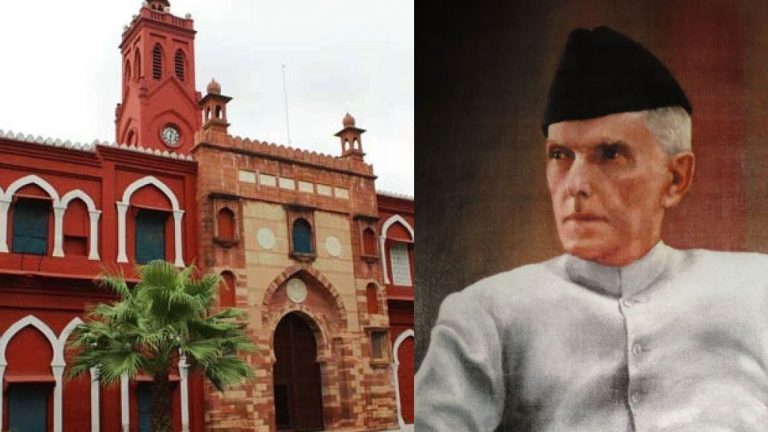
Each portrait tells a story. A portrait, behind its contours, contains a persona that inspires, stimulates and motivates the beholders to emulate the ideals and ideologies that the former represents. The portrait of Muhammad Ali Jinnah hanging on the walls of the Students Union office in the Aligarh Muslim University, similarly, hides many stories behind the dust of time gathered around it that contains a different message to different people.

Muhammad Ali Jinnah is not just another figure lying in the debris of the history but is a cruel perpetrator of the past who caused the dismemberment of India in order to create a separate nation on religious line. He gave political expression to a dangerous and dysfunctional “two nation theory”, which was long being propagated in-principle by the likes of Md Iqbal and Sir Sayyid Ahmad Khan. Finally, through his unfathomable obstinacy and persistence, he became successful in creating the theocratic state of Pakistan but not before programming a madness in which nearly 2 million were killed and 14 million were displaced permanently for no fault of their own. Those who lived behind, untouched with the ravages of death or displacement, got a permanent scar on their psyche and a pathological divide in their hearts.

While to the Hindus, Jinnah represents a treacherous villain piercing a dagger of religion in the body-mass of India to fork it into two, to some of the Muslims he comes across as the greatest leader, the undisputed Quaid-i-Azam who pulled off a valiant coup on the belligerent Hindus led by an ‘obstructionist’ Gandhi to create Pakistan for the ummah, an act of alliance comparable to none other than the Rashidun caliphs, who expanded the reach of Islam immediately after the Prophet’s death.

But Jinnah was not like that, and at least till 1936, he wasn’t a Muslim bigot. Jinnah was a free spirit caged within a Muslim body. Born an Ismaili Shia, Jinnah was as much a Muslim as Jawaharlal Nehru was a Hindu. With a cigar, wine, western clothes and British mannerism he wasn’t someone who fits the bill of a Jihadi fighter struggling in the way of Allah for establishing an Islamic state for his followers. He never entertained the obscurantism of Islam or its fanatic traditions.

So, how did suddenly Jinnah becomes fanatic? What makes him fall to the notion of the partition of a country, in which he lived all through his life, on religious line? The answer lies in two factors.

The first factor that drew him to a separate Muslim state was the fear that the western democracy, as being adopted gradually in India, would be detrimental for the Muslims because of their small population. Constituting less than one-third of the total population, Jinnah believed the Muslim would ever remain outnumbered by Hindus in all policy decisions.

Though, the idea of a separate Islamic state within India was incubating slowly since the days of ideologues like Sir Saiyyad Ahmad Khan, this idea didn’t resonate well with Jinnah, who at best looked for extracting concessions for Muslims from the Congress leaders as well as the British for a bigger pie in the governance within a united India. However, the Government of India Act, 1935 providing ‘separate electorates’ for Muslims and the subsequent elections of 1937 proved disastrous for the political ambitions of Jinnah. Whereas the Congress was successful in making governments in 8 provinces across India, the Jinnah-led All India Muslim League (AIML) couldn’t form government anywhere including Punjab and Bengal, which were Muslim majority states. This exposed him to the realization that the provision of ‘Separate Electorate’ was not working to the benefit of Muslims.

Thus, the developments convinced him that electoral democracy would result into the permanent subjugation of Muslims by the Hindus – a hypothesis that has since been thoroughly and comprehensively defeated in India, which has largely remained successful in ensuring rights and dignity for the minorities over its 70 years of post-independence existence. The conclusion convinced him of the need and necessity of pitching a political demand for Pakistan.

The second factor was his close association with Muhammad Iqbal, the poet, politician and ideologue who is considered as the “Spiritual father of Pakistan” in the 1930’s till the latter’s death. Through his series of speeches and writings, Iqbal established that Islam had a “legal concept” which was anachronistic with the principles of nationalism or democracy as neither of the two can operate without dividing the community (umma).

During the period of political vacuum in the IUML, mainly due to the self-imposed exile of Jinnah from India in the first half of 1930’s, Iqbal theorized and successfully articulated, what was to be known later as ‘The Two Nation Theory’ — a political principle of religious exclusivism that holds Muslims as a distinct nation unable to co-exist with any other religious group or community, hence deserving political independence from the Hindus.

Having theorized such a blatant communalist principle, Iqbal set himself on the task of convincing Jinnah to come back to India and take up the leadership of the IUML, as he believed that the latter was the only Muslim in India who possessed the ability to lead the community and to make them join the League. With a series of intense and fruitful correspondences with Jinnah, Iqbal was successful in bringing the former back from London in 1936 to lead the IUML. Thus, appears Jinnah 2.0, thoroughly transformed and wholly steeped into the ideologies of Iqbal, whom he declared as his political mentor.

From 1937 through the World War II, Jinnah still looked hesitant to ask for partition and wanted to have some kind of rapprochement with the Indian National Congress. However, the subsequent political developments dashed all hopes of Jinnah and he got more and more drawn to the visions of Iqbal. Finally, convinced of the need of Pakistan, Jinnah formally brought up “Pakistan Resolution” for the creation of a Muslim state of Pakistan in its Lahore session of 1940 and the IUML adopted the same as its political goal henceforth.

The AMU had become the hotspot of Pakistan movement during this period as Jinnah made multiple visits to the institution all through this period. He was given a lifetime membership of its student union in 1938.

Thus, the vagaries of electoral democracy and the machinations of Muhammad Iqbal were the two factors that completed the transformation of a secular-liberal Jinnah 1.0 to his 2.0 avatar, which saw a communal, obstinate and villainous politician spewing venom against the ‘”Hindu” Gandhi and his Congress leaders while unashamedly talking of Pakistan in an uncompromising manner. That’s why the Indians, including a majority of Muslims who stayed behind rejecting his flawed theory, loathe him and find his portrait on an Indian university campus shocking.

However, from the Muslim perspective, Jinnah was a savior of Muslims from the ‘oppressive’ democracy that would have put them under the permanent subjugation of Hindus in an undivided India. He fought the British authorities as well as with the Hindu majority tooth and nail to carve out Pakistan. That’s why he is still the hero of a section of Indian Muslims who treat him as an Islamic victory conquering over the Hindu majoritarianism. The portrait hanging in the students’ Union office of the AMU is the portrait of Jinnah 2.0 which still finds space in the current Indian political environment.

Thus, Jinnah is a moral leader of those Indian Muslims who look for a dominant political space for themselves in the 21st century India. The Jinnah portrait gives them the inspiration and assures them that it’s possible. The chant, ‘lad ke lenge azadi’ (we’ll achieve independence by force) has its source in that portrait.

Just because the Berlin wall was there since the 1960’s didn’t mean it couldn’t be demolished. Many such mistakes of the history have been rectified in course of time; hence the argument that the portrait is there since 1938 is not the reason d’être for its existence in the university. The portrait of Muhammad Ali Jinnah in the AMU’s student union’s office is nothing but the moral elixir of the aspirational Muslim youths looking for an Islamic icon in India through the leadership vacuum of modern times.

Thus, don’t expect the portrait to be taken down from AMU. No wonder, if you find it creeping up many other university walls in India in days to come.


BJP MLAs and Bajrang Dal express outrage over Hindu girl’s ‘abduction’ by Muslim man in UP

A newlywed Hindu girl who was abducted on 8 April while going to her in-laws’ place along with her husband, continues to remain untraceable, leading the Bajrang Dal to threaten protests, as reported by Indian express. The girl hails from the Etmadpur town in Uttar Pradesh.

As per a Patrika report, following the incident, the police has sent a few individuals to jail but has still failed to intercept the main accused Shahzad who has a Rs 25,000 reward on his head. It has been claimed that Shahzad attacked the newlyweds’ car and took away the girl.

The Indian Express report though gives another angle to the story by claiming that the newlywed girl and Shahzad have eloped willingly and as claimed by Rajesh Kumar Pandey – Senior Superintendent of Police (Meerut), have even moved the Allahabad High Court to seek police protection.

Pandey is further quoted as claiming that the woman might have been forced into marriage by her family.

What makes the affair even more puzzling is the fact that despite being absconding, Shahzad is regularly updating his Facebook feed, with the police now writing to Facebook to trace their location.

Owing to the police’s failure to trace the duo, the Bajrang Dal which calls this a matter of Love Jihad has threatened an agitation. The report also claims that the brother of the girl was shot while returning from a meeting with the SSP on 17 April, an attack for which Shahzad has also been accused.

Now as claimed by an Amar Ujala report, the accused Shahzad, who has a criminal record, is supposedly being given protection by a BSP leader. This information though hasn’t yet been verified.

As per SP Rakesh Kumar, on Saturday Shahzad had uploaded a selfie with the girl on Facebook, which had prompted inflammatory comments on the post.

BJP MLA Dinesh Khatik has claimed that such posts have created tension in the area. The MLA has also claimed that the attack on the brother has terrorised the girl’s family. Besides this “abduction” Shahzad has been accused in the past of robbery and attacking a police officer.

As per Bajrang Dal’s leader Balraj Dungar, they would be forced to launch an agitation if the police didn’t trace the duo soon and expressed anger over the Facebook posts, which he claimed, were designed to hurt their sentiments.

A Jagran report has claimed that BJP MLAs Khatik and Satyavir Tyagi already went down in this route on Saturday after they along with hundreds of supporters met SP Rakesh Kumar. In that meeting, they made it clear that the matter pertained to love jihad – something which will not be tolerated under their government.

Pakistan targets civilians in recent ceasefire violations, kills an 8-month-old baby boy

0

Last night an-8-month-old infant, Nitin Kumar was killed by a bullet fired by the Pakistani soldiers in the latest round of ceasefire violation by them. This incident took place in Jammu & Kashmir’s Keri Battal area of Akhnoor.

Local police suspect that this might have happened due to a stray bullet or sniping from the Pakistani side, the infant was sleeping with his family outside their home in Pallanwala sector.

The Pakistani Troops started heavy shelling along the LoC in violation of the ceasefire, earlier that day. Following the ceasefire, the residents of Arnia sector migrated to safer places.

The state has witnessed a spurt in Pakistani shelling and firing along the IB and the LoC this year. Over 700 such incidents have been reported this year, which have left 38 people, including 18 security personnel, dead and scores injured.

Union minister Jitendra Singh said that by killing people during the holy month of Ramzan, Pakistan “is guilty of sacrilege.”

“I have seen it and the entire world has seen it. It’s saddening. Our soldiers are not sitting silent, befitting reply will be given to them,” Hansraj Ahir, Minister of State for Home Affairs, told ANI.

The recent attacks killed the eight-month-old boy and injured six more. A mortar shell fired from the Pakistani side, landed on the police station, damaging its walls and killing a Special Police officer (SPO).

Reuters shares a video of textile workers losing jobs in Gujarat, scores a self goal instead

Reuters, a news outlet headquartered in London, took to Twitter to assert that 400,00 textile workers have lost their jobs in Surat, Gujarat. They shared a video with the assertion, one would assume, to elaborate more on the claim they have made.


However, the video itself showed that the news was from Thirrupur, Tamil Nadu, and not Gujarat.


It isn’t the first time that foreign journalists and media outlets have engaged in spreading fake news in India. C.J. Werlemen, part-time journalist and full-time propagandist, notorious for peddling fake news, was even reprimanded by the Uttar Pradesh Police for his tweets. Even the New York Times has on multiple occasions indulged in crass elitism and condescension while reporting on India. On another occasion, it had asserted that fashion has become a ‘nationalist cause’ in India. Even agencies like the BBC has been known to express an anti-India sentiment.

However, the Reuters tweet makes one think the mainstream media is losing their touch. Because sharing a claim with a video that itself refutes it is pretty inefficient even by the standards of the mainstream media.