Home Blog Page 7213

NIA reveals larger conspiracy in RSS leader Ravinder Gosain’s murder, files chargesheet

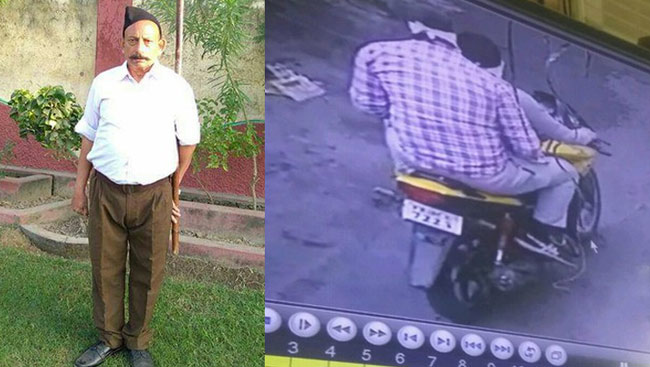
NIA’s 1000 page chargesheet in the murder of RSS leader Ravinder Gosain shows that the conspiracy had links in several countries including Pakistan, UK, Australia, France, Italy and the UAE. He was shot dead in Ludhiana on October 17 last year near his house. There already are reports of Pakistan’s ISI training youth and Hafiz Saeed courting Khalistanis during processions in Pakistan.

The chargesheet says that the 15 persons accused “used to get their execution plans from Pakistan and several other countries over various social networking sites”. The NIA further adds that the transnational conspiracy was planned by Khalistan Liberation Force and eight incidents were executed as part of it from January 2016 and October 2017 in Punjab. All the targets belonged to specific communities and organizations. The objective of the conspiracy was to destabilize law and order and resurrect the terrorism in the state. The accused got entire planning and training on escaping CCTV cameras and execution of the crime from their handlers via Skype and Signal, a messaging app similar to Whatsapp.

The agency has mentioned a list of 172 witnesses including 28 ‘protected’ whose identity will not be revealed to anyone. This is the first time the NIA has used the term “protected witnesses”. Name of one accused who had died in Patiala jail on April 18 has been removed and an application for discharge of Taljeet Singh alias Jimmy has also been move as no substantial evidence has been found against him.

The witnesses include bankers, forex officials through which money was routed from foreign countries into the accounts of local contacts. It has been mentioned that large amounts of funds for the purchase of weapons and logistics had been moved from countries such as Italy, Australia and the UK to the killers. The evidence has been collected from oral, documentary, material, electronic sources and from several countries.

Earlier Home Minister Rajnath Singh had taken up the issue with Punjab Chief Minister Captain Amarinder Singh. The Home ministry ordered the case be handed over from Punjab police to NIA following which the agency registered the case. We had also reported about Pakistan’s ISI training youth and Hafiz Saeed courting Khalistanis during processions in Pakistan.

Yogi Adityanath accuses Congress of supporting Jihadis, speaks of ancient relationship between UP and Karnataka

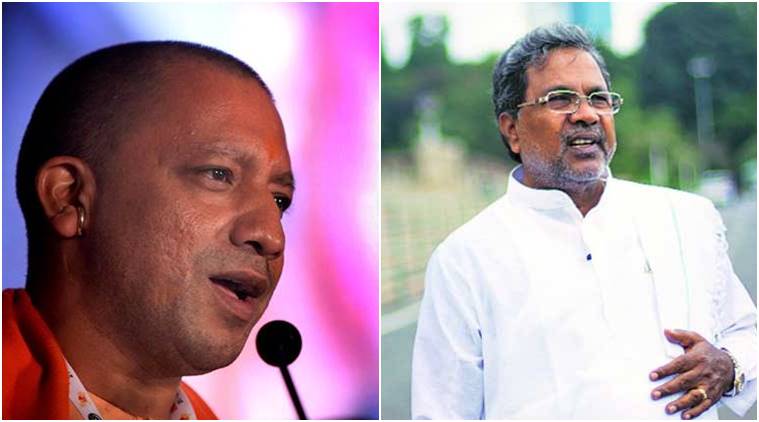
During his rally in Karnataka ahead of the Assembly Elections, Chief Minister of Uttar Pradesh, Yogi Adityanath launched a scathing attack on the Congress and the Siddaramaiah government. He accused the Congress of protecting and encouraging Jihadi elements and playing divisive politics.

[youtube https://www.youtube.com/watch?v=Ng9dWLbbGjc]

In his speech, Yogi Adityanath emphasized on Gauraksha and condemned the ministers in the Karnataka cabinet for encouraging the consumption of beef. He suggested that Gauraksha is the soul of this nation and that Congress has given up on both Gauraksha and Rashtraraksha. Yogi Adityanath cited the murders of numerous Hindu activists to accuse the Siddaramaiah government of making Karnataka a breeding ground of Jihadi forces.

We had reported earlier on the withdrawal of its candidates by SDPI, the political arm of PFI, a radical Islamist outfit, to help the Congress in the upcoming Assembly elections. The Congress government in Karnataka had come under scrutiny when it decided to drop 175 cases against the PFI. SDPI activists were arrested recently in Kannur in connection with the murder of an ABVP worker. The NIA also suspects members of the PFI to have links with alleged cases of ‘Love Jihad’.

In an effort to thwart the politics of North-South divide, Yogi Adityanath elaborated on the sacred threads that bind the country together. He spoke of the deep connection between his sect and the state of Karnataka. Yogi Adityanath remarked that Gorakhnath who is worshipped by the followers of his sect in Uttar Pradesh is worshipped as Manjunath in Karnataka. He stated how Shri Rama found his most loyal devotee, Hanuman, in the land of Karnataka. He also said Bhairaveshwara who is worshipped in Karnataka is the same Kal Bhairav who is worshipped in Kashi, Uttar Pradesh. Yogi Adityanath suggested if the Congress could understand these things that bind us together, then the country wouldn’t have undergone partition.
[youtube https://www.youtube.com/watch?v=m5YBkM4DF3k]

The Chief Minister of Uttar Pradesh also accused the Congress government in Karnataka of rampant corruption and suggested that they were using the state as an ATM. “Today the Siddaramaiah government is using Karnataka as its automated teller machine. Thus, I have come here to tell you that Congress-free Karnataka is the need of the hour,” said Yogi Adityanath.

Yogi Adityanath also took a dig at Siddaramaiah over farmer suicide rates. “This government does not seem to be standing in favour of farmers, traders, citizens and BJP workers and does not seem to be doing justice to them. The government is encouraging anarchy,” said the UP Chief Minister.

Power over opinion: Doval’s old speech highlights the nature of the ‘information war’ we see today

0

It is easy to make out a case for the view that opinion is omnipotent, and that all other forms of power are derived from it. Armies are useless unless the soldiers believe in the cause for which they are fighting, or, in the case of mercenaries, have the confidence in the ability of their commander to lead them to victory.

Law is impotent unless it is generally respected. Economic institutions depend upon the respect for law; consider, for example, what would happen to banking if the average citizen had no objection to forgery. Religious opinion has often proved itself more powerful than the State. If, in any country, a large majority were to favour socialism, capitalism would become unworkable. On such grounds, it might be said that opinion is the ultimate power in social affairs. 

Bertrand Russel in his book ‘Power’

Media’s ability shape public opinion with one-sided narrative is a potent power

We usually underestimate the power wielded by the press and journalists. The nature of power held by academicians and ‘intellectuals’ is also considered milder in comparison to that of army commanders or bureaucrats because the latter has the authority to take decisions that lead to action. This is a misconception because, actions are a result of thoughts and ideas which are controlled by academicians, intellectuals and journalists.

‘Power over opinion’, as described by Russel is gaining more importance every day as the internet/media reaches more people. Cambridge Analytica perhaps is the most sophisticated attempt is turning ‘power over opinion’ into a potent weapon. Even without it, the nature of discourse in media is good enough for a serious assessment.

In the secular-liberal section of media, the assault on public opinion is at least a thousand times stronger over a Muslim death in comparison to the death of a Hindu in any significant piece of news. Shaming of majority religion is done without any fear, whereas minorities are always shielded from public opinion entirely. Shaming of Hindus in the aftermath of Kathua rape case is another important example. Words like ‘Hindustan’ and ‘Devi-sthan’ were used remorselessly to target Hindus. On the other hand, crimes of minorities are whitewashed or downplayed in media. The recent attempt to whitewash the Kashmiri Pandit exodus as a voluntary migration is a classic example.

Self-proclaimed academic Audrey Truschke is another example. When people criticise Hindu gods as a ‘misogynist pigs’ they become intellectuals. When cartoonists portray Prophet Muhammed in a cartoon they get shot down. This demonstrates, that Islam has a control over thoughts of its followers as well as bystanders whereas Hinduism has none of it. In fact, Hindus embrace insults and take pride in shaming Hinduism themselves under the guise of ‘freedom of expression’. How did we get there? The roots of this imbalance can be traced to 200 years of British rule that succeeded in colonising the Hindu mind.

Information wars are a key component of civilisational wars

This assault on ideas/ opinions/ civilisations is not a short-term project, but a part of a long-term propaganda war. It is usually irreversible. The current NSA Ajit Doval had deconstructed this phenomenon in a speech delivered at Mumbai in 2015. While delivering the Lalit Doshi Memorial Lecture, Doval highlighted the paradigm shift in the nature of wars fought today. The transcript of the lecture dealing with the topic is reproduced below [From 22:30] (emphasis added):

Earlier the statecraft was more confined to the question of wars. The rules of wars were made, the Vienna convention was made, what are the permissible type of weapons which can be used, what is the type of the mines that can be laid and not can be laid, prisoners of war, all these things have been settled to the large extent. But the days of statecraft through wars is coming almost to an end. War is no more an effective instrumentality of achieving your political and strategic objectives in a cost-effective way.

There’s no guarantee that a very powerful nation with a huge arsenal, with a huge economy with a huge intelligence capability, with great scientific props would be able to subdue even a small group of the terrorists whether it’s a Federal state in Vietnam or Soviet in Afghanistan. 

So people are increasingly thinking that probably it is not, the most effective way. You are not able to achieve your strategic objective through the mechanism of war. That has evolved into the statecraft, the other institutions, or the other props of the statecraft becoming quite important. in any case like Roger’s theory about the morality of the war itself has brought into the focus, and even most of the countries which are engaging in war have found it that it is an unaffordable diplomatic cost for them to sustain that.

So in this background, no instrumentality like diplomacy, intelligence, perception management, media, use of soft power, influencing the minds of the people, that have become new instruments of the statecraft. In a way have you ever wondered why the Americans decided to support the Islamic gun wielding irregulars against a regular Soviet Army? It had many options. When the Soviets made an entry to Afghanistan they could have taken them militarily, they could have done an economic blockade, they could have done at UN security council, they could have passed any resolution against them. They could have tried all means which are available to greater powers in the world. But it resorted to the entirely different mechanism. That was the mechanism of the covert war.

That is the proxy war you are fighting against someone using somebody else’s manpower, using somebody else’s weapon. You fly the weapons from Egypt which are of the Russian origin, send it to Peshawar and then distribute it to Mujaheddins and then send it to Afghanistan because they found that the other means of the statecraft were unaffordable against the country which has the great strategic weapons strength. Now that is the dilemma. That this is statecraft, wars is more transparent but wars through other means are much more dicey and much more difficult to handle. This proxy war, this covert wars, espionage, sabotage, subversion, influencing the minds of the people seating in this hall.

If I can make all of you think the way that I want to think and behave I wield a power over you. The real power in the coming times will not be invaded by those people who are going to have control over your labs, or over the technology, or over the means of production, or over the wealth. It will be wielded by people who can make you think the way that is in their interest. If I want you to buy a product and you buy that, I control your minds. If I want you to hate everything that is Indian, I want you to be ashamed of your culture and civilization. And if I achieve that, I win the battle. If you resist it and you are not able to do this thing, you win the battle.

This is the battle of civilization, a battle of culture, basically the battle of minds. It is all by exercising through the soft powers. And statecraft has got thus a new instrumentality.”

Information wars that affect India in short term and long term need to be fought actively

Therefore governments, strategists and nationalists must be ready for this battle over opinions and ideas. For they are more potent than AK-47s or ICBMs in the long run. Pro- Pakistani/Pro-China articles are not written for the sake of pissing off RSS/BJP. They are written to colonise the Indian mind on Pakistan/China-related issues.

Scholarly work that depicts Hinduism in a bad light is not done for cheap thrills. It is written in order to aid evangelists/conversion factories. How? Once people lose contact with your own culture, others can occupy that void.

Every propaganda war that is antithetical to Hindu values/ integrity of India is funded by vested interests. Therefore, there is a dire need to correct/fight the deliberate bias in the media discourse. Simultaneously, there is a need to preserve the ideals transmitted from generation to generation though great epics of Ramayana and Mahabharata. Nationalists should also ensure that the history and its interpretation does not get watered down in a way that absolves some religions from their atrocities. If we have to defend the ethos, integrity and culture of our motherland there is a dire need to fight those who stand opposed to Hindu values of India.

Come June, Sikkim will no longer be the only state in the Country without an operational airport

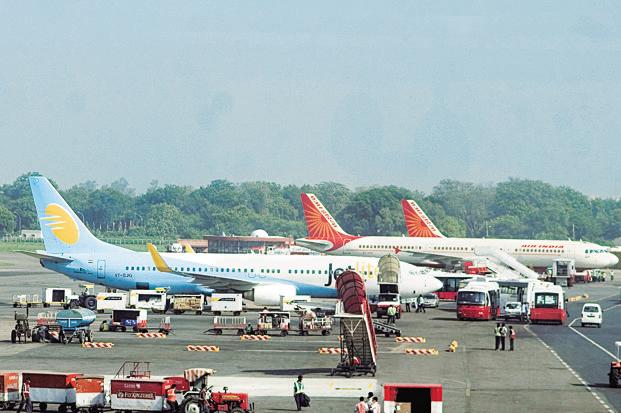
Sikkim’s Pakyong airport has received a green signal to start commercial flight operations from June thus bringing the state under country’s civil aviation network. This makes it the 100th operational airport once it begins operation. Sikkim was the only state without an operational airport in the country.

Civil Aviation Minister Suresh Prabhu announced the same on twitter.


The Pakyong airport, at a height of 4,500 ft above sea level, is nearly 30 km from the capital Gangtok. Till now the travellers had to fly to Bagdogra in Siliguri for more than four hours by road to reach the capital, 123km away. Trials were conducted in March when a Spicejet Q400 Bombardier plane, with 70 passengers, took off from Kolkata at 10.40 am and landed reached Pakyong Airport at noon. The airport was built at a cost of about Rs. 350 crore and is no mean feat considering the difficult terrain and its geographical location.

Spicejet, the low-cost airline, has been granted the license to commence operations from Kolkata to Pakyong under the government’s regional connectivity scheme UDAN (Ude Desh ka Aam Naagrik). Sikkim is a very attractive tourist spot and the new airport will surely encourage tourism in the state.

Dear Prakash Raj, ‘Hindu Rashtra’ is a struggle for equality

The other day on Times Now, during a debate on Hindutva, actor turned villain Prakash Raj tore into the concept of ‘Hindu Rashtra,’ exhorting the people of India to ‘learn from history.’ Among other things, he presented the following gem:

“If the Middle East decides they will send back all Indians … because you want your Hindu Rashtra, we want a Muslim Rashtra there.”

No seriously, he did say that. Watch from 6:30

[youtube https://www.youtube.com/watch?v=nYLjHkseNOw?version=3&rel=1&fs=1&autohide=2&showsearch=0&showinfo=1&iv_load_policy=1&wmode=transparent]

What if the Middle East decides tomorrow to become a ‘Muslim rashtra’? Seriously?

What do you suppose Saudi Arabia, UAE, Qatar, Kuwait, Iraq and Iran are? Secular states? Are Rahul’s fans deliberately pretending to be ignorant so that Rahul Gandhi’s IQ looks higher by comparison? Serious question.

And why do you say “If Middle Eastern decides they will send back Indians?” Are you glorifying the way Middle Eastern countries are set up today? Are you suggesting that you are fine with the way Hindus are treated in Muslim countries of the Middle East at this very moment?

Let me put this on record, even as someone you would probably consider a ‘communal bigot.’ I am absolutely not fine with a nation where our Indian Muslims are treated the way Middle Eastern countries treat Hindus. In fact, I take extreme offence to you for implicitly suggesting such barbarism.

Let me now address the question of ‘Hindu Rashtra’ and what it means for people like me. It is nonsensical for you to suggest that it has anything to do with asking Muslims to leave the country or treating them as second class citizens.

This nation has seen many movements for justice. For example, political and social movements among so called ‘lower caste’ Hindus for emancipation after centuries of oppression. Many of these movements are still very active. Over the last several decades, the Indian state has moved to enact multiple provisions intended to compensate for historic injustices.

These movements were very much needed. Would you have asked them if they intend to throw all “upper” caste people out of the country? No, that would be silly.

Would you ask the movement for equality of women if they want to throw all men out of the country? Silly again.

Would you ask the movement for equal treatment of homosexuals, transgenders, etc if they want to kick all heterosexual individuals out of the country?

Ridiculous, I know. Then, why adopt a double standard towards the movement for Hindu Rashtra?

The movement for ‘Hindu Rashtra’ is a struggle for equality and justice. By members of a community who have suffered oppression at the hands of another community for 1000 years.

It is Hindus who lost their homeland in what is now called Pakistan and Bangladesh. That’s a huge chunk of our historic nation where Hindus will never be able to live with their heads held high again. The handful of Hindus who are stuck in these places have been tormented into submission, a vanishing minority.

What has been the fate of Hindus after the Republic of India was formed? There is only one large Indian state where Muslims are a majority. An entire population of Hindus had to flee their homes to save their lives. That was not 1000 years ago. That was barely 25-30 years ago. Many of the people who fled are still alive, with their first-hand account of what happens to religious minorities when an area becomes Muslim majority.

Answer my three questions, if you will dare:

(1) How have religious minorities been treated in the 50+ Muslim majority nations across the world?

(2) How have religious minorities been treated in Muslim majority nations of South Asia?

(3) How have religious minorities been treated in Muslim majority states of the Republic of India?

Our fear is real and very justified. So do not tell Hindus they are paranoid. Tell the Muslim community to reform. I say something similar when a woman suffers sexual assault anywhere in the country. Do not tell women that they can’t go out on the street or at night. Tell the men to change their attitude.

I do not ask for anyone to leave the country. I want the Indian state to reform and grant full equality under the law to all Indians irrespective of religion. This means freedom for Hindu temples and Hindu owned schools from the yoke of government. This means equal treatment for all Indians under a uniform civil code. This means, for instance, that Aligarh Muslim University cannot be both a public institution and a Muslim institution at the same time.

Tell me which one of my demands is unjust or unfair.

Above all, I call for the Indian Muslim community to reform and change their attitude towards their Hindu fellow citizens. I do not want riots and conflict to build a Ram Temple in Ayodhya. I want my Muslim fellow citizens to recognize the injustices inflicted upon Hindus for centuries, to understand why a Babri Masjid at Ram Janmabhoomi reminds us of the worst crimes of history … and to happily offer the land as a gesture of humility and apology.

I want to address the underlying attitude of Indian Muslims and those who purport to speak for them. For instance, Aligarh Muslim University is run by the government on government funds. Why do you stick to the demand that it should remain a minority institution, despite repeated judgements of the Supreme Court and High Courts? Why do you object? What would happen if AMU became a secular institution tomorrow? Why do you worry? What is wrong with being equal to Hindus?

The reason we celebrate when a woman becomes India’s Defence Minister is not because we hate all men. The reason we celebrate when a Dalit becomes India’s President is not because we hate all “upper” caste people. We celebrate because they become symbols of correcting historical oppression, a sign that the old walls are falling and we are moving towards a better future, with liberty and justice for all.

These struggles for justice, be it the movement for Hindu Rashtra, the movement for women’s rights or the movement against caste oppression, are not in conflict with each other. In each case, I take the side of justice.

When a Muslim mob is throwing a Hindu population out of their homes, I am on the side of the Hindus. If those Hindus happen to be from “upper” castes and they are discriminating against a man for belonging to a “lower” caste, I take the side of the “lower” caste man. If that “lower” caste man is deliberately not sending his daughters to school, I take the side of the daughters.

I take the side of equality and justice for all.

Muslim Mahasangh chief condemns Jinnah’s posters in AMU, announces reward to tear such posters

Amidst the row over the presence of Muhammad Ali Jinnah’s portrait in the student’s union office of Aligarh Muslim University (AMU), the national head of All-India Muslim Mahasangh on Friday announced a reward of Rs 1 Lakh for destroying Jinnah’s posters.


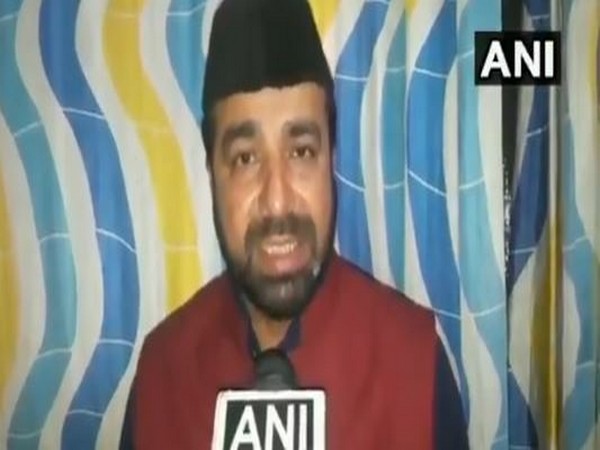
Blaming Jinnah for having broken the country at the time of partition, Farhat Ali Khan, the national head of All-India Muslim Mahasangh announced that the reward would be given to anyone who burns Jinnah’s photo which created ruckus at AMU earlier this week. Speaking to ANI, Khan said that Pakistan has not put up any photos of Mahatma Gandhi who played the most significant role in the freedom struggle of the country, so there was no valid reason for us to put up photos of Jinnah. He said that in the neighbouring country, all the Muslims who chose to move post-Partition were considered muhajirs. He said Pakistan hated India and India’s Muslims and the Muslims here felt the same way for the neighbouring nation. So there was no reason for photos of leaders like Jinnah anywhere in the country.

The controversy erupted when reports emerged that a portrait of Jinnah had been displayed on the walls of the Aligarh Muslim University (AMU) student union office. Aligarh MP and BJP leader Satish Gautam last Monday wrote to Vice Chancellor Tariq Mansoor objecting to Pakistan founder’s picture on the walls of the AMUSU office. Defending the portrait, apparently hanging there for decades, AMU spokesman Shafey Kidwai had, a day later, said that Jinnah was a founder member of the University Court and granted life membership of the student union.

The matter soon escalated as protests took place outside the university campus, followed by clashes between AMU students and the police. Rapid Action Force of the Uttar Pradesh Police was deployed. The row started when some activists demanded the removal of Jinnah’s photo, to which the students objected. Later in the evening, hundreds of students tried to march to the local police station, where the activists had been confined. Unable to control them, the RAF men used force, sources said.

Section 144 of the CrPC (Code of Criminal Procedure) was imposed in Aligarh and internet services were suspended to prevent the communal flare-up. The internet services in Aligarh will remain suspended till 12:00 am, 6th May 2018.

It is rather lamentable that these groups creating a ruckus over Jinnah’s photo, are a part of India. India, whose constitution has been built on the idea that rejected this very philosophy of Jinnah. Jinnah believed in the two-nation theory and Indian’s rejected his divisive ideology.

Brother of Kerala CPM leader arrested for running a fake jobs for money racket

P Sateeshan, the brother of a Kerala CPM leader was arrested on Friday, on charges of cheating a woman after promising her the job of her late husband, PTI has reported. Sateeshan is the brother of P Sasi – the former CPM Kannur district secretary.

The complainant woman in question has alleged that Sateeshan took about Rs 2.5 lakh from her in exchange of giving her employment at a local-self government department, where her late husband used to work.

As per a report in The Hindu, the woman hailing from Feroke alleged that Sateeshan pitched her his relationship with senior CPM leaders and government functionaries while promising her the job she wanted. She also claimed that he brought in the name of Chief Minister Pinarayi Vijayan to win her trust.

He though failed to keep his promise and as a result, was approached by the complainant on multiple occasions for getting her money back. He though was reluctant to do the same, following which the woman supposedly approached the police. A New Indian Express report has also quoted the woman as claiming that Sateeshan even threatened her when she asked her money back.

Sateeshan, as a result, has been arrested under Section 420 of the IPC which pertains to punishment for cheating and dishonesty. He would be produced before a magistrate on Saturday.

Incidentally, the report has claimed that a preliminary investigation by the Kasaba police has revealed that Sateeshan was involved in several other cheating cases. This included taking money from people after promising them jobs at the upcoming Kannur International Airport.

Under this case, two individuals from Olavanna have alleged that Sateeshan introduced himself as a staff in the Chief Minister’s Office and claimed that their money would be added to the party fund. He thus promised them posts of planning engineer and office staff respectively by November 2017. When this didn’t happen, plus when he also failed to return their money, they approached the police.

Following Sateeshan’s arrest, the CPM establishment in the state seems to have gone on the defensive, with ministers and other communist leaders denying connections with him. Even his brother P Sasi has claimed that he hasn’t had any contact with his brother for a while, as reported by Matrubhumi.

Jinnah sympathisers tacitly support two-nation theory under the garb of ‘secularism’, and India can’t have that

0

The portraits we put up in our homes, offices and universities tell something about our icons and the ideas that we subscribe to. We put up a photo of Gandhi in courts because we subscribe to the ideas of truth, ahimsa and values that he stood for.

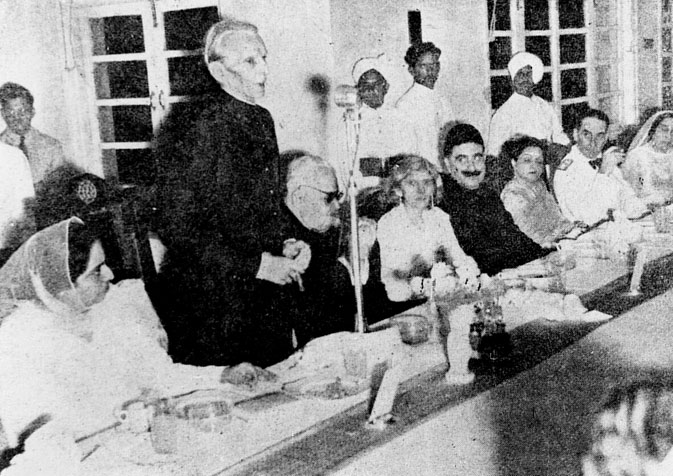
Personalities that we condemn reflect the kind of ideas or historical figures we dislike. Nobody puts a portrait of Hitler in a government office or even a home for any reason. What did Jinnah stand for? Let us not try to draw a line between what he did before a particular date or year. His ideas led to the partition of India and death of millions of Hindus and Muslims. People must know what his ideas led to a horrible chapter in India’s history.

The Pakistan resolution/Lahore resolution was passed by the Muslim league in 1940. It was indeed a tipping point which led to the eventual division of India. What did Jinnah say in his address to the Muslim League? The contents are reproduced below (emphasis added) :

Before I deal with what Mr Gandhi said a few days ago I shall deal with the pronouncements of some of the other Congress leaders — each one speaking with a different voice. Mr Rajagopalacharya, the ex-Prime Minister of Madras, says that the only panacea for Hindu-Muslim unity is the joint electorates. That is his prescription as one of the great doctors of the Congress organisation.

Babu Rajendra Prasad, on the other hand, only a few days ago said, “Oh, what more do the Mussalmans want?” I will read to you his words. Referring to the minority question, he says: “If Britain would concede our right of self-determination, surely all these differences would disappear.” How will our differences disappear? He does not explain or enlighten us about it.

“But so long as Britain remains and holds power, the differences would continue to exist. The Congress has made it clear that the future constitution would be framed not by the Congress alone but by representatives of all political parties and religious groups. The Congress has gone further and declared that the minorities can have their representatives elected for this purpose by separate electorates, though the Congress regards separate electorates as an evil. It will be representative of all the peoples of this country, irrespective of their religion and political affiliations, who will be deciding the future constitution of India, and not this or that party. What better guarantees can the minorities have?”

So according to Babu Rajendra Prasad, the moment we enter the Assembly we shall shed all our political affiliations, and religions, and everything else. This is what Babu Rajendra Prasad said as late as 18th March 1940.

And this is now what Mr Gandhi said on the 20th of March, 1940. He says: “To me,  Hindus, Muslims, Parsis, Harijans, are all alike. I cannot be frivolous” — but I think he is frivolous — “I cannot be frivolous when I talk of Quaid-i-Azam Jinnah. He is my brother.” The only difference is this that brother Gandhi has three votes and I have only one vote.  […]

It is extremely difficult to appreciate why our Hindu friends fail to understand the real nature of Islam and Hinduism. They are not religions in the strict sense of the word, but are, in fact, different and distinct social orders; and it is a dream that the Hindus and Muslims can ever evolve a common nationality; and this misconception of one Indian nation has gone far beyond the limits and is the cause of more of our troubles and will lead India to destruction if we fail to revise our notions in time. The Hindus and Muslims belong to two different religious philosophies, social customs, and literature[s]. They neither intermarry nor interdine together, and indeed they belong to two different civilisations which are based mainly on conflicting ideas and conceptions.

Their aspects [=perspectives?] on life, and of life, are different. It is quite clear that Hindus and Mussalmans derive their inspiration from different sources of history. They have different epics, their heroes are different and different episode[s]. Very often the hero of one is a foe of the other, and likewise, their victories and defeats overlap. To yoke together two such nations under a single state, one as a numerical minority and the other as a majority must lead to growing discontent, and final. destruction of any fabric that may be so built up for the government of such a state.

The entire Indian constitution has been built on the idea that rejected this very philosophy of Jinnah. India’s secularism, as per our Nehruvian establishment wholeheartedly rejected the idea of a Muslim Pakistan and a Hindu India. If that were the case, there should have been absolute intolerance towards Jinnah. I am not a great fan of Churchill, but he got it perfectly right on the strategy of appeasement. ‘An appeaser is one who feeds a crocodile, hoping it will eat him last.’

However, the cabal throws the burden of decency of ‘Hindutva’ wadis and complains that they are ones creating ‘trouble’ and using ‘Jinnah’ for the sake of polarisation. India requests this cabal to make its stand clear on their support or opposition to Jinnah instead of playing the victim card. I am not a great fan of Churchill, but he got it perfectly right on the strategy of appeasement.

‘An appeaser is one who feeds a crocodile, hoping it will eat him last.’

True secularists should be the first persons to throw away Jinnah’s portrait. Otherwise, please accept that you are Jinnah supporters who tacitly agree to the two nation theory. I also request this cabal to move over to Pakistan because Indians cannot tolerate the idea of another division of India on the basis of Jinnah’s ideas.

When Subramanian Swamy destroyed Prakash Raj

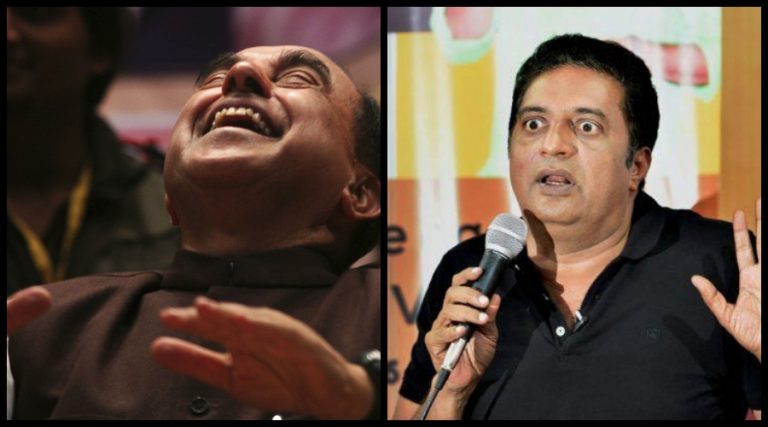
The villain from silver-screen had to endure another pummelling. This time though it was a verbal duel, in which a 78-year-old protagonist in the form of Subramanian Swamy knocked out his opponent, Prakash Raj. Times Now hosted a debate squaring up the two, after which Raj was seen visibly seething and frustrated.

The debate began on a very sombre note, but soon the mood changed. At one point, Prakash Raj stated that he is opposed to BJP, Modi and Shah because they “politicised religion”. At this juncture, the anchor asked Raj, that if he has this stand, why had shared a stage with the likes of Umar Khalid, who have done exactly that. Raj tried to wriggle out saying that although he shared the stage, it was for a different purpose. But he Dr Swamy quickly rebutted saying that he may not have supported them but he did not condemn them either. Raj was finally pressurised to issue a generalised condemnation of all such people who politicise religion.


Later in the debate, when the topic veered to lynch mobs killing in the name of food habits, Raj was asked whether he condemned the use of phrases like “saffron terror” or “Hindu terror”. Raj replied that he had asked Kamal Hassan to stop using such phrases, in a recent debate. Then Raj was asked whether he had condemned the Congress ministers and leaders in 2010 when the phrase was coined. At this point, Raj lost his cool and raised his voice. It seemed a raw nerve was touched. He however ended by saying that people who terrorize do not belong to that religion itself.

At one point, Raj was speaking to Dr Swamy where he asked Dr Swamy, to stop doing illegal activities. Dr Swamy replied: “Where have I done anything? There’s not a single criminal case against me. You try to put a criminal case against me and I will teach you a lesson”


Going further in the debate Raj placed a point that the fact that he was invited for a debate with Swamy, meant that his voice was being heard and he was able to change the narrative. Dr Swamy quickly answered him saying that his ability to speak was because the “Hindutva” in power, were allowing him to speak, thus negating the point of voices being suppressed.

Raj further went ahead to say that he has decided to question leaders to be answerable and accountable. Swamy quickly reminded him that he can do this only in India and not in Pakistan. Raj tried to misquote Swamy and said that whenever he asks questions, he is told to go to Pakistan. Swamy shot back saying:

“I did not say you go to Pakistan. I don’t think Pakistan will take you because they will not be able to adjust with you”

Raj had to respond by only saying “Kuch Bhi”


Perhaps Prakash Raj should restrict himself to the celluloid and at best, spreading half-truths and whole lies on social media. 

Fact Check: Did Justice Lodha slam the Loya verdict?

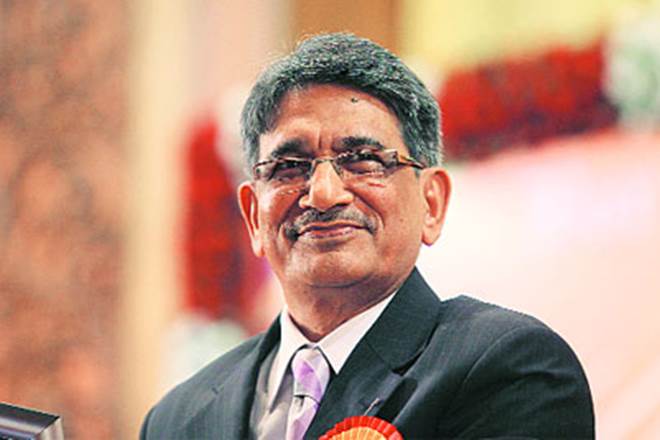
On 2nd May 2018, Business Standard ran a news report with the headline, “Loya verdict utterly wrong, SC in disastrous situation now: R M Lodha”. The headline referred to the former CJI Justice R M Lodha. The article was about an event for the launch of Arun Shourie’s new book ‘Anita gets bail’, which is reportedly about a false case registered against his wife Anita Shourie and how it took years for the case to come to conclusion.

The headline of the article obviously showed that the ex CJI had grave reservations about how the current Supreme Court had handled the Loya case. This has been a pet issue of leftists, although the Supreme Court had chastised them with very harsh words.

For this alleged statement by the ex-CJI, he was panned on social media:


Some expressed concern over this trend:


However, a reading of the article, made it clear that Justice Lodha did not refer to the Loya Verdict at all. The article states that Justice Lodha stated that he always felt the independence of the judiciary is non-negotiable and it is for the CJI who is the leader of the court to take them forward. He reportedly further added that the CJI has to show statesmanship qualities and take all the brothers and sisters together.

The article also mentioned that Justice Lodha stated, “The phase we are seeing at the Supreme Court today is, to say the least, disastrous. It is high time that collegiality is restored. The judges, though with their different approaches and different viewpoints, must find a common ground that takes the Supreme Court forward. That maintains the independence of the judiciary.”

He appeared to be expressing his views on the recent rumblings within the Supreme Court. However nowhere in the body of the article, it is mentioned that Justice Lodha spoke anything about the Loya verdict. In fact, It was former Delhi HC Chief Justice AP Shah who mentioned the Loya verdict and stated that Supreme Court’s verdict on the death of Judge Loya was “utterly wrong, and jurisprudentially, incorrect on so very many counts”.

A further search into other news articles also affirmed the same. It was a book launch event attended by many former lawyers, ministers and judges and no other article had attributed the statement about the Judge Loya verdict to Justice R M Lodha. All the articles have mentioned that it was Justice Shah who mentioned the Judge Loya case.

This brings to the mind a question, was the misleading headline just a mistake or it was a sly attempt to falsely attribute a statement to a former CJI and stir a controversy when there was none?