Home Blog Page 7248

A professor of international economics highlights challenges facing Belt and Road Initiative

0

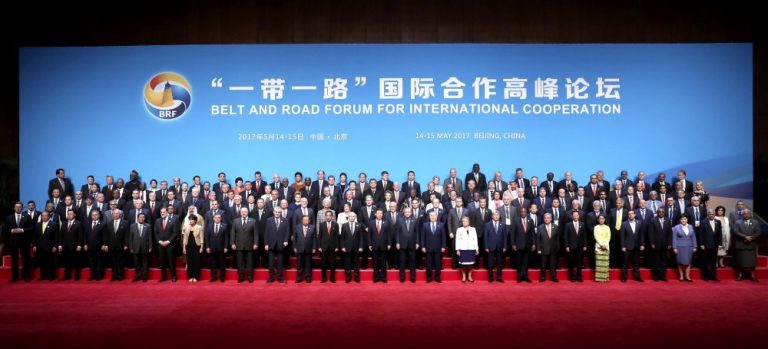
The BRI (The Belt and Road Initiative) project taken up by China is expected to touch approximately two-thirds of the world’s population, and 40 percent of global trade. The BRI summit held by China was attended by 130 countries out of which an estimated 68 had claimed that they had signed the BRI agreement. This initiative of China is seen as a major foreign policy challenge to India and a step towards China’s goal of ‘world leadership’.

Image Source : Brookings Institute

Linda Lim, an NTUC (National Trade Union Congress) Professor of International Economic Relations (2018) at RSIS (S. Rajaratnam School of International Relations), Singapore in her recent publication has highlighted grave concerns regarding the financial viability of the BRI. This study was highlighted on Twitter by columnist Chinu (@NamasteNiHao).

In her synopsis Prof Lim says that unless the challenges to the BRI are not addressed, China will find the project as a nightmare rather than a Bonanza. The challenges listed by Prof Lim are:

  • Challenge of Infrastructure funding
  • Political and Other Risks
  • Chinese Business Model
  • China’s Creeping Arrogance

The academic feels that the mechanism of implementation of these projects and capital required for them will decide the outcome of BRI. Since many developing countries don’t have the capital, technology and human resources to implement long term projects may be difficult. She says :

  • In developing countries capital is scarce, so at a premium, while borrowing from cheaper foreign sources requires repayment in foreign exchange, adding currency risk. Governance risk arises from governments often lacking the expertise to evaluate, implement and monitor projects, and leakage through corruption is common, increasing cost, delay and quality problems.

Professor Lim further cites the risk of high debt to GDP ration and high Chinese debt to GDP ratios in countries like Djibouti, Kyrgyzstan, Laos, Maldives, Mongolia, Pakistan, Montenegro, Tajikistan. In addition to this, she feels that the political risks and backlash from people who are not benefited from the project could adversely impact BRI. The professor says :

  • There is also political risk, since the distribution of costs and benefits may not be equitable, and social unrest may result from disputes over land appropriation and compensation, labour, and environmental consequences such as harm to local farming, forests and fisheries. Authoritarian governments are not transparent, and may use coercion to resolve disputes, while democratic governments may change and demand changed terms. 

In addition to risks of implementation and debt trap for participating nations, the most serious problem appears to be the Chinese business model. According to the professor, Chinese projects are not helpful in creating local jobs and depend on export model. Due to this model, the perception in local communities is adverse to such projects. She further adds that Chinese prefer to work with corrupt and incompetent leaders and ignore communities. She further adds :

  • Chinese companies have been accused of poor business practices, such as undercutting local suppliers, failing to honour contracts and to comply with local regulations, while delivering inferior quality and reliability, such as plagued Chinese-built power plants in Indonesia.

Chinese arrogance, is another challenge that could be a roadblock to success of BRI, says Professor Lim. She says that Chinese don’t respect the diversity in countries they operate in and favour local ethnic Chinese in their deals. As a result of their collaboration with Chinese, local politicians have lost elections as per the academic. She cites the example of Mahinda Rajapaksa in Sri Lanka.

The publication also offers some suggestions to combat these challenges. The professor suggests the Chinese to ensure that BRI is ‘Less Chinese’. She recommends that local population be taken into confidence and only viable projects be taken up. Otherwise she expects the project to be a foreign policy nightmare. To underscore this point she cites an example from CPEC.

  • Today, with a massive US$57 billion investment in energy and infrastructure projects in the China-Pakistan Economic Corridor, the Pakistan government has to employ a 15,000-strong military force to protect Chinese workers. Despite this, in February 2018, a Chinese shipping executive was shot dead in his car in Karachi in “a targeted attack”. If China does not learn to adapt to life outside the Great Wall, the Belt-and-Road Initiative risks turning into a foreign policy nightmare, not a bonanza.

Thus it appears that the BRI is not going to be a cakewalk. The Chinese ambition and economic power may formidable and admirable. If the concerns raised by Professor Linda Lim are ignored by Chinese, BRI may not succeed as expected by the world.

Indian Railways announces ambitious tourism plan centred around metre-gauge tracks

0

In a possible quest to boost tourism, the Indian Railways has announced its plan to convert commercially non-viable metre gauge lines into heritage routes. These metre gauge stretches encompass states like Madhya Pradesh, Gujarat, Rajasthan, Assam and Uttar Pradesh and are lying defunct.

These metre gauge tracks pass through few of India’s most picturesque locations like the Dudhwa tiger reserve in UP, the Vindhyachal mountain range and the Gir forest in Gujarat.

The Railway Ministry had earlier decided to convert five defunct metre gauge lines into broad gauge, but that plan has now been shelved in favour of re-branding them as heritage tourism destinations.

These five-metre gauge lines are Gujarat’s 42.27 km long Visavadar-Talala line, MP’s Mhow-Patalpani-Kalakand line which is 16 km long, 162 km long Mavli – Marwar line in Rajasthan, Mahur-Harangjao line falling in Assam and 171 km long Nanpur-Mailani line in UP.

Out of these lines, the Mhow – Kalakand line passes through breathtaking hills and valleys of the Vindhyachal range, letting tourists visit the Patalpani waterfall. This line would be solely used for tourism purposes. The Nanpara-Mailani line in UP passes through the Dudhwa tiger reserve, thereby aiding wildlife enthusiasts.

The Visavadar-Talala line in Gujarat passes through the Gir forest and Mavli – Marwar line in Rajasthan encompasses parts of the Todgarh Raoli biodiversity sanctuary. Assam’s Mahur-Harangjao line traverses the hills in the state’s Dima Hasao district and is famous for some of the tunnels along the route.

As per a railway official, all these metre gauge lines have sharp bends, tunnels and offer a potential to create eco-tourism safaris.

Besides the metre gauge lines, the railways are also planning other tourism initiatives like reviving a fireless steam loco currently displayed in Delhi’s national rail museum and using vintage steam engines to haul the world famous “Palace on Wheels” train.

Back in January, reports had indicated that the Railways was gearing for a branding push by possibly outsourcing the ticketing and catering initiatives to IRCTC. The Railway Board Chairman Ashwani Lohani had asked for the identification of tourism and luxury trains, to promote the rail tourism’s brand.

In 2016, the Railways as part of its wildlife tourism initiative had introduced a tiger trail circuit train which via a five day six nights trip, would help travellers visit the Bandhavgarh and Kanha National Parks in Madhya Pradesh.

Even though the Railways’ tourism initiative has taken long strides, its flagship products in this segment incidentally have struggled revenue-wise. As a report from January, the revenue of luxury tourist trains like Palace on Wheels and Royal Rajasthan on Wheels saw a decline of 24.08 percent and 63.18 percent, as a result of declining passenger capacity from 2014 to 2017. This decline was attributed to limited number of trips by these trains.

Rabri Devi writes to Nitish Kumar after Bihar government withdraws security staff deployed at her residence

0

Former Bihar Chief Minister and wife of RJD supremo Rabri Devi has written a letter to Bihar CM Nitish Kumar expressing her concern over the withdrawal of government-funded security provided in her residence (10, Circular road, Patna). She has warned the CM that if any untoward incident happens, the state home ministry will be responsible.


The letter states that they had B.M.P-2 commandoes appointed as residential as well as personal security guards for herself and her husband Lalu Yadav and seven such commandoes were appointed for their service since 2005. She added that when her husband Lalu Yadav went to jail on 23 December 2017, the government had acted fast and has withdrawn all security personnel appointed for him. However, on the night of 10th April, the remaining security staff were withdrawn in a haste too. The letter alleges that the move has destroyed the safety and security of her residence.

the letter further adds that Rabri Devi is taking the decision to return the remaining security personnel who are not B.M.P-2 commandoes and the government vehicles. Rabri Devi has written that if any security-related incident happens to herself and her family, the state home ministry will be responsible. She had added that the people of Bihar and RJD workers will look after them.

Rabri Devi, while speaking to reporters, has also claimed that she is concerned about her husband’s health and she doesn’t know whether he is dying or being killed by medication. She called it a conspiracy of Nitish Kumar, Sushil Modi and their government.


Yesterday, the CBI had raided the residence of Rabri Devi and her son Tejashwi Yadav was grilled for at least 4  hours by the CBI team in connection with the IRCTC hotel tender case.

Conspiracy theories are not new to the Yadav family. Earlier, Rabri Devi’s elder son Tej Pratap had claimed that Nitish Kumar government has set ghosts to haunt him at his residence. His brother Tejashwi had claimed that Nitish Kumar is trying to have his food poisoned.

On Point with Nupur Sharma : Tell all interview of Honourable Minister Smriti Irani

In this second episode of ‘On Point with Nupur Sharma’, it was a privilege to interview the Honourable Minister of Textiles and Information and Broadcasting, Ms Smriti Irani.

An important part of the Modi Government, Smriti Irani has often been surrounded by controversies and mindless, falsely concocted propaganda. In this tell-all interview, Ms Irani clears the air on some of the recent controversies that the Lutyens Media has taken immense pleasure in furthering.

Ms Irani candidly talks about the ‘fake news’ circular and clears the air on the so-called ‘withdrawal’ that followed. She also talks about the supposed ‘tiff’ with the Prasar Bharati Chairman, Mr Surya Prakash and the reasons behind this tussle.

The interview wasn’t just limited to recent controversies. She also made some startling revelations regarding the opaque process of accreditation, the Doordarshan Free Dish, how it massively benefits private channels and the misinformed manner in which the Lutyens circuit functions, furthering half-baked theories.

The full interview can be heard here :

[youtube https://www.youtube.com/watch?v=dEUz2_38A_4]

The interview can also be heard on YouTube.

We thank the Honourable Minister for this opportunity.

Head of SIT assures full security to the family of rape victim in Unnao

0

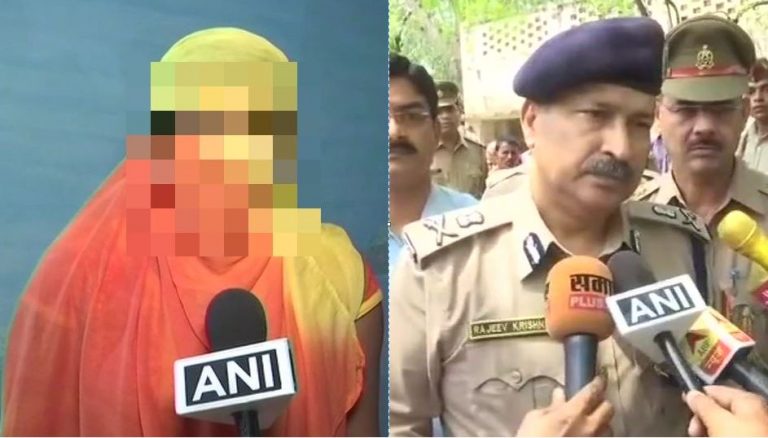
Allegations of rape and death of the victim’s father in Unnao (Uttar Pradesh) has forced the Uttar Pradesh administration to take note of the law and order situation in Unnao. In the light of these developments, a SIT headed by ADG Lucknow has been formed by the government. The chief minister, Yogi Adityanath has demanded a report within a day.


In spite of this announcement, reports of confinement of the rape victim in a hotel room by the DM of Unnao had also surfaced earlier in the day.

The SIT arrived in Unnao today. Rajeev Krishna, the ADG of Lucknow division told media that SIT was working without political pressure and he would be sending a report to the administration by evening. The ADG assured security to the family of the rape victim. The ADG added, “They have a relative in Delhi, now it is their decision if they want to live here in Unnao or in Delhi”.

Meanwhile, the wife of accused MLA Kuldeep Sengar said that her husband was innocent and evidence was being hidden. She added that there was a political motive behind this accusation.


The outcome of the SIT report and further developments, in this case, will be closely watched.

With expenses exceeding income, the Congress party seems to be in troubled Financial times

0

As per figures quoted in an Association For Democratic Reforms (ADR) report, the Congress party seems to be struggling to cope up financially with the demands of Indian Politics. The ADR report chiefly analyses the Income and Expenditure of the Bharatiya Janta Party (BJP) and the Indian National Congress (INC) for the Financial Year (FY) 2016-17. The report claims that the figures have been sourced from the submissions to Election Commission of India (ECI).

Going by the figures, the Congress party’s income slumped by 14 percent to Rs 225.36 crore from Rs 261.56 crore for FY 2015-16. When it comes to the total expenses incurred, the Congress incidentally spent more than it earned by declaring an expense of Rs 321.66 crore which is Rs 96.30 crore more than its total income.

When it comes to income sources the Congress party claimed that it received Rs 50.62 crore as donations and Rs 115.64 crore via the issuance of coupons. The party earned a total of 43.89 crores as interest on fixed deposits. When it comes to expenditure, the party supposedly spent Rs 149.65 crore as election expenditure and Rs 115.65 crore as administrative and general expense.

In contrast, the BJP seems to be doing pretty well after the party declared a total income of Rs 1034.27 crores which was a whopping 81.18% increase from the 2015-16 figure of Rs 570.86 crore. The party declared a total expenditure of Rs 710.05 crore.

BJP for its income has declared Rs 997.12 crore as having received grants or donations. This figure comprises of 96.41 percent of the party’s total income. The BJP received Rs 31.18 crore as income via banking means. Regarding expenses, the BJP spent Rs 606.04 crore for election and general ‘propaganda’. In contrast to the Congress party, the BJP spent a mere Rs 69.78 crores for administrative costs.

When it comes to all the seven national parties combined namely – BJP, INC, BSP, NCP, CPM, CPI and TMC, they declared a total income of Rs 1559.17 crore in 2015-16 and declared expenses worth Rs 1,228.26 crore.

This financial declaration by the national parties though hasn’t been without its controversy. As per the report, annual audited reports needed to be submitted by 30 October 2017 but the BJP submitted its on 8 February 2018 and the Congress on 19 March 2018.

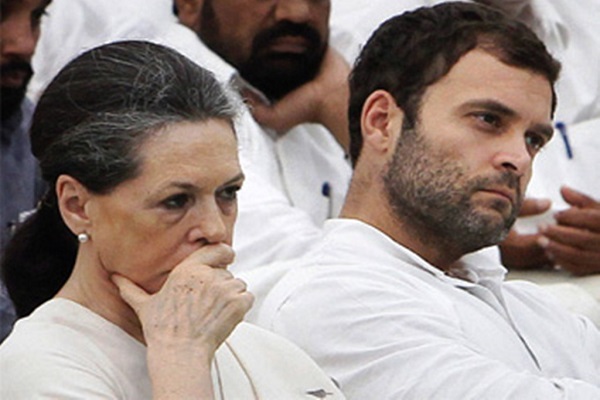
Sonia Gandhi began and ended her Presidentship without getting more than 30% votes in general elections

0

There is a popular habit among the secular-liberal gang in India. They claim that 69% of people had never voted BJP and thereby, the legitimacy of the government is questionable. However, they fail to understand that last two governments were led by a party with less than 30% of vote share.

In the ‘Sanjhi Virasat Bachao’ (save composite culture) convention in Jaipur, Sharad Yadav of JDU had said the following: They (the BJP) don’t want a Congress-free India. They want an Opposition free India. That will never happen. They should not forget that gained power with just 31% votes. It means 69% people voted against them.

Again, the then JNUSU president Kanhaiya Kumar had said that 69% of people had voted against Modi while speaking to an audience. He had said: I want to remind our government that 69% voted against you. Just 31% voted for you and some of them were caught up in your jumlas.

It is generally claimed that BJP and Narendra Modi don’t have the right to run a full majority government as they have secured merely 31% of vote share in 2014 Lok Sabha polls. However, the reality is that no single party had secured more than 30% vote share of the public since 1991 (when Congress had 244 seats with 36.1% of votes).

Sonia Gandhi took over the Congress party in April 1998. The Lok Sabha polls were concluded by February 1998. Thus the performance of Sonia Gandhi can be tracked from 1999 Lok Sabha poll onwards.

Performance of Congress party under Sonia Gandhi

  • 1999- Vote share – 28.3% (182 seats)
  • 2004- Vote share – 26.5% (145 seats)
  • 2009- Vote share – 28.6% (206 seats)
  • 2014- Vote share – 19.5% (44 seats)

Thus one could have very well questioned the legitimacy of 2004 and 2009 governments formed under the leadership of Congress party and Sonia Gandhi. The same can be said for the first Congress government led by Jawaharlal Nehru as well. 55% percent of the electorate had voted against Nehru. 1 out of 2 persons in India did not want Jawaharlal Nehru as prime minister in the first general election. In fact, Congress under Nehru never crossed the 50% vote share in first three general elections. That doesn’t make him an illegitimate Prime Minister.

Therefore this 31% jibe is nothing but a juvenile argument. It is quite difficult for any party to get a full majority in a diverse multi-party election with intense competition. Therefore it is better if the opposition sets aside the 31% mentality and work on setting its house in order. In addition to this, Sonia Gandhi must introspect why Congress never got a vote share above 30% in general elections under her leadership.

10 things Ambedkar said that Indian secularists wouldn’t bear to hear

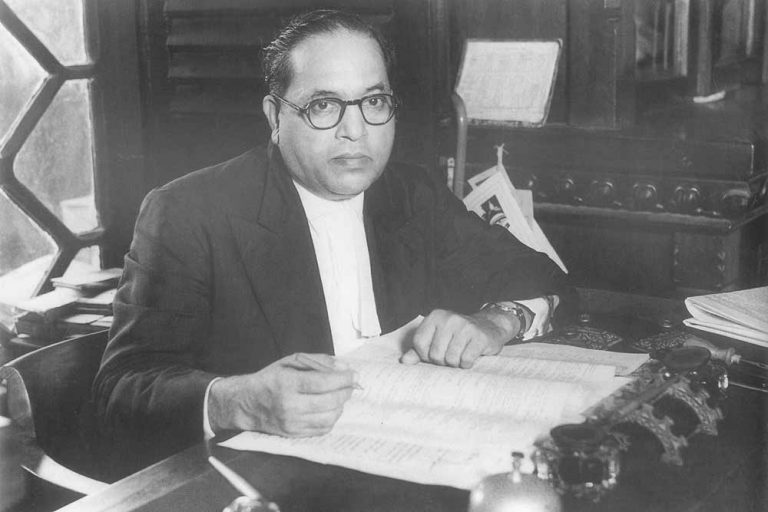
Yesterday, senior journalist Ashok Upadhyay, Editor of India Today Television, wrote an article in the India Today’s DailyO listing “10 things Ambedkar said in his lifetime that BJP wouldn’t bear to hear.”

Untitled.png

The stated aim of Editor saheb? The noble goal of taking a look at what Baba Saheb actually said. Along with the equally noble goal of making the BJP squirm over Dr Ambedkar’s quotes on Hindu society.

Excellent. My humble point is that listing merely 10 quotes can hardly do justice to the breadth of Dr Ambedkar’s genius. With a goal just as noble as that of Senior Journalist Ashok Upadhyay, I thought I would list out 10 more of his quotes.

Most of these quotes are from Dr Ambedkar’s book “Pakistan or the Partition of India.” A PDF copy may be found here. Let’s hope Indian secularists can take the heat.

(1) Which society has more social evils? Hindu or Muslim? 

Dr Ambedkar says:

“There can thus be no manner of doubt that the Muslim Society in India is afflicted by the same social evils as afflict the Hindu Society. Indeed, the Muslims have all the social evils of the Hindus and something more. That something more is the compulsory system of purdah for Muslim women.”

You hear that? All the big propaganda of the left about Ambedkar’s radical views on the evils of Hindu society and Dr Ambedkar states clearly and crisply that Muslim society is objectively worse.

(2) What is the “relieving feature” of Hindus and the “distressing” feature about Muslims?

Dr Ambedkar says:

“The existence of these evils among the Muslims is distressing enough. But far more distressing is the fact that there is no organized movement of social reform among the Musalmans of India on a scale sufficient to bring about their eradication. The Hindus have their social evils. But there is this relieving feature about them—namely, that some of them are conscious of their existence and a few of them are actively agitating for their removal. The Muslims, on the other hand, do not realize that they are evils and consequently do not agitate for their removal. Indeed, they oppose any change in their existing practices.”

Ah! What an amazing clarity of thought! Muslims have more social evils than Hindus. Hindus keep trying to reform themselves and eradicate the evils. Muslims don’t and they oppose any positive change.

(3) Which religious community adopts the “gangster’s method” in politics?

Dr Ambedkar says.

“The third thing that is noticeable is the adoption by the Muslims of the gangster’s method in politics. The riots are a sufficient indication that gangsterism has become a settled part of their strategy in politics. …. So long as the Muslims were the aggressors, the Hindus were passive, and in the conflict, they suffered more than the Muslims did. But this is no longer true. The Hindus have learned to retaliate and no longer feel any compunction in knifing a Musalman. This spirit of retaliation bids fair to produce the ugly spectacle of gangsterism against gangsterism.”

Look how wonderful. Correct me if I am wrong, dear liberal friends, but it seems to me that Dr Ambedkar is explaining the “action-reaction theory”. And he is making it absolutely clear who usually starts the violence.

Don’t leave the room just yet, dear secular liberal friends. We are just starting to have fun. Let’s see how long you can bear to keep listening.

(4) Why do Muslims carry out cow slaughter in India? Is it just to hurt Hindu sentiments? 

Well, let’s find out. Dr Ambedkar says:

“The second thing that is noticeable among the Muslims is the spirit of exploiting the weaknesses of the Hindus. If the Hindus object to anything, the Muslim policy seems to be to insist upon it and give it up only when the Hindus show themselves ready to offer a price for it by giving the Muslims some other concessions. Another illustration of this spirit of exploitation is furnished by the Muslim insistence upon cow-slaughter and the
stoppage of music before mosques. Islamic law does not insist upon the slaughter of the cow for sacrificial purposes and no Musalman, when he goes to Haj, sacrifices the cow in Mecca or Medina. But in India, they will not be content with the sacrifice of any other animal.”

Oh! So, that’s why Muslims in India insist upon carrying out cow-slaughter. So that it hurts the sentiments of Hindus. Just to repeat, Baba Saheb is saying that the purpose of cow-slaughter in India by Muslims is not a desire to innocently enjoy Tunday Kabab. The real purpose is to intimidate Hindus and extract … sorry… “exploit” … them to get concessions. Tough luck for my good friends at Scroll.in.

(5) But at least Islam teaches universal brotherhood, right?

Wrong! Dr Ambedkar has this to say:

“The brotherhood of Islam is not the universal brotherhood of man. It is brotherhood of Muslims for Muslims only. There is a fraternity, but its benefit is confined to those within that corporation.”

Short and sweet. And crisp. And cutting.

(6) But what about the “idea of India?” Is it right to question the patriotism of Indian Muslims?

Let’s find out what Baba Saheb has to say:

“The second defect of Islam is that it is a system of social self-government and is incompatible with local self-government, because the allegiance of a Muslim does not rest on his domicile in the country which is his but on the faith to which he belongs. ….  Wherever there is the rule of Islam, there is his own country. In other words, Islam can never allow a true Muslim to adopt India as his motherland and regard a Hindu as his kith and kin.”

Ouch! Let’s just say that if Dr Ambedkar were alive today, portals like Wire and Scroll would very likely refuse to publish his writings.

(7) How do the Muslims of India see the Hindus? Do they see Hindus as equals and treat them with respect as per Ganga-Jamuni tehzeeb?

Dr Ambedkar says:

“The realist must take note of the fact that the Musalmans look upon the Hindus as Kaffirs, who deserves more to be exterminated than protected. The realist must take note of the fact that while the Musalman accepts the European as his superior, he looks upon the Hindu as his inferior.”

Oh my god! Is Dr Ambedkar suggesting that Ms Sagarika Ghose is not a “realist”? How cruel!

(8) Has it ever surprised you that Muslims in India (and countries in the West where they are a minority) so passionate about human rights when Muslim majority countries have barely any rights for anybody?

Well, Dr Ambedkar has the answer:

“If the representative government can help the Muslims, they will demand it, and fight for it. … The dominating consideration with the Muslims is not democracy. The dominating consideration is how democracy with majority rule will affect the Muslims in their struggle against the Hindus. Will it strengthen them or will it weaken them? If democracy weakens them, they will not have democracy.”

(9) But don’t the vast majority of Muslims condemn all acts of violence? Isn’t Islam a religion of peace? 

You could listen to NDTV. Or you could listen to Dr Ambedkar:

“whether the number of prominent Hindus killed by fanatic Muslims is large or small matters little. What matters is the attitude of those who count, towards these murderers. The murderers paid the penalty of law where the law is enforced. The leading Moslems, however, never condemned these criminals. On the contrary, they were hailed as religious martyrs and agitation was carried on for clemency being shown to them. ”

One Yakub Memon comes to mind. And the terrorists who were killed in Batla House encounter.  Anyways….

(10) Have you ever felt that the political class in India turns a blind eye to atrocities committed by Muslims against Hindus?

Turns out Dr Ambedkar felt the same way:

“But Mr Gandhi has never protested against such murders. Not only have the Musalmans not condemned these outrages but even Mr Gandhi has never called upon the leading Muslims to condemn them. He has kept silent over them. Such an attitude can be explained only on the ground that Mr Gandhi was anxious to preserve Hindu-Moslem unity and did not mind the murders of a few Hindus if it could be achieved by sacrificing their lives. This attitude to excuse the Muslims any wrong, lest it should injure the cause of unity, is well illustrated by what Mr Gandhi had to say in the matter of the Mopla riots.”

This is not some right-wing troll on Twitter writing about Rahul Gandhi. This is Ambedkar talking about Mahatma Gandhi.

Let’s recap: Ambedkar believes that Muslim society has more ills than Hindu society, that Muslims are more resistant to positive change, that Muslims believe neither in democracy, nor in treating Hindus as equals, nor do Muslims condemn crimes against Hindus. That Muslims can never owe allegiance to India.

Suffice to say, Baba Saheb would certainly have lost the elections for the post of JNUSU President.

Karnataka elections: Congress in tizzy after ‘fake list’ in circulation even as Muslims demand one seat in each district

0

Ahead of the high-octane Karnataka State Assembly elections the ruling party in the state Congress has found itself in panic mode as a ‘fake‘ list of candidates started making rounds on social media. Karnataka Chief Minister Siddaramaiah accused that the fake list has been circulated to create confusion among the masses.


As per reports, even though the screening committee meeting took place yesterday and the party leaders met Congress President Rahul Gandhi with their feedback on some of the candidates, the central election committee is yet to meet and decide on the candidates. However, the candidate selection process is already created a lot of controversy as a large number of sitting MLAs from Karnataka have reportedly sought tickets for their own family members.

Meanwhile, a group of Muslim leaders from Karnataka have demanded that the Congress party reserves at least one constituency in each district of the state for Muslim candidates. With a population size of about 12 percent, the group held a meeting with leaders in Delhi to convince senior leaders on why Muslims should get a better deal this time.

In 2013, about 19 Muslim aspirants were given party tickets in different constituencies and 10 had won.

Aligarh family allege being victimised by the misuse of SC/ST Act after 12 FIRs were lodged against them

0

A family in UP’s Aligarh have stated that they are being harassed by a man over false cases under the SC/ST Act. The man, named Vishnu, has reportedly filed 12 cases on them after a land dispute. 10 of the cases have been filed since 2010.


According to reports, Vishnu and his family have lodged several FIRs within 6 years starting from 2010. They had taken compensation amounting to Rs 2 lakhs. 2 FIRs were filed in 2016. When the police did not take action in two cases, they complained to the National SC/ST commission which directed the District Magistrate and SSP to submit their explanations. Vishnu is a resident of Hastpur village.

The enquiry revealed that both of their FIRs were on false allegations. On the basis of that, a report was sent to the SC/ST commission and a request to recover the compensation was made. One of the FIRs was lodged by Vishnu and the other by his wife. The reports that the DM and SSP sent to the commission stated that Vishnu and his family had lodged 10 other FIRs in between the year 2010 and 1016. The report mentioned that Vishnu and his family were misusing the SC/ST Act to receive compensation.

The District Social Welfare officer Nagendra Pal Singh stated that the officials are waiting for the directions of the National SC/ST Commission to recover the compensation amount paid to Vishnu.

It is notable here that under the SC/ST (PoA) Act, Dalits receive a compensation of Rs 8 lakh for Murder, 5 lakhs for rape and so on. The first instalment is received after the FIR has been lodged and the second instalment after investigations are complete. The third instalment is paid after the court pronounces verdict in the case.

The Supreme Court of India, in its March 2018 order had suggested safeguards in the existing act to prevent its misuse. Following the order, widespread violence by Dalit groups was reported in the country alleging that the SC diluting the act. The central government has petitioned the SC for reviewing the order and the matter is pending.