Home Blog Page 7480

Aadhaar, the technology, and the privacy debate

0

The Aadhaar project has long been criticised to have impinged upon our privacy. Whether right to privacy is absolute, is it a fundamental right, etc. are matter that are sub-juice with the honourable Supreme court of India, which has reserved its verdict as of now. This article discusses how, and if Aadhaar actually infringes upon our privacy. Let’s dissect between what government claims and reality on ground.

Privacy and Aadhaar

Your Personal Identifiable Information i.e. PII is an essential part of privacy. PII consists of your name, address and other identifiable information along with, but not necessarily, your biometrics i.e. your biological data. With Aadhaar enrollment, you have to submit this data to the Government of India. Does it mean your your privacy has been impinged upon? There are points supporting both sides of the debate.

Even before Aadhaar, there were quite a few government systems that mandated you to submit these details to access a service. For example, you need to submit your Name, Address, Date of birth, Photograph and fingerprints to get a Passport. You need to submit your blood group to get a driving license. All that Aadhaar has introduced for the 1st time is “Iris Scan”, this is because a majority of manual labourers have their fingerprint ridges not clearly recognisable and hence the authorities had to look for some other unique biometrics.

Submitting your PII to government is not new. And Aadhaar is as much ‘mandatory’ as other such schemes. For example, you can refuse to have a Passport or a Driving license, but then you have to let go the privileges that comes with these. Similarly, you can refuse to have Aadhaar and forgo all benefits that comes with it.

One rider though, Aadhaar now seems to be tied up with everything or at least going to be tied up with almost everything. So giving up Aadhaar related benefits is not going to be ‘as easy’ as giving up on a driving license or passport.

What the government claims:

Let’s dissect the steps before you get an Aadhaar card and what happens after that:

Data Collection/ Enrollment

Information collected from you at an Offline centre is encrypted at source. Once your details are keyed in, the vendor collecting data can’t read it. He just has to submit this data to Central Identities Data Repository (CIDR). Also, these packets that are sent to CIDR for storage are biometrical signed by the vendor. In case of any dispute or controversy, the authorities know which vendor gave this data.

Data Storage

All your information along with biometrics are stored in encrypted form and decrypted only on demand. The packets are stored on Hadoop clusters, which provides distribution and high availability of large sets of data. For the searches, they use Mongo with Solr indexes. Because all these support clusters based storage and data is partitioned, there is no single point of failure.

Aadhaar Allocation

Once your data is stored, you are given a unique 12 digit Aadhaar number which is completely random. It doesn’t tell anything about yourself unlike your PAN where the fourth character tells the type of PAN holder, fifth character tells the first letter of your surname and so on.

Aadhaar Data Access

Who Can Access – There is a list of requesting entities known as eKYC User Agencies (KUA) and Authentication User Agency (AUA). They don’t have direct access to CIDR servers to authenticate you. There are Authentication Service Agencies (ASA) who have secured leased line connectivity with the CIDR, which is compliant with UIDAI’s (Unique Identification Authority of India) standards and specifications.

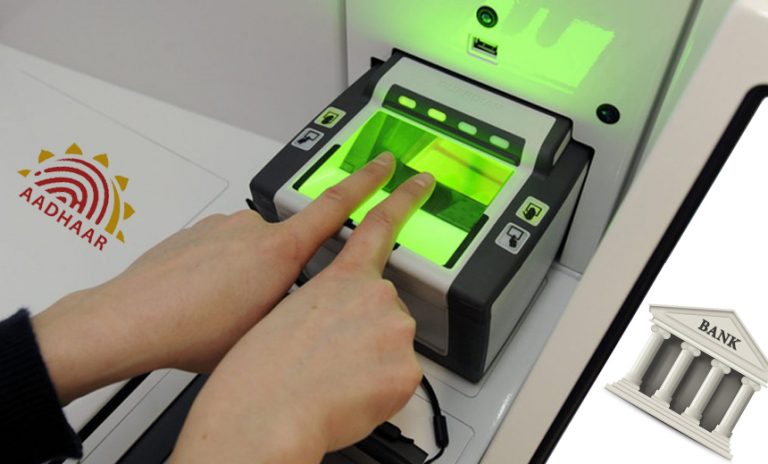
There is a formal set of procedures, guidelines and scrutiny before one becomes a AUA/KUA/ASA. For example, NPCI (National Payment Corp of India) is an ASA. Axis bank is a KUA. So, for the annual KYC activity, Axis bank can just tell you to give your biometrics on a device, it’s transmitted to NPCI which routes it to CIDR and CIDR responds with a Yes (Or No). There is no physical document submission.

Modes of Access – Aadhaar is a ID management system. It authenticates you and tells the authority “You are who you say you are”. Consider getting a SIM with Aadhaar validation as an example. The erstwhile procedure was to give a self attested copy of “Proof of Id” and “Proof of Residence” and upon validation, your SIM will be activated. Your self attested copies of your PAN card or Driving License stays with the company giving you the SIM.

With Aadhaar, when you give your finger print to a JIO SIM provider, it sends a packet to Aadhaar systems and the system authenticates your identity. The answer is boolean, just a Yes or No. It doesn’t tell anything else about you. The vendor in no way can impersonate you later as they don’t have any physical entity of your proof with them.

Biometrics in Aadhaar systems is matched using 3 vendor softwares. Vendor softwares are usually the gateway for vulnerability to creep in. However, there are several security perimeters here and the vendor software doesn’t have any detail of whose biometrics it is matching. It just has a [X,Y] matrix and certain templates to match them against.

Biometric Lock

If all these safeguards doesn’t sound convincing, you can go to UIDAI website, login using Aadhaar number and OTP, and lock your biometrics. What that means is, the biometric authentication is now not possible on your Aadhaar. You can turn it on when you want to avail a biometric authentication based service and turn it off back again.

Is it foolproof?

All these securities apart, chance of a data leak can’t be denied. Anything, that is connected to a computer network is hackable including your bank account. In fact, there was a large breach on 3.2 million debit cards of ICICI, Axis, HDFC, Yes bank and SBI. As usual, the malware originated from Hitachi Payment Systems ATMs and POS terminals, a 3rd party vendor software.

Does that mean we should stop electronic banking and go back to paper based system? And no, you not having an ATM card or having not applied for net banking doesn’t make your account safe. The bank still stores your financial data electronically. If there is a breach, there is a breach. It may make your account safer than those who use internet banking, but it doesn’t make it absolute safe. Nothing on computer networks is absolutely  safe.

Govt claims to have built adequate measures to safeguard our data. However, there are reports like this, which suggests, there was data leakage at ASA/AUA/KUA level. How did these agencies get the data in the first place is something the authorities should find out and answer.

The privacy debate

While we are at privacy, allow me to bring up something unrelated to Aadhaar but related to privacy. If you have a bank account, in all likelihood, your PII has been passed onto a private agency called CIBIL without even taking your consent.

Surprised? Request for CIBIL report and see all your PIIs  like name, all addresses where you have ever stayed, DoB, financial data (Loans, CC, A/cs) printed on sheets of paper right in front of you. The custodian of your data in case of Aadhaar is Government of India, who is bound by the Aadhaar act (pdf) unlike CIBIL.

Currently, the central govt has a long list of schemes for which it has made Aadhaar “sort of” necessary. Most of these are related to subsidies, which was the primary aim of Aadhaar — To de-dup the list of beneficiaries and check subsidy leak through DBT. Other schemes like PAN-Aadhaar or linking your bank a/c with Aadhaar is done to make the “Id management” easier and hassle free.

As per the MoS, Finance, Shri Gangwar’s answer in Rajya Sabha, with Aadhaar seeding, over 11 lakh duplicate and fake PANs have been deactivated:
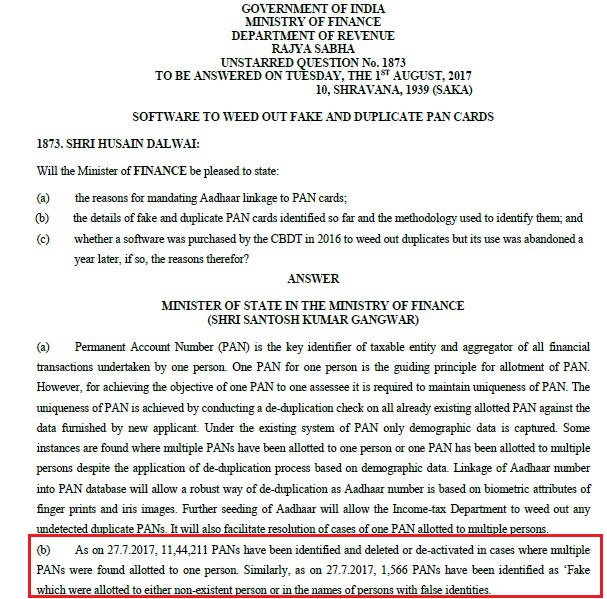
Privacy is something people closely guard with. Hence, it’s natural to ask question about resilience of the system that stores and claims to safeguard our personal information. In fact, questioning the system should be encouraged. They help in finding flaws and make the system stronger and as much hack proof as it can be. However, a nation as diverse as ours definitely need a unique id and that is the only way forward.
The Left is out to capture the web and why the Right should worry

0

Remember the early UPA-2 years? Those were the days when nobody in the media dared to open his/her mouth against Sonia Gandhi and the Opposition was numb. The arrogant Chidambarams of the world would condescendingly tell the BJP that it would not come to power for at least another 10 years.

It is around that time that dissent began to surface sporadically on the internet. Without any organization, coordination or planning, people began to take to whatever medium they could lay their hands upon … Blogger, Facebook, Twitter, etc to express their dissent. The use of the internet as a platform for political expression in India was still new.

Narendra Modi was the first to understand its potential and harness it effectively. The liberal media was too fond of itself to notice the sea change happening around it. The Congress was too busy counting its booty.

By the time the liberals realized what was happening, it was already too late. They had been reduced to 44 seats in the Lok Sabha, not even enough for an official opposition.

The Right Wing still has a decisive edge when it comes to the online space. But the worst mistake that the right can make is to fall for the same sense of complacency and self-satisfaction that proved to be the undoing of the left.

Because the sands are shifting in the online playground.

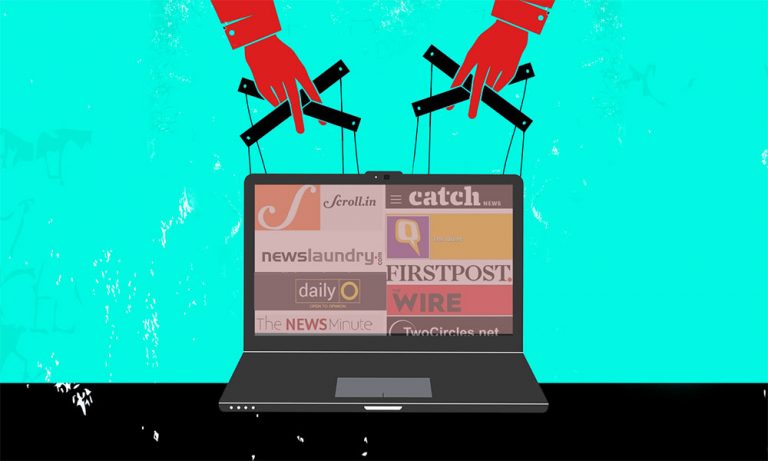
Taking lessons from its bitter 2014 defeat, the Left has invested lots of time and energy into building a string of online fortresses. We can easily reel off the names : Scroll, Wire, Catch, Quint, Newslaundry, the India edition of HuffPost and so on. One should really add Firstpost and DailyO to the same list because of the overwhelming majority of pro-left articles on both of these websites.

Unlike the right with its humble beginnings on social media around 2009-10, these left wing websites are no amateur operations. The typical person who writes for these websites is a professional journalist with a fat pay package. In contrast, the right wing on the internet still has not moved too far from its origins with common folk spending their spare time after work to indulge their hobby of political writing.

And there are signs that the leftist “string of pearls” is beginning to come together in a concerted effort to choke the right. Today, a sundry JNU student making yet another anti-Modi speech to a handful of comrades at JNU can get a national audience, thanks to Newslaundry broadcasting them live.

https://www.youtube.com/watch?v=Wi0SOiR2aSI

(Side question to JNUSU : How come your General Secretary is talking about Najeeb’s killers at 4:08? How do you know that Najeeb is dead? Do you folks know something that you are hiding from Delhi police?)

The left’s propaganda team is scouring the length and breadth of this country in the search for “talent”. One  forgotten news anchor, who made most of his name working with Doordarshan in the old days, has been recently been dredged up and rehabilitated on the internet. He now has his own (almost daily) show on the YouTube channel of The Wire, from where he launches bitter diatribes against Modi and calls for “honest, fearless  reporting”. You know … perhaps the kind they would do at Doordarshan during the Congress years.

A leftist comedian in some corner of the country starts something of a “talk show” to further anti-Modi propaganda. Merely two or three YoutTube episodes later, the “show” gets featured on Scroll.in for a massive publicity boost.

Leftist propaganda blog
Yeah… that high five with Congress leader Priyanka Chaturvedi seems about right.

And so do these left wing sites go on, aiding and abetting each other. A piece that appears on Altnews (a propaganda website that has morphed into media-criticism and fact-check website) one day is carried by Newslaundry (a media-criticism and fact-check website that has morphed into propaganda website) the next day. Purely on the basis of WhatsApp forwards and social media posts by people they refuse to name, The Wire puts up a piece that claims the BJP is trying to insult Rabindranath Thakur and to push Bengalis to give up their tradition of fish eating.

Propaganda blog The Wire
The original headline of The Wire, which they surreptitiously changed later.

Not a single shred of evidence is provided that the WhatsApp forwards even existed, or that they have been endorsed by the BJP. But the “story” catches the attention of the Huffington Post (HuffPost) and its contributing editor Sandip Roy now writes another article demanding that the BJP steer clear of “anti-fish propaganda”!

By the way, the original Wire piece went on to get 26000 shares on Facebook! Feel the power …

Oh and the reason I am using the internet archive for the above screenshot is to show the original headline of the article. Someone at The Wire must have realized later that the piece is embarrassingly devoid of credible references and slyly changed the headline to “Hindutva goes after two icons… ” in place of “BJP goes after two icons …” (the URL betrays it).

Yes … and I say this with considerable joy … those on the right still enjoy an edge on the internet. It says something truly remarkable about the amateurs who have managed to hold off a vicious coordinated all round propaganda of left wing websites.

It also says something truly embarrassing about the professional abilities of the keyboard journalists of the left. Despite their 24×7 efforts, their fat pay packages and well heeled media startups, they are still losing to a clutch of amateurs, part-timers and hobbyists. How pathetic is that!

But this does not mean that the current state of affairs is going to last forever. There is bound to be an inflexion point. At some point in the future, a well fed professional army of news propagandists is bound to turn the tide against its ragtag adversaries.

The Left’s so called dissent may be “astroturf” and the online right wing may take pride in being closer to “grassroots”, but the right’s edge is bound to erode. The left’s propaganda team is  well equipped and professional. And growing in resources, organization and experience every single day.

To add to that, they target individuals on the right who are trying to counter them. They indulge in character assassination, they write to employers, they cheerfully clap when someone uses legal means to harass, and they make sure their own cheerleaders are presented as ‘neutral’ commentators, fact-checkers, comedians, and activists.

So what is the right supposed to do? The onus here is naturally on the BJP to create its own professional ecosystem. So far, the progress made in this direction in the online space appears to be minimal.

The election of 2019 is drawing near. The one thing that we know for sure is that the number of people using the internet as their source of news is increasing exponentially.

Social media and elections

And we can never underestimate how much bigger the paradigm shift could get in the mere 20 months left for the election.

Of late, the BJP has made conspicuous progress in building its ecosystem — if it can be called so — within the cable news, especially English language cable news. This has come as much needed balm to the online right wing, which at one time used to see English language media as Enemy No. 1.

But has the BJP limited itself to neutralizing only the threats of yesteryear, long after the old medium has lost its sting? Online is where the action is and the right wing could pay dearly for being “missing in action”.

Now a man in Haryana blames a cat for chopping his hair

In recent weeks, various parts of the nation have been gripped by a mass hysteria of sorts after women started claiming that their hairs were mysteriously being chopped while they slept at night. At least 9 cases of such incidents were reported from Delhi and incidents were even reported from UP, Madhya Pradesh, Rajasthan and Haryana. According to reports, as many as 35 cases were reported in just Braj and Aligarh areas in 3 days.

People became so paranoid by this ‘ghost’ that a poor 65 year old woman was killed in a village near Agra over suspicion of her being the perpetrator of the ‘endemic’. Earlier, a mentally unsound woman was beaten up in Rajasthan on same suspicion — an incident that was given communal colours by journalists.

Even though senior police officers were urging people not to fall prey to rumours, some cops weren’t helping matters by stating that the role of ”tantriks” or a gang performing black magic could not be ruled out.

Apart from all the hysteria, what was also noticeable was the fact that almost all the victims of this mysterious ”barber” were women. This might have led some overtly alert and hyperactive people to conclude that there were misogynistic undertones to the whole affair and that the perpetrators were sexist.

But a report from Hirwadi village of Mewat district in Haryana, would assuage the fear of these people. According to local media reports, a 20 years old boy named Nuruddin has claimed that his hair too was chopped off. Incredibly, rather than pointing a finger at any tantrik or those who disapproved of his hairstyle, he decided to blame it on a cat.

The report has quoted him as claiming that he had gone to the 1st floor of his house to grab a shirt. There he noticed that a cat was approaching the room, after which he mysteriously fell on his bed. As he tried to stagger up, he realised that the cat had sat on his body, cut his hair and took it with itself.

It remains to be seen if the people are successful in ‘cat’ching that cat.

Shashi Tharoor slammed for trying to downplay killing of RSS workers in Kerala

Since October, 2016, as many as 14 RSS workers have been killed in Kerala. RSS Joint General Secretary Dattatreya Hosable has demanded a judicial probe in the sustained killings allegedly by the Communist Party of India (Marxist).

RSS has received support from BJP in this battle. Coming down hard on the lawlessness in Kerala, BJP MP Meenakhi Lekhi called Kerala “God’s Forsaken Country” in the ongoing Parliament session. The party has further accused the state government of inaction. Tomorrow, senior party leader and Union Minister Arun Jaitley will be visiting the home of a RSS worker who was killed last week.

Cornered on the issue, CPM first tried to deny these murders and finally they made ridiculous statements trying to downplay and even justify the violence. Have a look at the following reactions:


With the Kerala CPM leaders making a mess, it was left to left-leaning journalists and activists to downplay the incidents. It should be noted that many journalists and leftists had supported a murderous troll who always used to celebrate whenever an RSS or BJP worker was killed in Kerala or elsewhere in the country, but clearly such an approach will not impress an apolitical or “neutral” person. They tried to indirectly make these murders “lesser”.

Many journalists and ‘activists’ first tried to claim that violence was not the monopoly of the communists, however the recent data of 14 murders was exposing their claim; they could not flash a similar number of communists being killed.

They were soon helped by a tweet by an NDTV journalist, who shared alleged Kerala police records on killings of murders of CPM, BJP/RSS, Congress and Muslim League activists:


This proved to be the Oxygen some apologists needed to downplay the killings of RSS members.

Congress leader and Thiruvananthapuram MP Shashi Tharoor was one of them, who was quick to share this data. He tried to downplay the death of RSS workers by claiming that CPM victims were more in number:


He was immediately countered by many, including author Advaita Kala — who has played an important role in bringing this information about Kerala killings to the Delhi based media — who asked why only partial data was shared:


Tharoor was slammed by others too for his tweet. People pointed out that the data, even if taken on face value, actually implicates Tharoor’s own party than BJP or RSS:


//platform.twitter.com/widgets.jsTharoor’s tweet is indeed shocking as he starts by downplaying the current spate of murders by claiming “disinformation”, and ironically goes on spread disinformation himself.

No context or details of the data he shared was provided. As Advaita Kala pointed out, the data obtained is from 2000 onward while the first political murder in Kerala took place way back in 1969, when RSS worker Vadikkal Ramakrishnan was killed. RSS has accused that Kerala CM Pinarayi Vijayan, who was then with the youth wing of CPM, to be involved in the murder.

So not only many murders of RSS members were left out in that data shared by the NDTV journalist and promoted by Tharoor, the fact that many CPM members could be murdered by the UDF (Congress alliance) supporters was also not clarified.

The political murders scene in Kerala is pretty bad where even communists are accused of killing other communists. In 2014, CPM leaders and 7-man gang was held guilty of killing Marxist rebel T P Chandrasekharan. Similarly, Congress and CPM too are engaged in a bloody war with many cases seeing convictions by courts. However, this misleading data was used to downplay the current spate of killings of RSS workers.

It appears that Shashi Tharoor has become numb in counting dead bodies. What a fall for a man who was once a respected author and commentator.

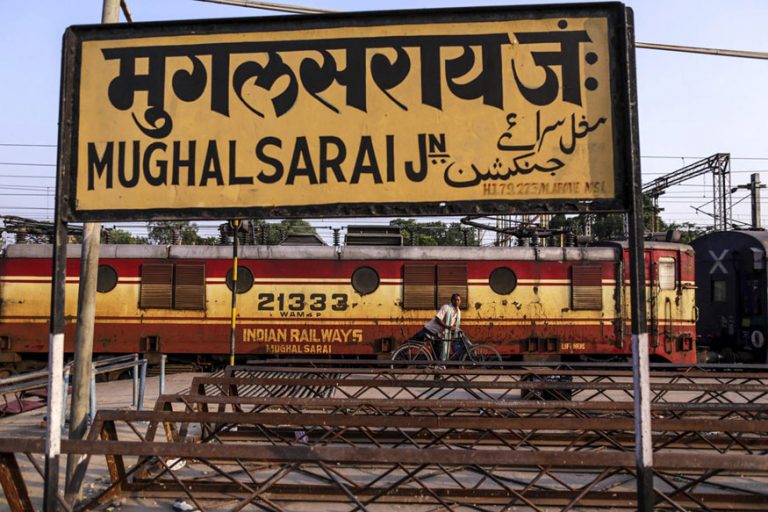
Plan to rename Mughalsarai station meets with strong protests from SP and BSP

0

The Ministry of Home Affairs on of 4th August approved the renaming of Mughalsarai railway station in Uttar Pradesh to Pandit Deen Dayal Upadhyaya Nagar station. This name change is based on a proposal of the Yogi Government.

This station was established in 1862 when East India Company linked Howrah to Delhi by rail. It is most well known for housing a railways marshalling yard which is the largest in Asia. This station is surrounded by a town which goes by the same name.

This name change is understood to be a tribute to Pandit Upadhyaya the Jan Sangh leader and proponent of the “Integral Humanism” philosophy. Pandit Upadhyaya was found dead in mysterious circumstances on the platform of the Mughalsarai Junction in 1968.

It was in June that the Yogi Government had given its green signal to the renaming of the station and had then requested an NOC from the Home Ministry regarding it in July. Reportedly the UP government in its proposal had cited the mysterious death of Upadhyaya on the station as one of the key reasons to rename it.

In order to pave the path for a smooth transition, the Home Ministry instructed the Railways to make changes to its records so as to create no hassles for the passengers. They also informed the Intelligence Bureau, Geographical Survey of India, Department of Posts, Ministry of Earth Sciences about the proposed change.

Now it turns out that not everyone is happy about the decision and it resulted in strong protests from the SP and the BSP in the Rajya Sabha yesterday.

The parties claimed that the government was forcibly trying to change UP’s geography and that the name was ages old. They also alleged that Upadhyaya had no role in the freedom struggle. The SP members were soon joined by their BSP counterparts during the protest after which they started to chant slogans and created a ruckus.

Their arguments were countered by MOS for Parliamentary Affairs Mukhtar Abbas Naqvi who stated that the opposition parties wanted stations to be named after the Mughals instead of Upadhyaya, who he described as a great thinker.

The SP member also reportedly tried to make fallacious arguments to justify their decision by claiming that no railway station in India was named after any personality. This clearly isn’t true as Chhatrapati Shivaji Terminus in Mumbai is already one such station. Also it isn’t the only time a railway station has been renamed in honour of a personality. Just in 2009 the Gomoh Junction in Jharkhand was renamed to Netaji Subhas Chandra Bose Gomoh railway station.

Also according to latest reports, the protests might be a bit misplaced as Mughalsarai wasn’t even the original name of the area. The report claimed that the town was in the past named Mughalchak, Mangalpur and Oven Nagar. It only received its existing name when the railways made their station a junction in 1883.

This stance of the SP and BSP against this renaming might be a bit perplexing, as they themselves were very active in renaming things when they were in power. In 2012 it was reported how both these parties were on opposing sides when the SP had renamed 8 districts which incidentally were earlier named by Mayawati when she was in power.

Bollywood stars under scanner for service tax payment discrepancies

0

In the Comptroller and Auditor General report tabled in the Parliament on Friday, as many as 156 cases of non-compliance of rules and short payment of service tax with revenue implication exceeding Rs. 50 crore have been detected.

Amongst the 156 defaulters, feature a number of Bollywood stars including Salman Khan, Ajay Devgn, Ranbir Kapoor, Riteish Deshmukh and Arjun Rampal.

“During the examination of records of Khan, Rampal, Deshmukh and Devgn, we observed from the agreements between producer and actors that the producers, being service recipients, agreed to provide for and bear expenses relating to arrangement of the services for travel, lodging and boarding of the make-up artist, hair stylist and spot boy,” the CAG report said. The value of this additional consideration was not included in taxable value of the assessees.

Elaborating the report, the CAG noted that in case of Ranbir Kapoor, “We noticed two instances where for the same film shot in India and abroad, the payment for the portion shot abroad was arranged from foreign companies, thereby the service was made to look as export of service with no tax liability.”

The report further added, “Kapoor acted in the movie ‘Ae Dil Hai Mushkil’ produced by Dharma Productions Pvt Ltd, shot both in India and New York. He received a consideration of Rs 6.75 crore from a foreign company, ADHM Films Ltd. (UK), based in London for the film shot in UK and did not pay service tax of Rs 83.43 lakh treating the same as export of services.”

While show-cause notices have been sent to actors like Rampal, Devgn and Deshmukh, the department has not clarified whether any action has been initiated against Salman Khan for short payment of service tax.

Rahul’s Day Out : Congress Vice President’s Gujarat tour creates political ripples

0

Congress Vice President Rahul Gandhi today visited the flood victims in Banaskantha, Gujarat, a week after one of the worst floods hit the state in almost a decade. Before visiting Gujarat, Gandhi had a brief stopover at yet another flood affected area in Jalore, Rajasthan where he toured the area by road.

He then steered his helicopter towards Dhanera in Banaskantha, Gujarat. Interestingly, Dhanera MLA, Joitabhai Patel is one of the 44 Congress MLA vacationing in Bengaluru’s Eagleton resort. All 4 Congress MLAs from Banaskantha are holed up in the resort, where karaoke parties are reportedly being organised.

Ironically, Rahul Gandhi then tried to assure people of Gujarat that Congress party is with Gujaratis.


Evidently, people are angry at their elected representatives abandoning them in their hour of need. Angry people protested his visit by showing black flags, to which, Rahul Gandhi, being as calm as cucumber, said he is not bothered by the act of people who are actually scared.

If only he had carried theplas cooked by the specially flown Gujarati chef for 44 Gujarat Congress MLAs for these people, they might not be so scared or unhappy maybe.

However, things got a bit ugly when stones were reportedly pelted at Rahul Gandhi’s car in Banaskantha, which Congress quickly blamed on the BJP:


Responding to allegation that the BJP was behind the attacks, Gujarat Deputy Chief Minister Nitin Patel said Congress VP refused to drive around in a bullet proof car offered by the state government, as per protocol, and chose to travel in a normal car:


Political temperature rose further as in a series of tweets, Gujarat CM Vijay Rupani, referring to Congress VP as “perpetual tourist”, hit it out on Congress and accused the party of having anti-people and anti-Gujarat mindset:

It is interesting to note here that 3 Rajya Sabha seats are up for reelection in Gujarat and one of the seats is of Ahmed Patel, political adviser to Congress President Sonia Gandhi. BJP has fielded BJP President Amit Shah and Smriti Irani. BJP has also fielded Balwantsinh Rajput, a former Congress MLA who defected and joined the BJP last week. With this, politics has taken center-stage in the state, even though assembly elections are a few months away.

Hindustan Times’ Hate Tracker: A classic case of how media peddles an agenda

0

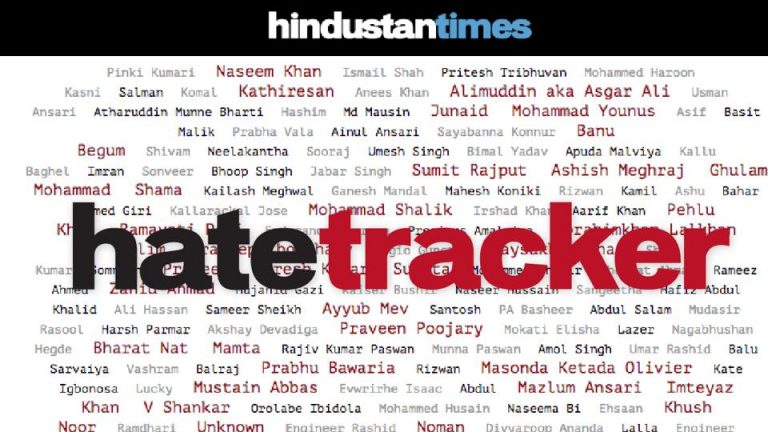
On 28th July, 2017, Hindustan Times introduced a “Hate Tracker” which is “a national database on crimes in the name of religion, caste, race”. They even have an option where you could “submit” a hate “incident” which shall be added to their database only if it meets their “editorial criteria”. Interestingly, their source till now has only been articles published by Hindustan Times.

Since little over three years, the Indian media has woken up to “hate crimes” or “identity-based hate crimes” in India. There can be no justification for any sort of hate crime. On similar lines, there should be no discrimination in reporting hate crimes. But it seems expecting fairness in reporting news by reputed media houses is also too much to ask for.

The “hate tracker” reports 14 “hate crimes” for the month of July 2017. They have reported articles where majority of the “victims” are Muslims and Dalits.

There’s a catch, though.

Hate crimes against people belonging to certain political or religious inclination are conveniently ignored, and so are crimes perpetrated by people belonging to certain political or religious ideology.

Scientist and columnist Anand Ranganathan was one of the first one to spot and point out this obvious bias. His thread on Twitter exposes this chicanery by Hindustan Times:


Frankly this is not surprising since there has always been a section of “liberals” who even denied that a mob attacked the train in Godhra where 59 Hindu karsevaks returning from Ayodhya were burnt alive.

Speaking of hate crimes against people belonging to certain religion, which failed to make it to Hindustan Times’ database, here are a few of those:

On 31st July, 2017, a group of Kanwariyas were attacked. Kanwariyas are Shiva disciples who make annual pilgrimages to various places in Uttar Pradesh, Uttarakhand, Jharkhand and Bihar to fetch holy water of Ganga river. The holy month of Shravan is when the pilgrimage is undertaken. This is not included in the “hate tracker” of Hindustan Times.

Attack on Kaanwariyas because of their faith is not rare actually, however you would believe that it does not exist if you look at Hindustan Times “database”. In July itself, many such incidents were reported, including the one in Bareilly of Uttar Pradesh where Muslims attacked kaanwariyas for passing through “their area”.

While we are on the topic of attacks on Hindu pilgrims, conveniently ignored by the “hate tracker”, remember Amarnath Yatra Attacks on the first day of holy Shravan? It was not “hateful” enough to be part of the “hate tracker”.

Then on 2nd July, 2017, in Pilibhit, Uttar Pradesh, a personal fight turned communal when one Kamil Raza and his friends threw casteist slurs at one Sunil and his friends who belong to the Dalit community. On 7th July, 2017, in Meerut, Uttar Pradesh, youth belonging to Muslim community attacked youth belonging to Dalit community, following which there was communal tension in the area. Even though these crimes have overtly communal elements, they couldn’t find their way into the Hindustan Times “database” which might well be quoted by international organisations soon. That’s how the “ecosystem” works.

And these are the incidents from just last few weeks. Since the “Hate Tracker” is tracking hate crimes since September, 2015, here are some of the crimes they missed. In November, 2015, 23 year old Gaurav was killed in an alleged scuffle with his Muslim neighbours who objected to Diwali firecrackers. In January, 2016, 17 year old Saavan Rathod was burnt alive by Muslims after he identified himself as a Hindu — a typical hate crime, ignored by Hindustan Times.

The hate is not just limited when victims are Hindus. Earlier in March, one H. Farooq, who identified himself as an atheist and a free thinker, was killed by radical Muslim group, and ignored by HT.

Hindustan Times “Hate Tracker” not only ignores hate crimes based on caste and religion, but also political ideologies. On 29th July, 2017, Rajesh, an RSS worker in Kerala, was hacked to death allegedly by CPM (Communist Party of India-Marxist) workers. Similarly, in January, 2017, a BJP worker, Ezhuthan Santhosh, was killed by suspected communists. And these are two of the dozens of murders of RSS/BJP workers in Kerala allegedly by CPM workers.

Nope, not hateful enough to be part of the “Hate Tracker”.

Why is just selective hate being tracked and documented? As a media organisation, which has taken the onus upon itself to hold the government accountable to eliminate hate crimes, why is the outrage one sided? Who benefits from this whitewashing of crimes against Hindus?

As a citizen, I feel betrayed by the media houses for not showing me the balanced, true and fair picture.

PTI misleads again, know the truth about ‘mandatory’ Aadhar for death certificate

Earlier today, news agency PTI (Press Trust of India) sent out an update that suggested that having an Aadhar card was mandatory for getting a death certificate from October onward this year:


//platform.twitter.com/widgets.jsIn absence of any details, and the way the update was worded, people thought that a person dying must have got an Aadhar number, or death of such a person will not be registered. Soon, Twitter was full of such jibes and jokes:


However, of late, PTI has developed a dubious distinction of spreading half-truths or fake news. Recently, it had spread misleading claim about Defence Minister planning surgical strikes due to an “insulting question” by a journalist, then it spread fake news about Yogi Adityanath government drastically reducing education budget, and only last month, it spread old pics of Chennai airport as those of Ahmedabad airport, for which they even drew flak from Information & Broadcasting Minister Smriti Irani.

And yet again, PTI was not exactly accurate.

On closer look of the press release issued by the Home Ministry, it becomes clear that the claim of Aadhar number being “mandatory” was misleading. Not only that, the step was not as regressive or void of logic as it may sound (this of course is beyond the basic concerns about privacy).

First let us understand what exactly has the government said:

  • First of all, it is already mandatory to register birth and death of citizens, and that’s actually a good thing for accurate information and management of human resources of a nation.
  • Nowhere the press release says it is “mandatory” or “must” or “necessary”. The title of the release is “Requirement of Aadhaar number for Registration of Death of an Individual”.
  • Through today’s press release, the government has essentially said that if a deceased person had an Aadhar number or Enrolment ID, the relatives (or the applicant registering the death) should disclose that number or ID to the authorities.
  • In case the person did not have an Aadhar number or had not even enrolled for it, or if the relative or applicant are not aware of the status, the same should be declared by the relatives/applicants in writing by issuing a certificate, wherein they should take responsibility for their declaration.
  • Therefore, even if a person did not have an Aadhar number or enrolment ID, he or she will have their death registered.
  • One line in the press release suggests that the applicant should mention his or her Aadhar number while issuing the certificate/declaration about deceased person not having an Aadhar card. It is not clear what will be done if no one in the family has an Aadhar card. Perhaps the same can be declared in the certificate.
  • Home Ministry has claimed that the objective of this new rule is to ascertain the identity of the deceased person and to smoothen the process. The press release says “it will obviate the need for producing multiple documents to prove the identity of the deceased person.”
  • Another objective, and that is very important, is to prevent identity theft and frauds. The press release says “It will provide an effective method to prevent identity fraud.” One should note that many scams involve using identities of dead persons to withdraw benefits available in government schemes. One such scam was unearthed in Uttar Pradesh in April this year. Thus, by this step, the government wants to ensure that an Aadhar number is not misused for such scams once a person has passed away.

Haraam or Halaal: Zakir Naik’s ready reckoner

0

Every other day a Muslim celebrity gets told by their fans how their acts are un-Islamic. After Mohammad Kaif was trolled for doing Surya Namaskar and playing chess with his son, and Irfan Pathan and Mohammad Shami drew flak for posting photograph of their respective wives on social media and for even celebrating birthdays, the moral police army has shifted aim to non-Indian players to teach them Haraam v Halaal 101 lessons.

Now English cricketer Moeen Ali is the latest celebrity to be reminded that drawing is against Islam. He has discovered that drawing a picture, which he did to raise money for charity, was against Islam.

Now this is tricky. The Muslim celebrities, especially those on Facebook, should know what is allowed and forbidden in Islam. So we’ve got you covered, brothers (and sisters).

Zakir Naik, the legendary intellectual and patron saint of all things halaal (allowed), has given us guidelines which could be followed by these celebs to ensure they do not unintentionally do anything that is haraam (forbidden).

Here are the ten commandments you must follow to avoid being called out on your un-Islamic ways on social media.

1. Thou shalt not listen to music or dance. It leads you to do bad things:

Only dafali is allowed in Islam.

2. Thou shalt not indulge in painting or drawing (yes, Moeen Ali, listen to Naik). Thou shalt not even use photography or videography in ‘wrong’ way as they are modern versions of drawings:

Zakir Naik especially considers it wrong to keep big photographs of celebs in your house. But having his own big photographs on billboards is allowed it seems.

3. Thou shalt not play cricket as it’s a waste of time (Shami, Irfan, Kaif, Moeen, what have you done with your lives?):

Personally, brother Zakir doesn’t say that cricket is haraam, but he doesn’t like the game. Children studying in the school run by his foundation are not allowed to play cricket, as it is waste of time for players as well as those who watch it.

4. Thou shalt not celebrate birthdays or anniversaries:

Celebrating birthday of individual is not haraam, but if it involves music and such things, it is haraam. Celebrating birthdays of celebrities or even religious personalities though is haraam.

5. Thou shalt not wear make up*:

*unless it is for your husband.

6. Thou shalt not send your children to institutions offering co-education:

“Medical college, atmosphere is the worst in terms of breaking the hijab. Only Allah can save you… Examining patients is very dangerous.” – Brother Zakir Naik.

7. Thou shalt not take insurance from modern companies:

Insurance per se is not haraam in Islam, but interest that banks charge on insurance is haraam. You need Islamic banking for ‘right kind of insurance schemes’.

8. Thou shalt not use pirated software (but don’t lose hope, you can in some cases):

Piracy per se is not allowed, but you can use the pirated copies if the companies themselves allow it (?) or if the software is Islamic (?) and not available in your country.

9. Thou shalt not shake hands with someone from the opposite sex:

https://www.youtube.com/watch?v=yL0WGzm0Obs

This is something we would suggest the Muslim men cricketers on Facebook should be careful. If they meet a woman cricketer, who recently are in news for their awesome performance in the recently concluded Women’s World Cup, they should not shake hands with them.

10. Thou shalt not fall in love before marriage, especially girls:

LBW (Love Before Wedding) does not exist in Islam (that term LBW is Zakir Naik’s invention, not ours). “Better to love the girl you marry, than marrying the girl you love” – Brother Zakir Naik.

No matter how noble your intentions are (non noble intentions are haraam to begin with), if the means to attain them are haraam, then it is haraam.

Save yourself from committing the sins and facing the whip on the Day of Judgement.