Home Blog Page 7483

Muslim group says Dr. Kalam was not a Muslim as he prayed to idols and respected gurus

On 27th July, Prime Minister Narendra Modi inaugurated the memorial dedicated to India’s ex-President and ‘missile man’ APJ Abdul Kalam on his 2nd death anniversary. This memorial was built by a dedicated force of 450 workers, who had demanded no extra money even though they had worked for extra time.

An imposing statue of Dr Kalam with a Veena was also installed inside the memorial:

Various groups made it an excuse to create controversy. A Bible and a Quran was placed next to Bhagvat Gita for secularism.

The memorial has unfortunately resulted in various political and fringe groups using it as a pretext to create a religious controversy.

Initially, a Congress leader had questioned the need for putting a Veena in Dr. Kalam’s hand because he was a missile man and not any Veena artist. The truth is that Dr. Kalam was an expert playing that instrument, a fact that seems to have escaped the leader’s knowledge.

Another controversy erupted when political groups like the MDMK started questioning the presence of Bhagwat Gita in the statue. To quell the controversy, family members of Dr. Kalam also placed a copy of the Quran and Bible each to apparently ‘secularise’ things and also promised to place the Thirukkural soon.

This in turn led to a protest from Hindu Makkal Katchi, which lodged a police complaint about the Quran and Bible getting placed near the statue without proper authorisation. They also reportedly protested in front of the memorial which led to the cops removing the two holy books.

Now a Muslim group named Tamil Nadu Thowheed Jamath has decided to take things to a new low by making defamatory personal remarks against Dr. Kalam.

The Jamath claimed that Quran was not needed in front of the statue of Kalam, as he was not a Muslim. The group claimed that Dr. Kalam just had a Muslim name, and not a real Muslim because he apparently prayed to Hindu idols and gurus.

Incidentally, this is not for the first time that Dr. Kalam has been denied a Muslim identity. Way back when he was declared the Presidential candidate by the NDA, senior Congress leader and Muslim scholar Dr. Rafiq Zakaria too had declared that Dr. Kalam can’t be considered a Muslim as his favourite scripture was the Bhagvad Gita, and favourite deity was Krishna.

NIA summons sons of separatist leader Syed Ali Shah Geelani in connection with terror funding probe

On 28th June, the son-in-law of separatist leader Syed Ali Shah Geelani was arrested in connection with the terror funding trail which the agency is investigating. The NIA had made this arrest in order to uncover the possible flow of money from Pakistan, which is in turn used to fuel terrorism in the valley.

Now the agency is again on the trail of Geelani’s aides after it summoned his elder son Naeem Geelani to New Delhi earlier today for questioning. He though failed to honour the summons as he got admitted into the ICU of a Srinagar hospital due to complaints of chest pain. A Hurriyat spokesperson claimed that Naeem has had a recurring heart problem and had suffered a massive heart attack in 2009.

The NIA has now also reportedly decided to summon Naseem Geelani who is the younger son of Geelani on Wednesday.

This isn’t the only time, the sons of Geelani have had a run in with the law. In October 2016, Naeem who is the elder son was arrested by the Jammu & Kashmir police while he was on route to the residence of his father. Even Naseem the younger son was stopped from entering the residence of the separatist leader.

This whole summon exercise might be a case of the NIA firmly tightening the screws on the veteran Hurriyat leader. On Sunday, the agency had raided the house of a Jammu based advocate named Devinder Singh Behl who is believed to be close to Geelani. The raid was reportedly successful as incriminating documents, financial papers and electronic gadgets were seized from the premises. Behl is accused to have acted as a courier for the funds sent from Pakistan to Geelani’s organisation.

Media reports also claim that out of the 7 Hurriyat leaders arrested on 24th July, Ayaz Akbar and Peer Saifullah are believed to be close associates of Geelani.

Muslim villagers protest against suspension of teachers who forced Hindu students to offer Namaz

Two teachers of a government residential school in Mewat district of Haryana, who were accused of forcing 2 Hindu students to offer Namaz, were suspended on 28th July. According to a report published by the Times of India, another teacher who was involved in this coercion has been transferred.

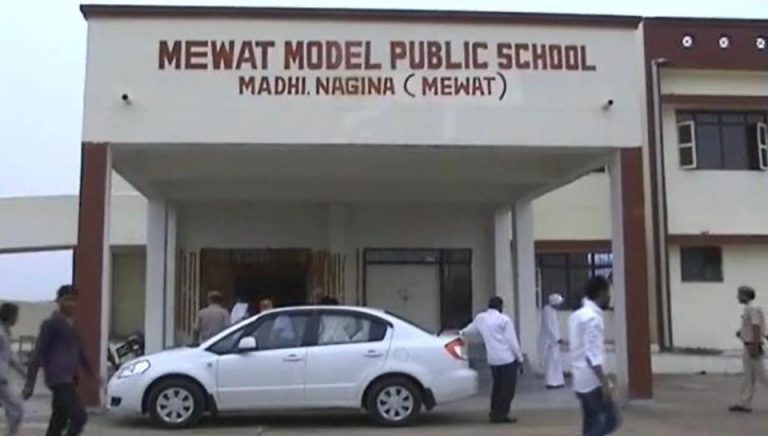
The Mewat Model School in Madhi village has about 207 students and is run by the Mewat Development Agency. The parents of the two Hindu students who study in the VII and IX standard respectively had complained to the school authorities on 22nd July, which led to the constitution of a three member panel led by the district education officer.

According to Shamim Ahmed, who is the project officer of the Mewat Development Agency and the member of the constituted committee, the matter had come to light on 22nd July when the two students asked for a school leaving certificate. The parents had earlier withdrawn the kids from the hostel before complaining against the teachers.

This panel as a result suspended the Computer Science and Urdu teachers. The Social Science teacher, who was also incidentally the hostel warden, was transferred to another school.

Media reports further suggest the concerned teachers had also pressurised the students to convert to Islam. This reportedly happened in the hostel where the boys stayed. The students had also complained to the principle of the school, but he allegedly refused to act in the matter. The report put out the names of the three teachers as Moinuddin, Mubarak Ali and Mohammed Arif.

However, the disciplinary action against the teachers have reportedly caused further problems in the area. Some teachers now allege that on Saturday, the villagers of the Muslim dominated area barged into the school premises blaming them for the action against the Muslim teachers. The villagers implied that the matter should have instead been hushed up. The report claimed that the warden, who was transferred to another school as ‘punishment’, too joined in the protest and blocked the entry of the teachers into the hostel.

Santaram, who teaches arts in the school has claimed that the district administration has imposed a gag order on them and asked them not to interact with the media.

Vande Mataram – the history of Muslim opposition and support

India’s national song Vande Mataram has been mired in debate once again. Following the Madras High Court’s order to make Vande Mataram compulsory in schools and government and private offices, a loathsome politics has been triggered over the national song in Maharashtra.

Citing the Madras High Court Order, BJP MLA Raj Purohit said that the singing of the national song should be made mandatory in schools and colleges across Maharashtra. This proposal, however, was strongly objected by MLAs from AIMIM and Samajwadi Party who called the song “anti-Islam”. MIM MLA Waris Pathan said he won’t sing Vande Mataram even if “someone puts a revolver to his head”. SP MLA and party’s Maharashtra unit president Abu Asim Azmi said he won’t sing the national song even if he is “thrown out of the country”.

Months ago a similar politics was witnessed over the national song when Municipal Corporations of Meerut, Moradabad, Varanasi and Gorakhpur had made the singing of Vande Mataram mandatory at the civic meetings. Muslim members belonging to Congress, SP and BSP had registered their protests.

Ahead of the centenary celebration of the national song in 2006, Islamic seminary Darul Uloom had issued a fatwa describing Vande Mataram as “anti-Islamic”. In 2009, Jamiat had issued another  fatwa against the national song.

In 2013, the then BSP MP Shafiqur Rahman had walked out of the Lok Sabha when Vande Mataram was being sung.

These are some recent incidents, but the opposition to Vande Mataram dates back to the pre-independence era.

When Muslim League opposed Vande Mataram

The separatist agenda of Muslim League had opposed Vande Mataram. The year was 1909. Speaking at the second national session of Muslim League in Amritsar, the then party president Syed Ali Imam had termed Vande Mataram a “sectarian cry” while decrying the festival of Raksha Bandhan as “sectarian” in the same breath.

Three decades later, Mohammad Ali Jinnah, who partitioned the country on religion lines, echoed similar views in an article dated 1 March, 1938, published in The New Times of Lahore:

“Muslims all over India have refused to accept Vande Mataram or any expurgated edition of the anti-Muslim song as a binding national anthem.”

What is the controversy about?

Vande Mataram, which means “I praise thee Mother” or “I bow to thee Mother”, is an ode to Mother India. The song envisions all citizens as its children. Because the song is an ode to Mother India, some Muslim politicians and maulvis – who claim to represent the Muslim voice – argue that singing of Vande Mataram is against the “tenets of Islam” and a “sacrilege against Allah” because a Muslim can bow to only Allah and no one else.

This opposition is more about political muscle flexing — unfortunately supported by so-called secular politicians — than religious beliefs, because many Muslim politicians and scholars have supported the song.

Muslims support Vande Mataram?

Well known Muslim scholar and noted freedom fighter Maulana Abul Kalam Azad saw a “fusion of endogenic creativity”, Islamic doctrines of “Wahdat-e-Deen” (Unity of religion) and “Sulah-e-Kul” (Universal peace) in Vande Mataram. Pertinent to mention that when Azad was the Congress president, Vande Mataram was sung in each and every session of the party.

Rafi Ahmad Kidwai, a prominent Muslim leader who worked as the Minister for Communications in Jawaharlal Nehru Cabinet, had also strongly defended Vande Mataram.

Author and activist Arif Mohammed Khan, who was also a long-time Member of the Parliament, had translated Vande Mataram in Urdu. In a 2006 article in Outlook, Khan wrote:

“The opposition to Vande Mataram came from the Muslim League, which under the leadership of Mohammad Ali Jinnah had developed a different attitude from those of nationalists on the question of India’s freedom from foreign rule. 

I have no doubt that opposition to Vande Mataram is not rooted in religion but in divisive politics that led to Partition. 

Those who persist in their opposition are actually negating a constitutional ideal. After all, the Constitution is not merely an exercise in semantics but expression of the people’s national faith.”

 Tearing into the blabber that “Vande Mataram is anti-Islamic”, Khan said:

“From the Islamic viewpoint, the basic yardstick of an action is Innamal Aamalu Binnyat (action depends on intention). Hailing or saluting Motherland or singing its beauty and beneficence is not sajda.”

Noted educationist Firoz Bakht Ahmed wrote in a 2006 article in The Pioneer:

“The melody, the thought content and the ambience of patriotism of Vande Mataram is unmatchable. It is high time that the so-called Muslim leaders stopped politicising the issue of Vande Mataram to promote their mucky politics.

 As a Muslim, I would like to convey a message to all my countrymen and especially my own community that some politically motivated people are trying to make an emotive issue out of Vande Mataram, a gem of a song and perhaps the song that in my view should have been the national anthem in place of Jana gana mana…”

And of course, music maestro AR Rahman, through his music album Ma Tujhe Salam, gave Vande Mataram a new dimension.

Vande Mataram – A brief history

It is important to revisit the history of Vande Mataram and understand its relevance in order to get the right perspective. Bankim Chandra Chatterjee penned the evocative song in 1870s, which he later included in his novel Anandmath published in 1882.

Sri Aurobindo called Vande Mataram as the mantra of the “new religion of patriotism”. Soon the song emerged as a hymn for Indian Independence Movement. From Mahatma Gandhi to Shubhash Chandra Bose, Vande Mataram was a mantra in the struggle for India’s independence.

Mahatma Gandhi associated the song with the “purest national spirit”. In an article dated 1 July, 1939, published in Harijan journal, Gandhi wrote:

“It was an anti-imperialist cry. As a lad, when I knew nothing of Anandamath or even Bankim, its immortal author, Vande Mataram had gripped me, and when I first heard it sung it had enthralled me. I associated the purest national spirit with it. It never occurred to me that it was a Hindu song or meant only for Hindus… It stirs to its depth the patriotism of millions. Its chosen stanzas are Bengal’s gift among many others to the whole nation.”

Pre-independence Indian society left no stones unturned in its endeavours to make Vande Mataram into a national slogan, reaching as far as England.

In the book Glorious thoughts of Tagore, a chapter called ‘Sandip’s Story’ has a very beautiful connotation on Vande Mataram. Referring to the protagonist of the story, Rabindranath Tagore wrote:

“Vande Mataram! These are the magic words which will open the door of his iron safe, break through the walls of his strong room, and confound the hearts of those who are disloyal to its call to say Vande Mataram.”

It was Congress which adopted Vande Mataram as the national song at its Varanasi Session on 7 September, 1905. On the first such political occasion, it was Rabindranath Tagore who sang Vande Mataram at 1896 Congress Session in Calcutta (now Kolkata). Five years later, Dakhina Charan Sen sang it in another session of Congress at Kolkata.

Lala Lajpat Rai started an Urdu weekly in the name of Vande Mataram from Lahore. Bipin Chandra Pal had founded a newspaper called Bande Mataram in 1905, which was later edited by Sri Aurobindo. An editorial in the newspaper exhorted:

“In every village, every town Anandamath must be established. Then the Mother’s name will be uttered by crores of throats and every side will resound Vande Mataram.”

In 1907, Bhikaiji Cama unfurled the first version of India’s national flag at Stuttgart, Germany with Vande Mataram written on its middle band. Matangini Hazra’s last words, as she was shot to death by the British Police, were Vande Mataram.

In Independent India, the first two stanzas of the song was declared as the national song by the Constituent Assembly on 24 January, 1950. While presiding over the Constituent Assembly, Dr Rajendra Prasad – the first President of India – had said:

“…The song Vande Mataram, which has played a historic part in the struggle for Indian freedom, shall be honoured equally with Jana Gana Mana and shall have equal status with it.”

While making a statement to the Legislative Committee of the Constituent Assembly on August 25, 1948, first Prime Minister of India Jawaharlal Nehru had said:

“Vande Mataram is obviously and indisputably the premier national song of India, with a great historical tradition, and intimately connected with our struggle for freedom. That position it is bound to retain and no other song can displace it. It represents the position and poignancy of that struggle, but perhaps not so much the culmination of it.”

Postscript

The history of Vande Mataram clearly shows that it is actually the opposition to the song that is sectarian and not the song itself. Those who espoused opposition to the song finally ended up demanding a separate nation for Muslims in Pakistan. Unfortunately, the same demand today passes off as “secularism”.

If social media had not supported Indu Sarkar, I’d have gone into depression: Madhur Bhandarkar

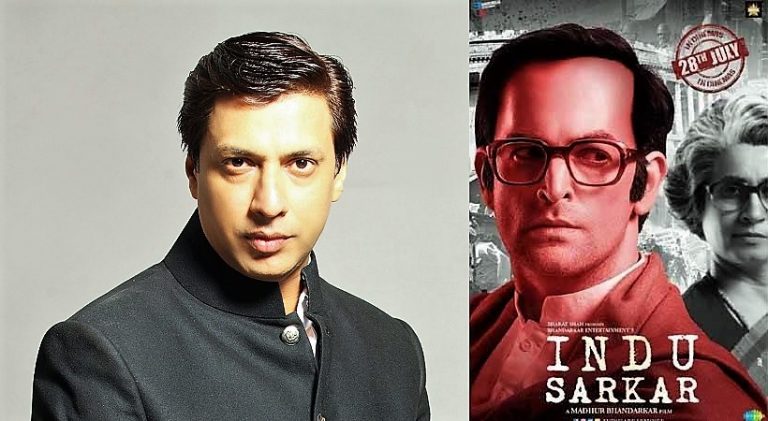
This Friday, Indu Sarkar, a movie by producer-director Madhur Bhandarkar released. The movie has Emergency as the setting and tells the story of those times.

Congress workers and supporters have been trying to bring down the movie – from spreading lies against it to stopping its screenings – and that has left Madhur Bhandarkar fighting a lonely battle as not many people came out in support.

I had a small conversation with Mr. Bhandarkar regarding the movie and his experience in wake of all this controversy. Here are the highlights of that interview:

***

What motivated you to make a movie based on the Emergency?

I made this movie because I feel this generation isn’t aware of the period of the Emergency. Also, I have always been the kind of movie maker to make realistic, hard hitting movies. The backdrop of my movies have always been that way. I wanted to do a period film based in the era of the 1970s and what better than to make it in the backdrop of the Emergency, a topic largely untouched by Bollywood.

Once you had decided to make a movie based on the Emergency, how did you go about conducting your research?

Well, I met a lot of people from that era, especially the people who were marginalized and terrorized and their families. I even spoke to a lot of people who were held under MISA. I also read the Shah commission report to better acquaint myself with what the situation at the time was. I went through books written about the Emergency, newspapers and also a lot of material from the Nehru memorial library.

When you were interviewing the people who really felt the brunt of the Emergency, was there any story that really stood out for you? Perhaps something that moved you emotionally?

I haven’t met George Fernandes, but how he was arrested, tortured, with his nails being removed etc., stayed with me. I read about his ordeal and though I couldn’t put it in the movie, it really touched me and gave a sense of how bad things really were during the Emergency. There were lots of other things as well. Like how Kishore Kumar was banned and he had to give an undertaking before the ban was removed. The sterilization program and how harshly it was conducted. These things really stayed with me.

Coming to the movie, it is a relatively smaller budget movie. Why is that?

Oh yes. My budget was almost as much an average Bollywood movie’s costume budget, and it was deliberate. My budget has always been controlled and that’s my USP. I generally tell me stories through relative newcomers. Even for Indu Sarkar, I haven’t engaged any big stars.

With Indu Sarkar, the posters were released very recently and the marketing of the movie also started very late. Any particular reason? Was there fear of disruption during shooting?

No no, there was no fear. I don’t get scared easy. I have always made hard hitting films that have offended someone or the other. Be it Fashion, Chandni Bar or Traffic Signal. I have always been fearless in terms of my stories and concepts and there have always been people who think I’m trying to rub them the wrong way. See, Indu Sarkar is a human story, and the Emergency is only the backdrop.

But people came to know about a movie on Emergency only when posters came out and by then the production was almost complete. Was it deliberate to avoid issues during filming?

There were talks even earlier that I’m making a movie based on the Emergency (though they didn’t make headlines), the posters releasing late was a marketing strategy. Definitely not because I was scared of disruption during filming, as I said, I don’t scare easy.

Considering the current situation, I’ve wondered if the threats start coming in when word got out that you are making a movie with the Emergency as the backdrop or did it start trickling in later, closer to the release?

See, I was aware what was happening. As a film maker, I have friends across the political spectrum. But yes, the whole thing started when word got out that I was making a movie with the Emergency as the backdrop. The moment they heard, they thought it was a political film so the threats and intimidation started. In fact, I got some calls from my well-wishers in Congress also asking me why I would want to make a film that would create trouble for me and would upset people.

The thing is, in 2014, when the entire film fraternity went on a platform and started an anti Narendra Modi tirade, I was the one, along with Lata didi, Kher sahab etc. who stood up and said Narendra Modi should become the Prime Minister of India. From that moment onwards, there is a certain hostility towards me in the film industry.

That would seem so. I remember you were in a debate with Sagarika Ghose in the panel and she accused you of staying silent when Karan Johar, or Anurag Kashyap were attacked. This was of course a lie. You had spoken up for their rights and movies.

Oh absolutely, I have always stood up for my fraternity. Whether it was Aye Dil Hain Mushkil or Udta Punjab. In fact, people had put up screenshots of my tweet because some ignorant people made claims about my silence. It was necessary to educate them.

So did you feel bad, that the people you had stood up for, like Karan Johar, Anurag Kashyap, Bhansali, didn’t speak up for you when you needed the fraternity’s support the most?

Oh yes, I had spoken up for Mr Bhansali also, and it was very unfortunate that none of these people, and the entire film fraternity, bothered to stand up for me. When I was gheraoed at Poona and then again in Nagpur where I had to cancel my press conference, it was scary. A Congress leader announced 1 lakh rupees award for anyone who blackens my face!

See, I knew the film industry makes fluff movies and it’s a very shallow and superficial industry for the most part of it, but I did think they would voice support; if not for me then for my freedom of expression. I genuinely thought they would stand for my right to make this film, because today it’s me, tomorrow it might be someone else, but I was disappointed. This selectivity in the film industry is very unfortunate.

But why do you think this happened? Do you think it’s because you took a stand for Narendra Modi when industry stalwarts like Mahesh Bhatt and company were against the PM? Or do you think it was because of this specific topic?

Other than the topic, I have always been seen as a Modi supporter and I have always been very vocal about my political preference. Through this interview, I would also like to clarify one thing. Many people said that I was given a Padma Shri by the Modi government. Let me put it on record, that my Padma Shri was recommended by UPA ministers and the UPA government. It was recommended in 2013, and I eventually got it in 2016.

So it was not by the Narendra Modi government?

Absolutely not. Now tell me, after winning national awards (before Modi took over) and also international awards, am I not eligible for a Padma Shri? That’s why I had asked some media persons to do their homework. My award was recommended by the Congress led government and not the Modi government, and regardless, I was eligible to get the award.

A section of the media has given raving reviews for your movie. But there is another section that has given terrible reviews. Do you think that’s because of your political leanings?

Yes. a large section has given excellent reviews. But the “award wapi gang” has gone hammer and tongs after it. More than the movie, they are attacking me personally. They are saying things like he is a Sanghi, or that I am looking at the movie through a “right wing prism” or that I have timed my movie to benefit politically. Their vengeance is evident against me, and it is completely because of my vocal support of Narendra Modi.

When the award wapsi brigade started, I was completely against it (Mr. Bhandarkar was one of the organizers of #MarchForIndia protest against award wapsi drama). I asked them where were they when in Kolkata Book Festival Tasleema Nasreen’s book was removed? Or when Salman Rushdie wasn’t allowed to even speak via video conferencing in the Jaipur lit fest? I asked them where was their voice when they should have supported Shereen Dalvi? None of these people came in support.

Well, none of them have come in your support either. There has been a lot of commotion since yesterday with Congress hooligans protesting in front of theatres and disrupting screening of the movies

Exactly. They’re scaring the audience from going to watch the movie. I wish I could ask Congress why they want to disrupt a movie that has been legitimately been passed by the censor board. When you read the reviews, you realize its pure vengeance. In fact, it’s laughable when they say it’s a propaganda movie. If I had to do that, I would have released the movie closer to elections and not now. All this is just very sad. Reviewers should review a movie genuinely. We work very hard for its completion.

So basically, you are saying they are doing exactly what they are accusing you of!

Yes. I think they were waiting for the movie to release so they could start printing their prejudiced reviews. They had already made up their mind about this movie. Judging from the personal attacks, I suspect some reviews had already been written before the movie released. That their level of vengeance. They say I’ve made the movie from a right wing perspective, I think they should go read some books and read the Shah commission report.

Was there any pressure from the distributors? Any distributor that refused to run with this movie because of its backdrop?

Nothing like that. But after everything that’s been happening since Friday, some people refused to screen the film because all the ruckus being created by Congress hooligans. Nobody wants business to be affected. Also, because of such hooliganism, cine goers also get scared. Word of unrest and shows getting cancelled spreads fast these days and force people to stay away from the movie. I am guessing these are all local level karyakartas looking for their moment of fame.

It’s been a while since such hooliganism has been happening. Did you receive any call from the upper echelons of the Congress party assuring you that they will support your freedom of expression and that no harm would befall you?

None. Not even one. This is the same Congress party that talks about freedom of expression and women empowerment. And today, they are obstructing a movie that has women centric protagonists. They went to the Censor board and fought for Udta Punjab and today, their duplicity has been completely exposed.

You, in fact, tweeted to Rahul Gandhi…

I was held captive in a hotel for over 3 hours because of a mob. It was all very unnerving. I had to change 3 cars just to get to the airport because there were people chasing us. That’s why I tweeted to Rahul Gandhi. I thought he is a young guy who will understand the problem and instruct his karyakartas to back off.

And you got any response?

None. Even my friends in Congress have tried to distance themselves from me. I understand their compulsions.

So who has really stood with you in this entire ordeal?

Some friends like Ashoke Pandit, Kher sahab etc. And of course, Social Media. Through you, I would genuinely like to thank the people on Social Media because these are the people who gave me the energy to go on. Had social media not been there for me, I think I would have gone into depression. I was fighting on all fronts. Hooliganism, sponsors, courts; every day was a battle. I don’t scare easy, perhaps that’s why I could survive. Nobody from even my own fraternity came for support.

Did you call anyone for support?

No. I knew I was going to be fighting a lone battle. I’m a very shy person when it comes to these things. In my career, I have been a one man show. I don’t belong to any coterie and don’t have too many friends in Bollywood. I do what I think is right.

Recently, there was a storm about nepotism in Bollywood. Do you think that plays a role in you being the proverbial cheese that stands alone?

 Absolutely. That might also be one of the reasons. I don’t come from a film family and I come from a middle class family who has struggled a lot to get where I am today.

So you are stuck between two nepotistic industries?

Yes. You can say that. And I can fight my own battles, that’s okay. I just hope people judge the movie and not resort to personal attacks. Though I give it back as good as I get.

There was one review that subtly accused you of being misogynistic. Saying that the antagonist in your movie if generally powerful, successful, evil and manipulative, while the protagonist if an innocent woman who first gets misled and then finds their true voice and that you never bother to show the journey of the antagonist. What do you say to that?

Firstly, Indu Sarkar is not a biopic. It’s about a poetess called Indu and her journey. Secondly, I have made my entire career on women centric movies, they should first see my movies before commenting. Like in Satta, Raveena Tandon’s character was of a fierce politician while in Chandni Bar the protagonist was very submissive. I think women have different shades in their personality and any artist who deals with women centric topics, has to understand all shades of a woman’s personality. Though since I haven’t read the article, I can’t comment on this particular review too much.

Considering all the drama, would you continue to make such controversial movies in the future?

Absolutely. I will make the movies that appeal to me. I will be back to making movies after taking a break for a while.

Any message to your Bollywood comrades who have kept silence through it all and continue to keep silent today?

I’m not surprised. I tweeted to you, didn’t I… “Kitne ajeeb rishte hain yaha pe..”

DRDO develops India’s first indigenous unmanned tank

In a big boost to India’s defence capabilities, the DRDO has developed India’s first unmanned remotely operated tank. The tank named Muntra was rolled out of DRDO’s Chennai lab. Muntra is incidentally an acronym and it stands for Mission UNmanned TRAcked.

This tank can chiefly be used in three ways that are surveillance, mine detection and reconnaissance. It can also operate in areas which have nuclear and bio hazards. So three versions of the tank have been created, which are Mudra-S, Mudra-M and Mudra-N which would be used for surveillance, mine detection and nuclear affected areas respectively.

This tank has specially been made for the army but the paramilitary too has expressed interest in using it in Naxal infested areas. This vehicle has already been tested by the Combat Vehicles Research and Development Establishment (CVRDE) in Avadi.

Two such unmanned tanks were kept on display at an exhibition at Avadi in Chennai, named Science for Soldiers which was a tribute to Late President APJ Abdul Kalam.

Some of the features of the tank include, a surveillance radar, an integrated camera along with laser range finder which has a whooping 15 KM range. It can also smoothly function in temperatures of about 52º Celsius.

Apart from these tanks, the DRDO also showcased some other cutting edge equipment it has developed. The inventions include a handheld wall penetration radar which when placed on a wall would be able to project the presence of people on the other side of it, helmet-mounted night vision, nano-driven thermal and electromagnetic protection which acts as a shield against electromagnetic attack to name a few.

According to the report, the DRDO via the exhibition wanted to improve the morale of its employees and change the negative perception which the government allegedly has towards the organisation.

DRDO’s chairman S Christopher stated that if the organisation manages to generate Rs 5 lakh crores in the next 5 years it would no longer have to depend on the government for funds.

In order to do that they are considering exporting some weapons which are now redundant for the Indian army(due to its acquisition of newer versions). These redundant weapons though are still good enough for some countries who incidentally have shown interest.


2 SP legislators quit the party after being discontent with Akhilesh’s leadership

In a setback to Akhilesh Yadav, two members of UP Legislative Council belonging to the Samajwadi Party, resigned from the party today citing growing lack of confidence in the party leadership.

The SP MLCs who have quit the party are Bukkal Nawab and Yashwant Singh. Even a BSP MLC Jaiveer Singh has reportedly decided to quit his party.

After tendering his resignation, MLC Bukkal Nawab – who is also the founder of Rashtriya Shia Samaj – showered praise on Prime Minister Narendra Modi and Uttar Pradesh Chief Minister Yogi Adityanath. He stated that:

Bharatiya Janata Party (BJP) is doing good work and PM Modi has given a good slogan of ”Sabka Sath, Sabka Vikas”. If they invite, then I might go with BJP. Yogi is also doing a good job in the state. At least there has not been any scam yet

Nawab who belonged to the Mulayam camp looked like using the pretext of the alleged family feud to justify his decision, “I was feeling very suffocated since last one-year. When Akhilesh is not with his own father, how he can be with the people of UP.”

Nawab also quipped that Samajwadi Party has turned into “akhadaa” under Akhilesh Yadav’s leadership and the party should be renamed as ‘Samajwadi Akhaada’.

Interestingly, the resignation of the SP MLCs came on a day when BJP president Amit Shah reached Lucknow on a three-day visit to the state. Shah is scheduled to meet Chief Minister Yogi Adityanath and his cabinet, senior BJP leaders in the state and the RSS functionaries.

The resignation of these MLCs has cleared the path for the election of UP Chief Minister Yogi Adityanath and Deputy Chief Minister Keshav Prasad Maurya to get elected to the Legislative Council. This way they won’t need to fight an election and become an MLA. But it would be interesting to see which route the BJP leaders choose to take.

It is also noteworthy that the SP currently holds the majority in the 100-member Legislative Council with 66(now 62) MLCs and the BJP just holds 8. So this resignations are unlikely to make any dent in the SP’s presence in the council.


Man breaks Lord Shiva’s idol, asks why stop him if Aamir Khan was ‘allowed’ in PK

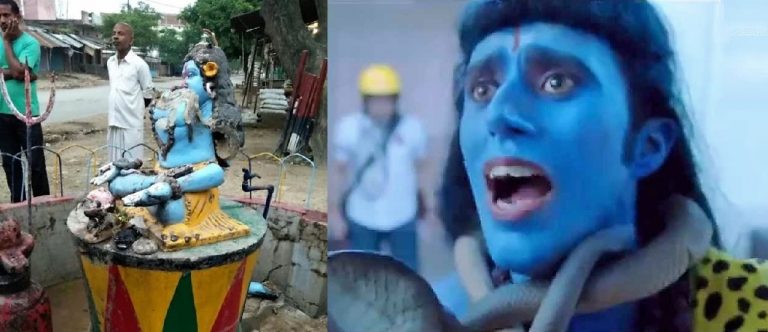
On Wednesday night, some unidentified elements were reported to have vandalised an old idol of Lord Shiva situated at Rani Ki Sarai area of Azamgarh district in Uttar Pradesh. The idol was installed in 1984 and locals used to offer their prayers there. They were angered when they discovered the vandalised idol on Thursday morning.

The angry locals demanded the police to arrest the culprits as well as install a new idol of Lord Shiva. The local administration accepted both the demands and on Friday morning a man named Chandrakant Saroj was arrested on charges of vandalising the idol. Police claims that he is mentally unsound and had vandalised another Shiva idol in the same area earlier this month.

Local media reports suggest that the man, described mentally unsound, was arguing with the police and local people justifying his acts. He is reported to have argued that if people did not protest against Aamir Khan’s (on-screen) deeds in the movie PK, why should his acts be opposed?

For the uninitiated, a man wearing the costume of Lord Shiva was seen being scared of Aamir Khan’s character in the movie PK, which was a satirical commentary on many religious beliefs. Many argued that the movie was against idol worship too, though that is a matter of interpretation.

However, the deeds of this man may not be entirely ‘inspired’ by PK, because he is being claimed mentally unstable by the police and even by his family members, who say that he has picked up ‘enmity’ with the god, especially Lord Shiva, because of series of misfortunes in his personal life.

Incidentally, this is not the only incident of Lord Shiva’s idol being broken in Uttar Pradesh when the holy month of Shraavan is going on. A cursory look at Hindi newspapers throw up at least 8 incidents of Lord Shiva’s idols being desecrated in different cities of Uttar Pradesh in the ongoing month. This is in addition to various incidents of other Hindu gods or goddesses’ idols also being desecrated or such incidents taking place in earlier months in Uttar Pradesh or in other states of India.

Apart from Azamgarh, Moradabad, Meerut, Jhansi, Farrukhabad, Kannauj, and Kanpur are some of the cities witnessing desecration of Lord Shiva’s idols in the current month. Coincidentally, police had claimed mentally unsound guys behind half of these vandalism incidents, though at least one such claim was disputed. Apart from desecration of Lord Shiva idols, this month has also seen attack on kaanvariyas, the shiva devotees, in Uttar Pradesh.

BJP office attacked by CPM workers in Kerala, cops suspended for inaction

In the wee hours of Friday, the BJP’s state committee office in Trivandrum, Kerala was attacked by CPM goons, during which most of the policemen, who were tasked with its security, appeared to remain mere bystanders. Similar attacks on properties owned by BJP karyakartas were also reported by the party in Veeranakavu, Kattakkada parts of the city on Wednesday morning.

Incidentally, the state President of Kerala BJP, Kummanam Rajasekharan was inside the BJP office when the attack took place at about 1:20 AM on Friday. The BJP soon alleged that it was an attempt to murder its State Chief and promptly made the CCTV footage of the attack available:


In the video, it is seen that 2 people, one of whom is carrying a stick, arrive in front to the office on a bike. Seeing them one of the policeman rushes out of the patrol vehicle and tries to stop them. Then at least another 2-3 people are seen arriving with sticks and large stones. Surprisingly, even after seeing the crowd assemble, the police personnel who ought to have tried and stop the attack, are seen fleeing outside the building.

The goons, as seen in the video, then start to pelt large stones and vandalise vehicles parked inside the office. They soon rush out of the office after carrying out a blitz attack. All this while, even though 4 policemen were clearly seen in the footage, only one was seen trying to stop the attackers.

The authorities though were quick to arrest the perpetrators of the incident. Of the 4 people arrested, one is CPM councilor I.P. Binu, another is SFI leader Prathin Saj Krishna, and remaining two are CPM party workers. These arrests have have confirmed the allegations of BJP that the attackers were communist goons. I.P. Binu and the two other CPM workers have now been suspended by the party, which is trying to distance itself from the incident.

Two police personnel have also been suspended for not trying to stop the CPM goons from attacking the office. The reports also claimed that the house of Bineesh Kodiyeri, who is the son of  CPI-M state secretary Kodiyeri Balakrishnan, was allegedly attacked hours after the incident, but the BJP has denied any hand in the same.

According to the reports, 10 houses belonging to both BJP and CPM workers were attacked on Thursday night. The police have reported taken six BJP youth wing activists in custody as well, though it isn’t clear whether any CPM activists too have been arrested for the same.

JD-U not to change its stand on Vice Presidential elections despite being with BJP now

Even as Nitish Kumar’s JD-U is back in the NDA fold after forming an alliance government in Bihar with the support of the BJP, the party is likely to stick to its earlier stance of supporting UPA candidate Gopalkrishna Gandhi against NDA’s Venkaiah Naidu in the ensuing Vice Presidential elections.

Reports suggest that all JD-U lawmakers have been conveyed that Gopal Gandhi remains their candidate and they need not consider NDA nominee Venkaiah Naidu.

“Nitishji has always maintained that the party has different roles in Bihar and in national politics. Alliance with BJP is in the interest of the state. But the party has supported Gopal Gandhi on merit and his credentials. Therefore, there is no reason to change the decision,” a senior JD (U) leader was quoted as saying.

It could be noted that Nitish Kumar’s JD-U had supported NDA Presidential candidate Ram Nath Kovind in the recently concluded Presidential elections. That time Nitish Kumar was with the UPA and he broke ranks with the Opposition to support Kovind.

The JD-U later announced its support to Gopal Gandhi for the Vice Presidential election. That time too the party was with the UPA.

The JD-U leader said the party will stick to its earlier decision to support Gandhi’s candidature in the Vice Presidential poll. There are similarities between JDU’s support to Ram Nath Kovind and Gopal Gandhi, he said.