Home Blog Page 7504

Major Gaurav Arya responds to lies and slander being spread about him

0

Editor’s Note: The best way to counter a man’s arguments is to attack the man’s character – this is an age-old propaganda tool that those on the ‘left’ have mastered. For example, if someone’s questions are troubling you, paint that someone as “troll” and live happily ever after.

This is what is being attempted with Major Gaurav Arya, whose outspoken views about Kashmir and other issues is not going down well with a certain section of the commentariat. Read this interview of him to understand him better and you will know why he is not liked. The best counter they could think of was of character assassination; paint Major Gaurav Arya as an unscrupulous liar, or as a simpleton who falls for internet hoaxes at best.

A leftist website recently published an article that had “Major Gaurav Arya circulates a fake image…” as the tile. The article was clear attempt of maligning the character and reputation of the army veteran by taking his tweet out of context, and by making him ‘guilty by association’ by putting him in the same bracket as some others who surely were misusing the image, which incidentally was not a “fake image”.

This is the tweet that was used to defame him:


Major Gaurav Arya wrote to the website to present his point of view, but the website didn’t care to respond or carry his side of the story. Perhaps that hints at the intentions and objectives of the website. OpIndia.com was launched to provide spaces to voices that are actively supressed and denied by the mainstream media and their cheerleaders. Hence, we are carrying the response of Major Gaurav Arya.

The article/response by Major Arya follows:

THE SILENT VOICE

Agitations and movements revolve around figures, romance and imagery. That is the nature of agitations and movements. Every movement has a figure or an image that is burned into public memory, never to be erased.

Think Syria humanitarian crisis. There are millions of images that jolted the collective conscience of the human race, but none so savagely as the image of Aylan Kurdi, the young Syrian boy who drowned in the Mediterranean Sea, in September 2015.

Whenever the next wave of pro-democracy protests hit China, the iconic image of the then unknown Chinese man holding shopping bags and standing defiantly in the path of an advancing tank, will be remembered.

Closer home, whenever there is an agitation against corruption, iconic images of Anna Hazare will be pulled out and flashed.

In each humanitarian crisis, you will see Aylan Kurdi. In every pro-democracy Chinese protest you will see images of the Chinese man standing in front of a tank. Every anti-corruption demonstration in India will see the face of Anna Hazare. These images will be seen even decades later. Such is the nature of movements and agitations everywhere. They weave and meander. They do not die. What was relevant a century earlier will remain relevant today and in the future.

These are not fake images. These images are the most powerful reminders that a movement lived and continues to live its life.

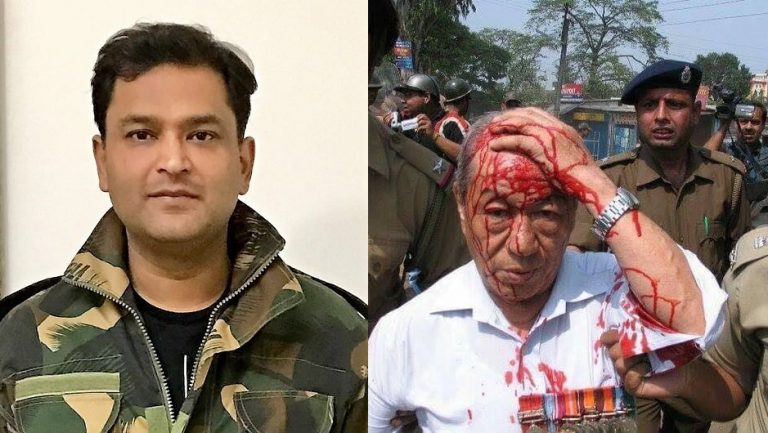
For me, the most powerful image of the Gorkhaland agitation will be of the late Col. Rai, wearing a white shirt, medals proudly pinned to his chest and blood flowing freely from a wound, all over his face and white uniform. A proud veteran walking on a road, surrounded by the local police, bleeding but still walking tall.

You may agree with the Gorkhaland agitation. You may disagree vehemently. I, for one, have no sides to take and no stakes to nurture. The only thing I have in common with Col. Rai is that both of us wore the uniform. It’s a very powerful bond, albeit difficult to explain to someone who has not had the privilege.

Did I know Col. Rai? No, I did not. I have never met him or spoken to him or even seen him from a distance. I don’t even know anyone who knew him. Neither did I know the veterans who had assembled at India Gate to mourn Lt. Umar Fayaz. And mostly, those veterans who gathered there did not know young Umar.

When I tweeted to Mamata Banerjee about treating Gurkhas with respect, I added that she had seen peaceful Gurkhas and she was fortunate. By this I directly implied three things. One, that I have seen Gurkhas in combat. Two, she was fortunate that the agitation had not got out of hand, because history is witness that once drawn in anger, a Gurkha will not put the khukri back in the scabbard without drawing blood. And three, she was dealing with veterans.

In the Gurkha community, veterans are venerated. The profession of arms is seen as the noblest of all professions. Gurkhas are natural warriors, insanely tough and they are just not afraid. Sounds familiar? Yes, these are the same people Sam Bahadur (Field Marshall Manekshaw) spoke about.

How do you deal with such a people? How do you get the agitators to go back home? It is simple. I know because I have operated with Gurkhas. Speak to them with respect and honour and they will die for you.

Limbu, Thapa, Rai, Gurung, Chhetri, Tamang, Thami, Bhujel…you will meet each type of Gurkha. Speak to the clan elders constantly and consistently and this will diffuse the situation. You will find that most of them have served in the Indian Army. Ask them their full names, and you will hear honors and awards suffixed; Vir Chakra, Sena Medal, Kirti Chakra, Shaurya Chakra, Uttam Yudh Seva Medal, AVSM, PVSM, and VSM…the list will be never ending. Yet, strangely, they are also gentle people.

I attached the photo of Col. Rai as a personal reminder of the most iconic image of the movement. And then AltNews.in wrote an article, which had the headline “Major Gaurav Arya circulates a fake image as evidence of lathi charge by West Bengal Police”.

There was a severe reaction on social media. I normally don’t respond to such news. I get enough of my daily dose of love from Pakistan and Kashmir every morning. I am inured to such news. But when Ankit Sharma sent me a message and said he did not like what was written, I reluctantly started the process of responding. Why? Because I owe my presence on social media to two people; Sonali Singh and Ankit Sharma. They trained and guided me when I knew nothing about social media. I was just a writer whom soldiers read. They made this entire thing, what you see around you, possible.

The statement “Major Gaurav Arya circulates fake image” is itself a fake statement because the image is not fake. It’s a true image. The picture is of Col. Rai. When you say “fake image”, you normally mean photo shopped, airbrushed etc. But this image was neither.

The next point of contention was that while the image was of possibly 2008, I used it to embellish an argument which was unfolding in 2017. Again, this is wrong because unless resolved, agitations are timeless. History traces the original demand for Gorkhaland to almost a century back, to 1907 if I am not mistaken. A referendum was submitted to the Minto-Morley Reforms Committee. It was also raised in the Constituent Assembly of India. It was revived in the early eighties (dates not known) by Subhash Ghisingh, a veteran. The demand for Gorkhaland technically predates West Bengal, as we know it in its current form and shape.

My intent of tweeting to Mamata Banerjee was simple, as can be made out from my tweet – treat Gurkhas with respect and honour. The problem will become easier to resolve.

Gurkhas tell me that over 1500 people have been killed so far, in this agitation. I don’t know if this is the truth. I have not verified these figures. I do not know if these are government figures. But yes, to be sure, people have been killed.

I am not blaming Mamata Banerjee for what happened in 2008, simply because she was not in power. She cannot be blamed. But then we must not forget that when we deal with governments and institutions, people become secondary. It is not important who was in power in 2008. If I am tweeting about a problem in 2017, I will have to address it to Mamata Banerjee. There is no point in tweeting to Buddhadeb Bhattacharjee.

My point is simple. The photo of Col. Rai bleeding over his medals is timeless. To insinuate that the Tweet is fake because Col. Rai was hurt in 2008 and I am Tweeting in 2017 using that image is splitting hair. I was tweeting, not making a legal argument in the Supreme Court of India. Contexts are important.

To me, this iconic image of a bleeding Colonel with medals, being accosted by the police encapsulated the issue perfectly. Yes, if I had used an image from another agitation and then Tweeted, you would have been justified in calling it fake. Kashmiri separatists regularly photo-shop images from Syria and “create” mass graves in Kashmir overnight, out of thin air. That is fake.

If Anna Hazare lands up tomorrow at Ramlila Maidan in Delhi for protesting, and TV studios play images from his 2011 protests, will you call them fake images? And if Anna Hazare protests today, would he petition to the current government or the one in 2011?

I don’t support or oppose the creation of Gorkhaland. Honestly, I don’t think it’s any of my business. But yes, you must all join me and other ex-servicemen in raising your voice when veterans are humiliated, be it Darjeeling or Jantar Mantar.

And by the way, Anna Hazare is also a veteran. He fought in the 1965 war against Pakistan in Khem Karan Sector. In the same war, just 8 kilometers to the north, was another soldier who fought to the death. He stopped a number of Pakistani tanks in their tracks; before he was martyred. His name was CQMH Abdul Hamid, PVC.

It will do us well to look holistically at an issue. To cherry pick would be to do disservice to people in general and veterans in particular.

To my mind, the news was how Gurkha veterans were being manhandled in Darjeeling at present, and how Mamata Banerjee must treat Gurkhas with honour and respect. Unfortunately, everyone ignored that and suddenly I became the news.

An unnecessary and synthetic controversy was created out of thin air, and the veteran’s cause was pushed to the background.

The Score: Rumormongers – 1. Veterans – 0.

Major Gaurav Arya (Veteran)
17 Kumaon Regiment
Indian Army
Violence mars Kashmir – 6 cops killed after two terrorists gunned down

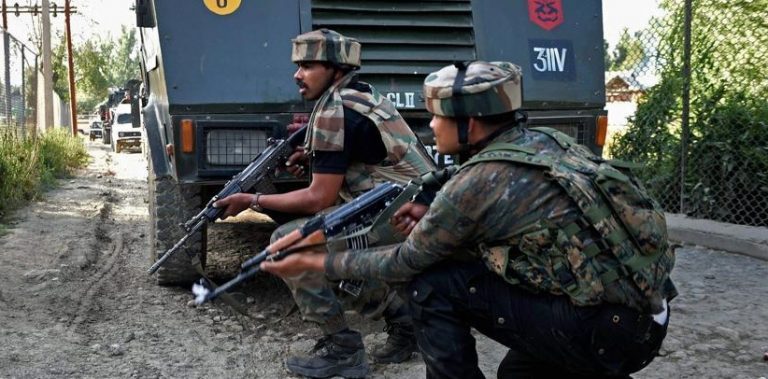
After a brief lull, violence has rocked the troubled Kashmir Valley. Six policemen, a soldier, two civilians and two terrorists were killed in separate incidents in the last 24 hours.

On Friday, the terrorists ambushed a police party at Achabal in Anantnag district killing six police personnel, including Station House Officer (SHO) Feroz Ahmad Dar.

According to reports, the daring attack took place when the police party was travelling in a jeep on Anantnag-Achabal road near Kulgad village, situated at a distance of 65 km from Srinagar. The terrorists laid an ambush, overpowered the police personnel and fired at them. They fatally shot the policemen in their faces from a close range, disfiguring them and escaped with their weapons.

Terror outfit Lashker-e-Taiba has claimed responsibility for the attack. The attack came hours after LeT regional commander Junaid Mattoo and one of his associates were killed in an encounter with security forces in Arwani, which is situated at a distance of 20 kilometres from the place where the ambush took place. As security personnel were laying siege, some local youth took to roads and pelted stones at them. Two civilians, including a teenage boy, were also killed in the cross firing. The LeT ambush is seen as a revenge attack for the Arwani encounter.

A jawan was martyred along the Line of Control (LoC) when Pakistani soldiers fired at Indian posts in southern Naushera.

Last month, the security forces gunned down Hizbul Mujahideen commander Sabzar Ahmad Bhat, the successor of Burhan Wani. Kashmir has been on the boil since the Hizbul Mujahideen commander Burhan Wani was killed by the Army in July last year.

Ever since the recent by-poll to Srinagar Lok Sabha constituency, a fresh spurt violence broke out in the valley. There is a palpable tension in the valley with the separatist forces calling for a 2016-like protests. The Valley has witnessed a spurt in incidents of violence and terrorist attacks in the last couple of months.

There is a nexus between the Pakistan, the terrorists operating in Kashmir, the separatists and the stone pelters. This has been established beyond doubts. Recently, the National Investigative Agency (NIA) has raided various locations in connection to the funding reportedly received by the separatists leaders to spread terror in Kashmir.  It has been revealed that ISIS is pursuing a nefarious game-plan to turn Kashmir valley into a caliphate based on eighth-century Islam and Sharia law.

According to intelligence estimate, 250 terrorists are currently active in Jammu & Kashmir. South Kashmir is turning into the hotbed of home-grown militancy with around 100 terrorists reportedly operate in the area. The Army launched ‘Operation Clean Up’ to flush south Kashmir of terrorists.

All you need to know about 1993 Mumbai blasts convicts

Twenty four years after serial blasts battered and brushed India’s commercial capital Mumbai – snuffing out the lives of 257 people – a special TADA court on Friday (16 June) convicted key mastermind of the blasts Mustafa Dossa, gangster Abu Salem and four others. One accused has been let off for lack of evidence.

Twenty four years is too long time. The victims’ family and the survivors kept on waiting all these years to see the light of justice and many of them could not even survive to see the justice. And finally the time has come.

Special Judge GA Sanap pronounced all the five convicts guilty for criminal conspiracy, murder under various sections of the IPC besides offences under TADA, Explosives Act, Explosive Substances Act, Arms Act and Destruction of Public Property Act. The court will pronounce the quantum of punishment against the convicts on Monday (19 June).

The Convicts

  1. Mustafa Dossa: Dossa, who is in his 50s, has been charged with overseeing the sending and arrangement landing of arms, ammunitions and explosives – including 3,000 kg of RDX in India – from Dubai to India. It was according to Dossa’s instructions that the arms were distributed among the accused, the CBI said. Dossa took the “first step” in the conspiracy by sending the arms and ammunition for the blasts, the TADA court observed.Dosa reportedly participated in the conspiracy meetings at the Dubai house of his brother Mohammed Dossa in between December 1992 and January 1993 which was attended by Dawood Ibrahim, Tiger Memon and others. According to CBI, the idea of sending weapons to India for Mumbai blasts and the subsequent communal riots was discussed at this meeting. Another conspiracy meeting for the blasts was held at White House, the Dubai residence of Dawood Ibrahim. Other accused including Firoz Abdul Rashid Khan were flown in by Dossa who facilitated their pick-up, accommodation and other arrangements. He sent some youth to Pakistan to acquire arms training to execute the blasts. Dossa was arrested in 2003.
  2. Abu Salem: Salem, 48, is one of the conspirators of the blasts.  He has been charged with transporting arms, ammunitions and explosives from Gujarat to Mumbai ahead of the blasts. The arms were distributed and stored among the co-accused for blasts. According to reports, Salem had collected nine AK-56 rifles and around 100 hand grenades, some boxes of cartridges and magazines from Sansrod near Bharuch in Gujarat and transported them to Mumbai via Bhiwandi. Some of these weapons were subsequently delivered to actor Sanjay Dutt. Dutt who was found guilty of illegally possessing weapons, convicted in 2007 and completed his sentence. Salem was arrested in Lisbon, Portugal in 2002 and extradited to India in 2005 following a long extradition process.
  3. Mohammed Tahir Merchant: Merchant, 55, a former hawala operator in Dubai, is one of the main conspirators and executors of the blasts who actively organised funds to procure arms and ammunition. According to the CBI, he attended conspiracy meetings in Dubai and floated and propagated the objective of the conspiracy. Merchant arranged travel for some Muslim youth in Mumbai to Pakistan for arms training. After prolonged proceedings, the UAE extradited Merchant in 2010.
  4. Karimullah Khan: Karimullah, 55, was found smuggling the explosives into the country through Shekhadi Port in Raigad. He reportedly had attended a conspiracy meeting held in an Alibaug hotel on February 2, 1993, which was attended by Tiger Memon among others. On the day of the blasts, he escaped to Dubai and from there he went to Pakistan. In 2006, Karimullah returned to India via Nepal boarder. He was arrested in 2008.
  5. Abdul Qayyum: Qayyum, 64, procured arms, ammunition and explosives and sent them to India. According to the CBI, Qayyum was involved in sending the first consignment of arms to Dighi port. He has been charged with facilitating the safe transportation of the part of the consignment of arms and ammunition from Pakistan to Mumbai. Qayyum along with Salem supplied weapons to Bollywood actor Sanjay Dutt. Qayyum was arrested in 2007.
  6. Feroze Khan: Feroze, 47, son of a retired Indian Navy officer, was found transporting the explosives to the targeted locations in Mumbai. Firoz attended the conspiracy meeting, held at the residence of Dawood Ibrahim in Dubai in February 1993 ahead of the blasts. Reports suggest that he was present in the conspiracy meeting held in a hotel in Panvel and was a party to the negotiations where the bribe amount of customs officials were settled for smooth landing of arms and ammunitions. After the 1993 blasts, Firoz fled the country to the Middle East. He returned to India in 2005 and assumed a false identity. He was arrested in 2010.

The accused who was let off: Riyaz Siddiqui was convicted under TADA for helping Abu Salem and others in transportation of arms.

How D-company executed 1993 blasts?

According to the prosecution, members of the crime syndicate run by underworld don Dawood Ibrahim, along with his key aide Tiger Memon, Mohammed Dossa and Mustafa Dossa had plotted the dastardly attacks on Mumbai.

Mustafa Dossa, Tiger Memon and Chhota Shakeel had organised training camps in Pakistan and in India to impart and undergo weapon and arms training and handling of explosives, the prosecution said.

The conspirators held 15 meetings before the execution of the blasts, the prosecution adds.

Dawood Ibrahim, Tiger Memon and Chhota Shakeel are currently in their safe haven in Pakistan.

A long trail

Though the hearing began in 2007, it was delayed as three simoltenious petitions were pending with the Supreme Court, one each filed by Dossa and Salem, and another by CBI. In the first leg of the trial that concluded in 2007, the TADA court had convicted 100 accused, while 23 people were acquitted. In 2013, the Supreme Court sentenced Yakub Memon – a key conspirator of Mumbai blasts – to death. Memon was executed on July 30, 2015.

The fateful day of 12 March, 1993

Pertinent to mention that 1993 Mumbai blasts was the first-ever terrorist attack in the world where RDX (Research Department Explosive) was used on such a large-scale after the World War -II.

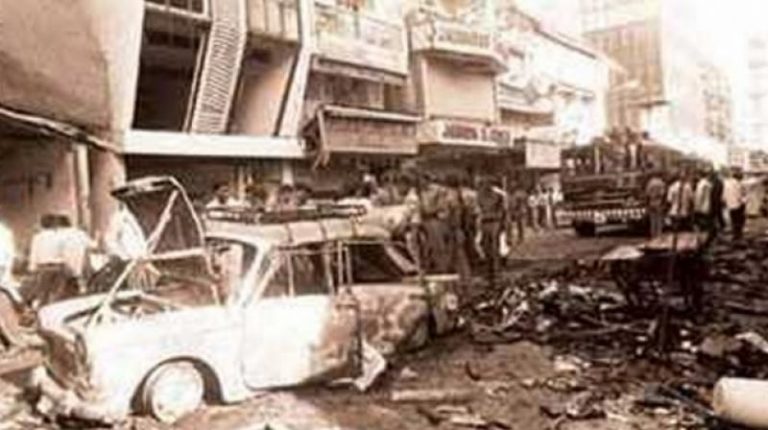
As many as twelve serial blasts in a span of two hours took place in Mumbai on 12 March, 1993. The blasts killed 257 people and injured 713 others. The blasts took place at Bombay Stock Exchange, Katha Bazaar, a petrol pump near Sena Bhavan, opposite Passport office near Century Bazaar, Fishermen’s colony at Mahim Causeway, at the basement of Air India Building, Zaveri Bazaar, Hotel Sea Rock, Plaza Theatre, Centaur Hotel of Juhu, Bay No-54 of Sahar Airport and Centaur Hotel near airport.

India can access details of black money stashed in Swiss banks from 2019

In a significant development, Switzerland on Friday ratified automatic exchange of financial account information with India. This will facilitate immediate sharing of details about suspected black money. However, the country sought to adherence to “strict confidentiality” and “data security”.

According to reports, adopting the Automatic Exchange of Information (AEOI) – a global convention on tax matters – the Swiss Federal Council said the implementation is planned for 2018 and the first set of data would be exchanged in 2019. The Swiss Federal Council will soon notify the Government of India about the exact date from which the automatic exchange would begin.

The development came following hectic parleys between India and Switzerland for introduction of the AEOI on tax matters under the guidance of G20, OECD (Organisation for Economic Co-operation and Development) and other global organisations.

The decision is not subject to any referendum, which means that there should be no further procedural delay in its implementation, according to a draft notification approved by the Swiss Federal Council.

The Swiss Federal council said the proposal to introduce AEOI with India and 40 other jurisdictions “met with widespread approval from the interested parties who voiced their opinions in the consultations”.

“In concrete terms, the AEOI will be activated with each individual state or territory by means of a specific federal decree within the framework of this dispatch,” it said.

The exchange of information will be carried out based on the Multilateral Competent Authority Agreement (MCAA) on the Automatic Exchange of Financial Account Information.

Once automatic exchange of financial account information with Switzerland ratified, India will get access to the black money stashed in tax heavens and do the needful to bring them back and act against the black money hoarders.

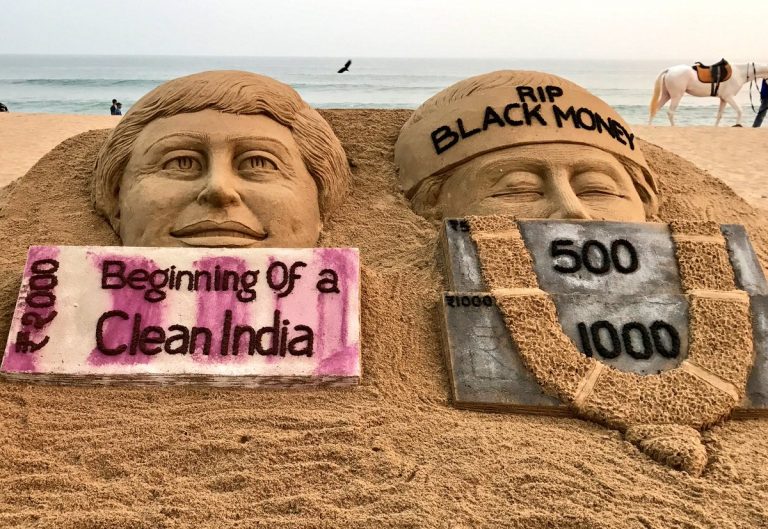
The size of India’s black money economy is estimated at 23 and 26 per cent. In the run up to the 2014 elections, the BJP had promised to bring back black money stashed abroad into India. From forming an SIT to demonetisation, the government has taken various steps to curb black money, and this development is expected to further help in this mission.

Why any claim that demonetisation was a failure is totally misplaced

Earlier this week, there were some claims that demonetisation could be declared a failure as apparently there was enough data on the table to conclude it. These claims were made on the basis of current loan-waiver costs that the government has to incur, which was, rather speciously, linked to demonetisation and identified as ‘cost’ of demonetisation. This was further juxtaposed with the ‘benefits’, data for which is by no means conclusive, for not even three full quarters have passed since the announcement.

It was argued that the farmers were not getting good prices for their produce because the intermediary markets were mostly cash driven and the demonetisation after-effects were still not over. This argument, in my view, is far-fetched as well as reductionist. The prices of agricultural goods are a factor of production more than liquidity, and a ‘good’ harvest following a good monsoon ironically gets ‘bad’ prices for the farmers.

The issues with farming and agriculture financing are far more complex and badly need solutions, and it will do no one a justice if we take a reductionist approach and blame it all on demonetisation.

Nonetheless, scope of my article is about demonetisation, not about farming, and I strongly believe that any statement declaring demonetisation a failure, when not even 9 months have passed since the step was announced, is not just premature, but even ill-conceived.

Demonetisation was a disruptive step in true sense, having far reaching impacts on various facets of our economy and consumption habits. A little over eight months is too short a period to pronounce judgments or take up any meaningful ‘cost-benefit’ analysis.

To truly understand the benefits, we will have to understand the objectives of demonetisation and see whether those objectives have been met and the kind of benefits they are expected to bring.

Broadly, there were three objectives behind demonetisation:

  • Track and tax “black money” in the system
  • Bring more people into the formal economy and/or tax base
  • Encourage digital payments leading to “less cash economy”

Let us take each objective separately and see what was planned in short and long term and how did Modi government perform.

Track and tax “black money” in the system:

How do you quantify/track and bring to tax something which you only had an estimate of? In this paper titled “White Paper on Black Money” [pdf] published by the Ministry of Finance, GOI, various estimates and methods are provided to quantify “Black Money”. At best these were only estimates. One surest thing that happened after demonetisation is that every piece of currency paper now has an address.

Let us rewind a little.

First: while accepting deposits during the demonetisation drive, IDs were collected and proper forms were filled by citizens. Second: the deposit limits were also set. Third: Bank accounts with no proper KYC were debarred from accepting cash deposits. All this ensured that only accounts which could be traced back to an individual/firm were allowed to deposit cash.

The result:

During Budget Speech this year, Finance Minister Arun Jaitley revealed that during the period from 8th November to 30th December 2016, deposits between Rs 2 lakh and Rs 80 lakh were made in about 1.09 crore accounts with an average deposit size of Rs 5.03 lakh. Deposits of more than Rs 80 lakh were made in 1.48 lakh accounts with average deposit size of Rs 3.31 crore.

I don’t intend to say that all cash is “black money” or everything in bank is white, but it is pertinent to note that 31% of the total deposits that were made into banks were by individuals with an average of Rs 80 lakhs and above. This data is goldmine for tax administration. I have a simple query: who keeps on an average Rs 3.31 Cr in cash?

If it is legitimate cash, there should be no problems in replying to Income Tax notices. This tracking and reset of the currency flow is one of the successes of demonetisation.

You can’t put a number to it to undertake any meaningful cost-benefit analysis. This is more like a hard reset of the system so that future functioning is smooth. However, there still are some numbers that need to be accounted.

Let us take an example: Suppose an individual deposited Rs 20 lakhs in his account. After receipt of a notice from the income tax department, he replies that he had provided certain service to another person. Here, the effect is that the government gets to claim service tax on this amount.

Furthermore, they can ask him to provide full details of the service recipient and even question him over the source, thus establishing the full source of this amount. Plus, this individual will now have to file returns year after year and all his declarations shall be open to scrutiny every single time. Will he try to be too clever and conceal his sources of income? Not only the current black money is detected, even future generation of black money is discouraged as a result.

On this, some express the concern of “tax terrorism”, but the demonetisation actually made sure that tax authorities did not become too powerful. Arbitrary powers to charge penalty on evasion were removed and replaced with a fixed amount; this ensured that no cases got “settled” outside the system. Of course, final assessments will take time. The persons have a right to defend themselves and go in appeals hence it is difficult to quantify the tax gains as of now.

At this stage, it is important to note that demonetisation is one of the part of series of decisions taken since Day 1 by Modi government to eliminate corruption, black money, counterfeit currency, and terror funding. Hence not an end in itself but means to an end. In this fight, such data as highlighted by the finance minister is invaluable.

Bring more people into the formal economy:

On 14th December 2016, CBDT issued a press release stating that only in certain cases revised returns can be filed by Assessee. The fact that this came into notice highlights that this method was being used by persons to manipulate income figures, cash-in-hand, profits, etc. and were attempting to launder unaccounted money.

So what happens when you plug one loophole? People try and find some other way. The government added 9.1 million new taxpayers in 2016-17. This was an 80% increase over the normal yearly growth in tax base each year. Income tax collection till 15 June has risen by 26.2% compared to last year.

Further, for April-December 2016 period, indirect tax collections grew at 25% to Rs 6.3 trillion, central excise was up by 43% to Rs 2.79 trillion, service tax grew at 23.9% to Rs 1.83 trillion, and customs by 4.1% to Rs 1.67 trillion. Direct tax collections were also up by 12.01% to Rs 5.53 trillion in the nine-month period. (source)

Demonetisation critics stress that holding cash isn’t illegal, I agree, it is not but they should also understand that merely depositing cash into bank accounts does not convert black money into white! Ignoring facts like expansion in tax base and deposits being tracked shows how facts are being ignored to arrive at inferences they have already concluded. Any process under Income Tax Act has various steps and stages. A long-term analysis is being written off in a very short term.

Now these new taxpayers will have to file returns on a year to year basis. How do we quantify this incremental benefit? The tax collections figures should be an indicator. During demonetisation, searches, seizures, and raids were conducted across the nation. In a reply to the Rajya Sabha, the Finance Minister informed the House that under Operation Clean Money, the Income Tax Department had issued 18 lakh notices to persons whose cash deposits were not matching with their income profiles. Against this, they received 12 lakh responses from 8.38 lakh distinct PAN/persons. The process is far from over.

Further implementation of Goods and Services Tax (GST) will widen the formal economy leading to a wider tax base. Raids, searches, notices and government responses every day to plug loopholes (during demonetisation) sent a strong message to tax evaders who now probably have a sense of fear in their minds. You cannot quantify these benefits.

Move to a less-cash economy:

In November last year, I had written why a move to less-cash economy comes with its own benefits. Cost of transactions goes down, time and cost of accounting goes down, and of course, costs of printing currency goes down. Compliance is better as there is better documentation. Better documentation and compliance plugs loopholes in public distribution system. And there is better tax monitoring, and better revenue collections. As you can see, not everything among these can be quantified, but these objectives are being met.

RBI data shows that India is adopting digital means of payments. Cash has made a comeback but clearly there is a change in mindset and behaviour. Launch of BHIM app, Aadhaar Pay, and incentives for online transactions are few instances to promote digital payments. There is surely much more that’s needed to be done as behavioural change takes time, but there is no doubt that we have taken important first steps towards a less-cash economy.

Finally, demonetisation is not a standalone project:

Regardless of the horizon that we choose to undertake a cost-benefit analysis – and that horizon definitely can not be less than 9 months – we have to keep in mind that demonetisation is no standalone project. It is a key and crucial part of a series of steps taken to tackle black money problem.

Here are few of those steps:

  • Constitution of the Special Investigation Team (SIT) on Black Money under Chairmanship and Vice-Chairmanship of two former Judges of Hon’ble Supreme Court
  • Enactment of a comprehensive law – ‘The Black Money (Undisclosed Foreign Income and Assets) and Imposition of Tax Act, 2015’ to specifically deal with black money stashed away abroad,
  • Constitution of Multi-Agency Group (MAG) for investigation of revelations in Panama paper leaks,
  • Proactively engaging with foreign governments to facilitate and enhance the exchange of information under tax treaties
  • Renegotiation of tax treaties to bring the Article on Exchange of Information to International Standards and expanding India’s treaty network by signing tax treaties with many jurisdictions to facilitate the exchange of information and to bring transparency
  • Proactively furthering global efforts to facilitate automatic exchange of information and
  • Enabling attachment and confiscation of property equivalent in value held within the country where the property/proceeds of crime is taken or held outside the country by amending the Prevention of Money-laundering Act, 2002 through the Finance Act, 2015
  • The Benami prohibition law which remained in-operative for last 28 years was made operational through a comprehensive amendment with effect from November, 2016.
  • Cash deposit limits and cash transactions limits plus streamlined penalty provisions
  • Aadhaar linking with bank accounts and PAN for better tracking of money to stop accumulation of unaccounted money

From May 2014 till February 2017, 23064 searches/surveys were conducted (Income Tax 17525; Customs 2509; Central Excise 1913; Service Tax 1120); more than Rs. 1.37 lakh crore of undisclosed income/tax evasion was detected (Income Tax 69434; Customs 11405; Central Excise 13952; Service Tax 42727). Simultaneously, criminal prosecutions were launched in 2814 cases (Income Tax 1966; Customs 526; Central Excise 293; Service Tax 29) and 3893 persons were placed under arrest (Customs 3782; Central Excise 47; Service Tax 64)

Post demonetisation, during the period 9th November 2016 to 10th January 2017, more than 1100 search and survey were conducted by the ITD, apart from issuing more than 5100 verification notices in the cases of suspicious high value cash deposits or related activities. These actions led to seizure of valuables of more than Rs. 610 crore which includes cash of Rs. 513 crore. Seizure of cash in new currency notes was about Rs 110 crore. The undisclosed income detected in these actions was more than Rs. 5400 crore. (source)

If you analyse demonetisation (a long-term activity) on a short-term basis or ignore all the above mentioned steps and their outcomes/benefits, it is unjustified and unfair on the entire exercise. As can be seen, some short-term benefits have materialized, but the long-term benefits can be seen only in the long run. But data points to the fact that we are heading in the right direction.

Looking at the data available and the trends, I can say with confidence that demonetisation was not just a political success, but an economic one too.

Indian origin man declared a global terrorist by US – know who he is

Mohammad Shafi Armar, the principal recruiter for the Islamic State in Iraq and Syria (ISIS) in the Indian subcontinent has been declared as the ‘Specially Designated Global Terrorist’ by the US State Treasury Department.

30-year-old Armar, alias Chhote Maula, Anjan Bhai and Yousuf al-Hindi is a native of Bhatkal in Karnataka.

This is for the first time that the US has imposed sanctions against a terrorist originally hailing from India. Shafir Armar is said to be currently operating from Afghanistan or Syria.

“Mohammed Shafi Armar is a leader and head recruiter in India for the Foreign Terrorist Organisation (FTO) and Specially Designated Global Terrorist (SDGT) group, ISIS,” the US State Department said in a statement.

“He has cultivated a group of dozens of ISIS sympathisers who are involved in terrorist activities across India, such as plotting attacks, procuring weapons, and identifying locations for terrorist training camps,” the statement said.

“These actions are part of a continued effort to target individuals and entities that willfully provide support to ISIS in order to constrict this violent terror group’s operational reach and shut off its access points to the international financial system,” it said.

Armar, now a key figure on jihadi landscape, earlier worked with the terror outfit Indian Mujahideen. He was said to have left for Pakistan along with his elder brother after crackdown on Indian Mujahideen cadre. Armar is believed to have created a radical Islamist organisation Ansar ul Tawhid, which later pledged its allegiance to ISIS.

Armar became the chief recruiter in India after the death of his brother Sultan Abdul Kadir in March 2015 in a US drone attack in Syria. Now he is considered as the key ally of ISIS chief Abu Bakr al-Baghdadi.

Intelligence agencies suggest that tech savvy Armar has been operating on closed Facebook groups and messaging platforms like Trillion, Surespot, WhatsApp and Skype over the past few years to contact, brainwash, radicalise and recruit Muslim youths from India, Bangladesh and Sri Lanka.

Reports suggest that he is responsible for forming several ISIS affiliated groups in India in the last three years including Junood al Khalifa e Hind (JKH).

It could be noted that the NIA had chargesheeted Armar for conspiring to carry out terror strikes in Delhi and Haridwar. An Interpol Red Corner notice is pending against him.

Armar came on the radar of Indian investigation agencies when the NIA was probing suspected Islamic State cadre Madhya Pradesh’s Ratlam. Interrogations of Indian Mujahideen co-founder Yasin Bhatkal by the investigative agencies have highlighted Armar’s association with the ISIS. India had approached the US and the UN to designate Armar as a “global terrorist”.

How Vijay Mallya routed funds through web of shell companies

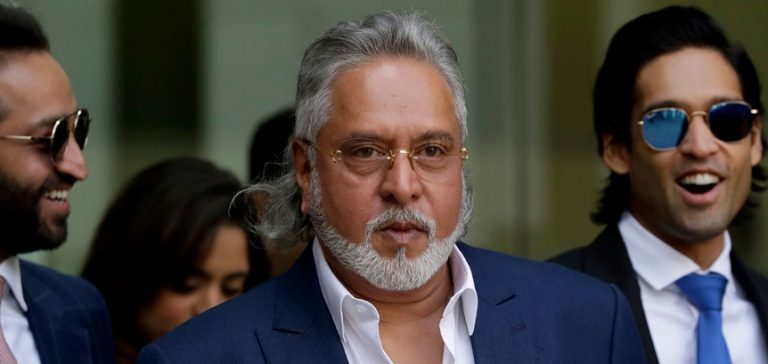
Liquor baron Vijay Mallya had floated as many as 20 shell companies and used them as special purpose vehicle to route funds. Directors of these letter-box companies are either his personal staff or retired officials from his company.

This has been revealed in the Enforcement Directorate (ED) chargesheet filed before a special PMLA court in Mumbai in connection to the Rs 900 crore IDBI-KFA loan default case.

“Mallya was holding directly or indirectly movable and immovable assets, in the form of shares of publicly listed companies, by way of creating a web of shell companies. The assets were being in shell/ dummy companies created by Mallya,” the ED chargesheet said.

“Mallya has nominated directors in those companies who were either his personal staff, retired company official or a third person,” the chargesheet, which runs into 5000-pages, said.

The agency has identified shell companies such as Ms PE Data Centre Resources Private Limited, Ms Pharma Trading Limited, Ms Kingfisher Finvest Limited, Devi Investment Private Limited, Ms Mallya Investment Private Limited, Ms Explicit Consultancy Private Limited, Ms Ambitious Computech Private Limited and Vilora Consultancy Private Limited among others. 

The chargesheet has mentioned a transaction made to a firm which reportedly had dummy directors. “An amount of Rs 63.10 crore (approximately) was paid to Ms UBICS Technologies Pvt Ltd (controlled by Mallya). Directors are dummy directors acting on behalf of Mallya”.

“This company was used as a special purpose vehicle to route the funds of Ms KFA as no other transaction from any other company has been noticed in this,” it said.

The ED chargesheet shows how Mallya routed overseas over Rs 417 crore of the Rs 860.92 crore he secured as loan from IDBI Bank for aircraft rental leasing and operational expenses of Kingfisher Airlines in clear violation of rules. It talks about diversion of funds to Mallya-owned entities such as Watson and Force India and software consulting firm UBICS. The chargesheet further suggests that funds were diverted Mallya’s Formula-1 car racing event and the two firms controlled by him — UBICS Technologies Pvt Ltd and UB Engineering Pvt Ltd. 

“There were unencumbered (free of debt) properties more than Rs 1,760.03 crore in addition to the properties mentioned in the personal guarantee submitted by Mallya to the IDBI bank”, the chargesheet said.

“It is suspected that major portion out of the amount of Rs 417.29 crore was remitted out of India to overseas parties from IDBI bank,” it said.

“Thus, the acts of Mallya, Ms UBHL and others, establish that a criminal conspiracy was hatched for obtaining or sanctioning of bank loan to KFA in gross violations of established procedures and the airline had no intention for repayment of loan of Rs 900 crore since the beginning,” the chargesheet said.

“The said loan amount along with interest totalling Rs 1,301.67 crore, therefore, falls within the sweep of the proceeds of crime in terms of section….Of the PMLA,” it said.

Apart from Mallya, the ED chargesheet has named eight other accused including his now-defunct Kingfisher Airlines (KFA), his United Breweries (Holding) Limited and senior employees and executives of KFA and the IDBI Bank.

The Enforcement Directorate is in the process of confiscating a Mallyaa-owned coffee estate in Karnataka’s Coorg and other assets in Bengaluru. These assets were attached under the Prevention of Money Laundering Act (PMLA). Recently, the ED had confiscated a Rs 100 crore worth farm house owned by Mallyaa in Maharashtra’s Alibaug. The agency has already frozen Rs 9,680 crore of property belonging to Mallya and Kingfisher Airlines.

Presidential elections: How parties are placed in the Electoral College

The race to Raisina Hill is heating up with the ruling coalition and the opposition chalking out their respective strategies for the upcoming Presidential election, scheduled to be held on 17 July.

The Presidential election involves a complex voting pattern. The President of India is elected by an Electoral College comprising of members of both the Houses of the Parliament and members of the state legislative assemblies. A total of 4896 voters – 4120 MLAs and 776 elected MPs – are eligible to cast their ballot to elect the next President of India.

In the Electoral College, the value of each MP’s vote is 708. But the value of each MLA’s vote differs according to the size of the respective state assemblies and population of the respective states. While an MLA in UP has the highest vote value of 208, an MLA in Sikkim has the lowest vote value of 7.

Let’s take a look at how the parties and alliances are placed in the Electoral College.

NDA: After the BJP’s emphatic win in the most populous state of Uttar Pradesh, the BJP-led NDA is comfortably placed in the Electoral College. Currently, the NDA’s vote share stands at 48.64 per cent. There is a chance that Shiv Sena could play hard ball in this Presidential election also. It could be noted that in the last two Presidential elections, Sena broke ranks with NDA and voted for the UPA candidates.

This time also, the Sena insisted on RSS Sarasanghchalak Mohan Bhagwat’s candidature despite knowing very well that Bhagwat would never contest the Presidential election. If Shiv Sena won’t go with the NDA this time, the NDA’s vote share would reduce to 46 per cent. So basically the NDA needs the support of only one or two opposition parties to cross the half-way mark. In other words, the NDA needs around 20,000 more votes to ensure victory of its candidate.

UPA: On the other hand, the Congress-led Opposition block, which consists of 17 parties – CPM, CPI, JDU, RJD, TMC, SP, BSP, NCP, DMK and some other regional parties – has a 35.47 per cent vote share in the Electoral College. But the Opposition block is facing the key challenge of keeping a united front in the run up to the Presidential election with indications that that some partners may slip away.

So far, Sharad Pawar’s NCP is non-committal to the opposition bandwagon. Senior NCP leader Praful Patel maintains that the Opposition should wait as the government wants to talk to them. There remains question mark over JD(U) after Nitish Kumar skipped the Opposition meeting, for the Presidential election, on 25 May and joined a dinner hosted by Prime Minister Narendra Modi. Trinamool Congress is yet to make any committeemen to the Opposition block.

Non-NDA, non-UPA parties: Apart from the Congress-led Opposition block, there six Opposition parties – AIADMK, BJD, TRS, YSR Congress Party, INLD and AAP who maintain ‘equal distance’ from the BJP and the Congress. Together, these six parties hold a total of 13 per cent vote share in the Electoral College.

It would be interesting to see which party will go with the ruling establishment and which one will stand with the opposition. Obviously all the six parties won’t stand together in the Electoral College. Apart from this there are tiny regional parties which also account for around 3 per cent vote share in the Electoral College.

Fake journalist caught selling fake helicopter tickets in Jammu & Kashmir

In a “you cannot make this stuff up” incident, a man who was claiming to be a journalist cum travel agent has been caught by Jammu’s Crime Branch for running a fake helicopter ticket scam.

The man whose name real name is Sanjay Bajaj used to meet gullible pilgrims under the name of Sidharth Sharma and sell them fake helicopter tickets for the 2017 Amarnath Yatra. He ironically used to bring further credibility to himself by posing as a journalist and the state bureau chief of some news outlets named Tezz Khabar, Nation Live News and Keyline News. He had reportedly minted some Rs 15 lakh via running this fraud.

Arrested on Sunday, he was brought before a Tehsildar and was sent to a 6 day police remand. He was arrested on the basis of a complaint by a certain Rajesh Gupta who is the representative of a Helicopter services company Global Vectra Helicorp Ltd.

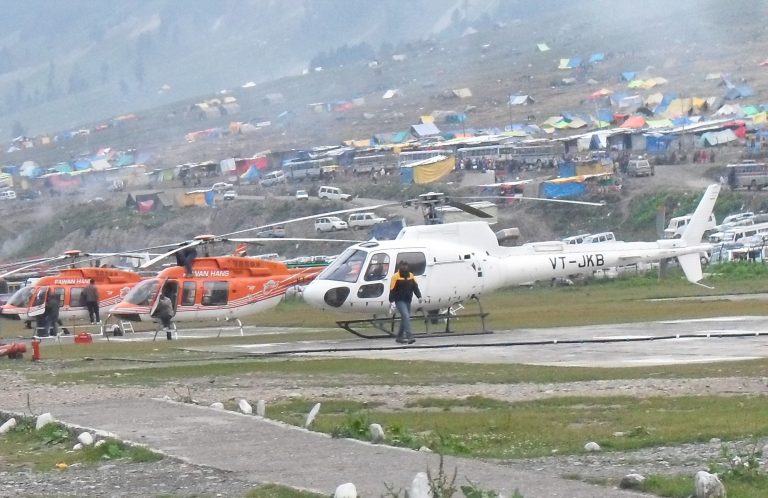
The helicopter company had a contract with the Shri Amarnath Shrine Board for providing helicopter service on Neelgrath-Panchtarni route. The one way prices for the same had been fixed at Rs 1715.

The offices of the helicopter agency had reportedly received a call on 4th June from a Sudarshan Sharma of Jammu who had asked them to authenticate 22 helicopter tickets which he had bought from the accused Sanjay Bajaj. Sudarshan had also apparently shared the copies of the tickets on WhatsApp, which on scrutiny were found to be fake. The tickets also cost about Rs 3250 which were almost double the regulated price of Rs 1715.

Sudarshan was immediately informed that he had been duped and no such person was authorised to sell the tickets. A complaint was lodged and the subsequent preliminary investigation by the Crime Branch authorities found that the accused Sanjay Bajaj used to prepare forged helicopter tickets at his Jammu based company named Sidhi Vinayak Tour & Travels.

He was reportedly running this scam since long via his unregistered travel agency and had cheated many innocent pilgrims.

Men beat up and force woman to chant ‘Allah’ and ‘Ram’, journalists hide ‘Allah’ part

In an example of how half-truths are used to peddle an agenda, a bizarre and cruel incident was used by some journalists and celebrities to push ‘Hindu intolerance’ narrative on Twitter yesterday (and it continues even today).

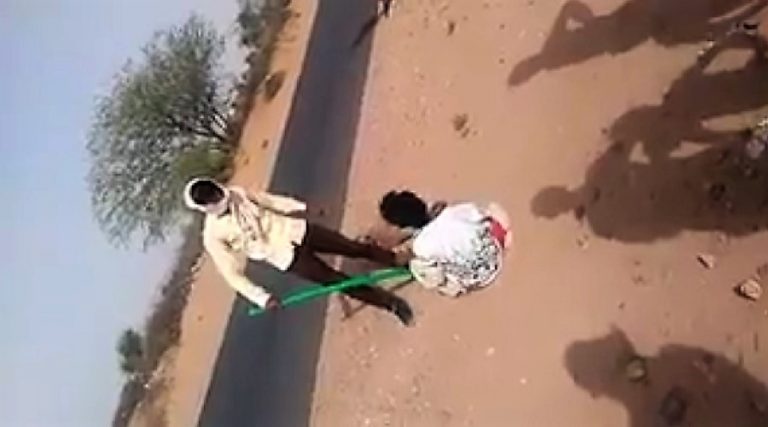
The incident reportedly happened on Tuesday earlier this week in Nagaur district of Rajasthan where a group of men, some hiding their faces, were recorded on camera abusing and assaulting a woman with plastic pipes and forcing her to chant religious slogans. It was not clear who recorded the incident, but the video clearly showed that the men were forcing the woman to chant “Allah” and “Jai Shri Ram”.


In the above video, one can hear clearly that the woman was asked to chant “Allah” at least three times, and then asked to chant “Ram”, “Jai Shri Ram” and “Jai Hanuman” once subsequently. This ‘communal counting’ is silly given that the incident itself should be outrageous enough, but we are forced to do so since a section of the mainstream media decided to give it communal colour.

Local media reports confirm that the incident was purely criminal and the motive behind it might have been a suspicion that the woman could have been the unknown miscreant, who apparently has been cutting hairs of villagers, especially of women, in the area during the night. However, this incident, which highlights lack of policing in the area, was presented as a hate crime involving Hindutva elements.

It started with a Hindustan Times journalist tweeting only about the “Jai Shri Ram” part and hiding the “Allah” part, thus making it appear as a case of “Hindu intolerance” in a BJP ruled state. The journalist’s intention to link it with religion and politics becomes clear in a subsequent tweet, where he tags CPM leader Sitaram Yechury and links the incident to another incident of “cow vigilantism” that happened in the state last week:


His trick worked, and Hindustan Times too played its part by re-tweeting the journalist’s half-truth. It was enough for people to lament “Hindutva” and “beef politics” and go on an ideological overdrive when the incident had nothing to do with any communal or partisan politics.

Here is one sample reaction from Sagarika Ghose, who of late has been on a mission to spread fake news and misinformation to push her agenda:


This is not for the first time when Indian mainstream media has used half-truths to peddle a partisan agenda. Earlier we had seen how HuffPo ignored killings of Hindus and focused only on Muslim victims regarding an unfortunate incident in Jharkhand, while before that, The Hindu had blamed only Hindu groups in a case of forceful cancellation of an event where other religious groups were also involved.

Fortunately, not everyone in the media was pushing the agenda this time. Rajasthan Patrika, generally considered close to the Congress, reported with full facts, raising the relevant issue of law and order.

News agency ANI too reported without hiding the “Allah” part. It should be further noted that two men in this case have been arrested and police is investigating more about the case, including about the person who shot the video and uploaded it on social media.

However, this has not deterred people, especially journalists, from continuing to peddle their partisan agenda. Following is a tweet by a former Hindustan Times journalist, who quotes the same ANI tweet that mentioned “Allah”, but decides to focus only on “Jai Shri Ram”:


And then they claim that the media in India is not free.