Home Blog Page 1140

How Indian men and women differ when it comes to gameplay time

0

Gaming has evolved significantly over the years, transcending traditional stereotypes and becoming mainstream entertainment worldwide. In India, the gaming landscape has seen remarkable growth, with a diverse range of players contributing to its popularity. However, beneath the surface lies a complex foundation of gaming habits influenced by various factors, including gender. This article delves into the nuanced differences in gameplay time between Indian men and women, shedding light on the cultural influences and behavioural patterns that underpin these distinctions. Specifically, we will examine how the game of Rummy, with its distinct rules and gameplay dynamics, plays a pivotal role in shaping gaming preferences among Indian males.

Gender Dynamics in Gaming

In India, as in many other parts of the world, gaming habits are often influenced by societal norms, responsibilities and expectations associated with gender. Traditionally, gaming has been perceived as a predominantly male activity, with men usually encouraged to pursue leisure activities that align with notions of competitiveness and strategic thinking. However, this perception is gradually evolving as more women actively participate in the gaming community, challenging long-held stereotypes and carving out their niche within the digital realm.

Gameplay Time Analysis: Indian Men vs. Women

When analysing gameplay time among Indian gamers, striking disparities between men and women emerge. Data insights reveal that, on average, Indian men tend to spend significantly more time engaged in gaming activities than their female counterparts. While various factors contribute to this gap, including access to technology and socio-economic status, cultural influences play a crucial role in shaping these distinct gaming habits.

Let’s further discuss the nuanced differences in gameplay time between Indian men and women clearly and concisely by taking Rummy as an example, as it is heavily dominated by males of all age groups, and the game is very specific to rummy rules, which demands skills and strategy.

The Dominance of Rummy Among Indian Males

One game that exemplifies the gender disparity in gaming habits within the Indian context is Rummy. Rummy is a card game that requires strategic thinking, skilful planning, and adherence to specific rules. Interestingly, Rummy has emerged as a favourite pastime among Indian males of all age groups, dominating the gaming landscape with its blend of entertainment and mental stimulation. The game’s popularity can be attributed to its accessibility and the challenge it presents to players to outsmart their opponents using a combination of wit and strategy.

How Specific Gameplay Demands Impact Gender Participation

The Rummy rules are integral to understanding its appeal and influence on gaming behaviour among Indian men. Unlike other games that rely purely on chance, Rummy is skill-based, requiring players to employ strategic thinking and tactical manoeuvres to succeed. This emphasis on skill and strategy may resonate more strongly with male players, who are often drawn to competitive gaming experiences that allow them to showcase their abilities and intellect. Additionally, the structured nature of Rummy, with its clear rules and objectives, provides a sense of order and challenge that appeals to individuals seeking mental stimulation and engagement.

Cultural Influences on Gaming Choices

Cultural norms and traditions also play a significant role in shaping gaming choices among Indian players. In a society where traditional gender roles are still prevalent, certain games may be perceived as more suitable or appropriate for men or women. If we talk about Rummy, its association with skill and intellect is often viewed as a game that aligns with masculine ideals of competitiveness and strategic thinking. As a result, men may feel more inclined to participate in Rummy games to assert their gaming prowess and demonstrate their ability to excel in a challenging and mentally stimulating environment.

Understanding Gaming Behavior

Psychological factors also contribute to the gender disparities observed in gaming habits. Research suggests that men and women may have different motivations and preferences for gaming, with men often seeking competitive challenges and opportunities for mastery. In contrast, women may prioritise social interaction and collaborative gameplay experiences. These divergent motivations can influence the types of games individuals play and how much time they invest in gaming activities.

Implications and Future Trends

Addressing gender disparities in gaming requires a multifaceted approach that acknowledges the complex interplay of cultural, social, and psychological factors. Creating inclusive gaming environments that celebrate diversity and cater to all players’ unique preferences and interests is essential for fostering a more equitable gaming community. Additionally, initiatives that promote gender diversity in the gaming industry, such as mentorship programs and educational initiatives, can help empower women to pursue careers in game development and design, contributing to greater representation and inclusivity within the industry.

Conclusion

In conclusion, gender disparities in gaming habits persist within the Indian gaming community. Men and women exhibit distinct preferences and behaviours regarding gameplay time. The game of Rummy is a compelling example of how specific gameplay demands and cultural influences can shape gaming choices among Indian males, highlighting the need for greater awareness and inclusivity within the gaming industry. By acknowledging and addressing these disparities, we can work towards creating a more equitable and inclusive gaming community that celebrates the diversity of its members.
Islam forbids organ donation, but allows receiving: As a Pakistani girl receives a heart transplant in India, Indians have many questions

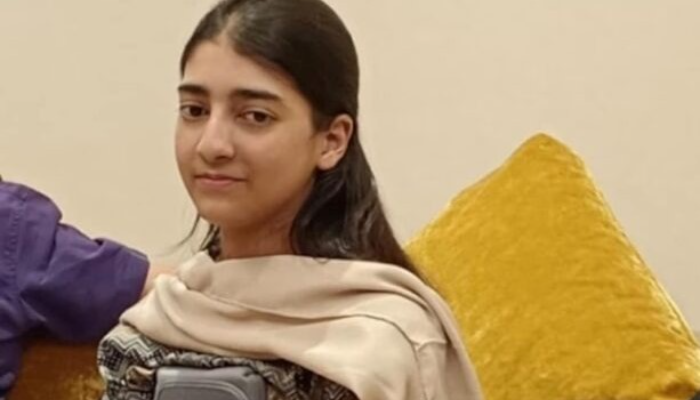
A 19-year-old fashion designing aspirant named Ayesha Rashan from Pakistan’s Karachi got a new lease on life after she received a heart from an Indian patient via a heart transplantation surgery in Chennai. She was first admitted to MGM Healthcare in Chennai in 2019 as a result of a serious cardiac condition that developed into heart failure. She was advised of a heart transplant. The family was hesitant, though, because they couldn’t afford more than Rs 35 lakh needed for the transplant.

Afterwards, the medical team put the family in touch with the Aishwaryam Trust which provided the funds for the procedure. She eventually received the life-saving surgery at the hospital around six months ago and that too free of cost. The donor was a 69-year-old brain-dead patient from Delhi.

Notably, the development has raised a number of concerns among netizens who are wondering how a Pakistani girl managed to reach the top of the waiting list in a nation of over 1.2 billion people that is infamous for its high heart disease rate which is double the national averages of the western world. They also emphasised how Muslims often receive organs, however, organ donation is outright forbidden in Islam.

Dr K G Suresh Rao, co-director at the hospital’s Institute of Heart and Lung Transplant and Mechanical Circulatory Support claimed, “A heart is allotted to foreigners only when there is no prospective recipient in the entire country. Since this patient’s heart was that of a 69-year-old, many surgeons hesitated. We decided to take the risk partly because the condition of the donor’s heart was good and partly because we knew this was Ayesha’s only chance.”

On the other hand, the users are finding it hard to accept this argument considering the prevalence of heart disease among Indians and the enormous size of the country’s population. Organ transplants for foreigners, particularly those from Bangladesh and Pakistan, should be prohibited, according to Rakesh Krishnan Simha who highlighted, “Each year thousands of Indians die waiting for a heart transplant. However, a Pakistani girl jumped the queue and received an Indian heart free through leftist architect Chitra Vishwanath’s Aishwaryan Trust. The heart was flown from Delhi to Chennai for the Pakistani girl. The doctors claim nobody wanted it in Delhi, but who knows if these doctors are being economical with the truth to avoid controversy.”

Another user urged people not to vote for Congress and I.N.D.I. Alliance as he charged, “DMK ruled Chennai allowed heart transplant of a Pakistani girl who will never donate her organs. Thousands of Indian Tamil people were in line in government hospital but MGM Healthcare gave a heart transplant free of cost to a Pakistani.”

An individual asked how the authorities and government fail to consider the long-term effects of their misguided charity and commented, “Now she will go back to Pakistan, marry a ‘jihadi’ and give birth to at least a dozen kids who will wage a war against India,” alluding to the religious extremism and the abject anti-India sentiment in Pakistan. The person added, “The most important point to consider here is was she given the heart at the expense of an Indian patient? Wasn’t there a single Indian patient waiting for a heart transplant? Who gave the nod for the heart transplant to a Pakistani girl?”

Another voiced that a foreigner is receiving priority and free treatment when there are a significant number of Indians in need of transplants.

A netizen remarked, “And we gave a heart transplant to a Pakistani girl. For humanity the recipient also should be human. In this case for mullas it’s haram,” while reacting to a post regarding forcible abduction, conversion and marriage of a 9-year-old Hindu girl to a 45-year-old man at a Sufi Dargah in Pakistan, drawing attention to the plight of Hindus in the Islamic Republic as its Muslim nationals are bestowed with new life in India.

A person expressed that he had witnessed Indians turning off their loved ones’ ventilators because they were no longer able to pay the medical expenses and inquired, “Free surgery for a Pakistani girl, how? Why free?

Another asked whether there was no one to help her in Pakistan and questioned, “Why are Muslims not organ donors? But happy to take non-Muslim ones? Muslims be organ donors.”

Organs can only be accepted, never donated

The irony was also brought out by many who questioned why Muslims are only receiving organs and never donating them because they believe it violates their religious beliefs. They challenged whether people who choose not to donate should still be able to receive organs and why there are disparate standards around it.

Even Syed Kirmani, the wicket-keeper for India’s 1983 Cricket World Cup winning team withdrew his promise to donate his eyes in 2018 which he had promised while attending an awareness campaign about eye donation at the Rajan Eye Care Centre in Chennai. He claimed to be an “emotional and sentimental” person who was moved by the hospital’s mission. He retracted his pledge because it might be against Islamic law. He claimed, “In Islam, we are not supposed to take out or donate the organs of a dead body.”

The same year, a Muslim doctor from Kanpur, Uttar Pradesh named Arshad Mansuri revealed he was being threatened because he had promised to donate his organs after his death. Some in his community appeared to be offended by his noble sentiment and were angry with him for carrying out an action that they perceived to be “anti-Islamic.”

Islam forbids organ donation, according to a fatwa against him given by a madrasa in Kanpur. Arshad Mansuri, who encouraged other Muslims to donate organs has reported receiving threatening phone calls and being the target of a social boycott. Arshad Cleric Muneef Barkati who issued the fatwa asserted that the doctor approached him with a query about whether or not it is acceptable in Islam to donate one’s body or organs for medical purposes to which he responded that a human body is a gift from Allah and that in accordance with the Quran, a person does not own it.

He further added that if someone doesn’t obey what Allah commands, it’s dubious if they can truly be considered Muslims. Therefore, he claimed that Arshad Mansuri might be someone who is attempting to discredit the community by just adopting a Muslim name.

While there are several schools of thought within Islam, it seems that several individuals hold the general idea that Islam prohibits organ donation. It was reported in August 2016 that out of over a thousand records of organ or tissue donations between 2013 and 2016, not a single Muslim donor could be found in Telangana’s state cadaver organ transplantation authority’s database.

When kidney became kafir

Shockingly, it seems that the person who gives organs to a Muslim is likewise vulnerable to the wrath of the radicals. Lekha Namboothiri, a Hindu resident of Mavelikkara in the Alappuzha district of Kerala came onto a man’s advertisement in 2009 looking for kidney donors. She had turned down proposals totalling up to Rs 15 lakh and was eager to donate her kidney. Nevertheless, in 2012, she gave one of her kidneys to Shafi from Pattambi who was in critical need of a kidney replacement.

He pretended to be on his deathbed and presented himself as impoverished. Lekha made the decision and underwent the procedure in 2012. She was also struggling with her declining financial situation and lived in a leased home. Her finances had been severely strained by her husband Sajan’s medical treatment who was a patient himself. The pair’s two sons were enrolled in grades 8 and 10. However, she made the decision to proceed with the free organ donation despite these difficulties and declined numerous offers that totalled up to Rs 15 lakhs.

Everything then proceeded smoothly for nearly two years. A local newspaper learned about the incident in 2023, they wanted to run the story as it was the epitome of harmony between Muslims and Hindus. Lekha was hesitant to make things public since she and Sajan did not want unnecessary media attention but later agreed after they were persuaded by a reporter. The article was released with the “Communal Kidney” title.

Lekha’s husband informed the media that they sought Saifi’s permission before sharing their story but the latter expressed his displeasure as his family and relatives learned about it because the donor was from a different religion. The incredible deed was met with the fury of the beneficiary and his family who were overcome with a strong feeling of communal hatred. According to Lekha, Shafi insulted her after claiming to be ridiculed by friends, family and other members of his community for accepting a kidney from a Namboothiri woman.

Importantly, Lekha’s kids had attended Rashtriya Swayamsevak Sangh (RSS) shakhas in the past to instil a sense of patriotism in them. The revelation that the family was associated with the outfit, however, was attempted to be suppressed by the state’s media. The secular media refrained from highlighting the altruistic deed committed by a Hindu.

Conclusion

Donating an organ is a wonderful deed that ought to be honoured but sometimes even the most commendable actions backfire due to the recipient’s nature. Showering generosity on the citizens of a nation that has a history of hostility against India, has preyed on Indian lives for decades and is notorious for its Hindumisia could prove catastrophic for us, as evidenced by multiple past events. Should medical tourism be an exception to Prime Minister Narendra Modi’s remarkable statement that “terror and talks cannot go hand-in-hand?” It’s time we reconsider how much leeway we are willing to offer Pakistan in the name of humanity since our neighbour is doing everything in its power to bleed India and her innocent citizens.

Rajasthan: Supporters of independent candidate from Barmer Ravindra Singh Bhati and Congress’s Ummeda Ram Beniwal clash in Sheo

On Friday (26th April), clashes erupted between the supporters of the Independent candidate from Rajasthan’s Barmer Lok Sabha seat Ravindra Singh Bhati and Congress candidate Ummeda Ram Beniwal during voting today. Due to the clashes, the voting process was halted for around half an hour in the Sheo assembly constituency. The two sides clashed at around 3 pm today following which IG Vikas Kumar and Baytu MLA Harish Chaudhary reached the spot.

Ravindra Singh Bhati alleged that tapes were being pasted in front of his name on the EVMs. Meanwhile, Congress leader Ummeda Ram Beniwal’s supporters accused the supporters of Bhati of booth capturing.

Earlier in the day, Bhati had alleged that the vehicles of supporters were being deliberately stopped by the administration. Bhati claimed that his polling agent was thrown out of the booth in Baytu.

“My agents are being thrown out of the booths in Baytu assembly and a strip is being put on my name on the voting machine. What kind of democracy is this? Under whose pressure is the administration working?” Bhati wrote on X today.

Meanwhile, two sides clashed at Mahabar village, Sadar police station area, Barmer district after a dispute leaving two youths injured. After this, Barmer SP arrived at the spot. According to SP Narendra Singh Meena, a clash broke out between two parties adding that two people have been detained. Two people were hurt and taken to the hospital.

In a triangular contest in the Barmer Lok Sabha constituency, Bhati is pitted against BJP MP and Union minister Kailash Choudhary and the Congress’s Ummeda Ram Beniwal.

As reported earlier, Ravindra Singh Bhati, MLA from Sheo has emerged as a popular leader in Rajasthan. He was with the Bharatiya Janata Party (BJP) before the Rajasthan Assembly Elections in 2023. However, he left the party and contested the elections as an independent candidate after the BJP denied him a ticket. Bhati won the Sheo Assembly Constituency by a substantial margin and later announced he would challenge for Lok Sabha Elections as an independent candidate from the Barmer constituency. Bhati was recently in controversy over meeting several anti-India elements including Nitasha Kaul and Dibyesh Anand.

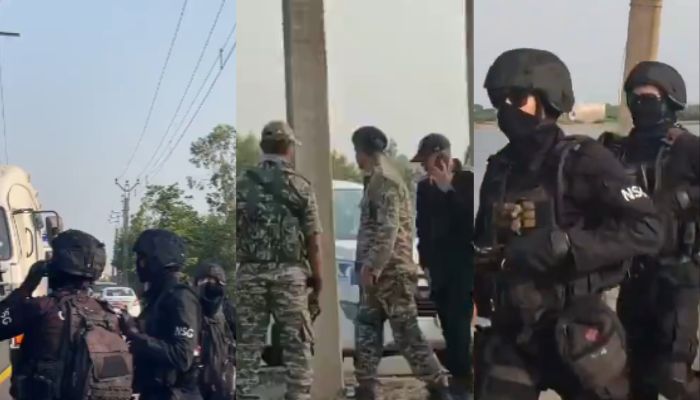
West Bengal: CBI recovers foreign weapons from Abu Taleb’s house in Sandeshkhali, NSG called in to diffuse crude bombs

Amid the second phase of Lok Sabha elections in West Bengal, a team of the Central Bureau of Investigation (CBI) has found a large cache of arms and crude bombs in Sandeshkhali village in North 24 Parganas district of the State.

According to Republic TV, a team of the National Security Guard (NSG) was brought in after the discovery of the arms, armaments and explosives in Sandeshkhali.

As per a report by The Indian Express, the CBI had been conducting raids in Sandeshkhali since Friday (26th April) morning after learning that a locked house belonging to a local resident has stored arms, crude bombs etc.

The central agency also brought in equipments to dig the floor of the house.

Visuals shared on social media by Republic Bangla highlight recovery of large cache of weapons. According to the channel, crude bombs were recovered from under the land ahead of the upcoming elections in Sandeshkhali.

In a tweet posted by BJP MP Locket Chatterjee, she said, “Amidst the recovery of arms in Sandeshkhali, the reign of fear perpetuated by Sheikh Sahajahan looms large. It’s time to dismantle the networks of terror and restore peace to the region. No more intimidation, no more violence.”

Citing sources, Republic Bangla also informed that the weapons, which also included imported ones, were recovered from the house of a man named Abu Taleb.

The investigative authorities are now probing whether the accused had stored Improvised Explosive Devices (IEDs) in the bunkers found at his house

Emory Professor in Atlanta knocked to the ground and handcuffed: How universities across the US have become a hotbed of pro-Hamas protests

Earlier this month, the United States got a taste of nuisance caused by gratuitous protests as a large number of students across campuses took to the streets in support of Hamas and Palestine and against Israel’s war against the October 7 terror attack. A video of a professor being decked to the ground by Atlanta police during one such protest has gone viral on social media.

In the video, a lady, a professor at the Emory University in Atlanta, expresses outrage over police action against protesters on campus. Subsequently, a police officer twists her hand and decks her to the ground, handcuffing her, even as the lady identifies herself as a professor at the university. 

According to the report, the Atlanta Police detained the professor, identified as Fohlin, for over 11 hours and charged her with “Battery Against Police Officer”.

Pro-Hamas protesters demonstrate against Israel-Gaza war across universities in the US

Numerous students are staging protests across various campuses in the US, including prestigious institutions like Columbia University, Yale, New York University, and MIT. Their demands include a permanent ceasefire in Gaza, an end to US military aid for Israel, divestment from arms suppliers and other companies profiting from the conflict, as well as an end to what they perceive as “genocide and occupation in Palestine.”

However, pro-Israel supporters express concerns about campus safety, alleging that these protests are fostering anti-Semitism, intimidation, and hate speech.

Columbia University’s vice president of public affairs, Ben Chang, emphasised that while students have the right to protest, they must not disrupt campus life or engage in harassment and intimidation.

The pro-Palestinian protesters come from diverse backgrounds, including Jewish and Muslim faiths, and are organised by groups such as Students for Justice in Palestine and Jewish Voice for Peace. At Berkeley, for instance, they set up approximately 15 tents, accompanied by teach-ins, interfaith prayers, and musical performances, with organizers disavowing violence against pro-Israel counter-protesters.

Key protest sites like Columbia University, Harvard, Yale, MIT, and NYU have witnessed significant demonstrations. At Columbia, over 100 pro-Palestinian demonstrators were arrested, with the university emphasizing safety by offering virtual options for classes. Harvard suspended the Harvard Undergraduate Palestine Solidarity Committee due to violations of school policy during a demonstration. At Yale, approximately 45 protesters were arrested for misdemeanour trespassing, and at MIT, students demanded a cease-fire, criticizing the school’s alleged complicity in the Gaza conflict. At NYU, an encampment faced police intervention due to disorderly conduct and reports of antisemitic incidents.

The impact of these protests extends beyond these campuses. California State Polytechnic University, Humboldt, cancelled in-person classes temporarily after students barricaded themselves, demanding disclosure of ties with Israel. Similarly, the University of Michigan emphasised allowing free expression and peaceful protests at graduation ceremonies while preventing substantial disruption.

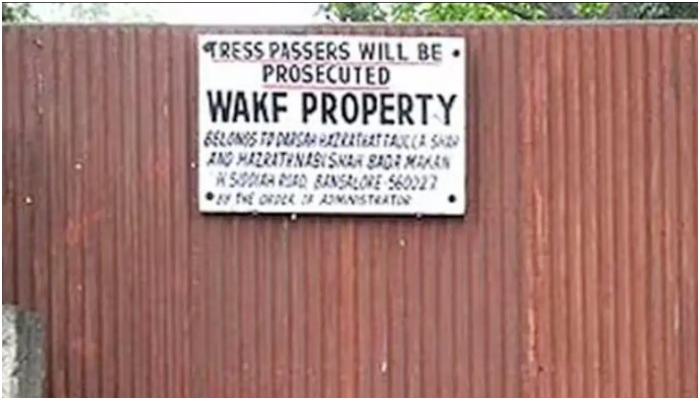
Madras HC declares amendment to Tamil Nadu law on Waqf properties unconstitutional, rules only Waqf tribunals can evict encroachments

On Thursday (25th April), the Madras High Court ruled that the Tamil Nadu Public Premises (Eviction of Unauthorised Occupants) Amendment Act 33 of 2010 was invalid in regards to the Waqf Act, 1995, and therefore it violated the Constitution.

The amendment granted the Tamil Nadu Waqf Board Chief Executive Officer (CEO) the authority to act as Estate Officer, allowing them to order the eviction of encroachers on waqf properties covered by the Tamil Nadu Public Premises (Eviction of Unauthorized Occupants) Act of 1976. However, now the court has ruled that the officer does not have the power to evict encroachments from Waqf properties.

The division bench of Chief Justice SV Gangapurwala and Justice D Bharatha Chakravarthy declared that encroachers of waqf properties could only be evicted through waqf tribunals constituted in response to the 2013 revision to Central legislation. The verdict came in the form of a series of writ petitions alleging that the State’s 2010 revision violated the Waqf Act of 1995. Some appeals were also filed to overturn a single-judge bench’s order issued in July 2023.

All of the petitioners and appellants were either renters whose leases had expired/determined, or they were considered encroachers on Waqf-owned properties/premises. On behalf of the petitioners/appellants, it was argued that the Waqf Amendment Act, 2013, modified the Waqf Act, 1995 especially to deal with the unauthorized occupation and eviction of waqf properties and that Section 54 clearly and categorically offers the procedure for dealing with such encroachments or unauthorized occupations.

The jurisdiction of the civil court, revenue court, and any other authority has been barred by the modified Section 85, which also includes the authority of the Estate Officer under the Tamil Nadu law, they claimed.

It was argued that because the Central Act seeks to cover all bases by providing a thorough method for evicting unlawful tenants from waqf assets, the challenged Tamil Nadu Act of 2010 is null and void. This is because any state legislation that conflicts with the Central Act would be replaced, they claim.

The Additional Solicitor-General of India, appearing on behalf of the Union of India, pointed out that the Union had not filed any affidavit supporting or opposing the petitioners. He contended that the Union was not required to take a stand because the challenge was to State legislation.

The Advocate-General for the State contended that both state and central laws might be in effect at the same time. Under this arrangement, the CEO of the Tamil Nadu Waqf Board might use state law to seek the expulsion of external encroachers on waqf property. Meanwhile, in circumstances involving complex title disputes, the CEO may seek relief from the Central Law Tribunal.

However, the division bench dismissed this contention.

The bench stated that the 2013 revision to the Central law followed the 2010 amendment to the State law. As a result, it may be assumed that Parliament was aware of the State amendment when it purposefully revised the Waqf Act in 1995. “Thus, It can be seen that the Parliament wanted to deal with all kinds of encroachments and to provide for effective mechanisms with respect to the recovery of possession thereof,” said the bench.

The Court additionally dismissed the Waqf Board’s/Waqfs’ position that if merely an application is presented to the Tribunal, the issue is determined by the Tribunal. It stated that the competence of the civil court, revenue court, or any other body to expel illegal tenants of waqf property is clearly excluded.

“The parliamentary law intends to secure the protection of waqf properties which requires uniformity of law and consistency of its application all over the country. The Central Act is thus made as an exhaustive code on the subject. Thus, the State enactment is repugnant to the Waqf Act, 1995, as amended in the year 2013”, the bench concluded. 

As a result, the court ruled that, upon application by the respective Waqf(s) or otherwise, the Chief Executive Officer is entitled to file an application against encroachers before the Waqf Tribunal under the Waqf Act, 1995 (as amended), and the Tribunal will consider the same in accordance with the law.

Furthermore, the court overturned the single-judge bench’s ruling and dismissed the proceedings launched against the appellants through the issuance of show cause notices under the authority of the 2010 State amendment.

INDI Alliance leaders should apologise for committing sin of creating doubt on EVMs, their dreams shattered by SC verdict: PM Modi

0

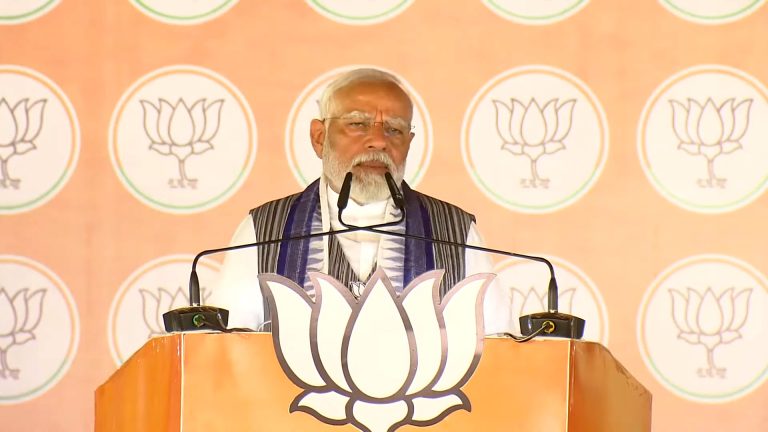
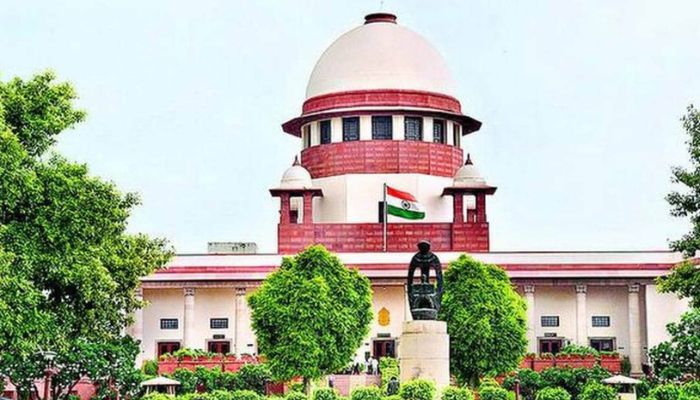
Prime Minister Narendra Modi on Friday attacked the INDIA bloc over the Supreme Court decision rejecting the plea for 100 per cent VVPAT verification of EVM votes and said every leader of the opposition grouping has “committed the sin” of creating doubts in minds of people about Electronic Voting Machine and “their dreams have been shattered”.

Addressing an election rally here, PM Modi alleged that RJD and Congress alliance in Bihar neither cares about the constitution of India nor about democracy.

“They did not let people exercise their right to vote for decades. Booth capturing was very common… They did not even let the people step out to vote… Now when the poor and honest voters have the strength of EVM, they are trying all they can to get rid of the EVM… Today, the Supreme Court has given a strong verdict saying that the old system of ballot paper voting will not come back,” PM Modi said.

He said opposition parties should apologise to the people for creating doubts about the Electronic Voting Machines (EVMs).

“Today, the whole world praises India for its democracy, for its election process, and its use of technology in the election process and these people for their own self-interest were defaming the EVMs. These people have continuously tried to betray democracy,” he said.

Targeting RJD and INDIA bloc parties, he alleged they are the people who for decades snatched the rights of the poor through the excuse of ballot paper.

“Polling booths were looted, paper ballots were looted. Today when voters have been empowered, those who indulged in loot on election day, tried to snatch, they are also uneasy, they have one task day and night that EVM should not be there,” he said.

“See the power of democracy and constitution of Dr Ambedkar. The Supreme Court has given such a shock to those who had the intention to loot ballot boxes that all their dreams have been shattered. The Supreme Court has made it clear that the old system of ballot paper will not return,” he said.

The Supreme Court of India on Friday rejected all the petitions seeking 100 per cent verification of EVMs votes with their Voter Verifiable Paper Audit Trail (VVPAT) slips.

PM Modi said that the love from the people is a big source of energy for him. “The love of Araria is a big source of energy for me. I will work hard and in the third term, there will be more decisions taken for the benefit of the nation and people.”

With 88 seats witnessing polling in the second phase of Lok Sabha polls, PM Modi urged people to vote in maximum numbers.

“I would like to appeal to the voters, especially the youth voters, to go out and vote…there should be an environment of festival at the polling booths,” he said.

PM Modi said the verdict of the 2024 Lok Sabha elections is to make India strong economically and people of Bihar have an important role to play.

“Today, there are two main streams in politics. One stream is BJP-led NDA which wants to strengthen the people of India… on the other side is INDI alliance which wants to fill their own pockets by seizing the property of the people,” he alleged.

The PM also highlighted the work done by the BJP for the people of the state and said under the PM Kisan Samman Nidhi, the farmers of Araria received Rs 1600 crore directly in their bank accounts.

“People of Bihar still shudder at the memory of the Jungle Raj. People from Araria and Seemanchal have made up their mind to teach a lesson to the nepotistic parties…,” PM Modi said.


This news report is published from a syndicated feed. Except for the headline, the content has not been written or edited by OpIndia staff)

‘Maybe I was born here in my last birth, or will be born again as child of a Bengali mother’: PM Modi seeing overwhelming love of people in Malda

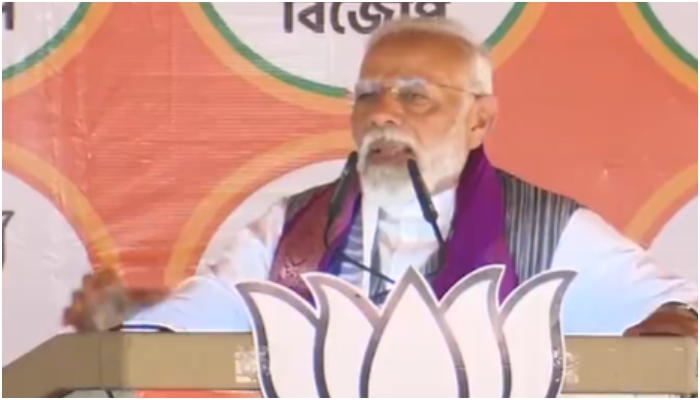
Amid the ongoing Lok Sabha elections 2024, Prime Minister Narendra Modi addressed the masses in the Malda region of West Bengal saying that he was feeling overwhelmed by the love and support extended to him by the voters of Bengal. “Aapka prem mere sar aankhon par…” said the Prime Minister during his rally in Malda as people loudly cheered ‘Modi-Modi’.

“You people are showering so much love that I think I have a deep-rooted connection with you all and West Bengal. As if I were born here in my past life or I will take birth here in my coming life, as the child of a Bengali mother. You people have gathered here in huge numbers and many are suffering due to heat and the crowd, but are still standing strong behind me. I feel overwhelmed,” PM Modi said.

During the address, PM took a jibe at the TMC and the Congress party saying that they both cared very little for the betterment of the country and its citizens. He said that in an attempt to appease the minority community, both parties were snatching the rights of Dalits and OBCs.

“TMC and Congress are just pretending to be in a conflict in the state, but the truth is, the character and ideology of both these parties is the same. Appeasement is the common thing between TMC and Congress, for which they can do anything and everything. They want to revoke each and every decision taken by us for the safety of our country. INDI alliance wants to revoke Article 370, TMC says it will abolish CAA… Many beneficiaries of the CAA include Dalits. For the sake of appeasement, TMC and Congress want to reject them,” he said.

Further, he said that the Congress party will continue to loot the people even after their deaths. “Congress has declared it will investigate all assets of the poor people. They have brought an X-ray machine from abroad and will conduct an X-ray of everyone in the country… They want to seize all assets, including jewelry and property, and give a part of it to their vote bank. But TMC did not speak a word against it and is supporting it by staying quiet… TMC settles illegal immigrants from Bangladesh in the state by giving them your lands, and Congress is talking about giving away your wealth to this vote bank… Congress’ loot will continue ‘Zindagi ke saath bhi, zindagi ke baad bhi’,” he said.

PM Modi meanwhile also said that the BJP intends to work for the farmers of Malda who grow the best Makhanas and mangoes. “We say that the mangoes and ‘makhana’ produced by the farmers of Malda is world famous. The income of these farmers should increase, for which, we will set up a food processing industry. TMC demands their share in that also,” he said.

“Nothing can happen in Bengal without corruption. They did not even spare farmers… TMC has regularly played with the future of Bengal’s youth… 26000 families were left jobless, along with the burden of loans they had taken to pay TMC to secure those jobs,” he added.

He further also said that the state of West Bengal had now become only the center of scams and corruption. “There was a time when Bengal was the driver of India’s development. Be it social reforms, scientific advancements, philosophical advancements, spiritual advancements, and even sacrificing life for the country. There was no sphere of life that was not led by Bengal. But first the Left, and then TMC rule, sabotaged the greatness and respect of this state and even stopped development. Under the rule of TMC, only one thing prevails in Bengal, which is thousands of crores of scams,” he stated.

General elections in India began on 19 April and will continue until 1 June 2024. The voting has been planned to happen in seven phases, to elect 543 members of the Lok Sabha. The votes will be counted and the results will be declared on 4 June 2024.

Supreme Court Registry rejects plea challenging constitutional validity of Collegium system

The Supreme Court’s Registry refused to register a writ petition filed by advocate Mathews J Nedumpara and others challenging the validity of the Collegium system of appointing judges in constitutional courts, stating that the plea was filed to overstep established legal principles or with an ulterior motive.

In a six-page order, Supreme Court Registrar Puneet Sehgal on 24th April said that the Collegium system had already been upheld, but the NJAC, which gave the government an equal involvement in judicial appointments, had been overturned by a Constitution Bench in October 2015. In 2018, a review plea against the judgement was also dismissed.

“In my opinion, the prayers as have been sought for have already elaborately been covered in the aforementioned judgment which is a judgment in rem dated 16th October, 2015. The present petition, in one manner or the other replicates the issues as have already been put to rest by detailed judgment (supra). In order to prevent needless waste of judicial time and energy, it is critical to ensure litigants do not overburden courts with the matters already stands adjudicated,” the SC registrar said.

“Additionally, the repeated litigation of an already adjudicated matter is generally not in the public’s best interest. The principle of res-judicata bars the invoking of provisions of law as sought by the petitioner. It appears that the present petition has been filed in order to over-reach the principles of settled law or with some ulterior motive,” he added.

The instant plea was brought on the grounds that the Collegium System of judicial selection has resulted in the denial of equal opportunity to petitioners and thousands of lawyers. The petitioners primarily sought a mechanism to replace the Collegium and a revision of the National Judicial Appointments Commission Act, 2014.

Given that the 2018 review plea against the NJAC judgement was also dismissed, the registrar said that that the petitioners, under the garb of Article 32 of the Constitution, are seeking a review of the 2015 verdict.

“By virtue of the present petition, the petitioners under the garb of original jurisdiction are seeking a review of the judgment dated 16th October 2015 remedy of which has already been exhausted in Review Petition (Civil) No. 3831 of 2018 and the same cannot be legally permitted to be re-agitated again. Moreover, once the Hon’ble Court has been pleased to settle down a law the same cannot be allowed to be reopened by invoking the civil original jurisdiction of this Court,” the Registrar said.

Notably, the NJAC was proposed as a body to appoint Chief Justices, Supreme Court judges, and High Court judges, replacing the collegium system. The commission was constituted under the 99th Constitutional Amendment Act of 2014. President Pranab Mukherjee signed the NJAC into an Act on December 31, 2014. According to the Act, the commission was composed of the Chief Justice of India (Chairman of the NJAC), two senior Supreme Court judges, the law minister, and the opposition leader.

Lok Sabha election: TMC workers attack BJP leader and workers, surround Balurghat candidate Sukanta Majumdar while raising offensive slogans

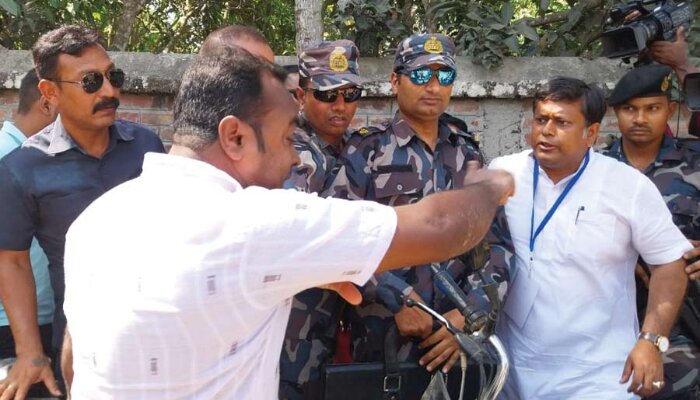
On 26th April, the second round of the Lok Sabha election commenced and reports of violence and altercations have already surfaced from West Bengal where voting is taking place in three North Bengal constituencies including Raiganj, Balurghat and Darjeeling. Notably, the members of the All India Trinamool Congress (AITC or TMC) camped out within 100 meters of a voting booth installed at Patiram Vivekananda Girls School in Balurghat in an attempt to influence the voters. Jyotish Roy, the general secretary of the Bharatiya Janata Yuva Morcha was physically assaulted for opposing the same.

BJP state unit president and Lok Sabha candidate from the area, Sukanta Majumdar reached the location upon receiving the information, however, he was met with “Go Back” slogans as the TMC workers surrounded him and started protesting which led to a conflict between the two sides. The BJP leader accused the TMC of “thuggery” as well as charged that the police administration is “pimping” for the TMC government and is not taking the necessary steps. Furthermore, he voiced that he had been the target of hostile slogans from TMC workers.

He also voiced his anger towards the IC (inspector-in-charge) and stated, “I have notified the Election Commission. Is it within the rules that slogans can be raised within 100 meters of the polling station? Our booth agent was beaten up. The TMC is indulging in hooliganism to win the election. IC isn’t doing its work properly. Two police officers have already been suspended for incompetence. If this continues then we will take action against the IC.”

Meanwhile, the TMC workers in Balurghat’s Khadimpur Masterpara attacked a BJP member for utilizing his democratic right to vote. The official handle of the party’s state unit also posted about the incident and wrote, “TMC’s goons strike again in Balurghat, Khadimpur Masterpara, assaulting a BJP activist for exercising his democratic right to vote. This blatant display of thuggery exposes TMC’s fascist agenda to suppress opposition voices. Shame on TMC for resorting to such cowardly tactics.” Additionally, the Election Commission of India was tagged to alert them to the situation.

TMC worker hurt in blast while making bombs

On the night of 24th April, 40-year-old Zinnah Ali was reportedly injured in his right hand in an explosion while constructing crude bombs in Murshidabad, West Bengal. His hand was blown as a result of the blast. The incident transpired in Munai Kandra hamlet, Burwan of the Berhampore Lok Sabha seat. A loud sound roused the residents from their sleep and they discovered Zinnah Ali lying unconscious in a pool of blood and was taken to Birbhum immediately.

Jayanta Das, the spokesman for the Murshidabad district Congress, stated that TMC workers were manufacturing homemade bombs to intimidate opposition members before the poll. There was a polling place 50 yards away from the location. The state police and district administration have been asked to provide a report by the Election Commission regarding the occurrence. Berhampore will go to elections on 13th May.

The incidents of finding country-made bombs during elections in the state are very common. A large number of bombs have been found in Murshidabad last year. Bombs are used in elections, ranging from panchayat to assembly and Lok Sabha. Last year, 35 bombs were found near the pond in Murshidabad on the repolling day of the panchayat elections. Likewise, there were reports of bombings on the day of the first voting phase. Bombs were also found outside the house of a BJP worker.