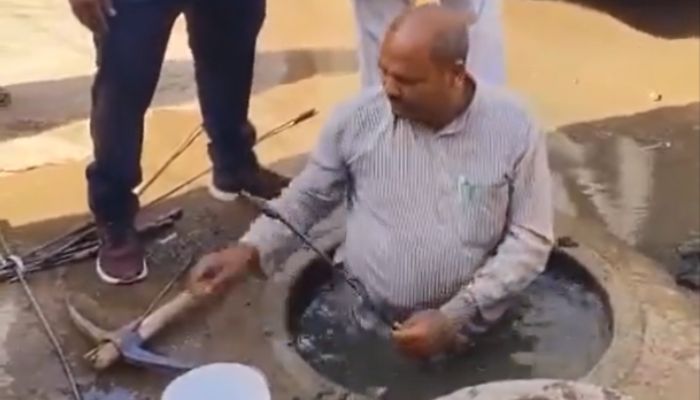
On Tuesday (2nd April), Devendra Rathore, a BJP councillor in Gwalior‘s Birla Nagar Gadaipura area in ward number 15, took matters into his own hands when his complaints about a jammed sewer chamber went unheard. Venturing into the chamber himself, he undertook the cleaning task. A large crowd gathered and recorded the event, which soon went viral on social media. Upon receiving word of the councillor’s actions, the commissioner promptly dispatched cleaning staff to the site, and the sewer chamber was cleaned.
In the Gadaipura area within Ward 15 of the city, the persistent jamming of a sewer chamber for the past 20 days has meant dirty water spilling onto the roads, causing distress among residents. Despite repeated complaints from locals and their councillor, Devendra Rathore, regarding this issue, no action was taken. Rathore escalated the matter by lodging multiple complaints to the nodal officer Lallan Sengar, as well as to the individuals in charge, Ramsevak Shakya and the contractor. However, these attempts were met with evasion, and no resolution was reached.
The councillor mentioned having lodged complaints with both the mayor and commissioner. However, with no response forthcoming, he took matters into his own hands, descending into the chamber himself on Tuesday, April 2, to clear the choked sewer. Upon the dissemination of the video showing the councillor undertaking the cleaning task, the commissioner sent the corporation staff to Gadaipura to clean the chamber.
On Tuesday (2nd April), Devendra Rathore, a BJP councillor in Gwalior’s Birla Nagar Gadaipura area in ward number 15, took matters into his own hands when his complaints about a jammed sewer chamber went unheard. Venturing into the chamber himself, he undertook the cleaning task. A large crowd gathered and recorded the event, which soon went viral on social media. Upon receiving word of the councillor’s actions, the commissioner promptly dispatched cleaning staff to the site, and the sewer chamber was cleaned.
Devendra Rathore said, “There was a big sewer problem in ward number 15 and dirty water was flooding inside the houses of residents. People were living with foul smell and the matter was also brought before the council but no one paid attention to it. After this, I told the Commissioner, also requested the Mayor and raised the matter in the Council but the issue was not addressed. After that, I realised I would have to solve this matter myself.”
He added, “People have given me the vote and I must value their vote, therefore, I cleaned the sewer as no one was listening and people were facing issues. After I did the cleaning, the Municipal Corporation employees also came and started cleaning.”
Councillor Rathore also crticised Mayor Sobha Sikarwar, saying that under the leadership of the Congress and with a Congress Mayor in office, the municipal corporation remained silent on the issue. He said, “The municipality here is under Congress. We have the government in the state but here we are working under the Congress mayor Sobha Sikarwar but she remains silent.”
Meanwhile, the Additional Commissioner of Gwalior Municipal Corporation, Munish Singh Sikarwar, said, “Wherever sewer-related problems arise, they are being resolved immediately. In that ward too, work was being done by the Municipal Corporation next to the sewer. If such information was received, it would also have been resolved.”
Notably, last year two workers lost their lives due to inhalation of poisonous gases while cleaning a sewer chamber in the same vicinity. Moreover, there are stringent directives from the Supreme Court explicitly prohibiting individuals from entering sewer chambers for cleaning purposes.
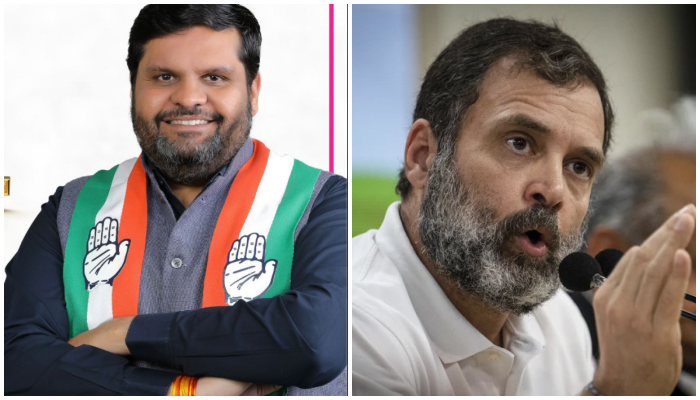
Congress leader Gourav Vallabh on Thursday resigned from the primary membership of the party ahead of the forthcoming Lok Sabha elections.
In a post on X, the leader posted his two-page resignation letter, which he sent to party President Mallikarjun Kharge.
He further said that he was quitting the party as he was not feeling “comfortable with the directionless way in which the Congress party is moving forward”.
कांग्रेस पार्टी आज जिस प्रकार से दिशाहीन होकर आगे बढ़ रही है,उसमें मैं ख़ुद को सहज महसूस नहीं कर पा रहा.मैं ना तो सनातन विरोधी नारे लगा सकता हूं और ना ही सुबह-शाम देश के वेल्थ क्रिएटर्स को गाली दे सकता.इसलिए मैं कांग्रेस पार्टी के सभी पदों व प्राथमिक सदस्यता से इस्तीफ़ा दे रहाहूं pic.twitter.com/Xp9nFO80I6
— Prof. Gourav Vallabh (@GouravVallabh) April 4, 2024
“I do not feel comfortable with the directionless way in which the Congress party is moving forward today. I can neither raise anti-Sanatana slogans nor abuse the wealth creators of the country. I am resigning from all posts and primary membership of the Congress party,” Vallabh said.
Gourav Vallabh contested the Rajasthan assembly election from Udaipur constituency in 2023.
However, the BJP candidate secured a comfortable win with a margin of over 32,000 votes.
Vallabh had made his poll debut in 2019 from Jharkhand’s Jamshedpur East, where he bagged over 18,000 and ended up in third spot behind then-sitting chief minister Raghubar Das and Saryu Roy.
He further alleged that the Congress party is moving in the wrong direction, against the ‘basic principle of the party’.
“These days the party is moving in the wrong direction. On one hand, we talk about the caste-based census and on the other hand, the party seems to oppose the entire Hindu society. This style of working gives a misleading message to the public that the party is a supporter of a particular religion only. This is against the basic principles of Congress,” he said.
He also alleged that Congress’s stand on economic matters ‘has always been to humiliate and abuse the wealth creators of the country’.
“Today we have turned against those economic liberalisation, privatization and globalization (LPG) policies for which the world has given us full credit for implementing in the country. Is it wrong to earn money by doing business in our country?” the leader said.
“Sir, when I joined the party, my only aim was to use my ability and capability in economic matters in the interest of the country. We may not be in power, but we could have presented the party’s economic policy-making in the national interest in a better way in our manifesto and elsewhere. But, this effort was not made at the party level, which is no less than a suffocation for a person with knowledgeable about economic matters like me,” he added.
(This news report is published from a syndicated feed. Except for the headline, the content has not been written or edited by OpIndia staff)
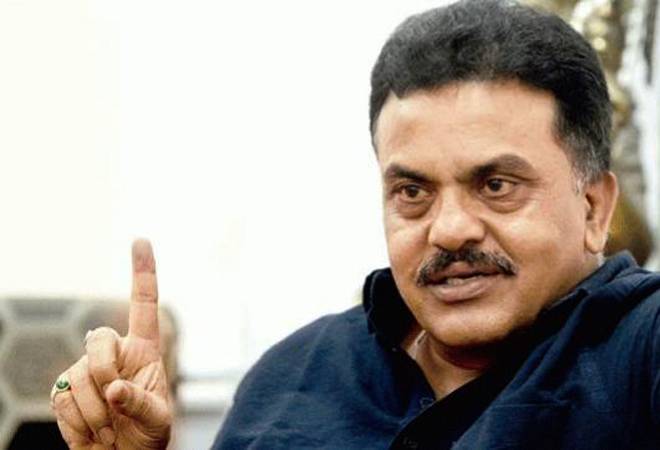
Maharashtra leader Sanjay Nirupam was expelled from the Congress for “indiscipline” and “anti-party statements,” Congress General Secretary K C Venugopal said in a statement.
“Taking note of the complaints of indiscipline and anti-party statements, the Hon’ble Congress President has approved the expulsion of Shri Sanjay Nirupam from the party for six years with immediate effect,” Venugopal said in the statement on Wednesday night.
The party’s decision comes after Nirupam was removed from the list of star campaigners for the Congress party in Lok Sabha general elections 2024 earlier in the day.
Maharashtra Congress President Nana Patole has said, “His name (Sanjay Nirupam) was mentioned in the star campaigners, which has been cancelled. The kind of statements he has been making, action will be taken.”
The action was taken for his recent remarks against INDIA block partner, Shiv Sena (Uddhav Balasaheb Thackeray), over seat-sharing for the Lok Sabha election.
Soon, after the Patole’s announcement, Sanjay Nirupam posted on X and said that he will take the decision to leave the party by himself.
“Congress Party should not waste much energy and stationery for me. Instead, use it to save the party. Anyway, the party is going through a severe financial crisis. The period of one week that I had given has been completed today. Tomorrow I will take the decision myself,” he said.
Sanjay Nirupam was keen to contest from the Mumbai North West seat but after the seat-sharing, the seat went to Shiv Sena (UBT) candidate Amol Kirtikar.
Nirpuam, who had represented Mumbai North in 2009 in the Lok Sabha, said that the decision of the Shiv Sena to field candidates in Mumbai was meant to sideline the Congress.
Notably, the state of Maharashtra with its 48 Lok Sabha seats, is the second-largest contributor to the lower house of Parliament after Uttar Pradesh.
In the 2019 Lok Sabha elections, the BJP won 23 out of 25 contested seats, while the undivided Shiv Sena secured 18 seats.
The undivided NCP, part of the opposition alliance, contested 19 seats and won four.
(This news report is published from a syndicated feed. Except for the headline, the content has not been written or edited by OpIndia staff)
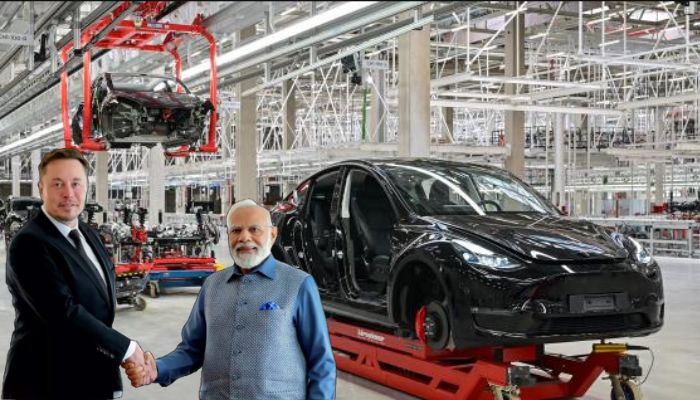
Billionaire Elon Musk-led Tesla Inc. has initiated its search to identify sites for building its proposed $2 billion to $3 billion Electric car plant in India. On Wednesday (3rd April), the UK’s Financial Times reported that the electric vehicle (EV) maker will send its team to India by late April to scout sites. As per the report, the team’s special focus is on states that already have automobile manufacturing hubs as well as ports to facilitate export. Reportedly, states like Maharashtra, Gujarat, and Tamil Nadu are on high priority for the company.
FT further reported, “Tesla might later also look at setting up its own battery plant, following the ‘gigafactory’ model it has followed at its plants in California, Texas, Berlin, and Shanghai, where suppliers have set up shop next to or near the mother plant.”
The development comes at a time when Tesla has reported a sharp decline in sales for the March quarter. The EV demand has plummeted in its main markets, the United States and China.
Meanwhile, the Indian government had in March reduced import taxes on certain electric vehicles produced by automakers that commit to invest at least $500 million (Rs 4,150 crores) and start commercial production in the country within three years.
Tesla CEO Elon Musk has been eyeing the Indian market for years but New Delhi has maintained that the EV maker has to commit to local manufacturing.
In June last year, Musk met Prime Minister Narendra Modi and the two held discussions on a range of issues including investment opportunities in India. After the meeting, Elon Musk said, “It was excellent and a very good conversation. I am confident Tesla will be in India and will do so as soon as humanly possible.”
Later in July of that year, the company said that it was interested in building a factory in India to produce an electric vehicle priced at $24,000. It had also sought lower taxes on more expensive models it wanted to sell in India, Reuters reported.
India’s electric vehicle (EV) market, though small, is on a growth trajectory and is currently dominated by domestic automaker Tata Motors. EVs accounted for approximately 2% of total car sales in India in 2023, with the government aiming to increase this to 30% by 2030.
Under the EV policy, it is mandated that companies achieve a localisation level of 25% by the third year and 50% by the fifth year of their entry into India to qualify for the lower customs duty of 15% on Completely Built Units (CBUs). This reduced duty applies to cars priced at a minimum value of $35,000 (approximately Rs 29 lakh), inclusive of costs such as insurance and freight charges.
Analysts in the automotive industry believe that this initiative will not only enable access to global technologies but also lead to an expansion of product range and improvement in cost competitiveness, ultimately driving increased adoption of EVs.
Global peace and security have been experiencing instability due to various conflicts and wars on multiple fronts. Additionally, the unprecedented COVID-19 pandemic exacerbated these crises, leading to multiple occasions when the large Indian diaspora found itself stranded in war-torn or crises-hit nations. However, while several major powers were caught wanting for opportunities to act or left their stranded diasporas on their own, a slew of successful rescue missions by the Modi government have underscored that Indians abroad can be assured of their safety amidst raging wars or unprecedented crises.
Throughout the tenure of the Modi government, numerous rescue operations were conducted. Following the onset of the COVID-19 pandemic in 2020, millions of stranded Indians in various foreign nations were safely evacuated, despite the absence of well-established norms.
Likewise, during the Ukraine-Russia war, Modi cabinet ministers visited the crisis-hit region and facilitated the evacuation of stranded Indian students. Additionally, the Indian Army also participated in evacuating members of the Indian diaspora from Sudan during this time. It is noteworthy that besides safeguarding Indian citizens, the Indian Embassy and Armed Forces have also assisted citizens of neighbouring countries, earning the moniker, ‘Vishwa Bandu’. Vishwa Bandu, translated as ‘Brother of the World,’ embodies the spirit of universal brotherhood, as brothers are not considered superior or inferior, fostering a sense of equality and solidarity.
Following is a brief listing of around 10 rescue missions undertaken during the ten years of the Modi government.
46 Indian nurses rescued from ISIS captivity in strife-torn Iraq in 2014
In June 2014, depressing news trickled in from strife-torn Iraq, where the Islamic State was making rapid territorial gains. The ISIS terrorists had managed to intrude into Tikrit as the Civil War between them and the Iraqi Army escalated. A contingent of Indian nurses was deployed to a hospital in Tikrit to look after the injured and sick. It was just weeks after Narendra Modi had sworn in as the Prime Minister with a very new cabinet.
46 Indian nurses were stranded in the hospital. All except one of the 46 nurses were from Kerala. For days on end, the nurses lived in perpetual fear of being assaulted and executed at the hands of their ISIS captors, who were also known for committing unspeakable atrocities against women and holding them as sex slaves.
Throughout their ordeal, the Indian Embassy in Baghdad steadfastly kept in touch with them on the phone and at times recharged their prepaid cell phones. On June 30, the nurses were ferried to the border by the ISIS terrorists. From their office at the border, another bus was arranged to transport the nurses to the Indian rescue team. They were then taken to the military office, and then Erbil airport after their documents were verified. The Indian Government had arranged a special flight from Delhi to Erbil to fly the nurses back. After 23 days of traumatic experience, the nurses, unscathed and unharmed, finally boarded the flight on July 5 and returned home.
The then External Affairs Minister Sushma Swaraj had maintained a continuous touch with all the major countries, including Saudi Arabia and Iraq. It is believed that New Delhi activated informal channels and established peripheral contacts with ISIS, and other splinter groups in Iraq to precipitate the rescue.
India extends the hand of ‘Maitri’ (friendship) to Earthquake-struck Nepal
In 2015, high seismicity earthquakes wreaked havoc in Nepal and some parts of India but given the strained economic and social condition of the Himalayan nation, it needed support and aid from multiple channels. Acting swiftly, the Modi government announced ‘Operation Maitri’ to give a massive thrust to its rescue and relief mission in quake-devastated Nepal.
India had deployed 12 heavy-duty military aircraft and 18 helicopters. Additionally, the country opened its four land routes to connect to Kathmandu and Pokhara Valley to safeguard men and materials.
In addition to aiding Nepal, India successfully evacuated over 43,000 stranded Indians via land routes by April 30th. The Air Force and Army conducted more than 11,000 evacuation missions, totaling over 2200 sorties, to transport people to safety. Moreover, Indian forces delivered over 1700 tons of aid supplies during this time. Additionally, Indian forces also conducted numerous rescues of Nepalese citizens.
More than 4,500 Indians and 960 foreigners evacuated from war-ravaged Yemen in 2015 under Operation Rahat
In 2015, as fighting raged between the Houthi rebels and the Yemeni government, thousands of Indians got stranded. This prompted the Modi government to launch ‘Operation Rahat’ to evacuate Indian citizens and foreign nationals from Yemen.
Since Yemen was not accessible by air due to a no-fly zone announced by Saudi Arabia, India chose Djibouti initially as a centre to carry out initial evacuation by sea. The Indian government also sent the then Minister of State for Overseas Indian Affairs General (Retd) V.K. Singh to oversee operations from the nearest port of Djibouti city.
The operation was launched on 1st April 2015 and ended on 11th April after ensuring the safety of all stranded Indians.
Under Operation Rahat, India rescued about 4,640 Indians stranded in Yemen, along with 960 foreign nationals from more than 41 countries including the US and the UK. Some of the countries did not have the operational capability to carry out a complex evacuation process so they sought India’s help. India happily obliged and rescued the beleaguered foreign nationals.
The then external affairs minister Sushma Swaraj had later revealed that PM Modi’s personnel connect in the form of a direct phone call to the Saudi King had facilitated this massive evacuation mission.
‘Operation Sankat Mochan’ in South Sudan
In 2016, a severe conflict erupted in the newest country in the world, South Sudan. The situation escalated into a civil war between the government and rebels. The then-president of South Sudan accused his former ally of rebellion. The country was already grappling with various problems, and the situation worsened. In July 2016, the Modi government announced ‘Operation Sankat Mochan’ to rescue its stranded citizens from the conflict-hit nation.
Under Operation Sankat Mochan, 300 Indians stranded in violence-hit South Sudan were rescued by the Modi government. Additionally, Indian armed forces also rescued other foreign nationals including Nepali citizens.
Again, it was General VK Singh who rose to the occasion and oversaw the execution of the rescue mission while remaining in the Middle-eastern region. The same was widely appreciated by the citizens for his relentless efforts in service of the nation like that of a soldier.
India exfiltrates CRPF contingent amidst escalating tensions in Libya in 2019
With the security situation on the ground rapidly deteriorating in Libya, the then External Affairs Minister Sushma Swaraj in April 2019 announced that an entire contingent of CRPF troops was removed from the conflict zone. The root of the crisis that continues to plague Libya to this day is the unrest that sparked the Arab Spring in 2011.
The infighting between warring factions had escalated in 2019 with the launch of a military campaign known as the Western Libya campaign, initiated on 4 April 2019 by Operation Flood of Dignity of the Libyan National Army to capture the western region of Libya and eventually the capital Tripoli held by the United Nations Security Council-recognised Government of National Accord.
The Indian government initiated a massive evacuation plan to rescue the marooned people from the country. Later, the then External Affairs Minister Sushma Swaraj tweeted that the evacuation of an entire contingent of CRPF forces was carried out as the situation in Tripoli had worsened.
During this time, some Indians residing in Tripoli were still hesitant to leave everything behind and get rescued from the war-torn country. With more than 500 Indians still in Tripoli, the then EAM Sushma Swaraj requested families and friends of people in Libya’s capital city Tripoli to persuade them to leave immediately amid an emergency.
Operation Samudra Setu and Operation Vande Bharat: Countrymen safely return to India amidst the scare of the COVID pandemic
The COVID outbreak hit the world in 2020, leading the world to a grinding halt and chaotic situation. A large number of Indians also got stranded abroad. The Modi government launched ‘Operation Samudra Setu’ and ‘Vande Bharat Mission’ to rescue
stranded Indians worldwide. The Navy deployed its ships Jalashwa, Magar, and Airavat, along with Shardul, for this purpose. During this period, the Navy safely brought back 3992 people from different countries.
While flights were suspended worldwide during the COVID, the Modi government, through the ‘Vande Bharat Mission,’ brought back its citizens from more than 100 countries. In a reply given in Parliament in March 2022, the Ministry of External Affairs stated that it had provided assistance to 2.97 crore people. During this time, Indians were rescued from countries including China, the United States, and Russia.
Operation Devi Shakti: Kabul evacuation in 2021 after the terror outfit Taliban took over Afghanistan
On August 15, 2021, while India celebrated its Independence Day, chaos unfolded in neighbouring Afghanistan. The terrorist organisation Taliban seized control of the country’s capital, Kabul. The democratically elected government led by Ashraf Ghani collapsed in the face of aggression by the terrorist outfit, following the withdrawal of US and Allied forces from Afghanistan. The Taliban’s takeover precipitated a humanitarian crisis and prompted the exodus of religious minorities, including Sikhs and Indians, as well as critics and opponents of the Taliban regime.
Consequently, the Modi government launched ‘Operation Devi Shakti’, under which more than 500 Indian citizens were safely evacuated. Additionally, around 110 Afghan Sikhs as well as Swaroop of Guru Granth Sahib were brought to India from Afghanistan. The pictures of Sikhs carrying Guru Granth Sahib on their heads have gone viral on social media.
Operation Ganga: Indian students rescued from Ukraine amid its war with Russia
In February 2022, war broke out between Russia and Ukraine. Russia initiated airstrikes on large areas of Ukraine. As a result, a significant number of Indians were stranded in Ukraine. Among these Indians, the largest number were students studying medicine in Ukraine. At the time the war began, there were over 20,000 Indians present in Ukraine. India utilised its diplomatic strength to evacuate students from Ukraine. Indian students later revealed that the Indian tricolour had come to their rescue as they were told that pasting the Indian tricolour in front of the vehicles would save them from shelling and gunfire as both Russia and Ukraine had agreed to cease hostilities in safety corridors for Indians.
The Modi government negotiated with Russia and Ukraine to create safe corridors for its citizens. During this time, under Operation Ganga, more than 18,282 Indian citizens were brought back via over 90 flights. Ministers of the Indian government were also actively involved in this entire mission. India also evacuated several Nepali citizens from Ukraine.
During the Budget Session of the Parliament in 2022, Foreign Minister Dr. S Jaishankar updated the Rajya Sabha about the details of the rescue mission. Back then, he had said, “India evacuated 147 foreign nationals from 18 countries during its evacuation mission.”
Operation Kaveri: To rescue stranded Indians from war-torn Sudan in 2023
In 2023, the Modi government launched Operation Kaveri to evacuate stranded Indians from war-torn Sudan. In April 2023, a fierce war broke out between two army factions in Sudan. More than 3500 Indians were stranded in Sudan. A large number of these were people who had gone from Karnataka. India launched Operation Kaveri to save them. Under Operation Kaveri, India evacuated 3961 Indians and 136 foreign nationals from Sudan.
The Indians were evacuated from Port Sudan to Jeddah after the Sudanese army and the paramilitary Rapid Support Forces (RSF) agreed to extend their ceasefire amid ongoing violence in the capital Khartoum and the western Darfur region. Indians were taken from Port Sudan to Jeddah on Navy ships and C-130J planes, from where they are being flown to India on C17 jet planes.
Operation Ajay
On 7th October 2023, the Islamic terrorist organisation Hamas launched an operation against Israel from land, air and sea killing over 1,200 men, women, children and Israeli soldiers. Following the terrorist attack in Southern Israel, there were concerns regarding the safety of Indian nationals, prompting the Modi government to announce Operation Ajay. Under this rescue operation, India safely evacuated more than 1300 citizens from Israel. India had also rescued several foreign nationals during this mission.
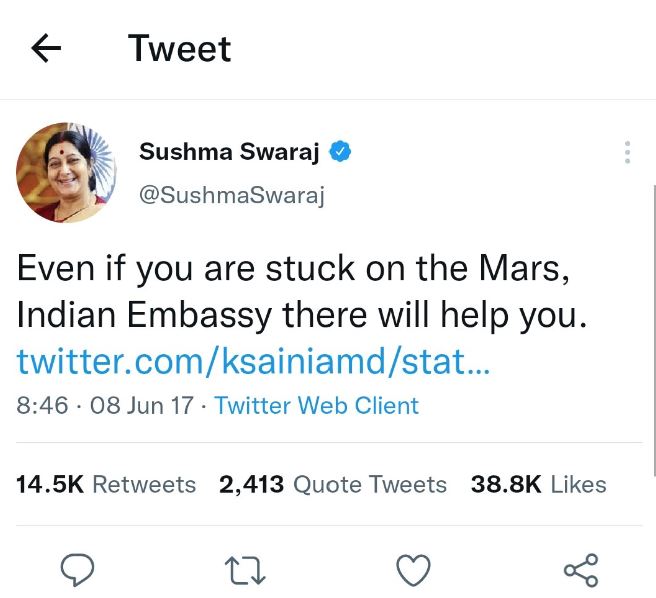
(Late Sushma Swaraj, Former Foreign Minister had assured stranded Indians about their safety, irrespective of their location)
“Even if you are stuck on Mars, the Indian embassy there will help you” – these reassuring words of the late stateswoman politician Sushma Swaraj, the then Minister of External Affairs, aptly sum up the Indian government’s policy of acting as a Sankatmochak for every stranded Indian and swiftly bringing them out of harm’s way, ensuring that no Indian is left behind.
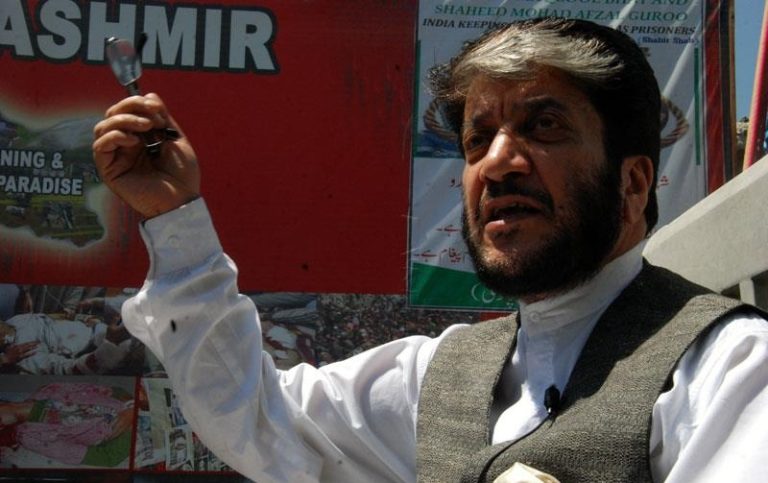
A tribunal set up by the union government has upheld the decision of the Union home ministry to ban the Jammu and Kashmir Democratic Freedom Party. On 5th October 2023, the Union Home Ministry banned the group for five years for its anti-India and pro-Pakistan activities.
Declaring the decision, the ministry said that this organization headed by jailed separatist Shabir Ahmad Shah has been involved in anti-national activities since year 1998 and its members have always promoted separatism and terrorist acts in India. The members of this organization, by inciting the people, want to make Kashmir a separate Islamic state, which is prejudicial to the sovereignty, security and integrity of India.
The ministry had added that many criminal cases have been registered against JKDFP under various sections of UAPA 1967, IPC 1860, The Arms Act 1959 and Ranbir Penal Code 1932.
After banning the group, the union government constituted a tribunal headed by a judge of the Delhi High Court to adjudicate if there is sufficient ground for declaring the Jammu and Kashmir Democratic Freedom Party. The UAPA tribunal was formed in October 2023 under sub-section (1) of section 5 read with sub-section (1) of section 4 of the Unlawful Activities (Prevention) Act, 1967 (37 of 1967), and it was headed by Delhi High Court judge justice Sachin Dutta
The mandate of the tribunal was to review the ban imposed on JKDFP. Now, after pursuing the matter for 5 months, the tribunal has upheld the decision to ban the group. The tribunal said that there is sufficient ground to declare Jammu and Kashmir Democratic Freedom Party an unlawful organisation under the provisions of the sub-section (3) of section 3 of the Unlawful Activities (Prevention) Act (UAPA) 1967.
Jammu and Kashmir Democratic Freedom Party was founded by Shabir Ahmad Shah, who is currently in jail after he was arrested by the ED in money laundering and terror financing cases. According to the Home Ministry, Shabir Ahmad Shah is a prominent separatist known for his anti-India and pro-Pakistan propaganda.
Shah had called Kashmir as a ‘dispute’ and ruled out any settlement within the framework of the Constitution of India, and the members of his organisation are been at the forefront of secessionist activities in the Jammu and Kashmir and want to create a separate Islamic State.
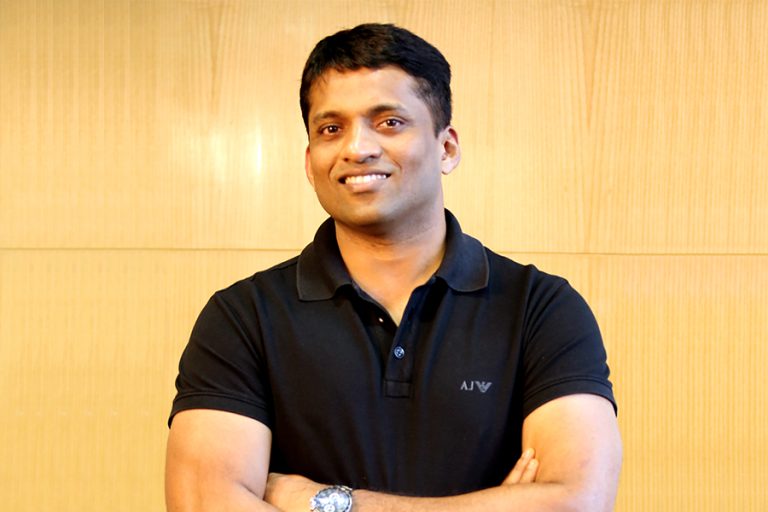
A year ago, Byju Raveendran’s net worth stood at ₹17,545 crore ($2.1 billion), earning him a place in numerous prestigious ‘world’s richest’ compilations. However, the recently unveiled Forbes Billionaire Index 2024 reports a significant drop to zero in Mr Raveendran’s net worth.
This sharp decline follows a series of crises that have shaken the once soaring startup, representing a notable fall from grace for the face of India’s startup landscape.
In acknowledging Byju’s removal from the list, Forbes stated, “Only four individuals from last year’s roster are absent this time, among them former edtech sensation Byju Raveendran, whose company Byju’s faced multiple crises, leading to a valuation markdown by BlackRock to $1 billion, a fraction of its peak $22 billion valuation in 2022.”
Established in 2011, Byju’s swiftly rose to become India’s most valuable startup, achieving a peak valuation of $22 billion in 2022. Raveendran’s brainchild disrupted the education sector with its innovative learning application, catering for elementary school to MBA students. However, recent financial disclosures and mounting controversies have severely impacted the company’s prosperity.
Byju’s challenges became evident when the company finally disclosed its long-awaited results for the fiscal year concluding in March 2022, revealing a staggering net loss surpassing $1 billion. This disappointing financial performance prompted BlackRock, a significant investor, to reduce its valuation of Byju’s to a mere $1 billion, marking a steep decline from its previous peak.
Byju Raveendran has faced substantial criticism for the company’s dwindling fortunes. Shareholders, including Prosus NV and Peak XV Partners, voted last month to remove Mr Raveendran as CEO, intensifying a struggle over the fate of the once high-flying online tutoring startup that is striving to sustain its operations.
Furthermore, Byju’s foreign investments have drawn scrutiny from the Enforcement Directorate. Before the lookout circular against its founder, the ED issued show cause notices to Byju’s parent firm, Think & Learn, over alleged violations amounting to over ₹9,362 crores under the Foreign Exchange Management Act.
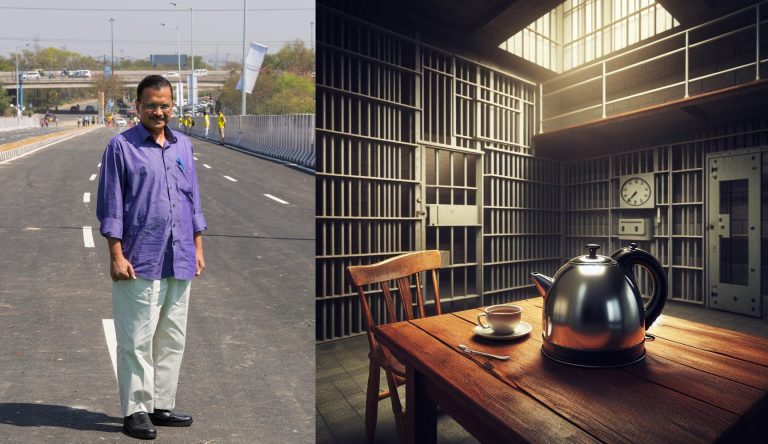
The Rouse Avenue Court on Wednesday allowed Arvind Kejriwal’s plea and directed Tihar jail authorities to provide an electric kettle to him and a table and chair for reading books, etc.
The Special Judge, Kaveri Baweja, on Wednesday allowed Kejriwal’s application
in view his medical condition and noted that electric kettle was required for heating water and for having tea, which he requires at frequent intervals.
The same court on April 1, 2024, sent the Delhi Chief Minister to judicial custody till April 15 in the excise policy money laundering case.
The Court on April 1, had directed Tihar Jail Authorities to allow Kejriwal to carry prescribed medicine, books, one table and chair, religious locket and special diet as prescribed by the doctors, as per Jail manual.
Kejriwal, through his lawyers, moved an application and sought permission to carry several books, including Bagwad Geeta, Ramayana and a book titled ‘How Prime Minister Decides’, authored by Neerja Chaudhary
Kejriwal was arrested on March 21 by the Enforcement Directorate in relation to the excise policy case and has spent 10 days in ED custody, after court direction.
Kejriwal was arrested by the central agency on charges of corruption in relation to the case. It is the first time in independent India that a serving Chief Minister has been arrested. The move came after Kejriwal skipped multiple summons by the investigation agency, nine in total, calling them “illegal.”
The case pertains to alleged irregularities and money laundering in framing and implementing the Delhi excise policy 2022, which was later scrapped.
While Kejriwal was not named in the FIRs registered by the ED or the Central Bureau of Investigation in the Delhi excise policy case, his name first found a mention in the ED’s chargesheet, wherein the agency claimed that he allegedly spoke to one of the main accused, Sameer Mahendru, in a video call and asked him to continue working with co-accused and AAP communications-in-charge Vijay Nair.
Nair was among the first people to be arrested by the CBI in the case, in 2022. Subsequently, former deputy chief minister Manish Sisodia and Rajya Sabha MP Sanjay Singh were arrested in connection with the case.
This news report is published from a syndicated feed. Except for the headline, the content has not been written or edited by OpIndia staff)
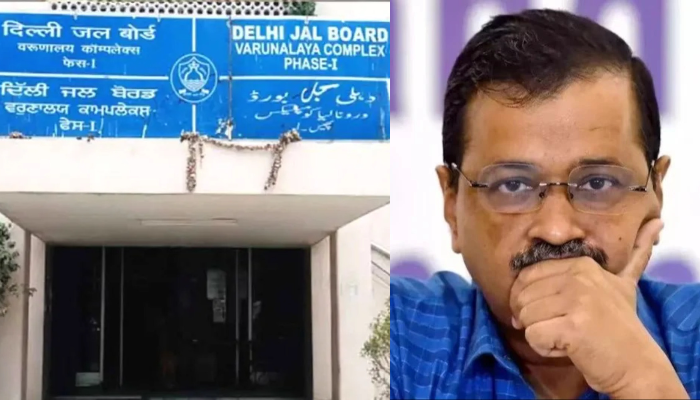
The Rouse Avenue Court in Delhi on 3rd April accepted the prosecution complaint submitted by the Enforcement Directorate (ED) in the Delhi Jal Board tender money laundering case. The move could result in creating further challenges for Chief Minister Arvind Kejriwal-led Aam Aadmi Party (AAP) administration. The agency arrested Kejriwal on 21st March in connection to the excise policy scam.
Delhi Jal board money laundering case | Delhi's Rouse Avenue court takes cognizance of chargesheet filed by the ED in the case, lists matter for hearing for tomorrow. The court issued summons to Devender Mittal and Tejinder Pal Singh to appear before the court and also issued a…
“From the material placed on record, it appears that all the accused persons/Company are either directly or indirectly found to be indulged or knowingly assisted or have been a party to or actually involved in the process or activities relating to the relation of the proceeds of crime or its concealment, possession, acquisition, use and projecting or claiming the same as untainted property. In the opinion of the court, there is sufficient material on record to proceed against the accused persons for the charges mentioned against them in the complaint.” Special Central Bureau of Investigation (CBI) Judge Bhupinder Singh pronounced will reading the order.
Special Public Prosecutors (SPP) Manish Jain and Advocate Ishan Baisla represented the ED before Special CBI Judge Bhupinder Singh while Advocate Nagesh Kumar Behl on behalf of the accused contractor. Attorney Behl contended before the Special CBI Judge that the ED could only become involved if there was a scheduled offence but in this case, it was only based on a CBI-filed FIR (First Information Report).
Additionally, he claimed in the remand request that the ED had purposefully misled the court by leaving out the dates of alleged transactions with Jagdish Kumar Arora. All of the accused who were not apprehended during the probe have now been summoned by the court on 4th April. A production warrant was also issued by the court, requiring the accused who were captured in the case to appear in court on the same day.
Delhi Jal Board money laundering scam
The Delhi Jal Board’s tender awarding method reportedly involved money laundering. Among those named in the ED’s chargesheet are Jagdish Kumar Arora, Anil Kumar Aggarwal and chartered accountant Tajendra Singh. Jagdish Arora and Anil Aggarwal were taken into custody by the agency on 31st January last year.
According to the Enforcement Directorate, NKG Infrastructure Limited was given the flow meter contract by Jagdish Kumar Arora, the former Chief Engineer of Delhi Jal Board, at an “inflated cost” of Rs 38 crore. The ED discovered throughout the inquiry that M/S NKG Infrastructure Ltd submitted falsified or misleading documents to secure the bid. It has been also revealed that Jagdish Kumar Arora knew the company didn’t match the technical requirements for the tender. Moreover, the ED disclosed that Anil Kumar Aggarwal’s sole proprietorship, M/S Integral Screws Ltd, was the recipient of the assignment subcontracted by M/S NKG Infrastructure Ltd.
It was also observed that only about Rs 14 crore of the Rs 24 crore payment that the Delhi Jal Board obtained was utilized for the contract work and the remaining amount was either misappropriated or spent as bribes. The ED further underlined that Jagdish Kumar Arora was paid a bribe of Rs. 3.19 crore, a portion of which he transferred to other Delhi Jal Board officials and the AAP to employ it in polls. According to the agency, Jagdish Kumar Arora, the former chief engineer of the Delhi Jal Board, “transferred” Rs 2 crore in bribe money to his departmental colleagues and the AAP for use as election finances.
The new money-laundering case is the result of a First Investigation Report that was filed by the Central Bureau of Investigation highlighting scheduled violations pertaining to bribery and corruption in the Delhi Jal Board under AAP. The ED announced that it had temporarily attached assets belonging to Jagdish Kumar Arora, his wife Alka Arora, Anil Kumar Aggarwal (proprietor of Integral Screw Industries, a subcontractor), and NKG Infrastructure Limited (contractor of Delhi Jal Board) totalling Rs 8.8 crore. The investigation team noted that all of these properties were situated in Delhi.
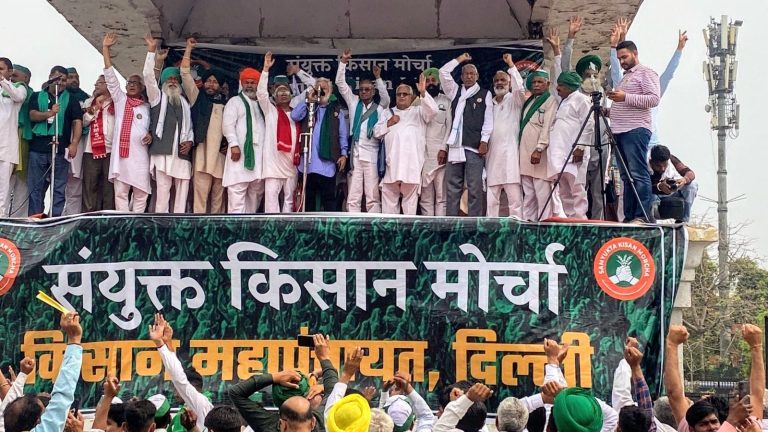
The Samyukt Kisan Morcha has called up the organisations and platforms of farmers, workers, students, youth, women and other sections including small traders, journalists, professionals, retired workers etc to join hands to convene Jana Mahapanchayat across India asking BJP to explain why farmers peaceful protest was stopped by the Union Government.
According to SKM, the Jana Mahapanchayat will appeal to people to discuss the livelihood issues- Agrarian Crisis, Minimum Support Price, loan waiver, unemployment, Labour Codes and privatisation of the public sector among others replacing the Ayodhya, religious disputes and narratives on corporate development by the RSS-BJP combine that divert the attention from the real issues of the people.
The Jana Mahapanchayat will appeal to all the people to stamp out the trends of dictatorship being exhibited by the Modi Govt. and protect the democratic, secular, and federal principles enshrined in the constitution of India.
“The Union Govt. stopped farmers from peacefully marching to the capital at Delhi borders during the 13-month period in which 736 farmers became martyrs. Peaceful protest to put pressure on the elected government is the democratic right of the citizens as enshrined in the Constitution of India and endorsed by the Supreme Court.” the release said.
The Delhi Police detained 400 farmers from Karnataka at Nizamuddin Railway station in Delhi and prevented them from attending the Mahapanchayat on March 14, 2024, at Ramlila Ground.
The Delhi Police ordered Delhi Gurudwaras not to serve langar, or provide shelter to farmers thus blocking them from holding high their great tradition of selfless service to humanity.
“Even today, the farmers are blocked at the Haryana border and the Haryana state government led by BJP had killed Shubkaran Singh a young farmer on 21st February 2024. The BJP has given Kheri seat to Ajay Mishra Teni, the main conspirator of the Lakhimpur Kheri farmers’ massacre. BJP has become the political agent of Corporate – Communal- Criminal -Corrupt Nexus that controls the political economy of India. Posters and banners will be put up in the villages raising these questions to the BJP.” the release from SKM read.
The Sikkim Kisan Morcha said that the Prime Minister never called the farmer’s representatives to discuss the burning issues raised during the 13-month-long historic farmers’ struggle and the governance in the last ten years reveals the dictatorial tendencies of Prime Minister Narendra Modi, said the SKM release.
“Though the model code of conduct has come into force, the Modi government has dared to arrest and jail the opposition leaders including Arvind Kejriwal and Hemant Soren, the chief ministers of Delhi and Jharkhand respectively, seized the accounts of the opposition political parties and the Enforcement Directorate summons the candidates of opposition political parties on pending cases thus denying the level playing ground to the opposition. The situation brings apprehension on the Election Commission of India, the statutory institution, whether the election will be conducted in a fair and trustworthy manner.” SKM added.
This news report is published from a syndicated feed. Except for the headline, the content has not been written or edited by OpIndia staff)