Home Blog Page 1249

Zomato brings ‘Pure Veg Mode’, and ‘Pure Veg Fleet’ for vegetarians who do not like mix-ups: CEO Deepinder Goyal announces

Food delivery aggregator Zomato has often faced criticism from ‘pure veg’ users who have sometimes found non-veg items on their food order. On March 19, CEO Deepinder Goyal announced that Zomato has brought a new service ‘Pure Veg Mode’ to serve its pure veg customers.

“India has the largest percentage of vegetarians in the world, and one of the most important feedback we’ve gotten from them is that they are very particular about how their food is cooked, and how their food is handled. To solve for their dietary preferences, we are today, launching a Pure Veg Mode along with a Pure Veg Fleet on Zomato, for customers who have a 100% vegetarian dietary preference”, Deepinder Goyal announced today.

Goyal further explained that Pure Veg Mode will consist of a curation of restaurants that serve only pure vegetarian food, and will exclude all restaurants which serve any non-veg food item.

“Our dedicated Pure Veg Fleet will only serve orders from these pure veg restaurants. This means that a non-veg meal, or even a veg meal served by a non-veg restaurant will never go inside the green delivery box meant for our Pure Veg Fleet”, he added.

Goyal added that anyone who prefers pure veg food can avail the service and this Pure Veg Mode, or the Pure Veg Fleet doesn’t serve or alienate any religious, or political preference.

Goyal further added that Zomato is planning more specialised fleets for special customer needs. “For example, there’s a special cake delivery fleet coming up with hydraulic balancers which prevent your cake from getting smudged during delivery”, he explained.

In India, some pure vegetarian people do not like their vegetarian food mixed up with non-vegetarian food, or served along with non-vegetarian orders. Some families even skip restaurants because of religious concerns around ‘pure veg’.

In the past, Zomato has often faced criticism for sending food orders that mistakenly mix up non-veg items. This is a concern with restaurants that serve both veg and non-veg food. Sometimes, vegetarian customers have even complained of finding bones and meat pieces in their food orders, bringing much condemnation for the delivery service and its standards.

RTI reveals that Modi govt spent ₹15.6 lakh crores on subsidies for food grains since 2018, highest during Covid

The Ministry of Consumer Affairs, Food and Public Distribution has informed that the Narendra Modi-led-Central government has spent ₹15.6 lakh crores on subsidies for food grains since 2018.

The Union Ministry made the revelation in its Right to Information (RTI) reply on 5th March this year. An RTI was filed by activist Piyush Tripathi, seeking information about the cost incurred by the Centre for the distribution of wheat, rice and important food grains in the past 5 years.

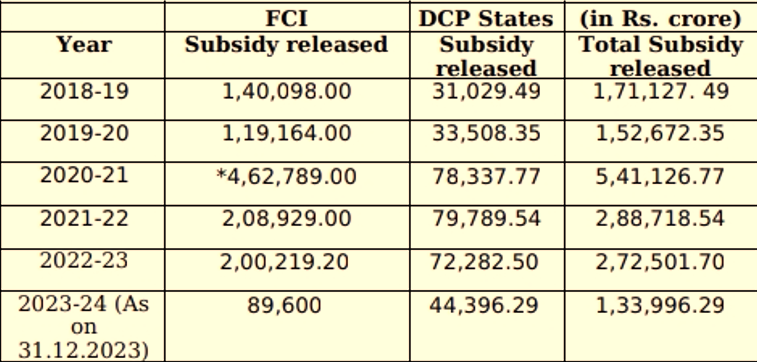
In its reply, the Ministry of Consumer Affairs, Food and Public Distribution stated that the Modi government spent ₹1.71 lakh crores during 2018-2019 while giving subsidies totalling ₹1.52 lakh crores during 2019-2020.

Screengrab of the RTI reply

During the Covid-19 pandemic, the Modi government increased its spending to procure food grains. Between 2020 and 2021, the annual spending increased to 5.41 lakh crores.

The subsidies on food grains remained at ₹2.88 lakh crores in 2021-2022 while it was about ₹2.72 lakh crores in 2022-2023. As of 31st December 2023, the Modi government spent ₹1.33 lakh crores on food grains. In total, the Centre paid ₹15.6 lakh crore in subsidies in the past 5 years.

The food grains were procured through the Food Corporation of India (FCI) as well as the Scheme of Decentralised procurement (DCT) States, namely, West Bengal, Madhya Pradesh, Chhattisgarh, Uttarakhand, Andaman & Nicobar Islands, Odisha, Tamil Nadu, Gujarat, Karnataka, Kerala, Andhra Pradesh, Bihar, Rajasthan, Punjab and Telangana.

In a tweet, RTI activist Piyush Tripathi wrote, “The Government of India, which works in the interest of farmers and public, purchased grains from farmers at MSP even during COVID and gave subsidy of ₹ 5 lakh crore to FCI and states during COVID. Rs 15 lakh crore has been spent in the last 5 years to distribute grains to the poor. I received this information through RTI.”

The response of the Ministry of Consumer Affairs, Food and Public Distribution comes at a time when one group of ‘farmers’ have been protesting in the National Capital for Minimum Support Price (MSP) on all crops, fixed daily wages, pensions and forgiveness of all farmer loans.

They are not ‘Pakistanis’, they are Indians who became victim of partition: Citizenship Amendment Act is India’s moral responsibility

The Citizenship (Amendment) Act 2019 was passed by both houses of Parliament in December 2019. After enduring a four-year struggle, the detailed 39-page rules outlining the qualifications and procedures of the Citizenship (Amendment) Act of 2019 were officially notified in the Gazette of India on 11th March 2024. This significant development signals the commencement of the Act’s implementation, marking a decisive step towards fulfilling the promises laid out by the framers of the Constitution.

The provisions governing citizenship are delineated in Articles 5 to 11 of the Indian Constitution. Upon the implementation of the Constitution of India on 26th January 1950, individuals born in British India automatically acquired Indian citizenship. However, numerous residents from the former princely states refrained from acquiring Indian citizenship. Subsequently, in 1955, the Citizenship Act was enacted, granting citizenship to all such individuals.

The Citizenship Act underwent amendments in 1986, 1992, 2003, and 2005 to extend citizenship to individuals residing in territories integrated into India following the resolution of land disputes. These territories include regions from Goa, Daman and Diu, Dadra and Nagar Haveli, Pondicherry, Karaikal, Mahe, Yanam, Bangladesh, and Pakistan. The Citizenship Amendment Act of 2019 was enacted to offer Indian citizenship to minorities in Muslim-majority neighbouring nations such as Pakistan, Bangladesh, and Afghanistan. These minority communities include Hindu, Sikh, Christian, Buddhist, Jain, and Parsi communities.

The rules notified in the Gazette are simple, easy to work, and sensible. In this, the complex process has been simplified to remove all the obstacles in obtaining citizenship. Under this, the applicant will have to submit any one of the 20 documents like his or her father’s / grandfather’s / grandfather’s passport issued by the Government of Pakistan / Bangladesh / Afghanistan or any document related to citizenship there, residential permit issued by the Government of India or birth/marriage certificate, Aadhaar card, PAN card, driving license, ration card, bank passbook, post office account, life insurance policy etc.

In the absence of certificates from the aforementioned lists, individuals will need to affirm their eligibility by providing an affidavit. Certificates issued by local governing bodies such as Gram Panchayat, Nagar Palika, or Municipal Corporation, confirming the date of asylum in India, are also accepted. Moreover, instead of applying at the District Magistrate’s office, individuals can now submit their applications through a centralised online portal.

The Act previously had a narrow list of acceptable documents for submission by applicants. Now, it has been significantly expanded to include a more comprehensive range. Additionally, candidates were required to present a certificate from an educational institution demonstrating proficiency in any one of the 22 languages listed in the Eighth Schedule, along with an affidavit of qualification from two Indian citizens other than themselves. These stringent regulations and complex procedures have been streamlined to ensure that the targeted community can promptly and effectively access the anticipated benefits of this Act.

Since 2019, opposition-ruled states such as West Bengal, Kerala, Tamil Nadu, Delhi, and Punjab have openly opposed the Citizenship Amendment Act (CAA). This opposition is rooted in the longstanding tradition of political appeasement towards the Muslim community.

Considering the lack of cooperation from parties engaged in communal politics and their respective state governments, a ‘Central Competent Committee’ will be established to streamline the citizenship application process. This committee will include representation from the relevant state governments.

District-level committees will also be formed to support the aforementioned committee, with their role being to initiate preliminary actions. This adjustment aims to mitigate unwarranted opposition and interference from state governments. It’s important to note that citizenship falls within the purview of the central list in the Constitution.

It remains concerning that minority communities such as Hindus, Sikhs, Christians, Jains, Buddhists, and Parsis in neighbouring Muslim-majority countries continue to face inhumane treatment and persecution. Since 1947, the number of displaced individuals in India has steadily risen due to religious persecution in these countries.

It is our moral and humanitarian duty to accept persecuted religious minorities as Pakistan did not comply with the Nehru-Liaquat Agreement for the Protection of Minorities. Those who have been persecuted for years due to religious reasons, whose homes, property and shelter have been left out, should they also be denied the right to lead a normal life? And should a country ignore them, of which they were citizens before partition? They were also assured of their safety, dignity and rights.

The religious faith with which they have been brought up, the faith which they value more than their lives, because of that faith and belief, they have to suffer humiliation, neglect and persecution. Seventy-five years ago, they were residents of this country, so naturally, they would expect refuge and help from their motherland India. A constitutional solution to this problem and fulfilling its pre-assurance was necessary for a sovereign nation.

Therefore, this bill to grant citizenship was necessary to protect the human rights of persecuted minorities (who have been living as illegal migrants for decades) from Pakistan, Bangladesh and Afghanistan. These countries have been incapable of protecting the rights of their minorities. Therefore, India has made this amendment considering it its duty to protect its citizens of undivided India on humanitarian grounds.

This amendment aims to provide a dignified life to persecuted religious minorities who are unable to freely practice their faith in their home countries. Under the Citizenship Act of 1955, illegal migrants were ineligible for Indian citizenship. They could apply for citizenship under Section 5 of the Citizenship Act, but if unable to provide evidence of Indian origin, they were required to pursue citizenship through “naturalization” under Section 6. This often resulted in the deprivation of numerous opportunities and benefits for them.

The Citizenship Amendment Act provided that these persons (Hindus, Sikhs, Buddhists, Jains, Parsis and Christians from Afghanistan, Bangladesh and Pakistan) should stay in India for at least 11 years to get citizenship by naturalization but in this new act this period is reduced to 5 years, that is, they would become citizens of India only after 5 years of living in India.

These Islamic countries were formed by the partition based on religion. Therefore, this amendment does not make any provision for the Muslim community there because Muslims are neither a minority in these countries nor are they facing any persecution on religious grounds. It is also not affecting the citizenship of any Indian minority, especially the Muslim community. This amendment does not violate anyone’s citizenship but gives legal rights to the deprived ones.

This Act does not confer citizenship indiscriminately; rather, only individuals who entered India by the cutoff date of 31st December 2014, will be eligible to apply for Indian citizenship through the central government.

Citizens of Islamic countries such as Afghanistan, Bangladesh, and Pakistan, including those of Islamic faith, can also seek Indian citizenship through the “citizenship by application” provision. This rule applies to all foreign individuals, and their applications are evaluated by the Government of India for consideration. For instance, Pakistani singer and artist Adnan Sami was granted Indian citizenship on 1st January 2016.

The CAA gives priority only to the six minority communities displaced due to extreme religious persecution from three countries if they fulfil the prescribed criteria. Therefore, opposing it for political reasons is illogical, inhuman and unconstitutional. As the nation goes for the general elections, the opposition should show sensitivity, understanding and restraint and avoid a repeat of the Shaheen Bagh protests and the Delhi riots.


Chhattisgarh: 15-year-old boy sexually assaults a three-year-old girl after locking themselves in a toilet, booked under the POCSO Act

0

A horrifying incident took place in Chhattisgarh’s Bilaspur city where a 15-year-old boy sexually assaulted a three-year-old girl after locking themselves up in a toilet, unmoved by the toddler’s screams and unfazed by her mother’s desperate banging on the door, police said on Monday.

In her search for her daughter, the girl’s mother was informed by a resident that the girl had been seen with the boy. Upon reaching the boy’s house, officials stated that the boy’s uncle informed her that the girl was not there. Subsequently, the mother resumed searching throughout the neighbourhood.

Returning to the boy’s house, she demanded to see him. Despite the uncle’s claim that the boy was in the bathroom, she persisted in opening the door. Officials stated that after significant resistance, the boy finally opened the door, revealing the girl inside in an unconscious state.

“The girl was hurried to a private hospital, where admission was refused. She was then swiftly taken to a government hospital, where she was declared deceased. A post-mortem report later revealed injury marks on her private parts,” an official stated.

The police officials said the boy first sexually assaulted the toddler and then when screamed, smothered her to death.

Authorities have filed a case under the POCSO Act and are currently questioning the accused. Bilaspur City SP Umesh Prasad Gupta disclosed that the girl and her parents were tenants in the accused’s family-owned house. Despite the boy’s attempt to flee, he was apprehended and handed over to the police.

A large crowd gathered at the local police station, demanding strict action against the accused. SP Rajnesh Singh arrived promptly to take control of the situation, assuring the crowd that measures would be taken according to the guidelines of the Juvenile Justice Act.

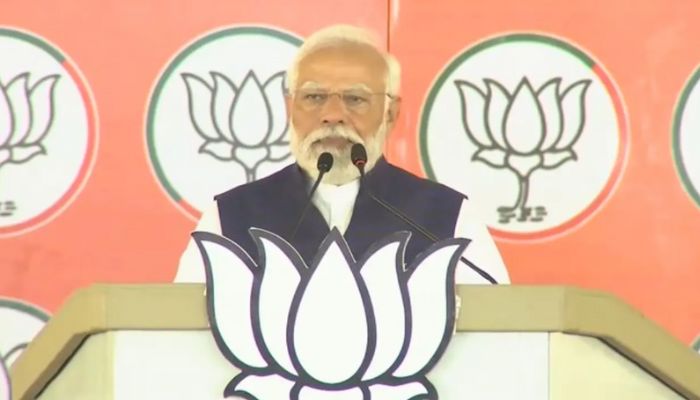
“Vinash unka hota hai jo Shakti ko khatam karne ka vichar rakhte hain”: PM Modi in Tamil Nadu

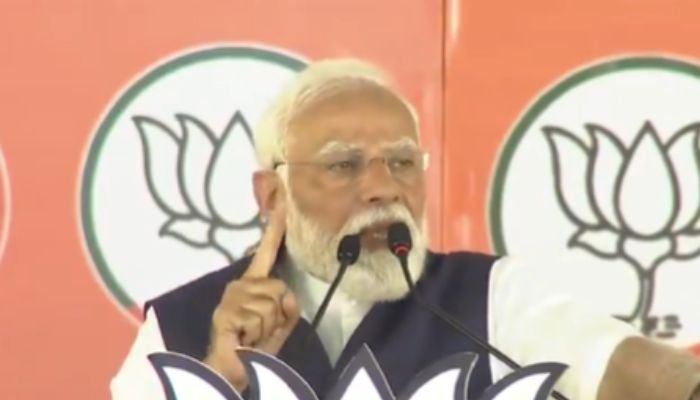
Prime Minister Narendra Modi on Tuesday accused the INDIA bloc leaders of “deliberately insulting” Hindu dharma and said that the opposition’s leader’s every statement against the religion is very “well thought out.”

Addressing the rally in Salem, the Prime Minister said that Tamil Nadu has decided that every single vote on April 19 will be given to the BJP-NDA.

“The INDI Alliance people repeatedly and deliberately insult Hinduism. Notably, every statement they make against the Hindu religion is very well thought out! The INDI Alliance of DMK and Congress does not insult any other religion. It does not utter a single word against any other religion. However, when it comes to the Hindu religion, they don’t leave any chance to abuse and insult it,” PM Modi said.

Prime Minister Modi again slammed Rahul Gandhi over his ‘Shakti’ remark and said that the election campaign has just started, and the plans of the INDI Alliance have been revealed in their first rally itself.

“During their first rally in Mumbai, they made statements about destroying ‘Shakti’, about fighting against ‘Shakti’. Their statement has been a sheer insult to the Hindu religion, Hindu faith,” he added.

“Mariamman yahan ki Shakti hai. In Tamil Nadu Kanchi Kamakshi is ‘Shakti’, Madurai Meenakshi is ‘Shakti’…Congress, DMK and the INDI alliance says they will destory this (Shakti). Hamare shastra sakshi hai ki vinash unka hota hai jo Shakti ko khatam karne ka vichar rakhte hai’ In Hindu Dharma, ‘Shakti’ means “Matra Shakti, Naari Shakti.”,” the Prime Minister said.

The Prime Minister said that everyone witnessed the kind of behaviour the INDI alliance does with women.

“You all are witness to the kind of behaviour INDI alliance does with women. When former state CM J. Jayalalithaa was alive you all know how DMK leaders behaved with her. This is DMK’s real face,” he added.

He further asserted that the DMK and Congress are two sides of the same coin.

“DMK and Congress are two sides of the same coin. DMK and Congress means- Big corruption and one family rule. When the country got rid of Congress, the country reached 5G technology. But in Tamil Nadu DMK is running its own 5G- one family’s fifth generation to have control over Tamil Nadu,” he added.

He further stated that one of the Defence Corridors being established in India is in Tamil Nadu.

“The BJP government is establishing 7 Mega Textile Parks across the country. Notably, one among those exists in Tamil Nadu. Our government is leaving no stone unturned to ensure the development and prosperity of Tamil Nadu. From free medical treatment to providing tap water connections in homes, from free ration facilities to benefiting women of Tamil Nadu through MUDRA Yojana, we have ensured to give the best, to serve the best,” he added.

PM Modi said that the people are enthusiastic about the BJP, and this has been troubling the INDI Alliance.

“Tamil Nadu has decided that on April 19, every vote will go to BJP, to NDA. Tamil Nadu has decided that ‘Abki Baar, 400 Paar’. For a developed India, we need ‘400 Paar’. For a developed Tamil Nadu, we need ‘400 Paar’. For a self-reliant India, we need ‘400 Paar’. Today, our entire country is watching the huge public support and love that Tamil Nadu is showering upon the BJP,” he added.

During the 2019 general elections, the Dravida Munnetra Kazhagam-led Secular Progressive Alliance, which comprised INC, VCK, MDMK, CPI, CPI(M), IUML, MMK, KMDK, TVK, AIFB, registered a landslide victory by winning 38 of the 39 seats.

In 2019, the DMK won 23 Lok Sabha seats with 33.2 per cent vote share, Congress bagged 8 seats with 12.9 per cent vote and CPI won 2 seats in Tamil Nadu. CPI(M) got a seat, IML won 1 seat and independents were elected on 2 seats.

Tamil Nadu will see voting on all 39 Lok Sabha seats in Phase 1 on April 19. Votes will be counted on June 4. (ANI)

(This news report is published from a syndicated feed. Except for the headline, the content has not been written or edited by OpIndia staff)

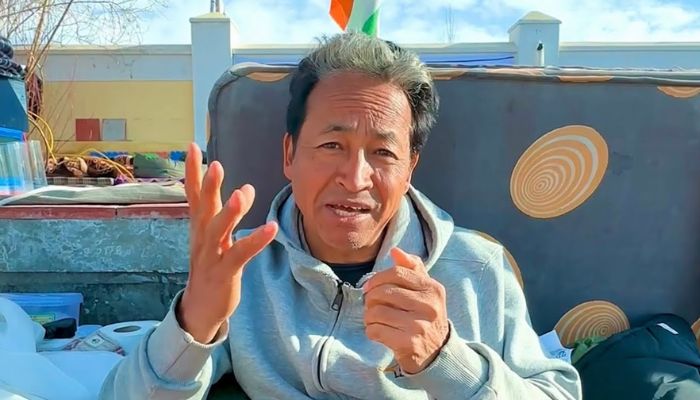
‘Ram put Sita for sale in open market’: Ladakh activist Sonam Wangchuk makes derogatory comments on Hindu Gods to justify his climate protest

On Monday (18th March), climate activist Sonam Wangchuk stirred a controversy after making highly objectionable remarks about Goddess Sita during an interview. The activist who has been observing the ‘fast unto death’ protest for the last 13 days said that “Modi government has turned out to be such a Ram who rescued Sita from Ravan but sold her on the open market after that.”

In a conversation with NDTV, Sonam Wangchuk attacked the Bhartiya Janata Party while accusing it of not fulfilling the poll promise to include Ladakh in the Sixth Schedule of the Constitution and give statehood to the region. However, during the interview, Wangchuk made an outrageous remark about Lord Ram and Goddess Sita and said, “In 2019 I never saw people of Ladakh so thankful when the Centre declared Ladakh a Centre-administered Union Territory. But, they saved us from one problem but landed us in another (Unhone ne hamein aasmaan se bachaya par khajoor mein atkaya).”

“I see it in the way that they [Central government] turned out to be such Ram who freed Sita from Raavan but didn’t take her home rather they put her on sale in an open market. So like this, they have left Ladakh open for industrialists and mining lobbies without any protection [from the government],” Wangchuk continued.

Many on social media have condemned the derogatory statements made against Hindu Gods.

Sonam Wangchuk’s 21-day climate fast

On the 6th of March 2024, climate activist Sonam Wangchuk announced a ‘fast unto death’ to draw attention towards climate change and raise the demand for the restoration of statehood for Ladakh. The activist is joined by many locals in the protest demanding the government to give assurance to protect the identity of Ladakh under the sixth schedule in addition to providing democratic representation. Notably, at present Ladakh has one seat in Lok Sabha, however, no representation in Rajya Sabha. In addition, the protestors are also demanding that a public service commission be set up in Ladakh to ensure jobs for the local people.

Notably, the anti-Modi lobby has been at the forefront of amplifying the Sonam Wangchuk-led protests in Ladakh. Recently, propagandist German YouTuber Dhruv Rathee made a video in Wangchuk’s support.

In an X post on 17th March, Rajdeep Sardesai wrote, “Tyranny of distance. Had @Wangchuk66 been fasting at Ram Lila Maidan, all cameras would have rushed. More power to you!”

Last month a massive protest was held in Ladakh’s Leh district wherein the protestors pushed their four demands: Ladakh’s statehood, its inclusion in the Constitution’s sixth schedule which grants it tribal status, job reservations for locals, and one parliamentary seat each for Kargil and Leh.

Notably, after Articles 370 and 35A were repealed, Ladakh became a Union territory without a legislature in addition to the bifurcation of Jammu and Kashmir into two union territories on August 5, 2019.

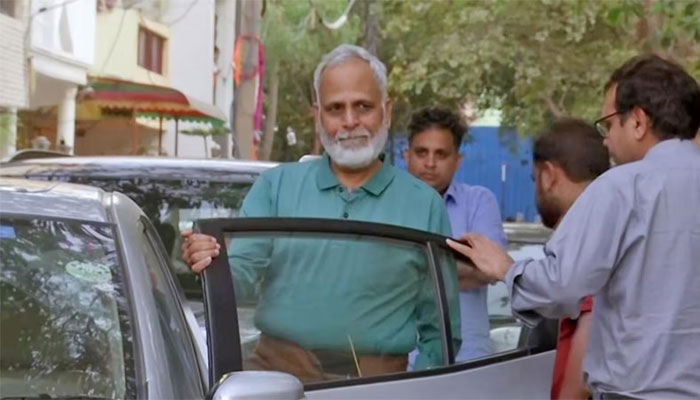
‘Prima facie guilty of the alleged offences’: Supreme Court dismisses bail plea of AAP leader Satyendar Jain in money laundering case

On 18th March, the Supreme Court of India dismissed the bail plea of Aam Aadmi Party (AAP) leader Satyendar Jain and observed that prima facie Jain was guilty of money laundering. The court said, “Having regard to the facts and circumstances of the case, we are of the opinion that the appellants have miserably failed to satisfy us that there are reasonable grounds for believing that they are not guilty of the alleged offences. On the contrary, there is sufficient material collected by the respondent-ED to show that they are prima facie guilty of the alleged offences.”

The court rejected the plea to grant bail to the AAP leader and highlighted that the accused failed to fulfil the twin conditions under Section 45 of the Prevention of Money Laundering Act for bail. Notably, Jain was arrested by the Enforcement Directorate (ED) in 2022 for his alleged involvement in money laundering via four companies during 2010-12 and 2-15-16.

Additional Solicitor-General SV Raju appeared for ED and argued that Jain effectively controlled the companies involved in the alleged money laundering racket. His control remained on the companies even though he had left his position as director. Senior Advocate Abhishek Manu Singhvi, appearing for Jain, refuted the allegations, claiming that there was a lack of credible links to tie Jain to the money laundering activities.

After hearing arguments from both sides, the court concluded that Satyendar Jain was responsible for conceptualising the accommodation of entries against cash. The accommodation entries done by the companies under Jain totalled approximately Rs 4.81 crores. The two-judge bench comprising Justice Bela M Trivedi and Justice Pankaj Mithal observed, “There remains no shadow of a doubt” about Jain’s role in the racket.

The court further highlighted the assistance provided by Vaibhav Jain and Ankush Jain in making false declarations under the Income Declaration Scheme, 2016. The total amount under false declarations amounted to Rs 8.26 crores. These declarations were made allegedly to protect Jain. Later, the Income Tax Department deemed those declarations void. However, the court stated that the appellants could not be allowed to take advantage of it as they misled the authorities.

The court said, “The declarations made by Ankush Jain and Vaibhav Jain under IDS have not been accepted by the income tax authorities on the ground that they had misrepresented the fact that the investments in the said companies belonged to them, which belonged to Satyendar Jain. The appellants cannot be permitted to take advantage of their wrongdoing of filing false declarations to mislead the income tax authorities and now submit in the present proceedings under PMLA that the said declarations under the IDS were void. The declarations made by them under the IDS, though, were held to be void; the observations and proceedings recorded in the said orders passed by the authorities and by the high court cannot be brushed aside merely because the said declarations were deemed to be void under Section 193 of the Finance Act, 2016.”

The court concluded that Jain and his two aides failed to comply with the twin mandatory conditions in Section 45 of the PMLA, which led to the denial of bail to Jain. The court further directed Jain to surrender before the special court. He was out on bail on medical grounds.

The court observed, “It is needless to say that the right to speedy trial and access to justice is a valuable right enshrined in the Constitution of India, and provisions of Section 436A of the Code of Criminal Procedure would apply with full force to the cases of money laundering falling under Section 3 of the Prevention of Money Laundering Act, subject to the provisos and the explanation contained therein.”

ED arrested Satyendra Jain in May 2022 under the provisions of PMLA. In April 2023, the Delhi High Court denied him bail, and he was moved to the Supreme Court. The court heard the matter for four days and reserved the judgment in January this year.

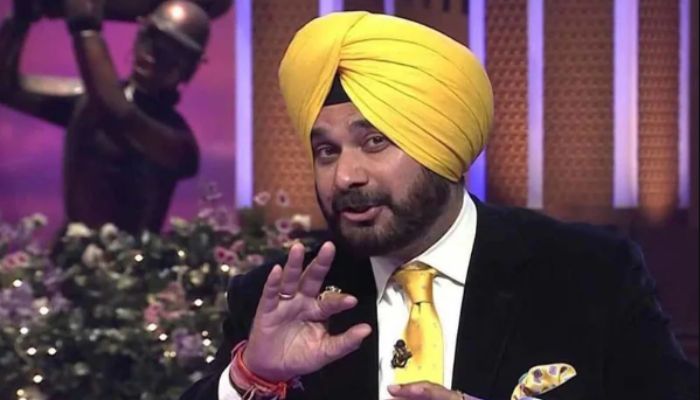
Congress leader and former convict Navjot Singh Sidhu returns to cricket commentary, will be part of commentary team for IPL 2024

Congress leader and cricketer-turned-politician Navjot Singh Sidhu is back doing what he used to do a few decades back– cricket commentary. Star Sports, the broadcast partner for IPL, announced Sidhu’s return as a commentator in an X (formerly Twitter) post.

Star Sports wrote, “A wise man once said, “Hope is the biggest ‘tope’”, And this wise man, the great @sherryontopp himself, has joined our Incredible StarCast!”

Star Sports further added, “Don’t miss his incredible commentary (and gajab one-liners) in #IPLOnStar – STARTS MAR 22, 6:30 PM onwards, LIVE on Star Sports Network!”, referring to Navjot Sidhu’s commentary.

In an interview facilitated by the IPL’s official TV broadcaster Star Sports, Navjot Singh Sidhu told PTI, “The IPL will set the tone for the World Cup. There is no other cricket happening. The eyes of the world are on IPL. This is where you can snatch a berth for the T20 World Cup, not only Indians, even the foreign players.”

Indian opener for majority of the 1990s, Navjot Sidhu is a seasoned politician as well. Sidhu is a former Punjab Congress chief, a former three-time Lok Sabha MP from Amritsar, a one-time Rajya Sabha MP, and a one-time MLA from Amritsar East. He is also a former cabinet minister.

With Navjot Sidhu accepting this commentary gig for IPL, it has become clear that he won’t be fielded as a candidate for Lok Sabha elections by Congress amid reports that he could contest from Patiala constituency. According to reports, Sidhu is likely to distance himself from campaigning for the Congress party. Notably, Punjab votes for the Lok Sabha elections on the 1st of June, days after the conclusion of the IPL.

Convicted Congress leader spent 10 months in jail for killing a man

The Congress leader had been at the centre of multiple conspiracies including hugging Pakistani Army Chief Qamar Bajwa but he had a particular bad stint when he was sent to jail for killing a man. In April 2023, Sidhu was released from jail after he served a 10-month sentence for a road-rage incident that resulted in a man’s death nearly three-and-a-half-decade ago. He was released two months before the end of his sentence for his ‘good behaviour.’

Navjot Sidhu was imprisoned on 20th May 2022 after surrendering to a Patiala court and receiving a one-year sentence from the Supreme Court in the case. The family of the victim had sought a harsher sentence and a reconsideration of the Supreme Court’s 2018 decision clearing him of murder.

On December 27, 1988, Patiala resident Gurnam Singh and Navjot Singh Sidhu got into a fight over a parking space. The former MP and his friend, Rupinder Singh Sandhu, dragged the latter out of his car and hit him. He later died in a hospital. The Congress leader was accused by an eyewitness of killing the latter with a strike to the head.

Tamil Nadu: PM Modi breaks down while paying emotional tribute to ‘Auditor Ramesh’ who was hacked to death by Islamists

On Tuesday (19th March), Prime Minister Narendra Modi broke down while recalling the contribution of several party workers in ‘hostile’ times, particularly Salem’s Auditor Ramesh who was hacked to death by Islamists outside his house. 

While addressing the rally in Tamil Nadu’s Salem, PM Modi paid emotional tribute remembering Auditor Ramesh, remembering his ardent sacrifice for the party. During his address, PM Modi mentioned several leaders, including former State BJP president late K.N. Lakshmanan, who contributed enormously to the expansion of the BJP in Tamil Nadu. PM Modi recalled how workers like Lakshamanan were actively opposing the Emergency and undertook welfare measures.

PM Modi mentioned list of such devoted party workers, noting that it is but natural to remember Auditor Ramesh, as the teary-eyed Prime Minister experienced an emotional breakdown.

He said, “I remember Auditor Ramesh. He was a dedicated leader of our party. He was a great orator and a very hardworking man. I pay homage to him.”

Who was V Ramesh aka Auditor Ramesh

The former BJP state general secretary ‘auditor’ V Ramesh (54) was attacked with sharp-edged weapons near his house in Salem town by Islamists in July 2013. At that time, the then Gujarat CM Narendra Modi had demanded that culprits in the shocking murder of Tamil Nadu BJP leader V Ramesh be punished at the earliest.

Later, Police had taken two accused identified as ‘Police’ Fakruddin and Bilal Malik into custody. 

Ramesh, who served twice as the general secretary of the state BJP, was widely known for his staunch Hindutva stance. During the NDA’s tenure in office, he was appointed as a trustee of the Chennai Port Trust.

Ramesh’s brother, Seshadri, held the position of ABVP national secretary. Just a week before his tragic murder, Ramesh was appointed as the official party spokesperson for the state. Prior to his untimely death, he had survived several attacks unscathed. In a disturbing incident in 2011, his car was set ablaze by a group of miscreants in an apparent attempted murder.

Why Somalia has so many pirates? As Indian Navy rescues another ship, read how Somali pirates came to be a menace in the Indian Ocean

The problem of pirates in the Arabian Sea and Indian Ocean Region was repeatedly seen in the last few months. Most of the pirates hail from Somalia. What caught global attention was the role played by the Indian Navy in the rescue operations for captured ships on multiple occasions. It, therefore, becomes necessary to know why Somalia has so many pirates and what are the conditions in the Sunni Muslim country leading people to resort to piracy. Before delving into the Somali realms, we will first take a fresh look at the recent rescue operations.

The Indian Navy rescued MV Ruen of Bulgaria

On Monday (18th March), the Bulgarian President expressed his gratitude to the Indian Navy for successfully carrying out a rescue operation on the hijacked Bulgarian ship, MV Ruen. The “Rouen” ship with eight Bulgarians, nine Myanmarese and one Angolan citizen on board was captured by pirates in the Arabian Sea in December last year.

Prime Minister Narendra Modi on Tuesday reaffirmed India’s commitment to safeguarding freedom of navigation and combating piracy and terrorism in the Indian Ocean region. PM Modi expressed appreciation for the President of Bulgaria Radev, and conveyed India’s satisfaction that the seven Bulgarian nationals were safe and would soon be returning home.

The ship “Rouen” with eight Bulgarians, nine Myanmar and one Angolan citizen on board was captured by pirates in the Arabian Sea on 14th December 2023. It was rescued by the Indian Navy on 16th March 2024.

The Indian Navy rescued Al Naeemi of Pakistan from the clutches of the pirates of Somalia

On 30th January 2024, the Indian Navy warship INS Sumitra successfully rescued a hijacked fishing vessel Al Naeemi and the 19 crew members onboard, all Pakistani nationals. The Pakistani vessel was hijacked by 11 Somali pirates, around 800 miles off the coast of Kochi, along the East Coast of Somalia and the Gulf of Aden.

The Indian Navy took to social media to inform about the anti-piracy operation successfully thwarted by INS Sumitra, the indigenous offshore patrol vessel of the Indian Navy, deployed for anti-piracy and maritime security operations in the east of Somalia and the Gulf of Aden. 

The Indian Navy rescued FV Iman of Iran

The rescue of the Pakistani fishing ship Al Naeemi came within 36 hours after INS Sumitra, which was deployed on anti-piracy operations, rescued another Iranian fishing vessel FV Iman with 17 crew members on board. In a total of 36 hours, INS Sumitra rescued two hijacked fishing vessels along with 36 crew, 17 Iranian and 19 Pakistani, in the southern Arabian Sea.

On 29th January 2024, INS Sumitra responded to a distress call regarding the hijacking of FV Iman to safely rescue the crew members and arrested the hijackers. The Indian Navy spokesperson said, “A swift response by the Indian Navy’s mission-deployed warship ensures the safe release of the hijacked vessel and crew. INS Sumitra, on anti-piracy operations along the East coast of Somalia and the Gulf of Aden, responded to a distress message regarding the hijacking of an Iranian-flagged Fishing Vessel (FV) Iman. The FV had been boarded by pirates, and the crew had been taken as hostages. After that, the fishing vessel was sanitized and released for onward transit.”

“The pirates have been disarmed and asked to move towards Somalia. The INS Sumitra has now moved out of the area. The ALH Dhruv choppers on board the warship had encircled the hijacked vessel to issue warnings to the pirates on board it,” said defence officials.

The Indian Navy rescued MV Lila Norfolk near Somalia

On 4th January 2024, merchant vessel MV Lila Norfolk was hijacked by pirates 300 nautical miles east of Somalia, while it was sailing from Port Du Aco in Brazil and was bound for Khalifa Bin Salman in Bahrain. After a high-voltage drama in the high seas, all 21 crew members including 15 Indian nationals from the hijacked vessel MV Lila Norfolk off Somalia coast were safely evacuated by the Indian Navy on 5th January 2024.

The Indian Navy’s Mission Deployed Platforms responded swiftly to the hijacking attempt on board a Liberian-flagged bulk carrier after it received a message on the UKMTO portal indicating boarding by approximately five to six unknown armed personnel. In response to the situation, the Indian Navy launched a Maritime Patrol Aircraft (MPA) and diverted INS Chennai, deployed for maritime security operations, to assist the vessel. The attempt of hijacking by the pirates was probably abandoned with the forceful warning by the Indian Navy, and MPA of interception by the Indian Naval warship.

What about Somalia?

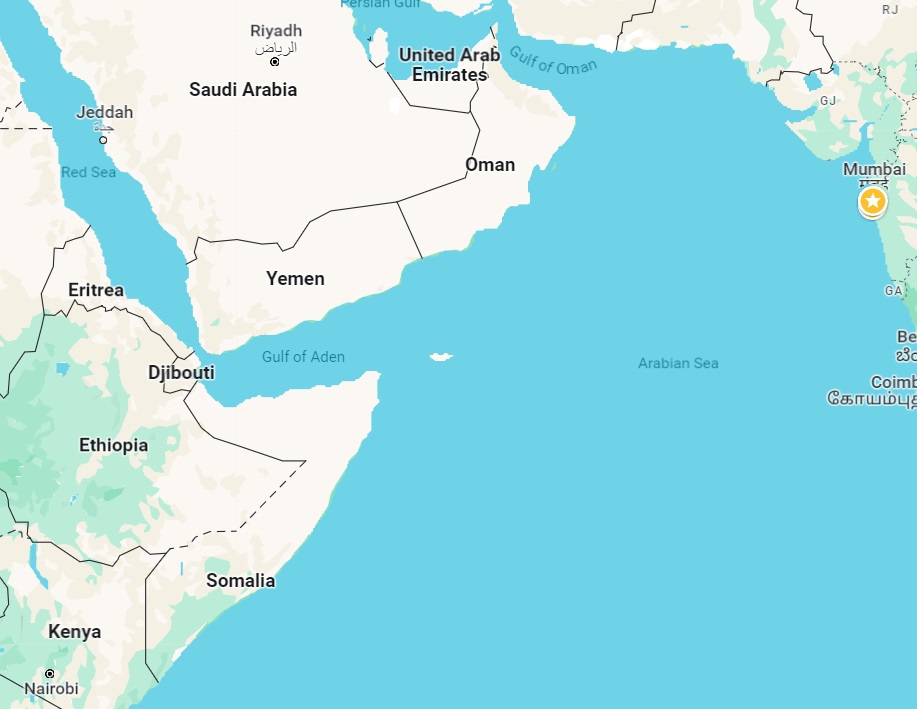
Somalia is a country located in the Horn of Africa, bordered by Ethiopia to the west, Djibouti to the northwest, the Gulf of Aden to the north, the Indian Ocean to the east, and Kenya to the southwest. It has a population of around 15 million people, consisting mainly of ethnic Somalis, with Islam being the predominant religion and Somali and Arabic being the official languages.

Somalia has experienced significant political instability and conflict since the overthrow of President Siad Barre in 1991, leading to the collapse of central government institutions. This has resulted in various societal and economic challenges, including widespread poverty, inadequate infrastructure, lack of access to basic services such as healthcare and education, and internal displacement of populations. Additionally, the country has been plagued by inter-clan conflicts and the presence of terrorist groups like Al-Shabaab.

Maritime piracy in Somalia

One of the most notable issues arising from the instability and lawlessness in Somalia is maritime piracy. Economic desperation, coupled with the absence of effective governance, led to the emergence of piracy as a lucrative business. Somali pirates hijacked ships passing through the Gulf of Aden and the Indian Ocean, often demanding hefty ransom payments for the release of the vessels and crew.

Somalia has a long seashore. Image Source: Google Maps

Piracy in the region posed significant risks to international trade, maritime transportation, and the safety of seafarers. It resulted in increased insurance costs for shipping companies and disrupted vital supply routes. Moreover, the violence associated with piracy, including hostage-taking and occasional clashes with naval forces, made it a serious threat to regional stability and security. The problem of Somalian pirates reached to its peak during 2010-2012. Then the combined efforts and international cooperation gradually brought it down.

Efforts to control the problem

Efforts to combat piracy in the waters of Somalia involved international naval patrols, cooperation between various countries and organisations, and the -implementation of best practices for ship security. Additionally, some efforts focused on addressing the root causes of piracy, such as poverty and lack of economic opportunities, through initiatives aimed at promoting economic development and strengthening governance structures onshore. But these efforts were less effective than the concrete action against pirates.

In recent years, there has been a significant decline in piracy off the coast of Somalia due to these concerted efforts. Naval patrols, improved ship security measures, and international cooperation have helped deter pirate attacks and disrupt pirate networks. However, the underlying issues that contributed to the emergence of piracy, such as instability and poverty, persist in Somalia, highlighting the need for continued efforts to address these root causes to ensure long-term stability and security in the region.

The Indian Navy is dedicated to acting as the primary responder in the region, ensuring the safety of merchant shipping in collaboration with international partners and friendly foreign countries. In the recent few months, the Indian Navy has rescued multiple ships from these pirates of Somalia and ensured safety in the Indian Ocean Region.