Home Blog Page 1455

‘Ram Lalla takes precedence over everything’: Karsevak Shiv Dayal Mishra, who survived 2 bullet wounds, describes the harrowing events of the 1990s

Construction of a majestic temple at Ram Janmabhoomi in Ayodhya is underway, and the consecration of the idol is scheduled to be conducted on 22nd January 2024, with the participation of Prime Minister Narendra Modi. Hindus globally are expressing their reverence for the devoted karsevaks who made sacrifices. However, some leaders from the Samajwadi Party are defending the 1990 massacre of Ram Bhakts, which was carried out on the orders of the then Chief Minister Mulayam Singh Yadav.

The OpIndia team is currently in Ayodhya, where we met Shiv Dayal Mishra, a karsevak from the 1990s who miraculously survived two gunshot wounds. Shiv Dayal Mishra shared with us his firsthand account of the harrowing events of the 1990s.

Despite being a government school teacher, Shiv Dayal Mishra got into Karseva

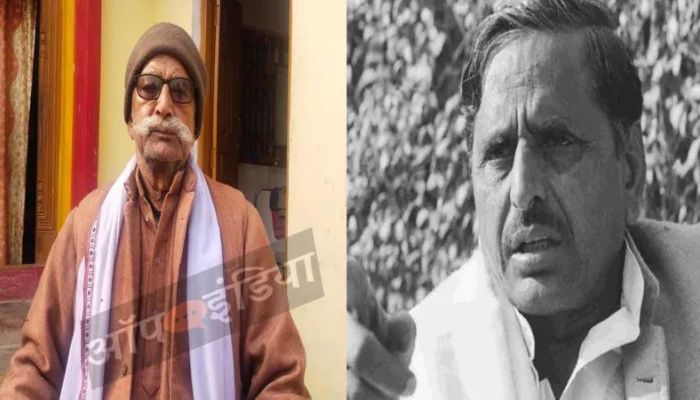
Karsevak Shiv Dayal Mishra, an eyewitness and survivor of the 1990 firing on Karsevaks, is originally a resident of the Wazirganj police station area of Gonda district. The name of his village is Poore Basanti. In 1990, Shiv Dayal was an assistant teacher in a primary school in Gonda. He retired as headmaster in 2009. Shiv Dayal, now 77 years old, was approximately 45 years old in 1990. He is currently engaged in agricultural activities and dedicated service to cows. He has a son in his family.

A profound scar is still visible on his left knee, marking the spot where a paramilitary bullet shattered his ankle. Additionally, there is a bullet injury in the toes of his right foot, where the bullet grazed leaving behind enduring scratch marks.

Shiv Dayal mentions that to this day, pain lingers in both of his wounds. Despite the persistent discomfort, he finds solace in recalling the sacrifices made in the name of Lord Ram. Shiv Dayal expresses that even if his life were to fade away, there would be no reason for sorrow.
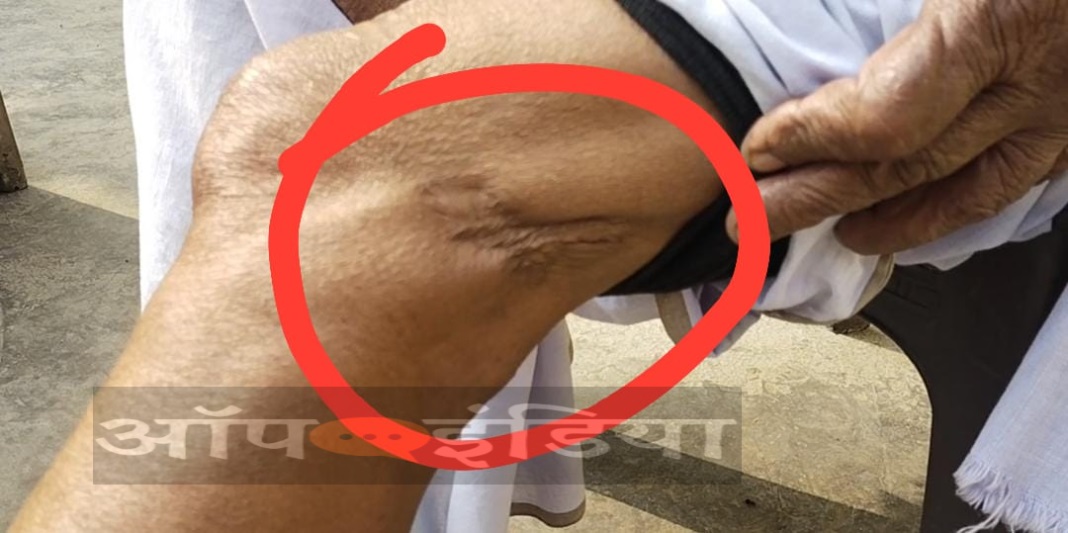
Shiv Dayal’s left leg still has marks of bullet wounds. Image Source: OpIndia Hindi

There was a passion to give life in the name of Lord Ram

When we asked Shiv Dayal why he chose the path of Karseva despite being in a government job, he said, “What is a job and a family when it comes to Lord Ram?” Shiv Dayal added that karsevaks from various parts of the country were passing through his village, displaying a profound readiness to sacrifice their lives for Ram Bhakti. Witnessing their dedication, Shiv Dayal mobilised a group of individuals from his village and the nearby areas. Simultaneously, he organised provisions for the lodging, meals, and refreshments of the Ram devotees arriving from other regions.

Karsevaks walked through waterlogged fields and thorny paths

Shiv Dayal recalled the day of 30th October 1990. The aerial distance from his house to Ayodhya is about 25 kilometres. He explained that in the morning, as he and his group headed towards Ayodhya, they observed that trees had been cut and placed on the main roads to prevent people from reaching Ayodhya.

Police vehicles were patrolling the lesser-known byways, taking Ram devotees en route to Ayodhya to unfamiliar destinations. Shiv Dayal advanced through the fields alongside the Ram Bhakts. He mentioned that numerous fields were inundated with knee-deep water at that time. In several instances, the feet of the karsevaks were injured by thorns, and even leeches stuck to their legs.

Despite this, the Ram devotees continued to advance cautiously. Shiv Dayal Mishra states that their goal, along with his companions, was Ayodhya, akin to the unwavering focus Arjuna had for the eye of a bird. Whenever the wailing sirens or the sounds of approaching vehicles echoed, Ram bhakts would conceal themselves amidst the water and fields. Despite these challenges, the determination of the Ram devotees remained unshaken, and eventually, in the afternoon, Shiv Dayal, along with his group, reached the banks of the Saryu River. Ayodhya was on the other bank of the river.

Crossing the Saryu meant death

Shiv Dayal recounted that despite reaching the outskirts of Ayodhya with his companions, the onward journey from that point felt akin to traversing the path of death. It was October, and the monsoon season had recently concluded. During that time, the Saryu River was flowing at its peak, making its currents formidable even for proficient swimmers to navigate.

Even if someone dared to swim across the river, there was no assurance that an armed policeman stationed on the riverbank wouldn’t open fire. As per Shiv Dayal, the sole viable entry point to Ayodhya was the Saryu Bridge. However, the path was heavily guarded, to the extent that not even a mosquito could navigate through. The karsevaks interpreted this as a challenge by Mulayam Singh Yadav, who had declared, ‘Not even a bird can flutter its wings.’

The first step on the bridge and the mayhem starts

Ram Janmabhoomi was approximately 3 kilometres from the location where Shiv Dayal and his group arrived. The only available route to enter Ayodhya was the bridge, where a substantial police force was stationed. As the karsevaks advanced to cross the bridge, the front-row police personnel instructed them to step back.

The Ram Bhakts, who were singing Ramdhun, refused to retreat and continued to move towards the bridge. Meanwhile, another troop came from behind the police personnel. That troop had state-of-the-art weapons. Shiv Dayal suspects that it was a paramilitary force.
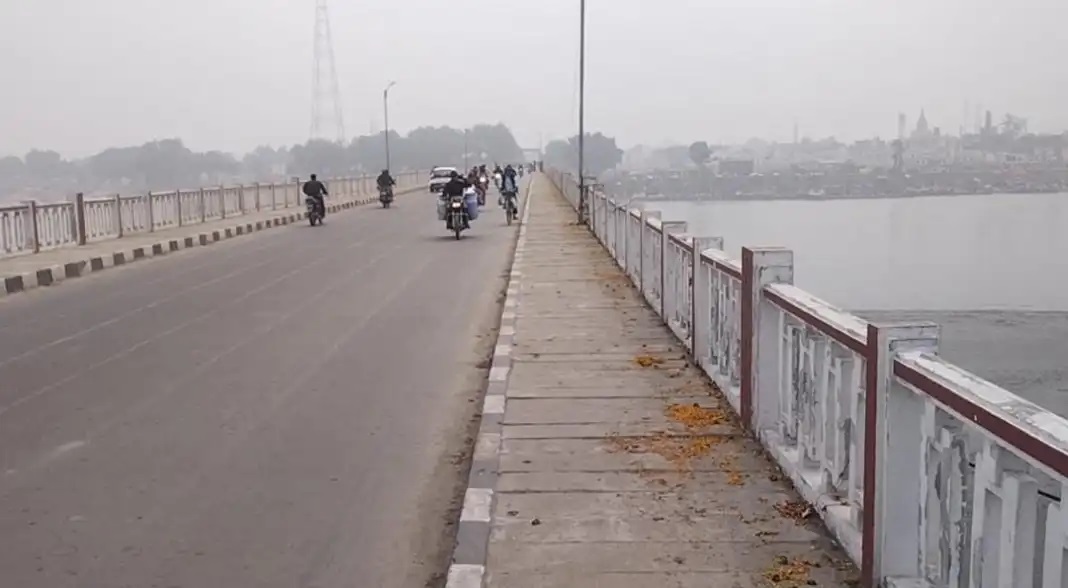
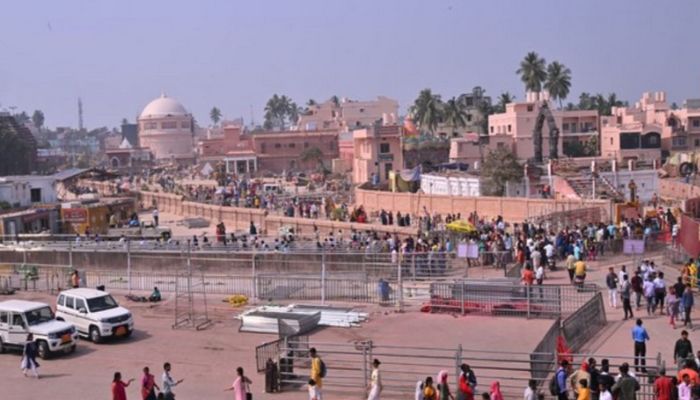
The Saryu Bridge where the massacre of Ram devotees took place. Image Source: OpIndia Hindi

According to Shiv Dayal, the troop that came from behind the police started firing without any warning. The bullets hit the head, legs and chests of the karsevaks. In the indiscriminate firing that lasted for about 5 minutes, many karsevaks died on the spot.

After witnessing the subsequent scene, it seemed as if the police vehicles had arrived prepared for a massacre from the start. The lifeless bodies were swiftly loaded into the vehicles. During this process, doctors stationed in temporary camps also fled due to the fear of gunfire.

Claims are being made that, due to the absence of doctors, numerous karsevaks who were still alive were allegedly taken away as corpses. According to Shiv Dayal, there were no witnesses to the fate of these individuals thereafter. There is a concern that their bodies might have been discarded into the river and disposed of.

Shiv Dayal Mishra survived after being hit by 2 bullets

According to Shiv Dayal Mishra, he felt sharp pain in both his legs amid indiscriminate firing. When he looked down, blood was coming out of both legs. He was shot in the knee of the left leg and the sole of the right leg.

Karsevak Shiv Dayal expressed that had he fallen he might have met the same fate of being thrown among the living corpses and discarded into the river. In this challenging situation, he gathered the courage to persevere. Shiv Dayal found support from fellow surviving karsevaks. Ultimately, navigating the same thorny path and waterlogged fields, he successfully made his way back.

When Shiv Dayal was taken to a local hospital, the doctors there declared themselves incapable of treatment. Eventually, Shiv Dayal was admitted to a better hospital by the rest of the Ram devotees. Here the bullet was removed from his knee. The bullet was seized by the local administration. Doctors declared that the wound on the other leg was not that dangerous.

Upon receiving the news, the family members of Karsevak Shiv Dayal rushed to the hospital. Subsequently, Shiv Dayal remained bedridden for nearly six months, and the entire cost of his treatment was covered by his funds. At one point, there were concerns that the karsevak might require leg amputation. However, Shiv Dayal attributes it to the blessings of Lord Ram that such a situation was avoided.
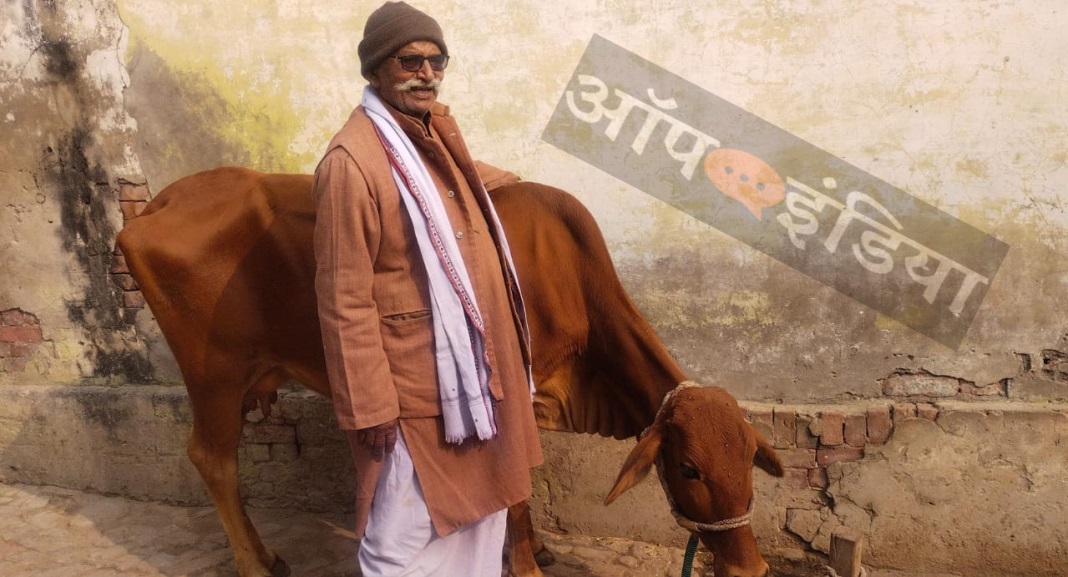
Shiv Dayal Mishra spends time doing cow service. Image Source: OpIndia Hindi

Vegetable seller Razzaq would threaten Shiv Dayal Mishra

Shiv Dayal Mishra shared that after approximately six months of being bedridden, he gradually resumed his teaching duties. The news of his injury during Karseva had circulated in the neighbouring areas. Whenever Shiv Dayal visited the nearby Wazirganj market, Razzaq Khan, a vegetable vendor, would lock eyes with him.

During a heated argument one day, Razzaq Khan went to the extent of labelling Shiv Dayal a ‘betrayer.’ Nevertheless, Shiv Dayal staunchly characterised Karseva as an expression of his devotion to Lord Ram. He told to Razzaq that he took pride in his work. Additionally, Shiv Dayal acknowledged that not only the Hindu community but also officers with Hinduist thoughts had accorded him considerable respect as a karsevak.

Presently, Shiv Dayal and his family remain devoted to Lord Ram. Shiv Dayal emphasizes that despite being around 77 years old if allowed to engage in Ramkaj (service to Lord Ram), he would not be tempted by his life.

Reflecting on his departed colleagues, Shiv Dayal became emotional, expressing that the echoes of those snapping bullets still occasionally resonate in his ears even today. He considers his life to be blessed and the efforts he put in as worthwhile. Shiv Dayal also openly commended Modi and Yogi for their leadership.
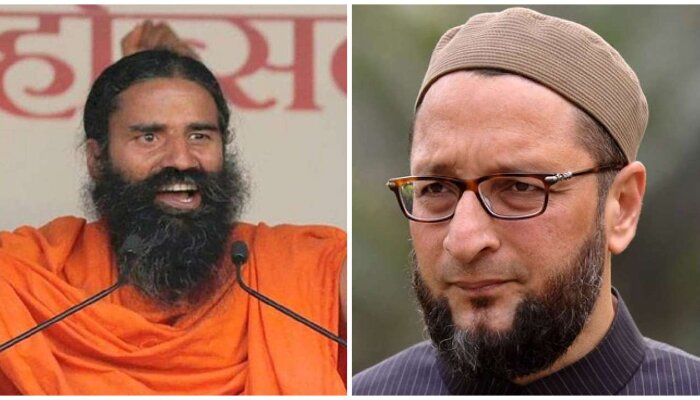
I said ‘Owaisi’ and not ‘OBC’: Baba Ramdev on allegations of making anti-OBC comments in a 30-second clip, longer video shows a different story

Yoga guru Baba Ramdev frequently makes headlines due to his extensive business, but, this time the brand ambassador for Patanjali Ayurved has courted controversy due to a statement related to Other Backward Class (OBC). However, he issued a clarification when the matter escalated.

A video clip from Baba Ramdev’s sermon on his Ashtha channel had appeared on social media where he appeared to be making derogatory comments about OBCs. A large number of people shared the clip on X, accusing Ramdev of making anti-OBC comments.

When the media asked bout about the comment, he denied making any comments on OBCs and claimed, “I have not made any such remark.” When he was reminded of his words by a journalist, he referred to All India Majlis-E-Ittehadul Muslimeen (AIMIM) chief Asaduddin Owaisi and stated, “Owaisi! His head is in the wrong place. What should I say about him? Owaisi and his forefathers always possessed an anti-national mindset. I don’t take him seriously.”

In response to the boycott hashtag trending in his name on social media over his comments on OBC, he said, “I have never said anything wrong about them, I never said anything negative on OBCs.”

It all started after an old video of Baba Ramdev from his program on the Aastha TV channel surfaced online in which he declared, “My original gotra (the exogamous unit used to denote the paternal lineage of Hindus) is Brahma gotra and I am an Agnihotri. I am an Agnihotri Brahmin. Someone told me ‘Baba you are an OBC, OBCs can go to hell’.” He further reiterated, “I am an Agnihotri Brahmin. I am a Vedi Brahmin. I am a Dwivedi Brahmin. I am a Trivedi Brahmin and I am a Chaturvedi Brahmin. I studied the four Vedas.”

He then proclaimed, “I am Brahmin because I remove ignorance. I am a Kshatriya because I eliminate everyone’s fear. I am a Vaishya because I fulfil people’s needs. I am a Shudra because your body, mind, life, food, thoughts, voice, behaviour, actions and conduct are cleansed by me. I purge every vice and establish the light of purity and knowledge. I am a Mahashudra as well as a Mahabrahmin.”

With a playful tone, he informed that those who perform the last rites of the deceased in Haridwar are called Mahabrahmins and announced that even he can perform those ceremonies. He then remarked, “We took down every obstacle and demonstrated to the people that you have everything and and everything is due to you. You are going to be the start of a new world and a fresh era. I am filling you with strength and bravery. I am transforming you into a Brahmin, a Kshatriya, a Vaishya and a Shudra. I am forming you into an Arya, a saint, a divine being and a part of Brahma. I am evolving you into a yogi and a devotee.”

The video’s year or exact time remains unknown.

Notably, Ramdev was narrating the discourse between him and another person, but only a small clip of the video is being shared, claiming that his comments quoting another person are his own comments. ‘Boycott Patanjali’ began trending on social media since a 30-second clip taken from the footage gained traction among netizens, which didn’t give the full context of his speech.

From the longer video, it is clear that someone had insulted him saying that he is an OBC, and Ramdev was responding to that. In the full video, Baba Ramdev can be heard talking about the unification of all castes in an individual and mocking the idea of associating with one caste.

Ram Mandir: Doors to be installed by January 19, process of cleaning, grinding stones for third floor underway

0

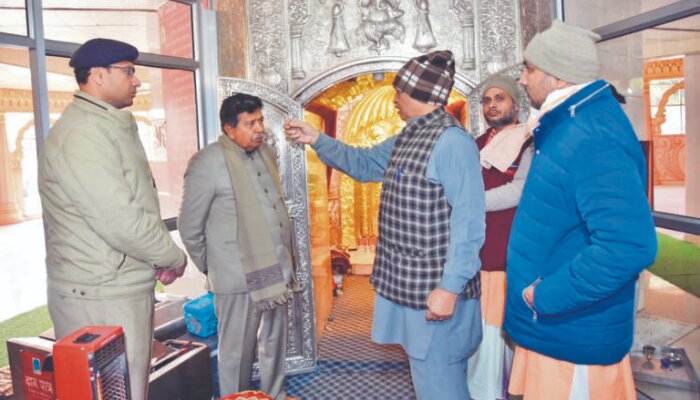
Ahead of the Pran Pratishtha ceremony of Ram Lalla in Ram Mandir on January 22, the work of installing doors in the temple has reached its final stage, while the process of grinding and cleaning the stones for the third floor is underway at a fast pace.

The intention of the Ram Mandir Teerth Kshetra Trust and the building construction committee is that as much work as possible should be completed before the programme on January 22, given that all the work will be done on a war footing.

Dharam Veer, the artisan who is constructing these doors, said that 16 doors have been placed so far and 4-5 more are yet to be placed. “All work will be completed by January 19,” he said.

“I am feeling immense joy by working for Lord Shri Ram. The way we installed the gold studded doors on the main gate of the sanctum sanctorum of Ramlala, there was enthusiasm and joy in our minds. It is a very difficult task to express in words. I consider myself very fortunate that I am working for my Ramlala,” he added.

Doors are being made for the third floor of the temple in Ramsevak Puram of Ayodhya. The beautiful carvings on these doors are mesmerising to the eyes.

The work of grinding and cleaning the stones for the construction work of the third floor of the temple is going on at a fast pace.
25 male workers have come from faraway places and are doing their work with great enthusiasm while singing Ramdhun and calling themselves very lucky.

Geeta, a labourer, told ANI “We have been working with 25 women for more than a year. We are working with great joy and heart. We are very happy that we got the opportunity to help in the construction work of Shri Ram Mandir. In the future, when our children will also see this, they will be happy that our mother has made a small contribution to this construction work.”

Labourer Lal Shankar Katara said that we have been working with 25 people for the last year. The work of construction of the second floor of the temple has been completed. We are doing the work of grinding and cleaning the pillars of the third floor. These stones are lifeless.

Meanwhile, the ‘Shri Ram Charan Paduka Yatra’ will leave from Chitrakoot on January 15. The Yatra will start from Bharatkup, Chitrakoot via Prayagraj and will reach to its destination Ayodhya.

Prime Minister Narendra Modi will perform rituals to mark the pran prathishta of the idol of Ram Lalla at the grand temple on January 22. A team of priests led by Lakshmikant Dixit will perform the main rituals of the pran prathistha of Ram Lalla on January 22.

(This news report is published from a syndicated feed. Except for the headline, the content has not been written or edited by OpIndia staff)

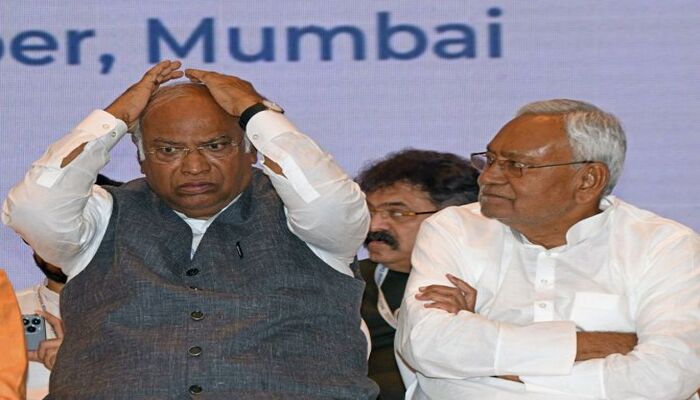
Nitish Kumar refuses to become INDI Alliance convenor after the opposition bloc refused to declare him PM candidate

In a major development, Janata Dal-United (JDU) supremo and Bihar Chief Minister Nitish Kumar has reportedly rejected the proposal to become INDIA Alliance’s convenor. Reports say that Congress party president Mallikarjun Kharge has been selected as the Convenor of the opposition bloc.

During a media interaction today in Delhi, (JDU) leader Sanjay Kumar Jha said, “The CM (Nitish Kumar) wanted the INDIA alliance convenor should be from Congress only.”

On Saturday, leaders of the  INDI Alliance held a virtual meeting to address issues such as participation in the Bharat Jodo Nyay Yatra, seat-sharing agendas, and other issues.

Notably, Mamata Banerjee, the Trinamool Congress (TMC) leader and West Bengal Chief Minister as well as Shiv Sena (UBT) leader Uddhav Thackeray reportedly did not attend the meeting. The conference was attended by NCP leader Sharad Pawar, DMK leader Kanimozhi Karunanidhi, and Tamil Nadu Chief Minister MK Stalin.

Meanwhile, parallel meetings are on with the Congress’ alliance committee taking the lead in consulting with various parties of the INDIA bloc on state-level alliances. On Friday there was a meeting of Congress and Aam Aadmi Party leaders on Friday evening regarding seat sharing. The meeting lasted for about two hours at Mukul Wasnik’s house, and the leaders of both parties described the meeting as a positive move, as per sources. On Saturday the Congress alliance committee is meeting leaders from Jharkhand to continue efforts to stitch up the alliance.

As the Lok Sabha elections draw near, India’s political landscape is undergoing a significant reshuffling. The emerging INDIA (Indian National Developmental Inclusive Alliance) consortium is gearing up to challenge the established National Democratic Alliance, setting the stage for an electoral showdown.

Earlier in the 2019 Lok Sabha elections, the NDA won 353 seats, the UPA stood at 91, and Others won 98. The voting was staggered in seven phases between April 11 and May 19, in which around 67 per cent of the nearly 900 million eligible people exercised their franchise to elect 542 members of the Lok Sabha.

Ahead of the opposition bloc’s virtual meeting, speculations were made that Nitish Kumar would most likely become the convenor, however, the JDU leader refused the proposal. Interestingly, Nitish Kumar has reportedly been upset with the INDI Alliance ever since Congress leader Mallikarjun Kharge’s name was brought up as the alliance’s prime ministerial candidate for the coming Lok Sabha election.

It was reported that Congress leader Rahul Gandhi had also reached out to Nitish in December last year amid media reports that the latter was miffed when the alliance didn’t declare him as the bloc’s PM candidate in the fourth meeting held in Delhi.

It was reported that several alliance partners within the opposition bloc, particularly the RJD and JD(U) – the ruling parties in Bihar were upset when Mallikarjun Kharge’s name came up as the alliance’s appropriate pick for Prime Minister. Former JDU president Lalan Singh’s unceremonious ouster as the party chief hinted the same although Singh did not openly say anything about it. There were rumours that JDU might move back to the NDA fold, however, the party refuted the same.

(With inputs from ANI)

Is the toll for Atal Setu too high?: Busting propaganda tropes by Congress ecosystem denigrating India’s longest sea bridge

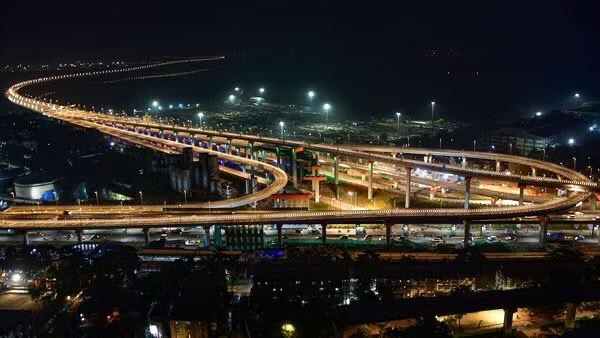
Earlier yesterday, PM Modi inaugurated the Atal Bihari Vajpayee Sewari-Nhava Sheva Atal Setu, India’s longest bridge, in Maharashtra. 

The Atal Setu, an engineering marvel that stands testament to the country’s rapid infrastructural growth, is the longest sea bridge in the country and one that would augment connectivity between Navi Mumbai and Mumbai, two important financial nerve centres of the country. 

Maharashtra Governor Ramesh Bais, Chief Minister Eknath Shinde and Deputy Chief Minister Devendra Fadnavis were also present on the occasion.

The foundation stone of the bridge was also laid by the Prime Minister in December 2016.

Atal Setu has been constructed at a total cost of more than Rs 17,840 crore.

It is a 21.8-kilometer-long, 6-lane bridge with about 16.5 km of length over sea and about 5.5 km of length on land.

However, no sooner did PM Modi throw open the new bridge to public use, a large number of social media users, presumably supporters of the Congress party and Congress IT cell members, took to X, formerly known as Twitter, to either downplay the engineering ingenuity or raise aspersions on the toll fare to be charged to traverse through the Atal Setu.

Congress ecosystem runs down Atal Setu by citing ‘exorbitant’ toll charges

Rezina Sultana, an otherwise #FreePalestine bot on X, shared the picture of the fare chart at the Atal Setu and took a swipe at the Modi government saying a car will have to pay Rs 250 for a single ride or Rs 12,500 monthly, which according to her is higher than the housing rent of a middle -class family. 

Never mind that the bridge is in Mumbai and the cost of house rent for a middle-class family in Mumbai is nowhere close to Rs 12,500 by any stretch of imagination. But for folks like Sultana, who, according to her X profile, lives in Kolkata, among the dirtiest cities in India as per a recent survey, making unfounded but scandalous but unfounded claims could attract eyeballs and shift the public focus from the ease of commutation the new bridge will provide to lakhs of daily commuters to a much for visceral issue of its financial viability. 

Congress loyalists pretending to be ‘neutral’ political commentators, too, jumped on the bandwagon of trashing the central government over the toll charges at the Atal Setu. 

Sandeep Manudhane, a vocal supporter of Congress and its senior leader Rahul Gandhi, tried to belittle the opening of the bridge, tweeting that the annual cost of riding a car through the bridge would come to around Rs 1,50,000 and for a truck Rs 500,000, after paying a host of other taxes such as GST, fuel tax, income tax etc.

This, again, is a preposterous argument, to begin with, but the benefit of the doubt must be granted to Congress supporters, who are either genuinely dumb or pretend to one to make their supreme leader appear smarter. Only a low-IQ compulsive critic would compare indirect taxes like GST with toll charges for using a bridge. 

If Congress supporters and trolls were not enough, Pankaj Pachauri, former journalist and PMO official—in another language, one of the members of the darbari media from the UPA era—notched the propaganda to the next level when he compared the annual bridge pass with India’s per capita annual Gross Net Income. 

Throwing shades on the financial viability of the toll, Pachauri tweeted that an annual bridge pass for Atal Setu is Rs 150,000 (for cars) while India’s per capita annual Gross Net Income is just Rs 113,395. 

While this infantile comparison should be dismissed with the contempt it deserves, let me try to explain with logic, even though rationality eludes the Congress IT cell and, dangerously, even its leaders.

Pachauri’s argument implies three things: 1.4 billion people in India own a car. Second, 1.4 billion will use their vehicles to travel through the Atal Bridge. Third, people from all over the country, from Dwarka in Gujarat to Guwahati in Assam, Leh in Kashmir to Kanyakumari in Tamil Nadu, will be using the Atal Bridge daily for their commutation.

More importantly, India’s per capita annual Gross Net Income is a metric to measure what an average Indian earns in a financial year. Statistically speaking, it is a median figure; there exist people on both sides of the median, people with both earnings lesser than the per capita annual Gross Net Income and those who earn significantly higher than that. To claim that the fare is exorbitantly high using the argument of India’s per capita annual Gross Net Income is grossly misleading and fallacious. There exist people in India whose annual income is several times higher than India’s per capita annual Gross Net Income and who would not mind shelling out Rs 250 daily at the toll at Atal Setu, just to save them time and distance. But such basic understanding is predictably missing among the members of the Congress ecosystem.

And to imagine Pachauri was a part of PMO India during the UPA days, one can rationalise why the Congress government at the centre was synonymous with incompetence, corruption, and policy paralysis.

Hatred for PM Modi and the country now bordering on insanity

Such denigration could be at best described as carping by a bunch of folks desperate to show the Modi government in a bad light and criticise their every move and decision. The hatred for PM Modi and the country is now bordering on insanity for the detractors, who don’t mind making a fool of themselves by offering foolish and vacuous arguments in the hopes of reversing their inexorable march to political oblivion. 

To give a perspective, the Bandra-Worli sea link, a 5.6 kilometre-long bridge, charged Rs 80 one way as of 4 January 2024. The per kilometre cost of driving through the Bandra-Worli sea link comes to Rs 14.28. The Atal Setu on the other hand, is 21.8 kilometres long and charges Rs 250 one way, which comes down to Rs 11.46 per kilometre. This is, in no way, an endorsement of the fares charged at Atal Setu. Nor is this an attempt to treat the fare at the Bandra Worli sea link as a touchstone for ideal toll charges. It is only cited as an example to debunk the propaganda tropes peddled by the Congress ecosystem. 

Commuters not wanting to spend on tolls at Atal Setu can continue to use existing routes

It is worth noting that the Japan International Cooperation Agency (JICA) has provided an Official Development Assistance (ODA) loan for the ambitious Mumbai Trans Harbour Link project or Atal Setu. Japanese banks financed the construction of the bridge. Those arguing that the bridge should not have any toll charges at all need to understand that the Indian government has to pay back the loans to the Japanese banks. The development of infrastructure incurs costs, and it has to be paid by those who are going to avail of the facilities.

But more importantly, the Atal Setu only adds to the commutation options that the people of Mumbai and Navi Mumbai presently have. For years, people in the Mumbai Metropolitan Region have been demanding the construction of the bridge to ease their daily commutation and reduce their travel time. As per reports, the new bridge will reduce the distance from Mumbai metropolis to Navi Mumbai International Airport, Pune, Goa, and the rest of South India. It would also divert traffic and ease congestion on the present route via the Vashi Creek bridge. Residents who believe the toll charges are exorbitant can opt for the traditional route via Vashi Creek Bridge or go for the locals if are fine with travelling in public transport. Those who have enough time on their hands and do not want to pay the toll charges can give Atal Setu a skip and opt for the traditional route to reach their destination.

However, above everything, this criticism by the Congress ecosystem reflects their inability to appreciate the good work accomplished by the Modi government and their inveterate habit of denigrating the Centre for no good reason.

And to conclude, what amount can be labelled as “too high”? The answer to this question is philosophical rather than analytical. For those used to freebie culture and free services, shelling out even a single rupee on a better service would be a burden on their pockets because they are used to handouts and doles by the governments in every aspect of their lives. For others who are willing to pay, the new bridge would serve as a gateway to new opportunities to enhance their lives, save time, and create more wealth and render the argument of toll charges infructuous.

Want to credit PM Modi: TV’s ‘Ram’ Arun Govil expresses his gratitude after recieving invitation for Ram Mandir Pran Pratishtha

0

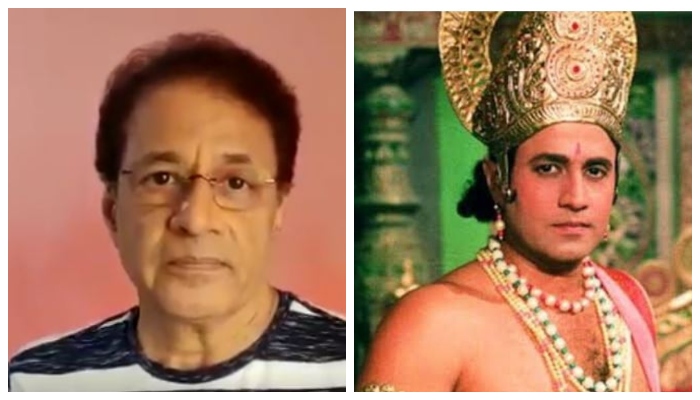
Veteran actor Arun Govil, who played the character of Lord Ram in Ramanand Sagar’s ‘Ramayan’, expressed his happiness on receiving the invitation to the ‘Pran Pratishta’ ceremony of the Ram Temple in Ayodhya on January 22. He said that he is looking forward to visiting the city and Ram Lalla’s darshan.

Govil told ANI, “I am happy that I received an invitation for the Pran Pratishtha ceremony, and I am looking forward to going there (Ayodhya) to witness it and for the Ram Lalla darshan. It is a very big opportunity. I consider myself lucky that this has happened in my lifetime; everything is going very well, the atmosphere is positive, the energy is there, and we are all very happy.”

Giving credit to Prime Minister Narendra Modi for this lifetime event. He said, “I believe that if we have to give credit to one person, then we will give it to Modi ji because of the way he has worked and spread the energy throughout, although I have accepted that whenever such work is done, it is not done by one person. The one who has spread all the positive energy is Modi ji. And the rest is collective work; everyone has worked a lot for many years, and many people have made sacrifices and are still working. So, whatever is happening, it’s a lifetime event.”

The ceremony is scheduled to take place on January 22, 2024.

Prime Minister Narendra Modi is expected to attend the ceremony at the Ram Temple on January 22. The event has garnered significant attention, with several VVIP guests from India and abroad receiving invitations to participate in the auspicious occasion in Ayodhya.
Vedic rituals for the Pran-Pratishtha ceremony of Ram Lalla (infant Lord Ram) in Ayodhya will begin on January 16, a week before the main ceremony.

A priest from Varanasi, Lakshmi Kant Dixit, will perform the main rituals of the consecration ceremony of Ram Lalla on January 22. From January 14 to January 22, Ayodhya will mark the Amrit Mahotsav.

A 1008 Hundi Mahayagya will also be organised, in which thousands of devotees will be fed. Several tent cities are being erected in Ayodhya to accommodate thousands of devotees, who are expected to arrive in the temple town of Uttar Pradesh for the grand consecration.

According to the Sri Ram Janambhoomi Trust, arrangements will be made for 10,000-15,000 people. Local authorities are gearing up for the anticipated surge in visitors around the grand ceremony and are in the process of implementing enhanced security measures and making logistical arrangements to ensure a smooth and spiritually enriching experience for all attendees.

(This news report is published from a syndicated feed. Except for the headline, the content has not been written or edited by OpIndia staff)

Delhi High Court reserves order on plea alleging denial of RTE benefits to Afghan refugee students studying at MCD Primary School

0

The Delhi High Court has reserved the order on a Public Interest Litigation (PIL) moved for 46 Afghan Refugee students of a MCD run school Jangpura on denial of Right to Education (RTE) Act benefits like uniform, scholarship, etc on the alleged reason of non-opening of their bank account.

The bench of Justice Manmohan and Justice Manmeet Pritam Singh Arora on Friday reserved the order after the conclusion of the submissions of all sides.

Petitioner Social Jurist, A Civil Rights Group through Lawyer Ashok Aggarwal stated that Afghanistan refugee students studying in MCD Primary School, Jangpura Extension, New Delhi are deprived of Statutory monetary benefits as guaranteed to them under the Right of Children to Free and Compulsory Education Act, 2009 read with Delhi Right of Children to Free and Compulsory Education Rules, 2011 on alleged ground of non-opening of Bank Account.

The plea was filed through Advocates Ashok Aggarwal and Kumar Utkarsh submitted that action on the part of respondents in depriving Afghanistan refugee students of Statutory benefits is arbitrary, unjust, malafide, discriminatory, unethical, anti-child, and violates the fundamental right to education.

Plea submitted that in the case of respondent Delhi Government and respondent MCD in lieu of providing textbooks, writing material and uniforms, money is transferred to the account of students. The relevant Rule 8 of Delhi Right of Children to Free and Compulsory Education Rules, 2011.

It further stated that respondent MCD Primary School, Jangpura Extension, New Delhi has having enrolment of 178 students. It is submitted that out of 178 there are 73 Afghanistan refugee students studying in the school. It is also submitted that all students of respondent MCD Primary School, Jangpura Extension are receiving Statutory monetary benefits through their Bank account except 46 Afghanistan refugee students who don’t have Bank Accounts.

Petitioner also added that the issue of depriving Afghanistan refugee students of statutory monetary benefits on the alleged ground of non-operation of Bank Account in the absence of KYC or non-opening of Bank accounts was brought to respondent’s notice by the petitioner vide representation dated 19.08.2023 and reminder letter dated 01.09.2023. Through representation, it was suggested to provide cash to students in case there is a problem in opening of Bank account or making it operational. However, nothing has been done so far. It is submitted that the money required to be paid to students is lying with MCD school. 


(This news report is published from a syndicated feed. Except for the headline, the content has not been written or edited by OpIndia staff)

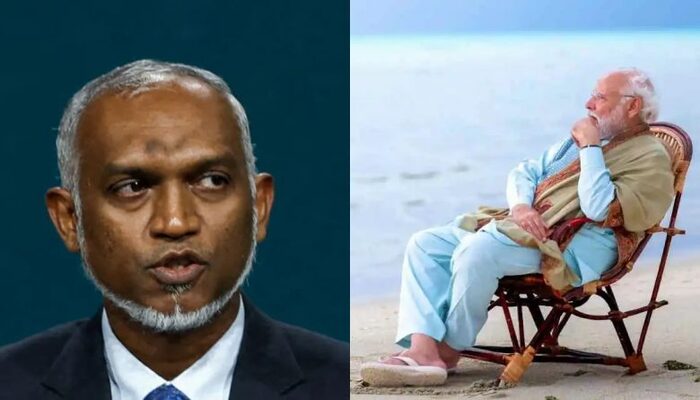
“We depend on India for food…”: Maldives residents raise concern over India’s ‘Boycott Maldives’ campaign

A major debate has erupted in Maldives amidst diplomatic tensions with India and the potential consequences of derogatory and racist remarks made by the three now-suspended Maldivian ministers on Prime Minister Narendra Modi and India. A tourist boycott by Indians poses a significant threat to the small country, jeopardising its primary source of income.

In 2023, Indian tourists formed the largest tourist group by nationality, adding immensely to the Maldives’ tourism-driven economy. It is to be noted that on social media platform X, the suspended ministers, namely Mariyam Shiuna, Malsha Shareef and Mahzoom Majid, recently called Prime Minister Modi a “clown” and a “puppet of Israel” in response to his posts about Lakshadweep islands.

Although the Maldives foreign ministry tried to distance itself from the derogatory remarks and ‘clarified’ that these comments were personal and did not represent the government’s stance, a significant section of Indian tourists have cancelled their Maldives holiday plans. They have instead shifted their attention to Lakshadweep and other tourist destinations within India as an “Explore Indian Islands” trend came up amidst the India-Maldives spat. 

Not to forget, Maldives is a small island nation with a population of 520,000, and is significantly reliant on India for essentials such as food, infrastructure, and technological developments. The residents of Malé are concerned that the diplomatic squabble could jeopardise ties between the two nations.

Locals are visibly disappointed, not only because of the boycott calls by India but also because of their government’s perceived error in judgement.

Speaking to BBC, Mariyam Eem Shafeeg, a student at the Maldivian National University said, “We were disappointed with the boycott calls. But we were more disappointed with our government. There was a lack of good judgment on the part of our officials.”

Shafeeg, inclined towards the Maldivian Democratic Party known for its “India first” policy, outlined that Malé also “depends on India for food, education and healthcare”.

Pertinently, Progressive Party of Maldives (PPM) leader Mohamed Muizzu won the presidential election in October last year after running a vicious “India Out” campaign. The Maldivian President is also known for his pro-China stance. Just days after the diplomatic row erupted between India and Maldives, Muizzu, while on a state visit to China, urged the country to send more tourists to the island nation.

Meanwhile, Maldivians have called out their government for upsetting a crucial ally like India which has been the first responder in every occasion of crisis the archipelago faced in the past. Be it the 2004 Tsunami or the 2014 water crisis, India has been like a big brother for Maldives. However, the actions of the three ministers and the PPM government’s tilt towards China, the India-Maldives ties remain a matter of concern, particularly for Maldives.

Stressing the same, Aik Ahmed Easa, a lawyer affiliated with the opposition told the BBC, “The ministers should have been sacked straightaway. We are worried now about India’s reaction as we depend on our neighbour for most of our food items.”

Notably, Maldives is dependent on India for the majority of goods, making India one of its primary trade partners. India’s exports to the Maldives accounted for Rs 49 crore of the overall trade between India and the Maldives in 2022 making India the island nation’s second-largest trading partner.

In addition to providing essentials like food, water and infrastructure, and higher education, India has also been a major support for the island nation in the arena of medical tourism. Reports say that India is the most preferred destination for Maldivian medical travellers. Notably, according to the Maldives Ministry of Tourism, India was the main source of tourist influx in 2023. Between January 1 and December 31, 2023, 209,198 Indians visited Maldives. According to the Indian government, India is the 2nd leading source market for Maldives with an 11.1% market share.

Maldives government faces criticism from its opposition

Earlier, it was reported that Maldivian opposition has demanded the removal of their President Muizzu after several ruling leaders mocked India and PM Modi. The minority leader in the Maldivian Parliament, Ali Azim called for the sacking of the archipelago’s President Mohamed Muizzu. 

Azim called for steps to remove the Maldivian President from office including initiation of a vote of no confidence against him. 

In response to Maldivian users’ and politicians’ uncalled-for racial commentary, trends like #BoycottMaldives, and cancellation of trips to Maldives are picking steam in India. Moreover, the Indian online travel company, Ease My Trip, also suspended all flight bookings to Maldives amidst the controversy. Consequently, the Maldives Association of Travel Agents and Tour Operators (MATATO) wrote to Ease My Trip CEO Nishant Pitti seeking his assistance in fostering positive relations between the two countries. “It is with a heavy heart that MATATO acknowledges the regrettable and derogatory comments made by some Deputy Ministers on social media platforms. These individuals, now suspended from their roles, do not reflect the sentiments of Maldivians in general. MATATO extends its sincere apologies for the hurt caused by these remarks,” the letter read.

Odisha: Jagannath Puri Temple Heritage Corridor inauguration on January 17, preparations in final stage

The inauguration of the ‘Sreemandir Parikrama Prakalpa,’ the temple heritage corridor project at the Lord Jagannath temple in Puri, will take place on 17th January, days ahead of Ram Mandir Pran Pratishtha in Ayodhya. The Shree Jagannath Temple Administration (SJTA) has invited representatives from 90 religious shrines and institutions nationwide to attend the mega ceremony on 17th January.

The rituals started on Friday (12th January) initiated by Gajapati Maharaja Dibyasingha Deb at his palace, ‘Sri Nahar.’ The Maharaja of Puri extended traditional ‘Sri Nahar’ invitations which were accompanied by betel nuts, to priests for the upcoming ‘Maha Yagna’. The Maha Yagna will take place on 15th January. 

Notably, Gajapati Maharaja Deb is the descendant of the dynasty that founded the Shri Jagannath Temple in the 12th century CE.

After the invitation, there will be special rituals called ‘Ankuropan’ and ‘Ankur Puja’ on Saturday (13th January), followed by ‘Yajna Adhibas’ on Sunday. On 15th January, an ‘Akhand Deepa’ (ever-burning lamp) will be placed at the site where priests will perform yagna for the next three days. As per schedule, the puja rituals will finally culminate on 17th January when Chief Minister Naveen Patnaik will walk through the corridor in the afternoon and officially declare it open for devotees.

A podium is being built at Utterparswa Mutt from where the Chief Minister will address the devotees. It will be accompanied by cultural performances and the traditional blowing of conch shells. 

This corridor is named the Shri Mandir Parikrama Project because it serves the major purpose of seamless circumambulation of the temple by the devotees. It has been prepared at a cost of ₹ 943 crore. It has a green buffer zone of 7 meters and a pedestrian way of 10 meters.

It was reported in December that invitations had also been sent to major Hindu temples across the world, and the King of Nepal. The Odisha government compiled an exclusive guest list which comprised prominent VIPs, corporate leaders, and celebrities for the grand event in Puri. 

Ranjan Kumar Das, chief administrator of the temple had earlier said, “We are inviting 857 temples in Odisha, and 180 major Indian temples including Vaishno Devi, Kamakhya Temple, and Shirdi Sai temples will also be invited for the three-day inauguration event beginning from January 15. Four Holy Dhams as per Hindu religion and four other Dhams will be invited. We are sending the invitation to the King of Nepal, who enjoys special rights in Jagannath Temple. Invitations are being sent to major Hindu temples in other countries too.”

Five lakh devotees and VVIPs are expected to seek darshan, Security heightened

It is anticipated that the temple corridor will record a huge turnout of around five lakh devotees and the event will also be attended by high-profile guests. To provide enhanced security for the temple corridor, five-layer security arrangements have been put in place in Puri before the inauguration of the heritage corridor.

To ensure the safety of VVIPs, a large number of security personnel have been assigned. The Indian Coast Guard and Marine Police will oversee security along the seafront, and numerous lifeguards will be stationed at designated bathing points along the beach. 

The IG said that more than 44 platoons of police, with one platoon comprising 30 personnel, have been deployed to provide security, maintain law and order, and manage traffic in the town from January 12 to 16. 

The IG added that 45 police officers will supervise the arrangements. To ensure smooth darshan, security personnel has been deployed inside the temple and some restrictions will be imposed on the movement of traffic on that day.

What is in the Shri Mandir Parikrama Project

The Shri Mandir Parikrama Project is designed to transform the rectangular corridor surrounding the 12th-century Jagannath Temple into a contemporary pilgrim centre, equipped with state-of-the-art amenities. These include a queue management system for 6,000 devotees, baggage screening facilities, a cloakroom capable of accommodating belongings for nearly 4,000 families. Provisions for drinking water, restroom facilities, areas for hand/foot washing, information-cum-donation kiosks, shelter pavilions for shade and rest, multi-level car parking, a dedicated lane for shuttles and emergency vehicles, an integrated command and control centre, and a souvenir shop are also there among other features.

(Video Courtesy – SJTA’s Youtube Channel)

Earlier, Ranjan Kumar Das had stated that Lokarpan Yajna will be performed from 15th January to 17th January 2024. He had said, “Recitation of Vedas will be done at the four gates of the temple. Rigveda for the eastern gate, Yajurveda for the southern, Samaveda for the western, and Atharvaveda for the northern gate have been finalised.”

Project Timeline

In November 2019, the process of land acquisition for the Shri Mandir Parikrama Project commenced, involving more than 600 residents residing in the vicinity of the temple relinquishing 15.64 acres deemed crucial for the establishment of a security zone. The foundation stone for the project was laid by Chief Minister Naveen Patnaik in November 2021.

Haryana: Rs 5 lakh cash, gold and silver items worth Rs 6.50 lakh stolen from Panchkula’s Chandi Mata temple, incident recorded on CCTV camera

0

On the intervening night between the 10th and 11th of January, three men stormed into the Chandi Mata temple in Harayan’s Chandimandir, Panchkula district and fled with money and jewellery. According to the police, the robbers broke the lock on the back gate in order to access the temple. They could be witnessed wearing shoes as they enter the sanctum sanctorum as filmed by the CCTV cameras positioned throughout the place.

The accused was on the temple grounds for almost 45 minutes after the theft which happened at around one in the morning, per the CCTV evidence. Approximately Rs 5 lakh in cash from four contribution boxes and 2.5 kg of gold jewellery as well as other items worth 6.50 lakh was taken, according to Mata Mansa Devi Shrine Board authorities.

The police were notified as soon as information regarding the theft in the temple surfaced. The police squad arrived on the scene and took stock of the situation as soon as they learned of the incident. They interrogated individuals in the vicinity while reviewing the temple’s CCTV footage. According to the police, the approximate value of the gold jewellery that was stolen from the temple is Rs 6.50 lakh. The Chandimandir police station in-charge, Lalit Kumar informed that CCTV video is being used to find the burglars.

The slum area is being searched by the police teams in an attempt to apprehend the suspects. They have reportedly offered a reward for information regarding the accused. Beed Ghaggar, Burj Kotia, Surajpur, Khark Mangoli and other impoverished localities surrounding the site are being raided by cops. Police have taken numerous people into custody since 11th January and are questioning them. The culprits are being tracked down relying on the temple’s CCTV footage.

Police are also looking through the Chandi Mandir toll plaza’s CCTV cameras at the same moment. The police are also enlisting the assistance of cybercell and undercover sources to catch the accused soon. Crime Branch-26, Crime Branch-19, Detective Staff and Chandimandir Police Station teams are hunting for them.

Gyan Chand Gupta, the speaker of the Haryana Assembly went to the temple on 11th January where bowed his head and prayed to the goddess for blessings. Subsequently, he obtained comprehensive details from the police and Prithviraj, the secretary of the Shri Mata Mansa Devi Shrine Board in connection to the incident. Later, he watched CCTV footage of the crime in detail. He ordered Deputy Commissioner of Police Sumer Pratap Singh to find the offenders, prosecute them harshly and step up regular patrols and surveillance at the temple.

The stolen articles included 16 tola gold jewellery, a silver bowl, pot, glass, crown, and lid while a gold umbrella, mangalsutra, necklace and the gold eye worn by the deity were recovered from the donation boxes. A case under relevant sections was registered at the Chandimandir police station.

The Chief Executive Officer (CEO) of the Mata Mansa Devi Shrine Board was also directed by the Speaker of the Haryana Assembly to strengthen the security measures at the three temples to avert similar instances in the future. He underlined that looting from the Mahamayi temple is a serious transgression and that violators will never be spared. He was given the assurance by the Deputy Commissioner of Police that, based on CCTV video four teams consisting of three crime units would be assembled shortly to capture the perpetrators. Officials discovered some temple materials on the hill behind the sacred structure suggesting that the burglars escaped by climbing the hill after committing the crime.

Municipal Magistrate Rajesh Punia, Municipal Corporation Councillor Narendra Pal Singh Lubana, Secretary of the Mata Mansa Devi Temple Sharda Prajapati, Assistant Commissioner of Police Aryan Chaudhary, Chandimandir police station in-charge Lalit Sharma of Chandimandir and other dignitaries were present there.