Home Blog Page 1461

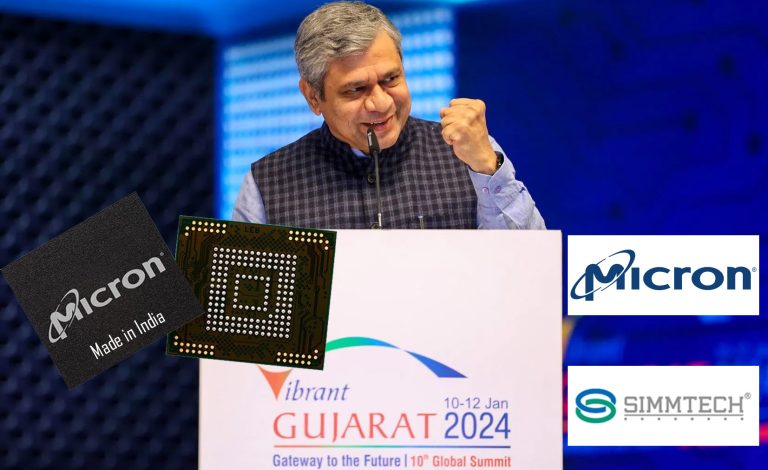
First made-in-India memory chip will be produced at Micron plant in Gujarat by year-end, South Korean firm Simmtech to collaborate: Ashwini Vaishnaw at Vibrant Gujarat Summit

The first made-in-India memory chip will roll out from the Micron plant in Gujarat by the end of the year due to a successful agreement the state government struck with South Korean firm Simmtech. The company which produces high-layer printed circuit boards for semiconductors would establish operations to assist Micron’s semiconductor plant in Gujarat, union minister Ashwini Vaishnaw informed at a press conference held on the second day of the Vibrant Gujarat Global Summit 2024 on 11th January.

According to the MoU (memorandum of understanding), Simmtech will collaborate in Micron’s semiconductor plant in Gujarat’s Sanand by setting up operations and investing more than Rs 1,250 crore. According to the minister, the plant’s installation will begin in March.

Ashwini Vaishnaw announced, “I’d like to thank Micron’s team for the passion with which they have started the construction work, the pace they have set for talent development, and the meticulous planning they have undertaken. This dedication gives us confidence that, in 2024, the first made-in-India memory chip will be produced at the Micron plant here in Gujarat.”

The Electronics & Information Technology Minister informed, “South Korean firm Simmtech Co Ltd has signed an MoU with the Gujarat government to set up a plant near the Micron plant at Sanand. The company is the world’s largest manufacturer of semiconductor substrate,” while addressing media. It has been granted 30 acres at Sanand.

He mentioned, “They will start working in the next three-odd months. This is the second semiconductor plant to be announced in Gujarat. The first semiconductor unit is being set up by Micron Technology. As per schedule, the first chip will be produced from the Sanand factory in December 2024.”

Ashwini Vaishnaw, who holds the portfolio of Railways as well as Communications Minister proclaimed, “The Simmtech plant will come up near Micron’s semiconductor plant that is already being established at Gujarat Industrial Development Corporation’s (GIDC) industrial estate in Sanand. We are very much sure that India will get its first domestically manufactured semiconductor chip in December this year.”

He remarked that Micron’s investment would open doors for India to become a hub for semiconductor development. Meanwhile, Micron and NamTech struck an agreement to foster talent for Micron’s Indian semiconductor business. Over 200 workers have already been hired by the United States company for its Indian operation.

According to him, the Tata Group’s proposed semiconductor fabrication unit at Dholera will be significantly larger than the Micron facility. “The project evaluation is under progress and once it is completed the investment figures can be revealed,” he stated and noted that Tata will enlist technical collaborators for the undertaking. He disclosed that Namtech would provide technicians for Gujarat’s semiconductor industry, and (Indian Institutes of Technology) IIT Gandhinagar will become the premier location for semiconductor research and development.

He added that government and business leaders had joined forces to create a workforce prepared for the future and highlighted, “I would request Micron to collaborate with IIT Gandhinagar to set up a centre of excellence, which will help in building a robust talent pipeline.”

Simmtech CEO Jeffrey Chun declared during the opening session of the significant event on 10the January that the business was prepared to make investments in India. More than 1,000 direct and indirect job opportunities are anticipated to be created in the state as a result of the initiative.

Simmtech was permitted to install a facility near Micron’s unit in Sanand last year in September. The bureaucrat-turned-minister had stated that this is the first of several supply partners that Simmtech will bring to India in the upcoming months and years as it constructs its first assembly, testing, marking and packaging (ATMP) unit in the nation in Gujarat. However, he had not released the exact amount of investment Simmtech will use for the manufacturing plant.

The company’s vice president, Gursharan Singh conveyed at the groundbreaking event that Micron Technology would establish a 1.4 million square foot ATMP plant, the first phase of which would start producing packaged chips by December 2024. There will be 500,000 square feet of clean room space at the site. An agreement was struck for Tata Projects to construct the plant.

He added that the plant’s capacity would rely on both local and international demand at the moment and it would feed both domestic and international markets in addition to the local one. He highlighted that the $2.75 billion project’s second phase will start in the second half of the decade but withheld specifics.

In the future, Micron plans to set up four or five of these factories. $1.95 billion in funding from the union and state governments will go toward the new factory, which is expected to create 5,000 direct and 15,000 indirect employment.

Evidence shared by IDF shows two ‘journalists’ neutralised in Gaza were terrorists linked to Hamas, Islamic Jihad

0

On 7th January, two Al Jazeera journalists named Hamza al-Dahdouh and Mustafa Thuria were eliminated in an Israeli airstrike in Gaza. The Israel Defense Forces (IDF) have now revealed that both the journalists were associated with Hamas.

According to the IDF, an Israeli aircraft directed by troops targeted the operators of a drone which was posing threat to IDF soldiers near Rafah. The operators were later identified as Hamza al-Dahdouh and Mustafa Thuria.

The IDF claims that the documents found by its troops in Gaza revealed that Thuria worked as Squad Deputy Commander in Hamas’s Gaza City Brigade and al-Dahdouh’s role in the electronic engineering unit of terrorist group Islamic Jihad.

Al-Dahdouh had also served as deputy commander in Islamic Jihad’s Zeitun Battalion. As per reports, the two journalists worked as stringers for AFP and other news organisations.

Reports say that the two were on assignment when they were killed whereas Hamza al-Dahdouh’s father, Wael al-Dahdouh also works for Al Jazeera as chief correspondent.

According to reports, IDF presented a document in Arabic which listed Hamza as a dual-hate terrorist-journalist for Islamic Jihad. He was reportedly responsible for recently firing the Islamic Jihad rockets in the area.

IDF Chief Spokesman Brig. Gen. Daniel Hagari said the IDF had found documents which linked
Thuria to Hamas too. Both were reportedly involved in activating drones endangering the Israeli forces.

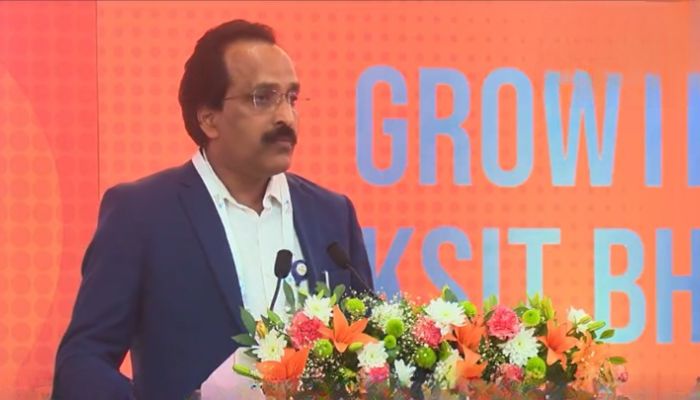
‘PM Modi told us to ensure human presence in space’: ISRO chief S Somanath shares details of ISRO’s next missions

0

On Thursday (11th January), during the International Space Conference in Gandhinagar, ISRO Chairman S Somanath unveiled India’s ambitious vision for its space program. Drawing inspiration from recent achievements and guided by Prime Minister Narendra Modi, Somanath underscored the country’s dedication to establishing an enduring human presence in space.

ISRO Chairman S Somanath recalled Modi’s support dating back to his tenure as Chief Minister of Gujarat. He said, “The Prime Minister has always been a fervent advocate for our space endeavours.”

S Somanath said, “Let me look at the type of vision that the Prime Minister has given after this success story of the last 6 months. I think he also has been an ardent supporter of space programs ever since he was a CM of this state. What he told us is that we must create continuous activity of humans’ presence in space.”

He added, “Though we have a Gaganyaan program, it must continue over a long period leading up to a human landing on the moon and an Indian landing on the moon by 2040. It looks far away, but it’s not far away. It’s so close. And we must build a space station by 2035, a space station that is accessible for Indians to go there and do research.”

While the timeline may appear distant, Somanath assured that it is well within grasp, as plans are actively underway to transform this vision into reality. Additionally, he emphasised the ambitious goal of constructing an Indian space station by 2035, poised to serve as a pivotal platform for Indian researchers to conduct experiments in microgravity conditions.

Somanath’s address follows a string of triumphs and significant declarations from ISRO. Notably, these include the successful deployment of the Aditya-L1 spacecraft, designed for studying the Sun from the first Sun-Earth Lagrangian point (L1), and the launch of the X-ray Polarimeter Satellite (XPoSat), dedicated to analysing cosmic X-rays.

Furthermore, the chairman delved into ISRO’s prospective trajectory, outlining plans such as the upcoming Venus Orbiter Mission, Shukrayaan-1, slated for either December 2024 or 2025. Notably, he detailed the ambitious initiative to launch the initial module of an Indian space station by the year 2028.

In addition, the space agency is gearing up for the Gaganyaan mission, with a sequence of tests scheduled throughout 2024 to guarantee preparedness for the slated launch in 2025.

ISRO’s vision is in harmony with the Prime Minister’s vision to achieve the milestone of landing an Indian on the moon by 2040 – a symbolic goal embodying the nation’s ambitions in space science and technology. Building on a track record of cost-effective and triumphant missions, ISRO remains a crucial force in India’s progress, actively contributing to the realms of education, agriculture, communication, and defence.

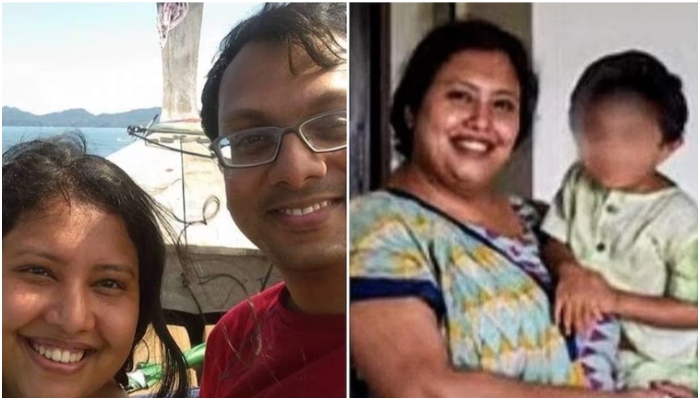
Suchana Seth overdosed her 4-year-old son with cough syrup before killing him, cab driver and a traffic jam played key roles in the CEO’s arrest

Suchana Seth, the CEO of a Bengaluru-based AI business, has been accused of suffocating her 4-year-old kid in an apartment in Goa. She sent a message to her estranged husband Venkatraman PR, telling him that he could visit his child in Bengaluru on Sunday, January 7. However, Suchana most likely did not intend to enab le the meeting because her stay in Goa was scheduled from January 6 to January 10.

According to the reports, Venkat was in Bengaluru at the time and he responded to Suchana’s message by showing up at the location where Suchana had stated she would be with their son. He waited for two hours, called and texted Suchana, but received no response. So he departed for Jakarta to work.

On Wednesday, the Goa Police launched a FIR against Suchana Seth. The FIR was registered by the management of the hotel where Suchana with her son was staying. Suchana has not acknowledged murdering her son, but she did tell the police that he died on January 7, a day after they booked into the hotel in Goa.

Even though her reservation was valid until January 10, Suchana requested a cab on the evening of January 7 saying that she had an urgent work assignment in Bangalore. She left the hotel alone with a suitcase.

The cab driver Royjohn D’Souza said that at around 11 PM on 7 January, he got a call from the reception of Hotel Sol Banyan Grande in Candolim, asking him to ferry Suchana Seth “urgently” to Bengaluru. He said that the red trolley bag that Suchana was carrying was unusually heavy, but he didn’t think much of it.

They left Candolim around 12.30 am, along with a co-driver, and reached Chorla Ghat at the Goa-Karnataka border at around 2 AM. There, a truck had overturned, causing a massive traffic jam.

The cab driver stated that he told Suchana that they could be stuck in the traffic jam for 4 to 6 hours, as the traffic was not moving at all. Therefore he suggested that Suchana take a flight instead, and offered to drop her at the airport using an alternate route since she said she was in a hurry to reach Bengaluru.

But Suchana refused to travel by air, stating that she would only travel by road, regardless of the time it took. He found it odd, because earlier she had said was in a hurry. But as the cab ride was fixed at an amount of Rs30,000, he didn’t protest. After being stuck in the traffic jam for 4 hours, the vehicle was finally able to move in the morning.

On January 8, the driver received a call from the Goa Police and asked if his passenger was alone or a child was with her. The police were talking in Konkani, which the woman didn’t understand. Police told him them that they found bloodstains in her hotel room and they had a suspicion about her. The police then asked him to hand over the phone to Suchana and asked her about her son, and she claimed that she left her son at a friend’s house, and have them an address.

The driver played an important role in the CEO’s arrest. After confirming that Suchana was lying about her son, the officers called the driver again some time later, and ordered him to take the cab to the nearest police station, without telling Suchana. The cab was already in Karnataka at the time.

Royjohn D’Souza said that they were on the expressway, and he could not understand about the location as all signage are in Kannada. Therefore he searched for the nearest police station on Google map, and it showed one 150 km away. As it would have taken too long to reach that police station, he told Suchana that he and his co-driver needs to use a washroom, and stoped the car near a restaurant. There they talked to the watchman, who said that the Aimangala police station in Karnataka’s Chitradurga district was just 500 metres away.

He then called back Goa Police, and kept them on standby on the call, and took the service road on the highway to reach the police station. After reaching the police station, he handed over the phone to the in-charge of the police station. After the cops talked to the Goa police, they searched the bag and found the dead body of Suchana’s son. The driver said that the woman didn’t show any reaction when the police were searching the bag. Suchana was immediately arrested after that.

It is possible that if they were not stuck for 4 hours in the traffic jam, the cab would have reached Bengaluru and the woman would not have been caught. She would have been able to dispose of the body, and then perhaps disappear or make a up story, leading cops to a clueless investigation.

Investigators are still unsure about the reason for the heinous murder, Suchana may have suffocated her kid with a pillow after administering a large dosage of cough medication. Police said that the murder was pre-planned as two empty bottles of cough syrup were found in the Goa apartment where she allegedly killed her son.

Reports said Suchana told her friends and family members that the son reminded her of her estranged husband’s face.

She spent much of the day in the Goa service apartment in her room. On January 7, Suchana purchased coffee and meals online.

According to reports, the bloodstains that alerted the hotel personnel after Suchana left were her own, which supports the police’s conclusion that after killing her kid, Suchana attempted to cut her wrist.

Suchana’s neighbors in Bengaluru describe her as peaceful. Until four months ago, she lived on Rachenahalli Main Road. She had moved out of this flat with her son four months ago. Suchana went to school in Chennai and college in Kolkata. Her professors recall her as a talented student who received a grant from The Raman Research Institute.

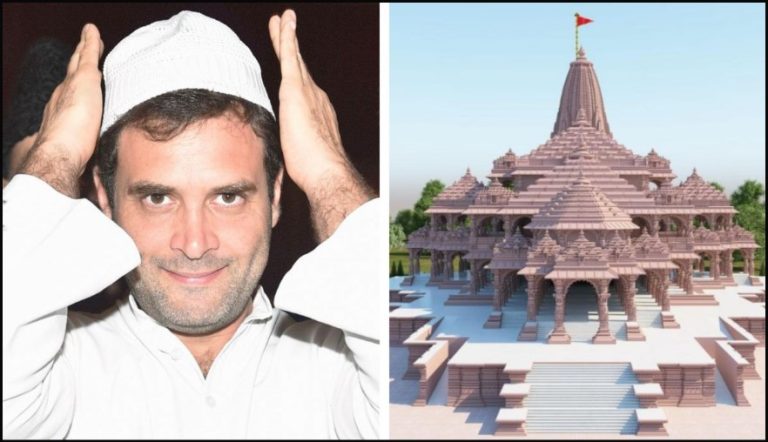
As Congress says ‘religion is personal matter’, read how they have used it for minority appeasement and Hindu hatred for decades

While hundreds of dignitaries and people from all walks of life are eagerly awaiting to witness history in the making on January 22, when Ayodhya’s Ram Mandir’s Pran Pratishtha is set to take place, the Congress party has declared that it would skip the massive inauguration ceremony.

On January 11, Thursday, the grand old party said its leaders, party chief Mallikarjun Kharge, his predecessor Sonia Gandhi, and the party’s Lok Sabha leader Adhir Ranjan Chowdhury, who received the invitation, declined it, citing it as a ‘political project’ of the BJP and the Rashtriya Swayamsevak Sangh.

“Religion is a personal matter”, said senior party leader Jairam Ramesh in a statement, as he defended Congress’ choice to abstain from the inauguration ceremony of the Bhavya Ram Mandir in Ayodhya, which not only signifies a victory for Sanatan Dharma and a symbol of Hindu awakening and the restoration of pride but also a reminder of the tenacity of our ancestors who refused to bow down to the relentless, brutal Islamic onslaught during the Middle Ages.

“Religion is a personal matter. But the RSS/BJP have long made a political project of the temple in Ayodhya. The inauguration of the incomplete temple by the leaders of the BJP and the RSS has been obviously brought forward for electoral gain,” read a statement from senior party leader Jairam Ramesh.

“While abiding by the 2019 Supreme Court judgment and honouring the sentiments of millions who revere Lord Ram, Shri Mallikarjun Kharge, Smt. Sonia Gandhi and Shri Adhir Ranjan Chowdhury have respectfully declined the invitation to what is clearly an RSS/BJP event,” he added.

Soon after the official statement by Congress, BJP condemned the party’s decision accusing it of being anti-Hindu.

Well, despite the party’s best efforts to turn the incident into a political football by accusing the ruling party of being responsible for its decision to skip the Ram Mandir Pran Pratishtha event, the fact remains that the Congress party has never shied away from displaying its anti-Hindu policies and unabashed Muslim appeasement.

It’s hilarious how, only during the election season, Rahul Gandhi, through his actions and his party’s policies, appears to wear Hinduism on his sleeves. As the elections come closer, posters of Rahul Gandhi depicting as a Hindu God are put up to entice Hindu voters and his Temple-runs around election time are organised to give an impression that he is a practising Hindu but as the election season subsides, Congress party and its president Rahul Gandhi relapse to their modus operandi of indulging in unabashed minority appeasement and anti-Hindu activities.

And when it comes to the Ram Mandir, Congress has always been against the very ideals laid down by Lord Rama himself and his established Dharma. So intense is their hatred for Lord Rama that the drawings of Lord Hanuman, Lord Rama’s chief disciple were branded as communal and unacceptable by the Congress ecosystem. Add to this, Rahul Gandhi’s proclamation that building the Ram Temple is a non-issue for his party in the last elections.

But what can be expected from a party which once questioned the existence of Lord Ram?

Congress’s anti-Hindu sentiments, in fact, have a long and distinguished history. It was Congress that moved heaven and earth to concoct the “Saffron Terror” narrative by falsely implicating Sadhvi Pragya and even Lt Col Purohit. It was Congress which wanted to pass the Communal Violence Bill which basically ensured that only Hindus would be considered perpetrators and never a Muslim, should there be any communal violence. The bill was formed by people who were associated with various foreign-funded NGOs.

Furthermore, it was former Congress president and Gandhi scion Rahul Gandhi who declared mythical “saffron terror” as being more dangerous than LeT. It was P Chidambaram and Sushil Kumar Shinde who called Hindus terrorists with no proof or reason. It was Manmohan Singh who said Muslims have the first right to our country’s resources.

Today, let’s briefly reminisce about the umpteen statements and incidents where Congress and its leaders, from time immemorial, have been snubbing Hindus and their religion.

Jawaharlal Nehru’s opposition to the reconstruction of the Somnath Temple

The final tragic destruction of the Somnath Temple occurred in 1665 CE when it was converted into a mosque on the instructions of Aurangzeb. The temple was abandoned for over three centuries, only surfacing occasionally in ancient British photographs and paintings.

On November 12, 1947, on the auspicious day of Diwali, Sardar Patel paid a visit to the temple and urged it to be restored to its former glory. Suddenly, the atmosphere became pregnant with the orgasmic cries of Jai Somnath. KM Munshi, then a minister, took an active interest and ensured that the project saw the light of the day. Nehru, as usual, lodged a vehement opposition, dubbing it a sign of ‘Hindu Revivalism’.

After the reconstruction was complete, KM Munshi invited the then President Dr Rajendra Prasad to the inauguration of the Somnath temple. Nehru did not like the idea of the president visiting Somnath temple for inauguration in 1951.

Nehru wrote a letter to Rajendra Prasad expressing his views on the matter. “I confess that I do not like the idea of your associating yourself with a spectacular opening of the Somnath Temple. This is not merely visiting a temple, which can certainly be done by you or anyone else but rather participating in a significant function which unfortunately has a number of implications,” Nehru has been quoted in various reports as having written in his letter.

However, Rajendra Prasad disregarded Nehru’s objections and decided to attend the ceremony in May, 1951. 

Shah Bano Case: When Rajiv Gandhi overturned SC judgement protecting Muslim women’s right to maintenance during talaq

In 1986, the Indian state headed by Rajiv Gandhi set a dangerous precedent of catapulting to Muslim hardliners. The Mohd. Ahmad Khan vs. Shah Bano Begum & Others case and the subsequent legislation passed by the Rajiv Gandhi government in 1986 is often remembered as a pivotal moment in India’s political history.

It all started when Shah Bano, the 62-year-old Muslim woman, filed a petition in court in April 1978 demanding maintenance from her divorced husband Mohammed Ahmad Khan, a renowned lawyer in Indore, Madhya Pradesh. Shah Bano’s husband Khan divorced her by uttering triple talaq later in November stating he was not obliged to pay her any maintenance as she is not his wife under Islamic law.

In April 1985, in a historic judgment, the Supreme Court ruled in favour of Shah Bano and upheld the decision by the High Court stating that she was entitled to be paid for maintenance by her husband.

The Muslim hardliners, clerics pushed the then Rajiv Gandhi government, elected in 1984, to pass the Muslim Women (Protection on Divorce Act), 1986. This law overturned the Supreme Court’s verdict in the Shah Bano case. The 1986 Muslim Women (Protection on Rights of Divorce) Act diluted the Supreme Court judgment and allowed maintenance to a divorced woman only during the period of iddat, or till 90 days after the divorce.

The Muslim Women Act in 1986, virtually pitted women’s individual rights against the rights of a religious group and the latter with their street veto power were capable of enforcing the law will over a weak, minority-appeasing government led by Rajiv Gandhi.

Most importantly, it took 33 years to correct the historic blunders made by the Rajiv Gandhi government. In 2019, the Narendra Modi government passed the Muslim Women (Protection of Rights on Marriage) Act, 2019 in the Parliament of India criminalising triple talaq and delivering justice to several crores of deserted Muslim women just like Shah Bano.

Congress leaders mocking Ram Mandir, insulting Lord Rama

It is to be recalled how Congress leaders and its allies have refused to believe in the existence of Lord Rama and mocked the construction of the Ram temple. Recently, DMK leader TKS Elangovan described Lord Rama’s birth as ‘mythology’ and alleged that the BJP was trying to replace history with mythology.

“They have demolished history and replaced it with mythology. Any country should be proud of its history, it should know the history. Ram’s birth is mythology, it is a story from Ramayana. It is literature. They want to replace history with mythology. That is what the BJP is trying to do. With these people in power, what can we expect?… He wants to make use of it as a political tool. He is not interested in Ram. BJP does not consider Ram as an important thing but their political gain becomes important so they are making use of Ram for their political gains,” the leader was quoted as saying.

Also, in June 2023, Rahul Gandhi’s ‘mentor’ Sam Pitroda mocked the Hindu deities while accusing the BJP of focusing only on religious matters. “We have a problem with unemployment, inflation, education, health. No one talks about these things. But everyone talks about Ram, Hanuman, mandir,” he had said during an event hosted by Congress leader Rahul Gandhi. The video of the incident had massively gone viral over the internet then.

Further, Kapil Sibal who was earlier a member of Congress had appeared for the Sunni Waqf Board and Babri Masjid Action Committee in the Supreme Court to term the case as a ‘trap’ laid by the BJP. “This judgment is going to have huge political ramifications. A party is pushing its manifesto. The court should not fall into a trap. This is nothing but a trap,” he had said in the year 2017. Sibal was then slammed by the netizens for the choice of his clients and the stance taken by him.

Sibal had been accusing the BJP of using the Ram Mandir issue for its political gains. He recently reiterated his stance saying that ‘no one becomes Ram by building Ram Mandir. People must learn to walk on the path of Ram.”

In the year 2018, Congress leader P Chidambaram mocked the idea of a Ram temple in Ayodhya and said that BJP was only focusing on building temples and giant statues. “At the beginning of five years, the promise is for Development, Jobs, and Money in every citizen’s bank account. Nothing was achieved, but at the end of five years, the new promise was for grand temples, giant statues, and doles,” he was quoted as saying. The BJP then slammed the leader for playing with the sentiments of Hindus.

As if denying the reality of Lord Ram wasn’t enough, the grand old party of India in 2022 came up with fresh ways to ridicule Hinduism. The leaders compared Congress leader Rahul Gandhi to Lord Rama as the former embarked on his political stunt called ‘Bharat Jodo Yatra’.

Further, Kerala Pradesh Congress Committee (KPCC) President K Sudhakaran also ridiculed Bhagwan Sri Ram, Sri Lakshman, and Sita Mata by distorting Ramayana. He stated in a recent video interview with The New Indian Express (TNIE) that while returning from Lanka on the Pushpaka Vimanam, after defeating Ravana, Lakshman briefly entertained the thought of pushing his brother, Lord Ram, into the sea and going away with his wife Sita.

In 2020, ahead of Ayodhya Ram Mandir Bhoomi Pujan on August 5, Zee News conducted a discussion on Ayodhya and Ram Mandir. In a shocking display of ignorance, Congress leader Kumar Ketkar denied the historical existence of Shri Ram and cast aspersions about the Hindu God being a creation of literature.

In September 2007, the Central government run by Congress-led UPA 1 had said that there is no historical proof of Lord Ram’s existence.

An affidavit filed by the Congress-led government read, “Valmiki Ramayana and Ramcharitmanas admittedly form an important part of ancient Indian literature, but these cannot be said to be historical records to incontrovertibly prove the existence of the characters and occurrences of events depicted therein.” The affidavit was filed to register the UPA government’s opposition to the demand to scrap the Sethusamudram project as it would damage the Ram Setu.

Senior Congress leader of the time, Kapil Sibal fought the Ram Janmabhoomi case for the Sunni Waqf Board opposing the building of a magnificent Ram temple at the disputed site in Ayodhya. He also employed dilatory tactics and asked the apex court to delay the decision in the Ram Janmabhoomi case till the 2019 elections.  Another eminent Congress leader Shashi Tharoor had earlier claimed that no ‘good Hindu’ would want a Ram Mandir at Babri site. Tharoor urged that one should have the Ram Mandir in one’s heart. 

Instances of the Congress leaders openly peddling the ‘Saffron Terror’ narrative

Most famously, a Wikileaks tape dating back to 2009 recorded former US ambassador to India – Timothy Roemer recounting how Rahul Gandhi in a conversation with him claimed that radicalised Hindu groups were a bigger threat than the Lashkar-e-Taiba.

Besides Rahul Gandhi, senior Congress leaders too have made similar allegations.

In 2013, the then Home Minister Sushilkumar Shinde claimed that BJP and the RSS were spreading “Hindu terrorism” via their “training camps”. He also alleged that Hindus were behind Hyderabad’s Mecca Masjid blast which now has been proven to be a lie.

In 2010, erstwhile Home Minister P Chidambaram “cautioned” law enforcement authorities with regards to “the recently uncovered phenomenon of saffron terror”.

Even controversial Congress leader Digvijaya Singh has been quoted in 2013 as questioning as to why did all the “Hindu terrorists” have RSS links. He though had a change of heart two years later when he objected to the use of the term saffron terror.

Besides this Hindu terror bogey, was the infamous communal violence bill which the Congress-led UPA government wanted to enact. In a nutshell, the communal violence bill in itself was considered communal by many, with it stipulating that only religious or linguistic minorities could be labelled as victims of communal violence. How would the party explain this, while opting for a pro-Hindu push?

All this is apart from the noise made by the state-level leadership of the Congress, which included Karnataka CM Siddaramaiah asking for the opinion of district heads regarding the withdrawal of cases lodged against minorities. After public furore, he decided to take a U-turn. Just to mention, he also had signalled his intention to play by the “old rules”, when he called BJP and Congress Hindutva terrorists.

Over the years, what became evident was how Congress was using the “soft Hindutva publicly, minority appeasement privately, and caste divide covertly” tactic to try and keep all factions happy. We have seen their divisive tactics since time immemorial. From their unholy support to people like Jignesh Mevai and Hardik Patel to their tacit silence during Koregaon violence to their direct involvement in the Padmaavat row, and beyond.

While Congress tries to publicly appease Hindus, it has time and again jammed a dagger in the Hindu back by dividing them on the basis of caste.

Congress leaders discrediting the genocide of Hindus

In 2022, the unexpected success of Vivek Agnitori’s The Kashmir Files, a film based on the genocide of Kashmiri Hindus has completely thrown all the so-called leftist liberals and Islamist apologists off balance, including the grand old Congress party that has officially stepped in to defend the Islamists who carried it out.

At first, the Congress Kerala tried to blame the BJP for the genocide, then the party’s media head in Chhattisgarh effectively exonerated the Islamists who carried it out, and now its senior leader Jairam Ramesh has gone on to not only dismiss the veracity of the Kashmiri Hindus genocide but also cast aspersions on the film-makers’ sincere efforts to expose the unspoken and harsh truth about the Islamic terror in the valley in the 1990s that forced thousands of Kashmiri Pandits to flee their homeland.

It’s not at all surprising that the Congress party despises Hindus. It’s been around for a while, always kept well under wraps. It was only after Narendra Modi took office as prime minister of the nation in 2014, that all the pretences were abandoned and the Congress’ animosity for Hindus came out in the open. Be it the brazen use of the gau-mutra jibe to deride Hindus or openly passing anti-Hindu remarks to the unabashed display of their pro-Muslim moorings, the list of Congress’ treachery concerning Hindus is rather endless and the above-mentioned instances are just a few examples to highlight Congress’ anti-Hindu leanings.


Swimming pool, gazebo, plush gardens: Take a look at the lavish holiday home of Hamas’s deputy chief in Gaza

0

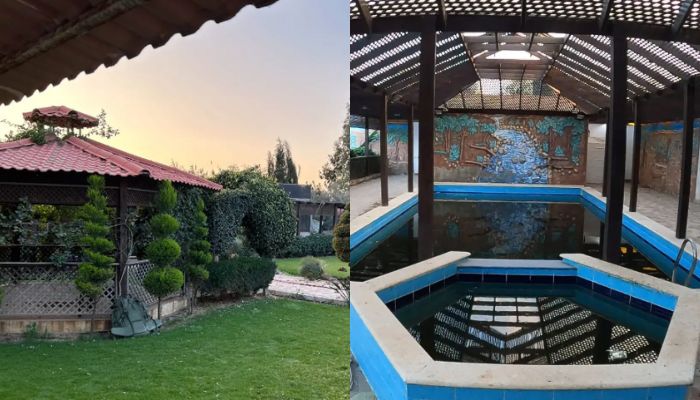
Imagine a plush green Gaza with enchanting gardens, plantations, swimming pools, jacuzzi, gazebo, arbor, water tank and what have you. Well, all of it and more exists in the Gaza Strip, except only in the luxurious vacation home of Hamas’s political leader Marwan Issa.

The Israel Defense Forces (IDF) on 10th January raided the holiday home of Hamas’s deputy chief in central Gaza and recorded a video showing the extravagance that Hamas leaders were living in at the cost of the Gazan people. Notably, civilians in Gaza lack basic access to drinking water.

Marwan Issa is reportedly the second-in-command of Hamas’s military wing. His home, an estate in the Bureji area, rests on a large piece of land with a green backyard and patio space, a gazebo and expensive furniture.

The house also has a large outdoor swimming pool surrounded by an oasis-style mural. IDF spokesman Lt. Col. Avichay Adraee said, “This is further evidence of the complete disconnect between the Hamas leadership, including the leaders of the military wing, which lives a life of luxury and enjoys great wealth, and a large segment of the Gaza population that issues distress calls to obtain donations and international aid.

Adraee reportedly said that while Hamas leaders are in heaven, Gaza residents are in hell.

About two months ago, the IDF took over the luxury homes of other Hamas leaders in Gaza City featuring rows of affluent homes and buildings which housed the terrorist group’s parliament and police headquarters.

Reports cite Israeli military saying that in Bureij it “uncovered the largest weapons production site since the beginning of the war”.

Components for long-range missiles capable of reaching Israel and other explosives including mortar shells were recovered from the site which was located in the centre of a densely populated civilian area.

The site was also connecting with shafts that led to Hamas’s terror tunnel system located nearby. The Israeli forces are engaging in battles across central and southern Gaza.

This shocking revelation comes even as the West, Islamists and Leftists have taken focus away from the brutalities of Hamas and are rather brickbatting Israel for being on the offensive.

The images from the opulant homes of Hamas leadership in Gaza exposes how the terrorists are operating and living at the cost of Palestinian using the latter as human shields and to further their propaganda and gather sympathy from the world at the cost of Gaza civilians.

Boost for domestic tourism: SpiceJet announces plan to launch flights to Lakshadweep and Ayodhya soon

0

Prime Minister Narendra Modi recently promoted the beaches of Lakshadweep in a post on the social media platform X and urged the citizens of India to choose domestic tourist destinations for holidays. Also, the construction of Bhavya Ram Mandir in Ayodhya is set to increase the tourism industry in the holy city by several folds. Keeping it in mind, Spicejet, the low-cost airline, has announced plans to start flights for both Lakshadweep and Ayodhya.

In a report, LiveMint quoted the Chairman and CEO of SpiceJet, Ajaya Singh, saying that the airline plans to start flights to Lakshadweep soon. He also expressed interest in starting flights to Ayodhya in the coming months. The announcements were made during the company’s Annual General Meeting (AGM).

In his address during the AGM, Singh said that the search volume for Lakshadweep has dramatically increased since PM Modi visited the islands. Furthermore, the tensions between India and Maldives have encouraged Indian tourists to find alternative destinations other than Maldives, and Lakshadweep is a closest and unexplored beach destination meeting the requirements.

Using the opportunity, SpiceJet plans to start flights to Lakshadweep and later to Ayodhya to meet the growing demand for both destinations. Singh announced the company will use a fund of Rs 2,250 crores for the airline’s growth.

India-Maldives tension over tourism

Prime Minister Narendra Modi was in Lakshadweep on 2nd and 3rd January. During his visit to the Union Territory, he published some photographs of the beaches of Lakshadweep and urged citizens of India to choose domestic destinations for holidays. Though PM Modi did not take any names of the foreign destinations, there was a war of words between social media users of India and Maldives. The situation escalated when deputy ministers of the newly elected government of Maldives used abusive language for PM Modi and the people of India.

As the situation got worse, Indians started to trend boycott Maldives. Seeing the adverse effect on the tourism industry as tickets and hotel bookings were getting cancelled quickly, the Maldivian government announced that three of the deputy ministers who used abusive language on social media were suspended. However, the damage was already done, and several travel companies stopped Maldivian operations. In the coming days, domestic tourism may surge, with PM Modi urging people to choose local destinations over foreign trips.

21,000 priests from Nepal to conduct ‘Ram Naam Maha Yagya’ in Ayodhya to establish 1,008 Shivlings before Ram Mandir Pran Pratishtha

0

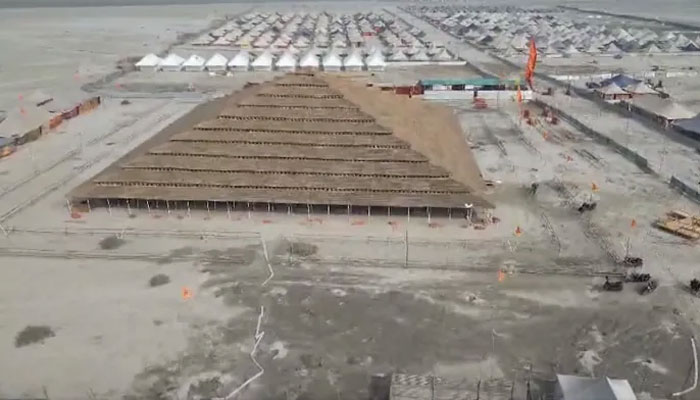
The Pran Pratishtha of Bhagwan Ram at the Ram Mandir in Ayodhya is scheduled for 22nd January. Before the ceremony, a grand “Ram Naam Maha Yagya” will take place to establish 1008 Narmadeshwar Shivlings on the bank of Saryu River in Ayodhya. The event will take place between 14th January and 25th January. 21,000 priests have been invited from Nepal to conduct the Maha Yagya. 1008 huts have already been raised, and Shivlings will be placed along with a grand mandap.

Notably, a tent city spread across 100 acres has already been established on the sand ghat of Saryu River, located around 2 KM away from Bhavya Ram Mandir site. Atmanand Das Mahatyagi, also known as Nepali Baba, is organising the Maha Yagya. Nepali Baba is originally from Ayodhya but later shifted to Nepal. He said, “I do this yagya every year on the occasion of Makar Sankranti, but this year, we have scaled it up given the Ram Temple consecration ceremony.”

He added that arrangements have been made to accommodate 50,000 devotees daily at the Maha Yagya. Furthermore, 1 lakh devotees will be able to have a feast at the Maha Yagya every day. Once the Maha Yagya is over, all the Shivlings will be immersed in the Saryu River. The Havan will start on 17th January with the chants of 24,000 of Ramayana and continue till 25th January.

All 1008 Shivlings will get anointed with Panchamrit every day. One thousand one hundred couples will perform Havan and recite Ram Mantras around 100 Yagya Ponds. The Shivlings have been brought from the Narmada River in Madhya Pradesh. Nepali Baba said, “The carving work will be completed before 14th January.” He added, “I was born in the phatic shi- la area of the temple town, and I am a disciple of Tapasvi Narayan Das.” Nepali King reportedly gave him the name “Nepali Baba”.

5 die as trial Electric Vehicle meets with accident in Uttarakhand, driver says rangers ‘forced’ him to speed: Details

0

On Monday (8th January) night, an electric vehicle (EV), sent for a trial ride, met with an accident in the Chilla range of Uttarakhand’s Rajaji Tiger Reserve, killing five people, including two forest guards. A lady warden is also missing since the accident.

The rescue mission went on late into the night. The State Disaster Response Force (SDRF) stated on Tuesday (9th January) morning that there were ten people in the vehicle. While five injured individuals were sent to AIIMS in Rishikesh for treatment, the force initiated a search for the warden who fell into the Chilla Canal.

The victims have been identified as forest range officials Shailesh Ghildiyal and Pramod Dhyani, Saif Ali Khan, and Kulraj Singh. Aloki, a wildlife protector, had also reportedly gone missing. However, the officials on Thursday (11th January) recovered the dead body of Aloki taking the death toll to 5.

Among the injured are doctor Rakesh Nautiyal, Govind Singh, Amit Semwal’s son who was in the car, Ankush, Ashwin Biju, and doctor Amit Semwal. Kulraj and Ankush are said to be employees at a vehicle manufacturing company.

The vehicle’s driver claims that forest officials forced him to overload and speed up while testing the all-terrain electric SUV.

A video of the crash, shared by news agency PTI, shows the EV first traveling at regular speed on a stretch of road. A person, presumably the driver, could be heard begging someone to let some individuals out of the vehicle. “Kuch logon ko utarna padega sir… risk nahi lena hai sir, jhatke me gir gaye…” the individual speaking could be heard saying. (Some individuals need to get out of the car; we cannot accept the risk, what if someone falls during a crash?)

According to the police, the tragedy happened while an interceptor vehicle brought in for patrolling and wildlife rescue was being tested on the Chilla range. As the EV drove from Chilla to Rishikesh, it collided with a tree ahead of the Chilla Power House and the Chilla Shakti Canal’s parapet. During the impact, some of the passengers fell into the ditch, while Aloki fell into the canal.

People traveling behind them in another vehicle alerted the police and park administration to the accident, and the rescue operation began immediately. Police and forest department officials rescued the injured from the ditch and transported them to AIIMS, where doctors confirmed four individuals dead.

In their statement, the SDRF stated, “Under the leadership of Manikant Mishra, Commandant SDRF, a search operation was carried out till late night in search of a woman officer who went missing during a vehicle accident in Chilla Canal. After taking stock of the incident site, Commandant SDRF identified important places for effective search operations where there is a strong possibility of success during the search. Necessary instructions were also given to SDRF deep divers by him.”

However, the SDRF team on Thursday (11th January) confirmed that the missing woman officer has also died. “The body of a missing Rajaji Tiger Reserve official was recovered from the Chilla canal here on Thursday, taking the death toll to five,” an SDRF official said.

“Devi’s body was found floating on the surface of the canal, which had been scoured by a team of divers since the accident occurred,” SDRF inspector Kavindra Sajwan said. The body was pulled out of the water and handed over to the police, he said.

Meanwhile, on Wednesday (10th January), the police filed a lawsuit against representatives of the firms that produced and modified the electric car involved in the accident during a test drive.

The FIR in the case was filed against the representatives of Aska and Pravaig Dynamics companies, as well as the vehicle driver Ashwani Biju, under various sections of the IPC, including 304A (causing death by negligence), 279 (negligent driving endangering human life), and 338 (causing grievous hurt by rash, negligent action), according to SHO Ravi Kumar Saini of the Lakshman Jhula police station.

However, the firm, Pravaig Dynamics issued statement in the matter and said that the FIR overlooked critical facts, including trial being authorised by the forest department, and that forest department officials overloaded the trial EV and took it off the approved boundary for trial runs.

The driver, a BE Mechanical Engineer, also claimed that forest officials urged him to overload and hurry up throughout the trial.

According to the statement, the driver’s first trial on Monday morning, which was permitted by the Uttarakhand forest department, went off without incident. However, during the second round of demonstrations in the afternoon, forest officials compelled him to carry nine persons (a total of ten, including the driver) despite the seating capacity of eight.

The corporation claimed that they had gotten proper permission from the state forest authority to conduct the test drive solely within the Rajaji National Park. “That permission did not allow forest department officials to violate the authorised capacity of our demonstration vehicles (of 8 pax). The forest officials were not allowed to instruct our test driver to trespass speed limits,” the statement said.

“Forest personnel (some in uniform) not only forced our test driver Ashbin Biju (BE Mechanical), to violate the boundary conditions, some of them chose to perch dangerously on the back bumper of our demonstration car and overloaded it, forcing it to go off balance”, the statement further said.

“We request that under law and principles of natural justice, Uttarakhand Police records a fresh FIR with all the relevant facts,” the statement went on to say.

Swachh Bharat Survekshan: Indore and Surat cleanest cities in India in 2023, Indore came out on top for 7th year running

0

Indore and Surat have been named India’s cleanest cities as part of the Union Housing and Urban Affairs Ministry’s Swachh Survekshan 2023 Awards on Thursday (11th January). Surat won the title for the first time, while Indore held the top rank for the seventh year in a row. Navi Mumbai emerged as the country’s third cleanest city.

Meanwhile, Maharashtra won the award of cleanest state, followed by Madhya Pradesh. Moreover, Chandigarh was named ‘Safai Surakshit Shehar’ for the city having the best safety standards for sanitation workers. Varanasi was awarded the cleanest “Ganga town” in the country.

Sasvad in Maharashtra, Patan in Chhattisgarh, and Lonavala in Maharashtra took the top three spots in the category of cleanest cities with a population under one lakh people.

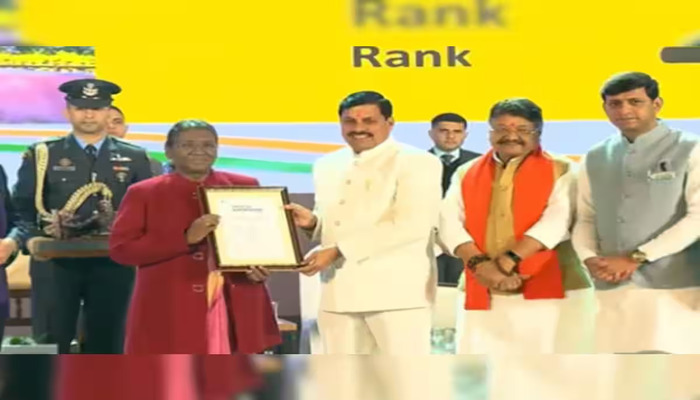
At an awards ceremony in Delhi, President Droupadi Murmu presented the awards to representatives of the winning cities and states at Bharat Mandapam in New Delhi in the presence of the Union Minister for Housing and Urban Affairs Hardeep Singh Puri. The theme of Swachh Survekshan 2023 is “Waste to Wealth”.

President Droupadi Murmu addressed the gathering, saying that the central government and other organisations have played a key role in making the Swachh Bharat Mission a mass movement in the country. She stated that the Swachh Bharat effort employs millions of individuals. President Murmu also thanked the ‘Safaimitra’ for their participation to the Swachh Bharat Mission, calling it remarkable. She urged the country’s youth to strive hard to make India the cleanest country in the world.

“If the young generation decides to keep all the cities and the entire country clean, then India of 2047 will certainly celebrate its centenary of independence by being included among the cleanest countries in the world,” President Murmu said.

Furthermore, President Murmu outlined that nearly one-third of our people live in cities. Cities and towns must be clean for their residents’ well-being and development. She mentioned how much urban land is buried under mountains of waste. She said that such garbage mountains are particularly hazardous to the health of the urban inhabitants. She was relieved to learn that such waste sites are being phased out as part of the Swachh Bharat Abhiyaan. She expressed confidence that effective work would be done in all urban areas and that the goal of zero dump sites would be met.

Swacch Bharat Abhiyan

On 2nd October 2014, the Swachh Bharat Mission was launched by PM Modi as a national movement. The campaign aims to achieve the vision of a ‘Clean India’. The Swachh Bharat Abhiyan is the most significant cleanliness campaign and is one of the important projects launched by the Narendra Modi government. Swachh Survekshan has evolved as a productive approach for altering the urban landscape over the years. Survekshan in 4,477 cities this year received unprecedented citizen reaction, with nearly 12 crore entries compared to nine crore last year.

Swachh Survekshan 2023 Indicators

The indicators for Swachh Survekshan 2023 focus on factors such as segregated door-to-door garbage collection, zero waste events, Divyang-friendly toilets, enhanced plastic waste management, and cleaning back lanes, for which the marks have been raised this year. Priority has been given to Safaimitra Suraksha in converting “manholes” to “machine holes.” 2x points were added to this component. The new ‘Waste to Wonder Parks’ indicator was created with a 2% weightage. Swachh TULIP was introduced in Swachh Survekshan 2023 as a new indicator, particularly for cities with more than one lakh people. In addition, Red Spots (spitting in commercial/residential places) were introduced as a new indicator under cleaning public areas. A special focus was placed on the RRR Promotion – RRR Centre Functionality. For the year 2023, 40% weightage had been assigned for detailed technical assessment of all waste treatment facilities in cities this year.

What makes Indore and other award-winning cities the cleanest

Notably, several cities across the country, especially Indore, have become transformatively clean since the Modi government launched the Swachh Bharat Abhiyan. According to the website of Smart City Indore, at present, Indore generates about 1,115 MT of waste every day, and it is all collected from the source, whether it is a family or a commercial establishment. The door-to-door service began in January 2016 as a pilot initiative in two of the city’s 84 wards. Indore has accomplished trash segregation at the source in 100% of its residential and commercial units. 

Indore, like most Indian cities, had challenges such as a lack of waste segregation at the source, an inefficient garbage collection and transportation system, insufficient public awareness, and limited infrastructure for garbage processing and disposal, among others. However, following the launch of the Swachh Bharat Abhiyaan in 2014, the Indore Municipal Corporation (IMC) embarked on an extensive transformation of its waste management system. To establish a more efficient and environmentally friendly garbage management system, current infrastructure, policies, and community participation activities were revamped.

The Swachh Bharat Mission has also created an environment of positive competition among the authorities and the people to make sure their city becomes cleaner than ever.

Another significant fact to note is that according to the Swachh Survekshan 2023 results, 129 cities in Uttar Pradesh have attained ODF++ classification, indicating adherence to open defecation-free standards and sustainable waste management techniques. The year 2023 recorded excellent progress, with 648 cities in the state getting the Open Defecation Free (ODF) status, a significant rise from the 588 cities the previous year.