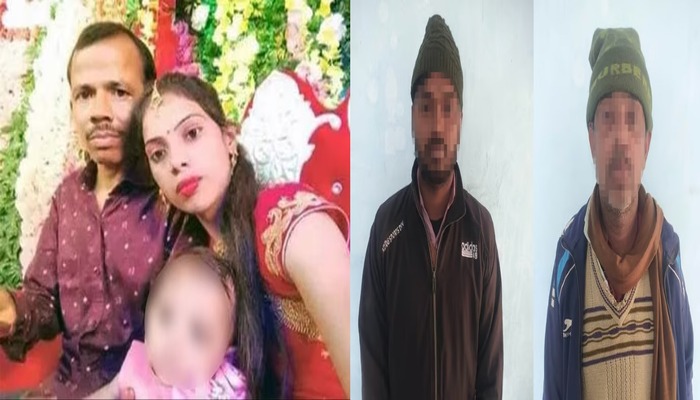
In a shocking case of honour killing in Bihar, a couple who eloped in 2021 and returned to their village along with their two-year-old daughter were shot dead by the girl’s family on 9th January. The deceased victims have been identified as Chandan, Chandni and Roshni. The accused have been identified as Pappu Singh and his son Dheeraj Kumar Singh.
The incident unfolded at about 4:25 p.m. in Nawtolia village, under the jurisdiction of Gopalpur police station in Bihar’s Nawgachhia police district. Reportedly, Chandan Kumar and Chandni Kumari eloped three years ago and got married against the wishes of their families. However, Chandni’s father was opposed to duo’s the marriage since they belonged to the same village and it was considered “inappropriate”. The villagers say that both Chandan and Chandni belonged to the same caste.
On the day of the incident, Chandni’s father, Pappu Singh, saw the couple and their daughter as they were returning to their home in Navtolia village. Pappu Singh confronted them, and an altercation followed. The argument turned heated, and Pappu Singh struck them with an iron rod. The strikes with the iron rod fractured Chandan’s hands. All three fell unconscious after the attack. According to authorities, Pappu’s son Dheeraj then shot all three at point-blank range. Senior police officers and forensic experts arrived on the spot immediately after the incident. Following that, the bodies were taken to a district hospital for post-mortem examination.
Sushant Kumar Saroj, superintendent of police (SP) of Nawgachhia, stated that Chandni Kumari’s father and brother were the primary suspects. “When they were on the outskirts of Nawtolia village to their new house, Chandni Kumar’s father, Pappu Singh, and her brother, Dhiraj Kumar, intercepted them, assaulted them with an iron rod, and then shot them one by one.”
According to police, Chandan Kumar Singh’s family seemed to have made up their mind to accept Chandan and Chandni’s union. However, Chandni’s family made it plain that they would not accept her.
According to the SP, the couple had spoken to local police personnel about the threat to their lives posed by Chandni’s family members and had been warned that now was not the time to return. Nonetheless, they decided to visit the village without informing the local police. Reports say that the couple had gone to see Chandan’s bedridden father.
Based on the application of Chandan’s elder brother and complainant Kedarnath Singh, the accused duo were booked under sections 341/307/ 302 / 506 / 34 IPC and 27 were registered against Arms Act 1. Singh sought justice for his brother and said, “My brother fell in love with Chandni and married her. They were both happy together. My brother, his wife and their daughter had come to see our ailing father moments before being shot dead. My sister-in-law’s father and brother killed them and fled the scene.”
On Thursday (11th January), Nawgachhia Police arrested the accused duo Pappu and Dheeraj Singh from Poornia district’s Rupauli. The father-son duo had been absconding after allegedly killing the couple and their daughter. The arrest comes after a special investigation team was formed which conducted searches in Nawgachhia and various areas of Bhagalpur district.
नवगछिया पुलिस को बड़ी कार्रवाई । गोपालपुर थानांतर्गत दिनांक-09.01.2024 को हुए "ट्रिपल मर्डर" कांड का 36 घंटे के अंदर सफल उदभेदन करते हुए कांड में शामिल दोनों अभियुक्त को पूर्णिया जिला के रूपौली से गिरफ्तार किया गया। Bihar Police Home Department, Govt. of Bihar #HainTaiyarHumpic.twitter.com/RswXxBU13D
The police received information that the accused perpetrators were hiding at a relative’s home in the Poornia district. Subsequently, police arrived at the location and arrested Pappu Singh and Dheeraj Kumar Singh.
नवगछिया पुलिस की बड़ी कार्रवाई ! जिले के गोपालपुर थानांतर्गत घटित "ट्रिपल मर्डर" कांड का उद्भेदन करते हुए घटना में संलिप्त 02 अभियुक्तों को पूर्णिया जिला के रूपौली से गिरफ्तार किया गया। अग्रतर कार्रवाई की जा रही है। . .#BiharPolice#HainTaiyaarHum#Biharpic.twitter.com/eVPluHeGaN
“Big action by Navgachia police! While exposing the “triple murder” case that took place under Gopalpur police station of the district, 02 accused involved in the incident were arrested from Rupauli in Purnia district. Further action is being taken,” Bihar Police wrote on X.
The Iranian navy on 11th January captured a US oil tanker St Nikolas in the Gulf of Oman containing Iraqi crude oil headed for Turkey. The move comes in retaliation to the seizure of the same vessel by the US almost a year ago.
145,000 metric tonnes of oil was loaded in the tanker at the Iraqi port of Basra and it was heading to Aliaga in western Turkey via the Suez Canal with a crew of 19 people including 18 Filipino nationals and a Greek national.
The incident occured near the Strait of Hormuz between Oman and Iran. According to the United Kingdom Maritime Trade Operations (UKMTO), four to five armed persons boarded a vessel around 50 nautical miles east of Oman coast.
The intruders were reportedly wearing military-style black uniforms and black masks. According to British maritime security firm Ambrey, he AIS tracking system of the tanker was switched off as it headed towards the Iranian port of Bandar-e-Jask.
Turkish oil refiner Tupras (TUPRS.IS) reportedly said that communication with St Nokolas under Marshall Islands flag and owned by the Greek shipowner Empire Navigation was cut off around 6.30 on 11th January in Oman waters. The company confirmed that the cargo was bought from Iraqi marketer SOMO.
Semi-official Iranian news agency Fars cited a statement by the Navy which said, “After the theft of Iranian oil by the United States last year, St Nikolas tanker was seized by Iran’s Navy this morning with a judicial order … it is en route to Iranian ports.”
The US has responded calling the act as unlawful. Pentagon said that Iranian forces unlawfully boarded the St Nikolas and forced it to change course towards the Iranian territorial waters.
White House national security spokesperson John Kirby said, “No justification whatsoever to seize it, none whatsoever. They need to let it go.”
Meanwhile the US Navy has said that Iran’s actions are contrary to international law and threaten maritime security and stability.
In 2023, the US seized St Nikolas, then called Suez Rajan, in a sanctions enforcement operation. Iran had threatened with a reciprocative move back then.
The Suez Rajan, now St Nikolas, was carrying over 980,000 barrels of Iranian crude oil in 2023 when it was seized and the oil was confiscated by the US. Washington had alleged that the Revolutionary Guards was trying to send contraband Iranian oil to China violating US sanctions.
This development comes amid the ongoing tensions in the Red Sea where Yemen’s Houthis have attacked commercial vessels to show solidarity with Palestinian terrorist group Hamas against Israel. Reports say these incidents have largely been occuring on the Bab al-Mandab Strait to the southwest of the Arabian Peninsula.
Drones and missiles were launched by the Houthis on the vessles in the Red Sea on 9th January drawing condemnation from the US and UK.
Now, US and UK with support from Australia, Bahrain, Canada and Netherlands have conducted strikes against a dozen Houthi targets in Yemen in response to Houthi attacks on international maritime vessels in Red Sea.
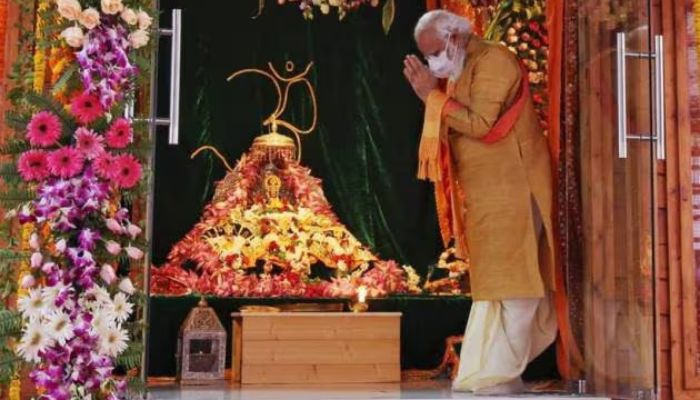
Prime Minister Narendra Modi on Friday said that he will commence a special 11 day ‘anushthan’ (ritual) from today till January 22, the day of the Pran Pratishtha ceremony of the new idol of Ram Lalla in Ayodhya’s Ram Temple.
In an audio message, PM Modi said he was fortunate to be a witness to what he described as a “historic” and “auspicious” occasion.
“There are only 11 days left for the pran prathishtha ceremony of Ram Lalla in Ayodhya. I am fortunate that I too will witness this auspicious occasion. The Lord has made me a medium to represent all Indians during the consecration. Keeping this in mind I am starting a special ritual of 11 days from today. I seek blessings from all of you,” PM Modi said in an audio message on social media platform X.
#WATCH | Prime Minister Narendra Modi's special message on his special anushthan ahead of 'pranpratishtha at the Ram Temple in Ayodhya.
"Only 11 days remain to the pranpratishtha of Ramlalla in Ayodhya. I am fortunate that I too will witness this holy occasion. God created me to… pic.twitter.com/ZB8vR3AtXM
Pran Pratishtha ceremony of the new idol of Ram Lalla at the sanctum sanctorum of the upcoming Ram Temple in Ayodhya is scheduled for January 22. The ceremony is set to be performed by PM Modi.
Prime Minister Modi said he has decided to rigorously follow all the rituals despite hectic schedule and responsibilities. As a result, he has embarked on a 11-day anushthan.
PM Modi further said that he is fortunate to witness the ceremony.
“I am going through this feeling for the first time in my life. I am experiencing a different kind of devotion. For me, this emotive journey (bhav yatra) is a moment of realisation, not expression. I am unable to expresse its depth, prevalence and intensity in words. You are able enough to understand my situation. The dream with which several generations lived, I have got the opportunity to attain this,” the PM added.
In the scriptures, the consecration of a deity’s idol is a detailed and extensive process and for this, rules have been given which have to be followed several days before the consecration.
Dev Pratishtha has been described as the ritual of infusing divine consciousness into an earthly idol. For this, rules for fasting before the ritual have been prescribed in the scriptures.
The PM said “It is my good fortune that I am starting my 11 day ritual from Nashik Dham-Panchavati. Panchavati is the sacred land where Lord Shri Ram spent a lot of time.”
“As it is also mentioned in our scriptures, we have to awaken divine consciousness in ourselves for the Yagya and worship of God. For this, fasts and strict rules have been prescribed in the scriptures, which have to be followed before consecration. Therefore, according to the guidance I have received from some ascetic souls and great men of the spiritual journe and the Yama-Niyams suggested by them, I am starting a special ritual of 11 days from today.
“On this holy occasion, I pray at the feet of God… I remember the virtues of the sages and ascetics and I pray to the people, who are the form of God, to bless me. So that there is no lack from my side in mind, words and deeds,” he said.
(This news report is published from a syndicated feed. Except for the headline, the content has not been written or edited by OpIndia staff)
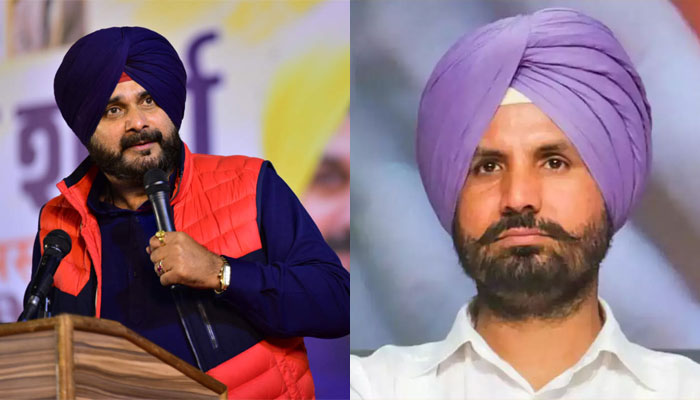
Congress is facing new challenges every day. In a recent blow to Punjab Congress, the differences between Congress leader Navjot Singh Sidhu and Punjab Congress chief Amarinder Singh Raja Warring seems to be widening. Sidhu took on X and posted a cryptic video on 11th January, hitting out at Warring. In a 14-second video, Sidhu sarcastically said that the spineless leaders of the party who cannot stand upright are talking big.
His message came out just one day after Warring warned the party members that anti-party activities would not be tolerated. Warring did not take any name, and so did Sidhu, but it was evident that both were hitting out at each other.
Reportedly, Sidhu has been holding rallies, which irked the state chief. Without taking any names, Warring said that the party-related programs should be held only after consultation with the state unit. Warring added that those who became a “spoilsport” would have to face consequences for their actions.
When asked about Sidhu’s rallies, Warrning claimed he has no objections to such programs. He said, “The (party’s) programme should be held according to the (state unit) president’s wishes. But Warring has a big heart. I have no insecurity from anyone. Some people have a good height but a small heart and feel threatened.”
Sidhu was scheduled to meet Punjab affairs in-charge Devender Yadav in Chandigarh. Following the meeting, Sidhu interacted with the media and hinted his rallies would continue. However, he emphasised that the final decision was of the party leadership. In a post on X, he wrote, “The Congress embodies service, integrity, and courage to say the truth with moral authority, unlike those who see politics as a profit venture. The true congressmen champion service, not self-interest. In Punjab, the battle is between those who treat politics as transactional business and those who stand with vision, policy and justice for the future generations of Punjab !! Rekindling this passion within our rank and file is the only way to revive the “Grand Old Party” and “Punjab”!! The fight is ideological, not personal!!”
The Congress embodies service, integrity, and courage to say the truth with moral authority, unlike those who see politics as a profit venture. The true congressmen champion service, not self-interest. In Punjab the battle is between those who treat politics as transactional… pic.twitter.com/Qo7wP0Xpqa
Sidhu categorically said neither Yadav nor Warring have any problems with his rallies, and it is essential for Congress to reinvent itself if it wants to win elections in the future. He spoke about the need to reach out to the voters and explain what Congress can do for them. “Otherwise, the public will change you; in fact, they have already changed you,” he said.
On Thursday (11th January), the United States and the United Kingdom carried out military strikes on a dozen Houthi targets in Yemen. The development comes months after the Iran-backed radical Islamist outfit targeted international commercial ships including a US ship in the Red Sea.
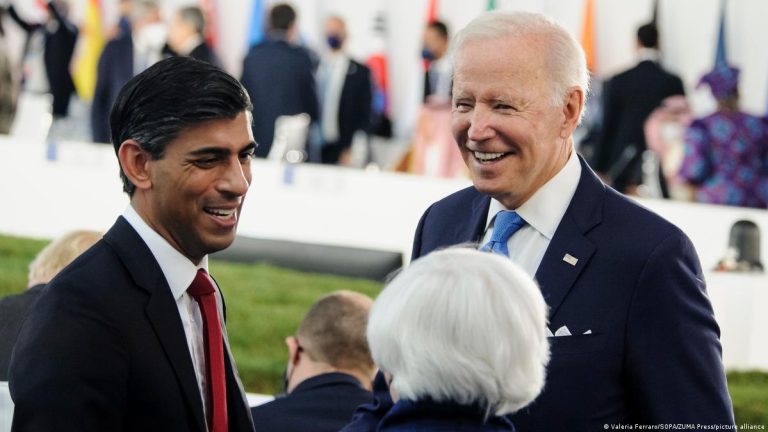
In a statement, US President Joe Biden said, “Today, at my direction, U.S. military forces—together with the United Kingdom and with support from Australia, Bahrain, Canada, and the Netherlands—successfully conducted strikes against a number of targets in Yemen used by Houthi rebels to endanger freedom of navigation in one of the world’s most vital waterways.”
“These strikes are in direct response to unprecedented Houthi attacks against international maritime vessels in the Red Sea—including the use of anti-ship ballistic missiles for the first time in history. These attacks have endangered U.S. personnel, civilian mariners, and our partners, jeopardized trade, and threatened freedom of navigation,” he further added.
Targeting factories of drones and anti-ship ballistic missiles…US & UK strike 10 key Houthi targets @AlAinNews
— حسن سجواني ?? Hassan Sajwani (@HSajwanization) January 12, 2024
Reportedly, there have been 27 attacks on international commercial ships by the Houthi movement, affecting more than 50 nations. The US President informed that the Houthis had taken crews belonging to more than 20 nations as hostages.
The series of attacks resulted in the diversion of over 2000 ships in the Red Sea. The United States and the United Kingdom reportedly carried out air and naval strikes at anti-ship missile and drone factories in Yemen, controlled mostly by the Houthi movement.
As per reports, the US-led coalition attacked military bases near Saana airport, Taiz airport and in Hajjah governorate. Additionally, a Houthi naval base was attacked in Hodeidah. Houthis confirmed the attacks and dubbed them as ‘American-Zionist-British aggression.’
As a result of the Houthi sanction system 95% of container ships have been rerouted from the Red Sea to take the long way round. pic.twitter.com/fw1b45vmIr
In his statement on Thursday (11th January), Joe Biden emphasised, “Today’s defensive action follows this extensive diplomatic campaign and Houthi rebels’ escalating attacks against commercial vessels.”
These targeted strikes are a clear message that the United States and our partners will not tolerate attacks on our personnel or allow hostile actors to imperil freedom of navigation in one of the world’s most critical commercial routes,” he added.
“I will not hesitate to direct further measures to protect our people and the free flow of international commerce as necessary,” the US President emphasised.
"The Houthis have taken more than 25 hostages from the ships that they've seized"
US Secretary of State, Antony Blinken updates reporters on his diplomatic trip of the Middle East before leaving Bahrain
Additionally, Secretary of State Anthony Blinken stated that more than 25 ship crew have been taken hostage by the Houthi movement.
The Houths have been fighting a civil war since 2014 against Yemen’s government. The govt is getting help from a coalition of Arab countries led by Saudi Arabia and the UAE, but the Houthis enjoy domestic support and the assistance of Iran and Hezbollah.
They declare themselves to be part of the Iranian-led “axis of resistance” against Israel, the US and the wider West. It considers itself to be an ally of Hamas and Hezbollah.
As the nation awaits the historic ‘Pran Pratishtha’ of Lord Ram in Ayodhya on January 22, a group of confectioners from Varanasi and Gujarat are in the temple town, busy preparing sweet offerings for the dignitaries and devotees on the big day.
The ace confectioners have been tasked with preparing laddus with pure desi ghee, which will be offered as a prasad to Lord Ram during the ‘Pran Pratishtha’ ceremony.
#WATCH | Ayodhya, UP: Artists from Varanasi & Gujarat make Laddu using desi ghee to offer Lord Ram during the upcoming Ram Temple 'Pran Pratishtha' ceremony (11/01) pic.twitter.com/3pOPB0F0DI
The process of making the popular North India sweet started on January 6 and will continue until January 22, when the city will be swarming with devotees and dignitaries for the big event.
In a day, the confectioners are making about 1200 kgs of laddus. According to sources, they have been assigned to rustle up 45 tonnes of laddus for the ‘Pran Pratishtha’ ceremony.
“The laddus are being made using pure desi ghee and will be offered as a prasad to Ram Lala on the 22nd of this month. We have been making laddus since January 6 and will continue doing so until January 22. In a day, we make around 1200 kgs of laddus. We have to make 45 tonnes of laddus for the ‘Pran Pratishtha’ ceremony,” one of the confectioners told ANI on Thursday.
Prime Minister Narendra Modi would preside over the ‘Pran Pratishtha’ ceremony at the Ram Temple on January 22.
The event has garnered significant global attention, with several VVIP guests from India and abroad receiving invitations to attend the ceremony.
However, Congress bigwigs–national president Mallikarjun Kharge, former president Sonia Gandhi and the Leader of the Opposition in the Lok Sabha, Adhir Ranjan Chowdhury–turned down the invitation to the Ram Temple opening earlier, labelling it as an event of the BJP and the RSS.
Vedic rituals for the ‘Pran-Pratishtha’ ceremony of Ram Lalla (infant Lord Ram) in Ayodhya will begin on January 16, a week before the main ceremony.
A priest from Varanasi, Lakshmi Kant Dixit, will perform the main rituals of the ‘Pran Pratishtha’ ceremony of Ram Lalla on January 22. From January 14 to January 22, Ayodhya will mark the Amrit Mahotsav.
A 1008 Hundi Mahayagya will also be organised, in which thousands of devotees will be fed. Several tent cities are being erected in Ayodhya to accommodate thousands of devotees, who are expected to arrive in the temple town of Uttar Pradesh for the grand ‘Pran Pratishtha’ ceremony.
According to the Sri Ram Janambhoomi Trust, arrangements will be made for 10,000-15,000 people.
Local authorities are also gearing up for the anticipated surge in visitors around the grand ceremony and are in the process of implementing enhanced security measures and making logistical arrangements to ensure a smooth and spiritually enriching experience for all attendees.
(This news report is published from a syndicated feed. Except for the headline, the content has not been written or edited by OpIndia staff)
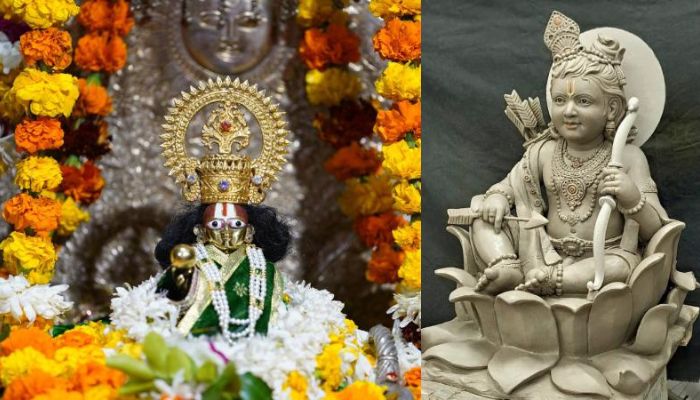
Preparations are in full swing for the consecration ceremony of the Ram Mandir in Ayodhya on 22nd January 2024. Ramlalla will be installed in the new sanctum sanctorum on that date. Lord Ram will be in a child form in this temple. Special care of this will also be taken during worship rituals. Ramlalla will be taken care of in the same way as a child is looked after.
Champat Rai, general secretary of ‘Shri Ram Janmabhoomi Teerth Kshetra’, has said that worship rituals will be performed in the temple according to the methods of the Ramanandi sect. It therefore becomes necessary to know what is the Ramanandi sect.
The Ramanandi sect follows an egalitarian ideology. It is one of the largest sects of Hindus. The beginning of this sect is believed to be with Lord Shri Ram himself. It is a Vaishnava sect, so it also emphasises the worship of other incarnations of Shrihari (Lord Vishnu). Members of the Ramanandi sect adhere to a vegetarian lifestyle while also embracing the Vishishtadvaita philosophy propagated by Acharya Ramanuja. There are also 2 groups named ‘Tyagi’ and ‘Naga’. While ‘Tyagis’ use ashes for spiritual initiation, ‘Naga’ sadhus are generally estranged from the world.
It is believed that the initiation of the Ramanandi sect was first given by Goddess Sita to Hanuman. Then from Hanuman, it reached Brahma, Vashishta, Parashar, Vedavyas, Shukdev, Bodhayan, Gangadharacharya, Sadanandacharya, Rameshwaranandacharya, Dwaranandacharya, Devanandacharya, Shyamanandacharya, Shrutanandacharya, Chidanandacharya, Puranandacharya, Shriyanandacharya, Haryanandacharya, Raghavanandacharya and then Ramanandacharya. Before knowing about the Ramanandi sect, one has to know about Ramanand and Vishishtadvaita philosophy.
Ramanand popularised Ram Bhakti in medieval times
Ramanand was a great saint in the medieval period of Indian history. Ramanand, who lived in the Ganga region of North India, was also known as a poet of the Bhakti movement. He is known as the founder of the Ramanandi sect in modern (meaning non-ancient) times. During the devotional era (Bhakti period) of the 14th-15th centuries in India, Ramanand played a pivotal role as an early and influential figure. He not only emerged as a prominent saint during this time but also stood out as a notable social reformer. Ramanand actively challenged caste and gender distinctions, welcoming individuals from all classes as his disciples.
Ramanand’s ‘Bani’ has also been given place in the most sacred book of Sikhs ‘Guru Granth Sahib’. Ramanand belonged to a Brahmin family. His sect was also known as the ‘Bairagi’ sect. Although there is limited information regarding the specific duration of his life, historical accounts indicate that he was born in Prayagraj. Ramanand’s early education was under Raghavanand, who was then a great scholar of Vishishtadvaita philosophy. He is also said to be influenced by the Nath sect.
Ramanand placed a strong emphasis on devotion rather than ritualistic practices. According to him, seeking refuge in God should be free from any form of discrimination, and he asserted that there is no fundamental distinction between living beings and God.
Consider a verse by Ramanand in the Adi Granth – ‘Kat jaiye re ghar lago rangu’ (कत जाईऐ रे घर लागो रंगु), which conveys the idea that there is no need for me to wander elsewhere; I am discovering happiness within my own heart. He also said – ‘Tathyai ni kuchh sansar, hamare Ram ko naam aadhar’ (तथ्यै नि कुछू संसार, हमारे राम को नाम आधार), which means the name of God – ‘Ram’ – is the great support we have. Here he underscored the importance of chanting the name of the deity.
Ramanand was influenced by Ramanuja, another great poet of the Bhakti period. Ramanand was there a few generations later among Ramanuja’s disciples.
Ramanand played a key role in advocating ‘Sagun Upasana’ (worshipping deity in a form that has tangible attributes) and promoting devotion to Lord Ram. While he predominantly wrote in the vernacular language, many of his texts are either unavailable or exist in a highly fragmented form. Ramanand advocated the worship of Ramavatar.
It’s noteworthy that he did not oppose Varnashrama system. In matters of Karmashastra, he aligned his opinions with the scriptures; however, he steadfastly rejected any form of discrimination when it came to the Bhakti of God. He believed that one who worships the Lord becomes one with the Lord.
In various accounts, Ramanand has been suggested as Kabir’s Guru, but there is no substantial evidence firmly supporting this claim. Ramanand authored the ‘Sri Ramarchan Paddhati’ (श्री रामार्चन पद्धति), a guide on worshipping Lord Ram, where he identifies himself as belonging to the Ramanuja tradition. Swami Ramanand preferred, instead of the Vishnu of Vaikunthaloka, the worldly incarnation of Vishnu as Ram for worshipping, thereby welcoming everyone to the path of Ram Bhakti. He also composed ‘Vaishnavmatabjabhaskar.’ The sacred seat of the sect was established in Galta, 10 km from Jaipur, by Krishnadas Payhari, a disciple of Ramanand’s follower Anantananda.
What is Vishishtadvaita philosophy?
This doctrine is primarily attributed to Acharya Ramanuja. According to this perspective, both the material world and individual souls are distinct from Brahma (read ब्रह्म – the supreme self), yet they originate from Brahma itself. The analogy used to explain this is that the world has a relationship with Brahma akin to the sun and its rays. In this conception, Brahma is singular yet manifests in manifold forms. While Jagadguru Adi Shankaracharya referred to the world as Maya, considering it illusory, Ramanuja asserted that the world is the creation of Brahma, challenging the characterisation of it being Maya.
In a way, Ramanujacharya tried to reconcile Nirguna Brahmism and Saguna Theism. In this tradition, when the presiding deity was differentiated, then the Shakta, Shaiva and Vaishnava sects were formed. Among the Vaishnavas, there are 4 main sects – Shrisampradaya (major philosophy – Vishishtadvaita) of Ramanujacharya, Brahmasampradaya (major philosophy – Dvaita) of Madhvacharya (also known as Anandatirtha), Rudrasampradaya (major philosophy – Shuddhadvaita) of Vishnuswami and Vallabhacharya and Sanakasampradaya (major philosophy – Dvaitadvaita) of Nimbakacharya. Similarly, the sect of Chaitanya Mahaprabhu was further called ‘Madhyavagaudiya’ or Achintyabhedabheda.
Under Vishishtadvaita, Ramanuja believes in 3 elements – Chitta (the sentient, conscious jiva or enjoyer), Achitta (the insentient, enjoyable material world) and Ishvara (the inner-dweller of both). He not only considers Chitta and Achitta as eternal but also independent of each other. However, according to him, both are dependent on Ishvara. That is, these two are like a body and Ishvara is their soul. According to Ramanuja, the soul should pervade and use the body for the fulfilment of purpose, while the body should be the object sustained and directed by the soul.
The Ramanandi method will be used to worship the deity in the Ram temple
Vishishtadvaita, in simple terms, implies that we are integral parts of God. While acknowledging a separation between the individual and God, Vishishtadvaita emphasises that the living entity is inherently a part of the divine. To attain God, two crucial elements come into play – the renunciation of ego and surrender. This forms the essence of the Vaishnava sect, where the path involves relinquishing ego and wholeheartedly dedicating oneself to God through devotion and bhajan. The spirit of surrender is also fundamental in the worship practices of the Ramanandi sect.
The worship of Lord Shri Ram is often conducted through the mantra ‘Om Ramaya Namah.’ Given that Ayodhya is the sacred birthplace of Shri Ram, many temples in the region adhere to the worship system of the Ramanandi sect. The primary aim is to encourage devotion to God without distinctions based on caste or faction. In the ancient temples affiliated with the Vaishnava sect, worship is exclusively performed by Bairagi devotees. Ayodhya also hosts saints and seers from the Ramanandi sect. Among the 13 Akharas, the ‘Digambar’ and ‘Nirvani’ Akharas are associated with Vaishnavism.
In this tradition, the guru imparts initiation to their disciple by whispering in the ear. Simultaneously, they apply a vertical-styled tilak on the disciple’s forehead. The Panchganga Math in Kashi is also one of the ancient monastic institutions affiliated with the Ramanandi sect. The revered devotee Pippa is considered a disciple of Ramanand. Goswami Tulsidas, the composer of the Ramcharitmanas, is also a part of this sect’s tradition. In the Ram temple, devotees won’t follow a specific procedure to offer prasad; instead, they will approach the deity with devotion, and the trust will handle the distribution of prasad.
Mahant Satyendra Das, who has diligently conducted the worship ceremonies of Ramlala for 32 years, shared insights into the meticulous care provided to the deity in its child form. The upbringing, dietary preferences, and likes and dislikes of Ramlala are all attentively considered. The deity is awakened from slumber, adorned with a bath of sandalwood and honey, and given a nap in the afternoon. Evening aarti is conducted, accompanied by the offering of bhog. Given that God is manifest in the form of a child, assuming the role of a guardian is integral to fulfilling these responsibilities. Even after consecration, the method of worship will remain unaltered, but it will acquire a more grandiose form.
The Central government on Thursday allocated powers to all the States and the Union Territory (UT) administration to take action against the banned Muslim League Jammu and Kashmir (Masarat Alam faction) and Tehreek-e-Hurriyat, Jammu and Kashmir (TeH).
In an order, the Ministry of Home Affairs (MHA) directed that all powers exercisable by it under sections 7 and 8 of the Unlawful Activities (Prevention) Act, 1967, shall also be exercised by the state governments and the UT administration in relation to the two banned organisations.
The Muslim League Jammu and Kashmir (Masarat Alam faction) was declared an unlawful association on December 27, 2023, while TeH was declared an unlawful association on December 31, 2023.
The MHA had declared the two organisations as unlawful associations exercising the powers conferred by sub-section (1) and proviso to sub-section (3) of section 3 of the Unlawful Activities (Prevention) Act, 1967 (37 of 1967).
Now, in the exercise of the powers conferred by Section 42 of the Unlawful Activities (Prevention) Act, 1967, the MHA directed that all powers exercisable by it under Section 7 and Section 8 of the UAPA shall be exercised also by the state governments and the UT administration in relation to these unlawful associations.
The MHA had declared the Muslim League Jammu and Kashmir (Masarat Alam faction) (MLJK-M) an unlawful association for the next five years.
The organisation is chaired by Masarat Alam Bhat, infamous for its anti-India and pro-Pakistan propaganda.
The Ministry’s action against the group followed input that “the objectives of MLJK-MA are to get the freedom of Jammu and Kashmir from India, realise the merger of Jammu and Kashmir with Pakistan, and establish Islamic rule in Jammu and Kashmir.”
As per the MHA notification, the members of the MLJK-MA have been indulging in secessionist activities in Jammu and Kashmir, and the leaders and members of the group have been involved in raising funds through various sources, including Pakistan and its proxy organisations for perpetrating unlawful activities, including supporting terrorist activities and sustained stone-pelting by security forces in Jammu and Kashmir.
Then notification pointed out that the MLJK-MA and its members, by their activities, show sheer disrespect towards the constitutional authority and constitutional setup of the country; and its leaders and members, particularly its Chairman Masarat Alam Bhat, have been indulging in unlawful activities which are prejudicial to the integrity, sovereignty, security and communal
harmony in the country.
The MHA had said there had been a number of inputs showing linkages between the MLJK-MA and banned terrorist organisations, as well as that the MLJK-MA and its members have been involved in supporting terrorist activities with an intent to create a reign of terror in the country, thereby endangering the security and public order of the state, and its anti-national activities also show disrespect and disregard for the constitutional authority and sovereignty of the state hence, immediate and prompt action was required against the organisation.
“The Central government is of the opinion that if there is no immediate curb or control of unlawful activities of the Muslim League Jammu Kashmir (Masarat Alam faction), it will use this opportunity to continue with the anti-national activities which are detrimental to the territorial integrity, security and sovereignty of the country; continue advocating the secession of Jammu and Kashmir form the Union of India while disputing its accession to the Union of India; and
continue propagating false narratives and anti-national sentiments among the people of Jammu and Kashmir with the intention to cause disaffection against India and disrupt public order,” mentioned the then notification.
Almost four days after declaring MLJK-MA an unlawful association, the MHA issued another order on December 31, declaring the TeH an unlawful association under UAPA for the next five years.
In its notification, the MHA said that the objective of the TeH is to separate Jammu and Kashmir from India and establish Islamic rule in the Union Territory, and that “the leaders and members of the TeH have been involved in raising funds through various sources, including Pakistan and its proxy organisations for perpetrating unlawful activities, including supporting terrorist activities, sustained stone-pelting on Security Forces in Jammu and Kashmir”.
The Ministry then said the TeH and its members, by their activities, show sheer disrespect towards the constitutional authority and constitutional setup of the country.
“The TeH members are paying tribute to terrorists who were killed in encounters with security forces, and its members have been involved in supporting terrorist activities with an intent to create a reign of terror in the country, thereby endangering the security and public order of the state.”
As per the MHA, the TeH and its leaders and members have been indulging in unlawful activities that are prejudicial to the integrity, sovereignty, security, and communal harmony of the country.
The Ministry had also said that the TeH never believed in a democratic system of governance, and the TeH leadership made repeated calls to boycott assembly elections on multiple occasions.
Explaining its action against the TeH, the MHA notification then pointed out, the Central government is of the opinion that “if there is no immediate curb or control of unlawful activities of the Tehreek-e-Hurriyat, Jammu and Kashmir, it will use this opportunity to continue advocating the secession of Jammu and Kashmir form the Union of India while disputing its accession to the Union of India; continue with the anti-national activities which are detrimental to the territorial integrity, security and sovereignty of the country; and continue propagating false narrative and anti-national sentiments among the people of Jammu and Kashmir with the intention to cause disaffection against India and disrupt public order.”
(This news report is published from a syndicated feed. Except for the headline, the content has not been written or edited by OpIndia staff)
In fresh violence in Manipur, four Meitei villagers including a father and a son were killed after being abducted by suspected insurgents in a mountainous area between Churachandpur and Bishnupur district on 11 January. Oinam Romen Meitei (45), Ahanthem Dara Meitei (56), Thoudam Ibomcha Meitei (53) and Thoudam Anand Meitei (27) are the deceased. Two of the four, Ahanthem and his son Thoudam come from the same family.
The state capital Imphal is 45 km away from Bishnupur’s Akasoi hamlet, from where the four men went to a nearby forest to gather firewood during the severe winter on 10th January, according to sources. When they didn’t return after a long time, their families approached the police.
Three bodies were found on 11th January after police along with the villagers searched the forest in Bishnupur’s Kumbi. The body of Ahanthem Dara has not been recovered yet. All three bodies have marks of the headshots, and additionally one of the bodies has a throat slit. Police are still conducting a massive search operation to locate the fourth body.
They were abducted by suspected Kuki militants from the forest, tortured and then killed, according to the complaint filed by the families of the victims.
The four villagers most likely entered the “buffer zone” that separates the two districts on the fateful day while gathering firewood, based on police sources. Social media posts purportedly depict armed individuals wearing camouflage combat gear stating they are the ones responsible for the murders.
According to a report by India Today NE, a fierce gunfight between two sides occurred in the Churachandpur district’s Haotak Phailen hamlet on 10th January at around 3 pm which resulted in the death of four individuals. The settlement lies on the boundary between the districts of Churachandpur and Bishnupur.
The residents of Churachandpur subdivision’s Haotak Phailen village alleged that the shootout between the two groups happened in the community’s forest, 38 kilometres from the district headquarters. They claimed that some residents of Tampha Khunou, a neighbouring hamlet to the northeast of Haotak Phailen village took advantage of their proximity and started chopping firewood illegally in the village’s forest.
They stated that the community volunteers moved quickly to disperse them after learning of the illegal activity taking place in the forest. A ferocious gun battle that lasted more than an hour broke out as the police attempted to stop the illegal activity. Four people who were supposedly involved in wood cutting were killed, but there was no word of any casualties among the volunteers from Haotak Phailen village.
Locals in the Tampha Khunou argued that the deceased were innocent citizens who had gone to collect ginger close to the scene of the shooting while volunteers of the Kuki village charged that they were armed militants. Moreover, the former asserted that Kuki militant organisations were responsible for the four deaths, however, the other side denied this.
Eight months have passed since May 2023 when violence broke out after a demonstration by the Kuki tribes against the Meiteis’ quest for Scheduled Tribes (ST) designation. The former are predominantly hill tribes whereas the latter are predominantly valley tribes. The Meitei-dominated valley district of Bishnupur is 35 km apart from the Kuki-dominated Churachandpur which falls under the category of hill districts.
In a peculiar turn of events at the United Nations, South Africa, a nation with a dark history of racial oppression, has filed a case accusing Israel of genocide in Gaza, sparking an ironic juxtaposition. The case unfolded at the International Court of Justice (ICJ), where South Africa demanded an emergency suspension of Israel’s military campaign in Gaza, alleging genocidal acts.
The allegations point to Israel’s actions since the 7th October 2023 attack by terrorist organisation Hamas with claims of intentional harm causing substantial so-called Palestinian casualties. Israel staunchly refuted these accusations, emphasising its military actions are solely directed against Hamas.
The ICJ hearings were initiated when South Africa presented its case, arguing that Israel’s actions in Gaza are “genocidal in character” and fall within the definition of genocide under the 1948 Genocide Convention. The allegations encompassed killing Palestinians, causing bodily and mental harm, and creating conditions for their physical destruction. Israel, a signatory to the Genocide Convention, denied these charges, labelling them as baseless and emphasising its commitment to international law.
Israeli Prime Minister Benjamin Netanyahu, in defence of his country’s actions, reiterated that Israel has no intention of permanently occupying Gaza or displacing its civilian population. He underscored that Israel is combating Hamas terrorists, stressing adherence to international law in minimising civilian casualties. The conflict traces back to the terrorist outfit Hamas’s cross-border rampage on 7th October, resulting in Israel’s all-out war to counter the attack.
The irony deepens as South Africa, once a victim of racial oppression, finds itself under scrutiny for challenging Israel on genocide allegations. The African National Congress, South Africa’s ruling party, has a long history of supporting the Palestinian cause, drawing parallels between Israel’s policies and its so-called apartheid era. South Africa’s current actions raise questions about its moral authority, considering its historical challenges and the ongoing domestic issues it faces.