Home Blog Page 1465

Kerala hand-chopping case: PFI member, the prime accused of chopping professor TJ Joseph’s hand over blasphemy accusations, arrested after 13 years

0

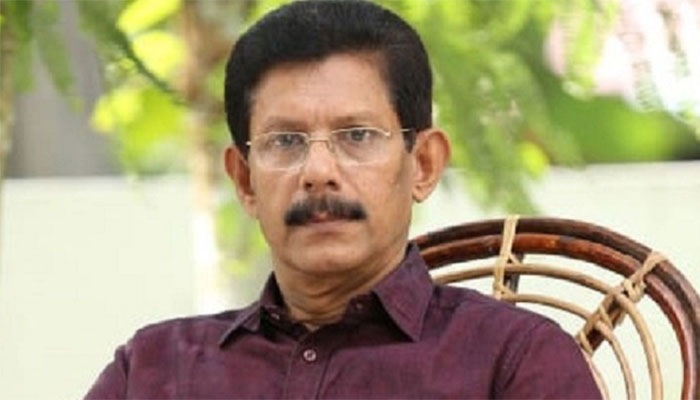
On 9th January, the National Investigation Agency (NIA) apprehended the first accused in the Kerala professor hand-chopping case. The significant breakthrough came as M Savad, a member of the now-banned Popular Front of India (PFI), was arrested by the central agency in Mattannur, Kerala, for his role in the brutal attack on Professor TJ Joseph in 2010.

On 4th July 2010, Savad and his associates from PFI reportedly chopped the hands of Professor Joseph over the content of a question paper set by the professor at Newman College, Thodupuzha. The group of attackers, armed with lethal weapons, ambushed Joseph and chopped his right palm, an act that sent shockwaves across the country. The incident raised serious questions about religious extremism and academic freedom.

Savad was on the run for over 13 years and was the last remaining absconder in the case. Over 50 accused have already been arrested and charged in two separate phases. Notably, the arrest comes over a year after the Government of India banned PFI, an Islamic organisation linked to several violent activities, including an attack on Professor Joseph, several attacks and murders of Hindu activists and plans to impose Sharia law in India.

NIA took over the investigation of Professor Joseph’s case from Kerala Police and classified it as an act of terrorism. Stringent provisions under the Unlawful Activities (Prevention) Act and the Explosive Substances Act were invoked against the accused. In 2015, the NIA court in Kochi convicted 13 accused and acquitted 18 in the matter. Subsequent phases of the trial saw further convictions and acquittals.

The case

In March 2010, Malayalam Professor TJ Joseph prepared a set of questions for the Malayalam language paper for 2nd-year BCom students. Reportedly, one of the questions asked students to punctuate a conversation between God and a character.

The conversation was extracted from the book ‘Thirakathayude Reethisasthram‘ by Malayalam Director Kunju Muhammed. 

The character in the passage was a man suffering from schizophrenia and having a constant dialogue with God. Without thinking much about the consequences, he named the man ‘Muhammed’ after the name of the Malayalam director. 

However, Islamists were quick to label this as ‘blasphemy’ and interpreted the question as a conversation between Prophet Muhammad and God.

Later, the matter escalated further when the Jamaat-e-Islami-run newspaper, Madhyamam, reported about it. Subsequently, radical Islamic outfits such as the Popular Front of India (PFI), Campus Front of India (CFI), Indian Union Muslim League (IUML), and even the Congress party led large-scale protests against Professor TJ Joseph.

The Kerala Police lodged an FIR against Professor Joseph for stirring communal hatred under Section 295 of the Indian Penal Code (IPC). The Police arrested him when he allegedly tried to evade law enforcement authorities. However, he soon was released on bail. 

To make matters worse, Newman College, which is a Christian minority institute affiliated with Mahatma Gandhi University, fired Professor Joseph. 

On the fateful day of 4th of July, 2010, Joseph, 53 years old back then, was returning home from church in his car at about 8 AM. His sister and mother accompanied him. Within no time, a gang of 6 Islamists laid siege to his car. Armed with an axe, they chopped off his hand below the wrist and ditched the severed part in a nearby land. The assailants also stabbed the Professor in the leg and arm.

The Islamists burst crackers and bombs to create an atmosphere of panic. They soon fled the crime scene, leaving an injured Joseph to fend for himself.

Professor Joseph claimed religious fundamentalism was at the heart of the problem

Professor Joseph was dismissed from the service over alleged blasphemy. After this, his financial condition deteriorated, and everyone abandoned his family. The church excommunicated his family. Friends and family members stopped visiting his house out of the church’s fear. 

Distraught by the aftermath of the incident that turned the life of TJ Joseph upside down, his wife Salomi committed suicide on March 19, 2014.

In an interview with The Times of India in September 2021, Joseph refused to accept that punishing the accused would bring justice. He emphasised that religious fundamentalism was at the heart of the problem.

He said, “My attackers were blinded by fundamentalism, and they gave me only physical pain, but what my own people did to me was even worse as it affected my family and me in all ways.” 

In 2020, Joseph’s memoir of the pain and suffering he endured over the false allegations of blasphemy was released in Malayalam. Its English translation by Nandkumar was later released under the title, “A Thousand Cuts: An Innocent Question and Deadly Answers”.
‘To protect constitution and peace, firing ordered on Karsevaks’: SP leader Swami Prasad Maurya justifies Mulayam Singh Yadav govt’s 1990 “shoot at sight” order

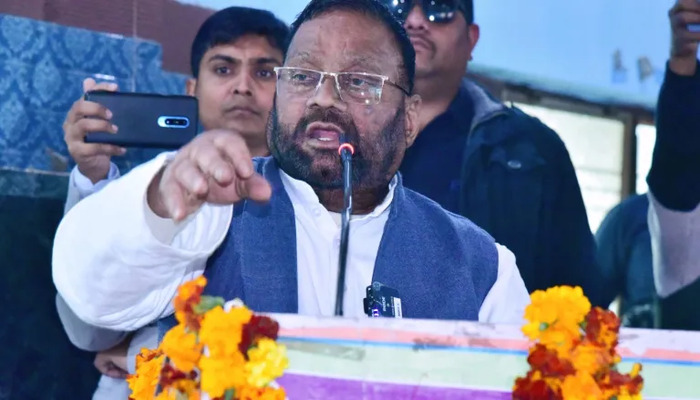
On Wednesday (10th January), Samajwadi Party leader Swami Prasad Maurya, who is notorious for his anti-Hindu statements, sparked a fresh controversy as he justified the Mulayam Singh Yadav-led Uttar Pradesh government’s ‘shoot at sight’ order resulting in the deaths of numerous unarmed karsevaks in the year 1990, after the rath yatra. The UP Police had opened fire on karsevaks on 2 November 1990, during the height of the Ram Mandir movement.

Swami Prasad Maurya gave a ‘clean chit’ to the then-Samajwadi Party government’s order to open fire on karsevaks, saying, “At the time the incident occurred at the Ram temple in Ayodhya. Unruly elements committed large-scale vandalism without judicial or administrative intervention.”

Maurya asserted that the Mulayam government ordered firing on karsevaks “to safeguard the constitution and the law and to protect the peace, the then government gave shoot at sight orders. The government merely did its duty…”

This comes after Union Minister and Agra MP SP Singh Baghel recently stated, “Karsevaks were fired upon during the SP government, but if anyone from Samajwadi Party wants to come to the consecration ceremony of the Shri Ram Temple, he is welcome.”

When asked to comment on the statement, Maurya stated, “SP Singh Baghel has been a very good friend of ours. At that time he was in Samajwadi Party. He was also a member of the Samajwadi Party when this happened in Ayodhya. That is why they should remain silent”

This, however, is not the first time that Swami Prasad Maurya has made such an outrageous statement He made a controversial statement about Ramcharitmanas last year. He also claimed that Hindu temples were constructed by demolishing Buddhist monasteries.

Notably, Maurya’s statement comes a day after Samajwadi Party supremo Akhilesh Yadav reportedly rejected the invitation to the Ram Mandir Pran Pratishtha ceremony. As reported earlier, media outlets quoted the Vishwa Hindu Parishad (VHP) sources as confirming that a VHP functionary had approached the SP chief with the invitation to attend the ceremony but Akhilesh did not “accept” the invitation saying that he did not know the person (VHP functionary) who went to invite him.

The brutal massacre of Rambhakt karsevaks in 1990

On November 2nd, 1990, the Mulayam Singh Yadav government in Uttar Pradesh ordered police to open fire on Karsevaks (religious volunteers) who were protesting peacefully in Ayodhya for the reclamation of land to build a Ram Mandir. At least 40 Karsevaks were killed in the indiscriminate firing. Many others were injured in police lathi-charge and brutality. Videos from the incident show police clashing with sadhus and seers, firing bullets, forcibly taking away devotees and protesters throwing stones amidst chants of “Jai Shri Ram”. Back in 2013, Mulayam Singh Yadav expressed ‘regret’ for these deaths and stated that he had no other choice. He claimed that the BJP had gathered 11 lakh people in Ayodhya in the name of Karseva. Gunshots had to be fired for the ‘unity’ of the country. A detailed report on the 1990 horror can be read here.

Thousands of farmers in Germany are blocking major highways with trucks and tractors: Know why they are out on the streets and what they want

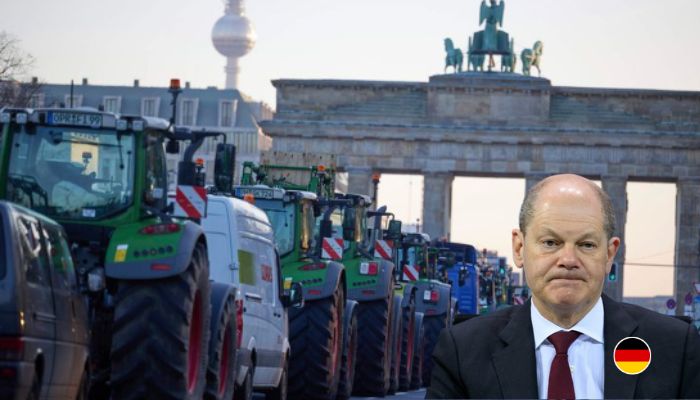
On 8th January (Monday), German farmers started a week of nationwide protests with thousands of tractors and trucks blocking streets and major highways in nearly all 16 Federal states in Germany. The blockades have been reported in Baden-Württemberg, North Rhine-Westphalia, Saxony, and Bavaria. Notably, the recent protests continue despite the government reversing its earlier plan to scrap diesel subsidy cuts.  

With thousands of tractors and trucks, the convoys also halted production at a Volkswagen auto plant facility in the northernwestern German city of Emden. As per German news agency DPA, the blockade prevented employees from getting to work. 

The haulage companies protesting against the increase in lorry tolls extended their support to the farmers’ blockade in the northeastern state of Mecklenburg-Western Pomerania.

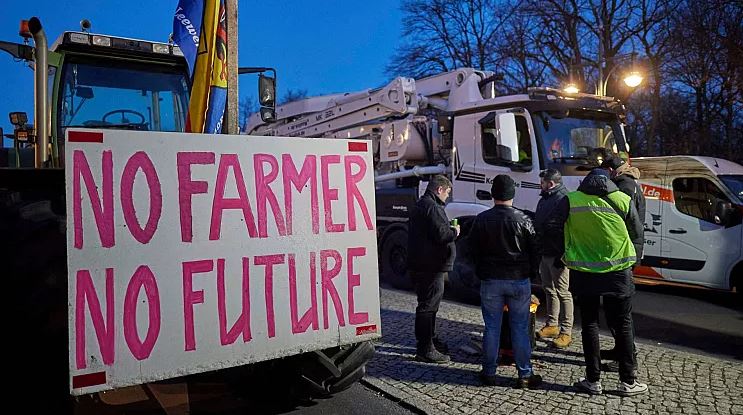
As per reports, thousands of protesters stormed in front of the Brandenburg Gate in Berlin and displayed banners with slogans like ‘No farmer, no future’.

(Tractors display signages, ‘No Farmer, No Food’ in front of the Brandenburg Gate in Berlin, Germany. Image Source – J’rg Carstensen/dpa via AP/ Euronews)

Several social media users shared photos and videos in which a large sea of trucks could be seen amassing in the streets of Germany days before the planned protest that began on Monday. The users accused the mainstream media of not highlighting the real extent of the protest by German farmers. In many places, German farmers have garnered support from truck drivers, and supporters of conservative/right-wing parties. Reportedly farmers from Dutch and Poland have also started to join their protest. 

A social media user claimed that Polish truckers have started to join the cause alongside German and Dutch Farmers as they all protest against Anti-Democratic laws designed to bankrupt small independent farmers and distributors.

The ongoing road blockage is the latest in a series of protests against the decision taken by Chancellor Olaf Scholz’s coalition government. The farmers’ associations are staging a nationwide protest against the government’s plan to scrap tax breaks on diesel used in agriculture.

In December, similar protests unfolded as German Chancellor Olaf Scholz’s three-party coalition sparked outrage among farmers by proposing the abolition of a car tax exemption for agricultural vehicles and diesel tax breaks. These measures were included in a larger package aimed at addressing a €17 billion deficit in the 2024 budget.

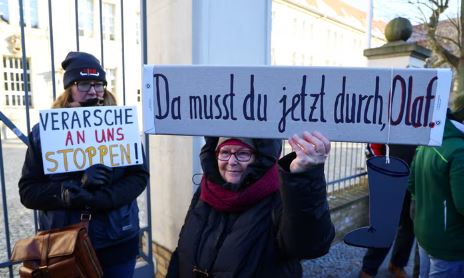
(People hold placards reading ‘Stop kidding us!’ and ‘You have to go through that now, Olaf’ in Potsdam. Image Source – Fabrizio Bensch/Reuters/ The Guardian)

The controversial subsidy cuts were part of the government’s budget revamp to cover the budgetary shortfalls. Notably, in November last year, Germany’s constitutional court declared the government’s budget illegal after which Chancellor Olaf Scholz’s government could not redirect €60 billion euros, initially designated to mitigate the impact of the COVID-19 pandemic, for initiatives aimed at addressing climate change and modernising the nation. This move went against Germany’s strict self-imposed limits on running up debt.

Farmers continue to protest despite the government backtracking on its proposal, the association demands the government scrap all plans to cut farmers’ subsidies

The farmers have continued to stage blockades across the country despite the government pacifying farmers who had also protested vehemently in December. The coalition government led by Scholz had backtracked on its initial subsidy cut proposal it had brought after the German Constitutional Court declared its budget illegal. 

At first, Berlin suggested eliminating a tax break for buying farming and forestry equipment, along with subsidies for agricultural diesel fuel. However, the tax breaks will stay, and fuel subsidies won’t be removed until 2026. Presently, farmers benefit from government subsidies, paying about half the price for diesel compared to regular drivers. The German coalition government argues that transitioning away from diesel will benefit the environment. Nevertheless, farmers argue that they lack alternative fuel choices, and the subsidy reduction puts their livelihoods at risk.

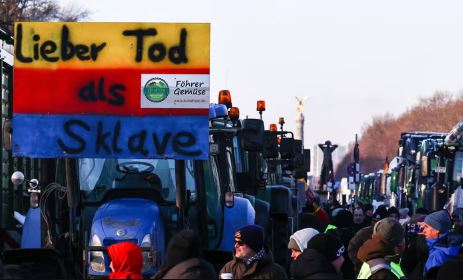
(A banner that reads ‘Better be dead than be a slave’ hangs on a tractor during the nationwide farmers’ strike in Berlin. Image Source – Filip Singer/EPA/ The Guardian)

The Farmers’ Association, DBV, demanded that the government abandon all plans to cut subsidies for farmers. According to them, till the plans are reversed fully, they would continue with a “week of action”. The announced week-long protests will culminate in a major event in Berlin next Monday (15th January). 

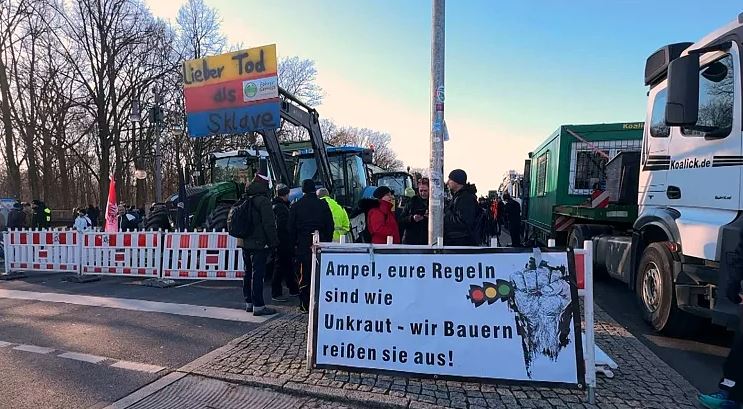
(Protest signs reading ‘Rather dead than slave’ (left) and ‘Ampel, your rules are like weeds – us farmers tear them out’ (right) – Image Source – Euronews)

On Monday (8th January) when the protest began, Farmers’ Association President Rukwied said, “We are hoping that the Berlin government will see reason and that this disproportionate burden on agriculture will be reduced. That is our core objective at the demonstrations.”

(Video Courtesy – France24 English)

In a radio interview, Rukwied warned, “Otherwise the supply of high-quality foodstuff is jeopardised.”

Meanwhile, Defending his coalition government, Vice-Chancellor Habeck argued that the problem is not the government instead it is the discounters who are causing the problem of poor returns to farmers. 

Habeck said it was understandable that farmers were upset and unwilling to give up subsidies. According to him, farmers’ outrage was not with the government but rather the changing face of the sector and it is the massive discount supermarket chains, slaughterhouses, and dairy manufacturers who caused the problem. As farmers find themselves unable to determine their own prices and face pressure from both discounters and consumers seeking lower prices for meat, milk, and other products, they are caught in a cycle. In this cycle, they are compelled to increase production while receiving lower returns, resulting in the closure of smaller farms, he argued. 

He said, “It’s called structural change. I think that’s euphemistic. It’s the industrialisation of agriculture.” 

He proposed that Fairer prices, sustainability rewards, and direct sales to consumers offered a way out of the impasse. Habeck added, “In my opinion, we should use the current debate to seriously and honestly discuss exactly that.”

The government alleges that extremists have infiltrated the protest and could hijack it; opposition and farmers’ association hit back

Criticising the blockades, Interior Minister Nancy Faeser warned that stopping people from going to work, school or to see a doctor “will cause anger and disagreement.” The government has also alleged that the protest is getting support from right-wing parties and “extremists” who could exploit and hijack the protest and it is fanning anti-government sentiments. 

It is alleged that the increasingly aggressive protest is at risk of being infiltrated by extreme anti-government organisations. As per reports, protesting farmers in some places have been accompanied by people brandishing right-wing symbols and allegedly clashed with police which was reportedly witnessed during anti-vaccine and anti-migrant protests in the past. 

As per reports, many vehicles part of the protest displayed banners that had the logo of the right nationalist Alternative for Germany (AfD) party. Notably, it has extended its support to protesting farmers rallying against the government. Furthermore, Politicians from other parties, including the conservative CDU/CSU, as well as the centre-left Social Democrats (SPD), have also extended their support to the German farmers’ protest. 

((A sign of the Alternative für Deutschland that reads ‘Our farmers first’ hangs on a farm vehicle near Munich. Image Source – Leonhard Simon/Reuters/ The Guardian)

Regional elections are slated for later this year in Germany with three eastern states – Saxony, Brandenburg, and Thuringia – going to the polls. Currently, AfD polling at around 23% nationally, is ahead of all the three governing parties – Social Democrats, the Greens, and Free Democrats. 

As per reports, some protestors targeted German Vice-Chancellor Robert Habeck and tried to board and confront him on a ferry while he was accompanied by his wife and other passengers on Thursday. The incident drew condemnation from all sides of the spectrum including the government, opposition leaders, and the farmers’ association.

Following the incident, he warned in a social media video that some involved in the actions were spreading “coup fantasies.” He added that “nationalist symbols are being openly displayed.”

In the video, Habeck said, “Calls are circulating with fantasies of a coup. Extremist groups are forming, nationalist symbols are being openly displayed. It is becoming clear that something has started to slip in recent years, which is limiting legitimate democratic protest and freedom of expression.”

However, the German Farmers’ Association (DBV) President Joachim Rukwied hit back at the government’s claims. Rukwied said, “I see no danger at all of our association being infiltrated [by the right].” 

Instead, Rukwied accused the government of “robbing agriculture of its future viability” and “jeopardising the secure supply of high-quality domestic food.”

Train drivers in Germany could go on strike from today

Furthermore, the German government which is reeling under pressure from farmers’ protests which also include truck drivers at places, could also face major strikes from train drivers. Reportedly, they have planned to go on strike against the coalition government later this week.  

Evidently, on Sunday (7th January), Germany’s GDL union said that it would call on members to walk out from Wednesday as part of a wage dispute with rail operator Deutsche Bahn.

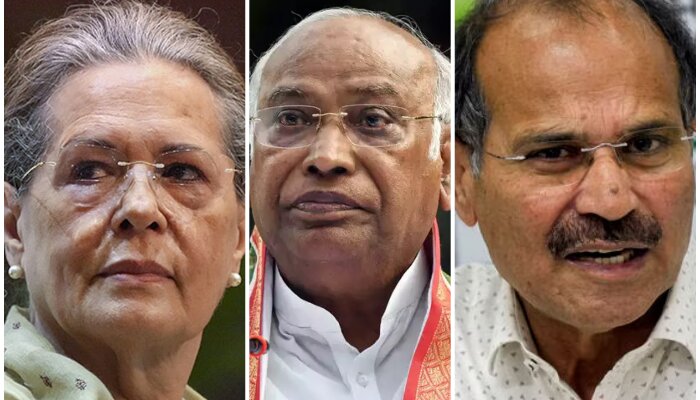
Sonia Gandhi, Mallikarjun Kharge, and Adhir Chowdhury reject invitation to Ram Mandir Pran Pratishtha, Congress calls it ‘BJP-RSS event’

Congress party has stated that their supremo Sonia Gandhi, party president Mallikarjun Kharge, and Leader of the party in Lok Sabha Adhir Ranjan Chowdhury will not attend the Ram Mandir Pran Pratishtha event on 22nd January. In a statement, Jairam Ramesh, the General SecAdhir Ranjan Chowdhuryretary (Communications) of Congress has stated that the three top leaders of the party have declined to attend the event because it is a ‘BJP-RSS event’.

“Religion is a personal matter. But the RSS/BJP have long made a political project of the temple in Ayodhya. The inauguration of the incomplete temple by the leaders of the BJP and RSS has been obviously brought forward for electoral gain. While abiding by the 2019 SC judgment and honoring the sentiments of millions who revere Lord Ram, Shri Mallikarjuna Kharge, Smt Sonia Gandhi and Shri Adhir Ranjan Chowdhury respectfully declined the invitation to what is clearly an RSS/BJP event”, the statement shared by Jairam Ramesh read.

It is notable here that Congress has always been opposed to the Ram Mandir, even going to the extent of denying the existence of Lord Ram. Congress leader Kapil Sibal was a part of the legal battle against the construction of Ram Mandir, representing the Sunni Waqf Board, and over decades, the Congress has used all political, vocal, and ideological tool to deride those who were working to get a Temple constructed at Ram Janmabhoomi.

It is notable here that Former prime ministers Dr Manmohan Singh and HD Deve Gowda have also been invited. Heads of all leading political parties, and former President Pratibha Patil have also been invited to the Pran Pratishtha ceremony.

4 years after the historic Supreme Court verdict and after centuries of waiting for Hindus, finally the Ram Mandir is ready at Ram Janmabhoomi in Ayodhya and Ram Lalla’s idol will undergo Pran Pratishtha in the temple on January 22.

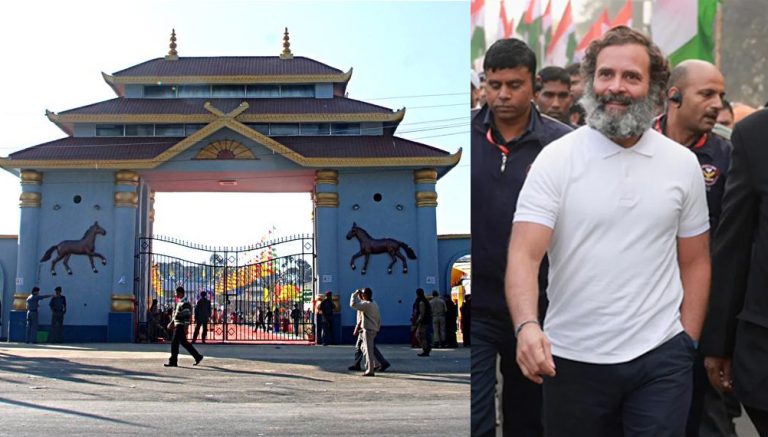
Manipur Govt declines permission to Congress to start ‘Bharat Jodo Nyay Yatra’ in Imphal’s Palace Compound, alternate venue to be chosen

On 10th January, the Congress party claimed that the Manipur government of Bharatiya Janata Party has declined permission to launch Bharat Jodo Nyay Yatra from Hapta Kangjeibung, Palace Compound in Imphal East. Manipur Pradesh Congress Committee (MPCC) president Keisham Meghachandra Singh stated, “Today a team of Manipur Pradesh Congress Committee met the Chief Minister N Biren Singh. He has declined to give permission for the venue. He declined the request.” He further claimed that the chief minister informed him that the state govt would not give them any public lane in the state for the yatra.

The Congress leader referred to the response as “very unfortunate” and added, “It is our right to use the public lane for public purpose. It is a violation of people’s rights and the political rights of the people, more particularly the people of Manipur. The lane doesn’t belong to the chief minister. The palace compound is for the people and the public. It has been used earlier and that is why we proposed it this time.” He claimed that the yatra is apolitical and aims to bring justice to youth as well as women and is about social, political and economic justice.

After the state govt declined permission to start the Bharat Jodo Nyay Yatra from the Palance Compound, the Congress party has decided to shift the venue to the Khongjom War Memorial Complex at Thoubal.

Keisham Meghachandra Singh informed, “Even if the government declines (the permission), we have decided to do this near the Khongjom War Memorial Complex, Thoubal at a private lane. We are discussing with the AICC (All India Congress Committee) team and senior leaders of the state.”

Congress General Secretary KC Venugopal said, “Manipur PCC President Keisham Meghachandra Singh formally submitted a request for permission to the chief secretary of Manipur one week before. They told him that he would receive an answer within 5 days. He waited for the period and personally visited the official to seek the permit who assured him that he would receive it by that day evening. This happened three days ago. Unfortunately, today we received information that the permission has been declined. Then this morning, our former chief minister of Manipur Okram Ibobi Singh and the PCC president met the chief minister of Manipur with the plea but were informed that the administration isn’t in a position to give them permission for the palace compound.”

He further conveyed, “This is not a political yatra and we aren’t going to politicise the matter of Manipur violence through the yatra. Rahul Gandhi visited Manipur earlier during the violence. Our request is to make a peaceful Manipur. When we are starting a yatra from East to West, how can we avoid Manipur? Then what message we are giving to the people of the country? We need to start the yatra from Manipur only. We aren’t going to create any ruckus there. We told them this much but they are reluctant to permit the palace compound. We are now going to do the yatra in another location. Our ex-chief minister and PCC chief informed the recent chief minister about this and he gave us the go-ahead.”

Keisham Meghachandra Singh was accompanied by MPCC vice president Hareshwar Goshwami along with other members during the meeting with the state chief minister N Biren Singh at the latter’s office in Imphal. A team led by led All India Congress Committee team arrived in Imphal on 8th January to oversee the preparatory works ahead of the program.

N Biren Singh told journalists in Imphal on 9th January that a decision on the Congress party’s “Bharat Jodo Nyay Yatra” would be taken after reviewing reports from the security agencies. “The granting of permission for Rahul Gandhi’s rally is under active consideration. We are reviewing the reports of various security agencies.”

The Congress-organised “Bharat Jodo Nyay Yatra” from Manipur to Mumbai is slated to begin on 14th January in Imphal and end on 20th March in Mumbai, covering 6,700 miles across 15 states in 66 days.  The yatra will go through the states of Manipur, Nagaland, Arunachal Pradesh, Assam, West Bengal, Bihar, Jharkhand, Odisha, Chhattisgarh, Uttar Pradesh, Madhya Pradesh, Rajasthan, and Gujarat before concluding in Mumbai, Maharashtra.

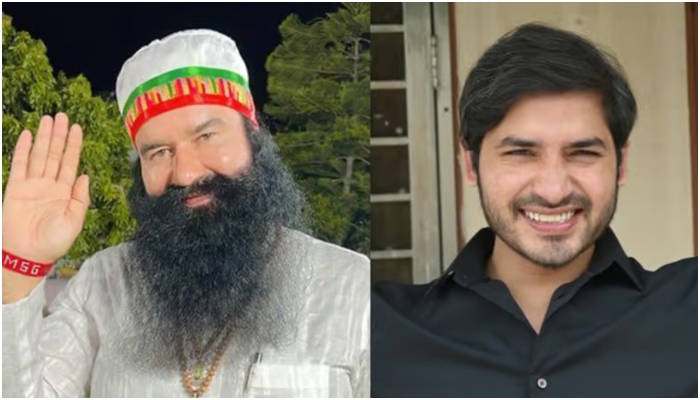
‘Prima Facie Defamatory, add disclaimer’: Delhi HC orders YouTuber Shyam Meera Singh to take down video on Gurmeet Ram Rahim

0

The Delhi High Court on Wednesday (10t January) directed YouTuber and journalist Shyam Meera Singh to take down a video he created about Dera Sacha Sauda Chief Gurmeet Ram Rahim.

Justice Jasmeet Singh ruled that the video is prima facie defamatory against Ram Rahim given that it contains no disclaimer about the sources of the assertions. Accordingly, the Court ordered that the video be removed from all social media platforms within 24 hours.

It stated that Singh could create a new video with disclaimers stating that certain elements of the film were based on trial court rulings and a book authored by another journalist. Shyam Meera Singh posted the video “How Gurmeet Ram Rahim Fooled His Followers?” last month.

Ram Rahim Singh’s counsel challenged Shyam Meera Singh for defamation after he uploaded the video. He said that the film was an attempt to prejudice his appeal, which is scheduled for hearing before the High Court.

Earlier, the Delhi High Court voiced its disapproval on 8th January and cautioned YouTuber Shyam Meera Singh that he could face contempt proceedings for comments he made against the Court. Shyam Meera Singh, in one of his latest social media posts, had mentioned that he was being pressured by the Court in the case against Dera Sacha Sauda chief Gurmeet Ram Rahim Singh.

“This is not fair. This is unfair. The court doesn’t force anybody. He’s saying he’s being forced. It was a concession. I could have passed an order. The court is very competent to pass an order about the merits of the case. It was done voluntarily. Where is the majburi (Compulsion)? You bring him here, and we’ll ask him what he wants, then it will not be a majburi (compulsion),” the court of Justice Jasmeet Singh was quoted as saying.

Meera Singh, however, informed the court that the video in question was based on trial court rulings and journalist Anurag Tripathi’s book “Dera Sacha Sauda and Gurmeet: A Decade-long Investigation.” He went on to say that the video is a journalistic work and that Ram Rahim has taken no action against Anurag Tripathi, even though his book has been in the public domain since 2018.

Maharashtra: School ‘dropout’ Shoaib Shaikh kills Sikh girlfriend, who was manager at a private bank, after 3 months of relationship

On Monday (8th January), a 24-year-old man named Shoaib Shaikh murdered his Sikh girlfriend after suspecting her of having an affair with another man. The incident took place in the Turbhi suburb in Navi Mumbai city of Maharashtra.

As per a report by The Times of India, the victim was identified as 35-year-old Amit Kaur. She met Shoaib on a dating app about 3 months ago. On the fateful night, Amit Kaur met the accused to celebrate her birthday.

They checked into a lodge in Turbhi, following which Shoaib strangled the victim to death. After committing the murder, he left the premises of the lodge and returned to his home in the Saki Naka neighbourhood of Mumbai.

While speaking about the matter, Turbhe senior police inspector Ravindra Daundkar said, “Shaikh and Kaur used their respective identity cards to book the room. Around midnight, the lodge staff noticed Shaikh leaving the premises.”

“But they did not find anything suspicious about him. It was only when police opened the room that they found Kaur lying strangled,” he added. At around 2 o’ clock in the night, assistant inspector (Saki Naka police) Valmiki Kore received a tip about Shoaib Shaikh.

The accused was called for questioning at the police station, following which he revealed that he murdered his girlfriend in Turbhe. The Saki Naka police recorded his statement, contacted their counterparts in Navi Mumbai and dispatched a team to the lodge.

The accused was handed over to the Turbhe police and a case was registered against him under Indian Penal Code Section 302 (murder). It has come to light that Shoaib Shaikh is a school dropout and worked at a garage owned by a family member.

On the other hand, his deceased girlfriend Amit Kaur was a manager at a private bank. She was divorced, had a teenage daughter and lived with her mother in GTB Nagar in South Central Mumbai.

‘Mother cannot be guardian to minor children, widows cannot sell property’: How Sharia Law is stalling Godrej’s Rs 227 cr land deal in Nagpur

The ongoing legal dispute over a Rs 227 crore land deal between Godrej Properties and an Agrawal family in Nagpur has brought to light the complicated Muslim personal law in India based on one’s religious identity. The case underscores how Muslim personal law does not grant a widow the right to sell or transfer property, which is now being used by heirs to stall a deal and allegedly secure large sums from a corporate entity after over three decades.

What is the dispute and how Muslim Personal Law is troubling Godrej’s deal?

The genesis of this dispute dates back to the death of Abdul Wahab, the patriarch of the Abdul family, who owned a 58-acre land parcel in Ghogli village near Besa in Nagpur district. After his demise, his widow Khairunisa sold the entire land to the Agrawal family in 1988 for an undisclosed sum. This transaction included the share of Khairunisa’s eight children as well.

At the time, the sale was facilitated by showing one Madhukar Purohit as the appointed guardian for the then minor children of Abdul. He signed the partition and sale deed on behalf of the children. Over three decades later, in 2022, the Agrawals struck a deal with Godrej Properties to sell the same land for a substantial amount of Rs 227 crores.

However, this second transaction came under challenge when one Abdul Bashir, heir of the Abdul family, filed a lawsuit questioning its validity. The prime contention was that under Muslim personal law, a mother cannot act as the natural or legal guardian of minor children after the father’s death. Thereby, the original 1988 land sale by Khairunisa to Agrawals was void since she had no right to sell the children’s share.

A recent ruling by a civil judge in Nagpur has upheld this objection based on the provisions under Muslim law. It observes that the inheritance opens up for all legal heirs immediately after a person’s demise. But division of property occurs only when a separation is sought by heirs. An heir can approach the court at any time in the future to claim their share.

Moreover, the limitation period for such lawsuits begins only after an ‘ousting from the property,’ which never happened in 1988. Thereby, the current case filed after 34 years is within the ambit of the law. This has paved the way for further civil lawsuits challenging the land transaction.

Another petition in this case

In October 2022, a second lawsuit was filed by Munnawara Begum on behalf of one of the original landowner’s sons, Abdul Jabbar, who is reportedly mentally unstable. The case argues that Jabbar’s share was sold by his mother without appointing a legal guardian for an unsound person, thereby contravening the Mental Health Act.

The matter is compounded by the fact that the original buyers, the Agrawal family, profited heavily from the disputed land after over three decades. They could secure Rs 227 crores from Godrej Properties for the same plot bought for an unknown sum in 1988. On the contrary, the Abdul heirs likely received a pittance back then but are now offended by the windfall gained by Agrawals through the land their father owned.

Flaws in the Muslim Personal Law and its Misuse

While the court is correctly upholding the provisions of Muslim personal law in evaluating the validity of the land transaction, the case exposes the problems with religious personal laws that fail to provide equal rights around marital property. A widow should have the legal and ethical right to utilise, sell and transfer property left behind by her deceased husband.

By restricting a Muslim widow’s rights, the law ends up enabling lucrative misuse in cases like this. After decades of silently enjoying the proceeds from the original 1988 sale, the Abdul heirs seem to have smelt the larger corporate money on the table. They are using the convenient religious provisions to stall the business deal and secure greater monetary benefits after all these years.

The court battles also risk setting an unhealthy precedent and hampering business transactions by corporate entities who act in good faith but get embroiled in personal religious matters. The fundamental issue remains that India still does not have a Uniform Civil Code to govern marriage, divorce, succession, adoption, and inheritance. This allows selective usage of religious laws, as seen in this case where Sharia provisions are being used to stop a land deal between Godrej Properties and the Agrawals in 2022 for a transaction done in 1988.

Need for the Uniform Civil Code

Having a uniform secular law, be it around property matters or other civil aspects, would have likely prevented such legal disputes from emerging decades later. It would have safeguarded the rights of the widow after her husband’s death rather than necessitating complex litigation. India must work towards implementing common governance around civil matters so that business dealings, property matters and women’s rights remain protected irrespective of the religious affiliations of the parties involved.

The Rs 227 crores land deal case involving Godrej Properties in Nagpur demonstrates the pressing need for a Uniform Civil Code in India. The fact that a court in 2022 has stalled a land transaction citing a 34-year-old sale deed which is being challenged under Muslim personal law provisions, highlights the endemic flaws of religious personal laws around property matters. They end up breeding disputes instead of settling ownership issues.

Moreover, the lack of rights for widows under Muslim personal law prevents the efficient transfer of property, enables potential misuse of provisions for monetary gains by heirs years later, and hampers secular business deals that get dragged into civil matters dictated by religious laws. India must implement a common civil code to ensure the protection of fundamental rights around property, inheritance and succession for every citizen irrespective of their faith.

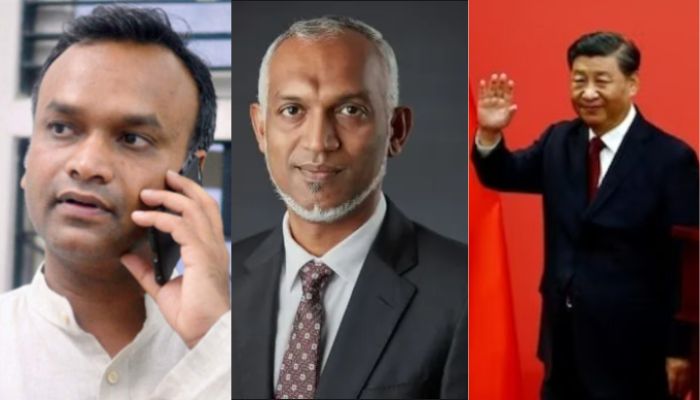
‘India Out’ campaign in Maldives, supported by current president, was from last year when “IT cell” had no interest in Maldives

The controversy sparked by 3 Maldivian ministers, now suspended, has brought global embarrassment to the Maldivian government. After a successful boycott Maldives campaign by Indian citizens, entrepreneurs and celebrities alike, the island country has appealed to China to send more tourists.

Where the entire row has unleashed India’s clout and that’s what everyone can really talk about, the Congress appears to see things differently than its compatriots, as is usually the case.

Congress leader and Karnataka Minister Priyank Kharge has suggested that the entire controversy signifies India’s loss and deteriorating ties with other nations under the Modi govt.

Taking to X, formerly Twitter, Kharge wrote, “India used to be the friendly big brother for our Asian and Indian Ocean neighbors. But strong arming smaller nations doesn’t help India in anyway. We are losing all the goodwill that has been built over decades. This is what happens when Govt allows party IT cell trolls to run foreign affairs.”

The basis of his geopolitical analysis were the reports that Maldives is begging to China for tourists because the Indian tourists that contributed greatly to its economy are boycotting it.

So the Congress’s takeaway is not that Indians made the pro-China Maldivian government bend but that India “lost all the goodwill built over decades”. But even in this wrong reading, the Congress minister could not get his facts right.

In a taunt to Mr Sinha, whose tweet first exposed the anti-India faces in the Maldivian government, Kharge blamed the Modi government for “allowing party IT cell trolls to run foreign affairs”.

However, Kharge, Congress and its stooges in the media have misrepresented the facts of the matter to milk their political narratives against the Indian government. The current PPM government in Maldives has historically been anti-India and pro-China. It is not the first time that the PPM is insulting India and Modi.

In 2020, then in the Opposition, the Progressive Party of Maldives (PPM) kicksarted the “India Out” campaign under former President Abdulla Yameen Abdul Gayoom.

The party backed by a news outlet named “Dhiyares” took to the streets donning red shirts with the text “India Out”, a demand to remove the Indian military forces deployed in the island nation.

While speaking to The Indian Express, Dhiyares co-founder Shifxan Ahmed alleged, “We are just protesting military presence in the country. We are not calling for a violent clash against India or Indians in the Maldives.”

Notably, the leader of the anti-India campaign, former President Yameen, had been pro-China during his tenure between 2013 and 2018 as Maldivian President. The current President of Maldives, Mohamed Muizzu, was also an active participant in the “India Out” campaign.

In January 2022, at least two Indian teachers were harassed on the streets by the supporters of the “India Out” campaign. hey were asked to leave the country.

It must be noted that the former Madivian President Abdulla Yameen was ousted from power in 2018 due to his pro-China policies. He claimed that India had been compromising the sovereignty of Maldives by interfering in its domestic affairs.

It was under the PPM-led Yameen government that India-Maldives ties had taken a hit and the same seems to be repeating now. PPM leader Abbas Adil Riza in December 2022 courted controversy after he called for an arson attack on the Indian High Commission in the capital city of Malé.

Notably, in the past too when ani-India demonstrations have broke out in Maldives, the Opposition parties in India attacked the Modi government for the tensions between the two nations.

Dancing to the tune of then Maldivian President Abdulla Yameen and by extention to China, on 14th June 2018, Congress scion Rahul Gandhi attacked the Modi government for the denial of visas by Maldives to Indians.

“Maldives, once one of our closest allies & beneficiary of massive aid, is cancelling Indian work visas & putting up “Not Hiring Indians” signs. This happens when foreign policy becomes about photo ops & “no agenda meetings” instead of strategic intent,” Rahul Gandhi wrote on Twitter.

The basis for Rahul Gandhi’s claims was a report published in The Hindu by Left-wing journalist Suhasini Haider claiming that Indians were not being granted visas by Maldives owing to the downgrading of ties. The report was motivated and lacked evidence to back the insinuations it was making.

A similar language is now being parroted by Priyank Kharge and other Congress leaders as they once again further the Chinese agenda. It would perhaps make the Congress and its footsoldiers happy to know that Maldives President Muizzu in December 2023 skipped the Colombo Security Conclave founded by India and opted to attend a Chinese Forum instead.

China and the Progressive Alliance in Maldives

The victory of the Progressive Alliance – including Progressive Party of Maldives (PPM) and the People’s National Congress (PNC) – in Maldives in October 2023 was touted as a victory for China and a setback for India.

From 2013-18 under the Yameen government, Maldives reportedly joined the Belt and Road Initiative (BRI), borrowed extensively, leased islands, signed a Free Trade Agreement (FTA) and discussed establishing a Joint Ocean Observation Centre with China.

Parallely, Yameen attacked India of meddling in Maldives’s internal affairs and told New Delhi to take back the choppers it had gifted to Male.

The anti-India political campaign fanned by China and the PPM in Maldives gave the latter a momentum in the 2023 elections. In his first speech as President, Muizzu coined the term “pro-Maldives” and atacked the Solih government for borrowing from India.

Amid the ongoing controversy, Muizzu has said that Beijing is Male’s “valued ally and integral collaborator”.

An island of Islamist hardliners

While suspended Maldivian minister Mariyam Shiuna called PM Modi a “clown” and “puppet of Israel”, another suspended minister Abdulla Mahzoom Majid made insulting comments against Indians.

Similar comments were made by suspended minister Malsha Shareef who is known to have made racist ‘cow urine’ and ‘cow dung’ jibes at Indians.

The hatred has exposed the fundamental Islamist mindset of the current Maldivian government. In fact, on 21st June 2022, an angry mob of hardliners including Islamic scholars and the then Opposition part PPM disrupted Yoga Day celebrations in Male.

A report citing top intelligence sources said that Maldives is a hub of ISIS operatives and also of Pakistan-based terror groups and narcotics smugglers.

A Maldivian link has emerged in the ISIS module case as recently as on 10th January 2024. A woman from the Maldives reportedly served as the handler for the arrested terrorist, Mohammed Shahnawaz.

Shahnawaz, a former mining engineer turned ISIS operative, had contact with the Maldivian woman through a Telegram channel named “Caged Pearl.” The woman purportedly worked to raise funds for women in the al-Hawl camp, a well-known ISIS refugee detention centre near the Iraq-Syria border.

Maldives is also known for lack of religious freedom for non-Muslims. As per reports, tourists cannot practice their religion in Maldives and cannot worship in public areas.

As per reports, three Indian visitors were arrested in Maldives for placing the idols of God there. Reports citing US state department data say that more than 250 people from Maldives have left the country to travel to Syria and join ISIS between 2014 to 2018.

‘Ram Lalla Hum Aayenge, Mandir Wahin Banaenge’: Man who coined the famous slogan invited to the Ram Mandir consecration ceremony

On 22nd January, Prime Minister Narendra Modi, Chief Minister of Uttar Pradesh Yogi Adityanath and more than 6,000 attendees are anticipated for the ‘Pran Pratistha’ (consecration ceremony) which will commemorate the official inauguration of the Ram Mandir at Ayodhya. Interestingly, several slogans were used during the Ram Janmbhoomi liberation movement to lift the spirits of the Ram Bhakts, however, the most significant of them was “Ram Lalla hum aayenge, Mandir wahin banaenge” (Lord Ram we will come and build your temple there). It came to symbolise the rightful struggle of the Hindus and became the hallmark of the movement as everyone from a little child to the elderly chanted the slogan.

Devotees and karsevaks in particular sacrificed immensely including their lives in the long-running effort to construct the temple which is finally coming to fruition. Baba Satyanarayan Mourya also known as Ghumakkad Baba from Madhya Pradesh who coined the aforementioned popular phrase is one of them. An invitation to be a part of the historical inauguration ceremony has been extended to him and he has stated he would undoubtedly attend the event. He lives in Indore, Ujjain and Mumbai.

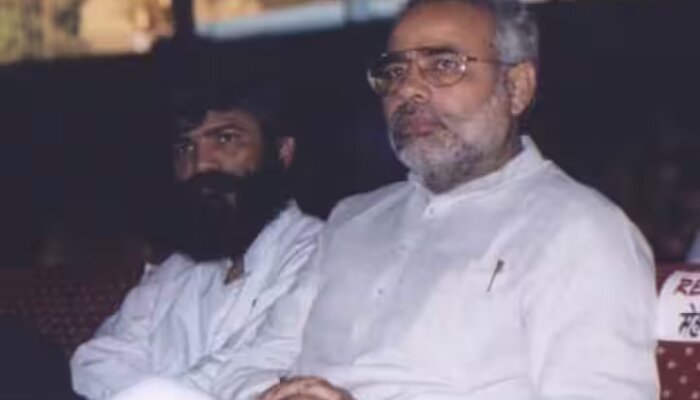
Old picture of Baba Satyanarayan Mourya with Prime Minister Narendra Modi (Source: ABP News)

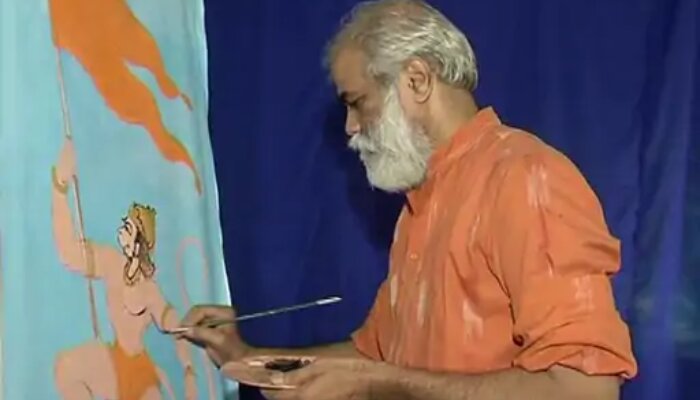
Baba Satyanarayan Mourya joined the Ram Janmbhoomi movement soon after completing his studies. He was fond of painting and started writing slogans on the walls of streets and neighbourhoods with others. One of these slogans was “Ram Lalla hum aayenge Mandir wahin banaenge” which infused a new energy in every Ram devotee. He came up with it when he was only 22 years old.

He is an international artist. He revealed that he began carving slogans on the walls while he was a student in Ujjain as a result of joining the temple movement. He afterwards moved to Ayodhya in 1990 with friends and here, too, started scrawling slogans on the walls. The then-chief of Vishva Hindu Parishad late Ashok Singhal encouraged him to continue the work after reading them. The former sent him to Delhi and recorded a cassette featuring his poems and songs upon learning about them. These slogans later echoed on the stage during the Ram Mandir protest.

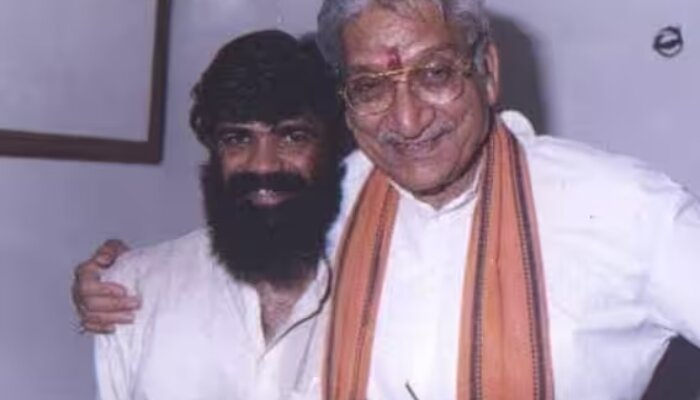
Baba Satyanarayan Mourya and late VHP supremo Ashok Singhal. (Source: ABP News)

Baba Satyanarayan Mourya was later announced as stagehead and gave the slogan “Ram Lalla hum aayenge Mandir wahin banaenge” in a program held in Ujjain. These lines were part of a song called “Saugandh Ram ki khate hain, hum Mandir wahin banaenge” (we swear on you Lord Ram, we will construct your temple there). He formed other slogans like “Rakt denge praan denge Mandir ka nirmaan karenge” (we will give our blood, our lives and build the temple).

He mentioned that he had been there for painting before the disputed structure was demolished in 1992. He had hung a lot of banners around Ayodhya. He left Ujjain with three or four pieces of cloth because 4 feet-wide cloth was quite uncommon at the time and created the banner out of yellow fabric. He disclosed that they were unaware that the structure would be destroyed on 6th December. The karsevaks questioned what to do after it collapsed and the authorities forbade any further construction. They then placed the deity on an altar they had set up in the same rubble. Subsequently, timber was buried, stones were smoothed and a temporary temple consisting of pink fabric and flags was erected. Afterwards, they had the opportunity to construct a wall and began manually putting bricks. The Central Armed Police Forces (CAPF) showed up on the 8th of December and all major leaders of the movement escaped.

He unveiled that he had created a whole historical exposition of Ram Janmbhoomi. It lists every person who served for the cause. There were reportedly 4.5 lakh casualties and 76 battles during the period. Numerous individuals committed their entire lives to the Ram Mandir.

Baba Satyanarayan Mourya is a native of Rajgarh. He received a gold medal in his MA (Master of Arts) and completed an MCom (Master of Commerce). His father was a teacher and his brother and both sisters also joined the same profession. He also wanted to continue the family tradition but conveyed that Lord Ram sent him to Ayodhya as a karsevak. He divulged that people laughed when they learned he was a gold medalist as he walked around in half-pants. The fact that the makeshift temple we constructed back then still stands makes him very proud. He shaved his beard after the structure was demolished.

He claimed that throughout his time in Ayodhya, he frequently painted slogans, images and tableaus on the walls. It was necessary to ensure at that moment that the police would not arrive and hence he used to do it quickly. There were a lot of prominent people with him on the podium on 6th December including Bharatiya Janata Party leader Lal Krishna Advani and Murali Manohar Joshi. Nobody knew that he was there among them which helped him in fleeing. He was the stage in charge that day and had painted all over in Ayodhya. He was the provincial campaigner of the temple movement. Several cassettes of Ramcharan Paduka were made for the movement. All the 40 people who were caught at that time became leaders but he was the only anonymous one.

Baba Satyanarayan Mourya held 57 exhibitions of Lord Ram in the United States. He also did the same in the West Indies. He worked with Ashok Singhal for 7 years as well as Prime Minister Narendra Modi. He used to come from Mumbai to join the election campaign in his home state. He also worked in the television industry for 5 years and has little time at his disposal as he travels around the world.

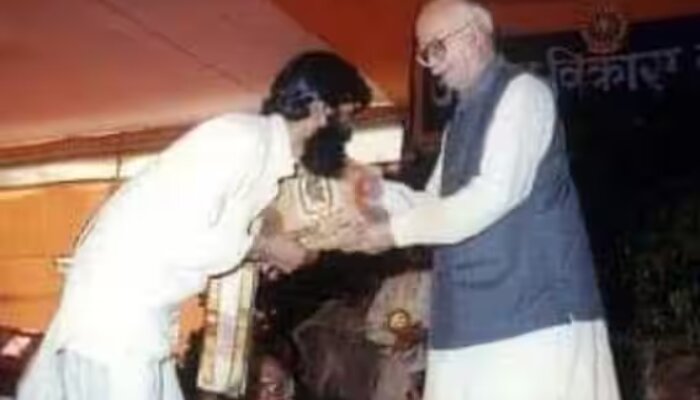
Baba Satyanarayan Mourya with BJP veteran LK Advani. (Source: ABP News)

He noted that he was not born to become popular but to do God’s work. His greatest reward is that Prime Minister Narendra Modi knows him by his name. Chief ministers of multiple states have honoured him and even foreign presidents held meetings with him.