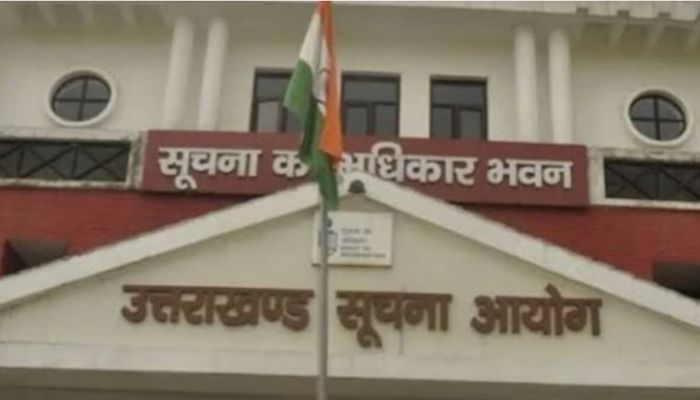
In Uttarakhand, the State Information Commission has included the Waqf Board under the Right to Information Act (RTI Act). With this, mosques, dargahs and madrasas will now have to give all the information about income and properties.
Information about the status of Waqf properties worth billions of rupees in the state, their income-expenditure and how the process of work is being conducted will now be made public. Around 2,200 waqf properties are registered with the Uttarakhand Waqf Board.
According to the Waqf Act of 1995 (amended in 2013), the Uttarakhand Waqf Board is responsible for overseeing the Waqf properties. However, there has been a consistent lack of transparency in the system. As a result, the management of Waqf properties has avoided appointing public information officers. Following the recent directive, this practice will no longer be continued.
The issue of waqf properties being exempt from the Right to Information Act was brought to light following an RTI application submitted by advocate Danish Siddiqui, a resident of Nagar Panchayat Piran Kaliyar. In July 2022, Siddiqui requested information from the Uttarakhand Waqf Board regarding various activities at the Piran Kaliyar Dargah.
In response, he was informed that there was no designated public information authority in Piran Kaliyar, thus preventing the release of information on the matter. As the situation persisted beyond the initial departmental appellate officer level, the case was eventually escalated to the Information Commission.
During the appeal proceedings, State Information Commissioner Yogesh Bhatt sought a comprehensive explanation from the officials of the waqf board, emphasising the need for clarification on aspects such as the Waqf Act and the extent of control over waqf properties. Subsequently, it was established that all waqf properties are indeed under the purview of the board, and the chief executive officer is authorised to conduct inspections, and assessments, and obtain any necessary documents related to waqf properties. It was concluded that all waqf properties were under government authority.
Information Commissioner Yogesh Bhatt also solicited responses from both former and current chief executive officers in relation to the case. Subsequently, directives were issued to bring the administration of the Piran Kaliyar Dargah within the ambit of the RTI Act. As a result, a Public Information Officer has been assigned to this role.
Furthermore, mandates have been put in place to enforce the RTI Act across all other Waqf administrations. The Information Commission has mandated the formulation of a manual in accordance with Section 4 of the Right to Information Act within a span of six months. Additionally, there has been a call to establish a legal framework for the dissemination of information.
A special National Investigation Agency (NIA) court in Delhi on Thursday sentenced 10 years of imprisonment to Syed Maqbool, one of the accused in the Indian Mujahideen conspiracy case.
Maqbool was previously convicted on September 22, 2023, by the special judge of the NIA special court in the national capital. He is the fifth accused among the total of 11 against whom sentence has been pronounced.
A resident of Maharashtra’s Nanded, Maqbool was arrested in the case on February 28, 2013, for his active involvement with members of Indian Mujahideen based in Pakistan and India and involvement in the crime and conspiracy.
NIA investigation revealed that the accused maintained close ties with key figures of the Indian Mujahideen, including Riyaz Bhatkal, who is based in Pakistan, and Imran Khan and Obaid-Ur-Rehman, who are located in India. “They hatched a conspiracy to carry out explosive attacks at various locations within India, with Hyderabad being a primary target. Extensive reconnaissance of important sites, including those in Hyderabad, was also conducted.”
The case pertains to the conspiracy hatched by the members of the Indian Mujahideen, a group responsible for organizing a series of devastating blasts across the country, said the NIA.
These acts of terror include the Varanasi blasts on March 7, 2006; the Mumbai serial blasts on July 11, 2006; the Uttar Pradesh courts serial blasts in Varanasi, Faizabad, and Lucknow on November 23, 2007; the Hyderabad twin blasts on August 25, 2007; the Jaipur serial blasts in 2008; the Delhi serial blasts in 2008; the Ahmedabad serial blasts on July 26, 2008; the Chinnaswamy Stadium blast in Bangalore in 2010; and the Hyderabad twin blasts in 2013.
Earlier, on July 12 this year, four accused, namely Danish Ansari, Aftab Alam, Imran Khan, and Obaid-Ur-Rehman, were found guilty under sections 18, 19, 38(2), and 39(2) of the Unlawful Activities (Prevention) Act in the case. They were sentenced to 10 years of imprisonment.
In March 31st this year, charges were formally framed against the aforementioned accused individual, along with ten others, including Yasin Bhatkal, Asadullah Akhtar, Zia-Ur-Rehman, Tehsin Akhter and Hyder Ali. The sentencing was done by the learned NIA Special Court in New Delhi under sections 121 and 122 of the Indian Penal Code (IPC), as well as sections 17, 18, 19, 21, 38, 39, and 40 of the UA(P) Act.
The trial in this case, pertaining to the remaining six accused persons named above, who face a range of charges under the IPC and the UA(P) Act, is ongoing.
(This news report is published from a syndicated feed. Except for the headline, the content has not been written or edited by OpIndia staff)
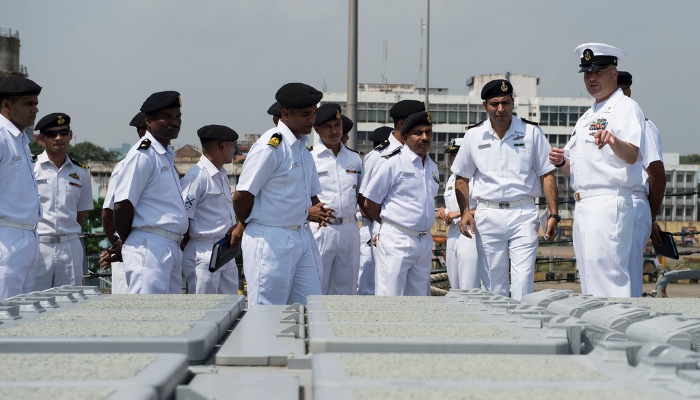
On Thursday, October 26, a court in Qatar awarded a death sentence to eight ex-Indian Navy officers. These officers, who were arrested in Doha on August 30, 2022, have been languishing in the Qatar jail for over a year on charges of espionage and spying. The Qatar authorities accused them of spying for Israel.
India’s Ministry of External Affairs has reacted strongly to the verdict saying that India is “deeply shocked.” MEA added that it would continue to extend all consular and legal assistance to secure the release of the eight former Indian Navy officers.
One of the jailed officers, Commander Purnendu Tiwari (Retd), is the managing director of the firm that was conferred the Pravasi Bharatiya Samman Award in 2019. The award was handed over by none other than the then-President Ram Nath Kovind.
The other detained Indians are Navtej Singh Gill, Birendra Kumar Verma, Sugunakar Pakala, Sanjeev Gupta, Amit Nagpal, Rajesh Gopakumar, and Saurav Vashisht.
Qatar’s intelligence agency had picked them up from their homes in the middle of the night on August 30. They were put in solitary confinement. For months after their arrest, the Qatar authorities never specified the charges that had been pressed against them. Only recently did they confirm that the Indian Navy personnel, who were held in solitary confinement for long spells, have been charged with the offence of spying for Israel on the country’s advanced submarines.
The Qatar State Security, the state intelligence agency, had claimed that it had intercepted electronic communications establishing that the naval officers were spying on the submarine programme. The agency had, however, not shared the information with India.
Reports that the former Indian Navy officers may have been “framed” by Pakistani intelligence agencies surfaced in April of this year. The case of Kulbhushan Yadav, a former commander of the Indian navy who was abducted from Iran and imprisoned in Pakistan on suspicion of spying, is said to have been used by the Pakistani intelligence agency ISI to convince the Qatari authorities against these eight decorated ex-Indian Navy officers.
Ever since the officers were taken into custody by the Qatari authorities, the Indian embassy has been doing everything within its power to get them released. They have been helping the family members have frequent visits, and they have been offering the Navy officers legal and consular support. When discussing India’s stance on the eight former Indian Navy officers who were arrested, MEA spokesperson Bagchi emphasized that the Center was doing “everything in its power to support these Indians.”
Today, following the announcement of the death penalty, India’s Ministry of External Affairs expressed shock and vowed to explore all available legal options to secure the release of its citizens.
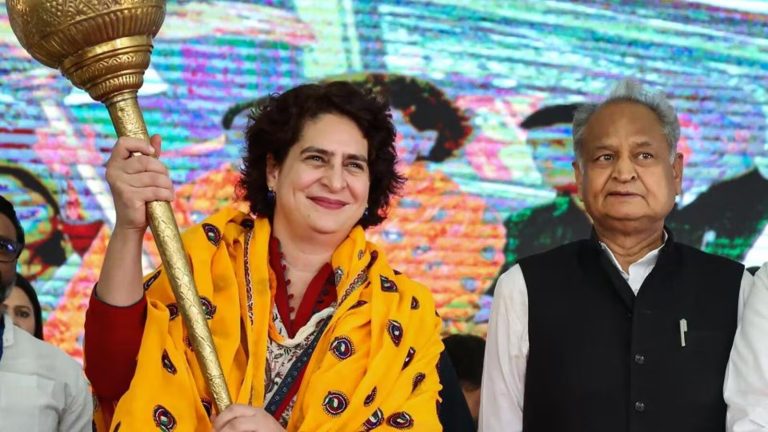
The Election Commission (EC) on Thursday issued a show-cause notice to Congress leader Priyanka Gandhi Vadra over her ‘envelop’ remarks in Rajasthan related to PM Modi’s temple visit. The notice has been issued under clause 2 of part I ‘General Conduct’ of the Model Code of Conduct for political parties and candidates, which prohibits criticism of opponents by invoking their private lives.
The action by the poll panel came after the BJP filed a complaint with the EC alleging that Priyanka Gandhi had violated the Model Code of Conduct while addressing a public rally at Dausa in Rajasthan on October 20, 2023. In that meeting, Priyanka Gandhi said that she saw on TV that when an envelope of donation made by Modi at a Devnarayan temple was opened, it had only Rs 21.
The BJP on Wednesday made a representation to the Election Commission of India and demanded action against Priyanka Gandhi, accusing her of “invoking the personal religious devotion of Prime Minister Narendra Modi” to make false claims during her poll campaign. “Today we met members of the Election Commission regarding a statement by Congress leader Priyanka Gandhi Vadra on October 20 that violated the Model Code of Conduct and RP Act. We want to ask ECI if Priyanka Gandhi Vadra is above the Model Code of Conduct. We demand ECI to take action against her,” Law Minister Arjun Meghwal had said.
Making the allegation which has already been proven false, Priyanka Gandhi Vadra added that she has seen the news and is not aware if the claim is true or not. She then used it to launch an attack on the BJP, saying that “envelopes” are shown to the public by the party but nothing is found in them after the elections.
The notice says that the poll panel has received a complaint alleging that she made false statements in respect of Prime Minister Shri Narendra Modi in her speech.
The EC notice said that her statement was examined in light of the provisions of Model Code of Conduct and the speech has been found to be prima facie violative of the aforesaid provisions of MCC. The EC notice asks Priyanka Gandhi Vadra to respond by 5 PM on 30 October, showing cause why appropriate action for violation of Model Code of Conduct should not be taken against her.
It is notable that the Model Code of Conduct has come into force with the announcement of poll dates in Rajasthan by the EC on 11 October.
The false claim about PM Modi’s ‘envelope’
The allegations by Priyanka Vadra refer to comments by priest Hemraj Poswal of Devnarayan Temple in Rajasthan’s Bhilwara, who claimed that when PM Modi had visited the temple in January this year, he had put an envelope in the donation, and later the envelope was found to have just ₹21. The priest had opened an envelope in front of the camera, claiming that it was the one put by PM Modi in the donation box in front of him. When he opened the envelope, ₹21 was found inside it.
Several Congress leaders and others had used the video of the priest’s claim to attack PM Modi. Congress leader Dheeraj Gurjar even went on to claim that PM Modi “deceived” the Gurjar community as he offered merely Rs 21 in the donation box.
However, it has been established that the entire claim by the priest was false, as visuals from PM Modi’s visit to the temple show that he didn’t use any envelope while putting money inside the donation box. PM Narendra Modi had put some cash in the box, without any envelope, and it is impossible to tell the amount as the cash donated in such donation boxes gets mixed.
Priest Hemraj Poswal was present behind PM Modi when he had put cash without any envelope in the box, but despite that, he went on to claim that a white envelope was used by the PM. And Priyanka Gandhi Vadra repeated that lie in an election rally after the lie was already busted.
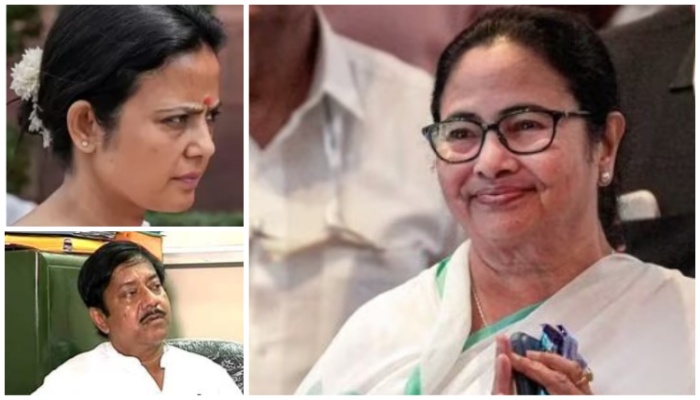
On Thursday, October 26, the Enforcement Directorate (ED) conducted a raid at the residence of West Bengal Minister Jyoti Priya Mallickat Salt Lake in Kolkata for his alleged connection in a case of corruption linked to ration distribution. As ED continues to search the WB Minister’s residence, West Bengal CM and TMC supremo Mamata Banerjee lashed at the central agency threatening it with police action if the senior Trinamool leader was harmed in any way.
Jyoti Priya Mallick who is currently serving as forest minister in Mamata Banerjee’s government earlier held the food minister portfolio.
TMC minister Jyotipriya Mallick unwell, will lodge FIR against BJP if anything happens to him during ED raids: Mamata Banerjee
Speaking in a press conference at her Kalighat residence Mamata said, “BJP is in engaged in a devious strategy under the guise of ED raids on opposition leaders nationwide ahead of the 2024 Lok Sabha elections. It will not help them to win. Jyotipriya Mallick is in poor health. He is suffering from high blood sugar. We will file an FIR against the BJP and the ED if any harm befalls him during searches at his residence.”
Referring to the raid at Mallick’s house, Mamata hit out at the BJP by saying, “What atrocities and lawlessness are occurring? BJP is playing a dirty game. I want to know whether they there has been even one such raid at the residence of any BJP leader? Neither they nor we will remain in power forever. New generation will come up to take over. But they are leaving blunders for the next generation.”
BJP targets Mamata Banerjee was discriminating against TMC MP Mahua Moitra
The moment Mamata Banerjee stepped in to support her cabinet minister, the BJP cornered her for her perceived discrimination against Mahua Moitra, another TMC leader who has recently been under investigation in connection with the cash-for-query scam.
Notably, the TMC supremo has not spoken a word in connection with Lok Sabha MP Mahua Moitra being investigated by the Ethics Committee in the alleged cash-for-query scam.
Targeting Trinamool Congress for its stoic silence in Mahua Moitra’s case, the BJP claimed Mahua Moitra has been “abandoned” and that Banerjee’s silence is an admission of her party leader’s guilt.
“TMC’s official stand on Mahua Moitra is that “We won’t comment. Said MP will defend herself” Does it mean 1)TMC accepts Mahua Moitra has made serious breaches including giving her log in to be operated from foreign soil by a rival corporate entity in exchange for kickbacks? 2) If so, then why is TMC still retaining her rather than sacking her? 3) Is the TMC afraid of taking this action because the party itself has something to hide? Perhaps people in the party knew or endorsed it? TMC must clarify,” BJP spokesperson Shehzad Poonwalla questioned.
TMC’s official stand on Mahua Moitra is that “We won’t comment. Said MP will defend herself”
Does it mean
1)TMC accepts Mahua Moitra has made serious breaches including giving her log in to be operated from foreign soil by a rival corporate entity in exchange for kickbacks ?…
Earlier, senior BJP leader Amit Malviya, who is co-incharge of the party’s Bengal operations, said it was no surprise that Mamata Banerjee has “abandoned” Moitra.
Mahua Moitra being investigated in the cash-for-query scam
The Ethics Committee of the Lok Sabha, meanwhile, has called Trinamool Congress MP Mahua Moitra on October 31, over the cash-for-query allegations against her. The decision was taken after the panel held its first meeting today wherein it was concluded that the charges against Moitra are “very serious” and warrant a full investigation.
Moitra has been accused of taking Rs 2 crore in cash to ask, in Parliament, questions allegedly designed to target the Adani Group.
The enquiry was initiated after BJP MP Nishikant Dubey earlier wrote to the Lok Sabha Speaker, alleging the involvement of Mahua Moitra in the ‘Cash for Query’ scandal. He further claimed that he had proof of the charges as given to him by Advocate Jai Anant Dehadrai.
The Trinamool Congress has distanced itself from charges facing Moitra. The party said last week it would take an “appropriate decision” after the Ethics Committee inquiry.
The Regional Connectivity Scheme (RCS) – UDAN (Ude Desh Ka Aam Nagrik), a government-backed initiative to improve infrastructure and connectivity in India, especially in remote and underserved regions, completed six years.
It is a vital component of India’s National Civil Aviation Policy (NCAP) 2016, launched by the Ministry of Civil Aviation (MoCA) on October 21, 2016, with a 10-year vision.
The first RCS-UDAN flight was inaugurated by Prime Minister Narendra Modi on April 27, 2017, connecting Shimla to Delhi. The scheme focuses on improving unserved air routes in underserved regions of the country and fulfilling the aspirations of the common citizens, the Ministry of Civil Aviation stated.
So far, RCS-UDAN has facilitated the travel of more than 130 lakh passengers, demonstrating its success in enhancing air travel accessibility.
Meanwhile, over the period of 6 years, various versions of the UDAN Scheme were launched: UDAN 1.0: 5 airlines companies were awarded 128 flight routes to 70 airports (including 36 newly made operational airports), UDAN 2.0: 73 underserved and unserved airports were announced and for the first time, helipads were also connected, UDAN 3.0: In coordination with the Ministry of Tourism, Tourism Routes were included. In addition to Seaplanes for connecting Water Aerodromes, several routes in the North-East Region came under the ambit of the scheme and UDAN 4.0: Gave impetus to North-Eastern Regions, Hilly States, and Islands. The operation of helicopters and seaplanes incorporated, the Ministry stated.
After the four successful rounds of bidding, the Ministry of Civil Aviation launched the 5th version of RCS-UDAN with numerous improvements based on stakeholder feedback.
UDAN 5.0 where the focus is on Category-2 (20-80 seats) and Category-3 (>80 seats) aircraft. Similarly, the cap of 600 km has been removed and there is no restriction on the distance between the origin and destination of the flight. This round prioritizes the routes that will connect the airports that are ready for operations or will be ready soon, which will lead to quicker operationalization of awarded routes. Consequently, Airlines would now be required to commence operations within 4 months of the award of the route, and they are welcoming this change as this helps them to better plan their operations. Additionally, if the average quarterly PLF of the route, for four continuous quarters, is higher than 85 per cent, the exclusivity for that route would be withdrawn, allowing for other airlines to also provide connectivity on the route, it added.
This was soon followed by UDAN 5.1, This round of RCS-UDAN is designed specifically for helicopter routes by increasing the scope of operations for helicopter operators, enhancing VGF and reducing Airfare Caps.
The Scheme will now allow operations on routes provided that at least one origin or destination is in a priority area and at least one origin or destination is a heliport, thereby enhancing the potential range of connectivity. VGF caps have been enhanced to improve viability for operators and airfare caps have been reduced to make flying more affordable for passengers respectively.
Currently, bidding for UDAN 5.2 is underway to further enhance the connectivity to remote and regional areas of the country, achieve last-mile connectivity, and provide impetus to the tourism sector through small aircraft (<20 seats). The Scheme will provide greater operational flexibility to the small aircraft operators, by allowing them to operate a maximum of 40% of annually quoted RCS seats and a minimum of 10 per cent of annually quoted RCS seats in any given quarter, the Ministry said.
The Ministry further said that RCS-UDAN is contributing to the growth of the civil aviation industry as four new and successful airlines have come up in the last 6 years. The scheme has helped airline operators to start up and develop a sustainable business model.
Additionally, it’s providing opportunities to small regional airlines FlyBig, Star Air, and IndiaOne Air to scale up their businesses and their successful run is evidence of the fact that the scheme is creating an amiable ecosystem conducive to airline business.
The scheme’s incremental expansion has generated an escalating demand for new aircraft, concurrently broadening the spectrum of aircraft deployed. This augmentation encompasses a comprehensive range of aircraft and encompasses helicopters, seaplanes, 3-seat propeller planes, and jet planes, it stated.
Presently, a diversified fleet, including Airbus 320/321, Boeing 737, ATR 42 and 72, DHC Q400 and Twin Otter, Embraer 145 and 175, and Tecnam P2006T, is actively serving on the RCS routes.
The heightened demand for aircraft is substantiated by Indian carriers’ orders, which exceed 1,000 aircraft slated for delivery over the next 10-15 years, representing a significant augmentation of India’s existing fleet, which currently comprises approximately 700 planes operated by various airlines, it said.
RCS-UDAN is not solely dedicated to offering last-mile connectivity to tier-2 and tier-3 cities; it also stands as a prominent contributor to the burgeoning tourism sector. UDAN 3.0 introduced tourism routes connecting several destinations in the Northeast region, while UDAN 5.1 is dedicated to expanding helicopter services in hilly regions to stimulate tourism, hospitality, and local economic growth.
This initiative has successfully connected destinations such as Khajuraho, Deoghar, Amritsar, and Kishangarh (Ajmer), which have substantial relevance in religious tourism. The entire Northeast region’s tourism industry is experiencing a considerable upsurge due to the introduction of Pasighat, Ziro, Hollongi, and Tezu airports, fostering greater accessibility, the Ministry said.
(This news report is published from a syndicated feed. Except for the headline, the content has not been written or edited by OpIndia staff)
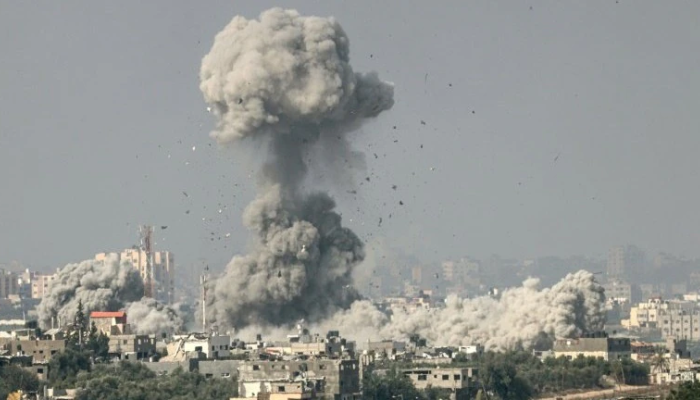
The conflict between Israel and Hamas started 20 days ago following the gruesome attacks on 7 October by Hamas. Israel has been continuously bombing the Hamas sites in the Gaza Strip as well as Hezbollah’s targets in Lebanon due to which multiple facilities belonging to Hamas, Islamic Jihad and Hezbollah were destroyed. Furthermore, Israel reported to have eliminated hundreds of terrorists from these organisations.
Hezbollah confirmed that 46 of its fighters including all its top commanders have been assassinated in this war so far. On 14 October, Ali Qadhi was killed by the Israeli military. He was the commander of the Nukhba Special Force, a Hamas special military unit and was involved in the planning of the deadly assault on the Jewish state earlier this month.
He was arrested by Israeli authorities for his involvement in the kidnapping and murder of 51-year-old Israeli businessman Sasson Nuriel but he was released in 2011 as part of the Gilad Shalit (Israeli soldier) prisoner exchange.
Zakaria Abu Maamar who was a member of Hamas’ political office during the 2020s was killed on 10 October. He lost his life in an Israeli Air Force airstrike on Khan Younis in the southern Gaza Strip during Operation Iron Swords in 2023.
Billal Al Kedra alias Bilal al Qadr who was a senior commander in the Nukhba and involved in the plotting of the 7 October attacks, notably the Kfar Aza, Nirim and Nir Oz massacres was killed. The news about his death first appeared on 14 October which revealed that he was killed in the Khan Yunis area in the southern Gaza Strip on 13 October. The Israeli military confirmed that he was killed during airstrikes on 15 October.
The name of the fourth Hamas commander killed in the airstrike of the Israeli forces on 15 October was Muetaz Eid. He was the commander of the Southern District of National Security of Hamas.
Jawad Abu Shamala Hamas’ Minister of Economy who managed the terror group’s funds and earmarked funds for financing and directing terror in and outside the Gaza Strip was eliminated on 11 October. Zakariya Abu Moammar who was the head of Hamas internal relations was also killed. He was a senior decision-maker and coordinator between terror groups in the Gaza Strip.
Merad Abu Merad, a Hamas leader who led the 7 October attack on Israel was killed by Israel on 14 October. He was commander of the Hamas’s aerial force and was largely responsible for directing terrorists during the massacre. Israeli Air Force fighter jets launched an airstrike to neutralise Ibrahim Al-Saher, the commander of Hamas’ Northern Brigade’s Anti-Tank Missiles Array.
Taysir Mubasher, commander of Hamas’s North Sector Battalion in Khan Younis, was assassinated by the Israel Defense Forces (IDF) and the Shin Bet (Israel Security Service). He had directed several deadly operations against both IDF soldiers and Israeli civilians over the years. He previously served as commander of Hamas’ naval forces.
An Israeli attack killed Muhammad Katmash who was the deputy in charge of Hamas’s artillery. He was behind the firing of thousands of rockets at Israel. He was responsible for fire and artillery management in the Central Camp Brigade. He was the Deputy Chief of the Regional Artillery Regiment of the Hamas and was instrumental in thwarting Israeli airstrikes in the Gaza Strip.
Ayman Nofal a commander of the central command in the Al-Qassam Brigades, Hamas’ military wing and head of air operations was killed during airstrikes. The announcement was made by the Israeli military on 17 October. According to the Israeli military, he was a member of the terror outfit’s General Military Council.
Abdul Fatah Hasan Dukhan also known as Abu Osama, who was a co-founder of Hamas was killed in an Israeli airstrike in Gaza on 11 October. He had drafted the 1987 Hamas charter in which he advocated for the annihilation of the Jewish state.
Sami al-Hassani, a reported founder of the al-Aqsa Martyrs Brigades (AMB) was killed by an Israeli airstrike in northern Gaza. The Israel Defense Forces stated that they killed Mamdouh Shalabiya, a member of Hamas’ naval commando unit in a strike in the Gaza Strip on 19 October. The assault was carried out by fighter jets and Navy vessels against a Hamas command centre located in the region.
On 24 October the Israel Defense Forces reportedly killed Abed al Rahman, deputy commander of the Nuseirat Battalion, who had led the kibbutz Be’eri massacre where at least 130 people including women, children and infants were murdered and dozens of homes were burnt. He was shot dead by the Israeli military.
The Shin Bet-led Israeli military forces assassinated the deputy commanders of Sheikh Radwan and Shati battalions in Hamas. Both Khalil Tetri and Khalil Mehjez perished in deliberate airstrikes on 24 October.
Lebanon’s Hezbollah announced that its commanders Hussain Hani al-Taweel and Mahdi Mohammad Atouiwas were also killed on 18 October. The group released a statement that mentioned it struck an Israeli Merkava tank near al-Rahib on the Israeli side of the border which resulted in the death and injuries of the tank’s crew members.
The two deceased terrorists “targeted an Israeli Merkava tank belonging to the ‘occupation’ army at 3.15 a.m. (0015GMT) on Wednesday at the site of al-Rahib,” which is opposite Aita al-Shaab in southern Lebanon. “It was a direct hit, leading to the death and injury of its crew,” the notification read. Hussein Mohammad Ali Hariri and Ali Ibrahim Jawad two more assailants from the terror group also died in the conflict.
Notably, a brief ground action by Israeli troops and tanks took place in northern Gaza overnight on 26 October with the intention of “preparing the battlefield” for the much-anticipated full-scale ground attack. The raid was led by the Givati infantry brigade destroyed several terrorist targets.
Talk about storm in a teacup and Rahul Gandhi’s interview/chat with former Jammu and Kashmir Governor Satya Pal Malik begins with the message, “On 14th October, I had a conversation with former Governor of J&K, Shri Satya Pal Malik. Do you think the media will broadcast any of this?”
One must commend Rahul Gandhi’s efforts to try to catch up with the times as far as content is concerned. But it is not fair for RaGa to take offence with the media for he leaves them dumbfounded. Still, if the media’s attention is what he wants, he must get it.
In the 28 minutes 17 seconds-long conversation, the Gandhi scion and Malik touched upon several subjects including Article 370, Pulwama, Farmers, MSP, the Army, Bharat Jodo Yatra, Casteism, Demonetisation, and a new subject, “Liberal Hinduism”, whatever that is.
At the centre of their conversation was venting their frustrations over Prime Minister Narendra Modi by making illogical statements, peddling lies, making bizarre insinuations, and sheer ignorance towards their own failures. As I said, a storm in a teacup.
Surprisingly, Malik, whose political career spans decades, displayed Rahul Gandhi-level of political understanding of all these issues. Even though the discussion was nothing but brick-batting the Prime Minister, the uncivilised manner in which Satya Pal Malik spoke was unexpected. “Iski, kara raha tha, ” was how Malik addressed whenever talking about the PM. At the same time, Malik put up a great image as that of a loyalist of the Nehru-Gandhi Congress dynasty.
To be or not to be (a PM), asks the Prince
In the same sentence, Satya Pal Malik appreciated and criticised Charan Singh saying, “Charan Singh ji was good. But his problem was that he had the dream of becoming the Prime Minister anyhow.” This prompted Rahul Gandhi to wonder why this is the case with politicians in India.
“Many of our politicians have this issue that I have to become PM at any cost. By compromising everything, we want to become PM. Why does this happen that there is so much impatience that under any circumstance…Many politicians are like that,” RaGa asked ruminatively.
For someone who has been launched, relaunched, and then relaunched again, we ask the same question to Rahul’s mother and former Congress President Sonia Gandhi. Why exactly do Sonia and her loyalists want to make RaGa PM when it was decided at least nine years ago, if not more, that it simply doesn’t seem to be working out?
Meanwhile, it was an insinuation by Malik against the Prime Minister that pacified Rahul’s pondering mind. The interview cut out to the next topic after a RaGa-approved reply from Malik who said, “After independence, politics was like duty and people used to perform it like that. Then it became a profession. Now it has become a business.”
Article 370 abrogation
According to Satya Pal Malik, Jammu and Kashmir “cannot be managed by force or the Army” and J&K’s statehood should be reinstated immediately. According to Malik, J&K was made a union territory because the government suspected that the police could revolt.
What followed this bizarre statement was insinuation after insinuation to paint a picture that the Central government doubts the Jammu and Kashmir police. That a former Jammu and Kashmir Governor is pitting the Indian Army against the Jammu and Kashmir police shows just how many challenges India faces internally.
Malik said that he had asked the government to reinstate statehood but, according to him, the Centre said that “that is not necessary, everything is going fine”, a point Malik disagrees with.
“How is going fine? Insurgency is back. Terrorists are active,” said Malik and Rahul added to this saying that terror incidents have increased. These statements come merely three days after Jammu and Kashmir DGP Dilbagh Singh said that “terrorism is breathing its last in the union territory”.
According to reports, Singh also said that only 10 local youth joined terror ranks this year as compared to 110 in 2022. This is reportedly the lowest number in the UT since late 1980s.
In September, the J&K DGP had said that of the 49 terrorists neutralised by security forces in J&K, 40 were foreign nationals. And yet, the former J&K Governor damned official data to propagate his lies and help validate Rahul Gandhi. “It (terror incidents) is happening everywhere. Everyday something happens in Rajouri, Kashmir valley,” Malik said.
Rahul and Malik blatantly peddle lies about and politicise Pulwama
At the very beginning, it is preposterous that Rahul Gandhi seeks Malik’s “opinion” about the Pulwama terrorist attack in which 40 Central Reserve Police Force (CRPF) personnel were martyred on 14th February 2019.
Malik responds, almost doing a favour, saying that he won’t say that they (the government) got it done. Seems like Malik did take note of how his interview with Karan Thapar, where he held the Modi government responsible for the Pulwama attacks, was used by Pakistan media to give the terror nation a cleanchit.
“But they ignored it in Pulwama and used it politically for themselves because there are his speeches (PM Modi’s) wherein he says that when you go to cast vote, remember the martyrs of Pulwama,” Malik told Rahul. He said that the Modi government wanted to use Pulwama for electoral gains to say that Pakistan did it and we will now defeat them.
It is funny though that a little later in the conversation, Malik says that the Prime Minister called him at around 5-6 PM and asked what happened. Malik recalls saying to the PM, “I told him because of our mistake many of our people have died. He told me to stay quiet and not say anything on it.” He said the same was told to him by NSA Ajit Doval.
Redirecting attention back to himself, Rahul alleged in the conversation that he was told by the security not to go to the airport to pay homage to the martyrs whose mortal remains were being brought to the airport.
“They locked me in a room at the airport and told me “you cannot leave the room”. I asked them “what do you mean?” The martyrs were brought there, Army men were there. The Prime Minister was coming. And they literally locked me with a key and told me I cannot leave. I asked the security that how can they do this. I fought them and left from there,” Rahul alleged.
Notably, this is the first time that Rahul Gandhi has mentioned this incident in all the times that he has spoken about Pulwama. Given that all of his claims have been proven wrong and that he has received backlash for politicising the attacks, Rahul seems to have spun this new story.
Both Rahul and Malik called the tribute to martyrs at the airport “a show” with the latter saying that the Prime Minister should have gone to Srinagar. So the former J&K Governor is of the view that the right response from the PM should have been to visit Srinagar and direct all security to himself rather than ensuring safety and normalisation.
With the security situation in J&K being extremely sensitive and local sentiments undecided, suggesting such experimental endeavours shows just why Satya Pal Malik is a failed politician who continued to lie in the course of the conversation.
Malik parroted a lie that was first tweeted by Rahul Gandhi on 22nd February 2019, just eight days after the Pulwama attack. Malik said, “Jis din yeh hua toh yeh National Corbett Park mein shooting kara raha tha apni (The day this happened, he was getting his shooting done at Corbett Park).
OpIndia had fact-checked Rahul Gandhi proving that the Prime Minister had completed his forest visit almost an hour before the attack in Pulwama, during which time some photographers took a few snaps of him. The photos were shared by Rahul with the allegations on Twitter and the same was spread like wildfire by his footmen in the Congress and mainstream media.
Another big lie that Malik has peddled despite being fact-checked is that the Pulwama attacks happened because the CRPF were not granted the five aircraft which they had sought approval for from the Home Ministry.
“Their application was lying at the Home Ministry for four months and it was rejected after four months. They had asked for five aircraft. It wasn’t given and the application was held for four months,” Malik lied.
“Agar woh merese maangte toh main immediately kar deta. Mere saamne nahin aane diya. Agar mere saamne aayi hoti toh main kuch usme karta. That was between CRPF and the Home Ministry. (Had they asked me I would have granted. But they did not let me know about it because I would have done something about that. That was between CRPF and the Home Ministry),” Malik said.
A report on 17th February 2019 quoted top CRPF officers and government sources saying that even if aircraft had been provided for personnel, convoy movement would still have happened as there were about 4,000 troops and aircraft could not have taken all of them.
The CRPF officer said there was a backlog due to weather, and 4,000 personnel needed to be moved. Not all of them could have gone by aircraft.
However, individuals like Satyapal Malik consistently spread fake news with help of the people like Rahul Gandhi, who has been… pic.twitter.com/5ey5M2luH0
Staying true to his colours, not once did Malik condemn Pakistan-backed terrorism responsible for the several terrorist attacks including Pulwama. Rather his focus was to demotivate and demean Indian intel and the forces. Again drawing a divide between the Kashmir police and the Central forces, the former J&K Governor said, “Not one of the 8-10 link roads on the 10-km stretch where the attack happened was sanitised that day. When I used to send my Kashmir police, we used to halt civil traffic on the entire stretch and would send them after sanitising.”
It is shocking that despite being proved wrong on several occassions over Pulwama, Rahul Gandhi was finding it tough to believe when Malik said that heaps of explosive had come from Pakistan.
“PM has given his money to Adani,” says Malik
While Rahul decried that the media is reporting only on Israel and not furthering his political agendas, Malik placated him by saying that Rahul has stuck the Adani name to PM Modi which he cannot get rid of now. “People are also saying that Adani has his (PM’s) money,” Malik said. If you think this is funny, wait till you read the next best thing.
Duo insinuates that Atiq Ahmed was killed to divert attention from Satya Pal Malik’s interview with Karan Thapar
“The day I did an interview with Karan Thapar, they called all channels and told them not to report it. And then Atiq Ahmed’s case happened and it was the headline for ten days,” Malik claimed.
Rahul immediately, and excitedly, jumped in to say that he told his sister Priyanka Gandhi that Atiq Ahmed’s killing was done to distract the people from what you said about Pulwama. “I notied that when you spoke about Pulwama, they were scared,” Rahul stated.
“But Atiq Ahmed’s news overshadowed it for 10 days,” Malik added. Yes, Satya Pal Malik thinks he is THAT important even after being ousted.
Rahul reiterates that he wants casteism to exist
It is still understandable to seek reservation/quota for a community in government ranks, but to ask for caste representation in all institutions, private or public is plain casteist. Rahul Gandhi claims to have found through his “research” that in all Indian institutions, including media and bureaucracy, OBCs, tribals, and Dalits have no representation.
“Whether it’s a big media house or anchors, and reports they do not have even a single OBC, Dalit, or Tribal,” Rahul lamented. If Rahul Gandhi had it his way, he would introduce reservation in the media to ensure freedom of press. Who knows, the existence of leftist-laden Press Clubs might just start making sense what with new-found inclusivity and placards crying “Brahminical patriarchy” might not be needed anymore?
Rahul, Malik attack GST, Demonetisation, Agniveer, Army, Election Commission, and every other institution their minds could comprehend
After Rahul’s monologue on how the current Indian institutional structure and the system of information are preventing their voice from reaching the people because “Modiji turns up the loudspeaker”, Rahul took to the topic of the working class.
He spoke about his conversation with carpenters who, he claims, told him that they build the products but they cannot go to the showrooms where the products are sold. “Our work, our labour, but the fruit is not ours,” Rahul cited them. Something tells me the message was beyond the realm of his understanding.
Malik was quick to blame the Modi government for this. “It is so unfair, they hike prices, and publicise it. The poor don’t get anything. It is a very exploitative system.” I wonder if Rahul and Malik would be open to elaborating their views of this “exploitative system” if they were to have a casual conversation with a real economist.
This was followed by a one-line attack on GST and Demonetisation each despite the fact that DeMo was announced targetting high-value currency, which by no logic can impact the poor. And then Rahul tossed the ball in Malik’s court mentioning farmers’ agitation. Malik was happy to receive it.
Malik blamed the Modi government for the changing economic aspirations of the country and the rural youth increasingly venturing out to urban areas for employment opportunities. “Slowly, there will be no farming,” Malik predicted. Spare this writer for not being able to explain how and why the former J&K Governor immediately drew parallels between his imagination that “farming will end” the way “they finished Army” through Agniveer.
Malik believes that “Who will sacrifice their lives for such a short period as Agniveer?” These are two daft Indian politicians, one seasoned in daftness, talking about what they think is right and wrong for the people of this country who they don’t even believe to have the patriotism it takes to safeguard the nation.
Notably, a day before this mind-boggling interview, Agniveer Gawate Akshay Laxman was martyred in the line of duty in Siachen Glacier making him the first such casualty since the scheme was introduced last year. As for the “short period as Agniveer” that Malik has a problem with, Laxman will be accorded all honours as a “battle casualty”. Even in the Agniveer’s death, Rahul took the opportunity to target the forces. Here’s a fact check by OpIndia Hindi.
Laxman’s family will receive Rs 48 lakh non-contributory insurance, ex gratia of Rs 44 lakh, Seva Nidhi contributed by the Agniveer (30%), with an equal matching contribution by the government, and interest thereon. The Agniveer’s next of kin with also receive pay for the balance tenure from the date of death till the completion of four years which amounts to over Rs 13 lakh, and contribution of Rs 8 lakh from the Armed Forces Battle Casualty Fund, as per government sources. Here are all the facts you need to know about Agniveer.
Rahul Gandhi then ranted saying that the Modi government is infiltrating its own people into every institution including the Election Commission (EC). This was Malik cue who alleged that Rahul should get a research done on how all Vice Chancellors in Central Universities appointed in the past one year are connected to the Sangh (RSS). Rahul’s understanding of this baseless and idiotic allegation is that the government is trying to practice “mind control”.
Basically, this part of the conversation was about whining about every institution which Rahul Gandhi cannot get his hands on. One wonders why he did not mention the Opposition even once for that too is as good as an institution RaGa cannot seem to have any say or control on.
“Farmers don’t know they are becoming poor” and “MSP should be implemented”
Satya Pal Malik, while trying to explain to Rahul Gandhi what challenges the farmers are facing, said that farmers don’t know that they are becoming poor. He said that the gap between cost of the crop and fertilizer increases and reduces the farmers’ purchasing power year on year. “He doesn’t know that he is becoming poor.”
Malik said that MSP should be implemented. But here’s the twist, MSP is already implemented. Oblivious to the fact, Malik went on to describe in detail why MSP should be implemented. He kept falsely accusing the government of cheating the farmers on MSP because Adani made big godowns and purchased crops at a set price. He alleged that the cost of these crops will increase next year and Adani will sell it.
This very month, the Modi government announced an increase in the MSP of wheat by Rs 150, the highest hike in MSP prices since Narendra Modi became PM in 2014. In June this year, the Food Ministry informed that more than 830 lakh tonnes of paddy was procured at MSP benefitting 1.22 crore farmers.
Rahul indulged in the conversation taking to his favourite part about Adani. He alleged that Adani has captured the entire storage infrastructure. “I saw its effect in J&K, in Himachal.” Malik responded by saying that the effect can be seen in Haryana and Punjab and in Panipat Adani has built huge godowns.
The duo alleged that Adani has captured storage to “fine tune” and “increase and decrease” the prices. “This has directly harmed the farmers,” Rahul declared. The solution Malik gave to this imaginary problem was this, “Until and unless there is halla bol (attack) against them, they will not change.”
“Or the government should change,” Malik said sowing the seeds of hope into Rahul’s barren head once again. “Aur 6 mahine ki baat hai, main likh ke de raha hoon, bilkul nahin aayenge power mein. (It is a matter of six more months. I give it to you in writing, they will not return to power),” Malik seals the deal in Rahul’s head.
RSS, Gandhivaad, and “Liberal Hinduism”
By this time, Rahul has switched from the role of an interviewer to being the guest and the guest, Satya Pal Malik, cheering RaGa on. Setting the argument that India is witnessing a clash between RSS and Gandhian ideologies, with the former being violent and latter peaceful, Rahul asks Malik about his views who coins the term “Liberal Hinduism”.
“Only if the liberal Hindu thought is promoted only then will the country survive otherwise it will be divided(tuke-tuke ho jayega),” Malik said. Malik said that Gandhi and Congress vision should be promoted amongst the people explaining why they are different.
Safe to say that when the Nehru-Gandhi loyalists could not insult the Hindu faith enough what with their attempts to separate “Hinduism” from “Hindutva” and what not, they are not trying to engineer the science of language and reinvent new narratives with the same old intention to malign Hindus.
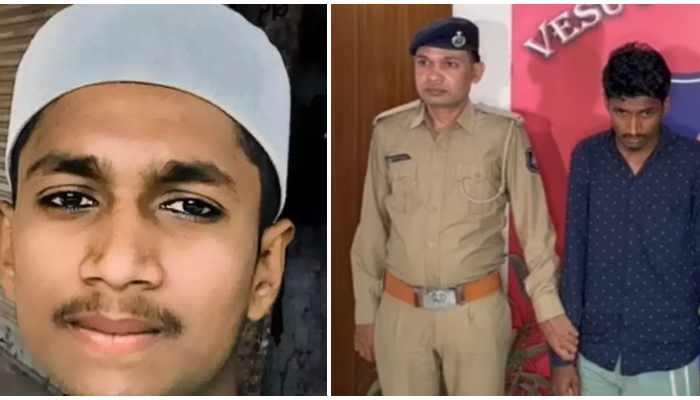
In another shocking case of love jihad, 22-year-old Museb Maniyar trapped a 15-year-old girl Hindu girl who studied in 9th grade and lived in Vesu, Surat in love jihad and then abducted and took her to Maharashtra when she came to meet him. Fortunately, she was saved by the police. The two had met through social media.
The accused is a resident of Aurangabad and worked as an auto-mechanic. He befriended the victim on Instagram and took her to many hotels. He reportedly made an account with the name “staunch Muslim” on the social media platform and lured her into his fraudulent love trap. He travelled to Surat along with a friend to meet her and celebrated his birthday with her in a hotel there.
Afterwards, he kidnapped her and brought her to Mumbai. The two also visited Ajmer and he stayed with her in multiple hotels during that time. Meanwhile, the victim’s family members protested to the authorities when their daughter went missing from the house for a few days and police started their probe. Two police teams were deployed to Maharashtra in search of them and another youth who helped the offender was caught.
The minor’s location was discovered at Ahmedabad’s Kalupur railway station when authorities put her mobile number under surveillance. She was saved after 15 days as a result of a tip-off and the perpetrator was taken into custody by Ahmedabad police after the information was passed on to them by authorities in Surat. He was going back to Maharashtra from Ajmer with her.
The police have taken action against him under the Kidnapping and Protection of Children from Sexual Offences Act (POSCO) Act based on the victim’s complaint. They were transported to Surat Civil Hospital for medical evaluation and at present both are being questioned by the cops.
According to Assistant Commissioner of Police VR Malhotra, the offender in the case is a mechanic who is employed in the garage of his uncle (mother’s brother). He made friends with the girl on social media last year and has been in touch with her ever since. Action has been initiated against him under Sections 363 (punishment for kidnapping) and 366 (Abducting or inducing a woman to compel her to marry) of the Indian Penal Code and the POSCO Act. The cops have organised for the medical examination of the girl and further sections are going to be imposed if rape is confirmed.
The startling occurrence has renewed worries about the threat posed by love jihad in Surat where authorities proclaimed that there has been an increase in instances of this kind recently. About 25 cases of love jihad have been reported in Gujarat in the last five months, the majority of them are from Surat. The case has outraged Hindu outfits in the area and the inquiry is continuing per law.
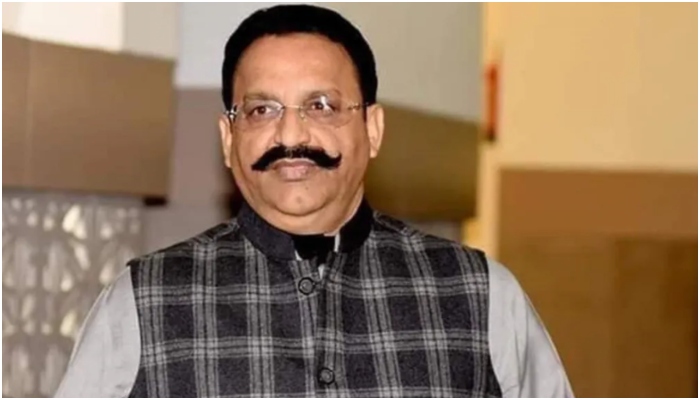
On Thursday (26th October), the MP-MLA court in Ghazipur, Uttar Pradesh, declared mafia and former MLA Mukhtar Ansari guilty in a 14-year-old murder case of one Kapil Dev Singh. Ansari was booked under the Gangster Act and was declared guilty by the court as confirmed by Ansari’s lawyer Liyaqat Ali. However, the court will announce the punishment to the guilty on Friday (27th October). Another accused Sonu Yadav was also convicted in the case.
According to the reports, a case was registered against Mukhtar Ansari under the Gangster Act in Karanda police station. He was booked in the Kapil Singh murder case and was also accused of launching an attack on one Mir Hasan. While the former MLA was acquitted in the case of an attack on Mir Hasan on 17th May, he has been found guilty in the murder case of Kapil Dev Singh.
Ansari was acquitted by courts in both cases in 2011 and 2023, respectively. However, the MP/MLA court of Gazipur found him guilty in the murder case.
Kapil Dev Singh was murdered in the Suapur region which falls under the Karanda police station area. It was alleged that Mukhtar Ansari planned a conspiracy to murder Singh around 14 years ago while he was in jail. The Court heard the case today and declared Ansari guilty.
For the last more than 15 years, this former ‘lawmaker’ – ill-known more for breaking the laws rather than making one – has been lodged in jail. He contested the elections from jail. He won the elections from jail. He is known for operating his gangs from jail.
There are many cases registered against this mafia who became MLA from Mau for the 5th time in 2017. The crimes enlisted in these cases are murder, attempt to murder, armed riots, criminal conspiracy, criminal intimidation, fraud for property expropriation, interference with public affairs, and willful attack to injure someone.
In the 80s, Mukhtar Ansari was involved in a gang war with another mafia Brijesh Singh. He had established his presence till Mau, Jaunpur, Ballia, and Varanasi. Mukhtar Ansari’s name first appeared in the Sachchidanand Rai murder case of 1988. Sachidanand Rai was killed in connection with a land dispute in the Ghazipur district. In this murder case, charges were leveled against Mukhtar Ansari. This was the first time that Mukhtar Ansari’s name was associated with a serious crime. However, the police could not gather any evidence in this case and Mukhtar Ansari could not be proven guilty.
The most important of the cases registered against Mukhtar Ansari is the incident of the murder of BJP MLA Krishnanand Rai. It was 29 November 2005, which is still called a ‘Black Day’ by the people of Ghazipur. Krishnanand Rai was an MLA from Muhammadabad. Krishnanand Rai was killed and his six companions were also killed in this mayhem.
Unfazed by the regime, the killers fired 400 rounds of bullets. After the incident, 67 bullets were removed from the bodies of the deceased during the postmortem. Mukhtar Ansari’s name also appeared in the contractor Ajay Prakash Singh’s murder case in Mau. The witness of this murder crime was also murdered. Similarly, the witness of the Krishnanand Rai murder case also died under suspicious circumstances.
In June this year, a special MP-MLA court in Uttar Pradesh’s Varanasi awarded life imprisonment to jailed gangster-turned-politician Mukhtar Ansari in the 1991 Awadhesh Rai murder case. On August 3, 1991, Congress leader and brother of former MLA Ajay Rai, Awadhesh Rai, was shot dead outside Ajay Rai’s house in Varanasi. Ansari was presented before the court through video conference where the court convicted him under Sections 145 and 302m.
In the given case, Ansari continues to be in jail and the court has declared him guilty for murder of Kapil Dev Singh. The punishment will however be announced by the court on 27th October. The maximum punishment in this case is reportedly 10 years.